Deadlift With Bands vs Seated Good Mornings

Compare target muscles, equipment, difficulty, movement type, and secondary muscles for Deadlift With Bands and Seated Good Mornings.

Change comparison Share

Get comparison link

Select the link and use your device's Copy command.

Comparison overview

AI-generated
Deadlift With Bands vs Seated Good Mornings puts two advanced posterior-chain lifts head-to-head so you can choose what fits your program. I'll walk you through who each move trains best, how the erector spinae and supporting muscles activate, exact technique cues (bar placement, hip angles, rep ranges), programming suggestions for strength vs hypertrophy, and relative injury considerations. Read on to learn which exercise gives more systemic overload, which isolates the spinal extensors, and practical tips so you perform each safely and get measurable progress.

Exercise Comparison

Exercise A
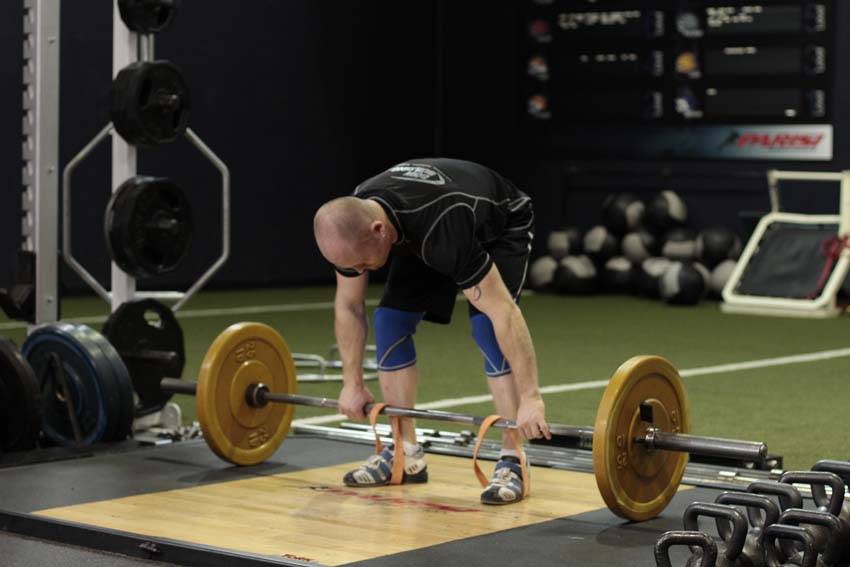
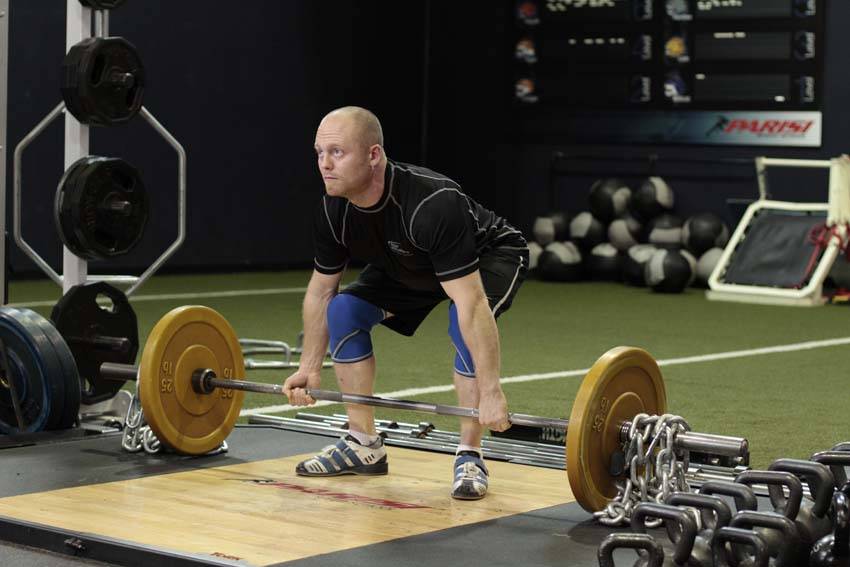
Deadlift With Bands demonstration

Deadlift With Bands

Target Erector-spinae
Equipment Barbell
Body Part Back
Difficulty Advanced
Movement Compound
Secondary Muscles
Forearms Glutes Hamstrings Middle Back Quadriceps Traps
VS
Exercise B
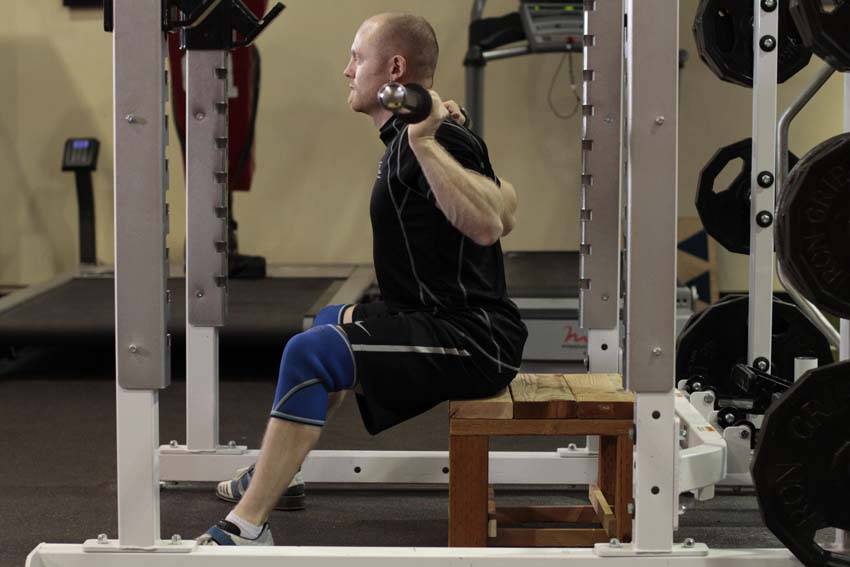
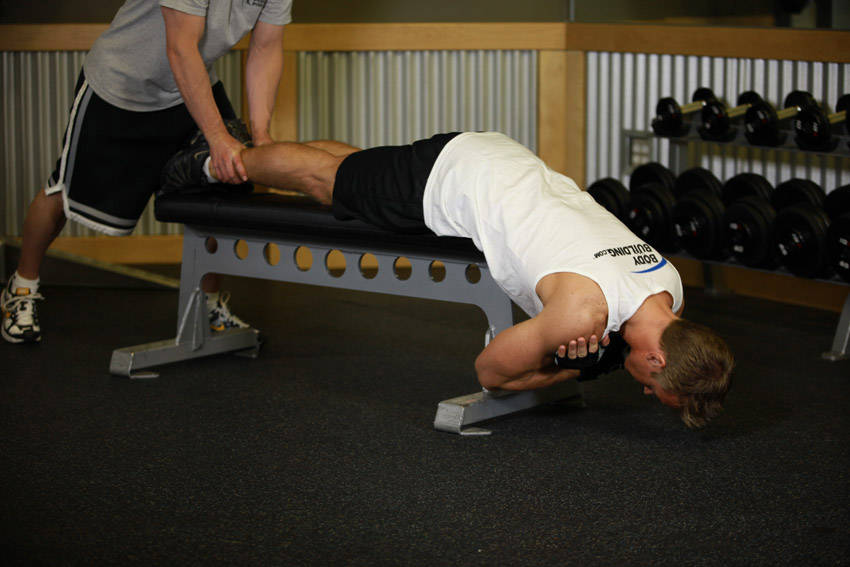
Seated Good Mornings demonstration

Seated Good Mornings

Target Erector-spinae
Equipment Barbell
Body Part Back
Difficulty Advanced
Movement Compound
Secondary Muscles
Glutes

Head-to-Head Comparison

Different values are marked. These are catalogue attributes, not performance scores.

Muscles used

Listed target and secondary muscles, shown on the body. Locations, not activation or strength scores.

  • Target
  • Secondary
  • Not highlighted

Deadlift With Bands

Front
Deadlift With Bands: front muscle locationsSolid: listed target. Striped: listed secondary. Grey: not highlighted. Locations, not activation or strength scores. See the muscle names below.
Back
Deadlift With Bands: back muscle locationsSolid: listed target. Striped: listed secondary. Grey: not highlighted. Locations, not activation or strength scores. See the muscle names below.
Target
Erector-spinae
Secondary
Forearms, Glutes, Hamstrings, Middle Back, Quadriceps, Traps

Not shown on diagram: Erector-spinae, Middle Back. These labels do not identify a precise region on this map.

Seated Good Mornings

Front
Seated Good Mornings: front muscle locationsSolid: listed target. Striped: listed secondary. Grey: not highlighted. Locations, not activation or strength scores. See the muscle names below.
Back
Seated Good Mornings: back muscle locationsSolid: listed target. Striped: listed secondary. Grey: not highlighted. Locations, not activation or strength scores. See the muscle names below.
Target
Erector-spinae
Secondary
Glutes

Not shown on diagram: Erector-spinae. These labels do not identify a precise region on this map.

Grey does not mean a muscle is unused. The diagrams show only the mapped catalogue labels.

Attribute Deadlift With Bands Seated Good Mornings
Target Muscle
Erector-spinae
Erector-spinae
Body Part
Back
Back
Equipment
Barbell
Barbell
Difficulty
Advanced
Advanced
Movement Type
Compound
Compound
Secondary Muscles Different
Forearms, Glutes, Hamstrings, Middle Back, Quadriceps, Traps
Glutes

Visual Comparison

An illustrative 1–10 profile derived from catalog difficulty, equipment, and listed-muscle fields—not measured performance or muscle activation.

Key Differences

  • Both exercises target the Erector-spinae using Barbell. The catalogue does not establish which exercise is better for an individual goal.

Muscle comparison

Shared target muscles

Both exercises heavily target the erector spinae through hip extension and trunk stabilization. Deadlift With Bands loads the posterior chain across the hips and spine, producing peak erector activation near lockout as extension torque and band tension increase. Seated Good Mornings place the erectors in a longer muscle length for a sustained tension curve, emphasizing mid-to-lower lumbar activity throughout the eccentric and isometric phases.

Secondary muscle differences

Deadlift With Bands recruits more hamstrings, glutes, forearms, middle back and quads due to the full standing hinge and grip demand; band tension shifts load toward lockout, increasing glute and hamstring drive. Seated Good Mornings spare the hamstrings and limit knee extension, so glute involvement is lower and forearm demand is minimal. Traps and middle back are more engaged on banded deadlifts to resist scapular rounding under load.

Muscle involvement analysis

Deadlift With Bands shows ascending tension: lower range has reduced external load (bands slack) while top range has higher load (bands stretched), so erectors fire hardest in the final 10–20% of extension. Seated Good Mornings produce a flatter activation curve with high eccentric and isometric erector activity across ~0–60° of trunk flexion; peak tension occurs near the eccentric bottom when length-tension and passive elements combine.

Equipment and setup

Deadlift With Bands: setup

Deadlift With Bands requires a barbell, loading pins or plates, and resistance bands anchored under the bar or to the platform. You'll need bands rated to provide ~10–30% of top-end resistance to get the intended variable profile.

Seated Good Mornings: setup

Seated Good Mornings need a barbell and a stable box or bench to sit on at about knee height; a rack or safety pins to load/unload the bar safely is recommended.

Access and practicality

Seated Good Mornings are more accessible if you have a barbell and bench because they don't require specific band setups. However, if you train with bands already, Deadlift With Bands can be scaled at home with light plates and bands, making it close in accessibility.

Learning and progression

Learning the movements

Seated Good Mornings are slightly easier to learn for isolating spinal extension because the seated setup limits hip travel and balance demands. Deadlift With Bands requires coordinating band height, bar path and a full-body hinge, so its motor pattern and set-up complexity make the learning curve steeper.

Progression considerations

Deadlift With Bands offers greater long-term progression due to the ability to add plates, change band tension by 10–30%, and manipulate leverages for heavier systemic strength. Seated Good Mornings progress via load, tempo, and range-of-motion but plateaus earlier for whole-body strength.

Limitations and precautions

Relative injury risk is higher for Deadlift With Bands when technique breaks because heavier total system loads and grip demands can create spinal rounding under load. Seated Good Mornings concentrate shear forces on the lumbar spine in a fixed hip position, so poor bracing or excessive load increases localized spinal stress. Both demand advanced technique and cautious loading.

Pros & Cons

Deadlift With Bands

+ Pros

  • Strong whole-posterior-chain recruitment — erectors, glutes, hamstrings, traps
  • Variable resistance increases top-end tension (~10–30% more at lockout)
  • High progression ceiling: add plates or stronger bands
  • Improves lockout strength and rate of force development

− Cons

  • Complex set-up and band anchor logistics
  • Higher coordination and balance demands
  • Greater systemic fatigue and grip limitation

Seated Good Mornings

+ Pros

  • Isolates erector spinae with a long time-under-tension stimulus
  • Simpler set-up: barbell and bench required
  • Lower grip and balance demands
  • Easy to control tempo for eccentric overload (3–5s eccentrics)

− Cons

  • Limited hamstring and quad involvement
  • Concentrates shear on lumbar spine if bracing fails
  • Lower overall systemic progression compared to standing lifts

When Each Exercise Wins

1
For muscle hypertrophy: Deadlift With Bands

Deadlift With Bands produces greater overall mechanical tension across the posterior chain and allows heavier total load and progressive overload. Use 6–12 reps for hypertrophy and bands to increase lockout tension for added stimulus.

2
For strength gains: Deadlift With Bands

Variable resistance trains the sticking point and improves lockout power; program heavy sets of 3–6 reps and increase band tension by ~10% every 2–4 weeks to push neural and structural strength adaptations.

3
For beginners: Seated Good Mornings

Seated Good Mornings limit balance and reduce coordination demands so you can learn safe spinal hinging and eccentric control. Start with 8–12 reps light tempo (2–3s eccentrics) to groove technique before adding load.

4
For home workouts: Deadlift With Bands

If you own bands, Deadlift With Bands scales load without heavy plates and trains the whole posterior chain effectively. Use lighter barbell load plus bands to mimic heavy resistance while keeping equipment minimal.

Frequently Asked Questions

Can I do both Deadlift With Bands and Seated Good Mornings in the same workout?

Yes — sequencing matters. Do Deadlift With Bands first if you want maximal strength or neural freshness, then follow with Seated Good Mornings for targeted erector hypertrophy and tempo work. Keep total lower-back volume to 8–12 working sets per week to avoid overuse.

Which exercise is better for beginners?

Seated Good Mornings are slightly better for beginners because they reduce balance and coordination demands and let you practice controlled hip hinge and eccentric loading. However, both are advanced; consider starting with Romanian deadlifts or hip-hinge drills before progressing to either.

How do the muscle activation patterns differ?

Deadlift With Bands ramps erector and glute activation toward lockout — peak tension typically occurs in the final 10–20% of extension as band tension increases. Seated Good Mornings keep erectors at a high activation throughout the eccentric and isometric phases with peak length-tension near the bottom of the hinge.

Can Seated Good Mornings replace Deadlift With Bands?

They can substitute when your goal is isolated spinal-extensor work or when band equipment isn't available, but they won't replicate the systemic load, hamstring and grip demands of banded deadlifts. Match the exercise to your goal: isolation and TUT vs whole-body strength and lockout power.

Comparison Summary

If your priority is posterior-chain strength and systemic overload, Deadlift With Bands is the decisive choice: it recruits erectors along with glutes, hamstrings, quads and traps and lets you manipulate top-end tension with bands for progressive strength and hypertrophy. If you want targeted erector-spinae hypertrophy or a controlled way to develop the hip-hinge pattern, Seated Good Mornings are the better tool — use slow eccentrics (3–5s) and moderate reps (8–15) to maximize time under tension. Both lifts are advanced: prioritize perfect bracing, neutral spine, and conservative loading (add no more than 5–10% weekly) while you build technique.

Exercise instructions

Steps from the exercise catalogue. Read the full sequence before starting.

Deadlift With Bands

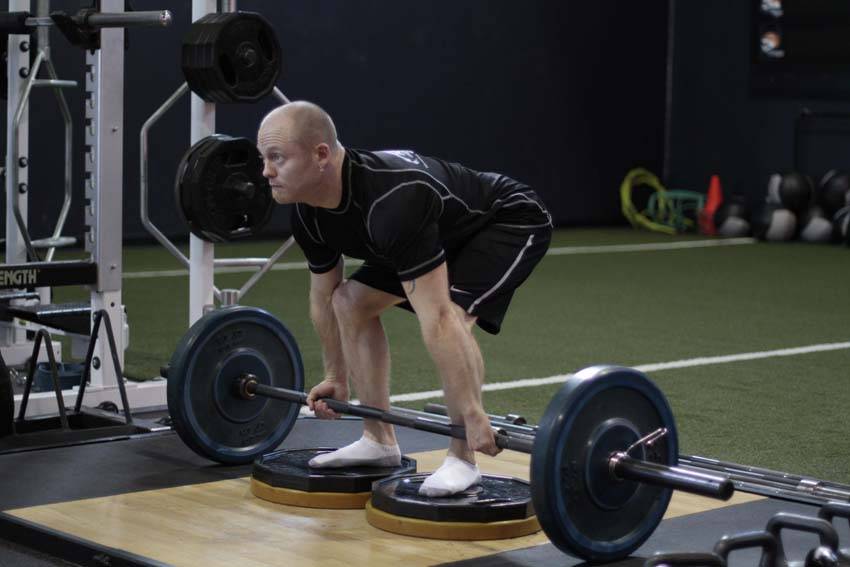
  1. To deadlift with short bands, simply loop them over the bar before you start, and step into them to set up. For long bands, they will need to be anchored to a secure base, such as heavy dumbbells or a rack.
  2. With your feet, and your grip set, take a big breath and then lower your hips and bend the knees until your shins contact the bar. Look forward with your head, keep your chest up and your back arched, and begin driving through the heels to move the weight upward. After the bar passes the knees, aggressively pull the bar back, pulling your shoulder blades together as you drive your hips forward into the bar.
  3. Lower the bar by bending at the hips and guiding it to the floor.

Seated Good Mornings

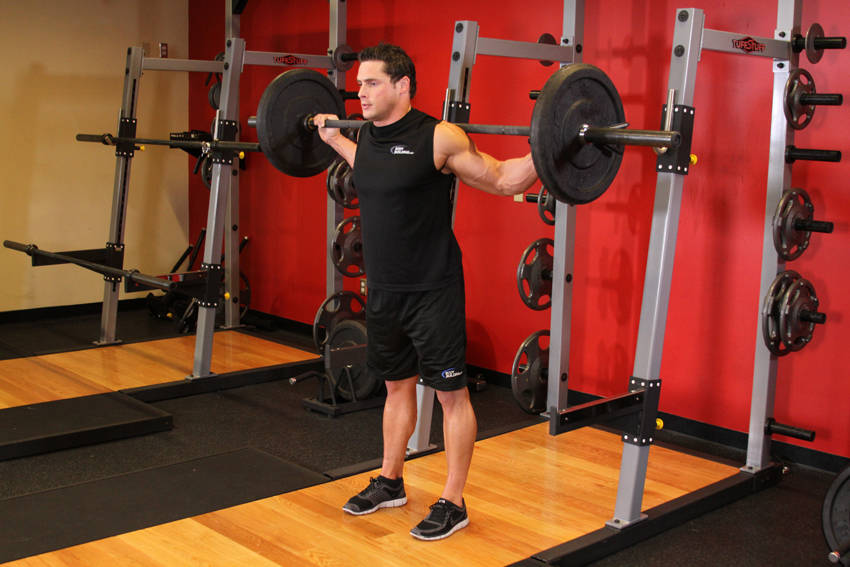
  1. Set up a box in a power rack. The pins should be set at an appropriate height. Begin by stepping under the bar and placing it across the back of the shoulders, not on top of your traps. Squeeze your shoulder blades together and rotate your elbows forward, attempting to bend the bar across your shoulders.
  2. Remove the bar from the rack, creating a tight arch in your lower back. Keep your head facing forward. With your back, shoulders, and core tight, push your knees and butt out and you begin your descent. Sit back with your hips until you are seated on the box. This will be your starting position.
  3. Keeping the bar tight, bend forward at the hips as much as possible. If you set the pins to what would be parallel, you not only have a safety if you fail, but know when to stop.
Read remaining steps for Seated Good Mornings
  1. Pause just above the pins and reverse the motion until your torso it upright.

Also Compare

Compare another pair

Choose two exercises to see their differences side by side.

Compare Exercises