

Barbell Drag Curl vs Barbell Lying Preacher Curl: Complete Comparison Guide
Barbell Drag Curl vs Barbell Lying Preacher Curl — both isolate the biceps but use different joint positions and tension curves. You’ll get clear technique cues, biomechanics-based muscle comparisons, equipment needs, difficulty breakdowns, and practical recommendations for hypertrophy, strength, beginners, and home workouts. Read on and decide which to prioritize in your upper-arm work based on shoulder position, elbow path, and force vector — not just feel.
Exercise Comparison
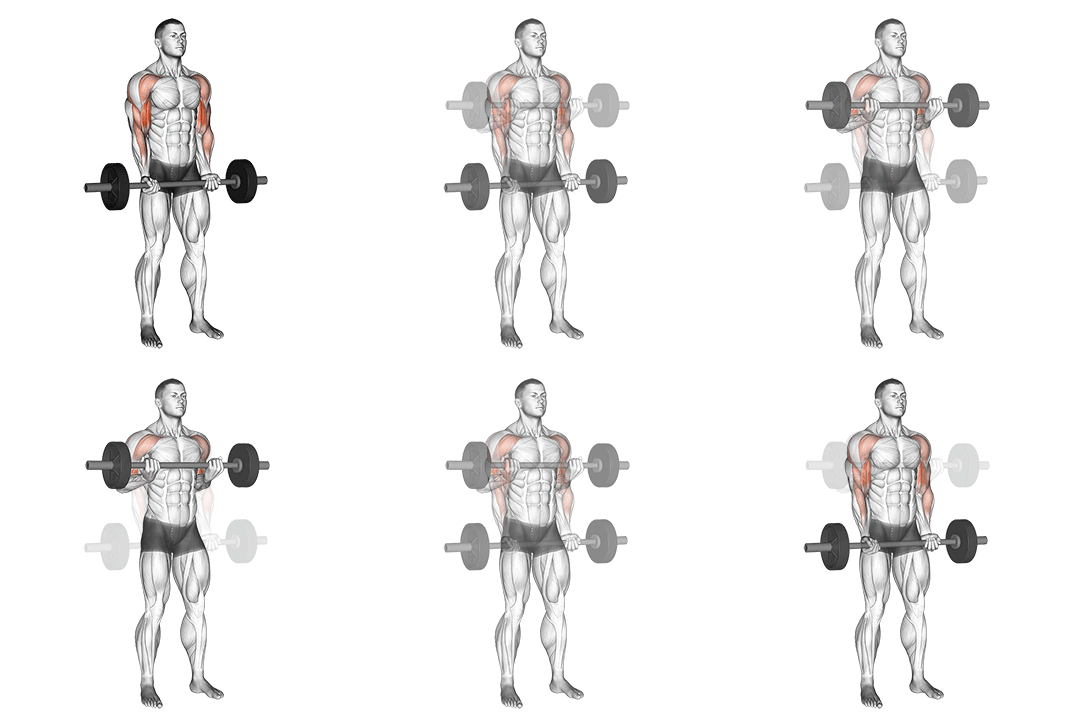
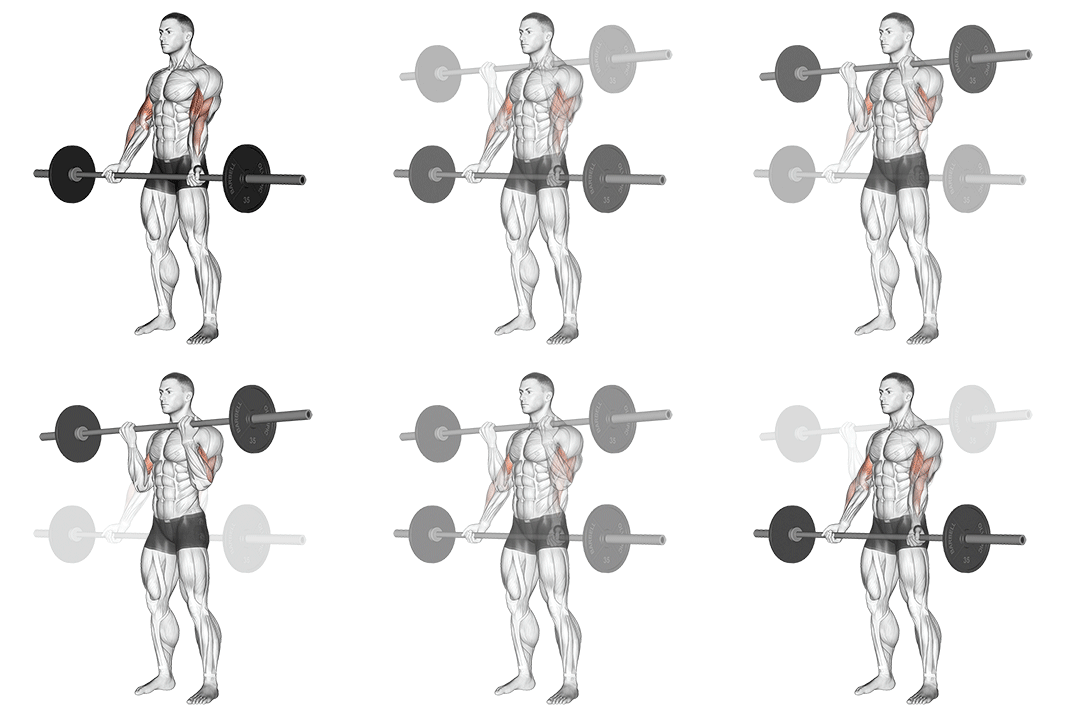
Barbell Drag Curl
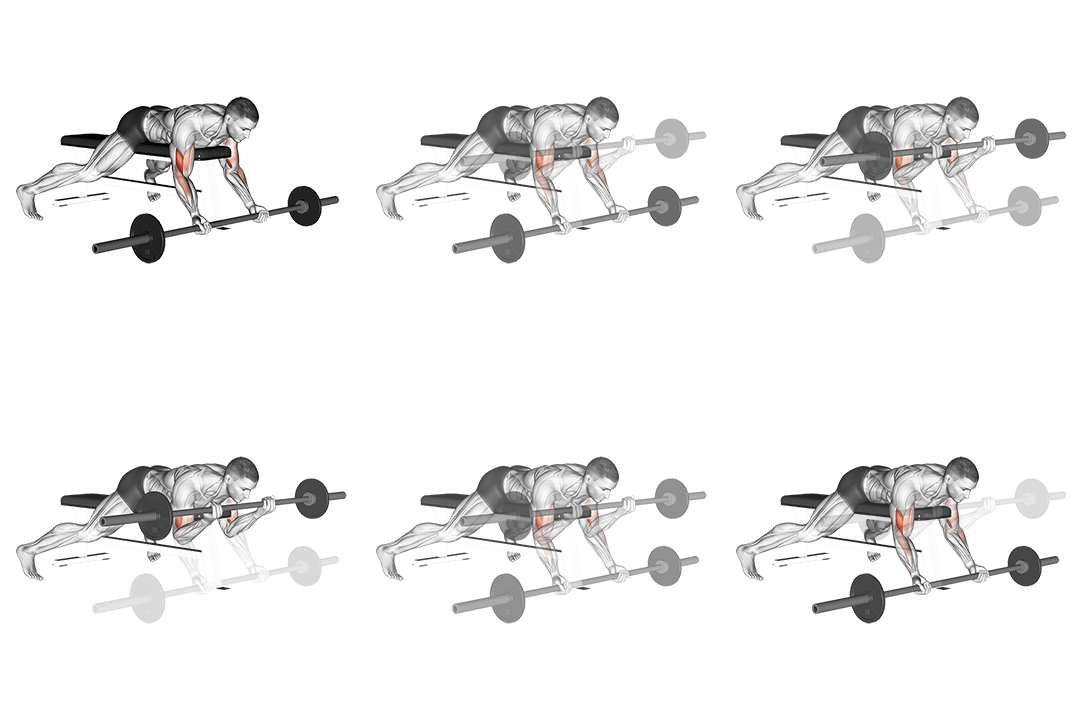
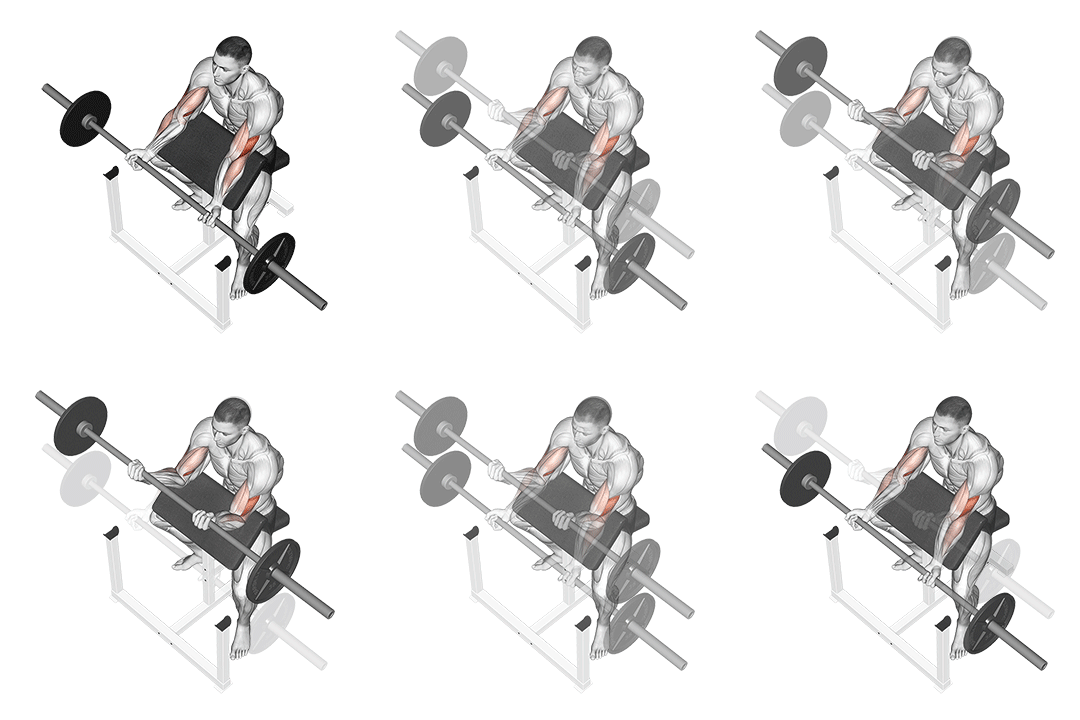
Barbell Lying Preacher Curl
Head-to-Head Comparison
| Attribute | Barbell Drag Curl | Barbell Lying Preacher Curl |
|---|---|---|
| Target Muscle |
Biceps
|
Biceps
|
| Body Part |
Upper-arms
|
Upper-arms
|
| Equipment |
Barbell
|
Barbell
|
| Difficulty |
Intermediate
|
Beginner
|
| Movement Type |
Isolation
|
Isolation
|
| Secondary Muscles |
1
|
1
|
Secondary Muscles Activated
Barbell Drag Curl
Barbell Lying Preacher Curl
Visual Comparison
Overview
Barbell Drag Curl vs Barbell Lying Preacher Curl — both isolate the biceps but use different joint positions and tension curves. You’ll get clear technique cues, biomechanics-based muscle comparisons, equipment needs, difficulty breakdowns, and practical recommendations for hypertrophy, strength, beginners, and home workouts. Read on and decide which to prioritize in your upper-arm work based on shoulder position, elbow path, and force vector — not just feel.
Key Differences
- Difficulty levels differ: Barbell Drag Curl is intermediate, while Barbell Lying Preacher Curl is beginner.
- Both exercises target the Biceps using Barbell. The main differences are in their movement patterns and muscle activation angles.
Pros & Cons
Barbell Drag Curl
+ Pros
- Stronger emphasis on long-head biceps via posterior elbow travel and greater shoulder extension
- Highly scalable: easy to increase load, change tempo, or vary grip width
- Minimal equipment—only a barbell and space required
- Better for standing transfer to functional pulling movements due to upright posture
− Cons
- Requires precise elbow control; tendency to use momentum if form breaks down
- Intermediate skill level — needs practice to perfect bar path
- Can place extra stress on distal biceps tendon and forearms if overloaded
Barbell Lying Preacher Curl
+ Pros
- Excellent isolation—upper arm stabilization reduces cheat and enforces strict reps
- Beginner-friendly due to fixed position and clear movement path
- Lower momentum, so you can focus on slow eccentrics (3–4 sec) for hypertrophy
- Consistent range of motion across sets makes tracking progress straightforward
− Cons
- Requires a preacher bench or pad—less accessible in some gyms or homes
- Shortens the long head, potentially reducing long-head stimulus compared with other variations
- Bench geometry can pin elbows in an uncomfortable position for some lifters
When Each Exercise Wins
Drag curls load the biceps over a longer muscle length and let you keep tension through the top of the rep; use 6–12 reps at 65–80% 1RM with 2–3 sec eccentrics to maximize fiber recruitment.
Standing drag curls allow heavier absolute loads and carryover to compound pulling; train sets in the 3–6 rep range at 85–95% of your working max with long rest for neural adaptation.
The preacher pad stabilizes the upper arm and removes compensatory shoulder movement, making it easier to learn strict elbow flexion and feel the biceps work with 8–15 moderate reps.
You only need a barbell and space; no bench required, so drag curls offer the simplest, equipment-light way to isolate biceps at home.
Frequently Asked Questions
Can I do both Barbell Drag Curl and Barbell Lying Preacher Curl in the same workout?
Yes. Start with the stronger, more technical move (drag curl) for heavy sets and compound-style overload, then use the lying preacher curl as a strict isolation finisher for 2–4 sets of 8–15 reps to increase time under tension without momentum.
Which exercise is better for beginners?
Barbell Lying Preacher Curl is better for beginners because the pad stabilizes the upper arm and eliminates torso sway, making it easier to learn pure elbow flexion and maintain consistent form.
How do the muscle activation patterns differ?
Drag curls shift the biceps to a longer starting length by moving elbows posteriorly, increasing long-head contribution and peak tension later in the ROM. Lying preacher curls fix the shoulder in flexion, shortening the long head and producing a more constant short-head-dominant torque curve.
Can Barbell Lying Preacher Curl replace Barbell Drag Curl?
If your goal is strict isolation and technique practice, yes—preacher curls can substitute. For long-head emphasis, heavier loading, and standing transfer, drag curls are the superior choice and shouldn’t be fully replaced if those are your priorities.
Expert Verdict
Use Barbell Drag Curls when you want a standing, scalable biceps builder that emphasizes the long head via posterior elbow travel and a longer length-tension curve—great for hypertrophy (6–12 reps) and strength (3–6 reps). Choose Barbell Lying Preacher Curls when you need strict isolation, lower momentum, and a beginner-friendly pattern that locks the upper arm in place; they’re ideal for focused slow eccentrics (8–15 reps) and dialed-in technique. For a balanced program, prioritize drag curls for progressive overload and add preacher sets as a strict finisher to increase time under tension and reinforce strict elbow flexion.
Also Compare
More comparisons with Barbell Drag Curl
More comparisons with Barbell Lying Preacher Curl
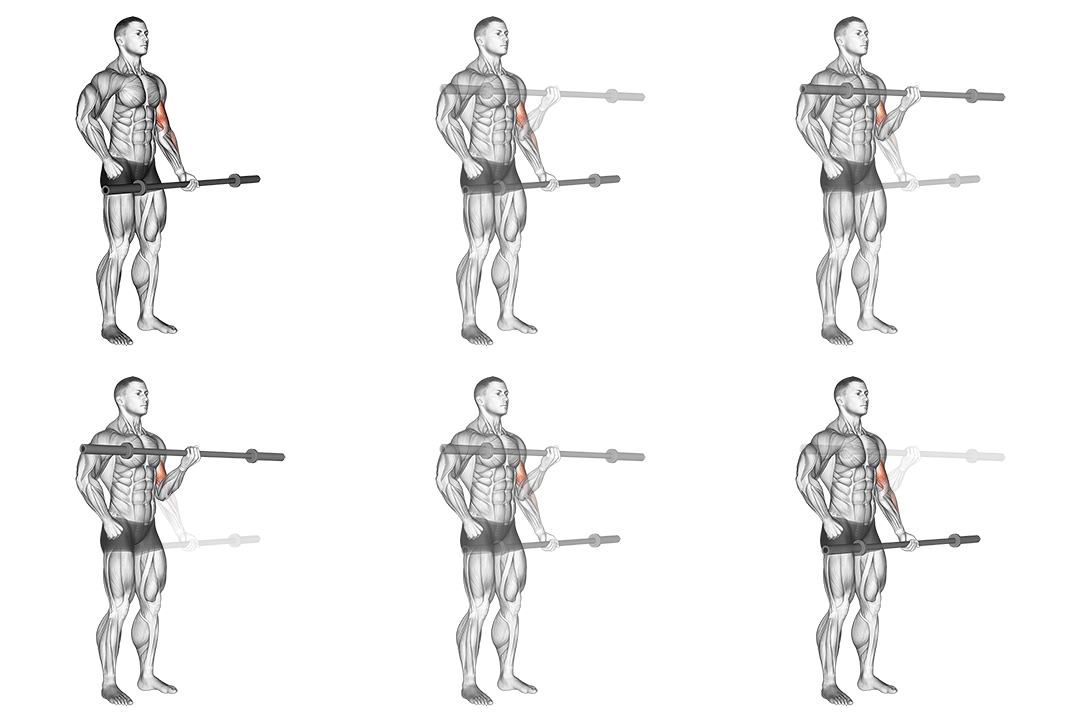
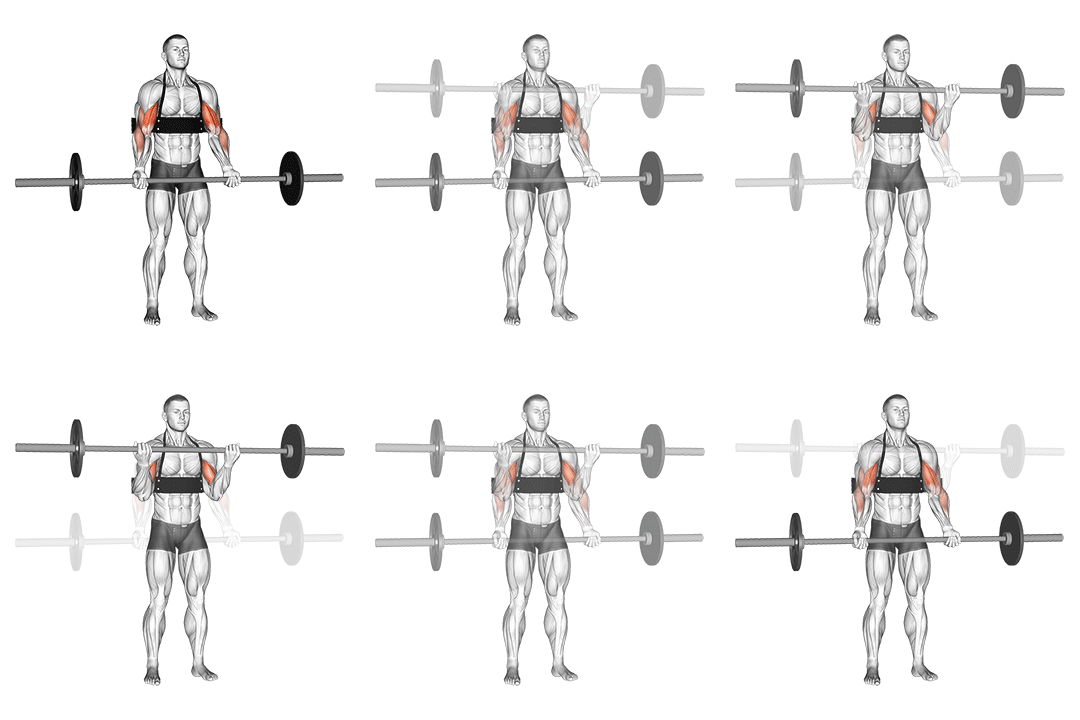
Compare More Exercises
Use our free comparison tool to analyze any two exercises head-to-head.
Compare Exercises