

Barbell Floor Calf Raise vs Barbell Standing Leg Calf Raise: Complete Comparison Guide
Barbell Floor Calf Raise vs Barbell Standing Leg Calf Raise — you’re choosing between a bilateral, stable calf movement and a single-leg, balance-heavy variant. If you want clear guidance, this comparison shows you biomechanics, muscle activation, equipment needs, technique cues, rep ranges (8–20 reps), and progression strategies. You’ll learn which exercise gives a fuller stretch, which lets you push heavier loads, and how knee angle, ankle range of motion, and unilateral stability change the stimulus. Read on to pick the best move for size, strength, or simple home training.
Exercise Comparison
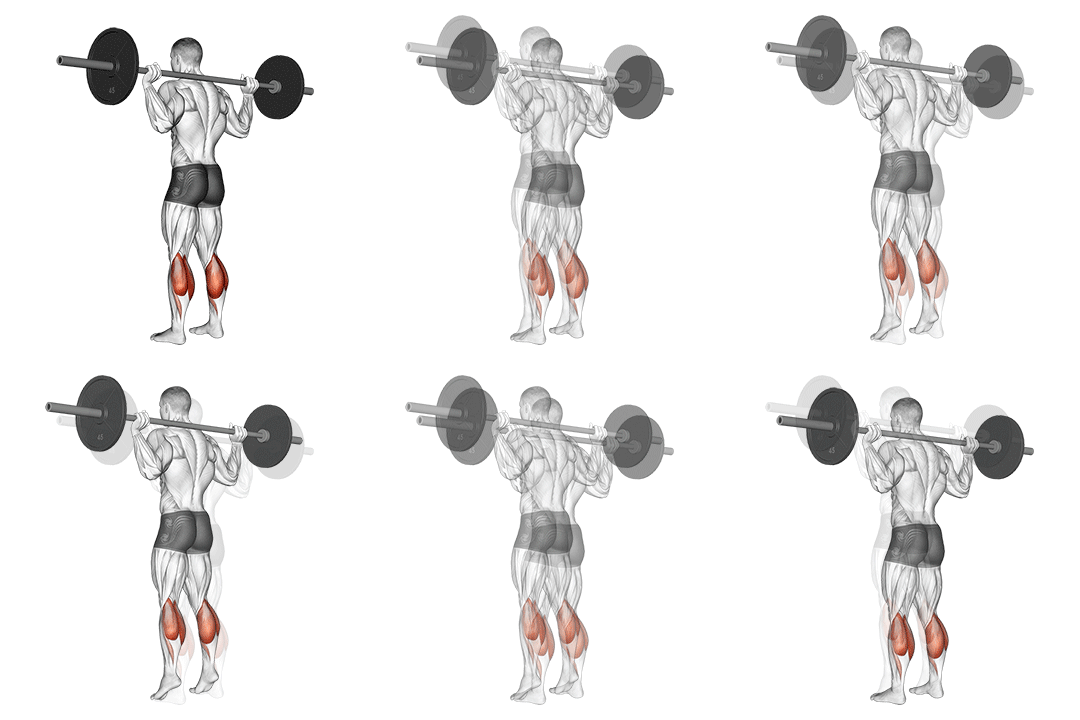
Barbell Floor Calf Raise
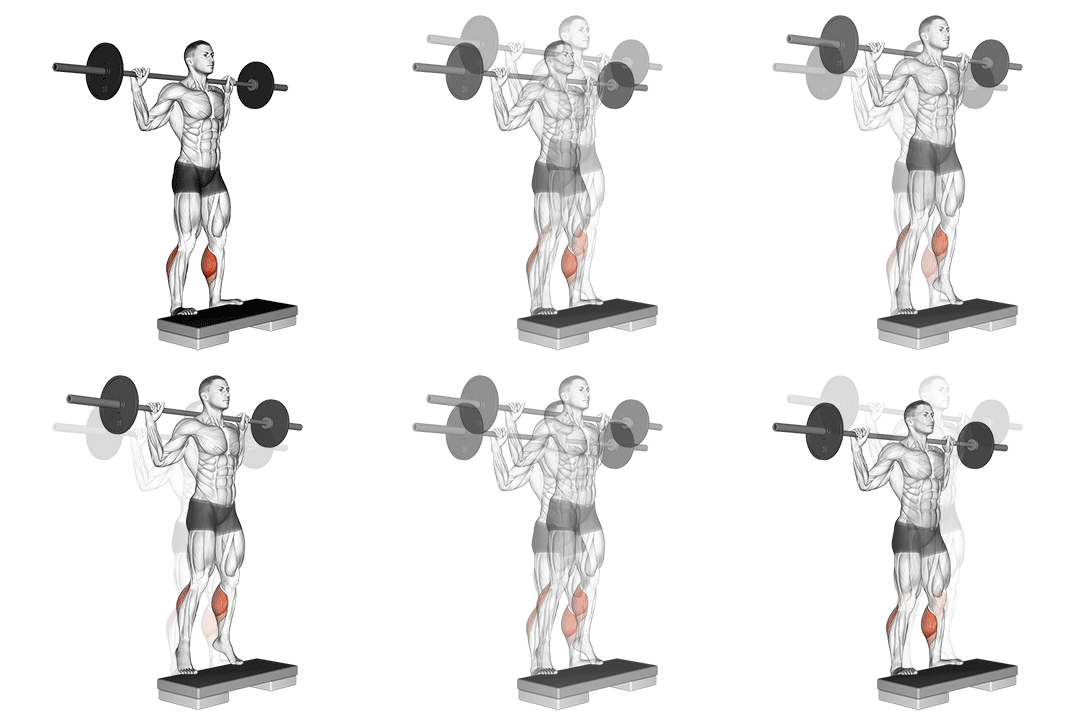
Barbell Standing Leg Calf Raise
Head-to-Head Comparison
| Attribute | Barbell Floor Calf Raise | Barbell Standing Leg Calf Raise |
|---|---|---|
| Target Muscle |
Calves
|
Calves
|
| Body Part |
Lower-legs
|
Lower-legs
|
| Equipment |
Barbell
|
Barbell
|
| Difficulty |
Beginner
|
Beginner
|
| Movement Type |
Isolation
|
Isolation
|
| Secondary Muscles |
1
|
2
|
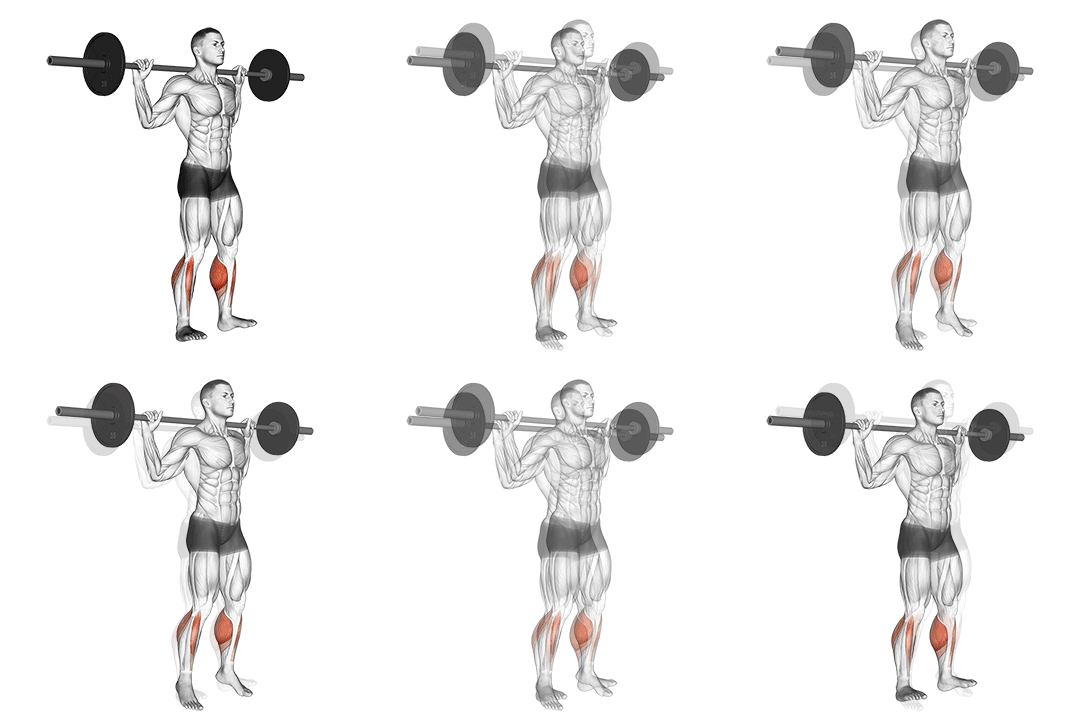
Secondary Muscles Activated
Barbell Floor Calf Raise
Barbell Standing Leg Calf Raise
Visual Comparison
Overview
Barbell Floor Calf Raise vs Barbell Standing Leg Calf Raise — you’re choosing between a bilateral, stable calf movement and a single-leg, balance-heavy variant. If you want clear guidance, this comparison shows you biomechanics, muscle activation, equipment needs, technique cues, rep ranges (8–20 reps), and progression strategies. You’ll learn which exercise gives a fuller stretch, which lets you push heavier loads, and how knee angle, ankle range of motion, and unilateral stability change the stimulus. Read on to pick the best move for size, strength, or simple home training.
Key Differences
- Both exercises target the Calves using Barbell. The main differences are in their movement patterns and muscle activation angles.
Pros & Cons
Barbell Floor Calf Raise
+ Pros
- Stable bilateral stance lets you use heavier absolute loads safely
- Easier to learn and coach — good for beginners
- Lower balance demand reduces risk of falls or compensations
- Simple setup: needs only a barbell and flat surface
− Cons
- Limited dorsiflexion if performed on a flat floor reduces stretch stimulus
- Less unilateral correction for left/right imbalances
- May compress the spine more when loading very heavy without a platform
Barbell Standing Leg Calf Raise
+ Pros
- Greater ankle dorsiflexion potential increases stretch‑mediated hypertrophy
- Unilateral focus helps correct side-to-side strength differences
- Higher gastrocnemius peak activation due to balance and ROM
- Easier to manipulate time under tension and tempo per leg
− Cons
- Higher balance and coordination demands — steeper learning curve
- Harder to load as heavily per leg compared to bilateral lifts
- Requires a small platform or step for full stretch and safer ROM
When Each Exercise Wins
Single-leg work allows 10–20° more dorsiflexion and greater stretch under tension, which exploits the muscle length-tension relationship for more hypertrophic stimulus. You can use 8–15 controlled reps with 2–3 second eccentrics to maximize fiber recruitment.
Bilateral loading lets you use higher absolute weight and overload the plantarflexion torques safely, making it better for raw strength. Aim for 4–8 reps with heavier loads and 1–2 second pauses at the top to build maximal force.
It’s simpler to learn, has lower balance demands, and you can focus on ankle mechanics and tempo without coordinating single-leg stability. Use 10–20 reps to build both tendon resilience and muscular endurance.
Requires minimal equipment (just a barbell and floor space) and no step or extra platform, making it the more practical home choice. It also lets you progress load using standard plates without needing extra gear.
Frequently Asked Questions
Can I do both Barbell Floor Calf Raise and Barbell Standing Leg Calf Raise in the same workout?
Yes — pairing them works well: start with heavy Barbell Floor Calf Raises for 4–8 reps to overload force production, then finish with Barbell Standing Leg Calf Raises for 8–15 reps to increase ROM and time under tension. Keep total volume reasonable (8–16 sets combined) to avoid overloading the Achilles.
Which exercise is better for beginners?
Barbell Floor Calf Raise is better for beginners because it lowers balance demand and lets you focus on ankle plantarflexion mechanics. Begin with 2–4 sets of 10–20 reps and light to moderate load to build tendon resilience and motor patterning.
How do the muscle activation patterns differ?
Single-leg standing raises increase gastrocnemius peak activation due to greater dorsiflexion and stabilization needs, while bilateral floor raises allow higher absolute load and recruit more overall motor units when weight is scaled. The soleus contributes more in higher-rep, longer-time-under-tension sets regardless of variant.
Can Barbell Standing Leg Calf Raise replace Barbell Floor Calf Raise?
It can replace the floor variant if your goal is hypertrophy and balance correction, but it won’t fully replace the heavy bilateral overload stimulus that the floor raise provides for strength. Rotate both if you want balanced calf development.
Expert Verdict
Use Barbell Floor Calf Raise when you want simple, heavy bilateral loading and an easy-to-teach movement for strength and general calf conditioning. It’s the go-to for beginners and home setups. Choose Barbell Standing Leg Calf Raise when you need to address unilateral imbalances or prioritize stretch-mediated hypertrophy — single-leg work increases dorsiflexion, balance demand, and peak gastrocnemius activation. Program both across a training cycle: emphasize bilateral heavy sets (4–8 reps) for strength phases and single-leg higher-volume work (8–15+ reps, slow eccentrics) during hypertrophy phases to maximize calf development and balance.
Also Compare
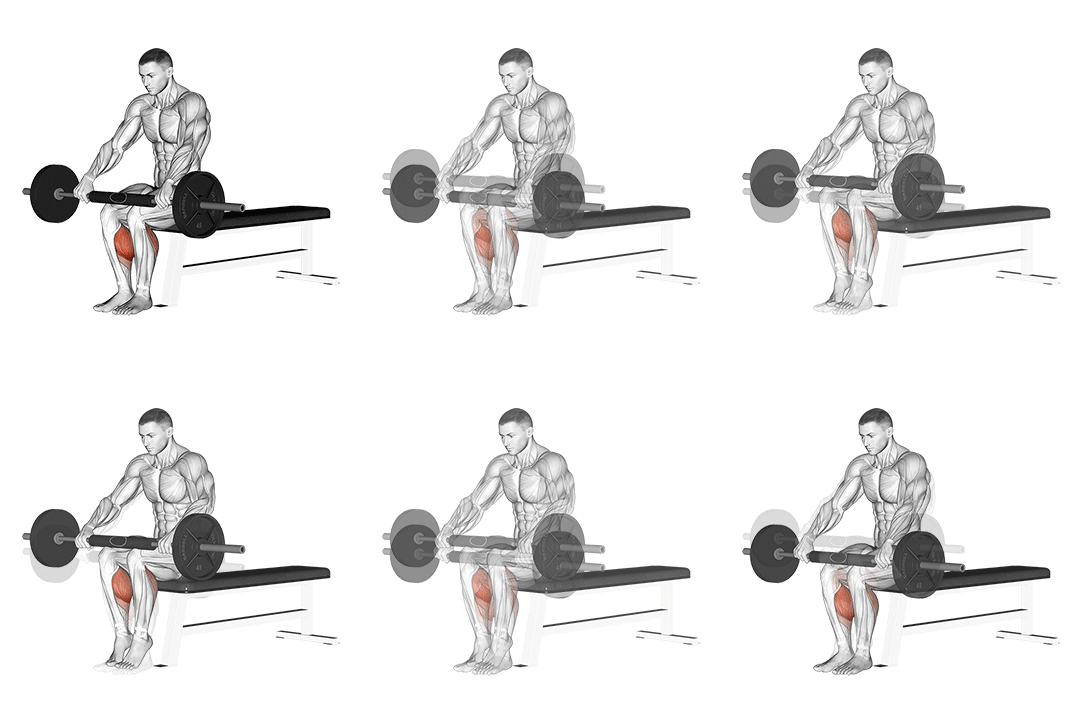
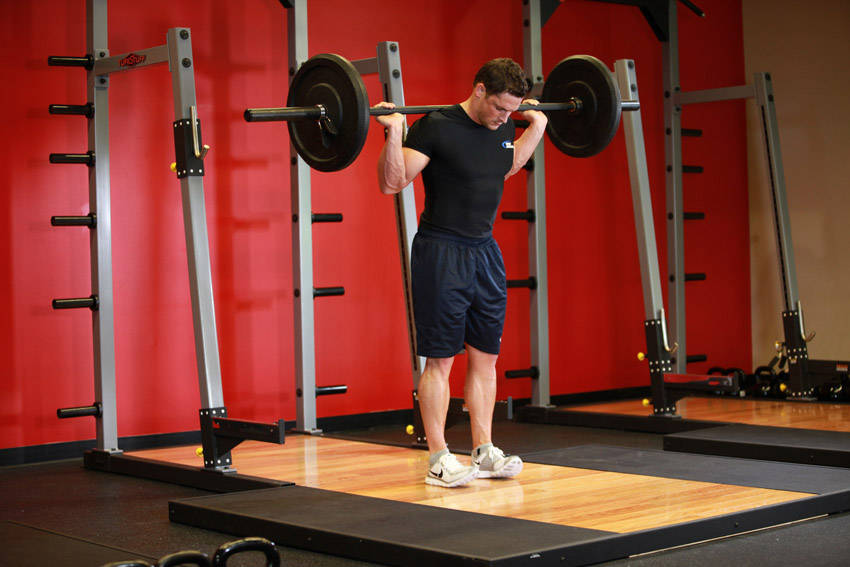
More comparisons with Barbell Floor Calf Raise
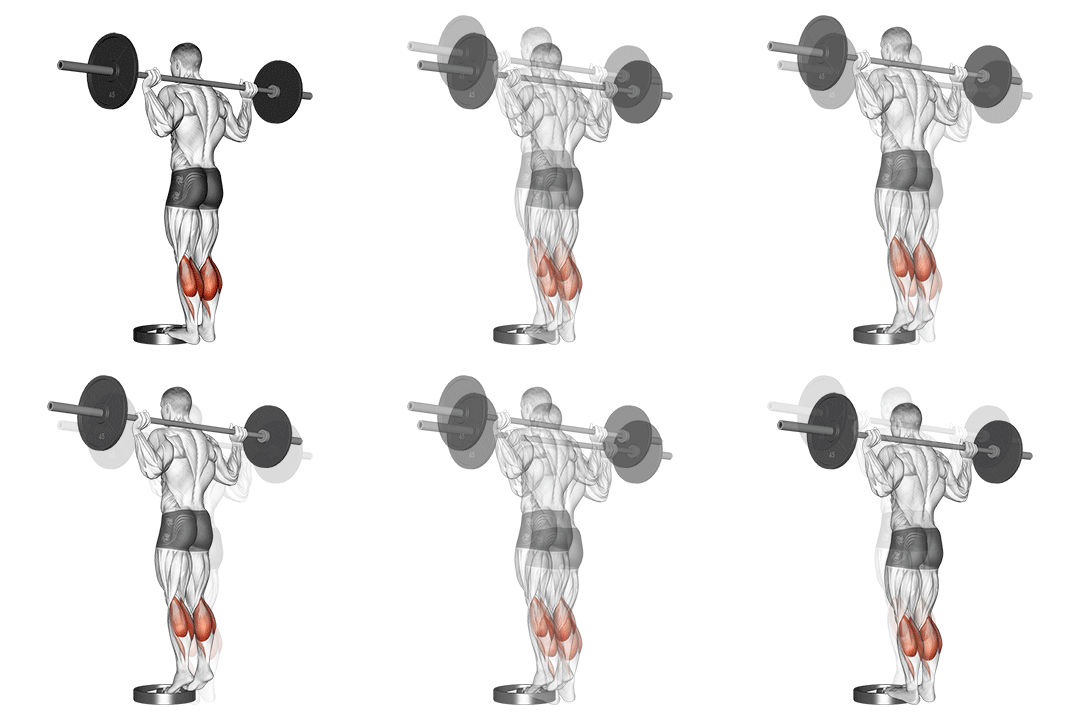
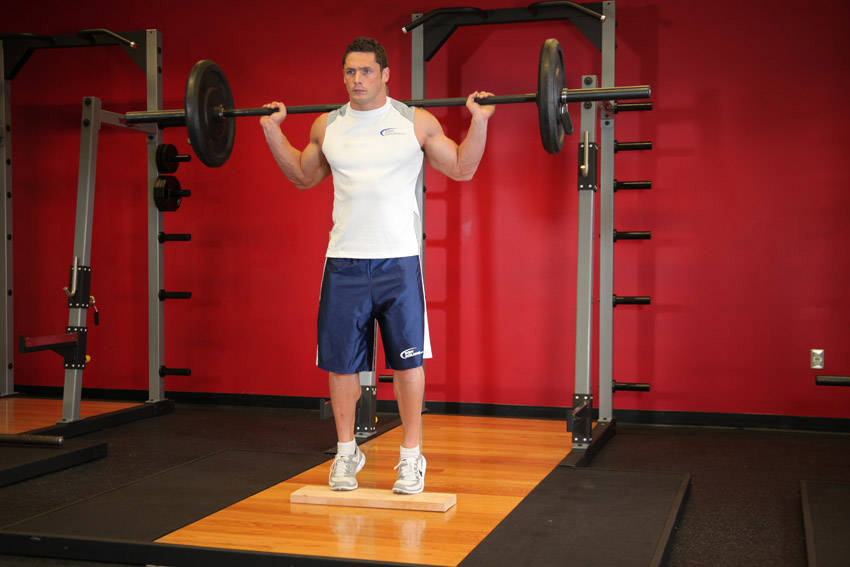
More comparisons with Barbell Standing Leg Calf Raise
Compare More Exercises
Use our free comparison tool to analyze any two exercises head-to-head.
Compare Exercises