

Barbell Standing Leg Calf Raise vs Standing Barbell Calf Raise: Complete Comparison Guide
Barbell Standing Leg Calf Raise vs Standing Barbell Calf Raise — both isolate the calves but use different loading and stability demands. If you want a clear recommendation, this guide breaks down muscle activation, equipment needs, technique cues, and when to pick single-leg vs double-leg versions. You’ll get specific rep ranges (6–20), joint-angle notes (ankle dorsiflexion to full plantarflexion), and pragmatic tips for beginners and experienced lifters. Read on to learn which variation better suits hypertrophy, strength, balance work, and limited-equipment setups.
Exercise Comparison
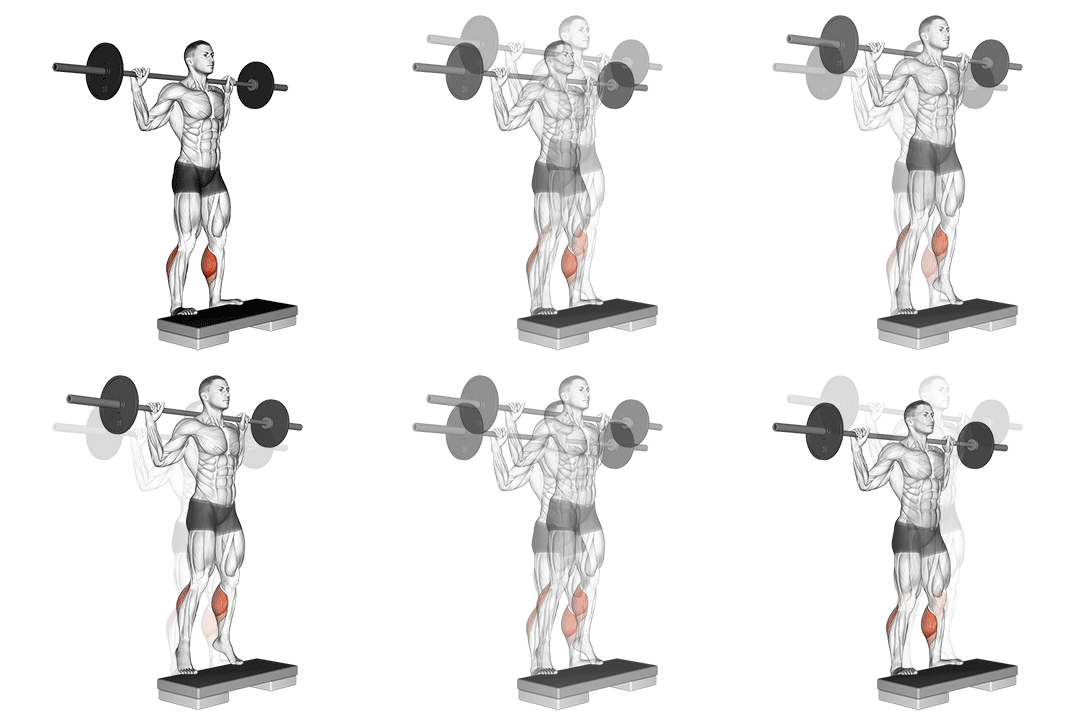
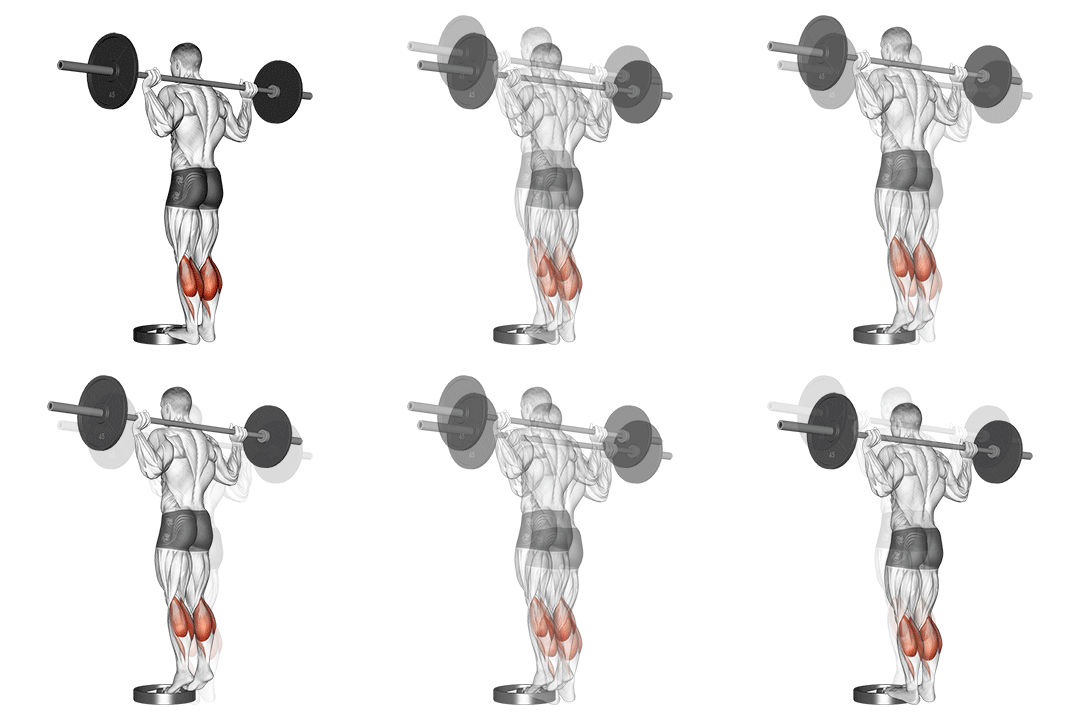
Barbell Standing Leg Calf Raise
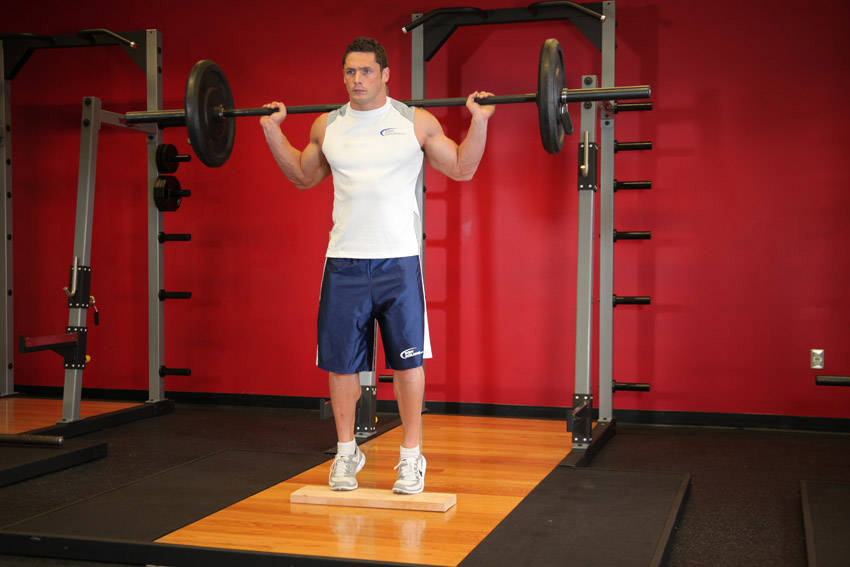
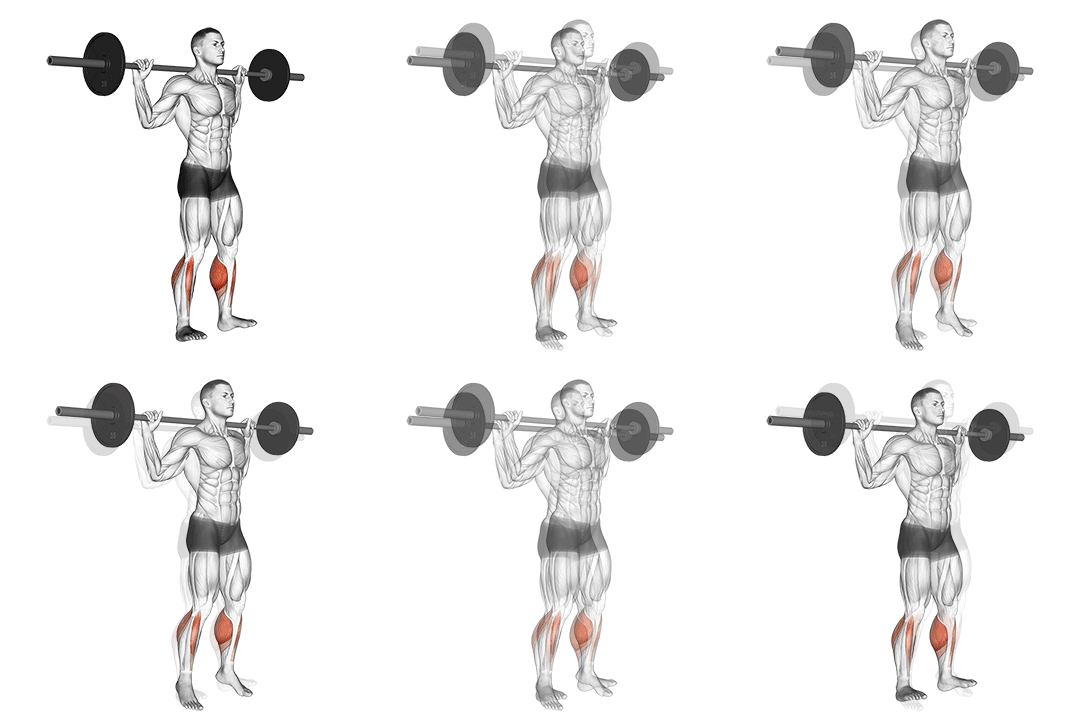
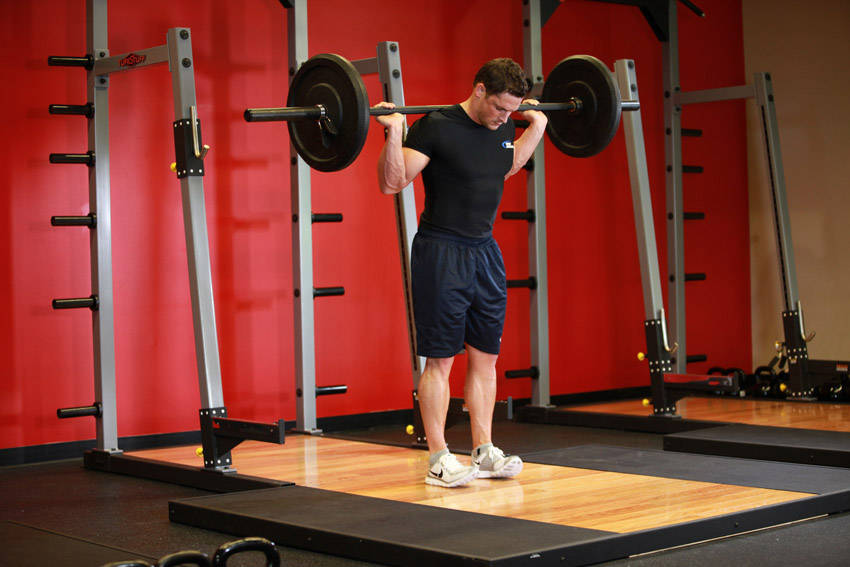
Standing Barbell Calf Raise
Head-to-Head Comparison
| Attribute | Barbell Standing Leg Calf Raise | Standing Barbell Calf Raise |
|---|---|---|
| Target Muscle |
Calves
|
Calves
|
| Body Part |
Lower-legs
|
Lower-legs
|
| Equipment |
Barbell
|
Barbell
|
| Difficulty |
Beginner
|
Beginner
|
| Movement Type |
Isolation
|
Isolation
|
| Secondary Muscles |
2
|
0
|
Secondary Muscles Activated
Barbell Standing Leg Calf Raise
Standing Barbell Calf Raise
Visual Comparison
Overview
Barbell Standing Leg Calf Raise vs Standing Barbell Calf Raise — both isolate the calves but use different loading and stability demands. If you want a clear recommendation, this guide breaks down muscle activation, equipment needs, technique cues, and when to pick single-leg vs double-leg versions. You’ll get specific rep ranges (6–20), joint-angle notes (ankle dorsiflexion to full plantarflexion), and pragmatic tips for beginners and experienced lifters. Read on to learn which variation better suits hypertrophy, strength, balance work, and limited-equipment setups.
Key Differences
- Both exercises target the Calves using Barbell. The main differences are in their movement patterns and muscle activation angles.
Pros & Cons
Barbell Standing Leg Calf Raise
+ Pros
- Greater unilateral activation per calf — better for balancing left/right asymmetries
- Higher time under tension for targeted hypertrophy
- Requires less absolute weight to fatigue each calf
- Engages hamstrings/glutes for stabilization, improving functional carryover
− Cons
- Harder to balance; requires more coordination
- Limited by grip/bar stability and single-leg strength
- Less absolute loading potential for pure strength work
Standing Barbell Calf Raise
+ Pros
- Easier to learn and set up — good for beginners
- Allows heavier absolute loads for strength and tendon conditioning
- Stable two-leg stance reduces balance demands
- Simple to progress with plates, tempo, and heavier eccentrics
− Cons
- Less unilateral correction for side-to-side imbalances
- Can hide weaker side due to dominant-leg compensation
- Requires a rack or spotter for very heavy loads to stay safe
When Each Exercise Wins
The single-leg version increases time under tension and peak activation per calf, helping you target each gastrocnemius and soleus with 8–20 rep sets. It forces full ROM and unilateral overload, which improves muscle fiber recruitment and addresses asymmetries.
Double-leg raises let you use heavier absolute loads and progressive overload (heavy sets of 4–8 or controlled eccentrics), producing greater tendon and maximal force adaptations necessary for strength.
Two-legged technique reduces balance and coordination demands so you can learn correct ankle dorsiflexion-to-plantarflexion sequencing and safely add weight over time.
If your home setup limits heavy plates, single-leg raises let you overload each calf using lighter weight and higher reps while still producing strong hypertrophy stimulus and requiring minimal space.
Frequently Asked Questions
Can I do both Barbell Standing Leg Calf Raise and Standing Barbell Calf Raise in the same workout?
Yes. Start with the heavier double-leg Standing Barbell Calf Raise for 3–5 heavy sets (4–8 reps) to train force, then follow with single-leg sets (8–15 reps) to target hypertrophy and correct imbalances. Keep total volume manageable—6–12 sets per session for calves is a good weekly starting point.
Which exercise is better for beginners?
Standing Barbell Calf Raise is better for beginners because it simplifies balance and lets you learn ankle mechanics under load. Begin with bodyweight or light-barbell sets and focus on full dorsiflexion and controlled 2–3 second eccentrics.
How do the muscle activation patterns differ?
Both perform plantarflexion, but single-leg raises increase unilateral gastrocnemius and soleus activation by roughly 8–15% due to greater stability demands and ROM per limb. Double-leg raises allow higher absolute force through the Achilles with lower unilateral EMG per calf.
Can Standing Barbell Calf Raise replace Barbell Standing Leg Calf Raise?
It can replace it if your goal is strength and you can load heavy, but it won’t correct unilateral imbalances as effectively. For balanced development, include both across training cycles—double-leg for load capacity, single-leg for targeted hypertrophy.
Expert Verdict
Use Standing Barbell Calf Raise when your goal is to build maximal lower-leg strength and tendon capacity: it lets you load heavier, train controlled eccentrics, and keep technique simple. Choose Barbell Standing Leg Calf Raise when targeting unilateral hypertrophy, fixing imbalances, or when you have limited load but want high per-calf activation. In practice, rotate both: prioritize double-leg heavy sets (4–8 reps, slow eccentrics) for strength cycles and use single-leg higher-volume work (8–20 reps, 2–4 s eccentrics) during hypertrophy phases. Emphasize full ankle ROM, braced core, and gradual progression to limit tendon risk.
Also Compare
More comparisons with Barbell Standing Leg Calf Raise
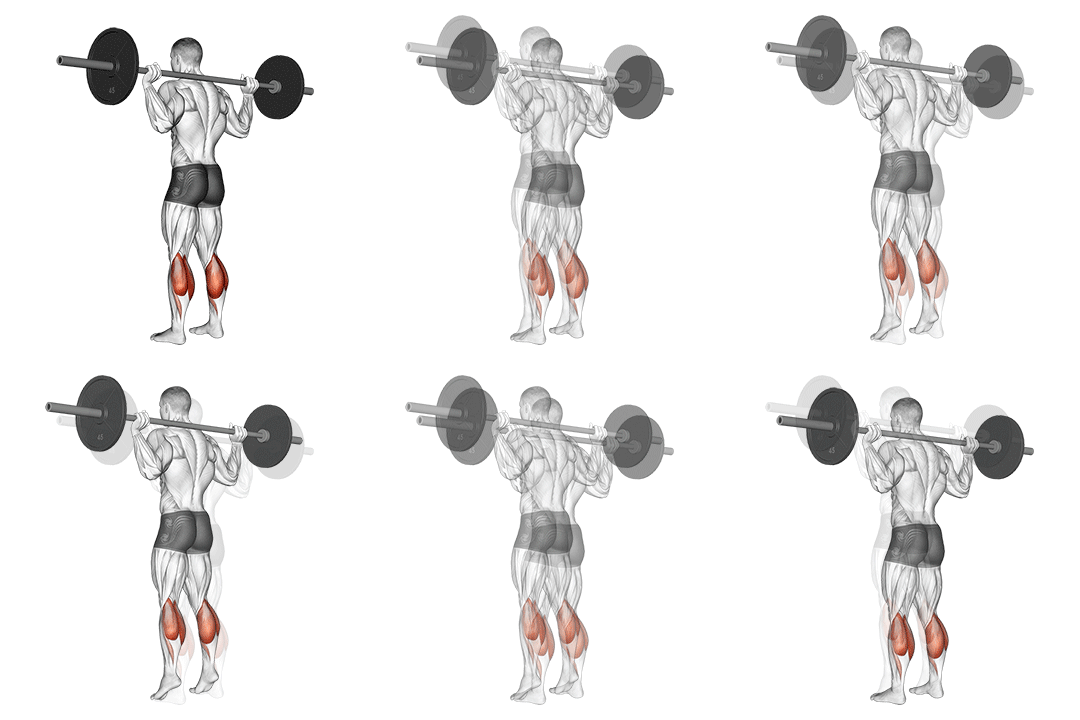
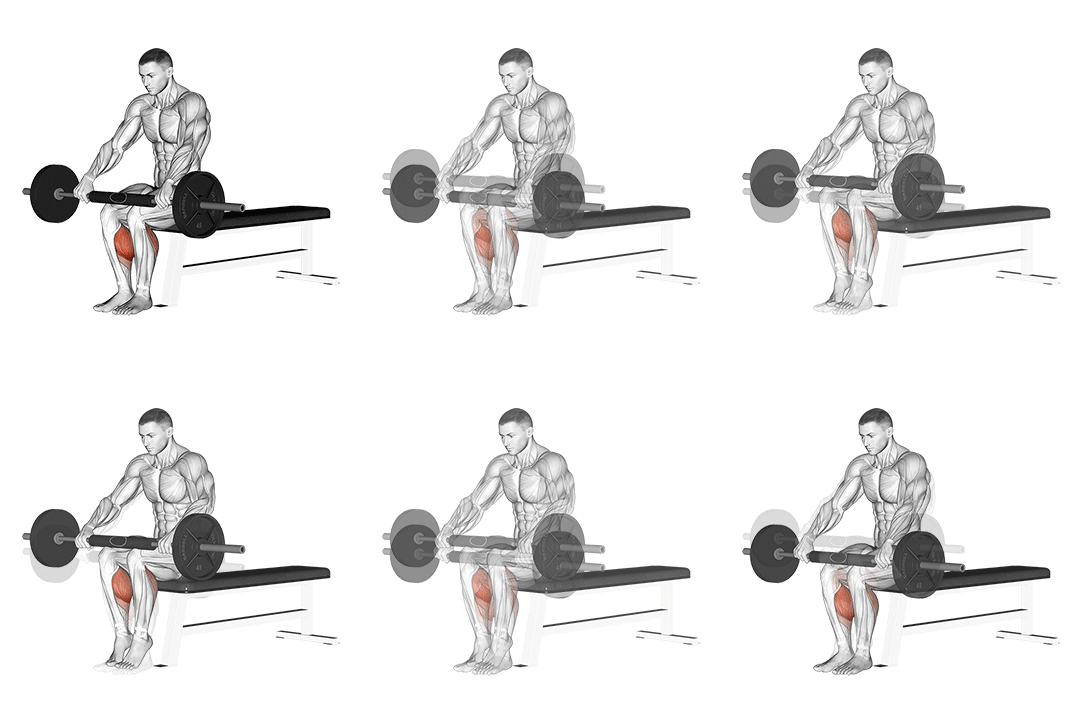
More comparisons with Standing Barbell Calf Raise
Compare More Exercises
Use our free comparison tool to analyze any two exercises head-to-head.
Compare Exercises