

Barbell Standing Calf Raise vs Barbell Standing Leg Calf Raise: Complete Comparison Guide
Barbell Standing Calf Raise vs Barbell Standing Leg Calf Raise — two barbell-based moves that target the calves but ask different things of your body. If you want to know which one gives more overload, which is easier to learn, and how each recruits stabilizers and hamstrings, this comparison breaks it down. You’ll get clear technique cues, rep and set ranges, biomechanical reasoning (length-tension and force vectors), and specific recommendations so you can pick the one that matches your goals and training context.
Exercise Comparison
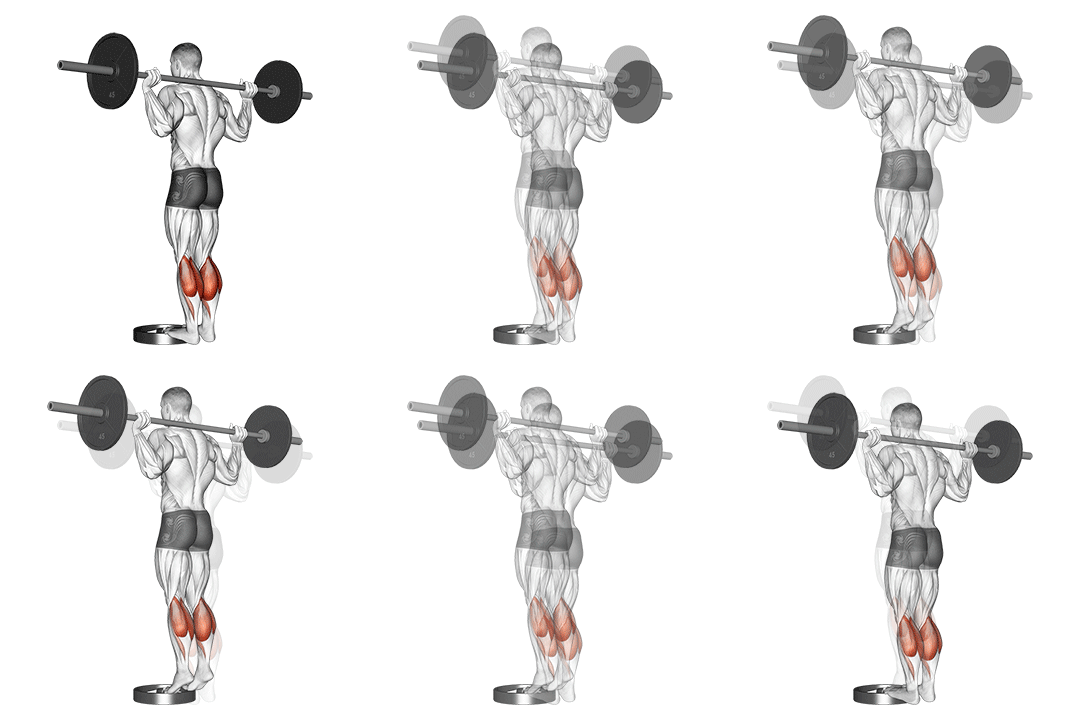
Barbell Standing Calf Raise
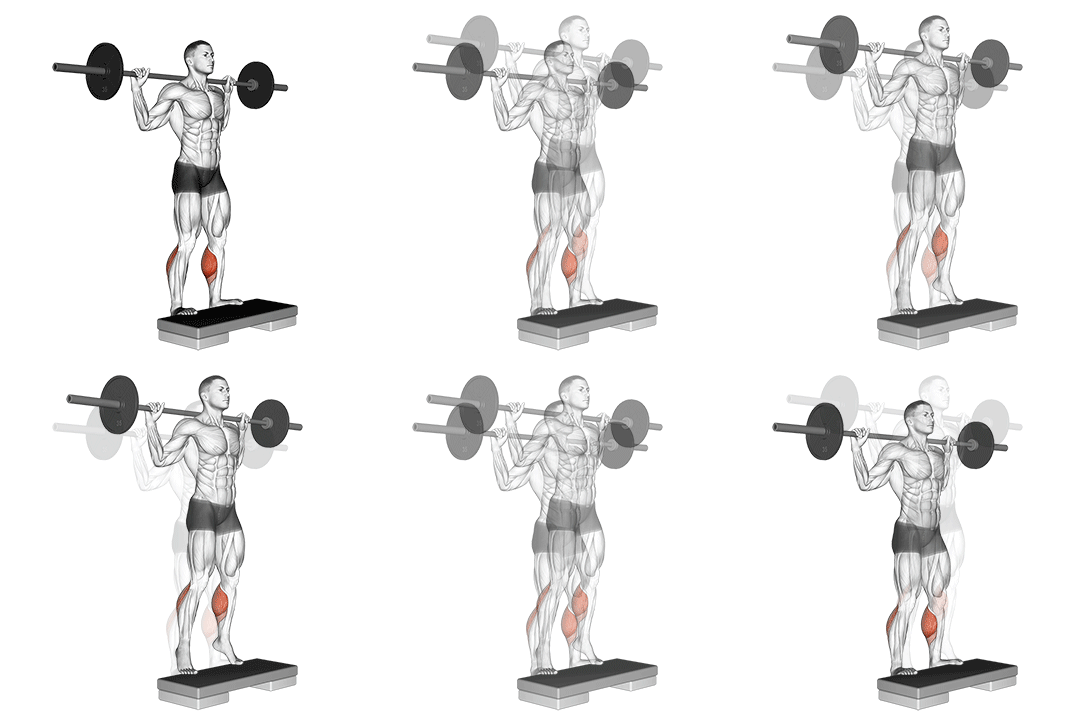
Barbell Standing Leg Calf Raise
Head-to-Head Comparison
| Attribute | Barbell Standing Calf Raise | Barbell Standing Leg Calf Raise |
|---|---|---|
| Target Muscle |
Calves
|
Calves
|
| Body Part |
Lower-legs
|
Lower-legs
|
| Equipment |
Barbell
|
Barbell
|
| Difficulty |
Intermediate
|
Beginner
|
| Movement Type |
Isolation
|
Isolation
|
| Secondary Muscles |
2
|
2
|
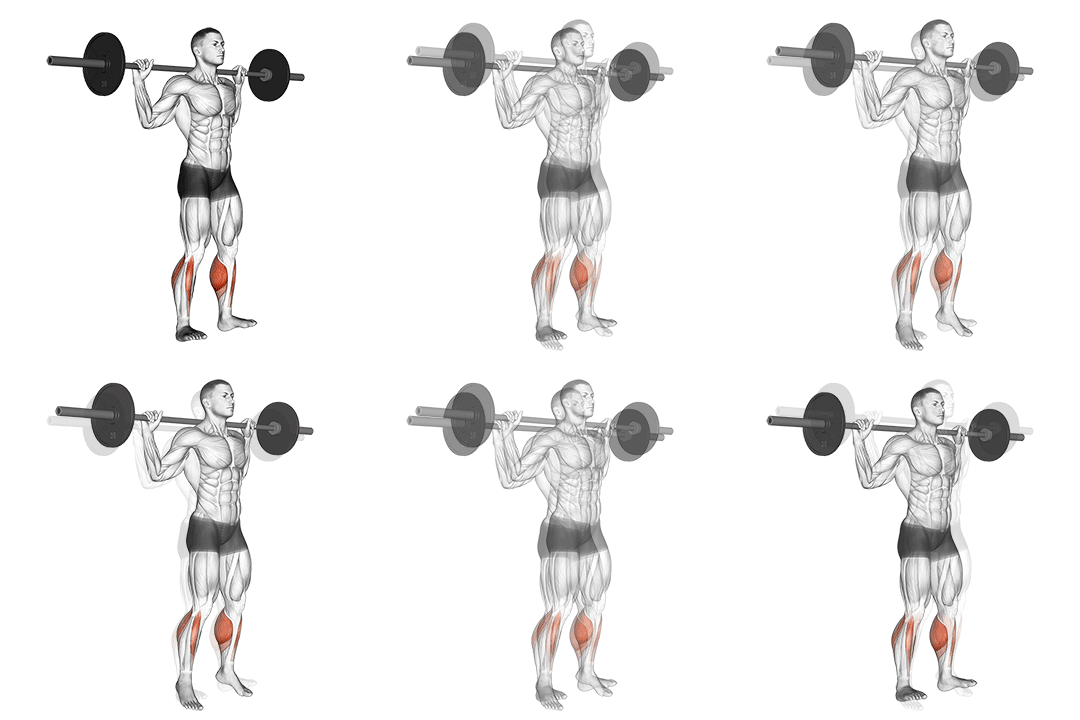
Secondary Muscles Activated
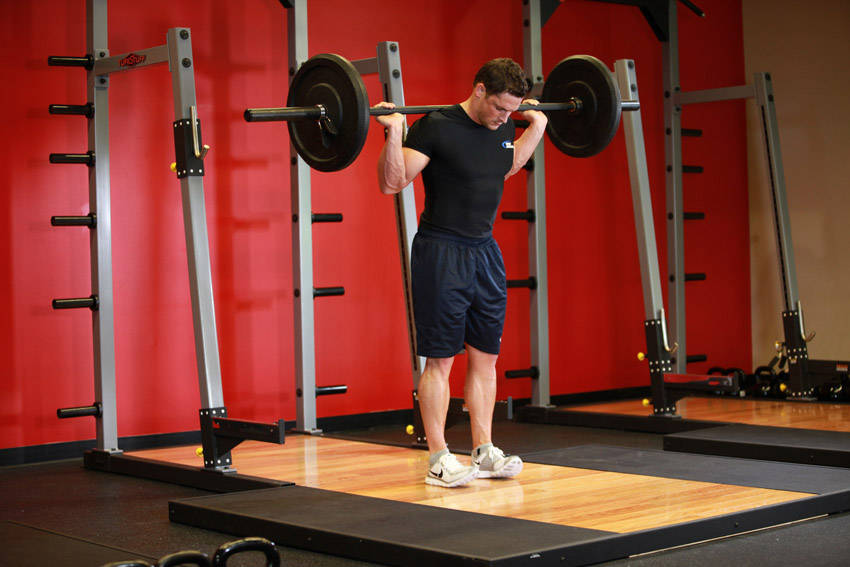
Barbell Standing Calf Raise
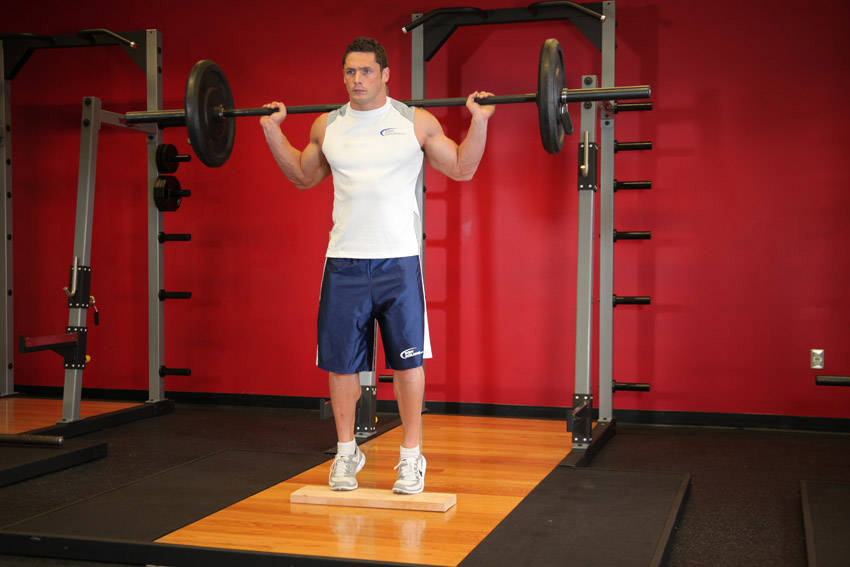
Barbell Standing Leg Calf Raise
Visual Comparison
Overview
Barbell Standing Calf Raise vs Barbell Standing Leg Calf Raise — two barbell-based moves that target the calves but ask different things of your body. If you want to know which one gives more overload, which is easier to learn, and how each recruits stabilizers and hamstrings, this comparison breaks it down. You’ll get clear technique cues, rep and set ranges, biomechanical reasoning (length-tension and force vectors), and specific recommendations so you can pick the one that matches your goals and training context.
Key Differences
- Difficulty levels differ: Barbell Standing Calf Raise is intermediate, while Barbell Standing Leg Calf Raise is beginner.
- Both exercises target the Calves using Barbell. The main differences are in their movement patterns and muscle activation angles.
Pros & Cons
Barbell Standing Calf Raise
+ Pros
- Allows heavier absolute loading for strength and progressive overload
- Better for consistent bilateral development and symmetry control
- Easy to manipulate load increments quickly (plates, microloading)
- Strong stimulus for gastrocnemius when performed with full ROM
− Cons
- Higher spinal loading and setup complexity
- Greater Achilles and tendon stress if you bounce at end-range
- Requires rack/platform and more gym equipment
Barbell Standing Leg Calf Raise
+ Pros
- Easier to start with lower absolute weights—good for beginners
- Improves unilateral stability, balance and proprioception
- Requires less heavy equipment and can be done with lighter barbells
- Reduces spinal loading compared with heavy bilateral loading
− Cons
- Slower to add absolute load per leg—progression increments are smaller
- Harder to maintain perfect form under fatigue due to balance demands
- May expose strength asymmetries that limit load
When Each Exercise Wins
The bilateral version lets you use heavier loads and longer time under tension with consistent, measurable progression (3–5 sets of 8–15 reps). Heavier absolute load increases mechanical tension on the gastrocnemius—critical for muscle growth—while a raised block increases peak muscle stretch at the bottom.
Strength favors overload. The bilateral setup allows you to apply larger absolute weights (low reps, 3–6) and train around maximal force output. That produces higher tendon and muscle force where force-velocity and length-tension curves optimize adaptation.
Lower absolute loading and the option to use a hand support make this easier to learn. You can build ankle control and progressive overload via reps, tempo, and unilateral stability before loading heavily.
Home gyms often lack heavy plates or racks. The single-leg version requires less weight and can be done with a light barbell or dumbbell while still delivering effective stimulus and balance benefits.
Frequently Asked Questions
Can I do both Barbell Standing Calf Raise and Barbell Standing Leg Calf Raise in the same workout?
Yes. Start with the bilateral Barbell Standing Calf Raise when you want to lift heavier and develop strength (3–5 sets), then finish with single-leg Barbell Standing Leg Calf Raise for extra reps, unilateral balance and to correct asymmetries (2–3 sets per leg). Monitor fatigue to protect the Achilles tendon.
Which exercise is better for beginners?
Barbell Standing Leg Calf Raise is generally better for beginners because it allows lower absolute loads and can be performed with a hand or rail for balance. That lets you learn ankle mechanics, build time under tension, and progress reps before adding heavy bilateral loads.
How do the muscle activation patterns differ?
Both emphasize gastrocnemius when the knee is extended; changing knee angle shifts activation toward the soleus (knee bend ~20–30°). The unilateral version adds hip and core stabilizer activation because force vectors must be controlled in the frontal and transverse planes.
Can Barbell Standing Leg Calf Raise replace Barbell Standing Calf Raise?
It can replace it when your goal is ankle control, rehab, or when heavy loading isn’t available. For maximal strength or high-load hypertrophy, it’s better to keep the bilateral Barbell Standing Calf Raise in your program at least periodically.
Expert Verdict
Choose the Barbell Standing Calf Raise when your priority is progressive overload, bilateral strength, and maximal mechanical tension on the gastrocnemius—aim for heavy sets (3–6 reps) for strength or 6–15 reps for hypertrophy with full ROM and controlled eccentrics. Opt for the Barbell Standing Leg Calf Raise if you’re new to calf work, training at home, or focusing on ankle stability and unilateral control; use 8–20 reps, slow eccentrics, and a nearby support to protect the ankle. Use both across training cycles: single-leg work for control and symmetry, bilateral work for load-driven progress.
Also Compare
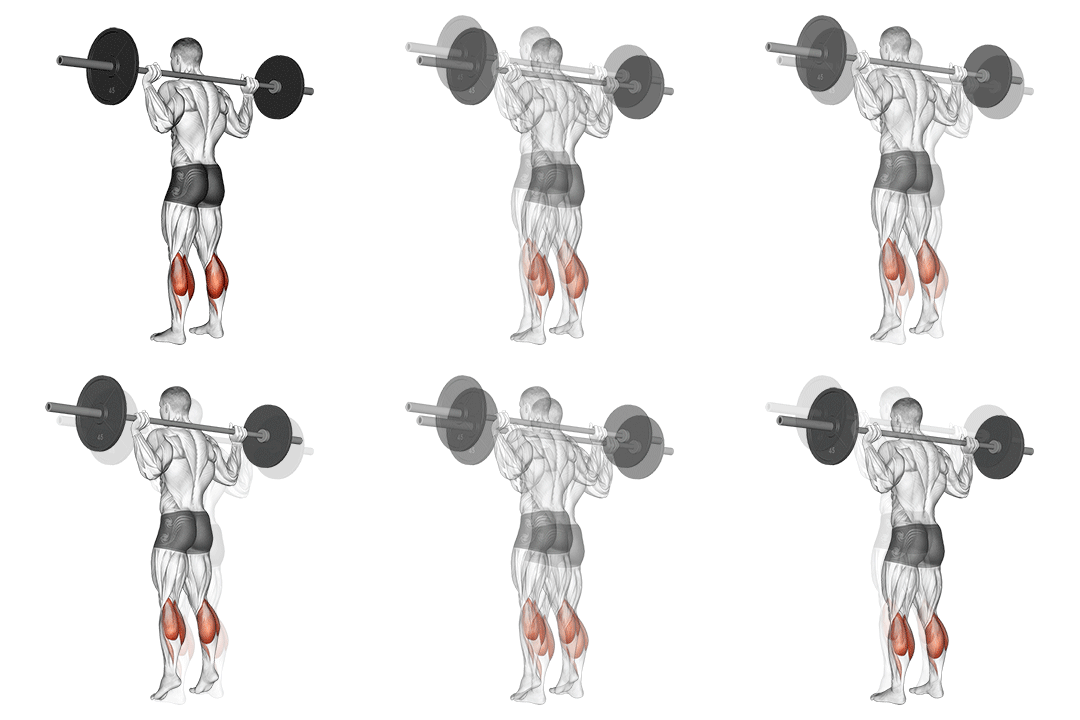
More comparisons with Barbell Standing Calf Raise
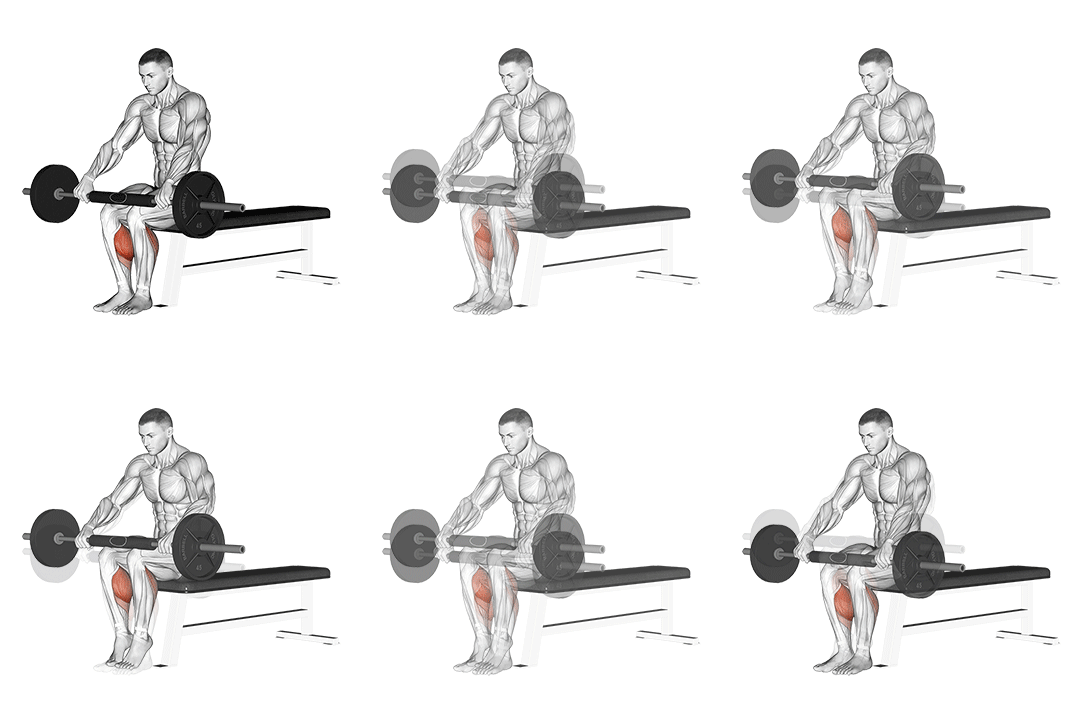
More comparisons with Barbell Standing Leg Calf Raise
Compare More Exercises
Use our free comparison tool to analyze any two exercises head-to-head.
Compare Exercises