

Barbell Incline Close Grip Bench Press vs Barbell Lying Close-grip Press: Complete Comparison Guide
Barbell Incline Close Grip Bench Press vs Barbell Lying Close-grip Press — two barbell compounds that both target the triceps but load the arms and shoulders differently. You’ll learn how each shifts force vectors, which triceps heads get the most work, exact setup and grip cues, equipment needs, and programming advice (rep ranges, angles, and progression). Read on to see which press fits your goal: building thicker upper-arms, adding pure pressing strength, or balancing chest and shoulder involvement in a triceps-focused plan.
Exercise Comparison
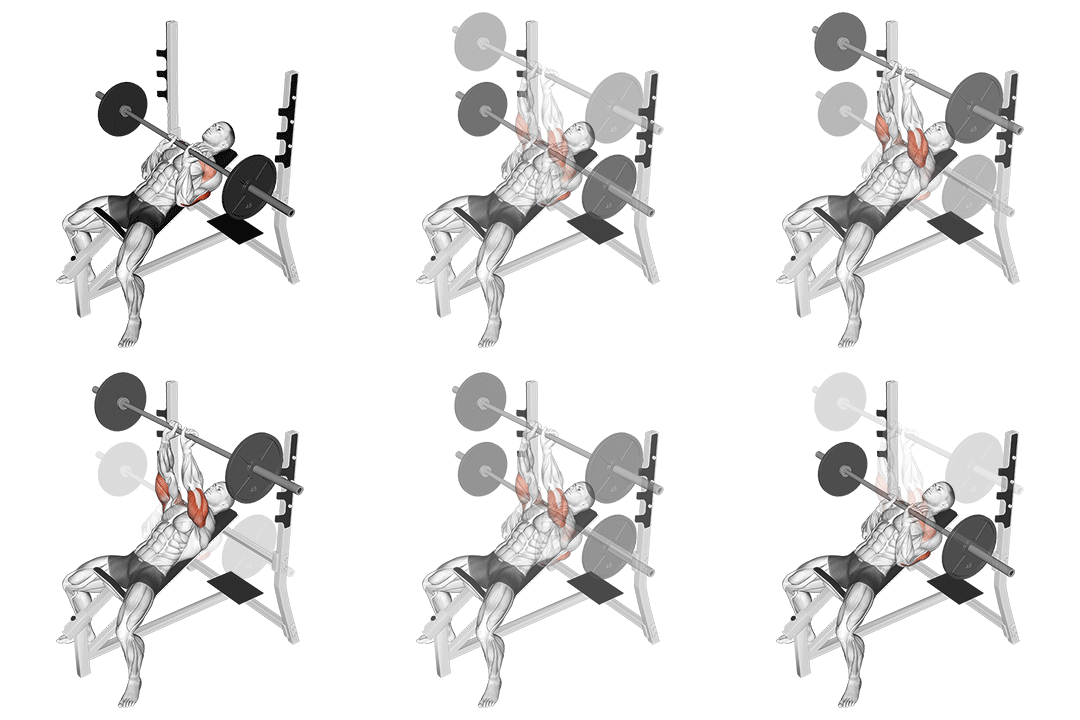
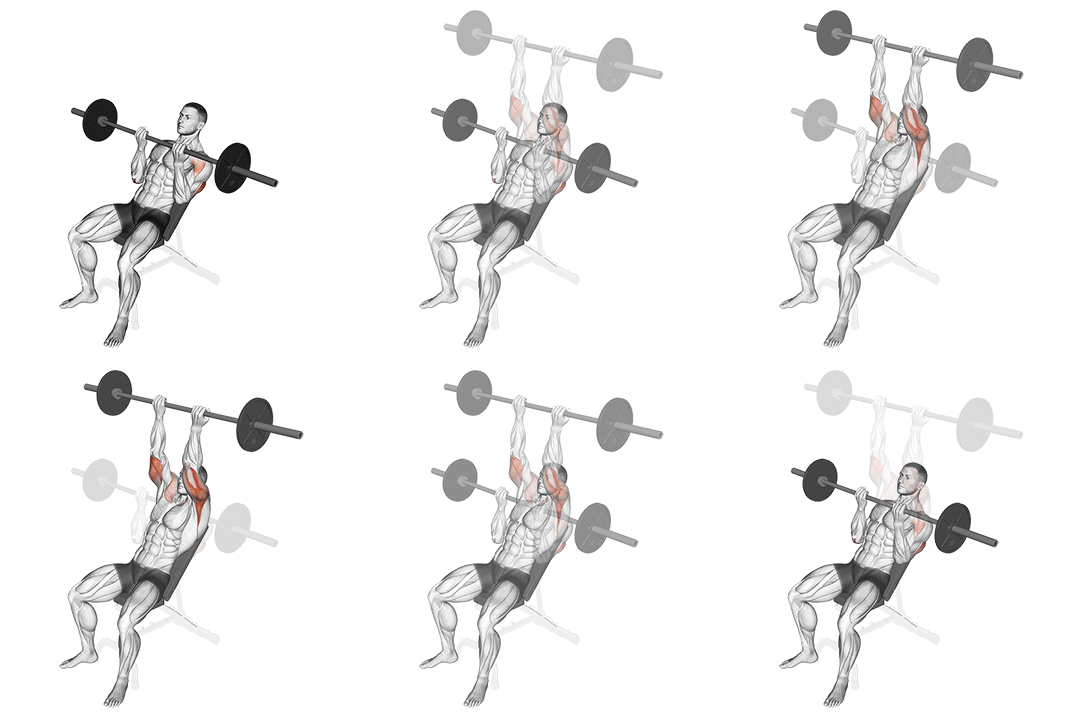
Barbell Incline Close Grip Bench Press
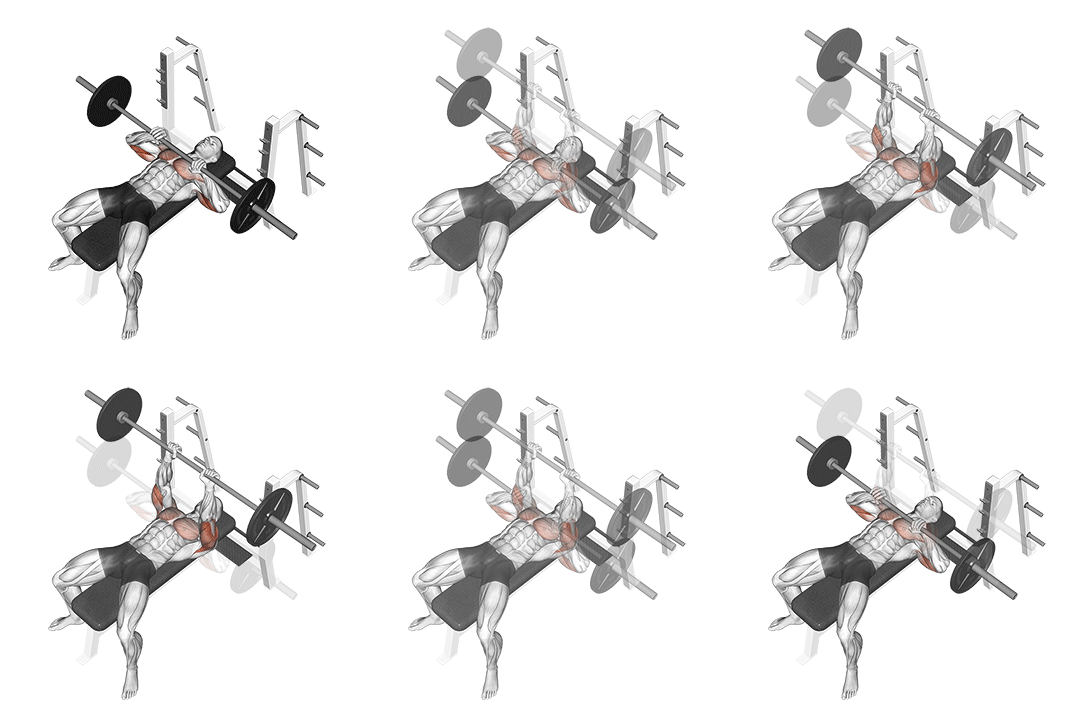
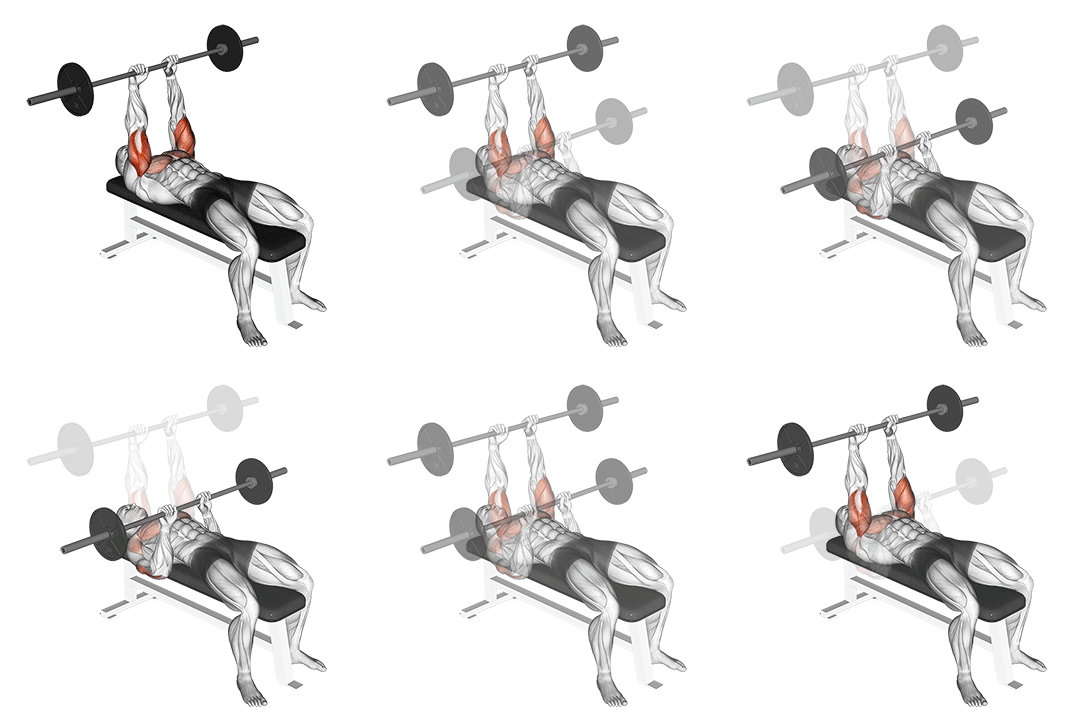
Barbell Lying Close-grip Press
Head-to-Head Comparison
| Attribute | Barbell Incline Close Grip Bench Press | Barbell Lying Close-grip Press |
|---|---|---|
| Target Muscle |
Triceps
|
Triceps
|
| Body Part |
Upper-arms
|
Upper-arms
|
| Equipment |
Barbell
|
Barbell
|
| Difficulty |
Intermediate
|
Intermediate
|
| Movement Type |
Compound
|
Compound
|
| Secondary Muscles |
2
|
2
|
Secondary Muscles Activated
Barbell Incline Close Grip Bench Press
Barbell Lying Close-grip Press
Visual Comparison
Overview
Barbell Incline Close Grip Bench Press vs Barbell Lying Close-grip Press — two barbell compounds that both target the triceps but load the arms and shoulders differently. You’ll learn how each shifts force vectors, which triceps heads get the most work, exact setup and grip cues, equipment needs, and programming advice (rep ranges, angles, and progression). Read on to see which press fits your goal: building thicker upper-arms, adding pure pressing strength, or balancing chest and shoulder involvement in a triceps-focused plan.
Key Differences
- Both exercises target the Triceps using Barbell. The main differences are in their movement patterns and muscle activation angles.
Pros & Cons
Barbell Incline Close Grip Bench Press
+ Pros
- Greater long-head triceps tension due to shoulder flexion and altered length-tension
- Adds upper-chest and anterior deltoid stimulus for a compound upper-body effect
- Easily manipulated by angle (30–45°) for targeted muscle emphasis
- Useful when you want triceps work that also trains shoulder stability
− Cons
- Requires adjustable bench and careful setup
- Generally lower absolute load capacity than flat close-grip
- More anterior shoulder stress at higher angles
Barbell Lying Close-grip Press
+ Pros
- Higher absolute load capacity supports greater overall mechanical tension
- Simpler setup — flat bench makes it easy to program and learn
- Strong carryover to lockout strength and pressing power
- More accessible for home gyms and basic commercial setups
− Cons
- Greater chest involvement can reduce pure triceps isolation
- Narrow grips increase elbow and wrist stress if form is poor
- Less emphasis on long-head length-tension than incline variations
When Each Exercise Wins
It allows greater absolute loads and straightforward progressive overload (6–12 reps for hypertrophy), producing higher overall mechanical tension across the triceps. Use incline work as an accessory to bias the long head, but prioritize the flat close-grip for total triceps mass.
The flatter force vector and ability to handle 5–15% heavier loads make the lying close-grip press the clear strength choice. Program low-rep work (3–6 reps) and heavier sets to increase maximal elbow extension torque.
Simpler setup and more familiar benching mechanics reduce the learning curve and safety concerns. Start with a light load, learn elbow tuck (~45°), and master bar path before adding incline variations.
Most home gyms have a flat bench and barbell but lack adjustable incline benches. The lying close-grip press is easier to implement with limited equipment and still delivers strong triceps stimulus.
Frequently Asked Questions
Can I do both Barbell Incline Close Grip Bench Press and Barbell Lying Close-grip Press in the same workout?
Yes — structure them with a heavy, low-rep lying close-grip press first (3–6 reps) for strength, then follow with incline close-grip as an accessory (8–15 reps) to increase long-head volume and time under tension. Keep total weekly volume progressive and monitor elbow discomfort.
Which exercise is better for beginners?
Barbell Lying Close-grip Press is better for beginners because setup and bar path are simpler and you can more safely ramp load on a flat bench. Teach elbow tuck (~45°), neutral wrists, and controlled descent before increasing weight.
How do the muscle activation patterns differ?
Incline pressing increases shoulder flexion, placing more stretch and tension on the triceps long head and recruiting upper-pec and anterior deltoid more. Flat close-grip shifts the force vector horizontally, producing higher peak external loads and stronger activation across all triceps heads during the lockout.
Can Barbell Lying Close-grip Press replace Barbell Incline Close Grip Bench Press?
Yes for general triceps development and strength — lying close-grip is the more versatile primary choice. If you want targeted long-head hypertrophy or extra upper-chest/shoulder stimulus, keep the incline variation as an accessory rather than a replacement.
Expert Verdict
Use the Barbell Lying Close-grip Press as your primary triceps builder and strength driver — it supports heavier loads, simpler progression, and better accessibility. Prescribe it for 3–6 reps when strength is the goal and 6–12 reps for hypertrophy, keeping grip roughly shoulder-width and elbows tucked around 45° to protect joints. Use the Barbell Incline Close Grip Bench Press as a targeted accessory when you want extra long-head emphasis and upper-chest/shoulder involvement; set the bench to 30° (30–45° max), focus on controlled eccentrics and tempo. Combine both across phases: prioritize flat close-grip for heavy phases and add incline sets (8–15 reps) to vary length-tension and fatigue patterns.
Also Compare
More comparisons with Barbell Incline Close Grip Bench Press
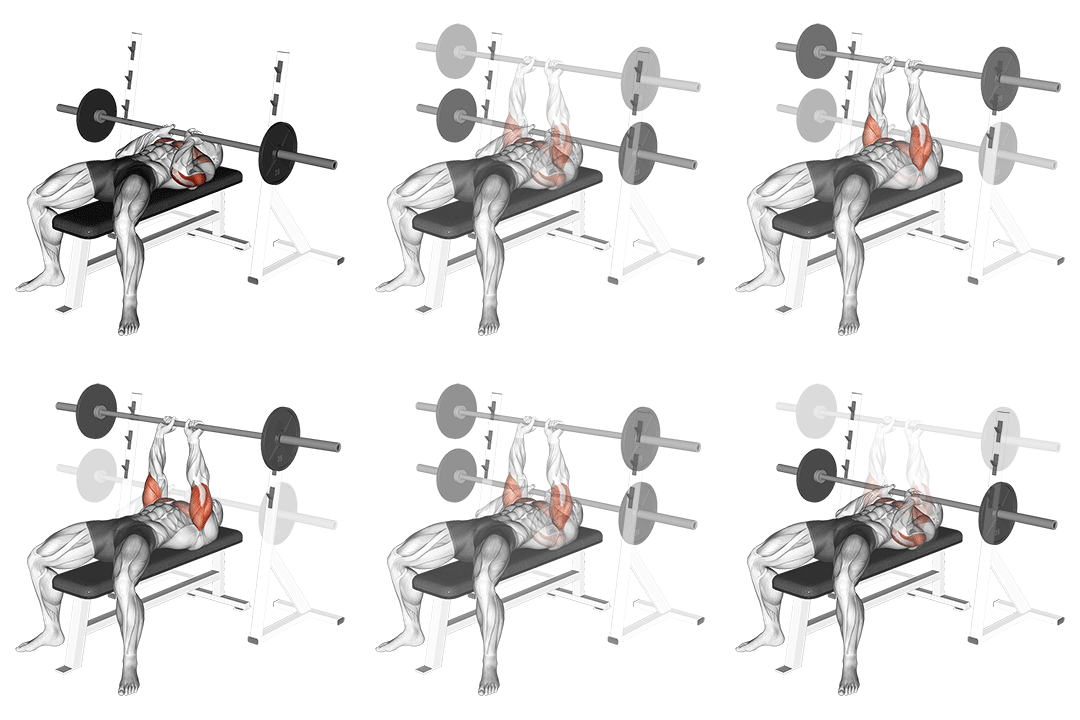
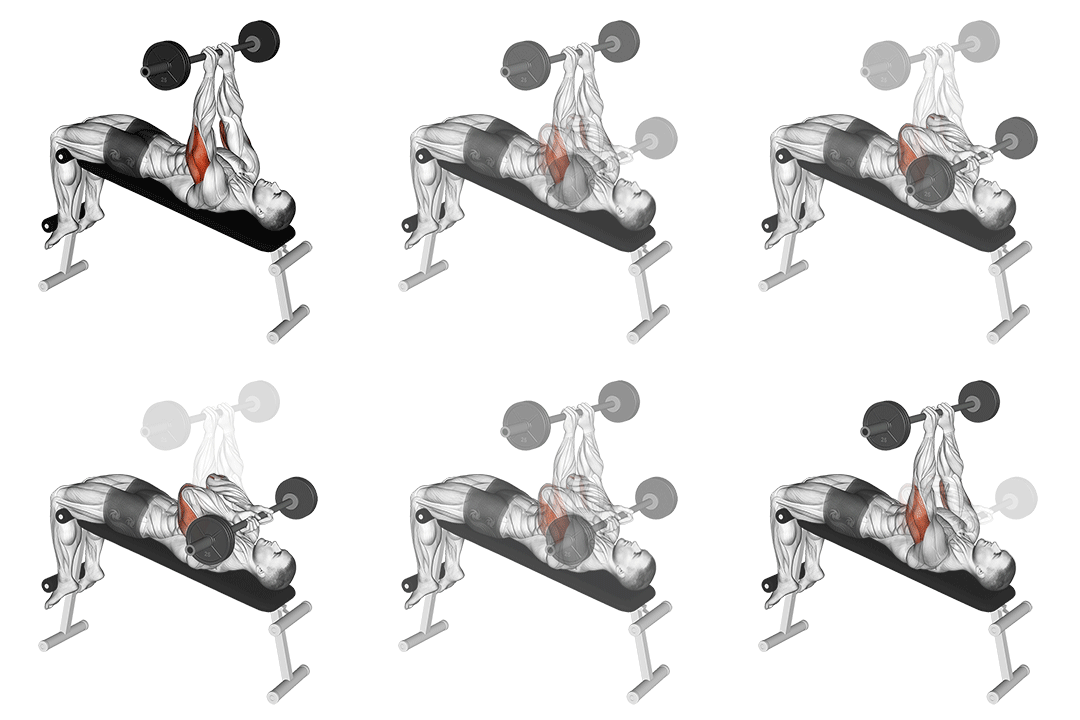
More comparisons with Barbell Lying Close-grip Press
Compare More Exercises
Use our free comparison tool to analyze any two exercises head-to-head.
Compare Exercises