

Barbell Seated Calf Raise vs Barbell Standing Calf Raise: Complete Comparison Guide
Barbell Seated Calf Raise vs Barbell Standing Calf Raise are two staple calf exercises that load the ankle plantarflexors differently. You’ll get a straight comparison that shows which exercise stresses the gastrocnemius versus the soleus, what gear and set-up each needs, and clear technique cues including knee angle, range of motion, tempo, and rep ranges (6–20). I’ll cover muscle activation, secondary recruitment, progression options like single-leg work and loaded pauses, plus practical recommendations so you can pick the right move for hypertrophy, strength, or starting out.
Exercise Comparison
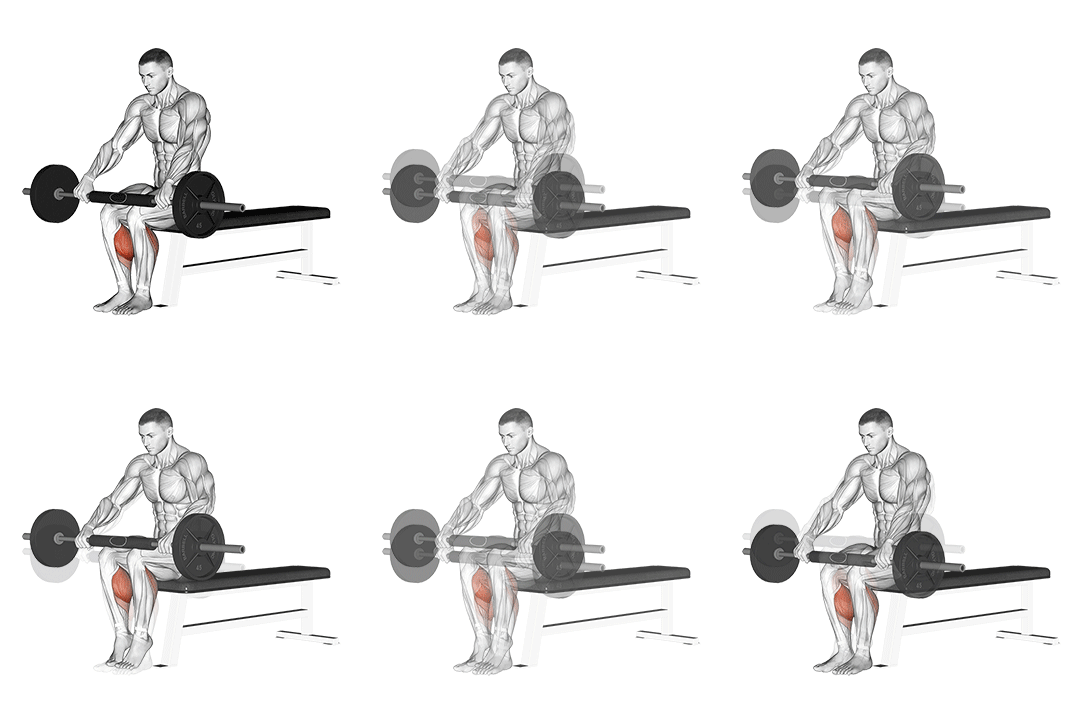
Barbell Seated Calf Raise
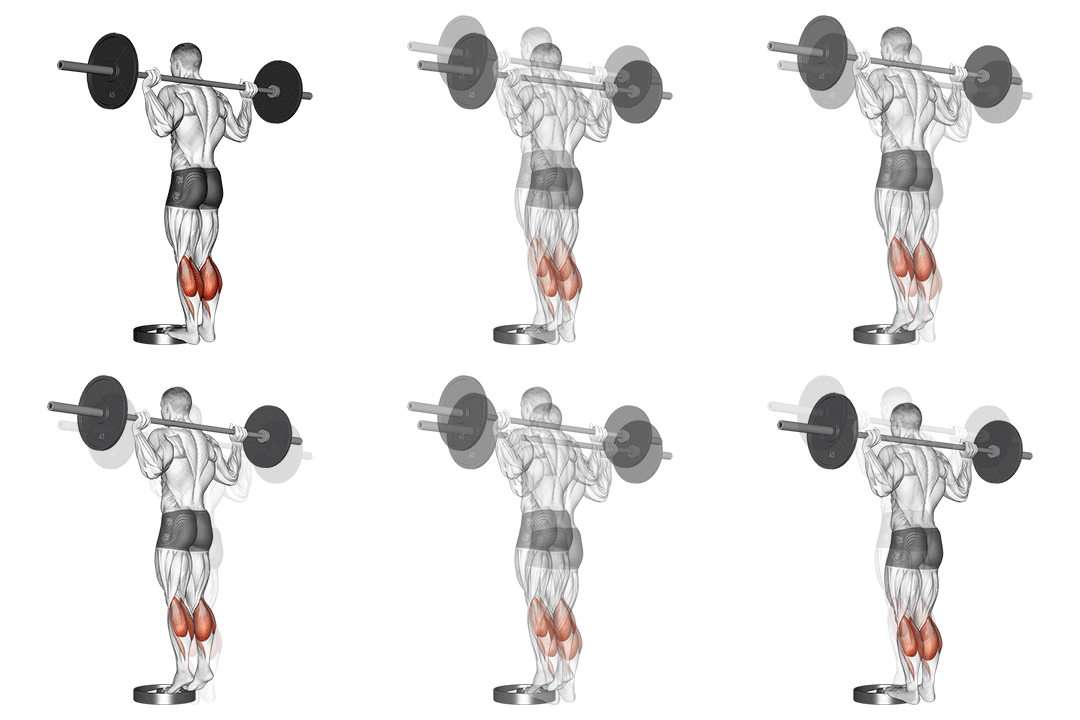
Barbell Standing Calf Raise
Head-to-Head Comparison
| Attribute | Barbell Seated Calf Raise | Barbell Standing Calf Raise |
|---|---|---|
| Target Muscle |
Calves
|
Calves
|
| Body Part |
Lower-legs
|
Lower-legs
|
| Equipment |
Barbell
|
Barbell
|
| Difficulty |
Beginner
|
Intermediate
|
| Movement Type |
Isolation
|
Isolation
|
| Secondary Muscles |
2
|
2
|
Secondary Muscles Activated
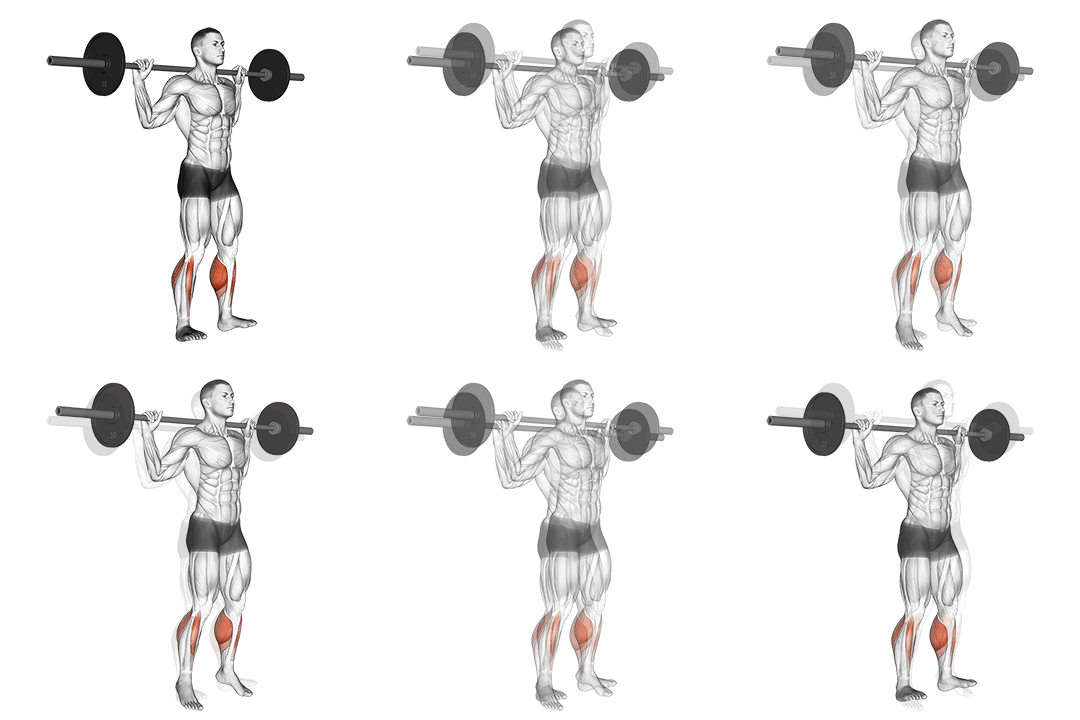
Barbell Seated Calf Raise
Barbell Standing Calf Raise
Visual Comparison
Overview
Barbell Seated Calf Raise vs Barbell Standing Calf Raise are two staple calf exercises that load the ankle plantarflexors differently. You’ll get a straight comparison that shows which exercise stresses the gastrocnemius versus the soleus, what gear and set-up each needs, and clear technique cues including knee angle, range of motion, tempo, and rep ranges (6–20). I’ll cover muscle activation, secondary recruitment, progression options like single-leg work and loaded pauses, plus practical recommendations so you can pick the right move for hypertrophy, strength, or starting out.
Key Differences
- Difficulty levels differ: Barbell Seated Calf Raise is beginner, while Barbell Standing Calf Raise is intermediate.
- Both exercises target the Calves using Barbell. The main differences are in their movement patterns and muscle activation angles.
Pros & Cons
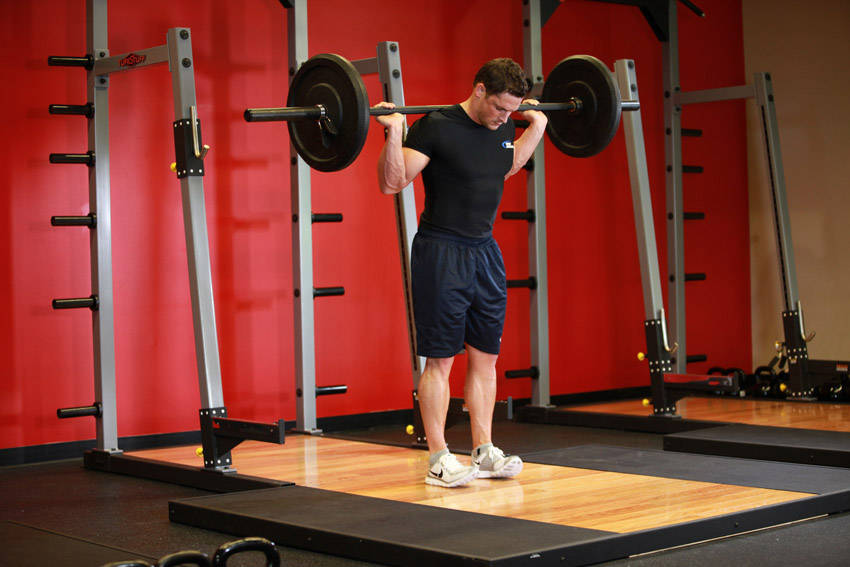
Barbell Seated Calf Raise
+ Pros
- Greater soleus emphasis due to knee flexion, good for endurance-style hypertrophy
- Stable setup reduces balance demands and spinal load
- Easier technique for beginners—simple concentric/eccentric focus
- Safe for heavier volume work and pause reps to increase time under tension
− Cons
- Limited absolute load compared with standing variations
- Requires bench/seat and a toe platform for full ROM
- Less gastrocnemius stimulation, so not ideal alone for full calf development
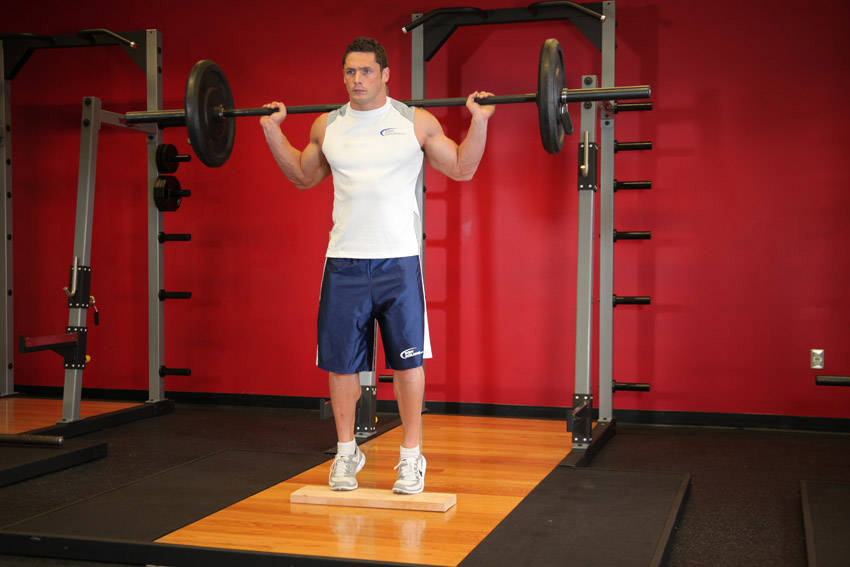
Barbell Standing Calf Raise
+ Pros
- Stronger gastrocnemius activation with knee near extension
- Allows higher absolute loads and better strength carryover
- Engages posterior chain and core for stability, improving transfer to compound lifts
- Easily progressed to single-leg or heavy loaded sets for overload
− Cons
- Higher balance and spinal loading demands—technique matters
- Greater injury risk if you overload with poor bracing
- Requires a rack or careful loading to be safe with heavy weights
When Each Exercise Wins
Standing raises let you use heavier absolute loads and recruit the gastrocnemius strongly, which drives visible calf thickness. Use mixed rep ranges—6–12 heavy sets plus 12–20 tempo sets—to tax both fast and slow fibers.
The standing position supports higher external load and better transfer to functional movements because the gastrocnemius is in a more advantageous length-tension state with the knee extended, enabling higher peak force production.
Seated reduces balance and spinal demands, isolates the ankle joint, and lets you learn tempo and full ROM safely. Start with 3–4 sets of 12–20 controlled reps and focus on a 2–3 s eccentric.
If you have a barbell and a small raised surface, standing raises need less specialized furniture than a secure seated setup and can be done with minimal kit while still allowing effective overload.
Frequently Asked Questions
Can I do both Barbell Seated Calf Raise and Barbell Standing Calf Raise in the same workout?
Yes. Pair them by doing standing raises first for 3–5 heavy sets (6–12 reps) to target the gastrocnemius, then follow with seated raises for 2–4 higher-rep sets (12–20) to finish the soleus and increase time under tension.
Which exercise is better for beginners?
Barbell Seated Calf Raise is better for beginners because it stabilizes the knee and spine, simplifies the motor pattern, and allows you to focus on tempo and full ankle range of motion before adding balance and heavier loads.
How do the muscle activation patterns differ?
Seated raises bias the soleus because knee flexion shortens the gastrocnemius and reduces its force output (active insufficiency). Standing raises keep the knee extended, so the gastrocnemius operates at a longer, more force-capable length and shows higher peak activation, especially at the top of the movement.
Can Barbell Standing Calf Raise replace Barbell Seated Calf Raise?
Standing raises can replace seated if you consistently vary knee angle and include high-rep work to hit the soleus, but for complete calf development you’ll get faster, more balanced progress by keeping both in your program.
Expert Verdict
Use both exercises strategically. If your priority is maximal calf size and strength, favor Barbell Standing Calf Raises for heavier loading and gastrocnemius development—work in 4–6 heavy sets of 6–12 reps plus accessory higher-rep sets. If you’re a beginner, have low back issues, or want to target the soleus and improve ankle endurance, prioritize Barbell Seated Calf Raises with 3–4 sets of 12–20 reps, slow eccentrics (2–3 s) and full dorsiflexion. For balanced calf development, cycle both across your program: standing for load and strength, seated for sustained tension and soleus density.
Also Compare
More comparisons with Barbell Seated Calf Raise
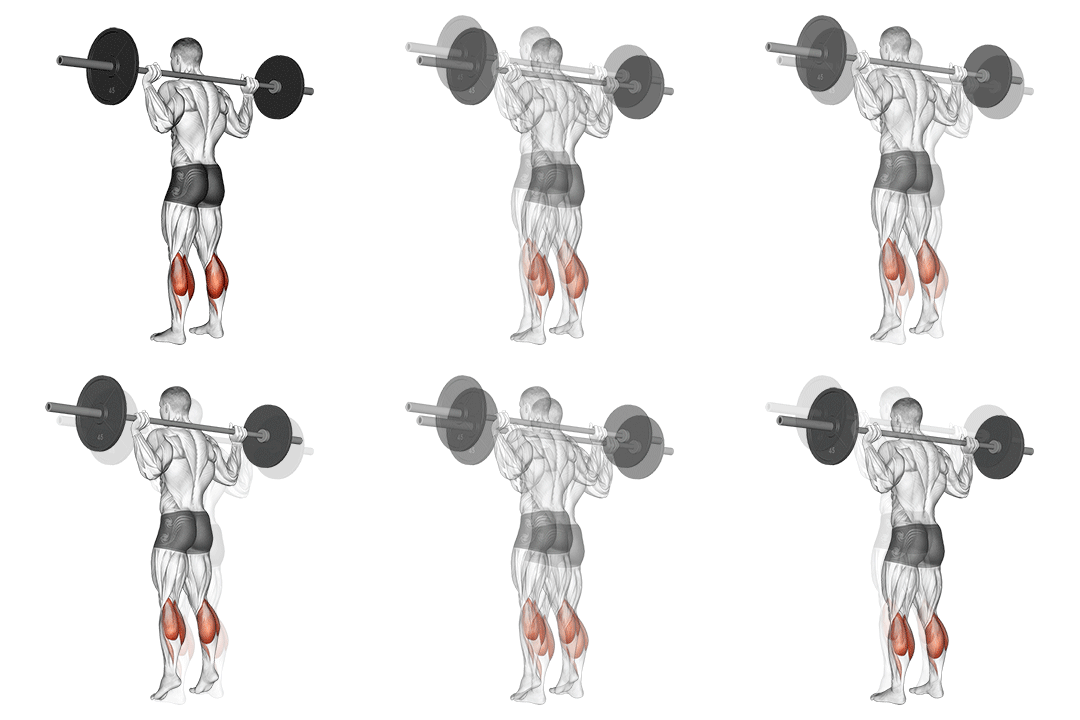
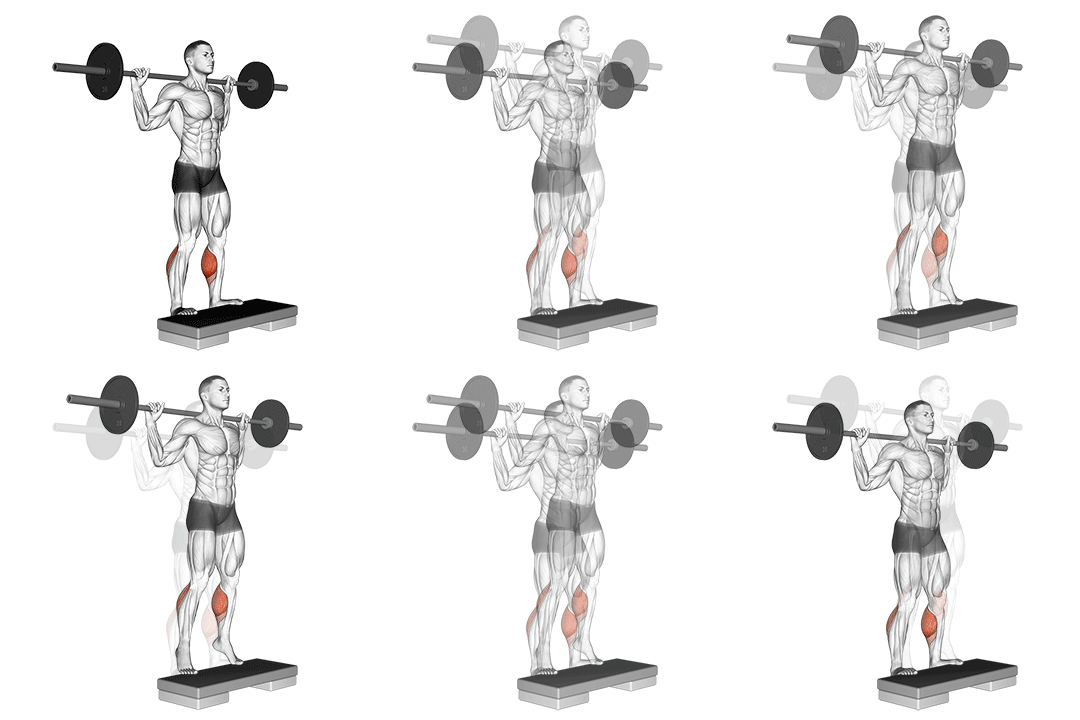
More comparisons with Barbell Standing Calf Raise
Compare More Exercises
Use our free comparison tool to analyze any two exercises head-to-head.
Compare Exercises