

Barbell Standing Calf Raise vs Rocking Standing Calf Raise: Complete Comparison Guide
Barbell Standing Calf Raise vs Rocking Standing Calf Raise — if you want bigger, stronger lower legs, you need to pick the right standing calf variation. I’ll walk you through how each move targets the gastrocnemius and soleus, what secondary muscles get involved, equipment setup, technique cues, rep ranges, and programming recommendations. You’ll get clear guidance on which to use for muscle hypertrophy, strength, or simple conditioning, plus step-by-step cues so you can perform each lift with safe biomechanics and maximum muscle tension.
Exercise Comparison
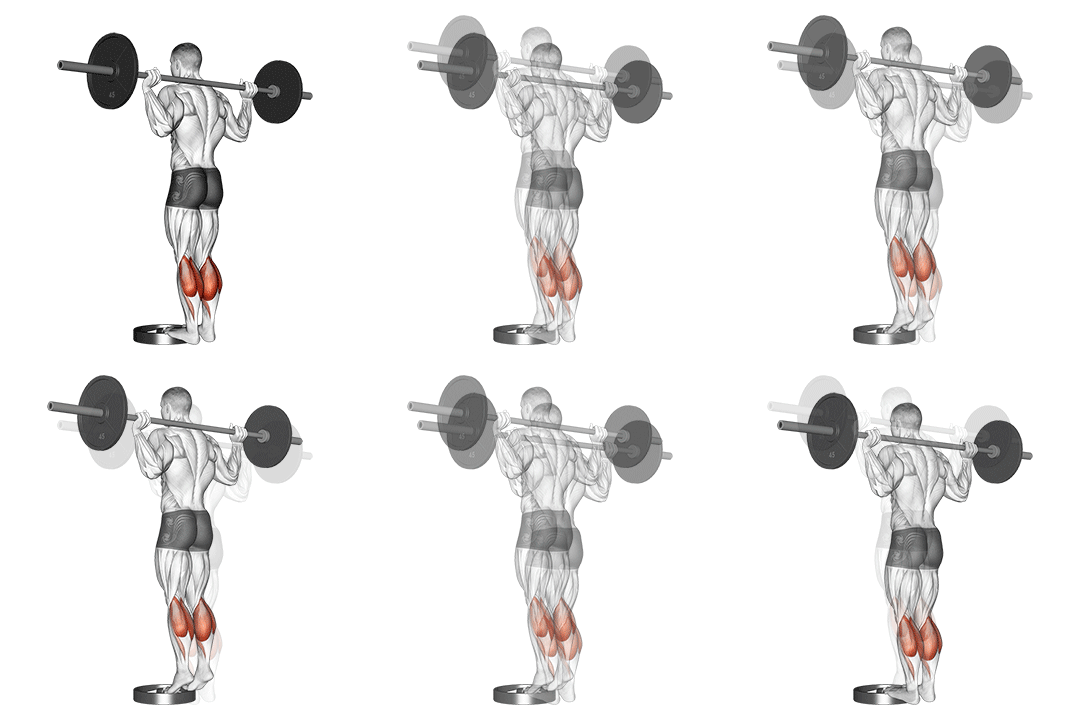
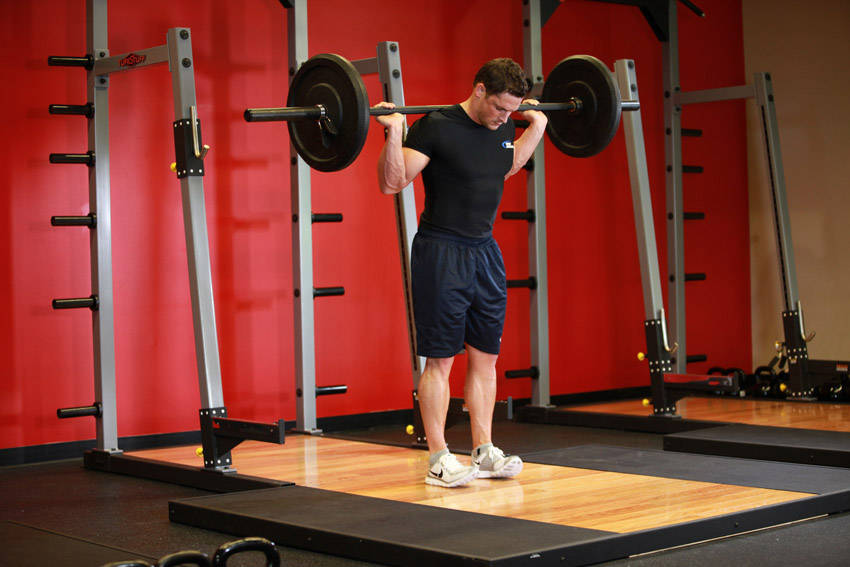
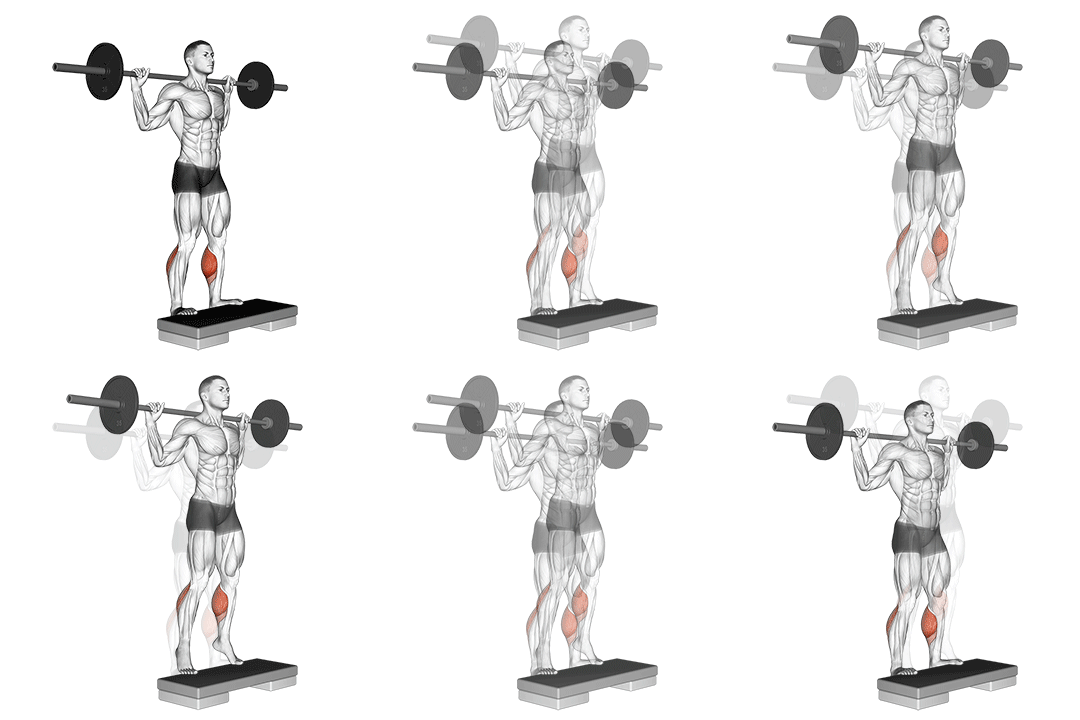
Barbell Standing Calf Raise
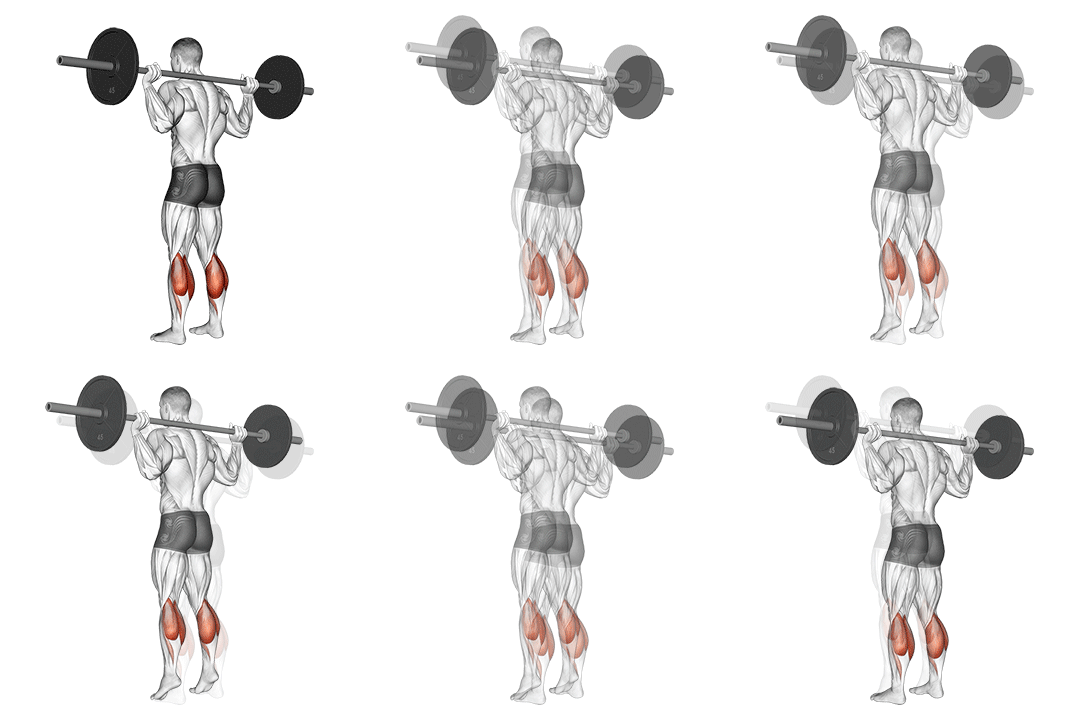
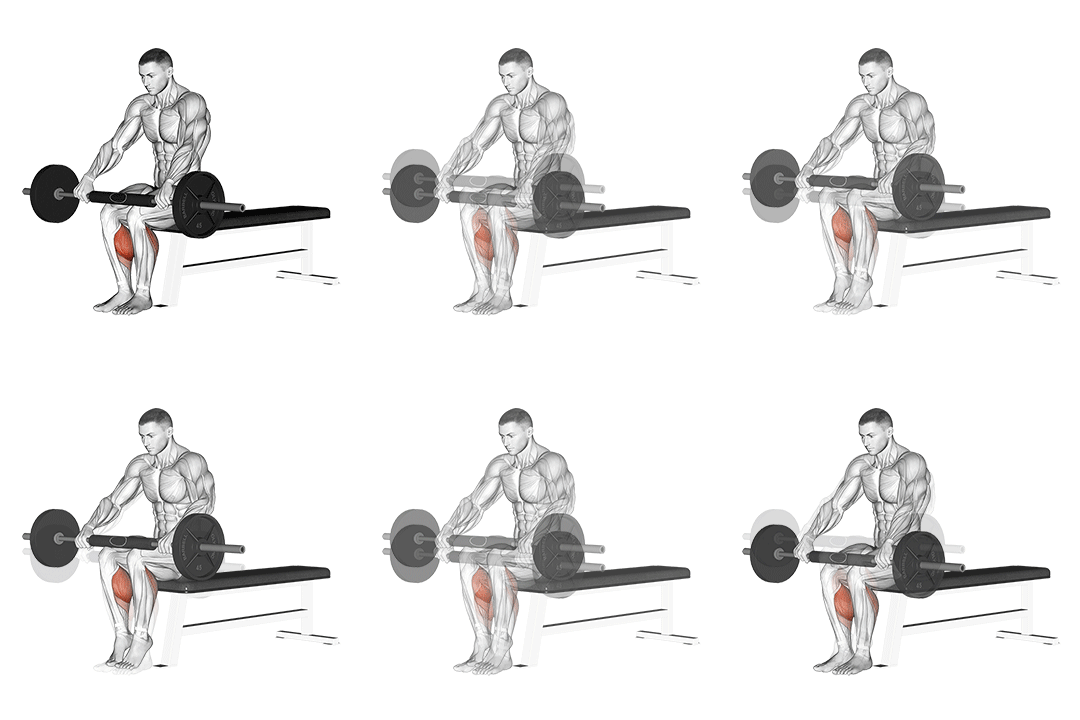
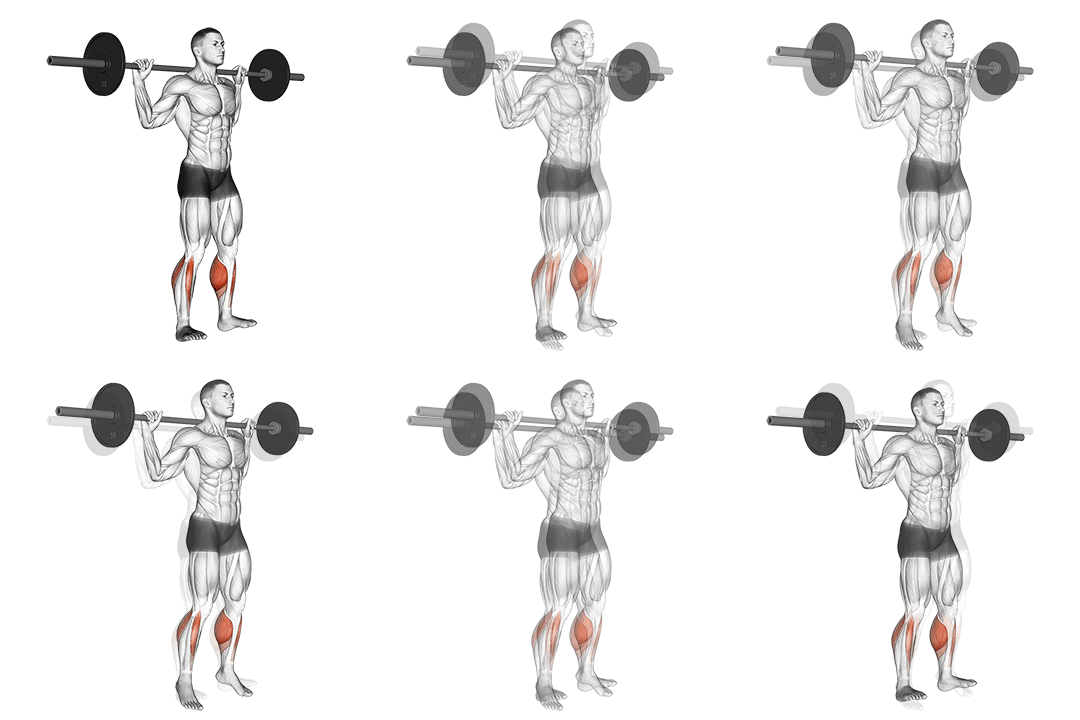
Rocking Standing Calf Raise
Head-to-Head Comparison
| Attribute | Barbell Standing Calf Raise | Rocking Standing Calf Raise |
|---|---|---|
| Target Muscle |
Calves
|
Calves
|
| Body Part |
Lower-legs
|
Lower-legs
|
| Equipment |
Barbell
|
Barbell
|
| Difficulty |
Intermediate
|
Intermediate
|
| Movement Type |
Isolation
|
Isolation
|
| Secondary Muscles |
2
|
0
|
Secondary Muscles Activated
Barbell Standing Calf Raise
Rocking Standing Calf Raise
Visual Comparison
Overview
Barbell Standing Calf Raise vs Rocking Standing Calf Raise — if you want bigger, stronger lower legs, you need to pick the right standing calf variation. I’ll walk you through how each move targets the gastrocnemius and soleus, what secondary muscles get involved, equipment setup, technique cues, rep ranges, and programming recommendations. You’ll get clear guidance on which to use for muscle hypertrophy, strength, or simple conditioning, plus step-by-step cues so you can perform each lift with safe biomechanics and maximum muscle tension.
Key Differences
- Both exercises target the Calves using Barbell. The main differences are in their movement patterns and muscle activation angles.
Pros & Cons
Barbell Standing Calf Raise
+ Pros
- Allows heavier loading for progressive overload and strength (safely use 4–12 rep ranges)
- Stable vertical force vector—easy to measure and increase weight
- Good for building peak concentric force and tendon stiffness
- Combines well with bilateral loading patterns and barbell programming
− Cons
- Requires setup with rack and platform for full ROM
- Higher spinal loading and need for trunk stability under heavy weight
- Can limit ankle dorsiflexion if heel drop platform isn’t used
Rocking Standing Calf Raise
+ Pros
- Increases ankle dorsiflexion and eccentric stretch for the calves (5–10% extra ROM)
- Minimal equipment setup—more accessible for quick sessions
- Improves balance and foot intrinsic stabilizers via rocking motion
- Lower spinal compression due to lighter typical loads
− Cons
- Harder to load progressively with big weight jumps
- May over-stress the Achilles/tendon if you push deep ROM too fast
- Smaller secondary muscle recruitment limits carryover to hip-driven movements
When Each Exercise Wins
The rocking variation increases eccentric stretch and time under tension through a larger ankle ROM, which stimulates stretch-mediated hypertrophy. Use 8–20 reps with a 2–3s eccentric and a 1–2s pause at the bottom to exploit the length-tension relationship.
Barbell loading allows you to progressively add significant resistance and train lower-rep strength blocks (4–8 reps). The vertical force vector and stable setup let you focus on peak concentric torque and tendon stiffness development.
Beginners benefit from the simpler setup, lower spinal load, and emphasis on balance and ankle control. Start with bodyweight or light barbell and 12–20 reps to build tendon capacity and motor patterning.
Rocking requires minimal equipment and can be done with a basic barbell or dumbbells on a flat floor. It’s easier to set up safely at home without a dedicated calf block or rack modifications.
Frequently Asked Questions
Can I do both Barbell Standing Calf Raise and Rocking Standing Calf Raise in the same workout?
Yes. Do the barbell standing raise first for heavy sets (4–8 reps) to prioritize strength, then use rocking raises as a volume finisher for 10–20 reps with longer eccentrics to increase time under tension and stimulus for hypertrophy.
Which exercise is better for beginners?
Rocking Standing Calf Raise is better for most beginners because it needs less setup, places less compressive load on the spine, and teaches ankle control. Start light and focus on 12–20 controlled reps to build capacity before adding heavy barbell variations.
How do the muscle activation patterns differ?
Both target the gastrocnemius primarily, but rocking adds extra dorsiflexion before the concentric, increasing eccentric lengthening and time under tension. Barbell standing raises permit higher absolute loads and focus more on peak concentric force production while the rocking variant emphasizes stretch-mediated recruitment.
Can Rocking Standing Calf Raise replace Barbell Standing Calf Raise?
Rocking can replace barbell raises if your goal is hypertrophy and you have limited equipment. For maximal strength or heavy progressive overload, keep barbell standing raises in the program—alternating both provides complementary benefits.
Expert Verdict
Use Barbell Standing Calf Raise when you want measurable progressive overload and strength-focused calf work. Its stable loading is ideal for heavy sets, lower-rep strength blocks (4–8 reps), and building peak concentric force. Choose Rocking Standing Calf Raise when you prioritize calf muscle lengthening, hypertrophy through extended ROM, or training with limited equipment—aim for higher reps (8–20) with slow eccentrics and a controlled pause at the bottom. For a balanced program, alternate both: heavy barbell raises for 4–8 weeks of strength, then 4–6 weeks of rocking variations to emphasize stretch-induced muscle growth and tendon conditioning.
Also Compare
More comparisons with Barbell Standing Calf Raise
More comparisons with Rocking Standing Calf Raise
Compare More Exercises
Use our free comparison tool to analyze any two exercises head-to-head.
Compare Exercises