

Basic Toe Touch (male) vs Bent Knee Lying Twist (male): Complete Comparison Guide
Basic Toe Touch (male) vs Bent Knee Lying Twist (male) — two beginner, bodyweight isolation moves that both list the glutes as their target. You’ll get a clear breakdown of which glute region each exercise trains, how the hamstrings, calves, obliques, and hip flexors come into play, and exact technique cues to help you perform each movement safely. I’ll cover biomechanics (length-tension and force vectors), rep ranges, progression options, and quick programming tips so you can pick the right exercise for your goals.
Exercise Comparison
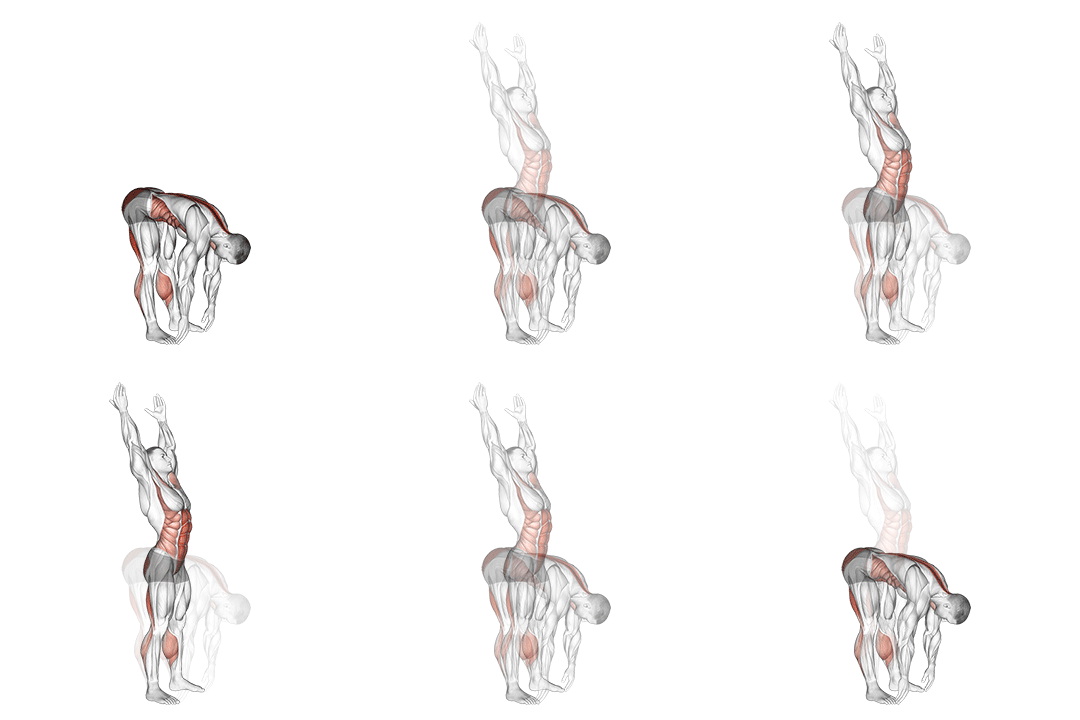
Basic Toe Touch (male)
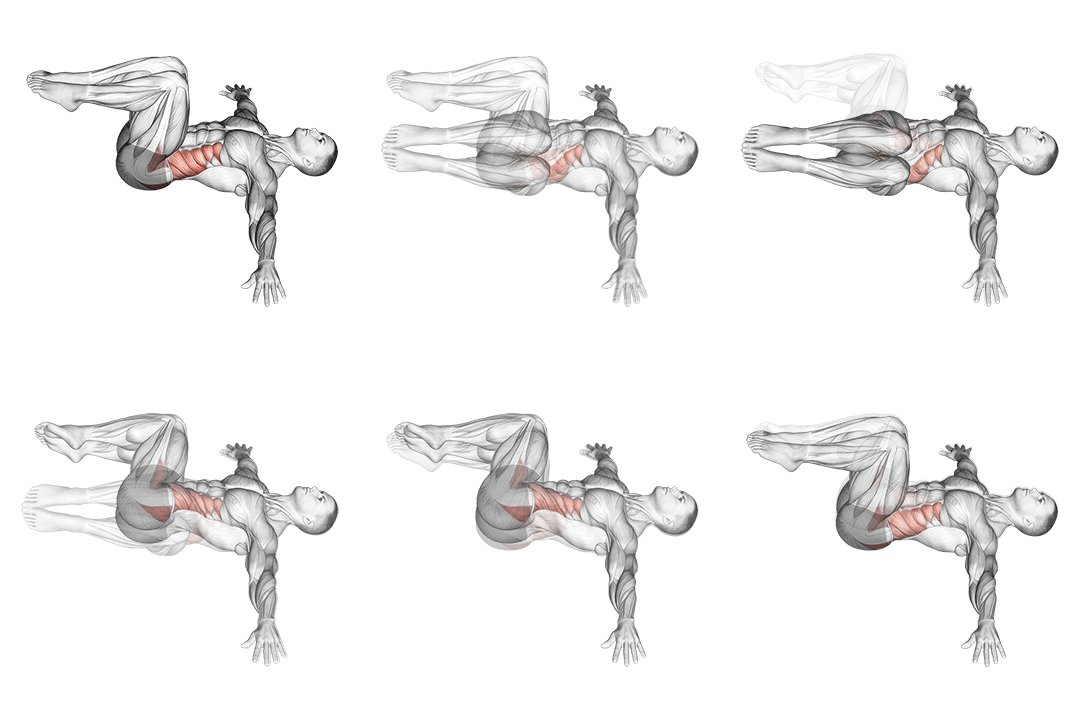
Bent Knee Lying Twist (male)
Head-to-Head Comparison
| Attribute | Basic Toe Touch (male) | Bent Knee Lying Twist (male) |
|---|---|---|
| Target Muscle |
Glutes
|
Glutes
|
| Body Part |
Upper-legs
|
Upper-legs
|
| Equipment |
Body-weight
|
Body-weight
|
| Difficulty |
Beginner
|
Beginner
|
| Movement Type |
Isolation
|
Isolation
|
| Secondary Muscles |
2
|
2
|
Secondary Muscles Activated
Basic Toe Touch (male)
Bent Knee Lying Twist (male)
Visual Comparison
Overview
Basic Toe Touch (male) vs Bent Knee Lying Twist (male) — two beginner, bodyweight isolation moves that both list the glutes as their target. You’ll get a clear breakdown of which glute region each exercise trains, how the hamstrings, calves, obliques, and hip flexors come into play, and exact technique cues to help you perform each movement safely. I’ll cover biomechanics (length-tension and force vectors), rep ranges, progression options, and quick programming tips so you can pick the right exercise for your goals.
Key Differences
- Both exercises target the Glutes using Body-weight. The main differences are in their movement patterns and muscle activation angles.
Pros & Cons
Basic Toe Touch (male)
+ Pros
- Direct sagittal-plane hip hinge that engages gluteus maximus and hamstrings
- Easy to scale with tempo, single-leg variations, or added load
- No mat or floor space needed—do it standing anywhere
- Good carryover to hip-dominant athletic movements
− Cons
- Higher demand on hamstrings and lower back if performed with poor form
- Limited transverse-plane stabilization training
- Requires decent hamstring flexibility to reach full range safely
Bent Knee Lying Twist (male)
+ Pros
- Strong transverse-plane and pelvic stability emphasis (glute medius)
- Low-impact and beginner-friendly supine position
- Targets obliques and hip flexors in addition to glutes
- Low equipment need; gentle on hamstrings
− Cons
- Limited ability to add significant progressive overload
- Less direct gluteus maximus lengthening for hypertrophy
- Requires a mat or padded surface for comfort
When Each Exercise Wins
The toe touch places the gluteus maximus through a larger sagittal ROM and you can increase mechanical tension with tempo, single-leg reps, or added load (aim for 8–12 reps with resistance or 12–20 slow reps bodyweight). That makes it the better option for progressive muscle growth of the posterior chain.
Toe touches allow clearer overload strategies (weighted holds, single-leg variants, slower eccentrics) so they transfer better to strength work. The lying twist is more stability-focused and less suited to increasing maximal force production.
The supine position stabilizes the spine and keeps loading low while training pelvic control and glute medius activation. A beginner can control range (30–45° knee drop) and focus on breathing and bracing before adding complexity.
Both exercises need no equipment, but toe touches require virtually no floor space or mat and can be slipped into standing circuits. That makes them slightly more convenient for quick home sessions.
Frequently Asked Questions
Can I do both Basic Toe Touch (male) and Bent Knee Lying Twist (male) in the same workout?
Yes. A practical sequence is to use the Bent Knee Lying Twist for 1–2 activation sets (12–20 reps per side) to prime the glute medius and obliques, then perform 2–4 sets of Basic Toe Touches with tempo or added load for higher mechanical tension. That order uses the twist for stability and the toe touch for force work.
Which exercise is better for beginners?
Bent Knee Lying Twist (male) is generally better for beginners because the supine position stabilizes the spine and allows controlled knee drops (30–45°). It teaches pelvic control and glute medius engagement before progressing to loaded or standing hip-hinge patterns.
How do the muscle activation patterns differ?
The toe touch emphasizes sagittal-plane hip movement: hamstrings lengthen eccentrically and gluteus maximus drives hip extension on the return. The lying twist creates transverse-plane torque, increasing gluteus medius and oblique activation as the pelvis resists knee rotation and maintains alignment.
Can Bent Knee Lying Twist (male) replace Basic Toe Touch (male)?
Not completely. The twist is excellent for stability and glute medius work but doesn’t load the gluteus maximus through the same sagittal ROM or allow the same progressive overload. Use the twist as a complement or regression, not a full substitute when your goal is posterior-chain hypertrophy or strength.
Expert Verdict
Use Basic Toe Touch (male) when your goal is to build posterior-chain strength or increase gluteus maximus size: it offers a clear hip-hinge pattern, larger sagittal ROM, and straightforward overload options (tempo, single-leg, light weights). Choose Bent Knee Lying Twist (male) when you need low-impact pelvic stability, gluteus medius activation, and oblique engagement—ideal for beginners or as a corrective/core-stability drill. For balanced programming, pair them: use the twist for activation and control (2–3 sets of 12–20 reps) and the toe touch for higher-tension sets (3–4 sets, 8–15 reps with tempo or added load).
Also Compare
More comparisons with Basic Toe Touch (male)
More comparisons with Bent Knee Lying Twist (male)
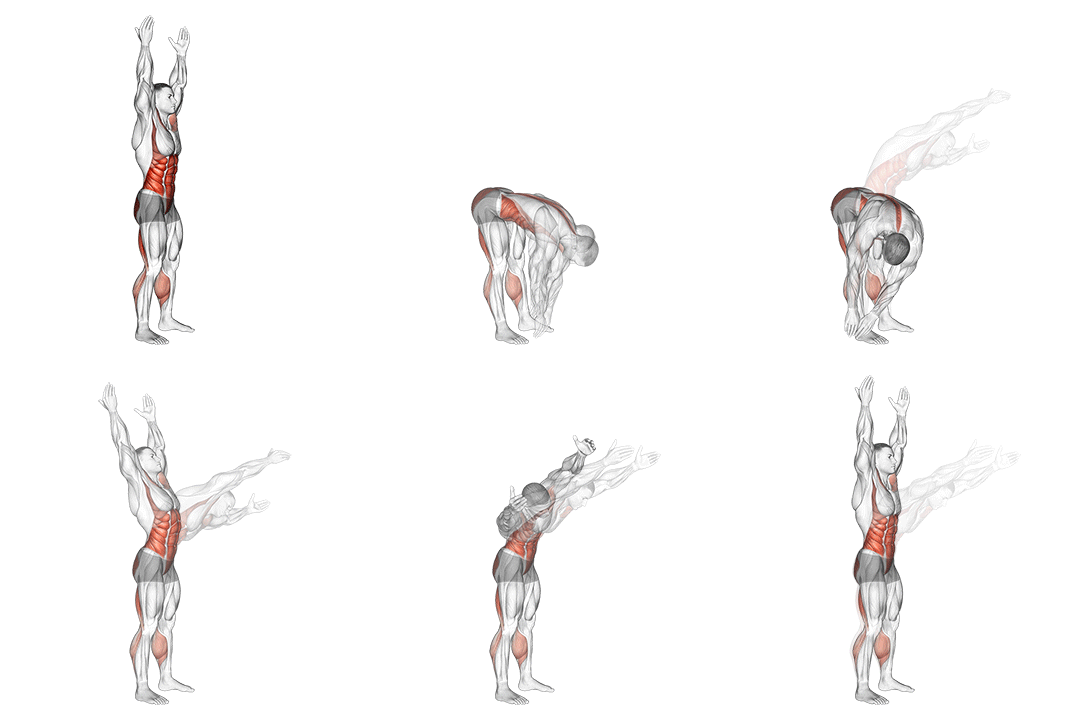
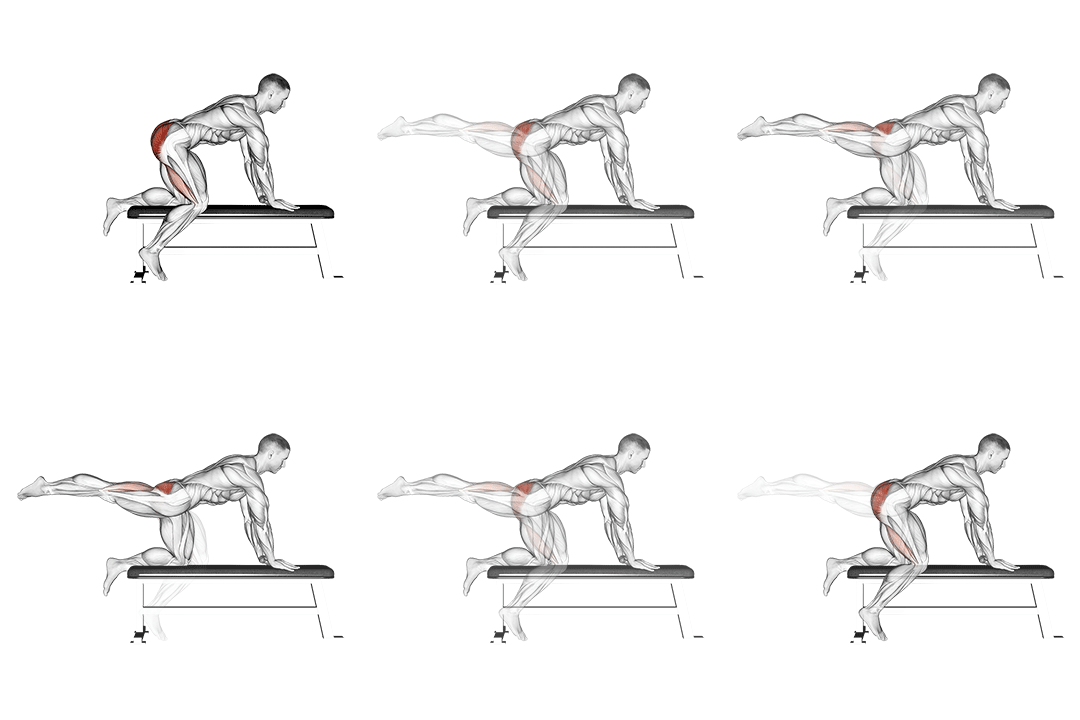
Compare More Exercises
Use our free comparison tool to analyze any two exercises head-to-head.
Compare Exercises