

Bodyweight Squatting Row (with Towel) vs L-pull-up: Complete Comparison Guide
Bodyweight Squatting Row (with Towel) vs L-pull-up — two intermediate bodyweight back builders that both target the lats but load the shoulder and scapula differently. I’ll walk you through muscle activation, equipment needs, learning curve, and when to pick one over the other for hypertrophy, strength, or convenient home training. You’ll get technique cues (scapular set, elbow path, torso angle), recommended rep ranges, and clear winners for common goals so you can pick the right exercise for your program.
Exercise Comparison
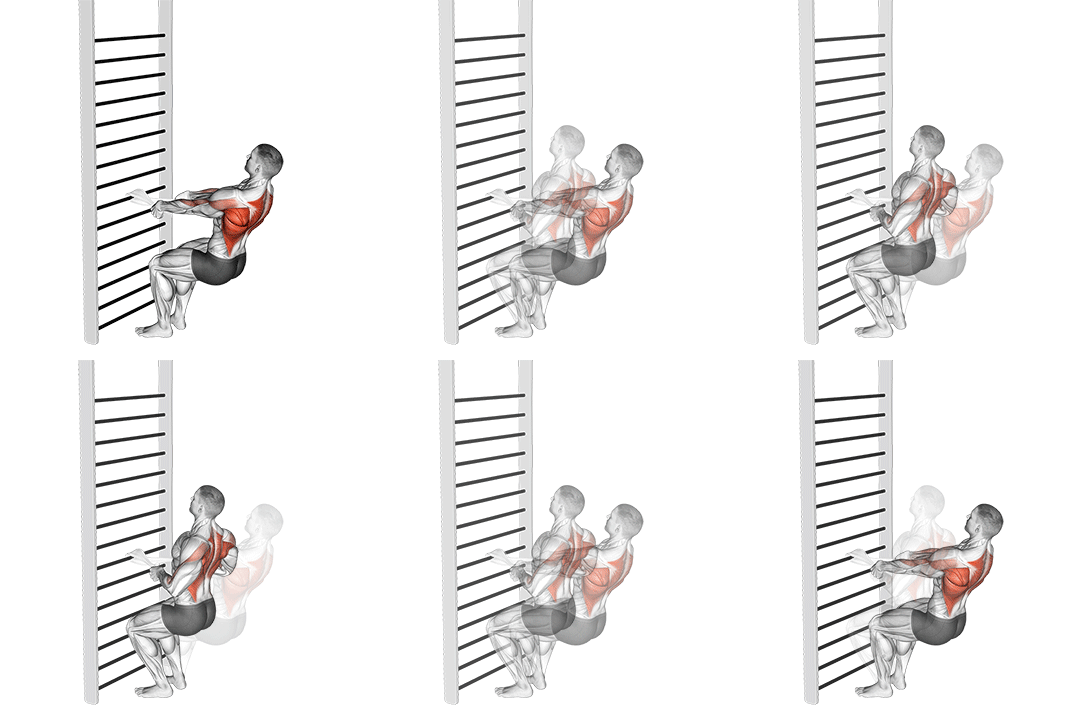
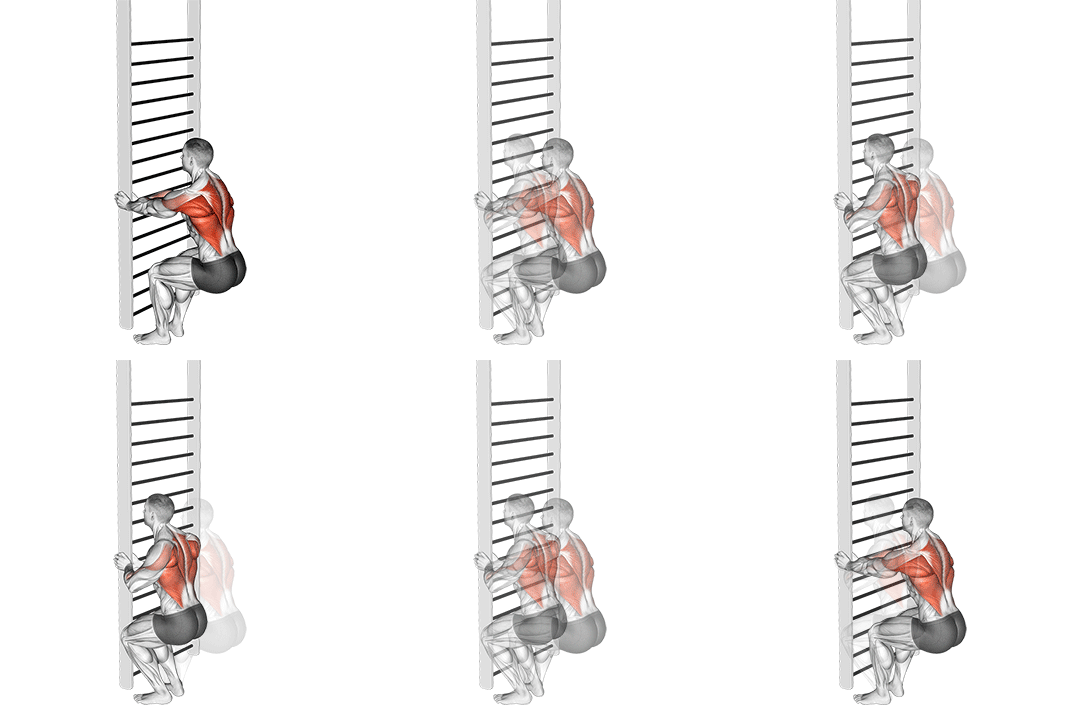
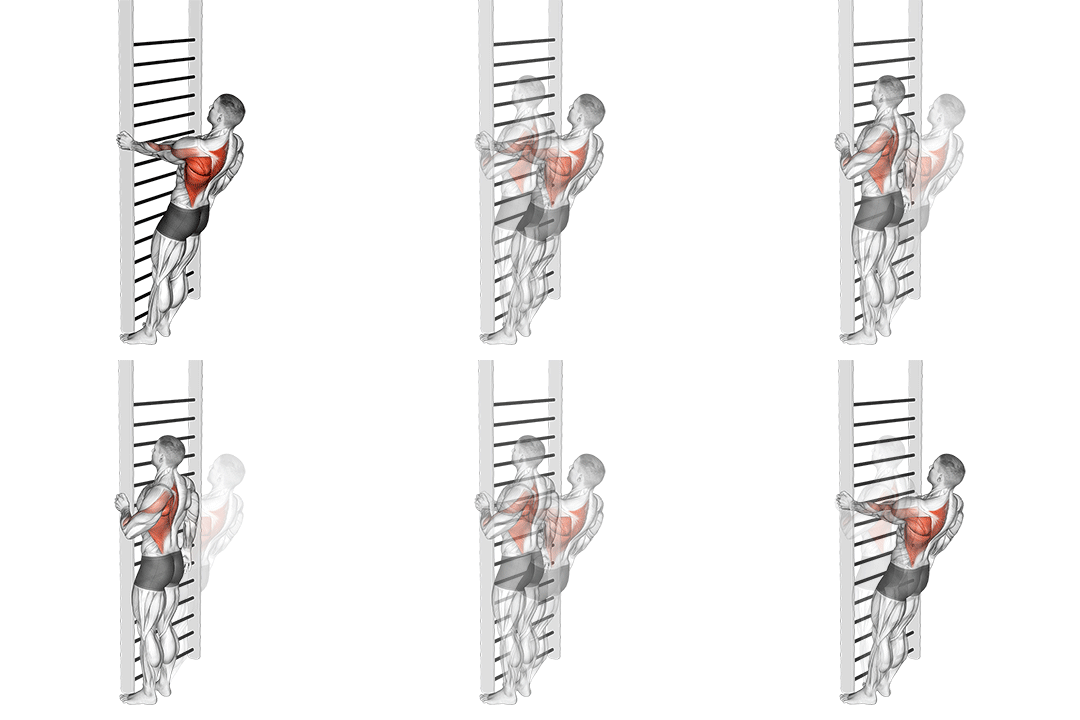
Bodyweight Squatting Row (with Towel)
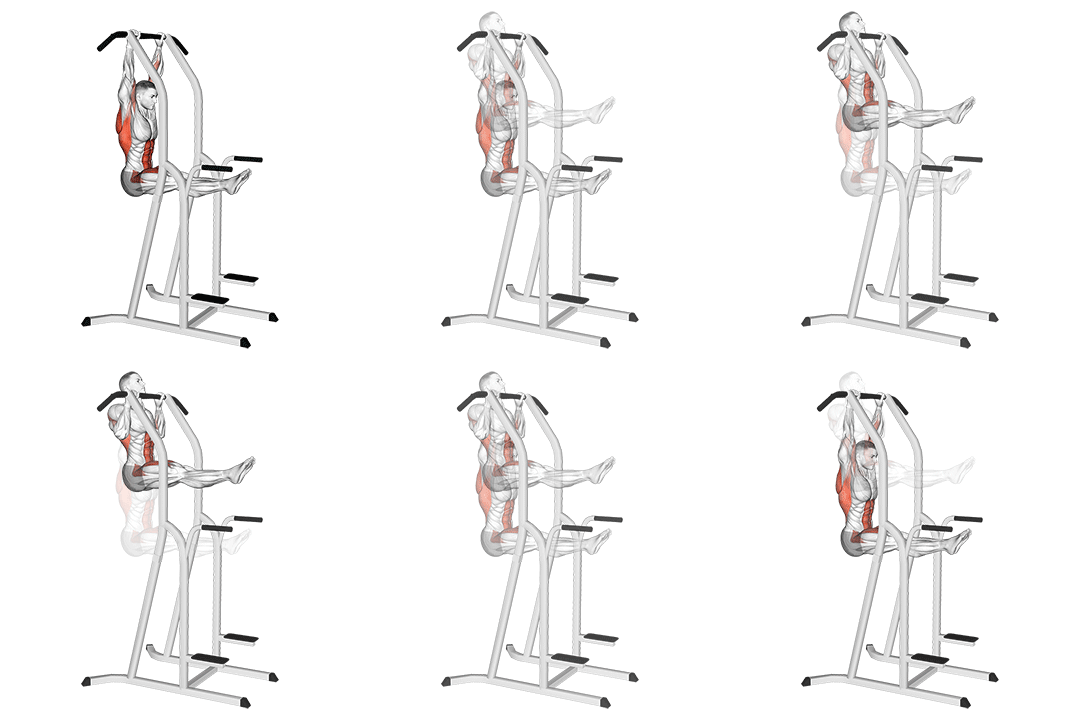
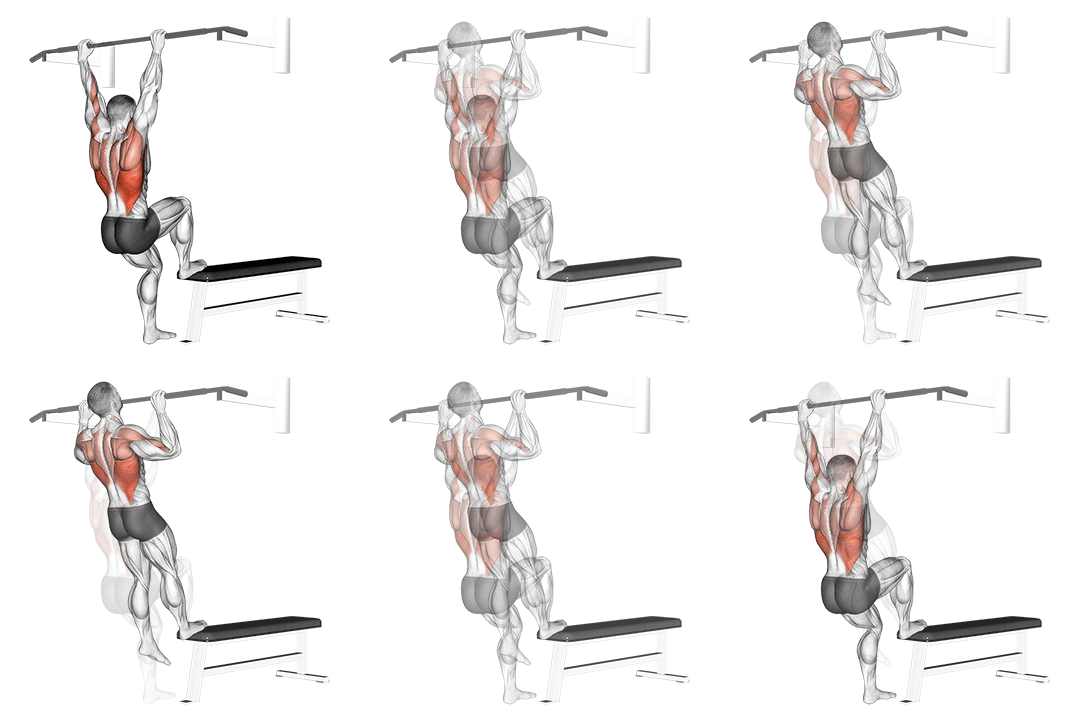
L-pull-up
Head-to-Head Comparison
| Attribute | Bodyweight Squatting Row (with Towel) | L-pull-up |
|---|---|---|
| Target Muscle |
Lats
|
Lats
|
| Body Part |
Back
|
Back
|
| Equipment |
Body-weight
|
Body-weight
|
| Difficulty |
Intermediate
|
Intermediate
|
| Movement Type |
Compound
|
Compound
|
| Secondary Muscles |
2
|
2
|
Secondary Muscles Activated
Bodyweight Squatting Row (with Towel)
L-pull-up
Visual Comparison
Overview
Bodyweight Squatting Row (with Towel) vs L-pull-up — two intermediate bodyweight back builders that both target the lats but load the shoulder and scapula differently. I’ll walk you through muscle activation, equipment needs, learning curve, and when to pick one over the other for hypertrophy, strength, or convenient home training. You’ll get technique cues (scapular set, elbow path, torso angle), recommended rep ranges, and clear winners for common goals so you can pick the right exercise for your program.
Key Differences
- Both exercises target the Lats using Body-weight. The main differences are in their movement patterns and muscle activation angles.
Pros & Cons
Bodyweight Squatting Row (with Towel)
+ Pros
- Requires minimal equipment — just a towel and anchor
- Easily adjustable load by changing torso angle (good for progressive overload)
- Lower overhead shoulder stress; safer for impingement-prone shoulders
- Strong mid-range lat tension and good scapular retraction training
− Cons
- Can be limited for maximal vertical pulling strength
- Anchor must be secure; improper setup risks failure
- Grip and wrist positioning can be awkward with a towel
L-pull-up
+ Pros
- High peak lat activation and strong vertical pulling specificity
- Excellent for maximal upper-body strength and weighted progressions
- Builds forearm and biceps strength under high load
- Adds core demand when performed as an L-pull-up (90° hip flexion)
− Cons
- Requires a stable overhead bar and sufficient strength to perform
- Higher shoulder and tendon stress if scapular mechanics are poor
- Harder to scale precisely for hypertrophy volume without extra equipment
When Each Exercise Wins
The squatting row allows you to accumulate higher time-under-tension and volume with easier load control (adjust torso angle, tempo, and pauses). Aim for 8–15 reps per set with 2–3 second eccentrics to maximize muscle growth across the mid-range where the lats maintain constant tension.
L-pull-ups create a larger shoulder extension moment arm and support heavy loading/weighted progressions, which drive maximal strength. Use lower rep ranges (3–6 reps) and add weighted vests or slow eccentrics to increase force demands.
Beginners can scale the row by changing body angle and practice scapular and elbow mechanics with low risk. It builds the pulling pattern and allows progressive overload before attempting full vertical pulls.
Most homes lack a high-quality pull-up bar, but a towel and sturdy anchor suffice for effective rows. The row also requires less raw upper-body strength and space than an L-pull-up.
Frequently Asked Questions
Can I do both Bodyweight Squatting Row (with Towel) and L-pull-up in the same workout?
Yes — pair them smartly: start with L-pull-ups for strength (3–6 heavy reps) then use squatting rows for volume (3–4 sets of 8–15) to increase time under tension without excessive joint stress. Manage fatigue by prioritizing the stronger, technical lift first and using rows as accessory work.
Which exercise is better for beginners?
The Bodyweight Squatting Row (with Towel) is better for beginners because you can reduce load by adjusting body angle and practice scapular retraction and elbow path safely. It builds the base pulling mechanics needed before attempting vertical L-pull-ups.
How do the muscle activation patterns differ?
The squatting row emphasizes a horizontal/diagonal pull pattern with steady mid-range tension and more posterior delt and lower-trap recruitment, while the L-pull-up produces higher peak lat activation near the top of a vertical pull and places greater demand on biceps and forearms. Differences stem from force vector (horizontal vs vertical) and joint angles across the ROM.
Can L-pull-up replace Bodyweight Squatting Row (with Towel)?
Only partially — L-pull-ups can substitute for rows when you need vertical pulling strength, but they don’t replicate the same horizontal force vector, scapular retraction emphasis, or easy volume scaling. For balanced back development include both or prioritize the one that matches your specific goal (strength vs volume).
Expert Verdict
Pick the L-pull-up if your primary goal is maximal vertical pulling strength and you have a secure overhead bar and sufficient baseline strength; program L-pull-ups for low rep, high-intensity sets (3–6 reps) and weighted progressions. Choose the Bodyweight Squatting Row (with Towel) when you want scalable volume, safer shoulders, and easier access—perfect for hypertrophy work (8–15 reps) or building the pulling pattern before progressing to vertical pulls. Use both: cycle rows for volume and technique, then add L-pull-up progressions for maximal force development once your scapular control and core stability are solid.
Also Compare
More comparisons with Bodyweight Squatting Row (with Towel)
Compare More Exercises
Use our free comparison tool to analyze any two exercises head-to-head.
Compare Exercises