

Butterfly vs Machine Bench Press
Compare target muscles, equipment, difficulty, movement type, and secondary muscles for Butterfly and Machine Bench Press.
Get comparison link
Select the link and use your device's Copy command.
Comparison overview
AI-generatedExercise Comparison
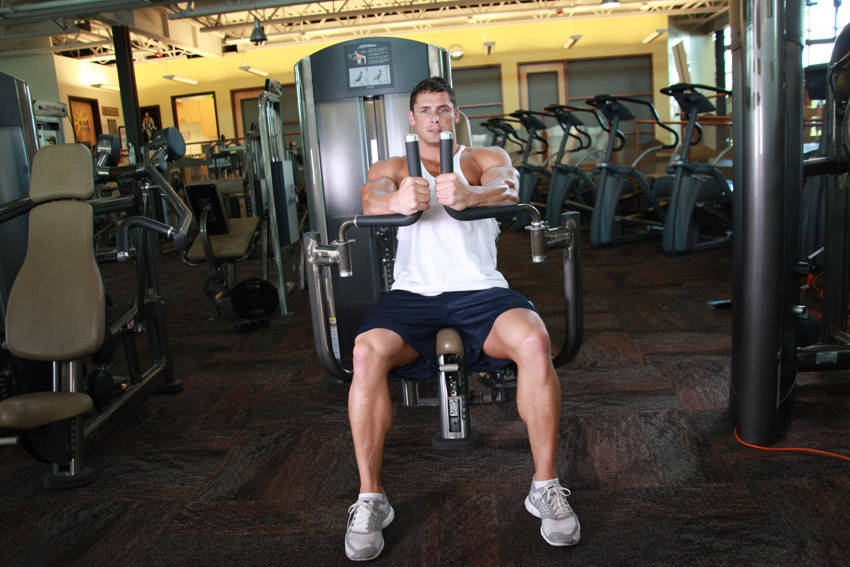
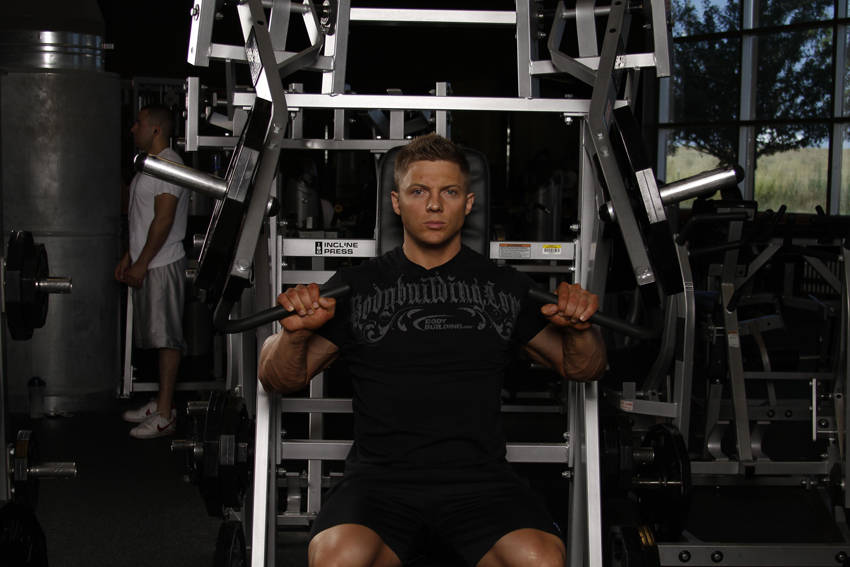
Butterfly
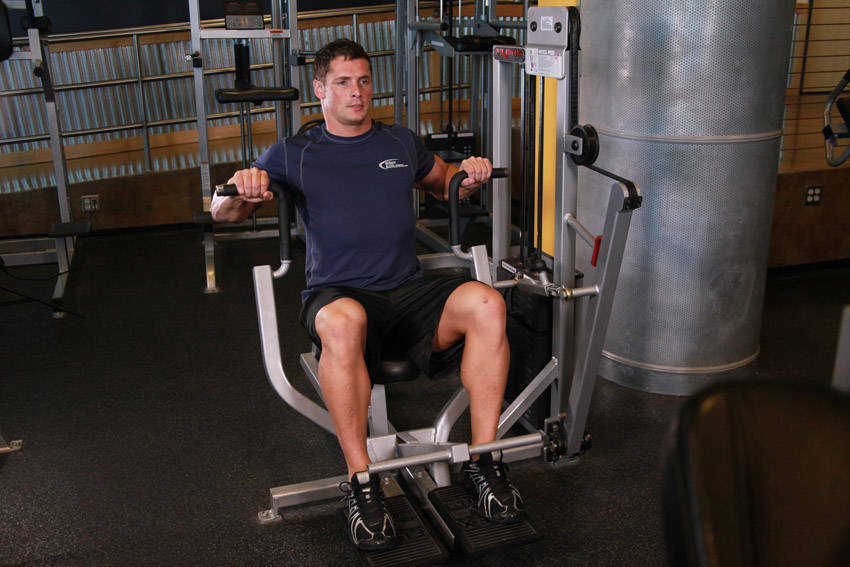
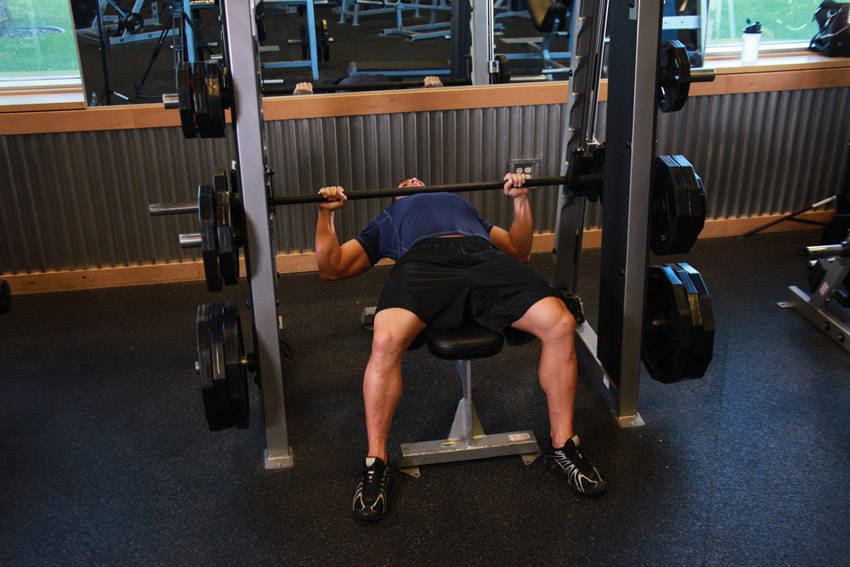
Machine Bench Press
Head-to-Head Comparison
Different values are marked. These are catalogue attributes, not performance scores.
Muscles used
Listed target and secondary muscles, shown on the body. Locations, not activation or strength scores.
- Target
- Secondary
- Not highlighted
Butterfly
- Target
- Pectorals
- Secondary
- None listed
Machine Bench Press
- Target
- Pectorals
- Secondary
- Shoulders, Triceps
Not shown on diagram: Shoulders. These labels do not identify a precise region on this map.
Grey does not mean a muscle is unused. The diagrams show only the mapped catalogue labels.
| Attribute | Butterfly | Machine Bench Press |
|---|---|---|
| Target Muscle | Pectorals |
Pectorals |
| Body Part | Chest |
Chest |
| Equipment | Machine |
Machine |
| Difficulty Different | Beginner |
Intermediate |
| Movement Type Different | Isolation |
Compound |
| Secondary Muscles Different | None listed |
Shoulders, Triceps |
Visual Comparison
An illustrative 1–10 profile derived from catalog difficulty, equipment, and listed-muscle fields—not measured performance or muscle activation.
Key Differences
- Butterfly is an isolation exercise, while Machine Bench Press is a compound movement.
- Difficulty levels differ: Butterfly is beginner, while Machine Bench Press is intermediate.
- Both exercises target the Pectorals using Machine. The catalogue does not establish which exercise is better for an individual goal.
Muscle comparison
Shared target muscles
Secondary muscle differences
Muscle involvement analysis
Equipment and setup
Butterfly: setup
Machine Bench Press: setup
Access and practicality
Learning and progression
Learning the movements
Progression considerations
Limitations and precautions
Pros & Cons
Butterfly
+ Pros
- High pec isolation via consistent horizontal adduction
- Easy to learn and set up — good for beginners and finisher work
- Lower demand on stabilizers, allowing focused chest fatigue
- Great for high-rep pump work and accentuating peak contraction
− Cons
- Limited progressive overload compared with compound presses
- End-range shoulder stretch can aggravate anterior capsule if overextended
- Less carryover to pressing strength because triceps and deltoids are minimized
Machine Bench Press
+ Pros
- Stronger progressive overload potential—suitable for heavy sets
- Works chest, shoulders, and triceps for practical pressing strength
- Guided path reduces balance/stability demands compared with free barbell work
- Easier to load for low-rep strength phases (4–6 reps) and mixed rep schemes
− Cons
- Greater overall joint loading — can stress shoulders and elbows under heavy loads
- Requires better setup (seat height, handle alignment) to hit chest optimally
- More technical coordination needed to avoid deltoid-dominant pressing
When Each Exercise Wins
Machine Bench Press wins because it allows heavier progressive overload (appropriate for building cross-sectional muscle growth) while still driving strong pec activation. Use 6–12 reps for mechanical tension and follow with Butterfly sets (8–15) to increase time under tension and local metabolic stress.
Machine Bench Press supports heavier loading and lower rep ranges (4–6 reps) which are key for neural and strength adaptations. The compound pattern trains the triceps and deltoids alongside the pecs, producing better transfer to pressing strength.
Butterfly is more beginner-friendly because it fixes the movement path and isolates the chest, letting you learn the feeling of horizontal adduction without complex coordination. Start with 2–3 sets of 8–12 reps while learning scapular control and seat setup.
Butterfly-style movements are easier to replicate at home with resistance bands or adjustable cable stations for a focused chest stimulus. If you lack a heavy press machine, banded or dumbbell fly variations mimic the biomechanics well and are safer for single-equipment setups.
Frequently Asked Questions
Can I do both Butterfly and Machine Bench Press in the same workout?
Which exercise is better for beginners?
How do the muscle activation patterns differ?
Can Machine Bench Press replace Butterfly?
Comparison Summary
Exercise instructions
Steps from the exercise catalogue. Read the full sequence before starting.
Butterfly
- Sit on the machine with your back flat on the pad.
- Take hold of the handles. Tip: Your upper arms should be positioned parallel to the floor; adjust the machine accordingly. This will be your starting position.
- Push the handles together slowly as you squeeze your chest in the middle. Breathe out during this part of the motion and hold the contraction for a second.
Read remaining steps for Butterfly
- Return back to the starting position slowly as you inhale until your chest muscles are fully stretched.
- Repeat for the recommended amount of repetitions.
Machine Bench Press
- Sit down on the Chest Press Machine and select the weight.
- Step on the lever provided by the machine since it will help you to bring the handles forward so that you can grab the handles and fully extend the arms.
- Grab the handles with a palms-down grip and lift your elbows so that your upper arms are parallel to the floor to the sides of your torso. Tip: Your forearms will be pointing forward since you are grabbing the handles. Once you bring the handles forward and extend the arms you will be at the starting position.
Read remaining steps for Machine Bench Press
- Now bring the handles back towards you as you breathe in.
- Push the handles away from you as you flex your pecs and you breathe out. Hold the contraction for a second before going back to the starting position.
- Repeat for the recommended amount of reps.
- When finished step on the lever again and slowly get the handles back to their original place.
Also Compare
More comparisons with Butterfly
More comparisons with Machine Bench Press
Compare another pair
Choose two exercises to see their differences side by side.