Butterfly vs Hands Bike

Compare target muscles, equipment, difficulty, movement type, and secondary muscles for Butterfly and Hands Bike.

Change comparison Share

Get comparison link

Select the link and use your device's Copy command.

Comparison overview

AI-generated
Butterfly vs Hands Bike — you're choosing between two machine isolation moves that target the pectorals. If you want clear guidance on which better suits hypertrophy, beginner learning, and equipment needs, you're in the right place. I'll compare primary chest activation, secondary muscle involvement, movement patterns, setup and technique cues, plus progression and injury considerations. Read on for concrete rep ranges, joint angles, and simple coaching tips so you can pick the right tool for your training goals and program.

Exercise Comparison

Exercise A
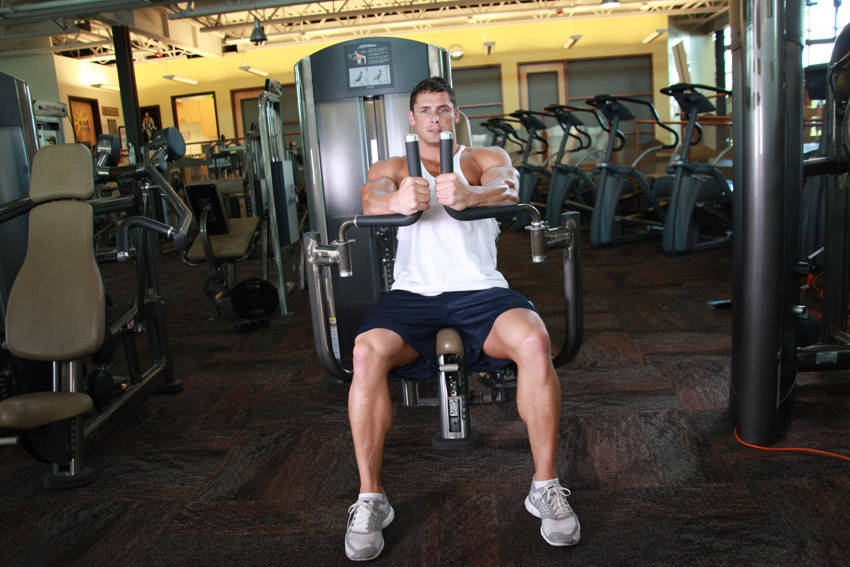
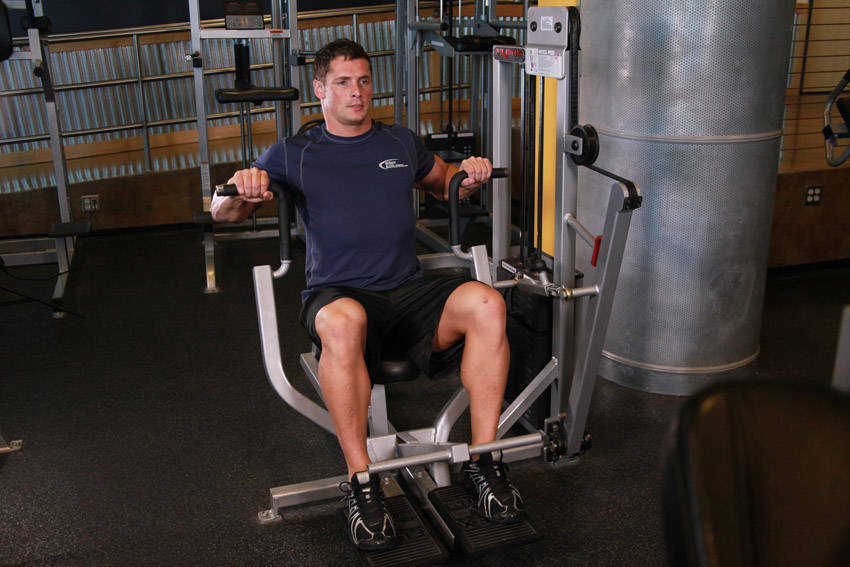
Butterfly demonstration

Butterfly

Target Pectorals
Equipment Machine
Body Part Chest
Difficulty Beginner
Movement Isolation
VS
Exercise B
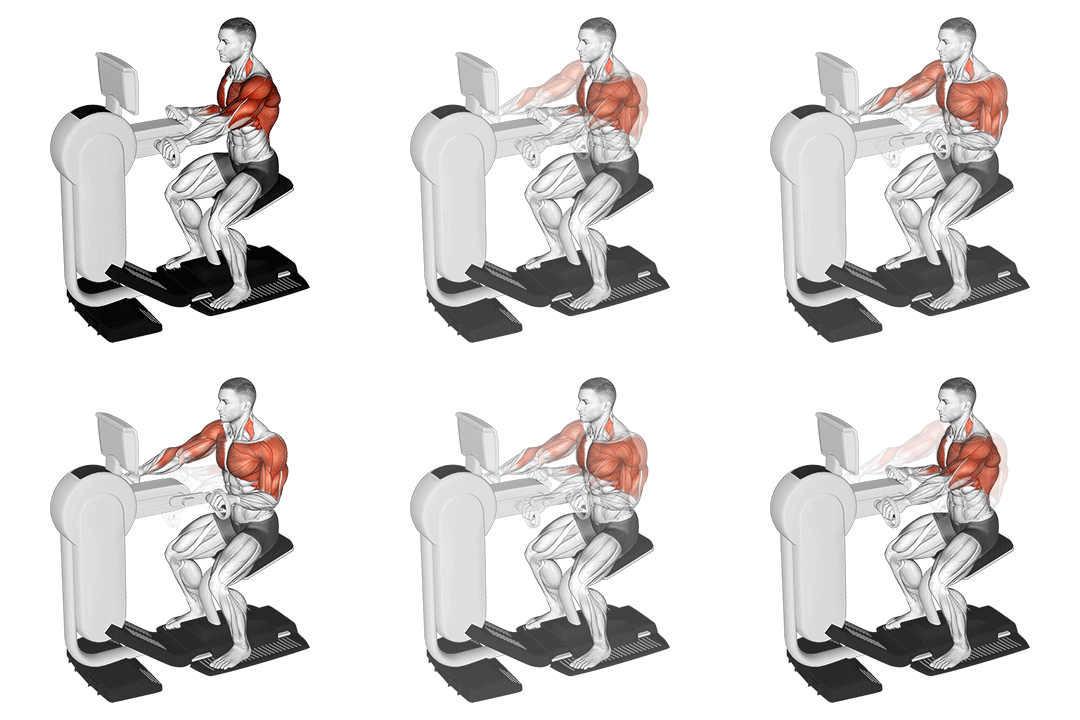
Hands Bike demonstration

Hands Bike

Target Pectorals
Equipment Machine
Body Part Chest
Difficulty Beginner
Movement Isolation
Secondary Muscles
Triceps Shoulders

Head-to-Head Comparison

Different values are marked. These are catalogue attributes, not performance scores.

Muscles used

Listed target and secondary muscles, shown on the body. Locations, not activation or strength scores.

  • Target
  • Secondary
  • Not highlighted

Butterfly

Front
Butterfly: front muscle locationsSolid: listed target. Striped: listed secondary. Grey: not highlighted. Locations, not activation or strength scores. See the muscle names below.
Back
Butterfly: back muscle locationsSolid: listed target. Striped: listed secondary. Grey: not highlighted. Locations, not activation or strength scores. See the muscle names below.
Target
Pectorals
Secondary
None listed

Hands Bike

Front
Hands Bike: front muscle locationsSolid: listed target. Striped: listed secondary. Grey: not highlighted. Locations, not activation or strength scores. See the muscle names below.
Back
Hands Bike: back muscle locationsSolid: listed target. Striped: listed secondary. Grey: not highlighted. Locations, not activation or strength scores. See the muscle names below.
Target
Pectorals
Secondary
Triceps, Shoulders

Not shown on diagram: Shoulders. These labels do not identify a precise region on this map.

Grey does not mean a muscle is unused. The diagrams show only the mapped catalogue labels.

Attribute Butterfly Hands Bike
Target Muscle
Pectorals
Pectorals
Body Part
Chest
Chest
Equipment
Machine
Machine
Difficulty
Beginner
Beginner
Movement Type
Isolation
Isolation
Secondary Muscles Different
None listed
Triceps, Shoulders

Visual Comparison

An illustrative 1–10 profile derived from catalog difficulty, equipment, and listed-muscle fields—not measured performance or muscle activation.

Key Differences

  • Both exercises target the Pectorals using Machine. The catalogue does not establish which exercise is better for an individual goal.

Muscle comparison

Shared target muscles

Both exercises emphasize horizontal adduction of the glenohumeral joint and load the pectoralis major as the prime mover. The Butterfly (pec deck) forces a controlled arc around a fixed pivot, concentrating load specifically on the sternal and clavicular heads. Hands Bike also targets the pectorals through horizontal adduction but often involves a slightly more anterior force vector, so peak pec activation is similar in range but achieved via a different path.

Secondary muscle differences

The Hands Bike recruits triceps and anterior deltoids more noticeably because the hand path and handle orientation create an additional pressing component. Butterfly minimizes triceps involvement due to its pure fly arc and usually keeps the elbow at a fixed small bend (10–20°), so shoulder stabilizers and pecs do most of the work.

Muscle involvement analysis

During the concentric phase Butterfly emphasizes short-range, high-tension horizontal adduction with peak tension near midline; you should feel maximal pec contraction at roughly 20°–30° before full adduction. Hands Bike shows a mixed activation: pecs generate horizontal adduction while triceps and anterior deltoids take more load during the terminal phase, shifting force distribution by roughly 10–20% toward those secondary muscles as the elbows extend.

Equipment and setup

Butterfly: setup

Butterfly: seated pec deck machine with adjustable back pad, pivot height and handles. Requires about a 4–6 ft footprint in a gym and stable, machine-guided path.

Hands Bike: setup

Hands Bike: a chest-oriented hand-bike machine or dual-action upper-body ergometer with handles that rotate/push. Requires machine with rotating handles and adjustable resistance; slightly more specialized than a standard pec deck.

Access and practicality

Butterfly is the more accessible option since most commercial gyms have a pec-deck machine while Hands Bike units are less common. For most trainees the Butterfly is easier to find and set up.

Learning and progression

Learning the movements

Butterfly has a shorter learning curve: set seat so handles sit at mid-chest, keep a 10–20° elbow bend, retract scapula, and perform smooth 8–15 reps. Hands Bike requires timing of rotational/pushing mechanics and coordination of both arms, so it takes slightly longer to groove a consistent path.

Progression considerations

Hands Bike offers modest progression via higher resistance settings and tempo changes, but both are limited compared to compound lifts. Butterfly allows microloading (2.5–5 lb plates or 2–4% increases) and tempo manipulation (2–3 second eccentrics) for progressive tension targeting the pecs.

Limitations and precautions

Relative injury risk is low for both when using controlled ranges. Butterfly can stress the anterior shoulder capsule if you stretch past 90° horizontal abduction; limit end-range stretch. Hands Bike can overload the anterior deltoid or triceps if you push with locked elbows—avoid full elbow lockout under heavy load.

Pros & Cons

Butterfly

+ Pros

  • Excellent isolation of the pectorals and clear mind-muscle feedback
  • Fixed pivot reduces need for stabilizer strength, ideal for focused work
  • Easy setup and short learning curve for beginners
  • Fine-grained tempo and microloading options for hypertrophy (8–15 reps)

Cons

  • Limited transfer to multi-joint pressing strength
  • Can overstretch the anterior shoulder if seat/arc are misadjusted
  • Not portable; requires a pec-deck machine

Hands Bike

+ Pros

  • Targets pecs while also recruiting triceps and anterior deltoids for functional pressing carryover
  • Often allows higher resistance settings useful for strength emphasis
  • Dynamic handle path can improve coordination and unilateral balance
  • Good for varied tempo and alternating arm patterns to address imbalances

Cons

  • Less common in commercial gyms, so accessibility is limited
  • Slightly steeper technique demand for consistent muscle targeting
  • Greater secondary triceps/shoulder involvement reduces pure pec isolation

When Each Exercise Wins

1
For muscle hypertrophy: Butterfly

Butterfly isolates the pecs with a fixed arc, letting you load the chest directly and use strict tempos (2–3s eccentrics, 8–15 reps). That focused tension and easier mind-muscle connection yields more reliable hypertrophy for the pectorals.

2
For strength gains: Hands Bike

Hands Bike recruits triceps and anterior deltoids in addition to the pecs, providing better carryover to pressing strength. Its ability to handle higher nominal resistance and a more functional push pattern makes it slightly better for building pressing force.

3
For beginners: Butterfly

Butterfly has a simpler setup and a controlled movement path, lowering coordination demands. You can teach proper scapular positioning and elbow angle quickly, making it ideal for new lifters learning chest work.

4
For home workouts: Butterfly

Both require machines, but pec-deck style machines or home-friendly cable fly setups are easier to acquire than a Hands Bike. If you must pick one machine for a small home gym, the Butterfly-style option is more practical.

Frequently Asked Questions

Can I do both Butterfly and Hands Bike in the same workout?

Yes. Pair them by order: start with Hands Bike if you want to prioritize pressing strength (3–6 sets of 4–8 or heavier work), then finish with Butterfly for focused hypertrophy (2–4 sets of 8–15). Monitor volume to avoid shoulder overuse.

Which exercise is better for beginners?

Butterfly is better for beginners due to its fixed path, simple setup, and clear chest isolation. It helps teach scapular control and proper elbow angle (10–20° bend) before progressing to more complex machines.

How do the muscle activation patterns differ?

Butterfly concentrates peak tension on the pecs during midline horizontal adduction, with minimal elbow extension demand. Hands Bike shifts load toward triceps and anterior deltoids during terminal extension, producing a mixed activation pattern and reducing pure pec isolation by roughly 10–20%.

Can Hands Bike replace Butterfly?

Hands Bike can substitute when you want added triceps and shoulder work or limited equipment options, but it won’t match Butterfly's pure pec isolation. If your goal is maximal chest hypertrophy, keep Butterfly in the program and use Hands Bike as a complementary or strength-focused alternative.

Comparison Summary

Use the Butterfly when your priority is direct chest development: it isolates the pectoralis major, minimizes triceps contribution, and lets you control range of motion and tempo for hypertrophy (8–15 reps, 2–3s eccentric). Choose Hands Bike when you want a bit more pressing transfer and secondary muscle recruitment—its triceps and anterior deltoid involvement improves functional pressing strength and allows heavier loading. For beginners and limited equipment situations, favor the Butterfly. If you train for stronger compound pressing or need extra upper-arm work, add Hands Bike or alternate them across phases.

Exercise instructions

Steps from the exercise catalogue. Read the full sequence before starting.

Butterfly

  1. Sit on the machine with your back flat on the pad.
  2. Take hold of the handles. Tip: Your upper arms should be positioned parallel to the floor; adjust the machine accordingly. This will be your starting position.
  3. Push the handles together slowly as you squeeze your chest in the middle. Breathe out during this part of the motion and hold the contraction for a second.
Read remaining steps for Butterfly
  1. Return back to the starting position slowly as you inhale until your chest muscles are fully stretched.
  2. Repeat for the recommended amount of repetitions.

Hands Bike

  1. Adjust the seat height and handlebar position to a comfortable level.
  2. Sit on the ergometer with your back straight and feet on the pedals.
  3. Grasp the handles with your hands and position your arms at a 90-degree angle.
Read remaining steps for Hands Bike
  1. Start pedaling with your hands, pushing and pulling the handles in a controlled motion.
  2. Continue pedaling for the desired duration or number of repetitions.

Also Compare

Compare another pair

Choose two exercises to see their differences side by side.

Compare Exercises