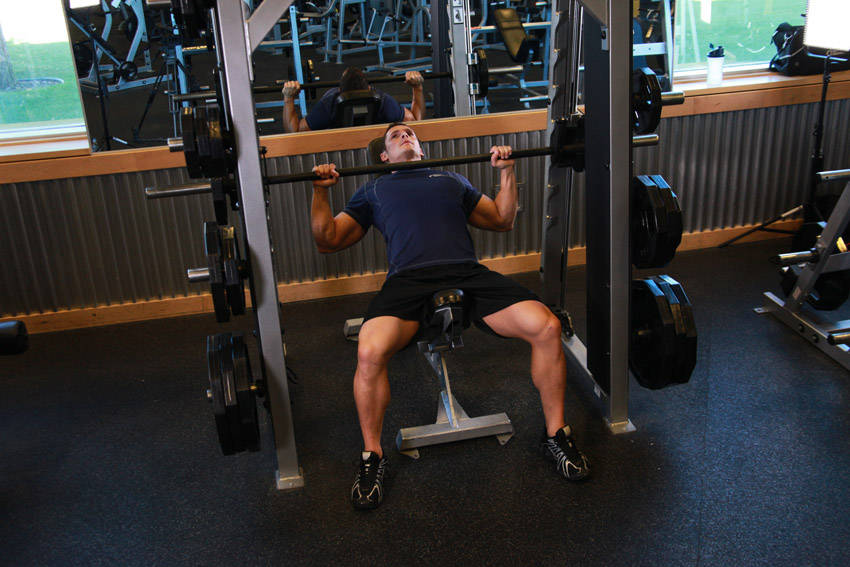
Hands Bike vs Machine Bench Press

Compare target muscles, equipment, difficulty, movement type, and secondary muscles for Hands Bike and Machine Bench Press.

Change comparison Share

Get comparison link

Select the link and use your device's Copy command.

Comparison overview

AI-generated
Hands Bike vs Machine Bench Press — choose the right chest machine for your goals. If you're reading this, you want practical, evidence-backed guidance on how each machine loads the pectorals, how much the triceps and shoulders contribute, and which movement fits your experience and equipment. You'll get clear technique cues (seat height, elbow path, scapular position), biomechanics explanations (force vectors, length–tension relationships), recommended rep ranges (3–6 for raw strength, 6–12 for hypertrophy, 12–20 for endurance), and programming tips so you can pick the best tool for your chest work.

Exercise Comparison

Exercise A
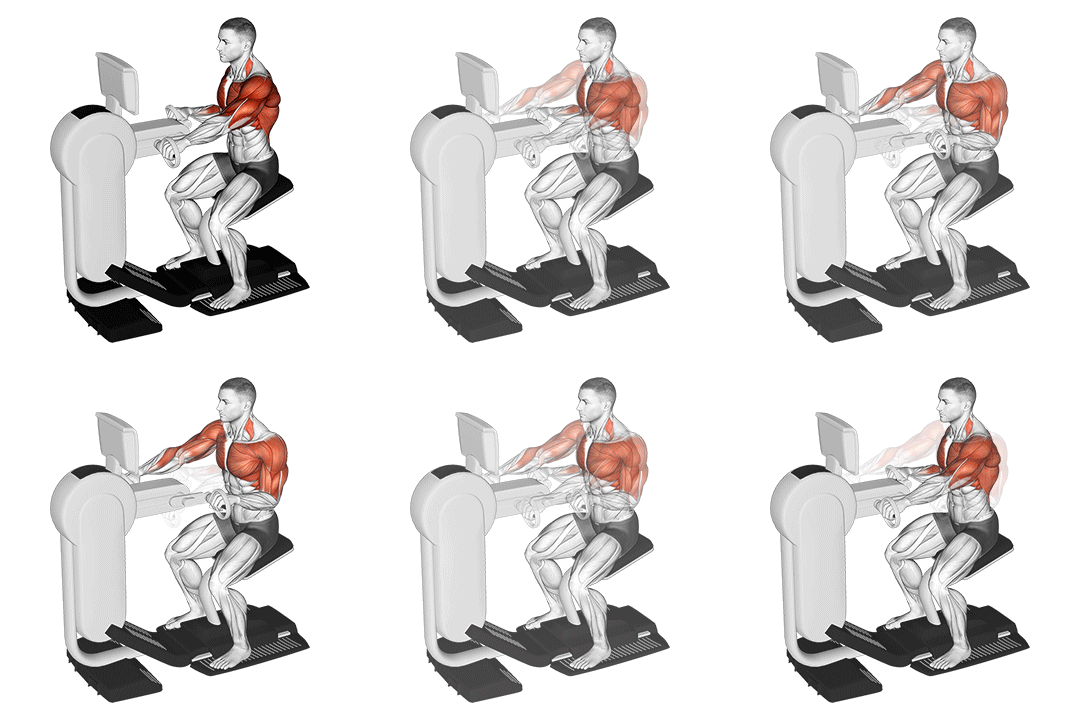
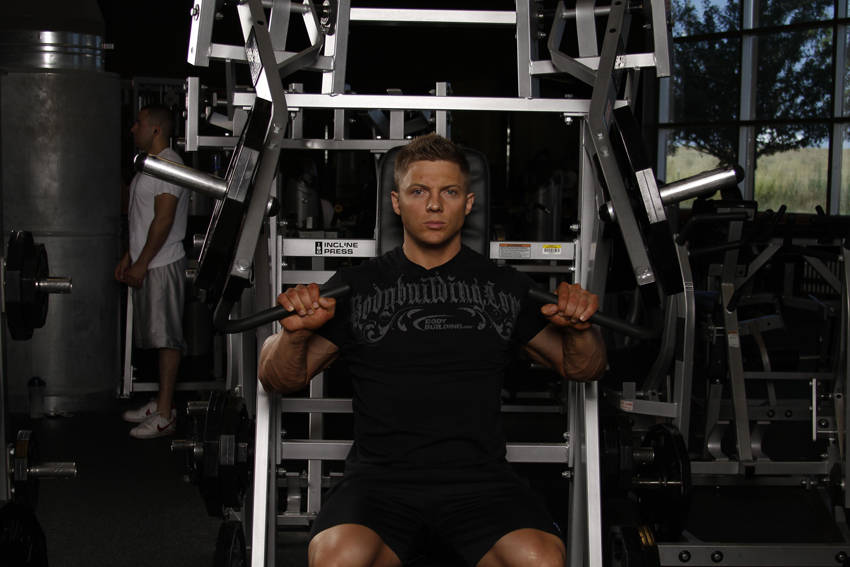
Hands Bike demonstration

Hands Bike

Target Pectorals
Equipment Machine
Body Part Chest
Difficulty Beginner
Movement Isolation
Secondary Muscles
Triceps Shoulders
VS
Exercise B
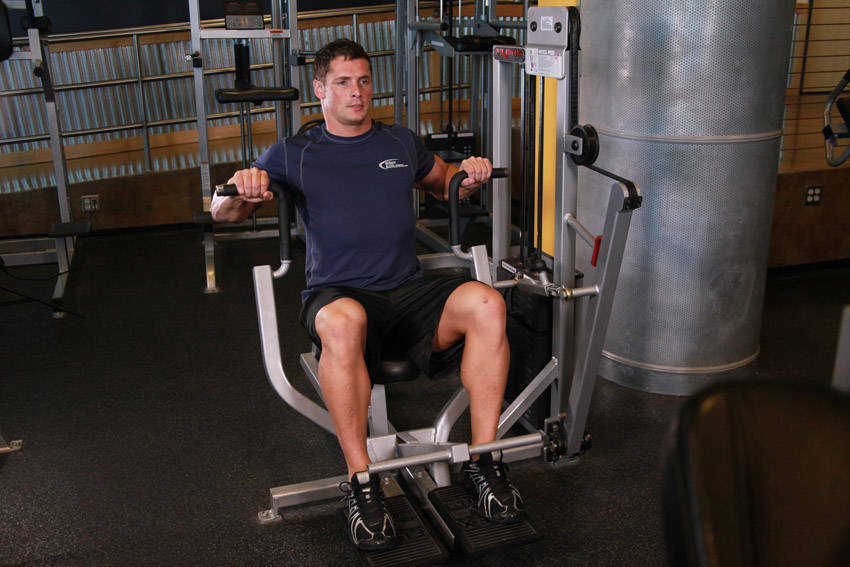
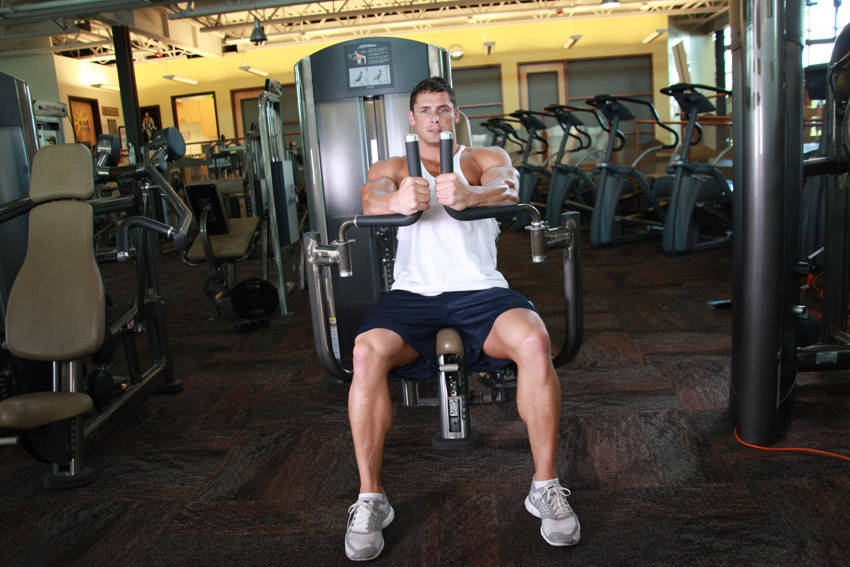
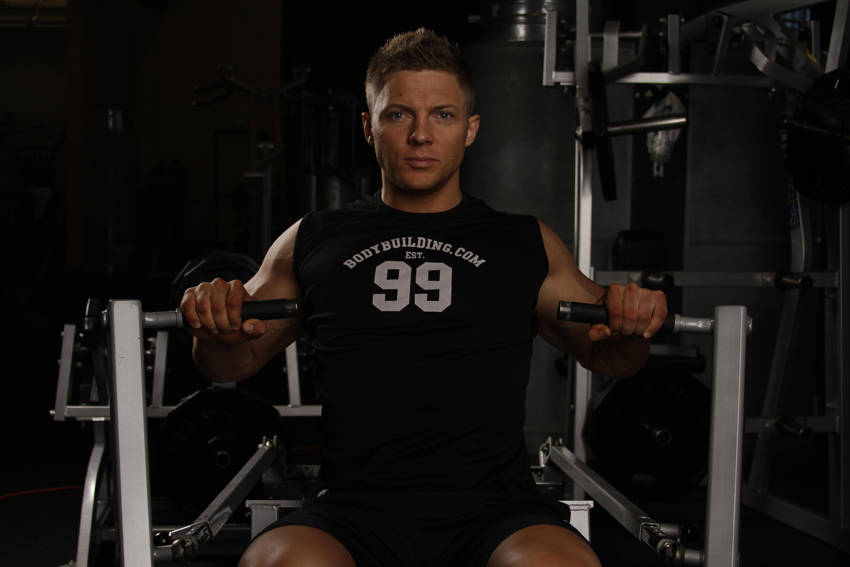
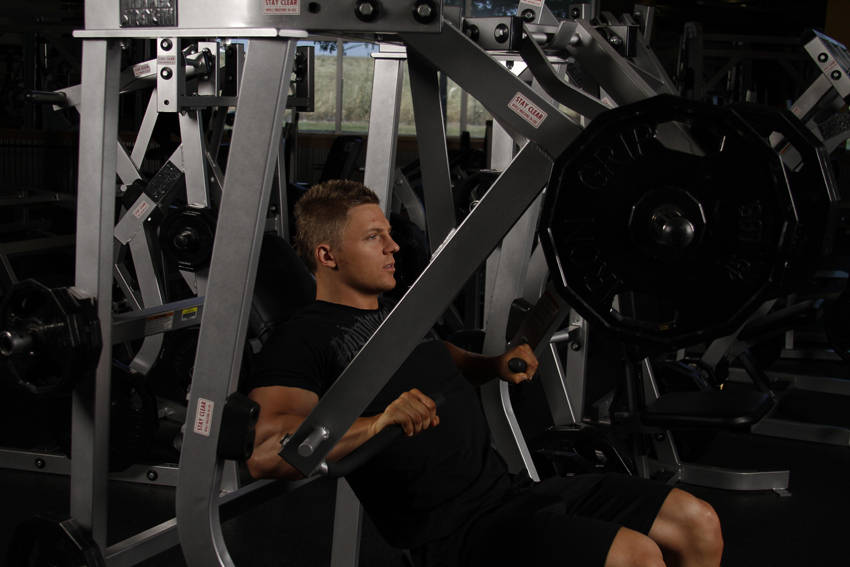
Machine Bench Press demonstration

Machine Bench Press

Target Pectorals
Equipment Machine
Body Part Chest
Difficulty Intermediate
Movement Compound
Secondary Muscles
Shoulders Triceps

Head-to-Head Comparison

Different values are marked. These are catalogue attributes, not performance scores.

Muscles used

Listed target and secondary muscles, shown on the body. Locations, not activation or strength scores.

  • Target
  • Secondary
  • Not highlighted

Hands Bike

Front
Hands Bike: front muscle locationsSolid: listed target. Striped: listed secondary. Grey: not highlighted. Locations, not activation or strength scores. See the muscle names below.
Back
Hands Bike: back muscle locationsSolid: listed target. Striped: listed secondary. Grey: not highlighted. Locations, not activation or strength scores. See the muscle names below.
Target
Pectorals
Secondary
Triceps, Shoulders

Not shown on diagram: Shoulders. These labels do not identify a precise region on this map.

Machine Bench Press

Front
Machine Bench Press: front muscle locationsSolid: listed target. Striped: listed secondary. Grey: not highlighted. Locations, not activation or strength scores. See the muscle names below.
Back
Machine Bench Press: back muscle locationsSolid: listed target. Striped: listed secondary. Grey: not highlighted. Locations, not activation or strength scores. See the muscle names below.
Target
Pectorals
Secondary
Shoulders, Triceps

Not shown on diagram: Shoulders. These labels do not identify a precise region on this map.

Grey does not mean a muscle is unused. The diagrams show only the mapped catalogue labels.

Attribute Hands Bike Machine Bench Press
Target Muscle
Pectorals
Pectorals
Body Part
Chest
Chest
Equipment
Machine
Machine
Difficulty Different
Beginner
Intermediate
Movement Type Different
Isolation
Compound
Secondary Muscles
Triceps, Shoulders
Shoulders, Triceps

Visual Comparison

An illustrative 1–10 profile derived from catalog difficulty, equipment, and listed-muscle fields—not measured performance or muscle activation.

Key Differences

  • Hands Bike is an isolation exercise, while Machine Bench Press is a compound movement.
  • Difficulty levels differ: Hands Bike is beginner, while Machine Bench Press is intermediate.
  • Both exercises target the Pectorals using Machine. The catalogue does not establish which exercise is better for an individual goal.

Muscle comparison

Shared target muscles

Both exercises primarily drive horizontal adduction of the humerus to load the pectoralis major. Mechanically they share the same goal: produce a large anterior force vector across the shoulder. The Hands Bike is a true isolation machine with a fixed arc that keeps the pectoral fibers under more continuous tension through the mid-range. The Machine Bench Press is compound and allows higher external loads, increasing overall mechanical tension on the pecs at similar joint angles when you use heavy sets.

Secondary muscle differences

Secondary recruitment differs notably: the Machine Bench Press recruits the triceps brachii and anterior deltoid to a greater extent because elbow extension and shoulder flexion/pressing torque increase under heavy load. Expect triceps contribution on the machine bench press to range roughly 20–40% of the total pushing work depending on grip and elbow tuck. The Hands Bike limits shoulder and triceps involvement—triceps contribution is lower (roughly 10–25%) because the machine reduces the need for elbow-stabilizing torque and minimizes scapular movement.

Muscle involvement analysis

Hands Bike produces a steadier pectoral activation curve with peak tension in the mid-range where horizontal adduction is maximal; length–tension favors a long-to-mid muscle length. Machine Bench Press shows a rising activation as load increases and through the concentric phase, with additional peaks at lockout due to triceps drive. Biomechanically, the Hands Bike emphasizes pure horizontal adduction force vectors, while the Machine Bench Press adds vertical press components and elbow extension moments that shift force distribution toward triceps and anterior deltoid.

Equipment and setup

Hands Bike: setup

Hands Bike: fixed-path chest machine, adjustable seat height and back pad, handles positioned for horizontal adduction. Requires a commercial gym or facility that carries this specific machine.

Machine Bench Press: setup

Machine Bench Press: seated or supine press machine, adjustable seat/back angle, selectable weight stack or plate loading. Variants include plate-loaded and selectorized versions, making it common in most gyms.

Access and practicality

Machine Bench Press is more accessible because its variants (selectorized, plate-loaded, Smith-style) are present in more facilities and can be approximated at home with dumbbells or a barbell. The Hands Bike is more specialized and less likely to be available outside larger commercial gyms.

Learning and progression

Learning the movements

Hands Bike is easier to learn for beginners because the fixed path reduces stabilization demands; you can focus on chest contraction and tempo. Machine Bench Press requires more awareness of elbow positioning and seat angle but is still easier than a free-weight bench press.

Progression considerations

Machine Bench Press offers greater progression potential because you can overload with heavier weights and use progressive overload protocols (linear increases, doubles, heavy triples, 3–6 rep strength blocks). Hands Bike is excellent for progressive volume and tempo work (8–20+ rep hypertrophy blocks) but may top out sooner on absolute load.

Limitations and precautions

Hands Bike has a slightly lower acute injury risk since the path is fixed and scapular motion is constrained, reducing impingement risk when set up correctly. The Machine Bench Press carries higher shoulder loading risk if you flare elbows >90° or go into excessive anterior shoulder extension; however, proper elbow tuck (around 45°) and seat adjustment mitigate that risk.

Pros & Cons

Hands Bike

+ Pros

  • Pure pectoral isolation with continuous mid-range tension
  • Beginner-friendly: fixed path reduces stabilization demands
  • Easy to control tempo for time-under-tension and metabolic protocols
  • Lower acute shoulder stress when seat and grip are set correctly

Cons

  • Limited maximal overload — plateaus sooner for strength
  • Less triceps and anterior deltoid development compared to compound presses
  • Specialized equipment that’s less common in small gyms or home setups

Machine Bench Press

+ Pros

  • Higher overload potential for mechanical tension and strength
  • Engages triceps and anterior deltoid for compound transfer to other lifts
  • Wide availability and machine variants in most gyms
  • Easier to progress with heavy singles, doubles, and low-rep work

Cons

  • Greater demand on stabilizers and shoulder joints under heavy loads
  • If set up poorly (seat height, elbow flare) can increase impingement risk
  • Less isolation of the pecs — harder to target a specific pectoral head without angle adjustments

When Each Exercise Wins

1
For muscle hypertrophy: Machine Bench Press

Machine Bench Press wins because it lets you apply heavier loads and progressive overload (6–12 reps for hypertrophy or heavier 4–6 rep blocks), driving greater mechanical tension. Use the Hands Bike as a finisher to increase time under tension and isolate the chest after heavy compound sets.

2
For strength gains: Machine Bench Press

Strength demands high absolute loading and neural adaptation; the Machine Bench Press accommodates heavier plates and low-rep work (3–6 reps) to build force production. The compound action recruits triceps and deltoids that are necessary for pushing strength.

3
For beginners: Hands Bike

Hands Bike is more beginner-friendly because the fixed motion reduces coordination and stabilization requirements, allowing you to learn chest contraction, tempo control, and proper seat setup before moving to heavier compound pressing.

4
For home workouts: Machine Bench Press

Machine Bench Press variants are easier to replicate at home with dumbbells, barbells, or a bench press station, giving more adaptable options. Hands Bike is a specialized gym-only machine and is rarely practical for home setups.

Frequently Asked Questions

Can I do both Hands Bike and Machine Bench Press in the same workout?

Yes. A proven approach is to perform Machine Bench Press first for heavy compound loading (3–6 or 6–12 reps), then finish with Hands Bike sets for 8–15 reps to increase time under tension and isolate the pecs. This sequence leverages mechanical tension early and metabolic stress later for balanced muscle growth.

Which exercise is better for beginners?

Hands Bike is better for absolute beginners because the fixed movement reduces coordination and stabilizer demands, letting you learn chest contraction and tempo safely. Once you master form and build baseline strength, add Machine Bench Press to progress load and compound strength.

How do the muscle activation patterns differ?

Hands Bike yields steady pectoral activation with a mid-range tension peak driven by horizontal adduction and constrained scapular motion. Machine Bench Press increases pectoral activation with added triceps and anterior deltoid contribution, especially as load and elbow extension torque rise during concentric phases.

Can Machine Bench Press replace Hands Bike?

If your goal is heavy loading and compound strength, Machine Bench Press can replace Hands Bike for primary work. However, replace only if you still include isolation volume or targeted pec-finisher sets elsewhere—Hands Bike offers specific mid-range isolation that the machine press can’t perfectly replicate.

Comparison Summary

Use the Machine Bench Press when your priority is progressive overload, strength, and compound upper-body development. Its ability to handle heavier loads and train low-rep strength blocks makes it the primary choice for long-term muscle growth and transfer to other lifts. Choose the Hands Bike when you need an easy-to-learn isolation option, want to minimize stabilizer stress, or need a focused finisher to sculpt the pecs with controlled tempo. For optimal development, start sessions with the Machine Bench Press for heavy work, then use the Hands Bike for targeted volume (8–15+ reps) to maximize hypertrophy and muscle quality.

Exercise instructions

Steps from the exercise catalogue. Read the full sequence before starting.

Hands Bike

  1. Adjust the seat height and handlebar position to a comfortable level.
  2. Sit on the ergometer with your back straight and feet on the pedals.
  3. Grasp the handles with your hands and position your arms at a 90-degree angle.
Read remaining steps for Hands Bike
  1. Start pedaling with your hands, pushing and pulling the handles in a controlled motion.
  2. Continue pedaling for the desired duration or number of repetitions.

Machine Bench Press

  1. Sit down on the Chest Press Machine and select the weight.
  2. Step on the lever provided by the machine since it will help you to bring the handles forward so that you can grab the handles and fully extend the arms.
  3. Grab the handles with a palms-down grip and lift your elbows so that your upper arms are parallel to the floor to the sides of your torso. Tip: Your forearms will be pointing forward since you are grabbing the handles. Once you bring the handles forward and extend the arms you will be at the starting position.
Read remaining steps for Machine Bench Press
  1. Now bring the handles back towards you as you breathe in.
  2. Push the handles away from you as you flex your pecs and you breathe out. Hold the contraction for a second before going back to the starting position.
  3. Repeat for the recommended amount of reps.
  4. When finished step on the lever again and slowly get the handles back to their original place.

Also Compare

Compare another pair

Choose two exercises to see their differences side by side.

Compare Exercises