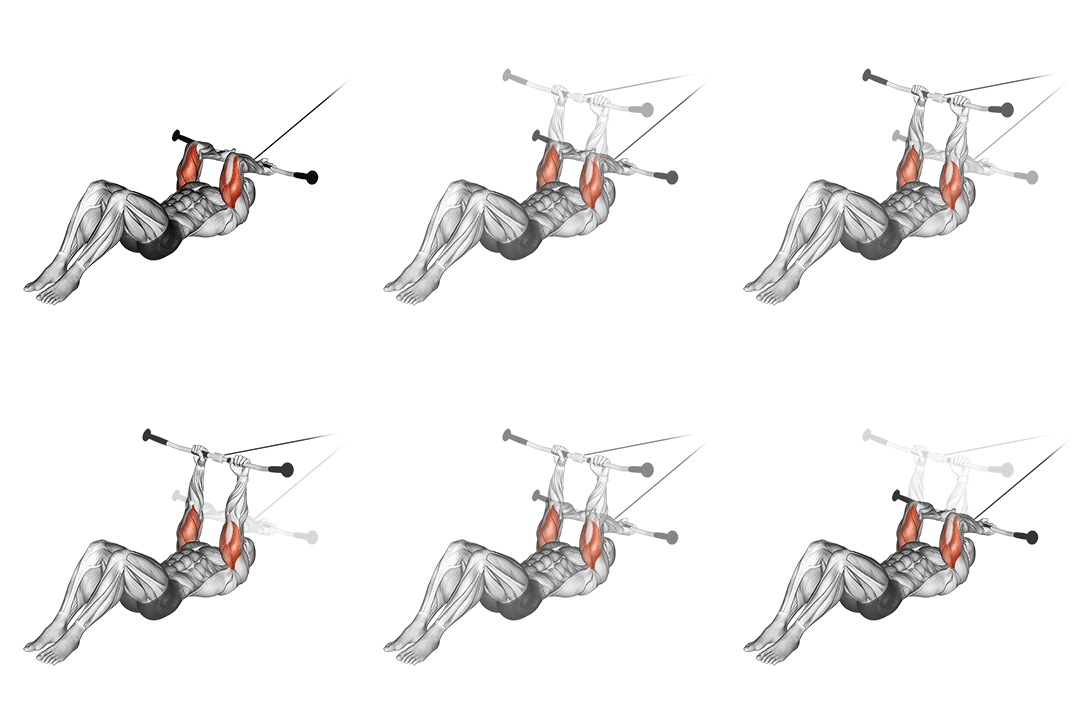
Cable Alternate Triceps Extension vs Cable Incline Triceps Extension

Compare target muscles, equipment, difficulty, movement type, and secondary muscles for Cable Alternate Triceps Extension and Cable Incline Triceps Extension.

Change comparison Share

Get comparison link

Select the link and use your device's Copy command.

Comparison overview

AI-generated
Cable Alternate Triceps Extension vs Cable Incline Triceps Extension — you’ve picked two solid triceps isolation moves. If you want clearer elbow extension strength, better long-head stretch, or a tool for unilateral control, this comparison helps you choose. I’ll walk through muscle emphasis, biomechanics (force vectors and length-tension), equipment needs, technique cues, and which move fits hypertrophy, strength, beginners, and home setups. Read on to learn how to set angles, pick rep ranges (6–15), and apply cues that maximize triceps activation.

Exercise Comparison

Exercise A
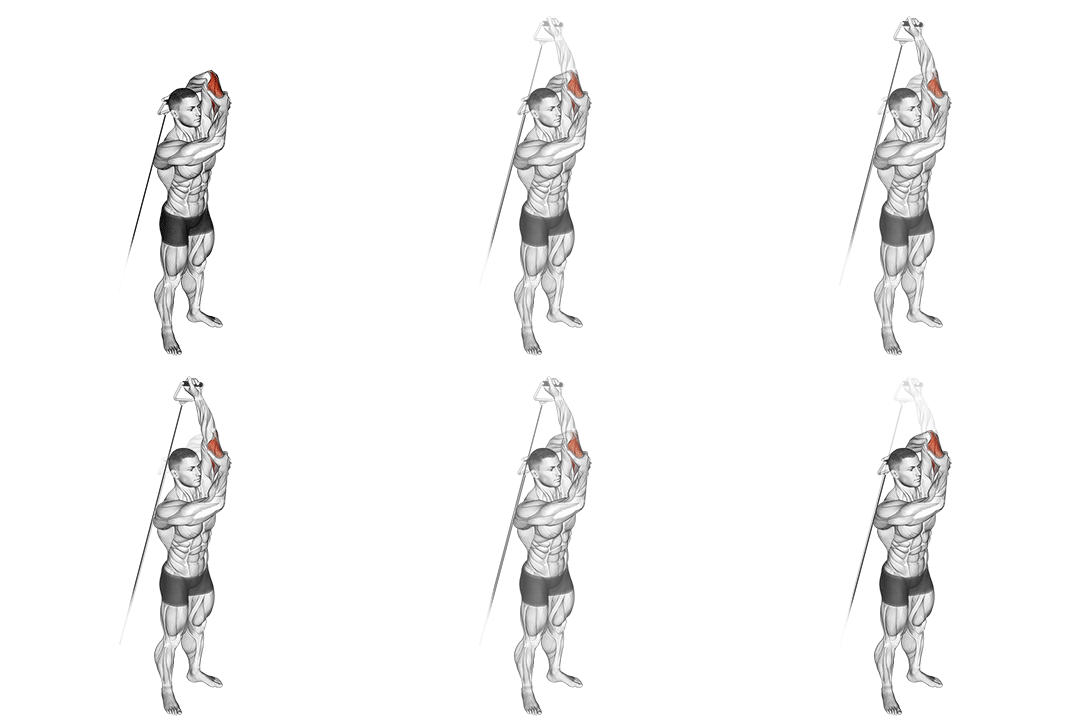
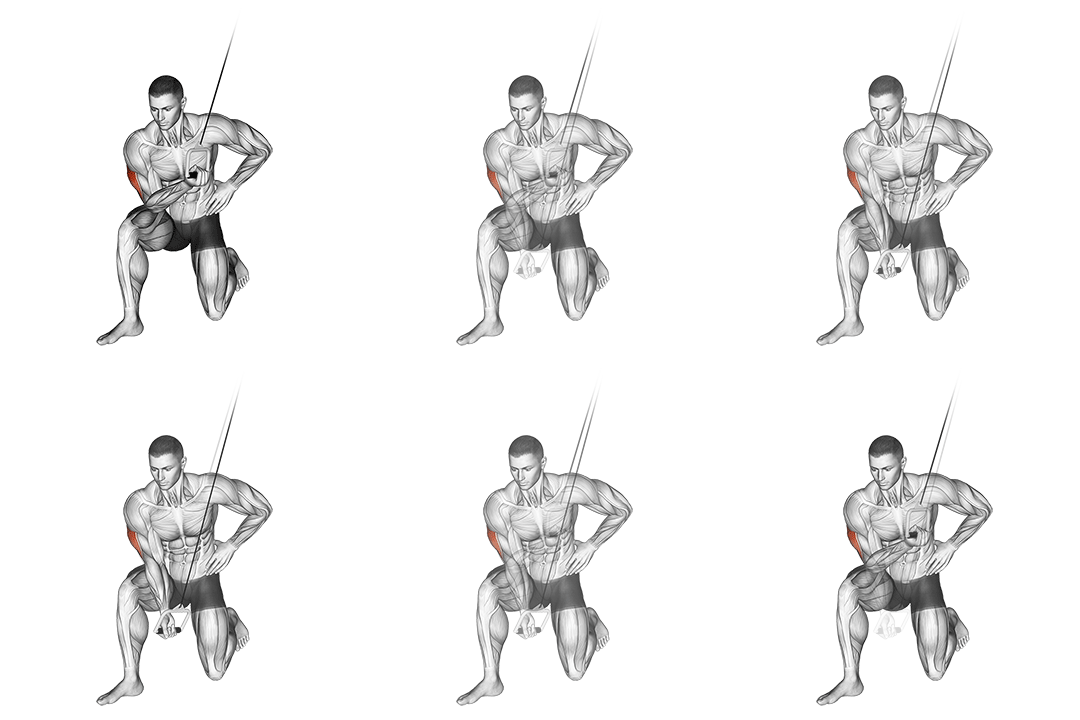
Cable Alternate Triceps Extension demonstration

Cable Alternate Triceps Extension

Target Triceps
Equipment Cable
Body Part Upper-arms
Difficulty Intermediate
Movement Isolation
Secondary Muscles
Shoulders
VS
Exercise B
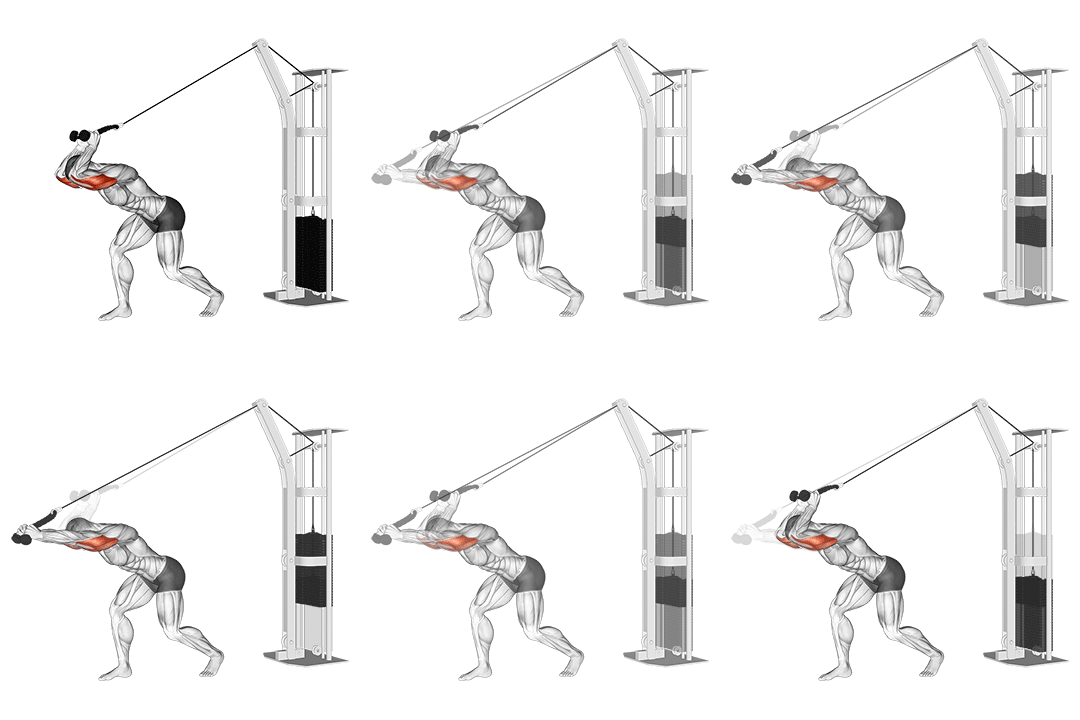
Cable Incline Triceps Extension demonstration

Cable Incline Triceps Extension

Target Triceps
Equipment Cable
Body Part Upper-arms
Difficulty Intermediate
Movement Isolation
Secondary Muscles
Shoulders

Head-to-Head Comparison

Different values are marked. These are catalogue attributes, not performance scores.

Muscles used

Listed target and secondary muscles, shown on the body. Locations, not activation or strength scores.

  • Target
  • Secondary
  • Not highlighted

Cable Alternate Triceps Extension

Front
Cable Alternate Triceps Extension: front muscle locationsSolid: listed target. Striped: listed secondary. Grey: not highlighted. Locations, not activation or strength scores. See the muscle names below.
Back
Cable Alternate Triceps Extension: back muscle locationsSolid: listed target. Striped: listed secondary. Grey: not highlighted. Locations, not activation or strength scores. See the muscle names below.
Target
Triceps
Secondary
Shoulders

Not shown on diagram: Shoulders. These labels do not identify a precise region on this map.

Cable Incline Triceps Extension

Front
Cable Incline Triceps Extension: front muscle locationsSolid: listed target. Striped: listed secondary. Grey: not highlighted. Locations, not activation or strength scores. See the muscle names below.
Back
Cable Incline Triceps Extension: back muscle locationsSolid: listed target. Striped: listed secondary. Grey: not highlighted. Locations, not activation or strength scores. See the muscle names below.
Target
Triceps
Secondary
Shoulders

Not shown on diagram: Shoulders. These labels do not identify a precise region on this map.

Grey does not mean a muscle is unused. The diagrams show only the mapped catalogue labels.

Attribute Cable Alternate Triceps Extension Cable Incline Triceps Extension
Target Muscle
Triceps
Triceps
Body Part
Upper-arms
Upper-arms
Equipment
Cable
Cable
Difficulty
Intermediate
Intermediate
Movement Type
Isolation
Isolation
Secondary Muscles
Shoulders
Shoulders

Visual Comparison

An illustrative 1–10 profile derived from catalog difficulty, equipment, and listed-muscle fields—not measured performance or muscle activation.

Key Differences

  • Both exercises target the Triceps using Cable. The catalogue does not establish which exercise is better for an individual goal.

Muscle comparison

Shared target muscles

Both exercises primarily load the triceps via elbow extension, recruiting the lateral, medial, and long heads. Peak internal torque occurs near 20–30° before full extension, so both hit the triceps across a similar range of motion. Expect comparable overall triceps volume per rep when using matched load and tempo.

Secondary muscle differences

Cable Incline Triceps Extension biases the long head more because the shoulder is placed in greater extension (bench set ~30–45°), lengthening the long head and shifting the length-tension curve toward higher passive tension. Cable Alternate Triceps Extension increases anti-rotation demand and scapular stabilizer (posterior deltoid, rotator cuff) involvement because you perform unilateral work in a standing or split stance position.

Muscle involvement analysis

With the incline variation the force vector aligns more with the long head (shoulder extension + elbow extension), so activation peaks earlier in the concentric phase as the long head shortens from a stretched start. In the alternate standing version the line of pull is often more horizontal: the lateral head contribution rises as you reach near-full extension while the medial head sustains consistent low-level activity. Technique cues: keep elbow fixed at the same azimuth, avoid protracting the shoulder, pause 0.5–1s at near-full extension, and control the eccentric for 2–3s to maximize time under tension.

Equipment and setup

Cable Alternate Triceps Extension: setup

Cable Alternate Triceps Extension: high pulley, single handle or rope attachment, optional weight stack; no bench required. You’ll want enough cable travel to allow a full elbow flexion starting position.

Cable Incline Triceps Extension: setup

Cable Incline Triceps Extension: incline bench (30–45°) set in front of a low or high pulley depending on preferred setup, rope or straight bar; bench anchors your torso so the shoulder can extend safely.

Access and practicality

Cable Alternate Triceps Extension — more accessible because it needs only a cable station and handle. No bench setup means quicker transitions in crowded gyms and easier to program into circuits.

Learning and progression

Learning the movements

Cable Incline Triceps Extension is easier to learn for isolation because your body is stabilized on the bench and the limb path is constrained. The incline reduces anti-rotation demands and helps you focus purely on elbow extension.

Progression considerations

Cable Alternate Triceps Extension offers more progression options via unilateral loading, tempo variations, peak contraction holds, and staggered stance stability challenges. You can also overload one arm to correct imbalances.

Limitations and precautions

Both are low-risk when performed with controlled tempo, but Cable Incline Triceps Extension places the shoulder into greater extension and can aggravate pre-existing anterior shoulder tightness or impingement. The standing alternate version can stress the low back or rotator cuff if you compensate without bracing.

Pros & Cons

Cable Alternate Triceps Extension

+ Pros

  • Unilateral control corrects left-right imbalances
  • Quick setup—only a cable and handle needed
  • Easier to adjust line of pull to target lateral or long head
  • Higher core and scapular stabilizer engagement builds functional strength

− Cons

  • Requires good torso stability to avoid cheating
  • Can be harder to load heavy compared to bilateral moves
  • Slightly more technical timing to keep elbows fixed and isolate the triceps

Cable Incline Triceps Extension

+ Pros

  • Better long-head stretch due to shoulder extension
  • Bench stabilizes torso so you can focus on the triceps
  • Consistent movement path reduces compensation
  • Easy to feel the muscle through full range when set up correctly

− Cons

  • Requires an incline bench and proper machine setup
  • Greater shoulder extension can irritate sensitive shoulders
  • Less core and unilateral control carryover

When Each Exercise Wins

1
For muscle hypertrophy: Cable Incline Triceps Extension

The incline setup lengthens the long head at the start of the rep, increasing time under tension for that head; use sets of 8–15 reps with 2–3s eccentrics and a 0.5–1s squeeze to maximize muscle growth.

2
For strength gains: Cable Alternate Triceps Extension

Unilateral loading and varied force vectors let you overload one arm and train force production more specifically; incorporate heavier sets of 4–8 reps and cluster sets to boost elbow extension strength.

3
For beginners: Cable Incline Triceps Extension

Bench stabilization reduces anti-rotation and balance demands, letting a beginner learn to isolate elbow extension and feel the triceps contraction without mastering standing stabilization.

4
For home workouts: Cable Alternate Triceps Extension

If you have a single cable station or resistance bands anchored high, you can replicate the standing alternate pattern easily; no bench needed makes it more practical for limited spaces.

Frequently Asked Questions

Can I do both Cable Alternate Triceps Extension and Cable Incline Triceps Extension in the same workout?
Yes — use one as your heavier, strength-focused exercise (e.g., alternate for 4–8 reps) and the other as a higher-rep finisher (incline for 10–15 reps). Space them to avoid fatigue-driven form breakdown, or place the incline later in the session for a focused long-head pump.

Which exercise is better for beginners?

Cable Incline Triceps Extension is generally better for beginners because the bench stabilizes the torso and reduces balance demands, letting you learn pure elbow extension mechanics before adding unilateral complexity.

How do the muscle activation patterns differ?

Incline variations place the shoulder in greater extension, increasing long-head length and early concentric contribution; standing alternate has a more horizontal pull that raises lateral-head engagement near lockout while demanding more scapular and core stabilization.

Can Cable Incline Triceps Extension replace Cable Alternate Triceps Extension?

It can replace it for hypertrophy-focused blocks, but not entirely if you need unilateral strength, balance correction, or core carryover. For well-rounded triceps development, cycle both or program them on separate days.

Comparison Summary

Pick Cable Incline Triceps Extension when your goal is targeted hypertrophy of the long head or when you want a stable, repeatable path to overload time under tension — set the bench to 30–45° and use 8–15 reps with controlled eccentrics. Choose Cable Alternate Triceps Extension when you need unilateral work, want to correct imbalances, or aim to build transfer to pressing patterns; load heavier for 4–8 reps or use tempo and holds for hypertrophy. Both are intermediate isolation moves; rotate them across training cycles to address different mechanical angles and to stimulate each triceps head through varied length-tension conditions.

Exercise instructions

Steps from the exercise catalogue. Read the full sequence before starting.

Cable Alternate Triceps Extension

  1. Stand facing the cable machine with your feet shoulder-width apart.
  2. Hold the cable handle with your right hand and bring your arm up so that your upper arm is parallel to the ground and your elbow is bent at a 90-degree angle.
  3. Keep your upper arm stationary and extend your forearm backward, fully straightening your arm.
Read remaining steps for Cable Alternate Triceps Extension
  1. Pause for a moment, then slowly return to the starting position.
  2. Repeat with your left arm.
  3. Continue alternating arms for the desired number of repetitions.

Cable Incline Triceps Extension

  1. Adjust the cable machine to a low pulley position.
  2. Attach a straight bar to the cable.
  3. Stand facing away from the machine with your feet shoulder-width apart.
Read remaining steps for Cable Incline Triceps Extension
  1. Grasp the bar with an overhand grip and extend your arms straight overhead.
  2. Lean forward slightly, keeping your back straight and core engaged.
  3. Bend your elbows and lower the bar behind your head, keeping your upper arms close to your ears.
  4. Pause for a moment, then extend your arms back to the starting position.
  5. Repeat for the desired number of repetitions.

Also Compare

Compare another pair

Choose two exercises to see their differences side by side.

Compare Exercises