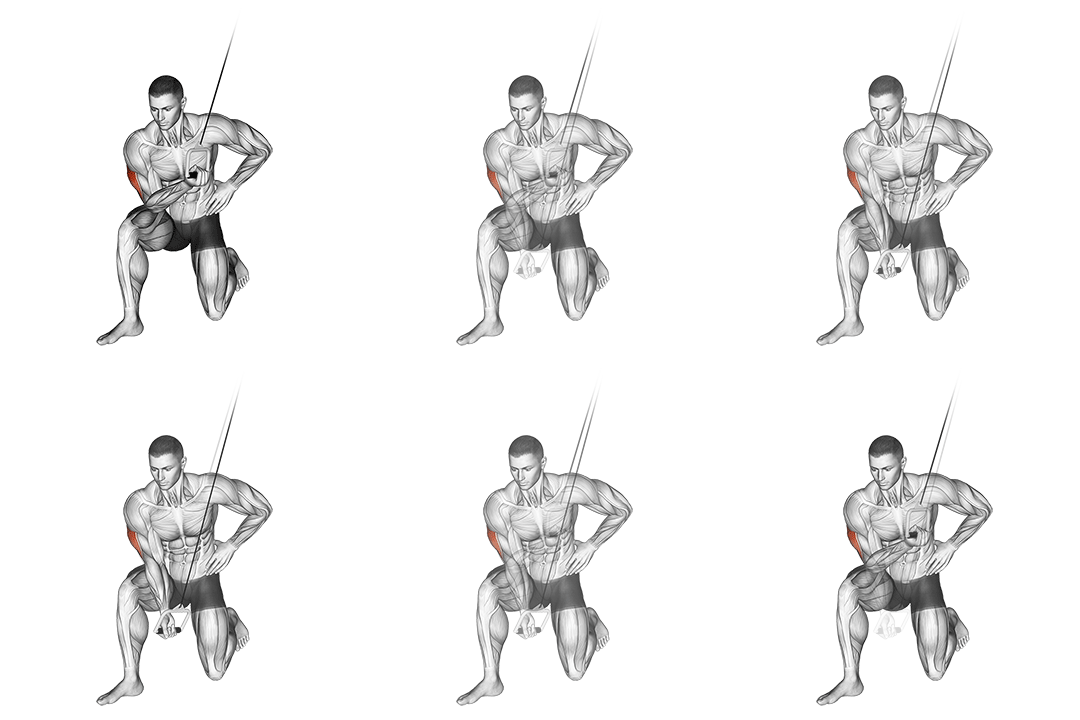
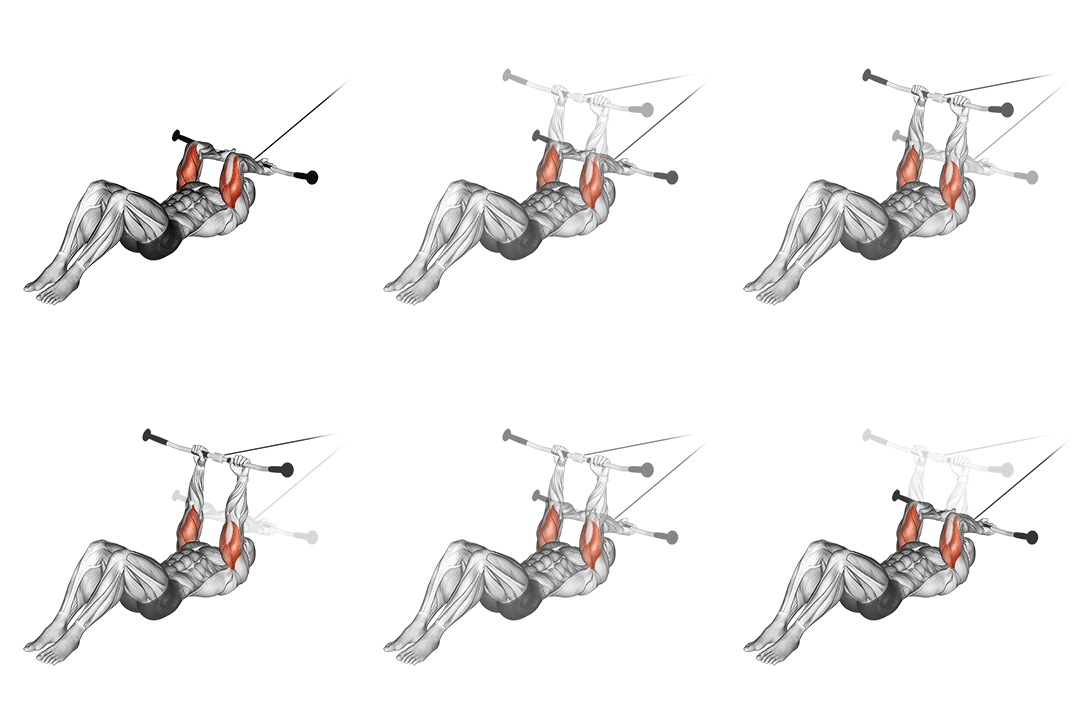
Cable Concentration Extension (On Knee) vs Cable Incline Triceps Extension

Compare target muscles, equipment, difficulty, movement type, and secondary muscles for Cable Concentration Extension (On Knee) and Cable Incline Triceps Extension.
Change comparison Share

Get comparison link

Select the link and use your device's Copy command.

Comparison overview

AI-generated
Cable Concentration Extension (on Knee) vs Cable Incline Triceps Extension — two cable isolation moves that hit the triceps differently. You’ll get clear guidance on muscle emphasis, setup and technique cues, equipment needs, and which choice fits your goals (hypertrophy, strength, or learning). I’ll walk you through biomechanics — shoulder angle, length-tension, and force vectors — plus practical rep ranges and progression tips so you can pick the better exercise for your program and perform it with solid technique.

Exercise Comparison

Exercise A
Cable Concentration Extension (On Knee) demonstration
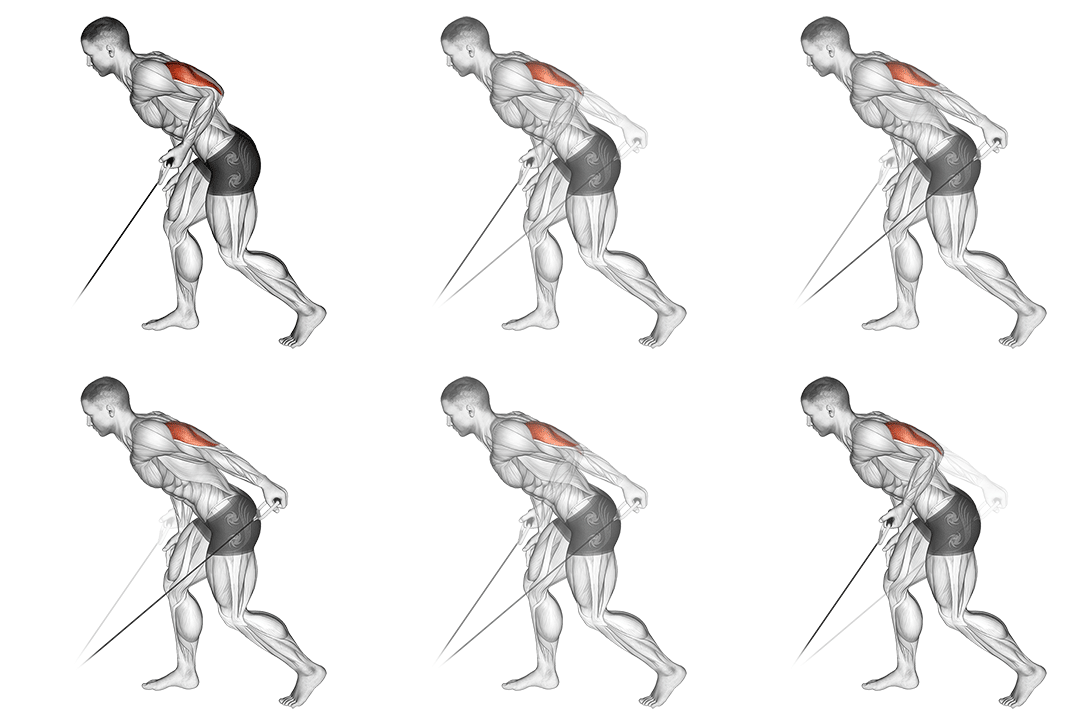
Cable Concentration Extension (On Knee)
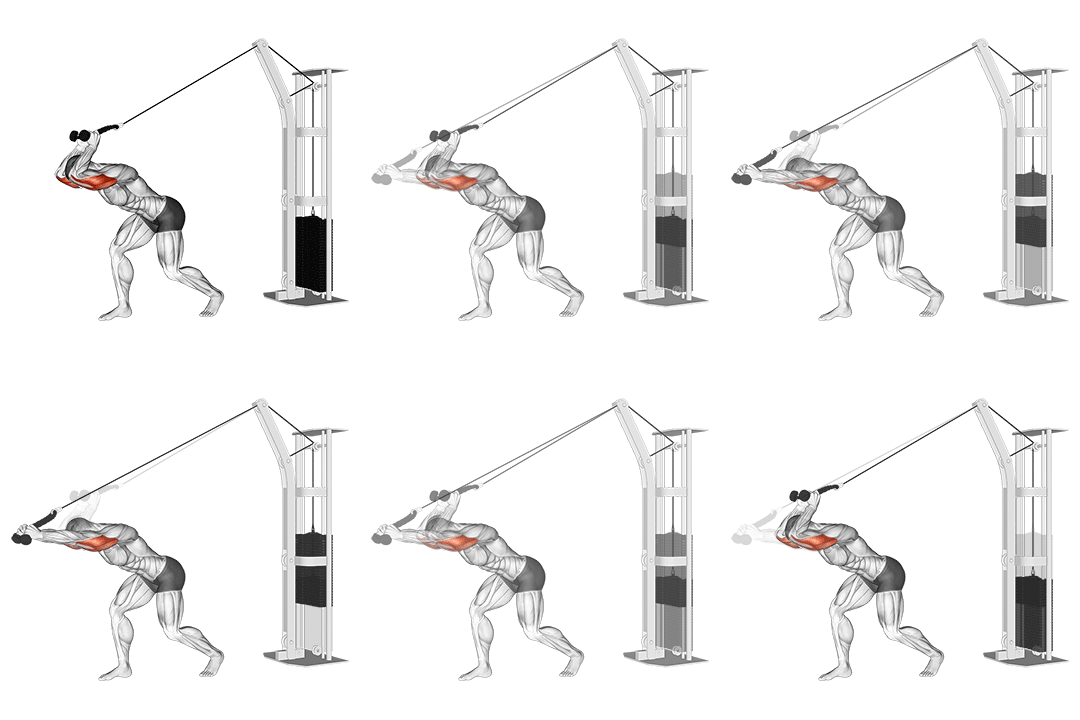
Target Triceps
Equipment Cable
Body Part Upper-arms
Difficulty Beginner
Movement Isolation
Secondary Muscles
Forearms
VS
Exercise B
Cable Incline Triceps Extension demonstration

Cable Incline Triceps Extension

Target Triceps
Equipment Cable
Body Part Upper-arms
Difficulty Intermediate
Movement Isolation
Secondary Muscles
Shoulders

Head-to-Head Comparison

Different values are marked. These are catalogue attributes, not performance scores.

Muscles used

Listed target and secondary muscles, shown on the body. Locations, not activation or strength scores.

  • Target
  • Secondary
  • Not highlighted

Cable Concentration Extension (On Knee)
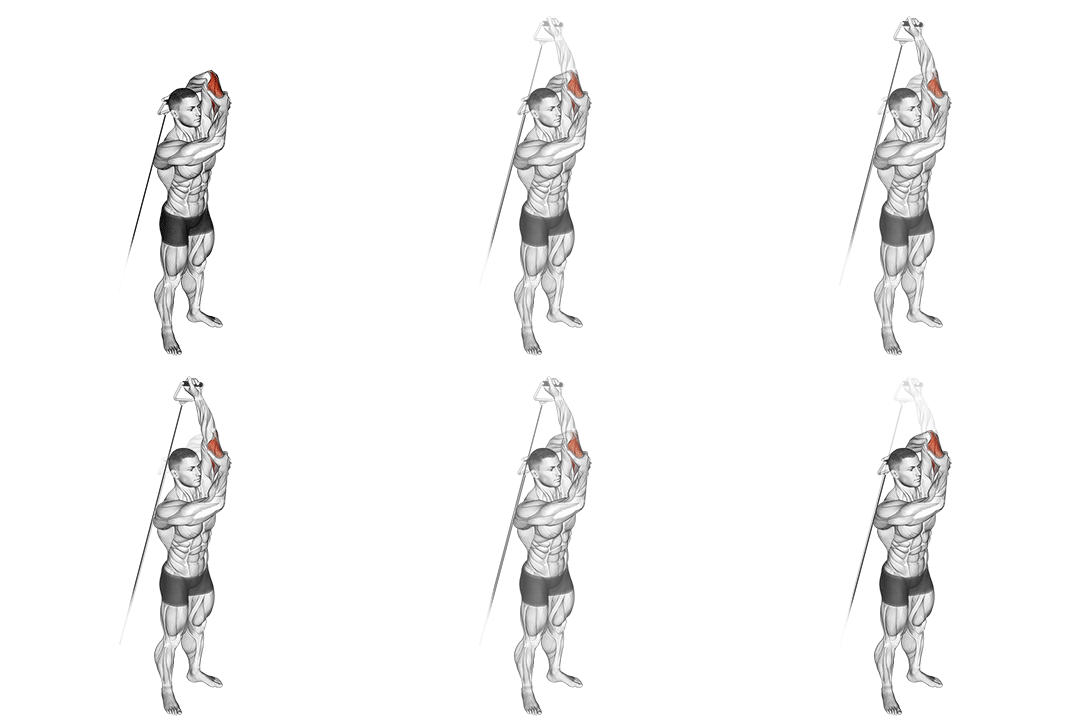
Front
Cable Concentration Extension (On Knee): front muscle locationsSolid: listed target. Striped: listed secondary. Grey: not highlighted. Locations, not activation or strength scores. See the muscle names below.
Back
Cable Concentration Extension (On Knee): back muscle locationsSolid: listed target. Striped: listed secondary. Grey: not highlighted. Locations, not activation or strength scores. See the muscle names below.
Target
Triceps
Secondary
Forearms

Cable Incline Triceps Extension

Front
Cable Incline Triceps Extension: front muscle locationsSolid: listed target. Striped: listed secondary. Grey: not highlighted. Locations, not activation or strength scores. See the muscle names below.
Back
Cable Incline Triceps Extension: back muscle locationsSolid: listed target. Striped: listed secondary. Grey: not highlighted. Locations, not activation or strength scores. See the muscle names below.
Target
Triceps
Secondary
Shoulders

Not shown on diagram: Shoulders. These labels do not identify a precise region on this map.

Grey does not mean a muscle is unused. The diagrams show only the mapped catalogue labels.

Attribute Cable Concentration Extension (On Knee) Cable Incline Triceps Extension
Target Muscle
Triceps
Triceps
Body Part
Upper-arms
Upper-arms
Equipment
Cable
Cable
Difficulty Different
Beginner
Intermediate
Movement Type
Isolation
Isolation
Secondary Muscles Different
Forearms
Shoulders

Visual Comparison

An illustrative 1–10 profile derived from catalog difficulty, equipment, and listed-muscle fields—not measured performance or muscle activation.

Key Differences

  • Difficulty levels differ: Cable Concentration Extension (On Knee) is beginner, while Cable Incline Triceps Extension is intermediate.
  • Both exercises target the Triceps using Cable. The catalogue does not establish which exercise is better for an individual goal.

Muscle comparison

Shared target muscles

Both exercises primarily target the triceps brachii and emphasize elbow extension. They share force vectors that load the triceps across similar ranges of motion, so both produce high lateral and medial head activity when performed with full elbow extension. The main overlap is strong isolation of the elbow extensors with minimal biceps involvement.

Secondary muscle differences

Cable Concentration Extension (on Knee) recruits the forearms more due to stabilization and grip demand while keeping the shoulder near neutral. Cable Incline Triceps Extension increases shoulder flexion (bench set at ~30–45°), which lengthens the long head and recruits the posterior shoulder stabilizers more. That means more deltoid and scapular-stability contribution on the incline variation.

Muscle involvement analysis

The knee concentration keeps the upper arm fixed and creates a steeper, near-vertical force vector that emphasizes peak contraction and end-range triceps tension. The incline variation moves the shoulder into flexion, placing the long head on stretch and shifting force through a more horizontal vector at the top of the movement. Expect stronger peak contraction with concentration and greater long-head stretch (and time under tension) with incline.

Equipment and setup

Cable Concentration Extension (On Knee): setup

Cable machine with a single handle, low pulley; a durable bench or stable platform to kneel beside; minimal setup and one anchor point.

Cable Incline Triceps Extension: setup

Cable machine plus an adjustable incline bench set to roughly 30–45°; two hands on a handle or rope for bilateral loading; more setup to align bench angle and cable path.

Access and practicality

Cable Concentration Extension (on Knee) — it needs less equipment and setup. You can perform it with a single low pulley and a small platform, making it faster to load and easier to fit into crowded gym time slots.

Learning and progression

Learning the movements

Cable Concentration Extension (on Knee) is easier to learn: single-arm movement, simpler path, and clear tactile feedback for elbow extension. Cable Incline Triceps Extension has a steeper learning curve because you must coordinate bench angle, shoulder position, and bilateral control.

Progression considerations

Cable Incline Triceps Extension offers more progressive overload options — you can load bilaterally, use heavier stacks, alter bench angle (30–45°) and vary tempo for increased time under tension. The concentration variant scales by load and reps but is limited by single-arm strength and stabilization capacity.

Limitations and precautions

Cable Concentration (on Knee) carries lower shoulder risk because the shoulder remains near neutral. Cable Incline increases passive tension on the long head and shoulder capsule; if you use excessive load or too-high bench angles (>45°) you raise risk of anterior shoulder strain. Controlled range and conservative loads reduce risk for both.

Pros & Cons

Cable Concentration Extension (On Knee)

+ Pros

  • Exceptional peak contraction and mind-muscle connection for the triceps
  • Minimal equipment and fast setup — good for supersets or finisher work
  • Lower shoulder strain due to neutral shoulder position
  • Better single-arm correction for left-right strength imbalances

− Cons

  • Limited loading potential compared to bilateral variations
  • More forearm and grip fatigue can limit true triceps stimulus
  • Less long-head stretch — may miss some hypertrophy stimulus available with shoulder-flexed positions

Cable Incline Triceps Extension

+ Pros

  • Stronger long-head stretch due to shoulder flexion (30–45° incline)
  • Higher total load potential when done bilaterally
  • Better time-under-tension for mid-range and stretch positions
  • Easier to progressively overload with heavier stacks or pauses

− Cons

  • Requires bench and more setup time
  • Greater shoulder demand; technique errors can load the capsule
  • More coordination needed to keep elbows tracking and avoid torso drive

When Each Exercise Wins

1
For muscle hypertrophy: Cable Incline Triceps Extension

The incline position stretches the long head and increases time under tension across the shoulder-elbow chain, which promotes more total triceps mechanical tension. Use 8–12 reps, 3–4 sets, and a 30–45° bench to maximize long-head loading.

2
For strength gains: Cable Incline Triceps Extension

Bilateral loading and higher absolute loads on the incline allow heavier stacks and better progressive overload. Aim for 4–6 reps with slow eccentrics and stable scapular positioning to build force capacity.

3
For beginners: Cable Concentration Extension (on Knee)

Its single-arm, vertical force vector simplifies coordination and reduces shoulder stress, so beginners learn elbow-extension mechanics more safely. Start with light loads and 10–15 reps focusing on full extension and controlled tempo.

4
For home workouts: Cable Concentration Extension (on Knee)

If you have a single low-pulley setup or resistance band anchored low, the kneeling concentration requires less space and equipment. It’s quick to set up and effective as a triceps finisher.

Frequently Asked Questions

Can I do both Cable Concentration Extension (on Knee) and Cable Incline Triceps Extension in the same workout?

Yes. Pair them sensibly: use the incline for heavier, compound-style sets (4–8 reps) then finish with kneeling concentration for 10–15 controlled reps to maximize peak contraction and metabolic stress.

Which exercise is better for beginners?

Cable Concentration Extension (on Knee) is better for beginners because it simplifies the movement pattern and reduces shoulder strain. It teaches strict elbow extension and builds a foundation before adding the shoulder demand of incline work.

How do the muscle activation patterns differ?

Concentration delivers a vertical force vector that emphasizes peak contraction and forearm stabilization, isolating the lateral and medial heads. Incline places the shoulder into flexion, lengthening the long head and increasing its contribution through the ROM, especially at the bottom of the lift.

Can Cable Incline Triceps Extension replace Cable Concentration Extension (on Knee)?

Only partially. Incline can cover long-head hypertrophy and load capacity, but it won’t replicate the exact peak contraction and unilateral control you get from the kneeling concentration. Use incline for load and stretch, and concentration for isolation and symmetry work.

Comparison Summary

Both moves isolate the triceps but serve distinct roles. Use Cable Concentration Extension (on Knee) when you want tight peak contraction, simple setup, or to correct unilateral imbalances — it’s beginner-friendly and places less demand on the shoulder. Choose Cable Incline Triceps Extension when your goal is greater long-head stimulus and heavier progressive overload; set the bench at 30–45° and control the eccentric to exploit the length-tension advantage. Program both across a training block: concentration for high-quality peak reps and incline for load and stretch-based hypertrophy phases.

Exercise instructions

Steps from the exercise catalogue. Read the full sequence before starting.

Cable Concentration Extension (On Knee)

  1. Sit on a bench or chair with your knees bent and feet flat on the ground.
  2. Hold the cable handle with your right hand and place your elbow on the inside of your right knee.
  3. Extend your arm fully, keeping your elbow stationary and close to your knee.
Read remaining steps for Cable Concentration Extension (On Knee)
  1. Pause for a moment at the top, then slowly lower your arm back to the starting position.
  2. Repeat for the desired number of repetitions, then switch sides.

Cable Incline Triceps Extension

  1. Adjust the cable machine to a low pulley position.
  2. Attach a straight bar to the cable.
  3. Stand facing away from the machine with your feet shoulder-width apart.
Read remaining steps for Cable Incline Triceps Extension
  1. Grasp the bar with an overhand grip and extend your arms straight overhead.
  2. Lean forward slightly, keeping your back straight and core engaged.
  3. Bend your elbows and lower the bar behind your head, keeping your upper arms close to your ears.
  4. Pause for a moment, then extend your arms back to the starting position.
  5. Repeat for the desired number of repetitions.

Also Compare

Compare another pair

Choose two exercises to see their differences side by side.

Compare Exercises