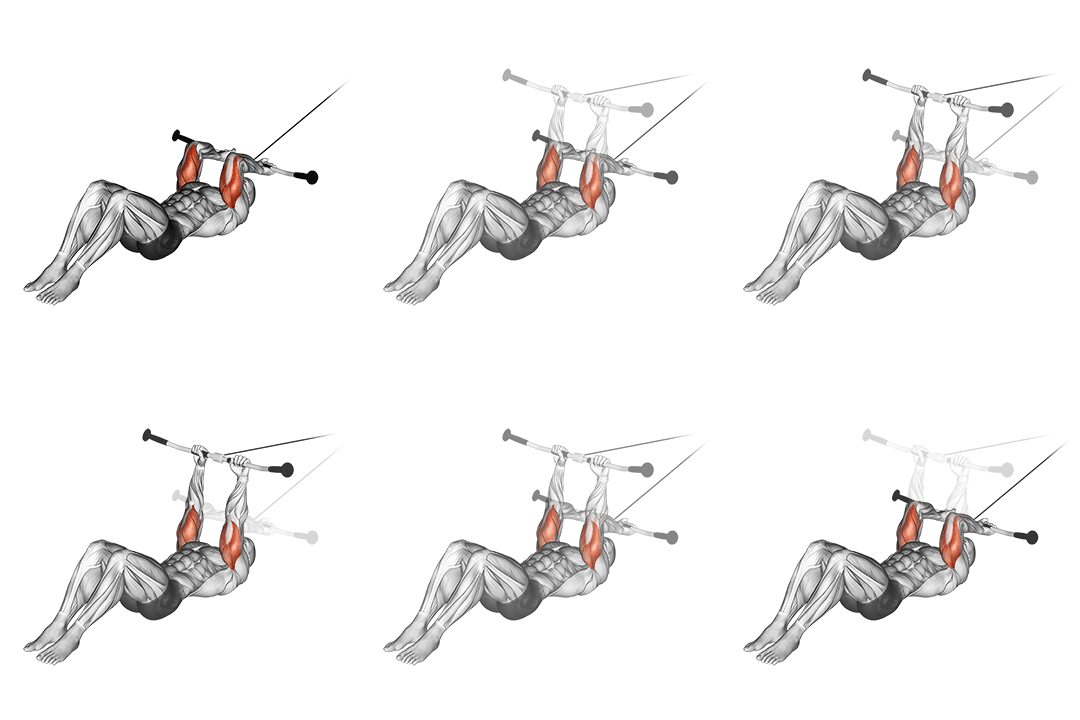
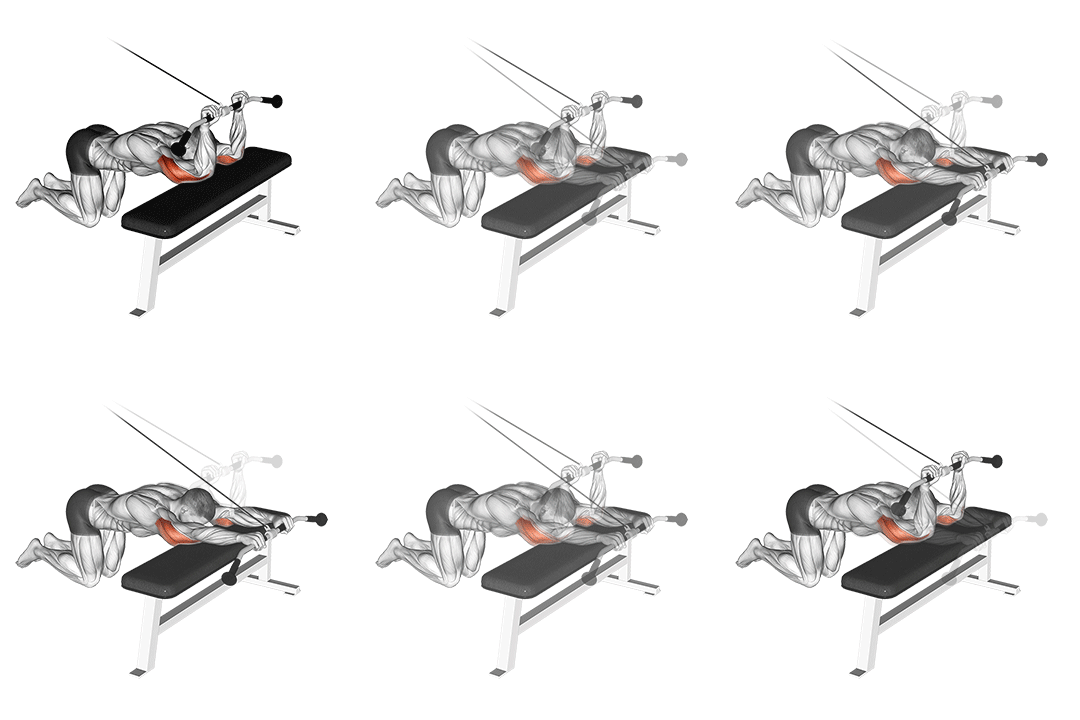
Cable Incline Triceps Extension vs Cable Kickback

Compare target muscles, equipment, difficulty, movement type, and secondary muscles for Cable Incline Triceps Extension and Cable Kickback.

Change comparison Share

Get comparison link

Select the link and use your device's Copy command.

Comparison overview

AI-generated
Cable Incline Triceps Extension vs Cable Kickback — if you want bigger, stronger upper-arms you need to pick the right isolation move. In this comparison I’ll break down how each exercise loads the triceps, the shoulder and elbow mechanics, which one stretches the long head more, equipment needs, learning curve, and practical programming tips. You’ll get clear technique cues, rep ranges, and when to use one over the other so you can plan workouts that prioritize muscle growth, strength, or safer progress.

Exercise Comparison

Exercise A
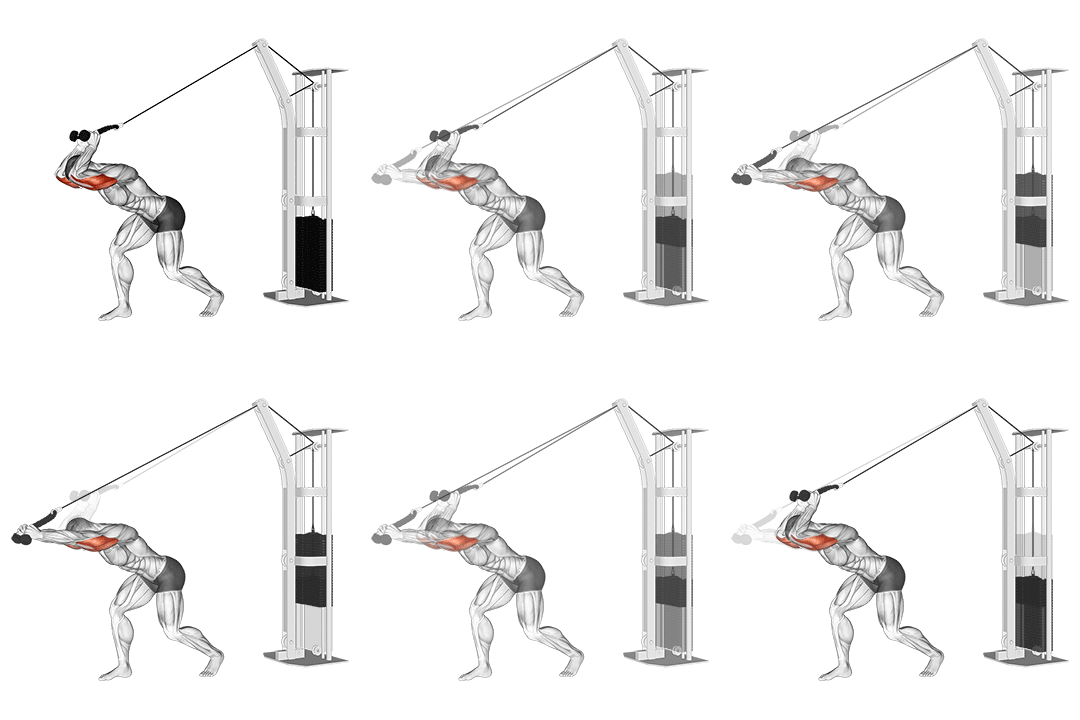
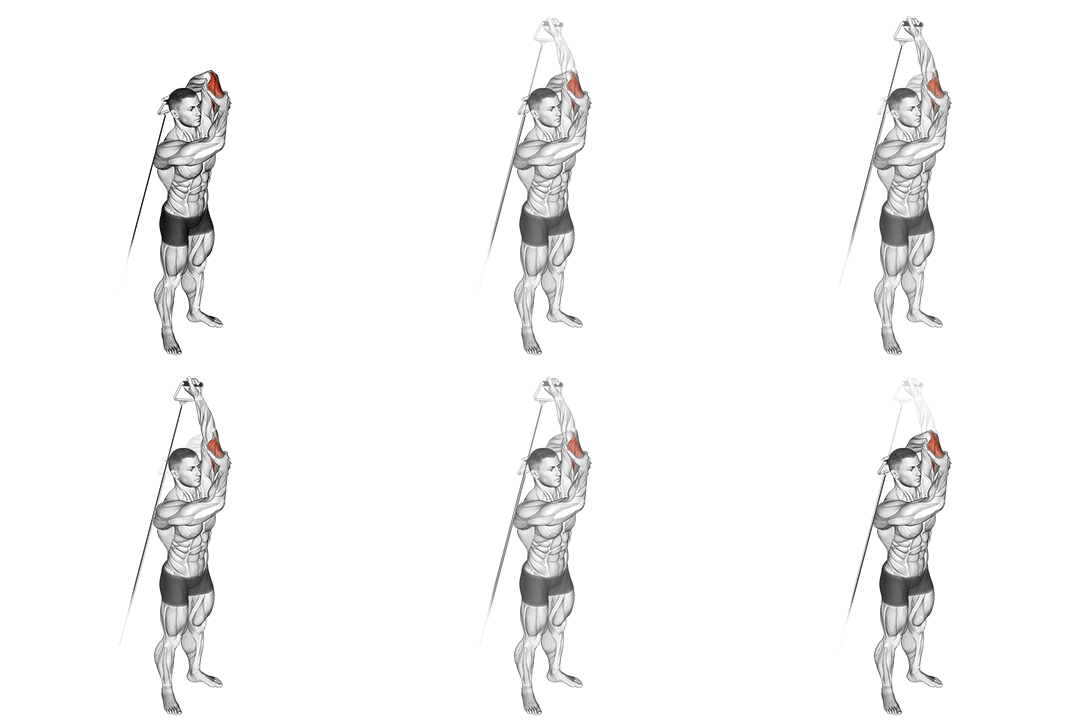
Cable Incline Triceps Extension demonstration

Cable Incline Triceps Extension

Target Triceps
Equipment Cable
Body Part Upper-arms
Difficulty Intermediate
Movement Isolation
Secondary Muscles
Shoulders
VS
Exercise B
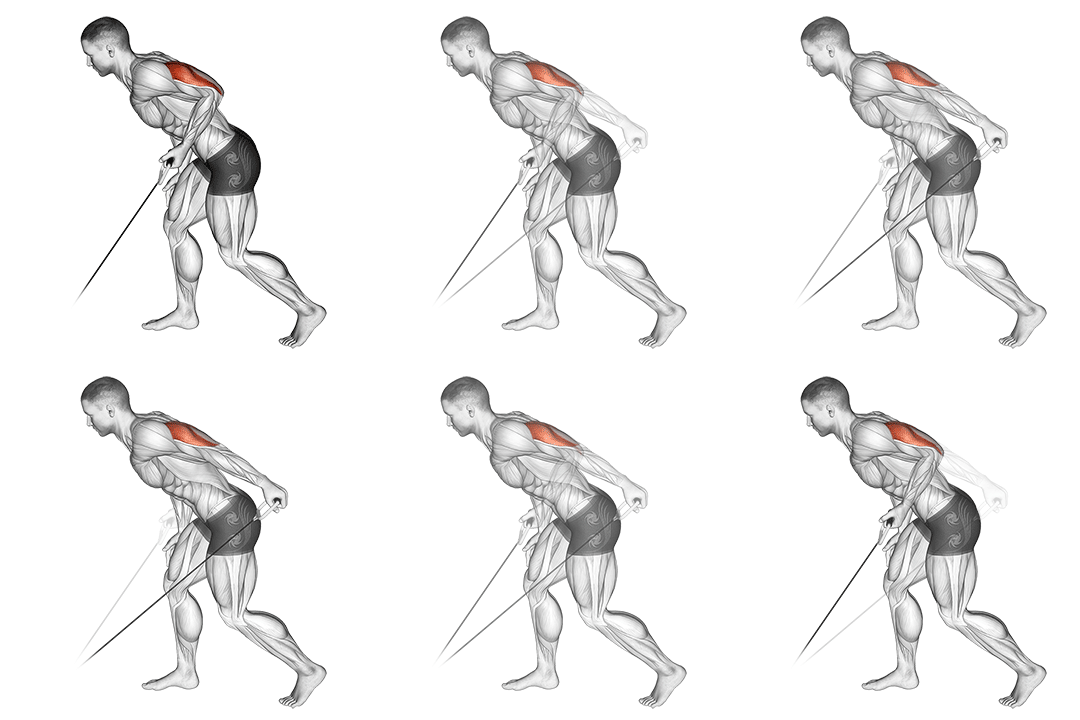
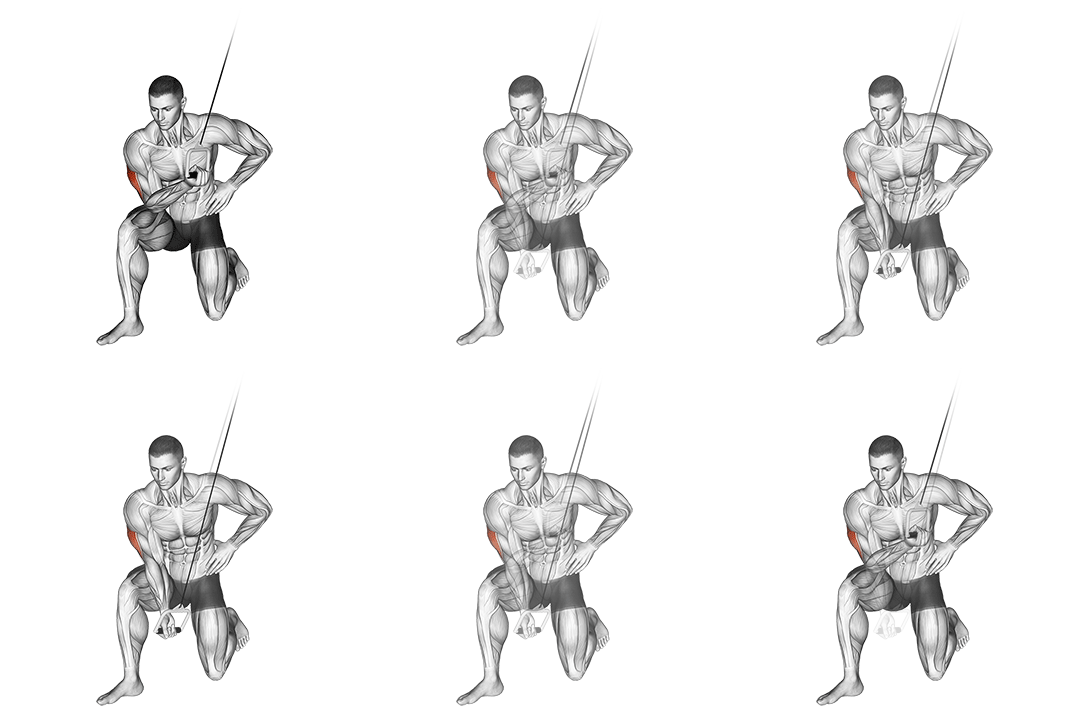
Cable Kickback demonstration

Cable Kickback

Target Triceps
Equipment Cable
Body Part Upper-arms
Difficulty Beginner
Movement Isolation
Secondary Muscles
Shoulders

Head-to-Head Comparison

Different values are marked. These are catalogue attributes, not performance scores.

Muscles used

Listed target and secondary muscles, shown on the body. Locations, not activation or strength scores.

  • Target
  • Secondary
  • Not highlighted

Cable Incline Triceps Extension

Front
Cable Incline Triceps Extension: front muscle locationsSolid: listed target. Striped: listed secondary. Grey: not highlighted. Locations, not activation or strength scores. See the muscle names below.
Back
Cable Incline Triceps Extension: back muscle locationsSolid: listed target. Striped: listed secondary. Grey: not highlighted. Locations, not activation or strength scores. See the muscle names below.
Target
Triceps
Secondary
Shoulders

Not shown on diagram: Shoulders. These labels do not identify a precise region on this map.

Cable Kickback

Front
Cable Kickback: front muscle locationsSolid: listed target. Striped: listed secondary. Grey: not highlighted. Locations, not activation or strength scores. See the muscle names below.
Back
Cable Kickback: back muscle locationsSolid: listed target. Striped: listed secondary. Grey: not highlighted. Locations, not activation or strength scores. See the muscle names below.
Target
Triceps
Secondary
Shoulders

Not shown on diagram: Shoulders. These labels do not identify a precise region on this map.

Grey does not mean a muscle is unused. The diagrams show only the mapped catalogue labels.

Attribute Cable Incline Triceps Extension Cable Kickback
Target Muscle
Triceps
Triceps
Body Part
Upper-arms
Upper-arms
Equipment
Cable
Cable
Difficulty Different
Intermediate
Beginner
Movement Type
Isolation
Isolation
Secondary Muscles
Shoulders
Shoulders

Visual Comparison

An illustrative 1–10 profile derived from catalog difficulty, equipment, and listed-muscle fields—not measured performance or muscle activation.

Key Differences

  • Difficulty levels differ: Cable Incline Triceps Extension is intermediate, while Cable Kickback is beginner.
  • Both exercises target the Triceps using Cable. The catalogue does not establish which exercise is better for an individual goal.

Muscle comparison

Shared target muscles

Both exercises isolate the triceps, with emphasis on the long head and lateral head depending on arm position. The Cable Incline Triceps Extension places the shoulder in relative flexion, lengthening the long head and increasing tension in the stretched position (higher passive tension and potential for greater hypertrophy). The Cable Kickback keeps the upper arm close to the torso or slightly behind, shortening the long head and shifting force slightly toward the lateral head. EMG literature and length-tension principles predict higher long-head stress on the incline variation and more terminal elbow-extension emphasis on the kickback.

Secondary muscle differences

Secondary muscle recruitment differs because of shoulder angle and trunk position. The incline extension recruits anterior deltoid isometrically to stabilize the shoulder at about 30–45 degrees of flexion, while the kickback uses the posterior shoulder and scapular stabilizers subtly when the arm is behind the torso. Core and lower-back demand rises slightly on incline if you sit back on a bench, whereas kickbacks demand less core tension but more scapular control.

Muscle involvement analysis

During the Cable Incline Triceps Extension the triceps experiences a longer muscle length at the start of the concentric, increasing time under tension and force produced during mid-range to lockout. Peak torque shifts earlier in the range as the long head crosses the stretched-to-mid range. In the Cable Kickback activation peaks closer to terminal elbow extension because the line of pull is more parallel to the forearm, producing a stronger moment arm at the end of the movement.

Equipment and setup

Cable Incline Triceps Extension: setup

Cable Incline Triceps Extension requires a cable machine with a high or mid pulley, an incline bench set to about 30–45 degrees, and a single-hand or rope attachment. You need stable bench placement to maintain shoulder angle and a pulley that tracks behind your head.

Cable Kickback: setup

Cable Kickback needs a low pulley and a single handle or D-handle; you can perform it standing with one knee on a bench or hinged at the hips. Minimal bench usage or none at all; the setup is quicker and uses less space.

Access and practicality

Cable Kickback is more accessible because it needs only a low pulley and minimal setup. The incline variation demands a bench and precise bench-to-pulley alignment, which many gyms or small home setups may not provide.

Learning and progression

Learning the movements

Cable Kickback has a shorter learning curve — the pattern is a simple elbow extension against a fixed cable line and is easier to cue for most lifters. The incline extension is intermediate because you must control shoulder flexion, bench angle, and a longer muscle-length start which can invite cheating if you don't stabilize properly.

Progression considerations

Cable Incline Triceps Extension offers greater progression potential for hypertrophy because you can increase mechanical tension by raising load, increasing bench angle slightly, or slowing tempo to add 20–40% more time under tension. Kickbacks suit higher rep progressions and can be progressed via tempo, range-of-motion pauses, or increasing sets, but absolute loading tends to be lower.

Limitations and precautions

Kickbacks present lower acute injury risk when performed with moderate load, but poor shoulder/elbow control can cause hyperextension or scapular winging. Incline extensions carry a higher elbow and long-head strain risk if you use excessive load or aggressive lockout—maintain controlled ROM and stop if you feel pinching at the posterior shoulder.

Pros & Cons

Cable Incline Triceps Extension

+ Pros

  • Stretches the long head to a longer starting length, increasing hypertrophy potential
  • Allows heavier, more sustained loading through a bench setup
  • Clear line of pull for progressive overload and tempo manipulation
  • Better mechanical tension across mid-range and stretch positions

− Cons

  • Requires an incline bench plus correct pulley alignment
  • Greater technical demand; easier to cheat with shoulder movement
  • Higher stress on elbow and posterior shoulder if overloaded

Cable Kickback

+ Pros

  • Simple setup and quick to learn for most lifters
  • Better for high-rep endurance and finishing work
  • Minimal equipment footprint—low pulley and handle
  • Lower immediate load on elbow joints; easier to control form

− Cons

  • Limited absolute loading, reducing maximal mechanical stress
  • Less long-head stretch so slightly less hypertrophic stimulus per rep
  • Can encourage momentum or shoulder swing if not braced

When Each Exercise Wins

1
For muscle hypertrophy: Cable Incline Triceps Extension

The incline position lengthens the long head and increases time under tension; use 6–12 reps with controlled 2–3 second eccentrics to exploit the stretch-mediated hypertrophy mechanisms.

2
For strength gains: Cable Incline Triceps Extension

It supports heavier, more consistent loading and better mechanical tension across the arc of motion, which transfers to stronger lockouts when trained in lower rep ranges (4–8 reps) with strict form.

3
For beginners: Cable Kickback

Kickbacks are easier to teach and execute, require simpler setup, and allow beginners to focus on elbow extension mechanics without managing bench angle or a stretched long head.

4
For home workouts: Cable Kickback

Kickbacks translate easily to low-pulley setups or resistance bands and require minimal space and equipment, making them the more practical choice for home training.

Frequently Asked Questions

Can I do both Cable Incline Triceps Extension and Cable Kickback in the same workout?

Yes — pairing them makes sense. Use the incline extension early for heavy, tension-focused sets (6–10 reps), then finish with kickbacks for higher-rep metabolic work (12–20 reps) to fully fatigue the triceps across ranges.

Which exercise is better for beginners?

Cable Kickback is better for beginners because the movement isolates elbow extension with minimal setup and lower technical demand. It helps you learn triceps mechanics before adding the bench and stretched start position of the incline extension.

How do the muscle activation patterns differ?

The incline extension emphasizes the long head via a stretched start and increases mid-range tension, while the kickback produces peak activation near terminal elbow extension. Length-tension and force-vector differences explain why incline favors hypertrophy and kickback favors end-range loading.

Can Cable Kickback replace Cable Incline Triceps Extension?

Not if your primary goal is maximal hypertrophy or improving heavy lockouts — the incline extension provides a longer muscle-length stimulus and greater mechanical tension. Kickbacks can replace incline for volume or when equipment is limited, but they won't match the same stretch-mediated stimulus.

Comparison Summary

Use Cable Incline Triceps Extension when your goal is targeted hypertrophy or improving elbow lockout strength: set the bench to 30–45 degrees, use a rope or single handle, and work in 6–12 reps with slow 2–3 second eccentrics to maximize stretch and mechanical tension. Choose Cable Kickback if you want a beginner-friendly, convenient isolation movement for higher reps (12–20) or as a finisher; brace your torso, hinge at the hip, and drive through the elbow to avoid shoulder swing. Both have roles: incline extension for heavy, tension-focused work; kickbacks for volume, endurance, and accessibility.

Exercise instructions

Steps from the exercise catalogue. Read the full sequence before starting.

Cable Incline Triceps Extension

  1. Adjust the cable machine to a low pulley position.
  2. Attach a straight bar to the cable.
  3. Stand facing away from the machine with your feet shoulder-width apart.
Read remaining steps for Cable Incline Triceps Extension
  1. Grasp the bar with an overhand grip and extend your arms straight overhead.
  2. Lean forward slightly, keeping your back straight and core engaged.
  3. Bend your elbows and lower the bar behind your head, keeping your upper arms close to your ears.
  4. Pause for a moment, then extend your arms back to the starting position.
  5. Repeat for the desired number of repetitions.

Cable Kickback

  1. Stand facing a cable machine with your feet shoulder-width apart.
  2. Hold the cable handle with your right hand and step back to create tension in the cable.
  3. Bend your knees slightly and hinge forward at the hips, keeping your back straight.
Read remaining steps for Cable Kickback
  1. Keep your upper arm close to your body and your elbow bent at a 90-degree angle.
  2. Extend your forearm backward, straightening your arm fully.
  3. Pause for a moment, then slowly return to the starting position.
  4. Repeat for the desired number of repetitions, then switch sides.

Also Compare

Compare another pair

Choose two exercises to see their differences side by side.

Compare Exercises