Cable Concentration Extension (On Knee) vs Cable Kickback
Compare target muscles, equipment, difficulty, movement type, and secondary muscles for Cable Concentration Extension (On Knee) and Cable Kickback.
Change comparison Share

Get comparison link

Select the link and use your device's Copy command.

Comparison overview

AI-generated
Cable Concentration Extension (on Knee) vs Cable Kickback — you’re choosing between two beginner-friendly cable isolation moves that target the triceps. In this guide I’ll walk you through how each exercise hits the three triceps heads, what secondary muscles come into play, precise technique cues, equipment needs, and which one to pick for hypertrophy, strength, or simple home setups. Read on and you’ll get clear rep ranges (6–12 for strength-to-hypertrophy work, 12–20 for metabolic sets), joint-angle notes, and actionable progressions so you can pick the right tool for your program.

Exercise Comparison

Exercise A
Cable Concentration Extension (On Knee) demonstration
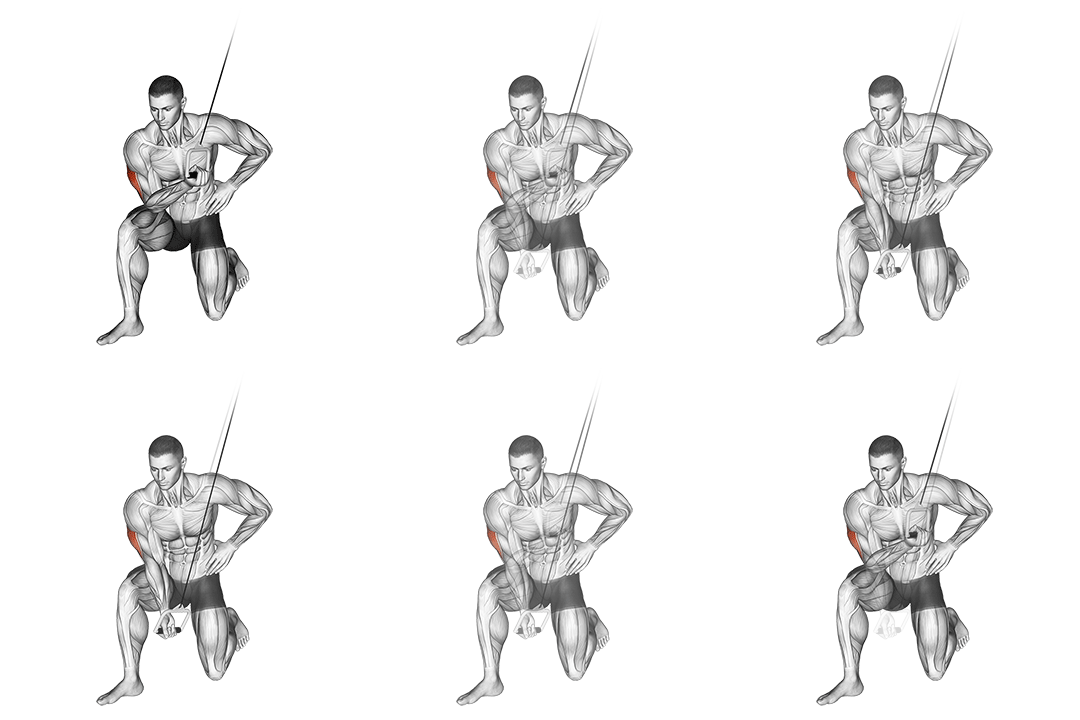
Cable Concentration Extension (On Knee)
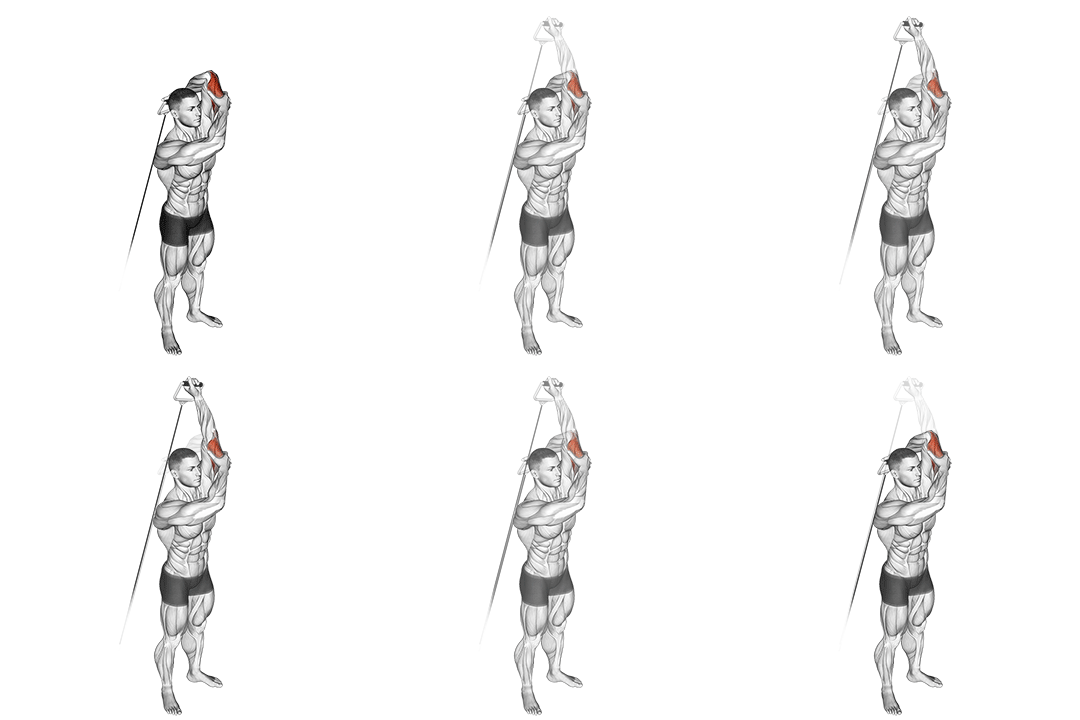
Target Triceps
Equipment Cable
Body Part Upper-arms
Difficulty Beginner
Movement Isolation
Secondary Muscles
Forearms
VS
Exercise B
Cable Kickback demonstration

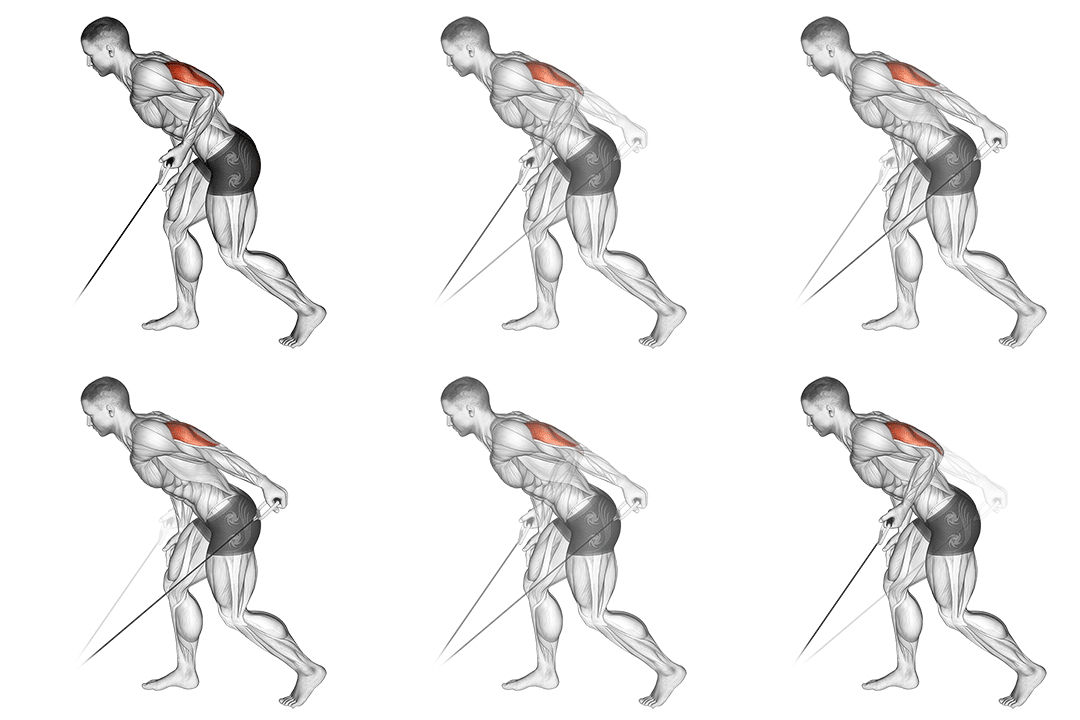
Cable Kickback

Target Triceps
Equipment Cable
Body Part Upper-arms
Difficulty Beginner
Movement Isolation
Secondary Muscles
Shoulders

Head-to-Head Comparison

Different values are marked. These are catalogue attributes, not performance scores.

Muscles used

Listed target and secondary muscles, shown on the body. Locations, not activation or strength scores.

  • Target
  • Secondary
  • Not highlighted

Cable Concentration Extension (On Knee)

Front
Cable Concentration Extension (On Knee): front muscle locationsSolid: listed target. Striped: listed secondary. Grey: not highlighted. Locations, not activation or strength scores. See the muscle names below.
Back
Cable Concentration Extension (On Knee): back muscle locationsSolid: listed target. Striped: listed secondary. Grey: not highlighted. Locations, not activation or strength scores. See the muscle names below.
Target
Triceps
Secondary
Forearms

Cable Kickback

Front
Cable Kickback: front muscle locationsSolid: listed target. Striped: listed secondary. Grey: not highlighted. Locations, not activation or strength scores. See the muscle names below.
Back
Cable Kickback: back muscle locationsSolid: listed target. Striped: listed secondary. Grey: not highlighted. Locations, not activation or strength scores. See the muscle names below.
Target
Triceps
Secondary
Shoulders

Not shown on diagram: Shoulders. These labels do not identify a precise region on this map.

Grey does not mean a muscle is unused. The diagrams show only the mapped catalogue labels.

Attribute Cable Concentration Extension (On Knee) Cable Kickback
Target Muscle
Triceps
Triceps
Body Part
Upper-arms
Upper-arms
Equipment
Cable
Cable
Difficulty
Beginner
Beginner
Movement Type
Isolation
Isolation
Secondary Muscles Different
Forearms
Shoulders

Visual Comparison

An illustrative 1–10 profile derived from catalog difficulty, equipment, and listed-muscle fields—not measured performance or muscle activation.

Key Differences

  • Both exercises target the Triceps using Cable. The catalogue does not establish which exercise is better for an individual goal.

Muscle comparison

Shared target muscles

Both moves primarily drive elbow extension, so they heavily load the triceps brachii. Biomechanically, both emphasize the lateral and medial heads because those do the bulk of elbow extension torque; the long head contribution varies with shoulder position. Overall triceps activation between them is similar — in typical gym practice they’ll be within about 5–10% of each other when load and tempo are matched — because both present a single-joint resistance vector across the elbow.

Secondary muscle differences

Cable Concentration Extension (on Knee) recruits the forearm flexors and wrist stabilizers more because you’re often gripping and bracing with a fixed elbow position, increasing isometric wrist demand. Cable Kickback brings the posterior deltoid and upper-back stabilizers into play, especially if you hinge at the hips; the shoulder must resist horizontal force vectors, so the deltoid works as a stabilizer/secondary mover.

Muscle involvement analysis

Cable Concentration Extension uses a vertical or slightly downward cable vector with a fixed upper-arm position, producing a large moment arm near 30–10° before lockout which emphasizes peak contraction at the end range. Cable Kickback uses a more horizontal force vector; the moment arm can decrease as the elbow approaches full extension, but you maintain tension across a longer portion of the range. Length-tension: moving the shoulder forward (as in some kickback setups) shortens the long head and shifts relative load to the lateral/medial heads.

Equipment and setup

Cable Concentration Extension (On Knee): setup

Cable machine with single-handle attachment, low pulley position, a bench or platform to kneel beside, and a secure anchor. Optionally use a D-handle and wrist strap for a tighter grip.

Cable Kickback: setup

Cable machine with single-handle attachment, low pulley. You can perform it standing with no bench or by bracing a hand on a bench; ankle straps are not required. A mirror helps check torso angle.

Access and practicality

Cable Kickback — it’s simpler to set up and can be done standing with a low-pulley cable and minimal positioning. You don’t need to kneel or use a bench platform, and it’s easier to mimic with a resistance band at home.

Learning and progression

Learning the movements

Cable Concentration Extension (on Knee) is slightly easier to learn because your torso and upper arm are stabilized by the bench/ground, reducing compensatory trunk movement. You focus purely on elbow extension with a predictable pivot.

Progression considerations

Cable Kickback offers more straightforward progression: you can increase load incrementally, adjust torso angle to change the force vector, or use heavier single-arm sets. Kickbacks also lend themselves to tempo and paused variations that increase time under tension.

Limitations and precautions

Both are low-risk when performed correctly. Concentration extensions place more compressive stress on the elbow at terminal extension if you lock out aggressively; keep a 5–10° soft lock. Kickbacks risk shoulder strain if your torso position is poor or you use excessive load — maintain a neutral spine and controlled range.

Pros & Cons

Cable Concentration Extension (On Knee)

+ Pros

  • Excellent peak contraction with chest/bench support for isolation
  • Lower trunk involvement — easier to feel the triceps (better mind-muscle connection)
  • Low demand on shoulder stability, suitable for rehab-friendly loads
  • Simple unilateral work to correct left-right imbalances

− Cons

  • Requires kneeling/bench space which may be awkward in crowded gyms
  • Wrist and forearm stabilizers can fatigue early for some lifters
  • Terminal elbow lockout can create local compressive stress if overloaded

Cable Kickback

+ Pros

  • Minimal setup — can be done standing with a single pulley
  • Maintains long tension curve through much of the range
  • Easier to progress load and vary force vectors by changing torso angle
  • Transfers well to compound lifts because it trains shoulder and scapular stability

− Cons

  • Requires better torso and hip stability to avoid cheating
  • Can shift load to posterior deltoid if upper arm isn’t kept aligned
  • Less pronounced peak contraction for some trainees compared to kneeling concentration

When Each Exercise Wins

1
For muscle hypertrophy: Cable Concentration Extension (on Knee)

It gives a stronger peak contraction and isolates the triceps, letting you focus tension on the elbow extensors. Use 8–12 reps with a 2–1–2 tempo and short 1–2 second pause near 10–20° from lockout to maximize mechanical tension and time under tension.

2
For strength gains: Cable Kickback

Kickbacks allow easier progressive loading and variations in force vector, letting you incrementally increase weight and overload the triceps. Aim for 4–6 heavy sets with controlled tempo and full-range control while keeping the elbow tight to the torso.

3
For beginners: Cable Concentration Extension (on Knee)

The kneeling support minimizes trunk compensation and teaches isolated elbow extension mechanics, making it easier to learn proper elbow tracking and avoid shoulder involvement. Start with light loads and 12–15 reps to build motor control.

4
For home workouts: Cable Kickback

Kickbacks translate well to resistance bands or a single low pulley, and they don’t require a bench to kneel on. You can stand and anchor a band low to replicate the horizontal pull, making them more practical for limited-equipment setups.

Frequently Asked Questions

Can I do both Cable Concentration Extension (on Knee) and Cable Kickback in the same workout?

Yes — pairing them can be effective. Do the heavier or more technical option first (usually kickbacks for progressive overload) then finish with concentration extensions for peak contraction sets of 10–15 reps to burn out the triceps.

Which exercise is better for beginners?

Cable Concentration Extension (on Knee) is better for most beginners because the knee/bench support reduces compensatory movement and teaches pure elbow extension mechanics. Start light and focus on slow, controlled reps.

How do the muscle activation patterns differ?

Activation differs by force vector and shoulder position: concentration extensions emphasize peak end-range contraction with a vertical vector and greater forearm stabilization, while kickbacks present a horizontal vector that keeps tension across a longer arc and recruits the posterior deltoid as a stabilizer.

Can Cable Kickback replace Cable Concentration Extension (on Knee)?

Yes, depending on your goal. If you want convenience and progressive loading, kickbacks are a fine substitute. If you need maximal isolation or have trouble feeling the triceps, keep concentration extensions in the program for targeted hypertrophy.

Comparison Summary

Both Cable Concentration Extension (on Knee) and Cable Kickback are excellent triceps isolation tools; choose based on your priority. Pick the kneeling concentration extension when you want maximal peak contraction, a strong mind-muscle connection, and minimal trunk involvement — use 8–12 reps and focus on a controlled end-range squeeze. Choose the cable kickback when you need easy setup, progressive loading, and a longer tension curve; use 6–12 reps with strict hip hinge and elbow stability. For balanced development, rotate them across training blocks: concentrate on contraction-focused sets for 4–6 weeks, then switch to heavier kickback progressions for 4–6 weeks to drive both muscle growth and strength.

Exercise instructions

Steps from the exercise catalogue. Read the full sequence before starting.

Cable Concentration Extension (On Knee)

  1. Sit on a bench or chair with your knees bent and feet flat on the ground.
  2. Hold the cable handle with your right hand and place your elbow on the inside of your right knee.
  3. Extend your arm fully, keeping your elbow stationary and close to your knee.
Read remaining steps for Cable Concentration Extension (On Knee)
  1. Pause for a moment at the top, then slowly lower your arm back to the starting position.
  2. Repeat for the desired number of repetitions, then switch sides.

Cable Kickback

  1. Stand facing a cable machine with your feet shoulder-width apart.
  2. Hold the cable handle with your right hand and step back to create tension in the cable.
  3. Bend your knees slightly and hinge forward at the hips, keeping your back straight.
Read remaining steps for Cable Kickback
  1. Keep your upper arm close to your body and your elbow bent at a 90-degree angle.
  2. Extend your forearm backward, straightening your arm fully.
  3. Pause for a moment, then slowly return to the starting position.
  4. Repeat for the desired number of repetitions, then switch sides.

Also Compare

Compare another pair

Choose two exercises to see their differences side by side.

Compare Exercises