Cable Kickback vs Cable Kneeling Triceps Extension

Compare target muscles, equipment, difficulty, movement type, and secondary muscles for Cable Kickback and Cable Kneeling Triceps Extension.

Change comparison Share

Get comparison link

Select the link and use your device's Copy command.

Comparison overview

AI-generated
Cable Kickback vs Cable Kneeling Triceps Extension — you want to know which move will build thicker upper-arms without wasting time. In this comparison you’ll get clear technique cues, biomechanical differences, rep ranges, and programming tips so you can pick the right isolation move for your goals. I’ll cover which head of the triceps each emphasizes, how shoulder angle and force vector change activation, equipment needs, and simple progressions you can use next session. Read on to choose the best triceps finisher for your routine.

Exercise Comparison

Exercise A
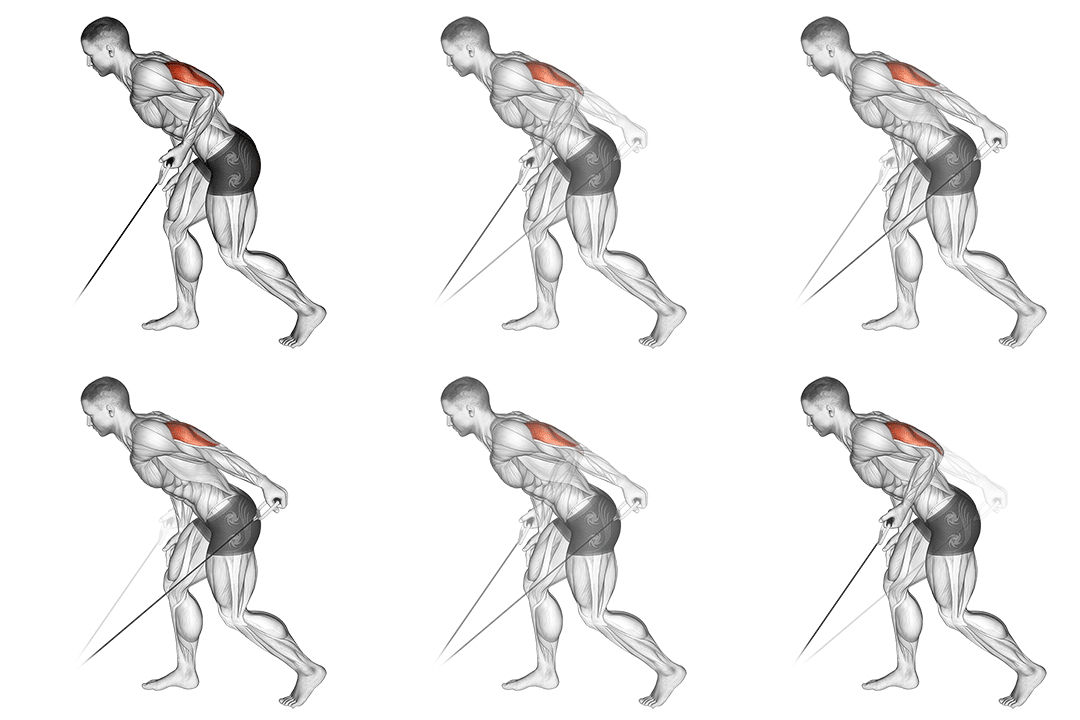
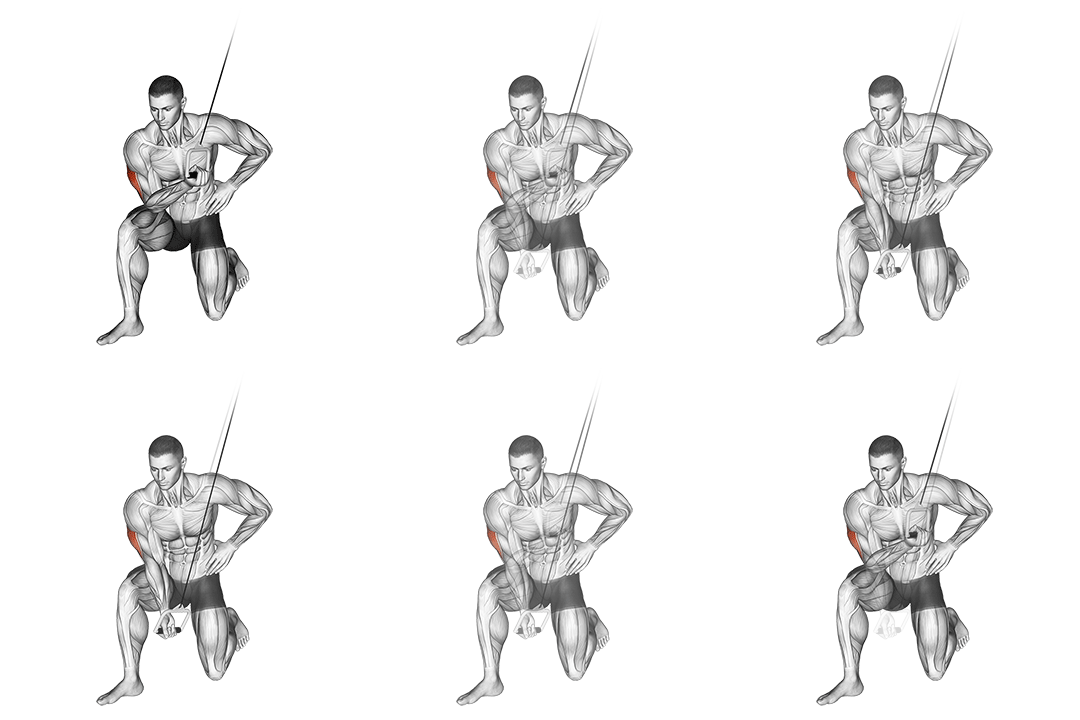
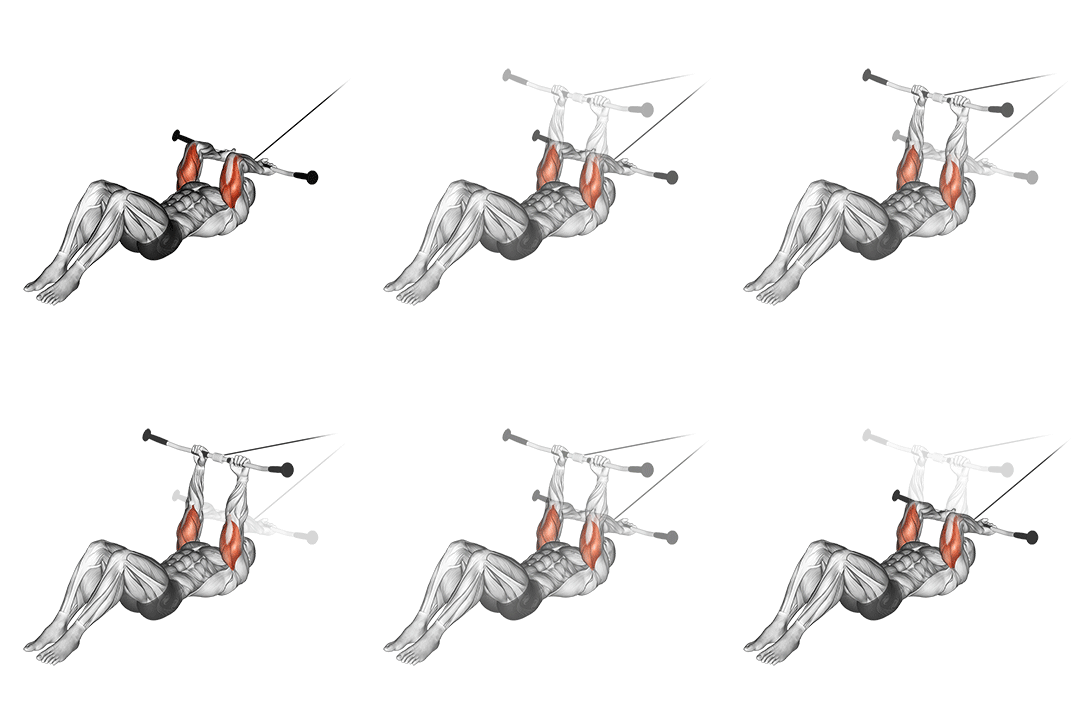
Cable Kickback demonstration

Cable Kickback

Target Triceps
Equipment Cable
Body Part Upper-arms
Difficulty Beginner
Movement Isolation
Secondary Muscles
Shoulders
VS
Exercise B
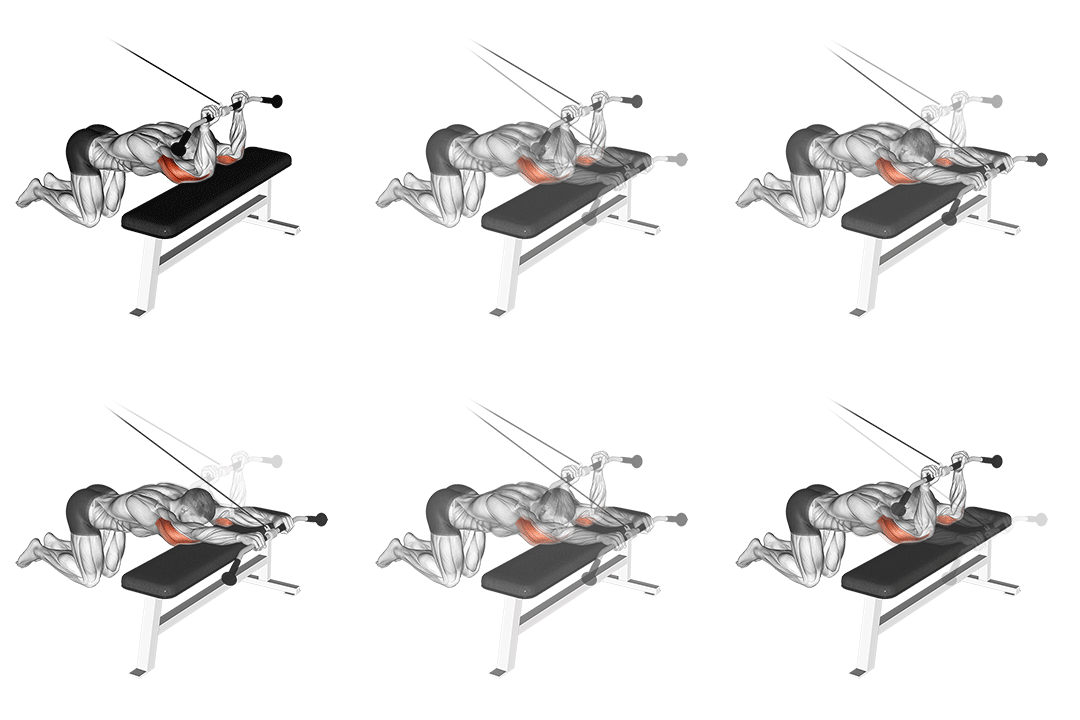
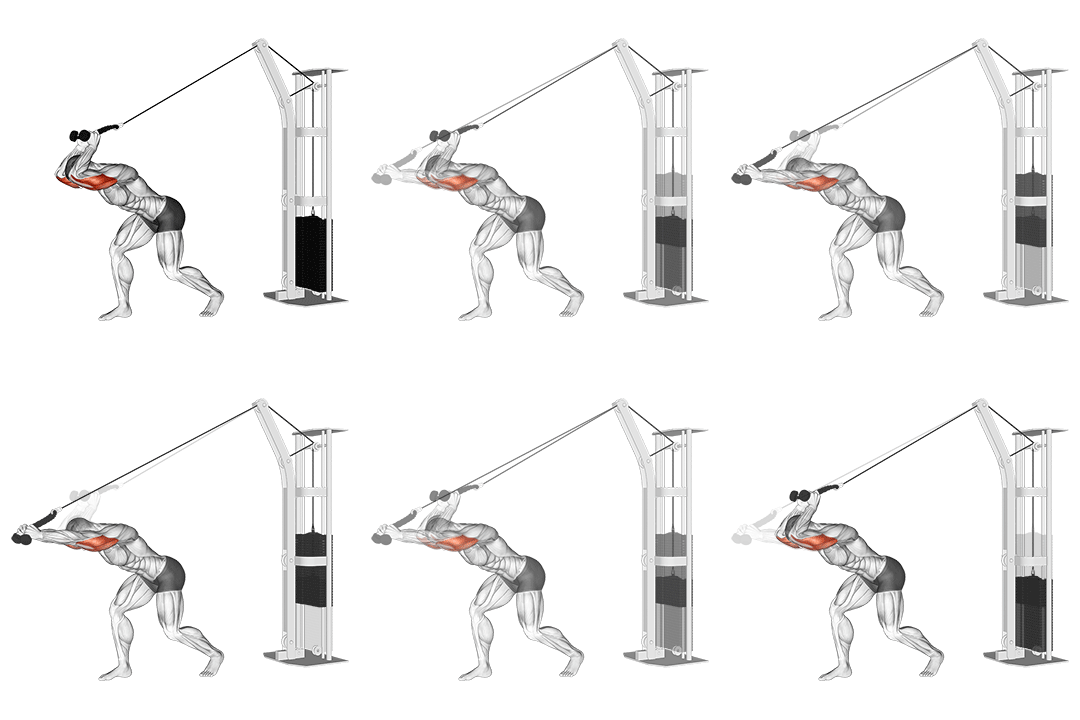
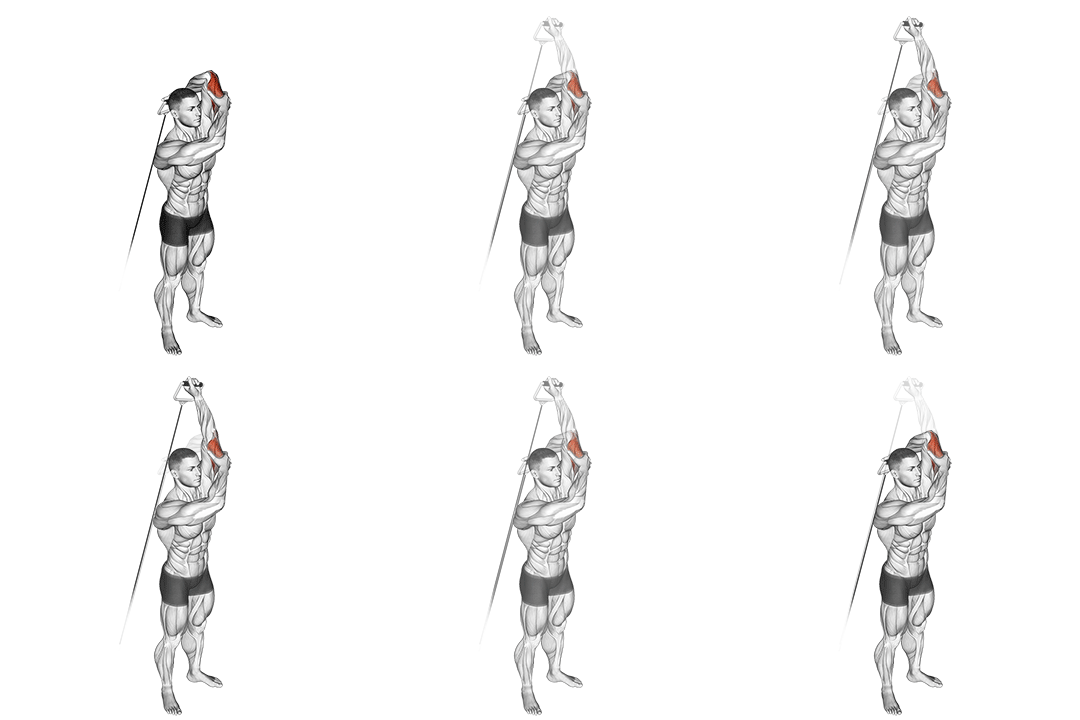
Cable Kneeling Triceps Extension demonstration

Cable Kneeling Triceps Extension

Target Triceps
Equipment Cable
Body Part Upper-arms
Difficulty Beginner
Movement Isolation
Secondary Muscles
Shoulders

Head-to-Head Comparison

Different values are marked. These are catalogue attributes, not performance scores.

Muscles used

Listed target and secondary muscles, shown on the body. Locations, not activation or strength scores.

  • Target
  • Secondary
  • Not highlighted

Cable Kickback

Front
Cable Kickback: front muscle locationsSolid: listed target. Striped: listed secondary. Grey: not highlighted. Locations, not activation or strength scores. See the muscle names below.
Back
Cable Kickback: back muscle locationsSolid: listed target. Striped: listed secondary. Grey: not highlighted. Locations, not activation or strength scores. See the muscle names below.
Target
Triceps
Secondary
Shoulders

Not shown on diagram: Shoulders. These labels do not identify a precise region on this map.

Cable Kneeling Triceps Extension

Front
Cable Kneeling Triceps Extension: front muscle locationsSolid: listed target. Striped: listed secondary. Grey: not highlighted. Locations, not activation or strength scores. See the muscle names below.
Back
Cable Kneeling Triceps Extension: back muscle locationsSolid: listed target. Striped: listed secondary. Grey: not highlighted. Locations, not activation or strength scores. See the muscle names below.
Target
Triceps
Secondary
Shoulders

Not shown on diagram: Shoulders. These labels do not identify a precise region on this map.

Grey does not mean a muscle is unused. The diagrams show only the mapped catalogue labels.

Attribute Cable Kickback Cable Kneeling Triceps Extension
Target Muscle
Triceps
Triceps
Body Part
Upper-arms
Upper-arms
Equipment
Cable
Cable
Difficulty
Beginner
Beginner
Movement Type
Isolation
Isolation
Secondary Muscles
Shoulders
Shoulders

Visual Comparison

An illustrative 1–10 profile derived from catalog difficulty, equipment, and listed-muscle fields—not measured performance or muscle activation.

Key Differences

  • Both exercises target the Triceps using Cable. The catalogue does not establish which exercise is better for an individual goal.

Muscle comparison

Shared target muscles

Both exercises isolate the triceps via elbow extension and primarily train the lateral, medial and long heads. They overlap at the movement pattern (elbow extension) and both emphasize the lateral and medial heads when the upper arm is neutral, but the kneeling extension places the long head under greater stretch because the shoulder is flexed. Expect similar peak tension during the final 10–20° of elbow extension for both movements.

Secondary muscle differences

Cable Kickback uses a torso-lean position that recruits stabilizing posterior deltoid and scapular retractors to hold the upper arm steady. Cable Kneeling Triceps Extension, with a high-pulley overhead line, increases demand on shoulder stabilizers and core anti-extension because your arms start with shoulder flexion. That overhead line shifts some loading to the long head and requires more scapulothoracic control.

Muscle involvement analysis

Kickbacks emphasize a horizontal force vector: your forearm pushes straight back while the humerus stays roughly parallel to the floor (about a 30–60° torso hinge). That creates peak torque late in the extension. Kneeling extensions create a more vertical/upward force vector with the shoulder flexed ~100–140°, placing the long head on a greater length-tension curve and increasing tension early in the concentric phase across a larger ROM.

Equipment and setup

Cable Kickback: setup

Cable Kickback needs a low pulley, single-handle or rope, and a bench or one arm braced on a rack for stability. You can often substitute a resistance band anchored low.

Cable Kneeling Triceps Extension: setup

Cable Kneeling Triceps Extension needs a high pulley and rope or bar attachment and space to kneel with a mat. A bench behind you can help for knee padding; a tall anchor is required.

Access and practicality

Cable Kickback — it needs less setup and can be replicated with a low anchor or band, making it more accessible in busy gyms or limited-equipment settings.

Learning and progression

Learning the movements

Cable Kickback is easier to learn: keep your elbow fixed, hinge at the hips ~30–45°, and extend the forearm from about 90° to full extension. Kneeling extension requires managing shoulder position, trunk stability, and a longer ROM, so it has a steeper learning curve.

Progression considerations

Cable Kneeling Triceps Extension offers greater progression potential because the overhead line lets you load the long head more and use heavier loads in the 6–12 rep range. Kickbacks progress well with higher reps (12–20) and tempo work but have limited absolute loading potential.

Limitations and precautions

Relative injury risk is slightly higher for the kneeling extension due to shoulder strain if you hyperextend or use too-heavy loads; kickbacks risk lower-back strain if you hinge improperly. Use controlled tempos and maintain neutral spine to minimize risk.

Pros & Cons

Cable Kickback

+ Pros

  • Easy to learn: simple elbow-extension pattern with minimal setup
  • Highly accessible: works with low pulley or resistance bands
  • Great for high-rep metabolic and finishing work (12–20 reps)
  • Reduced shoulder strain when performed with upper arm stabilized

− Cons

  • Limited ability to use heavy loads, so less effective for maximal strength
  • Risk of momentum if torso isn’t braced (reduces triceps tension)
  • Smaller ROM; less emphasis on the long head compared to overhead variations

Cable Kneeling Triceps Extension

+ Pros

  • Stronger long-head emphasis due to shoulder flexion and greater ROM
  • Easier to progressively overload for strength (6–12 reps) with cable setup
  • Better for producing sustained tension across the entire elbow extension
  • Improves shoulder and core stability when performed correctly

− Cons

  • Requires a high pulley and more setup space
  • Higher shoulder stress if you hyperflex or flare the elbows
  • Slightly harder to master trunk and scapular stability for clean reps

When Each Exercise Wins

1
For muscle hypertrophy: Cable Kneeling Triceps Extension

The kneeling extension puts the long head on a greater stretch (shoulder flexion ~100–140°) and offers a larger ROM, so you can apply heavier loads and get sustained tension across 6–12 reps for superior hypertrophy stimulus.

2
For strength gains: Cable Kneeling Triceps Extension

Its force vector allows heavier loading and better transfer to pressing strength; use 3–5 sets of 4–8 reps with controlled tempo to overload the triceps without sacrificing technique.

3
For beginners: Cable Kickback

Kickbacks use a single-joint motion with an easy-to-fix elbow position and lower coordination demands, making it simpler to learn proper muscle recruitment and hit 12–20 rep sets safely.

4
For home workouts: Cable Kickback

Kickbacks translate directly to low-anchored bands or a single-handle cable, so you can mimic the movement at home without a tall pulley or extensive setup.

Frequently Asked Questions

Can I do both Cable Kickback and Cable Kneeling Triceps Extension in the same workout?

Yes. Pair the kneeling extension as your primary heavy set (6–12 reps) and use kickbacks as a higher-rep finisher (12–20 reps) to fully fatigue all triceps heads while maintaining good form.

Which exercise is better for beginners?

Cable Kickback is better for beginners because it has a simpler movement pattern and lower coordination demands. Start with light weight, keep the elbow fixed, and focus on slow controlled reps.

How do the muscle activation patterns differ?

Kneeling extensions bias the long head by combining shoulder flexion and elbow extension, increasing tension earlier in the concentric. Kickbacks use a horizontal force vector with the humerus near parallel to the floor, producing peak torque late in elbow extension and emphasizing lateral/medial heads more.

Can Cable Kneeling Triceps Extension replace Cable Kickback?

Yes for many programming goals: kneeling extensions can replace kickbacks when your priority is hypertrophy or strength because they load the long head and allow heavier weights. Keep kickbacks in your program when you need higher-rep volume or limited equipment.

Comparison Summary

Choose Cable Kneeling Triceps Extension when you want maximal tension on the long head, heavier loading, and a fuller ROM for strength or hypertrophy—program 3–4 sets of 6–12 reps and focus on shoulder flexion ~100–140°. Use Cable Kickbacks as a beginner-friendly finisher or when equipment is limited; keep the upper arm stationary, hinge ~30–45° at the hips, and use 12–20 reps to accumulate time under tension. Both moves are valid: pick kneeling extensions for prioritized growth or strength and kickbacks for accessibility, high-rep volume, and teaching clean elbow extension.

Exercise instructions

Steps from the exercise catalogue. Read the full sequence before starting.

Cable Kickback

  1. Stand facing a cable machine with your feet shoulder-width apart.
  2. Hold the cable handle with your right hand and step back to create tension in the cable.
  3. Bend your knees slightly and hinge forward at the hips, keeping your back straight.
Read remaining steps for Cable Kickback
  1. Keep your upper arm close to your body and your elbow bent at a 90-degree angle.
  2. Extend your forearm backward, straightening your arm fully.
  3. Pause for a moment, then slowly return to the starting position.
  4. Repeat for the desired number of repetitions, then switch sides.

Cable Kneeling Triceps Extension

  1. Attach a rope handle to a high pulley and kneel down facing the cable machine.
  2. Grasp the rope with a neutral grip (palms facing each other) and bring your hands to the sides of your head.
  3. Keep your elbows close to your head and your upper arms stationary throughout the exercise.
Read remaining steps for Cable Kneeling Triceps Extension
  1. Extend your forearms by contracting your triceps until your arms are fully extended.
  2. Pause for a moment, then slowly return to the starting position by bending your elbows.
  3. Repeat for the desired number of repetitions.

Also Compare

Compare another pair

Choose two exercises to see their differences side by side.

Compare Exercises