

Dumbbell Deadlift vs Trap Bar Deadlift: Complete Comparison Guide
Dumbbell Deadlift vs Trap Bar Deadlift gives you a clear side-by-side look at two solid compound lifts that both target the glutes and upper-legs. If you want to know which one better builds muscle, which is safer, and which fits your equipment and goals, this guide has you. You’ll get comparisons of primary and secondary muscle activation, equipment needs, learning curve, specific technique cues, rep ranges (3–6 for strength, 6–12 for hypertrophy), and simple programming recommendations so you can choose the right lift and execute it well.
Exercise Comparison
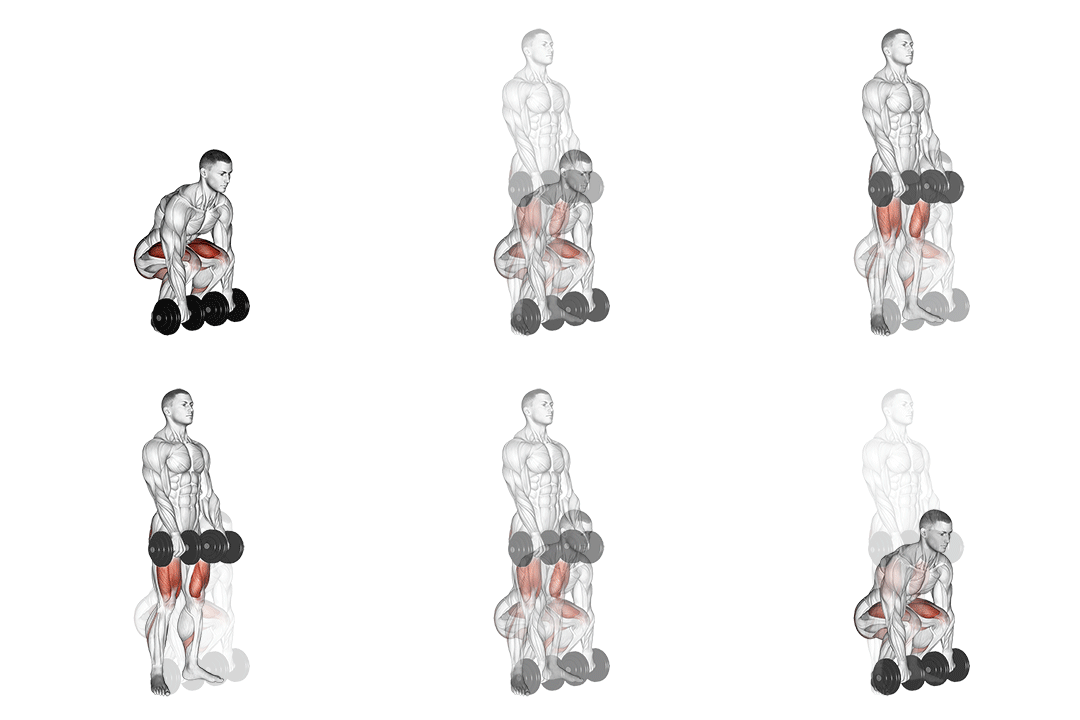
Dumbbell Deadlift
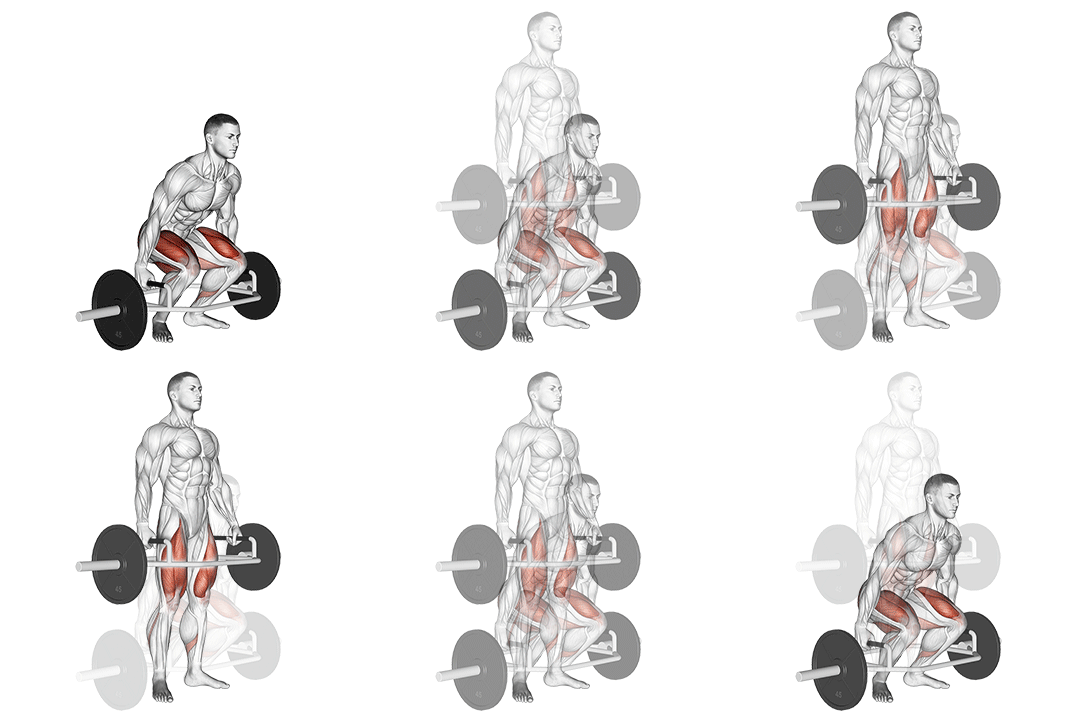
Trap Bar Deadlift
Head-to-Head Comparison
| Attribute | Dumbbell Deadlift | Trap Bar Deadlift |
|---|---|---|
| Target Muscle |
Glutes
|
Glutes
|
| Body Part |
Upper-legs
|
Upper-legs
|
| Equipment |
Dumbbell
|
Trap-bar
|
| Difficulty |
Intermediate
|
Intermediate
|
| Movement Type |
Compound
|
Compound
|
| Secondary Muscles |
2
|
3
|
Secondary Muscles Activated
Dumbbell Deadlift
Trap Bar Deadlift
Visual Comparison
Overview
Dumbbell Deadlift vs Trap Bar Deadlift gives you a clear side-by-side look at two solid compound lifts that both target the glutes and upper-legs. If you want to know which one better builds muscle, which is safer, and which fits your equipment and goals, this guide has you. You’ll get comparisons of primary and secondary muscle activation, equipment needs, learning curve, specific technique cues, rep ranges (3–6 for strength, 6–12 for hypertrophy), and simple programming recommendations so you can choose the right lift and execute it well.
Key Differences
- Equipment differs: Dumbbell Deadlift uses Dumbbell, while Trap Bar Deadlift requires Trap-bar.
Pros & Cons
Dumbbell Deadlift
+ Pros
- Widely accessible — most gyms and homes have dumbbells
- Excellent for glute and hamstring length-tension via hip hinge
- Great for unilateral or staggered-stance work to correct imbalances
- Easier to use as accessory with higher-rep sets (8–15 reps)
− Cons
- Limited top-end loading due to dumbbell increments
- Requires strong hinge mechanics and balance at heavier loads
- Can increase lower-back stress if spine position is lost
Trap Bar Deadlift
+ Pros
- Allows heavier loads and greater progression with plates
- More upright torso reduces lumbar shear and perceived strain
- Balanced load increases peak power output and force production
- Cleaner learning curve for most lifters and easier setup
− Cons
- Less common in home gyms and some commercial facilities
- Can shift emphasis away from hamstrings if you favor knee drive
- Requires trap bar hardware and space for loading
When Each Exercise Wins
Trap bar allows heavier loads and higher total work because you can safely push poundage while maintaining an upright torso. Use 6–12 rep sets and progressive overload to maximize muscle growth in glutes and quads.
Trap bar supports higher peak force and power output with lower lumbar stress, making it ideal for 3–6 rep strength cycles and maximal loading while preserving recovery.
The neutral grip and centered load simplify the movement pattern, reduce technical errors, and shorten the learning curve so you can build strength safely from the first sessions.
Dumbbells are the most common home tool, and adjustable sets let you perform heavy hip-hinge work without a trap bar. Use single-leg variations to increase intensity if your weights are limited.
Frequently Asked Questions
Can I do both Dumbbell Deadlift and Trap Bar Deadlift in the same workout?
Yes — pair heavy trap-bar sets early (3–6 reps) as the main strength stimulus, then follow with dumbbell deadlifts or single-leg dumbbell RDLs for 6–12 reps as an accessory to increase time under tension and address imbalances.
Which exercise is better for beginners?
Trap Bar Deadlift is better for beginners because the neutral grip and centered load reduce technical complexity and back stress. It lets you build hip and leg strength quickly while practicing safe bracing and drive mechanics.
How do the muscle activation patterns differ?
Dumbbell deadlifts bias a hip-dominant pattern with greater hamstring stretch and posterior-chain length-tension, while trap-bar deadlifts produce a more balanced hip-and-knee drive due to a more vertical force vector, increasing quadriceps contribution and peak power.
Can Trap Bar Deadlift replace Dumbbell Deadlift?
Trap bar can replace dumbbell deadlifts for most strength and hypertrophy goals, especially when you need heavier loading. Keep dumbbell variations in your program for unilateral work, higher-rep conditioning, and to target hamstring length-tension specifically.
Expert Verdict
Use the trap bar deadlift when you want raw strength, heavy loading, and a more upright, lower-back-friendly pattern — program it for 3–6 reps on strength days or 6–10 reps for heavier hypertrophy blocks. Choose the dumbbell deadlift when you need accessibility, unilateral options, or higher-rep accessory work (8–15 reps) to target glute-hamstring length-tension. For pure glute focus, both work: emphasize deeper hip hinge and slower eccentrics with dumbbells for hamstring/glute stretch, or heavier trap-bar sets to increase total mechanical tension. Pair them across a week (heavy trap-bar primary + dumbbell accessory) for balanced progress.
Also Compare
More comparisons with Dumbbell Deadlift
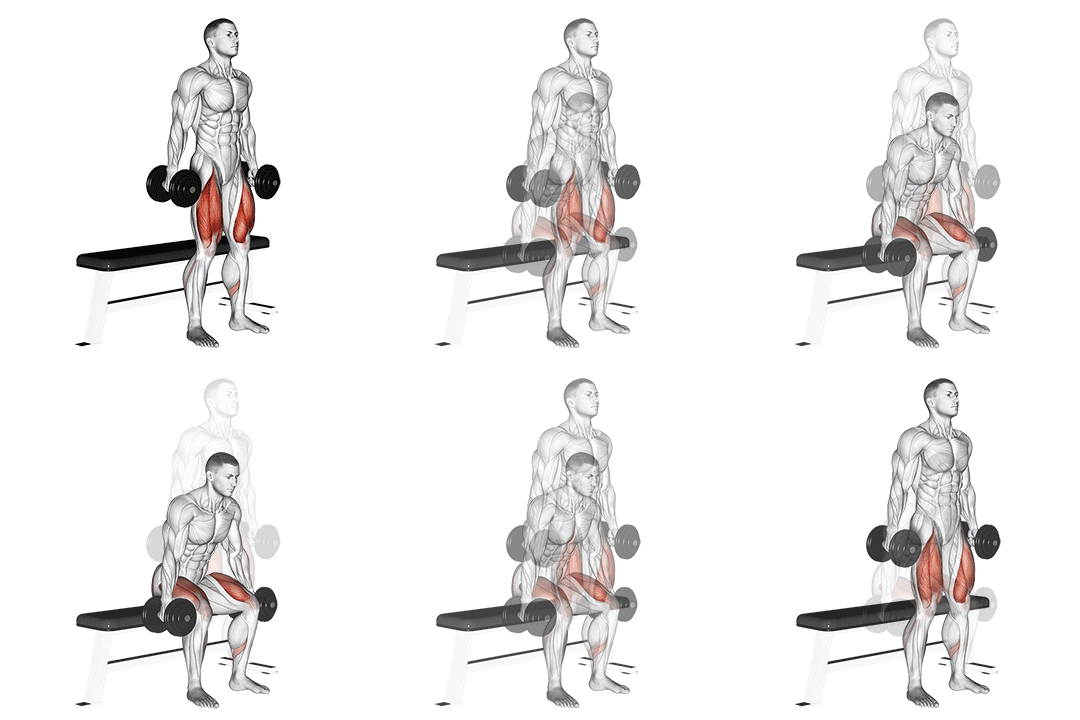
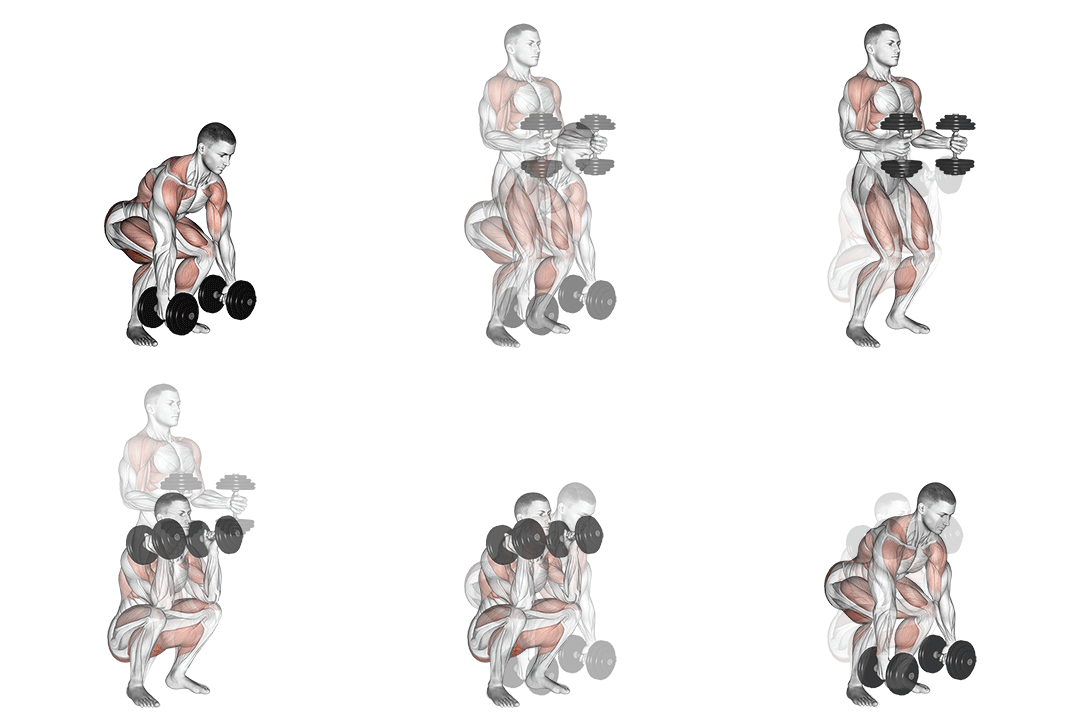
More comparisons with Trap Bar Deadlift
Compare More Exercises
Use our free comparison tool to analyze any two exercises head-to-head.
Compare Exercises