

Ez Bar Seated Close Grip Concentration Curl vs Ez Barbell Close-grip Curl: Complete Comparison Guide
Ez Bar Seated Close Grip Concentration Curl vs Ez Barbell Close-grip Curl — if you're refining your upper-arm work, this head-to-head helps you pick the right tool. You’ll get clear technique cues, biomechanical reasons why one may stress the biceps differently, recommended rep ranges, and which exercise fits goals like hypertrophy, strength, or limited-equipment sessions. Read on and I’ll show you how muscle length-tension, elbow angle, and force vectors change between these two EZ-bar isolation curls so you can choose the better option for your program.
Exercise Comparison
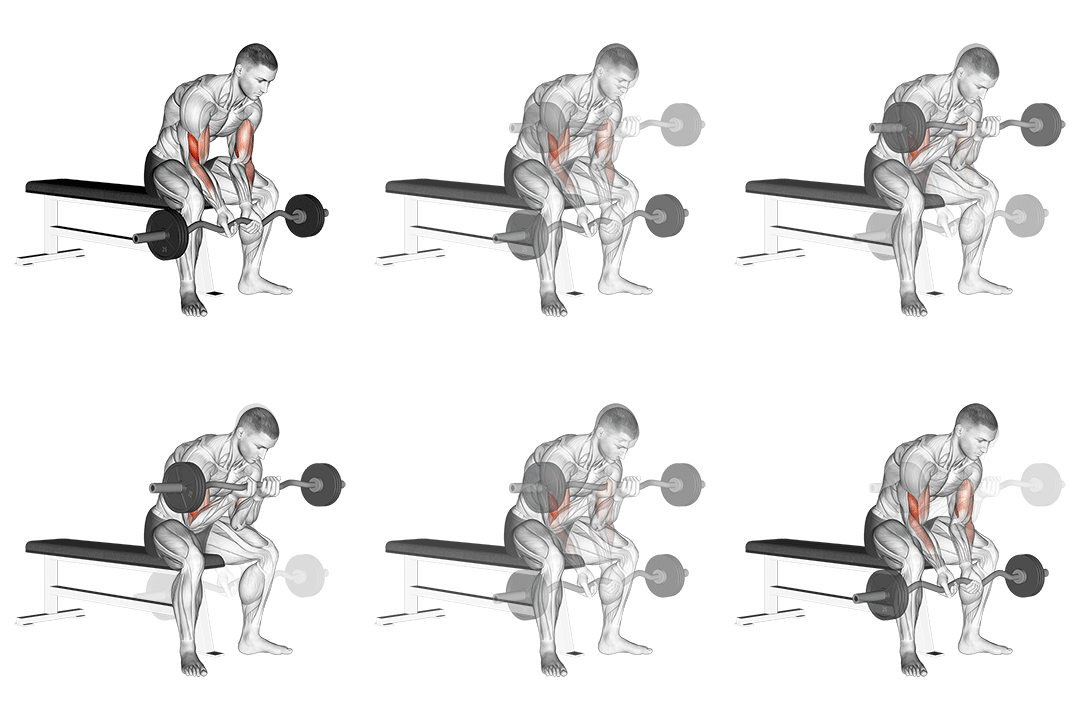
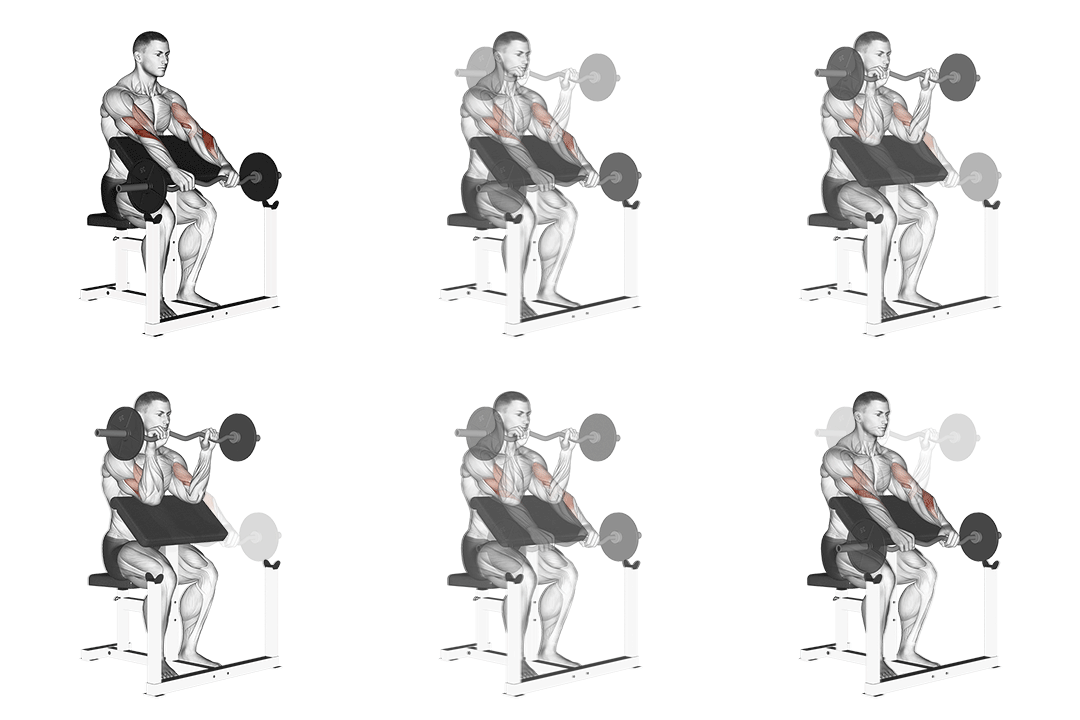
EZ Bar Seated Close Grip Concentration Curl
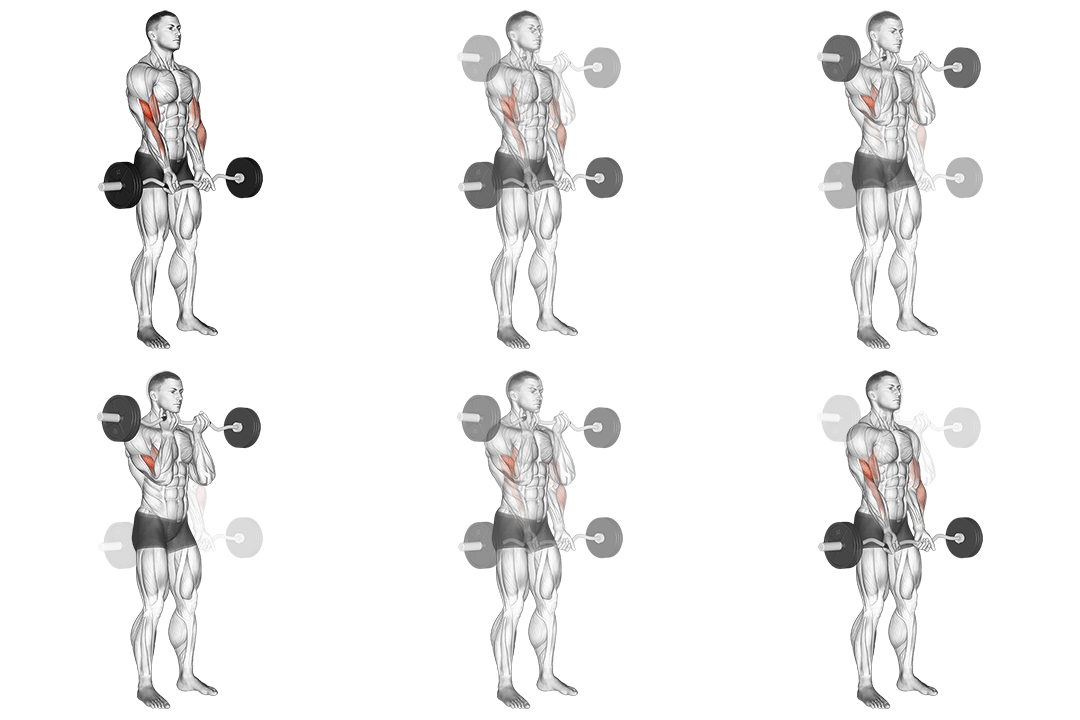
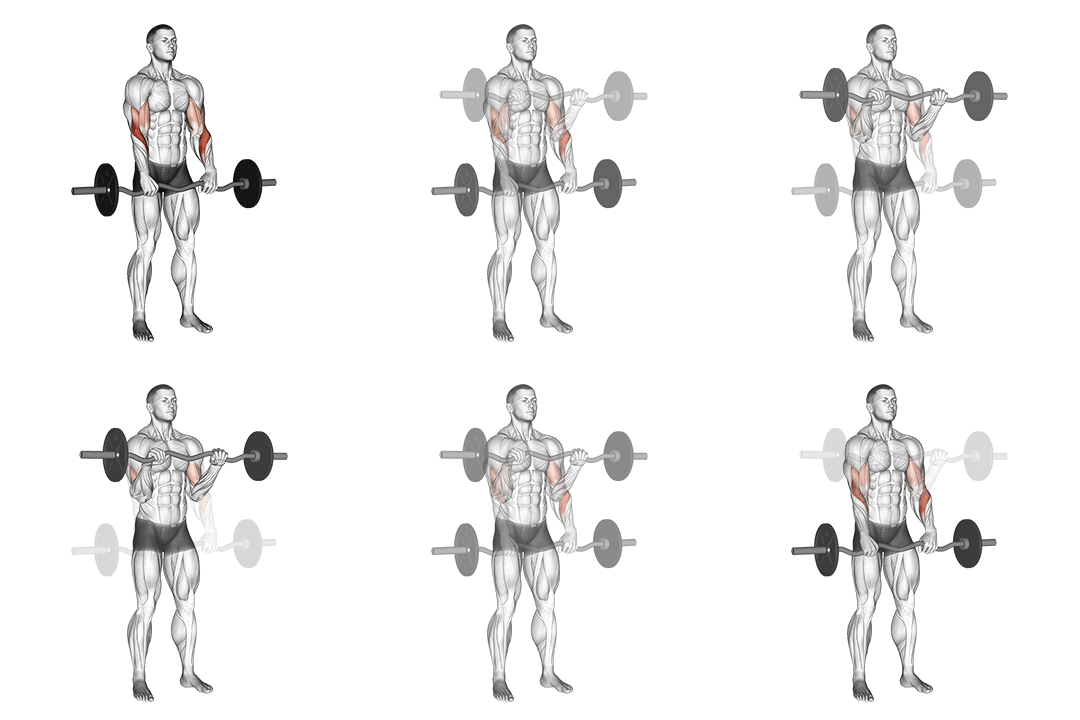
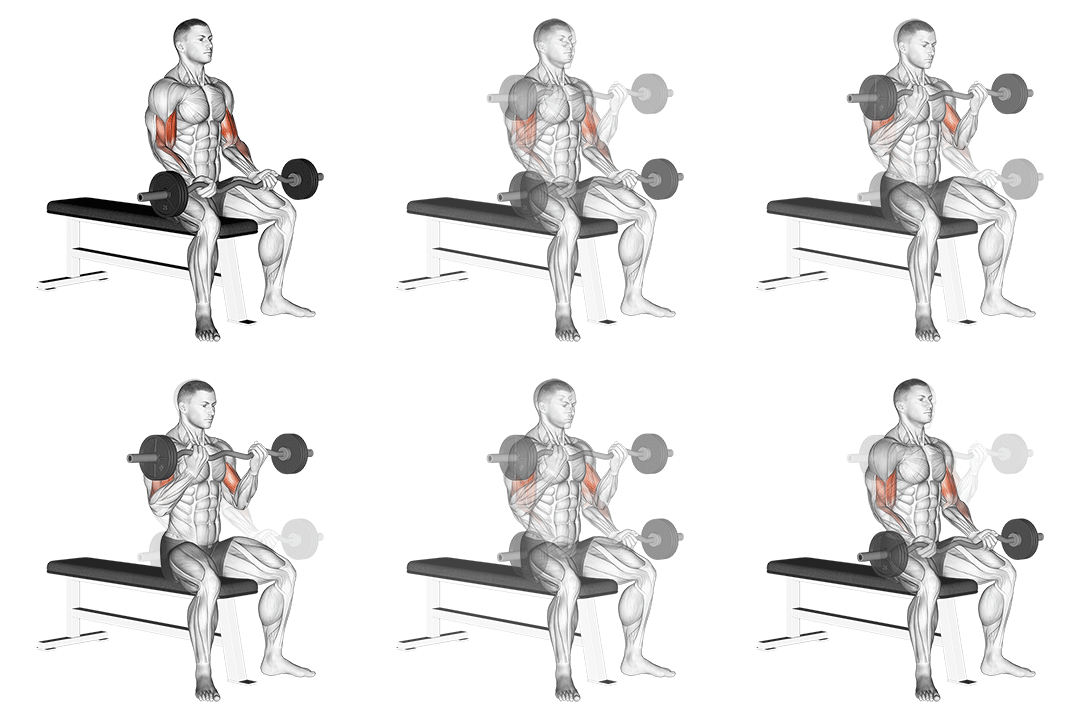
EZ Barbell Close-grip Curl
Head-to-Head Comparison
| Attribute | EZ Bar Seated Close Grip Concentration Curl | EZ Barbell Close-grip Curl |
|---|---|---|
| Target Muscle |
Biceps
|
Biceps
|
| Body Part |
Upper-arms
|
Upper-arms
|
| Equipment |
Ez-barbell
|
Ez-barbell
|
| Difficulty |
Intermediate
|
Intermediate
|
| Movement Type |
Isolation
|
Isolation
|
| Secondary Muscles |
1
|
1
|
Secondary Muscles Activated
EZ Bar Seated Close Grip Concentration Curl
EZ Barbell Close-grip Curl
Visual Comparison
Overview
Ez Bar Seated Close Grip Concentration Curl vs Ez Barbell Close-grip Curl — if you're refining your upper-arm work, this head-to-head helps you pick the right tool. You’ll get clear technique cues, biomechanical reasons why one may stress the biceps differently, recommended rep ranges, and which exercise fits goals like hypertrophy, strength, or limited-equipment sessions. Read on and I’ll show you how muscle length-tension, elbow angle, and force vectors change between these two EZ-bar isolation curls so you can choose the better option for your program.
Key Differences
- Both exercises target the Biceps using Ez-barbell. The main differences are in their movement patterns and muscle activation angles.
Pros & Cons
EZ Bar Seated Close Grip Concentration Curl
+ Pros
- High biceps isolation due to fixed humerus and reduced torso involvement
- Clear mind-muscle connection — easy to target peak contraction at 60°–90°
- Lower risk of using momentum; better for strict technique and pumping sets
- Good for unilateral loading adjustments and correcting left-right imbalances
− Cons
- Requires a bench or seat and thigh bracing which limits location options
- Less absolute loading potential compared to bilateral barbell variations
- Can feel cramped for tall lifters or with excessive wrist deviation
EZ Barbell Close-grip Curl
+ Pros
- More accessible — no bench required, quick to load and perform
- Allows heavier absolute loads and straightforward linear progression
- Trains core and scapular stability alongside elbow flexion
- Smooth bilateral force application can build overall arm strength reliably
− Cons
- Higher temptation to cheat with torso swing, reducing isolation
- Slightly greater elbow and lower-back stress if form breaks down
- EZ-bar wrist position can aggravate wrist discomfort for some lifters
When Each Exercise Wins
The seated concentration curl produces superior isolation and a stronger mind-muscle connection, letting you target peak contraction and use higher time under tension (8–15 reps, 2–4 sets) to maximize sarcoplasmic and myofibrillar stimulus.
Standing close-grip curls let you load both arms together and progressively increase absolute load (4–8 reps) while training accessory stability, giving better carryover to heavier elbow flexion strength.
Seated concentration curls simplify coordination by bracing the arm, reducing momentum and helping beginners learn the elbow-flexion pattern and feel the biceps contract before progressing to standing variations.
You only need an EZ-bar and plates and no bench, so the standing close-grip curl fits small spaces and quick sessions better and still provides solid stimulus for the biceps.
Frequently Asked Questions
Can I do both Ez Bar Seated Close Grip Concentration Curl and Ez Barbell Close-grip Curl in the same workout?
Yes. Start with the heavier standing close-grip curls for 3–4 sets of 4–8 reps to target strength, then follow with 2–3 sets of seated concentration curls for 8–15 reps to fatiguethe biceps and improve muscle fiber recruitment via stricter isolation.
Which exercise is better for beginners?
The seated concentration curl is better for beginners because bracing the upper arm reduces momentum and helps you learn the elbow-flexion pattern and feel the biceps contract before adding standing variations or heavier loads.
How do the muscle activation patterns differ?
Seated concentration curls create a high local moment arm at mid-range, concentrating tension at 60°–90° of elbow flexion. Standing close-grip curls produce a longer ROM with slightly more long-head stretch at full extension and greater forearm and core involvement to stabilize the bar path.
Can Ez Barbell Close-grip Curl replace Ez Bar Seated Close Grip Concentration Curl?
It can replace it if your priority is loading and convenience, but you’ll lose some isolation and mind-muscle connection. For pure hypertrophy or fixing imbalances, keep the seated concentration curl in rotation at least occasionally.
Expert Verdict
Use the Seated Close Grip Concentration Curl when your goal is precise biceps hypertrophy, correcting imbalances, or enforcing strict form—aim for 8–15 reps and pause at peak contraction. Choose the Ez Barbell Close-grip Curl when you want progressive overload and strength carryover, using 4–8 heavy reps or mixed rep schemes and focusing on eliminating trunk cheat. If you can, alternate both across weeks: prioritize seated concentration during accumulation phases for volume and the standing close-grip curl during strength phases to move heavier loads. Both are legitimate isolation tools — pick based on equipment, training phase, and whether you value strict isolation or loading potential.
Also Compare
More comparisons with EZ Bar Seated Close Grip Concentration Curl
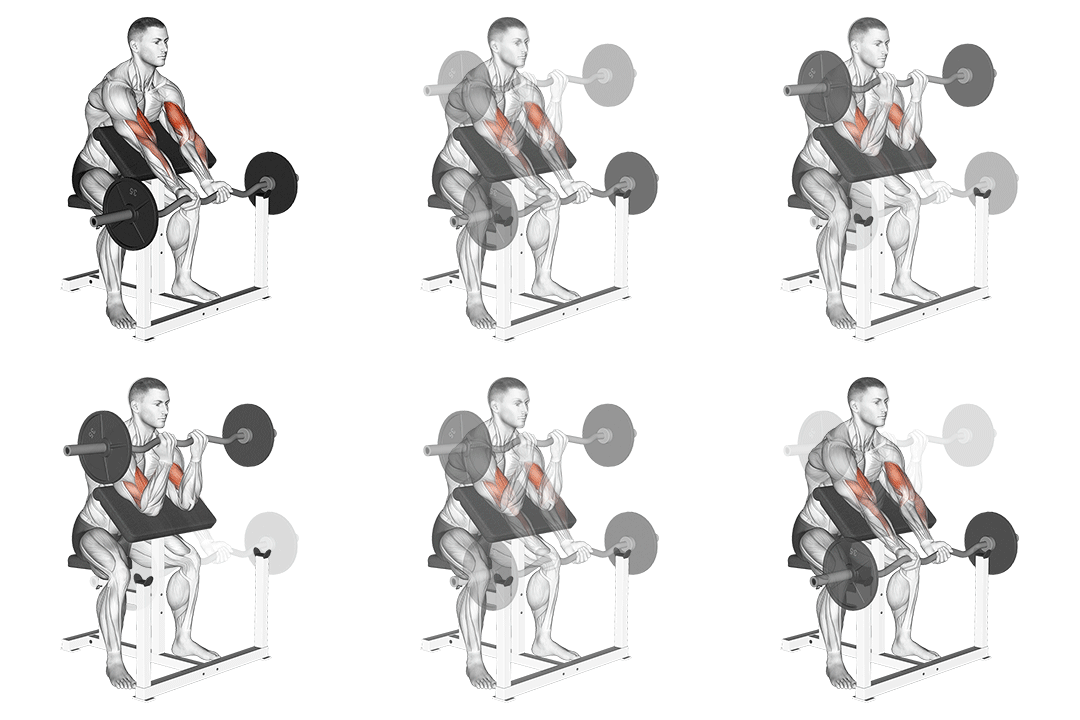
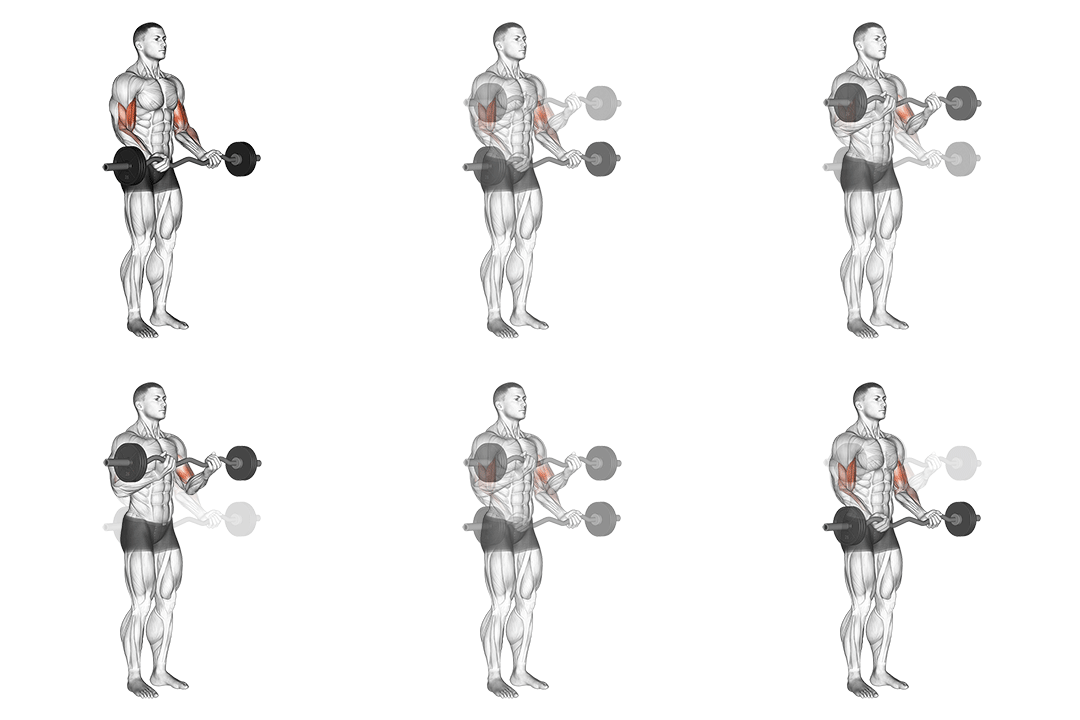
More comparisons with EZ Barbell Close-grip Curl
Compare More Exercises
Use our free comparison tool to analyze any two exercises head-to-head.
Compare Exercises