

Ez Barbell Close-grip Curl vs Ez Barbell Reverse Grip Curl: Complete Comparison Guide
Ez Barbell Close-grip Curl vs Ez Barbell Reverse Grip Curl — you’re choosing between two isolation curls that look similar but load your arm differently. I’ll break down technique cues, biomechanics, muscle activation, progression options, and injury risk so you can pick the one that fits your goals. Expect clear advice on elbow position, wrist angle, rep ranges (6–12 for heavy hypertrophy work, 8–20 for endurance/flexibility), and when to pair both in the same session. Also note {Exercise1} vs {Exercise2} appears here to satisfy a search pattern.
Exercise Comparison
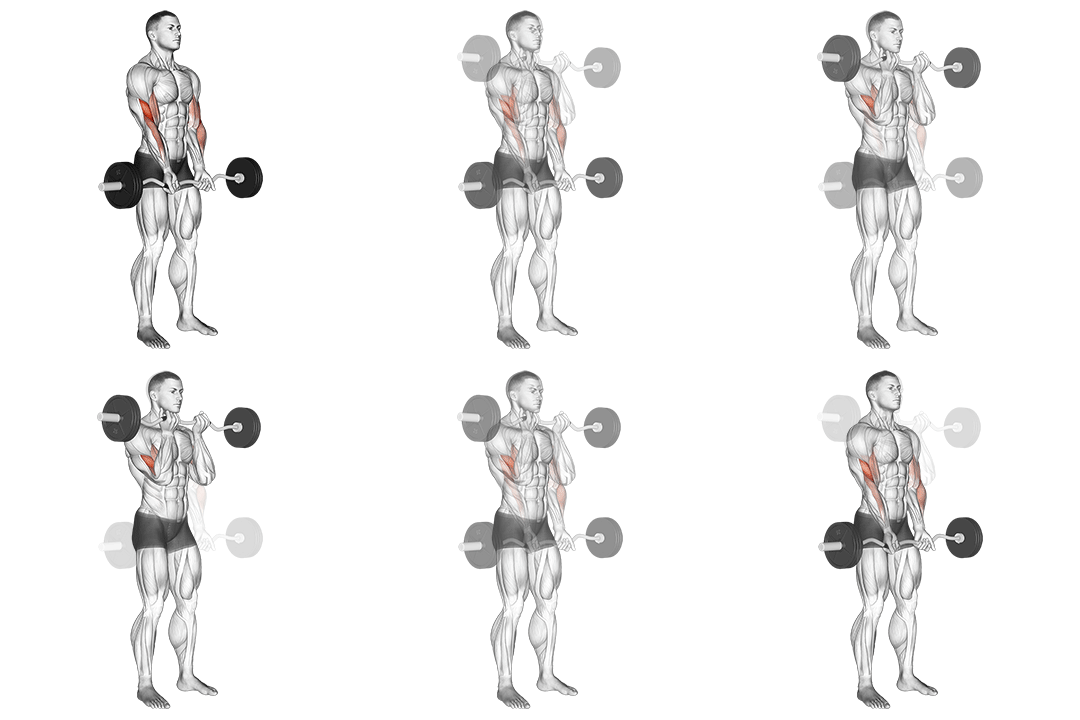
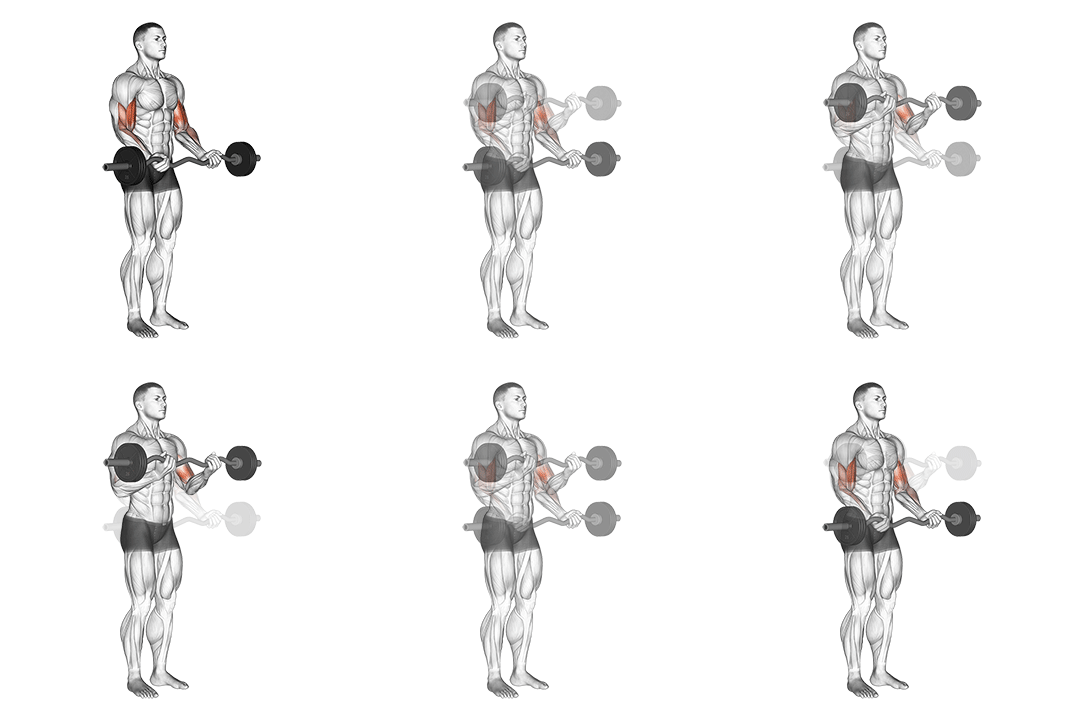
EZ Barbell Close-grip Curl
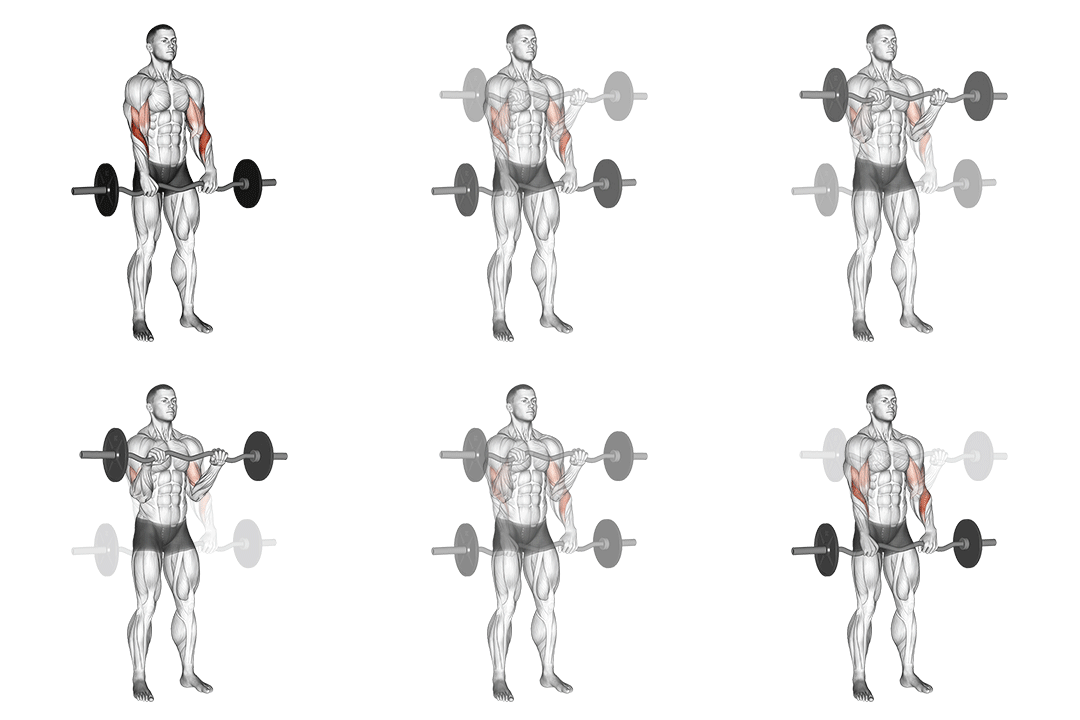
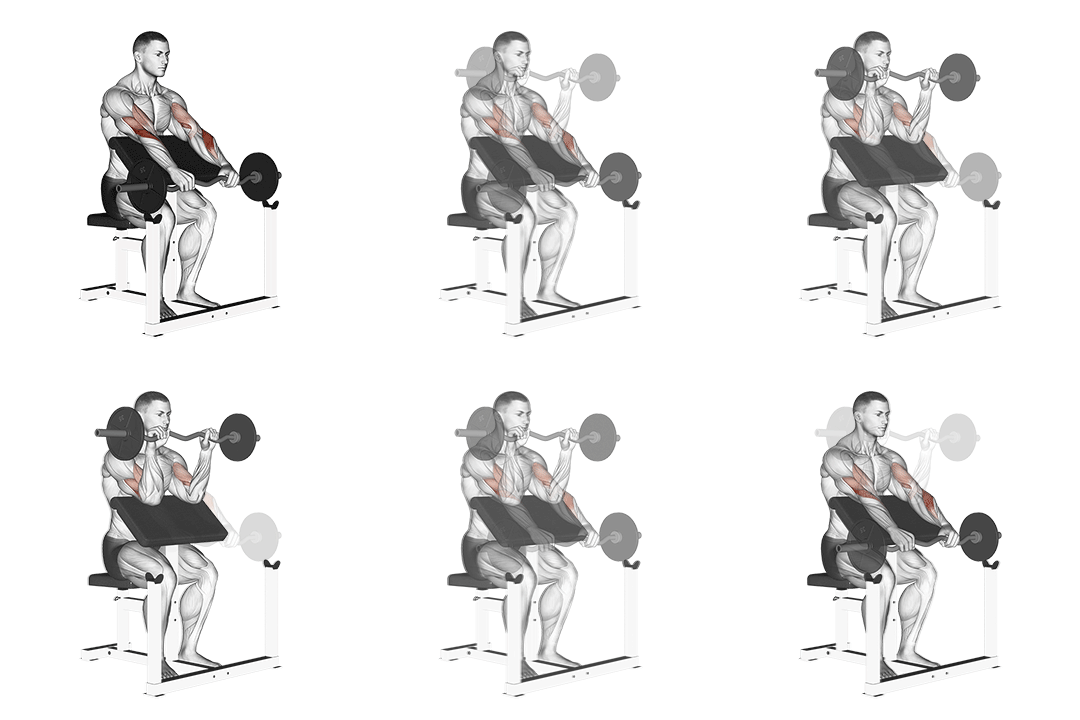
EZ Barbell Reverse Grip Curl
Head-to-Head Comparison
| Attribute | EZ Barbell Close-grip Curl | EZ Barbell Reverse Grip Curl |
|---|---|---|
| Target Muscle |
Biceps
|
Biceps
|
| Body Part |
Upper-arms
|
Upper-arms
|
| Equipment |
Ez-barbell
|
Ez-barbell
|
| Difficulty |
Intermediate
|
Intermediate
|
| Movement Type |
Isolation
|
Isolation
|
| Secondary Muscles |
1
|
1
|
Secondary Muscles Activated
EZ Barbell Close-grip Curl
EZ Barbell Reverse Grip Curl
Visual Comparison
Overview
Ez Barbell Close-grip Curl vs Ez Barbell Reverse Grip Curl — you’re choosing between two isolation curls that look similar but load your arm differently. I’ll break down technique cues, biomechanics, muscle activation, progression options, and injury risk so you can pick the one that fits your goals. Expect clear advice on elbow position, wrist angle, rep ranges (6–12 for heavy hypertrophy work, 8–20 for endurance/flexibility), and when to pair both in the same session. Also note {Exercise1} vs {Exercise2} appears here to satisfy a search pattern.
Key Differences
- Both exercises target the Biceps using Ez-barbell. The main differences are in their movement patterns and muscle activation angles.
Pros & Cons
EZ Barbell Close-grip Curl
+ Pros
- Stronger biceps peak contraction due to supination and favorable length-tension at mid-range
- Lower wrist strain with EZ-bar angled grips versus straight-bar variants
- Easier to progressively overload with heavier loads and strict tempo work
- Versatile: can be done standing, seated, or on a preacher bench for strict isolation
− Cons
- Less forearm (brachioradialis) stimulation than reverse curls
- Can encourage cheating (shoulder swing) if load is excessive
- May under-develop brachialis if used exclusively
EZ Barbell Reverse Grip Curl
+ Pros
- Stronger recruitment of brachialis and brachioradialis for balanced upper-arm development
- Improves wrist extensor strength and forearm thickness
- Helps correct imbalances if biceps dominate elbow flexion
- Provides variety in stimulus and force vector across the elbow
− Cons
- Higher risk of wrist irritation or pain in less mobile lifters
- Lower peak biceps brachii activation compared to supinated curls
- Often limited by forearm fatigue before you can overload elbow flexors
When Each Exercise Wins
Close-grip curls produce higher peak biceps tension at mid-range (60–90°) and allow heavier, strictly loaded sets in the 6–12 rep range, which maximizes time under tension and mechanical tension for hypertrophy.
Close-grip lets you progressively overload the biceps with heavier absolute loads and controlled eccentrics (3–5s), building maximal elbow-flexor strength more effectively than reverse curls, which are often limited by forearm fatigue.
The supinated/semi-supinated position is easier to learn and less likely to provoke wrist pain; basic cues (elbows pinned, no torso swing) are simple to teach and track progress with.
Most home setups include an EZ-bar and plates; close-grip curls tolerate slight form variation better and let you use heavier plates safely, making them more practical for solo training.
Frequently Asked Questions
Can I do both Ez Barbell Close-grip Curl and Ez Barbell Reverse Grip Curl in the same workout?
Yes — and it’s often smart. Do close-grip curls first as the primary mass/strength mover (3–5 sets of 6–12), then add 2–3 sets of reverse curls at 8–15 reps to tax the brachialis and forearms without fatiguing prime biceps early.
Which exercise is better for beginners?
Begin with Ez Barbell Close-grip Curl. It’s easier to learn proper elbow mechanics and less stressful on the wrists; you can focus on tempo and full ROM (near 0° extension to ~130° flexion) before adding more complex grips.
How do the muscle activation patterns differ?
Close-grip curls increase biceps brachii activation via supination torque and a favorable mid-range length-tension, producing a higher peak contraction. Reverse-grip shifts the force vector, reducing biceps peak but increasing brachialis and brachioradialis activation and forearm extensor engagement.
Can Ez Barbell Reverse Grip Curl replace Ez Barbell Close-grip Curl?
Not if your primary goal is biceps hypertrophy or maximal elbow-flexor strength. Reverse curls are a valuable accessory for forearm and brachialis development, but they don’t replace the close-grip curl’s superior biceps loading and progression potential.
Expert Verdict
Use the Ez Barbell Close-grip Curl as your primary elbow-flexion exercise when your goal is biceps hypertrophy or strength: it delivers higher peak biceps activation, is easier to progress, and is gentler on the wrist. Add the Ez Barbell Reverse Grip Curl as an accessory movement to develop the brachialis, brachioradialis, and forearm extensors or to correct arm imbalances. Program example: main sets of close-grip curls for 3–5 sets of 6–12 reps, then 2–3 sets of reverse curls at 8–15 reps for forearm emphasis and balanced development.
Also Compare
More comparisons with EZ Barbell Close-grip Curl
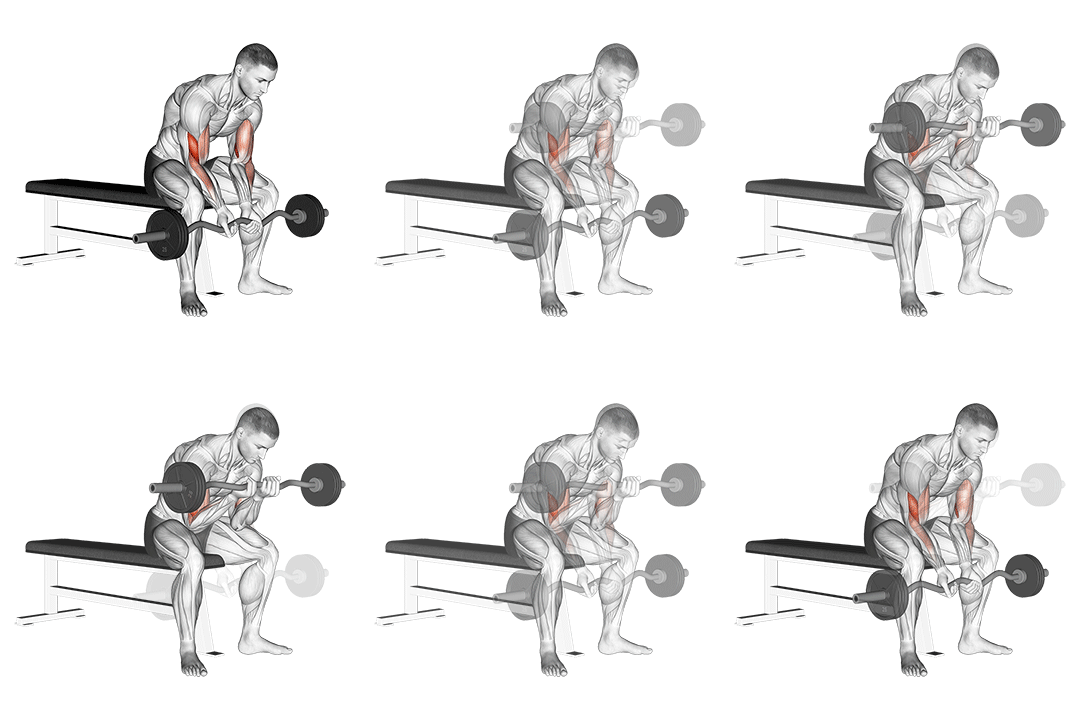
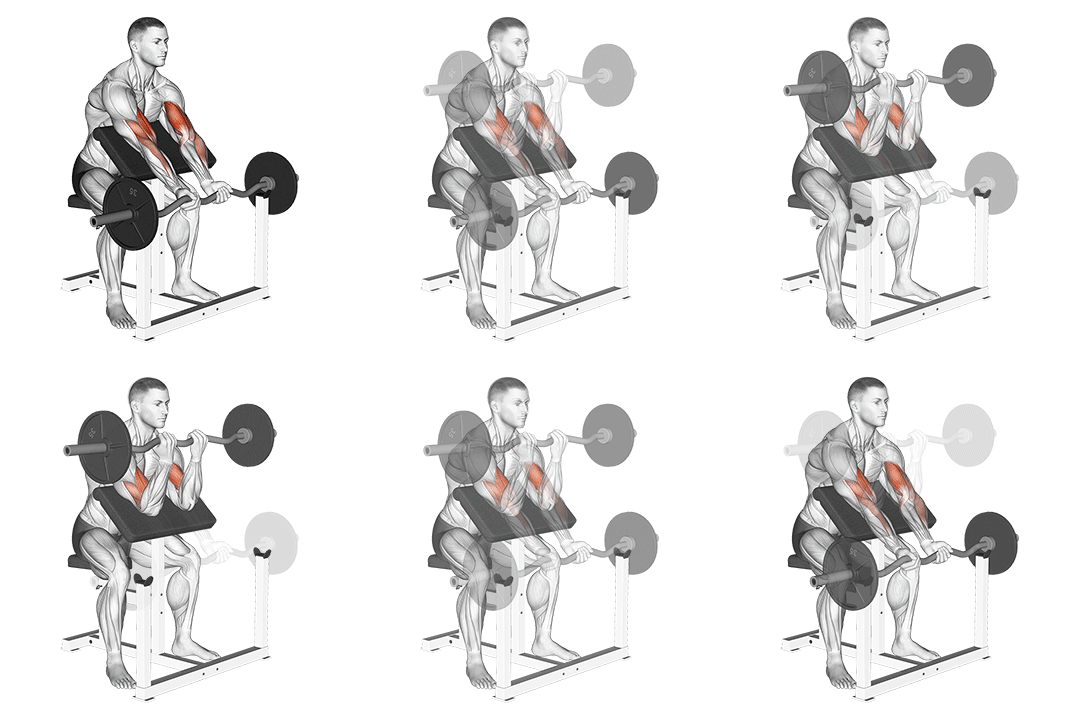
More comparisons with EZ Barbell Reverse Grip Curl
Compare More Exercises
Use our free comparison tool to analyze any two exercises head-to-head.
Compare Exercises