

Ez Barbell Curl vs Ez Barbell Reverse Grip Preacher Curl: Complete Comparison Guide
Ez Barbell Curl vs Ez Barbell Reverse Grip Preacher Curl — if you want bigger, stronger arms you need to pick the right tool for the job. I’ll walk you through how each move loads the biceps, how your wrist and elbow angle change muscle emphasis, and which exercise suits specific goals like hypertrophy, strength, or correcting weak forearms. You’ll get clear technique cues, rep-range recommendations (e.g., 6–12 for size, 3–6 for strength), and simple progressions so you can choose the best move for your training plan.
Exercise Comparison
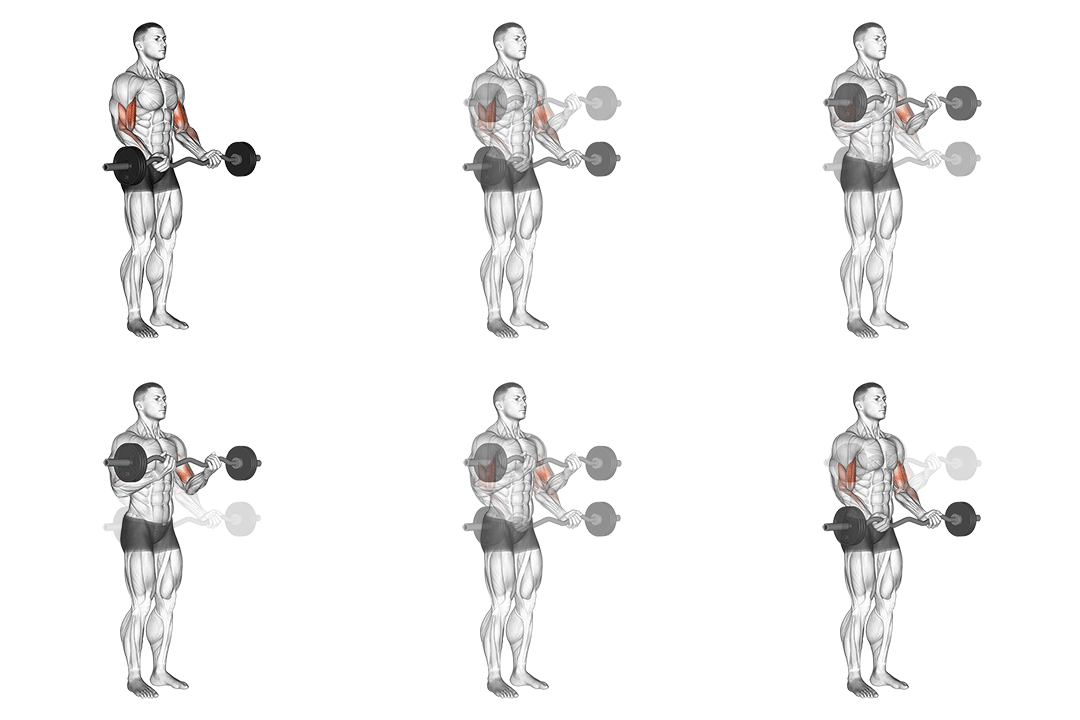
EZ Barbell Curl
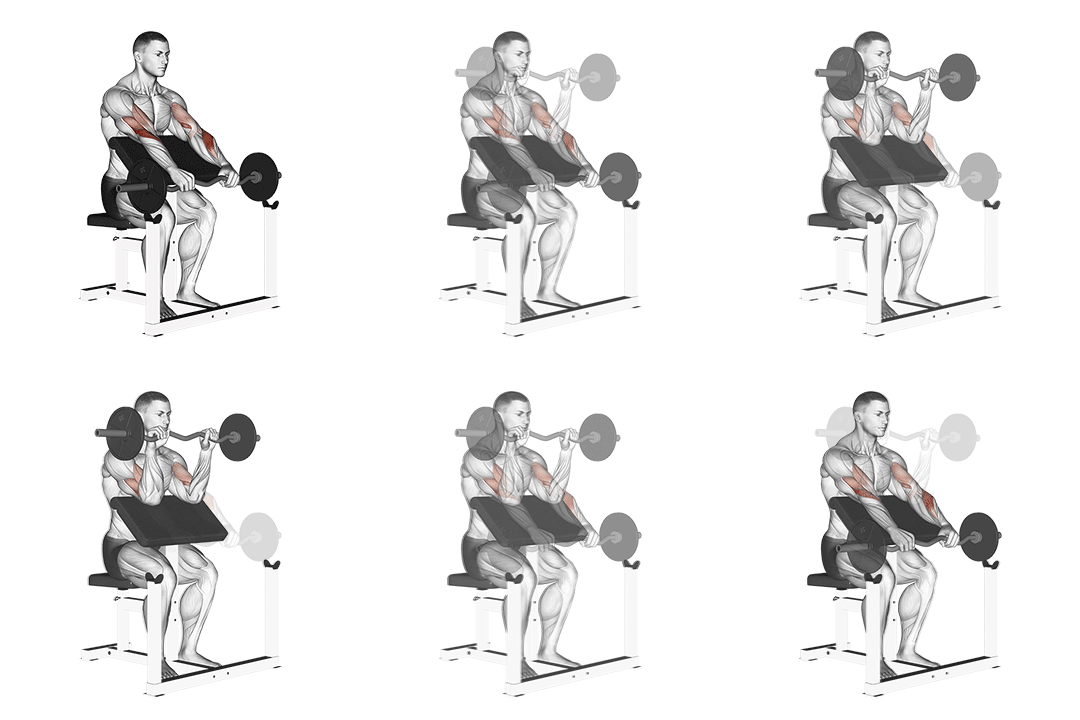
EZ Barbell Reverse Grip Preacher Curl
Head-to-Head Comparison
| Attribute | EZ Barbell Curl | EZ Barbell Reverse Grip Preacher Curl |
|---|---|---|
| Target Muscle |
Biceps
|
Biceps
|
| Body Part |
Upper-arms
|
Upper-arms
|
| Equipment |
Ez-barbell
|
Ez-barbell
|
| Difficulty |
Intermediate
|
Intermediate
|
| Movement Type |
Isolation
|
Isolation
|
| Secondary Muscles |
1
|
1
|
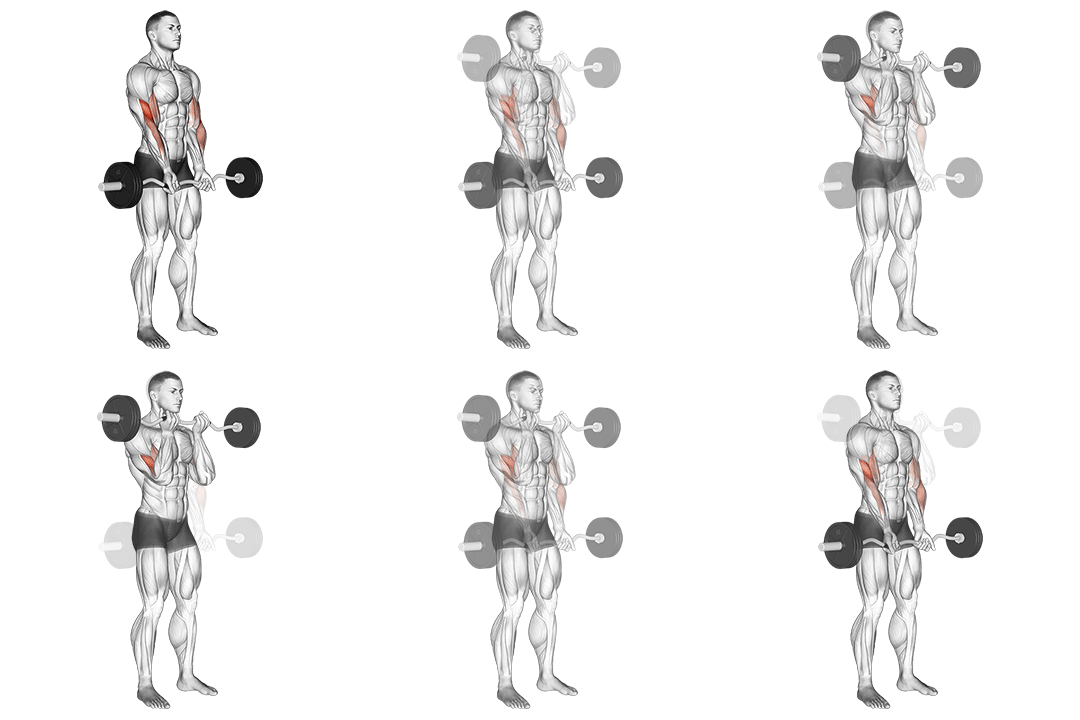
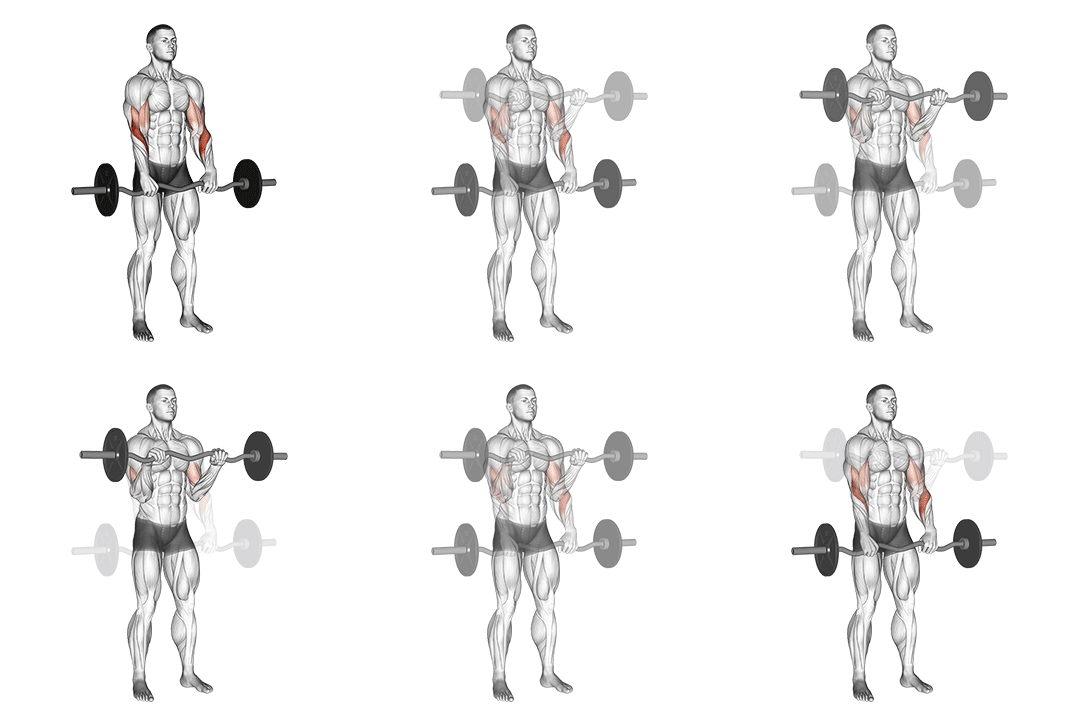
Secondary Muscles Activated
EZ Barbell Curl
EZ Barbell Reverse Grip Preacher Curl
Visual Comparison
Overview
Ez Barbell Curl vs Ez Barbell Reverse Grip Preacher Curl — if you want bigger, stronger arms you need to pick the right tool for the job. I’ll walk you through how each move loads the biceps, how your wrist and elbow angle change muscle emphasis, and which exercise suits specific goals like hypertrophy, strength, or correcting weak forearms. You’ll get clear technique cues, rep-range recommendations (e.g., 6–12 for size, 3–6 for strength), and simple progressions so you can choose the best move for your training plan.
Key Differences
- Both exercises target the Biceps using Ez-barbell. The main differences are in their movement patterns and muscle activation angles.
Pros & Cons
EZ Barbell Curl
+ Pros
- Simple setup — needs only an EZ-bar and space to stand
- Allows full range of motion and effective supination to load biceps
- Easier to use progressive overload with heavier loads
- Good for teaching tempo and concentric-eccentric control (use 1–2s concentric, 2–3s eccentric)
− Cons
- Easier to cheat with torso sway, reducing strict biceps loading
- Less isolation than a preacher position for eliminating momentum
- Wrist discomfort with heavy straight-bar curls if grip or wrist position is poor
EZ Barbell Reverse Grip Preacher Curl
+ Pros
- Preacher pad locks the elbow, reducing momentum and ensuring strict elbow flexion
- Pronated (reverse) grip increases brachioradialis and forearm recruitment
- Places peak tension earlier in the range, useful for targeting specific portions of the biceps
- Helps correct upper-arm swing and compensatory shoulder movement
− Cons
- Requires a preacher bench or incline bench setup
- Pronated grip can stress the wrist and distal elbow under heavy loads
- Generally limits the amount of load you can handle compared to standing curls
When Each Exercise Wins
Ez Barbell Curls allow a larger range of motion and better supination, which creates strong mechanical tension across the biceps. Use 6–12 reps for 3–5 sets, vary tempo (2–1–3) and include occasional preacher variations to hit the muscle from different lengths.
Standing EZ-bar curls let you load heavier and train lower rep ranges (3–6 reps) while still practicing full elbow flexion and stable scapular positioning. The bigger loading capacity yields better raw elbow-flexion strength transfer.
Beginners learn the basic elbow-flexion pattern more easily standing with an EZ-bar; you can focus on tempo and elbow position without worrying about pad setup or wrist pronation mechanics.
Most home gyms have bars but not preacher benches. The standing EZ-bar curl requires minimal equipment and can be scaled with adjustable plates or resistance bands.
Frequently Asked Questions
Can I do both Ez Barbell Curl and Ez Barbell Reverse Grip Preacher Curl in the same workout?
Yes. Pair them by doing heavier standing Ez Bar Curls first for 3–5 sets (3–6 or 6–8 reps depending on goal), then use 2–4 sets of reverse-grip preacher curls at a lighter load for 8–12 reps to fatigue the brachialis and forearms without compromising form.
Which exercise is better for beginners?
Ez Barbell Curl is better for beginners because it teaches the basic elbow-flexion pattern and allows easier load progression. Once you have stable form, add preacher variations to refine isolation and correct compensation.
How do the muscle activation patterns differ?
Standing EZ curls produce high biceps activation with significant supination torque, peaking around 60–100° elbow flexion. Reverse Grip Preacher Curls reduce long-head shoulder contribution, shift peak tension earlier, and increase brachioradialis and forearm activation due to the pronated hand position and fixed elbow.
Can Ez Barbell Reverse Grip Preacher Curl replace Ez Barbell Curl?
Not completely. Reverse Grip Preacher Curls are a valuable supplemental exercise for forearm and brachialis emphasis and strict isolation, but they typically limit loading and range. Keep standing EZ-bar curls as your foundation for maximal biceps size and strength.
Expert Verdict
Use the Ez Barbell Curl as your primary biceps builder when you need straightforward progressive overload, fuller range of motion, and easier equipment access. It’s the better go-to for hypertrophy and strength phases (6–12 reps for size, 3–6 for strength). Use the Ez Barbell Reverse Grip Preacher Curl as a supplemental tool when you want to emphasize forearm and brachialis activation, enforce strict elbow position, or vary the length-tension stimulus. Include preacher reverse curls for 2–4 sets of 8–12 reps mid-session to target weak points, but prioritize the standing EZ-bar for overall arm development.
Also Compare
More comparisons with EZ Barbell Curl
More comparisons with EZ Barbell Reverse Grip Preacher Curl
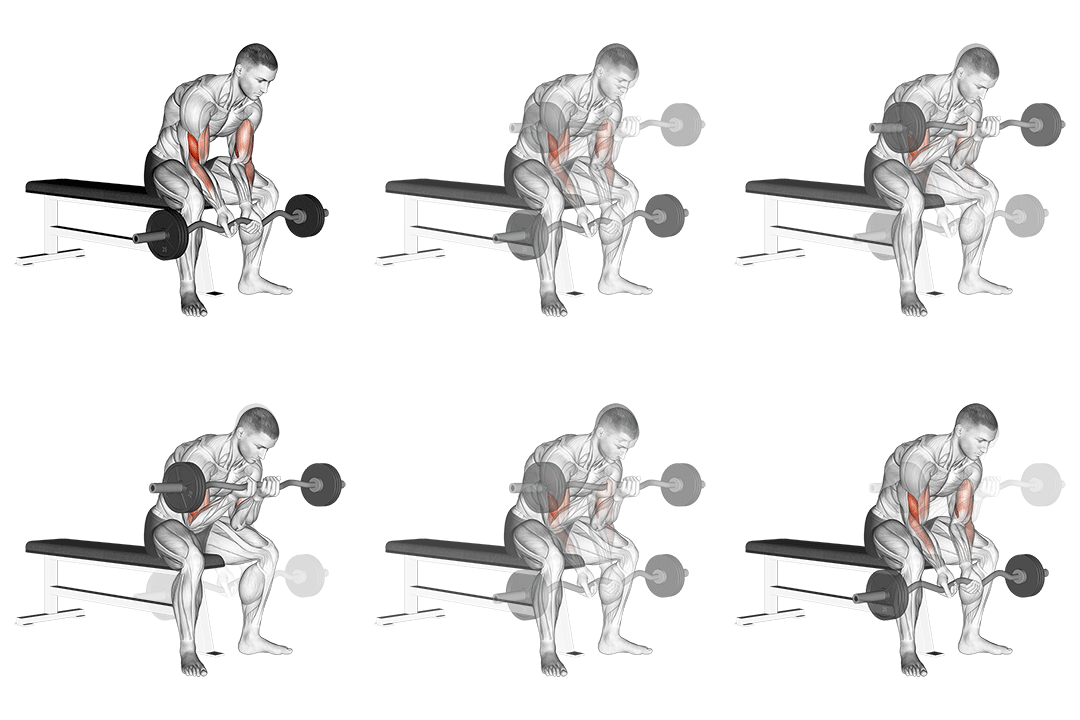
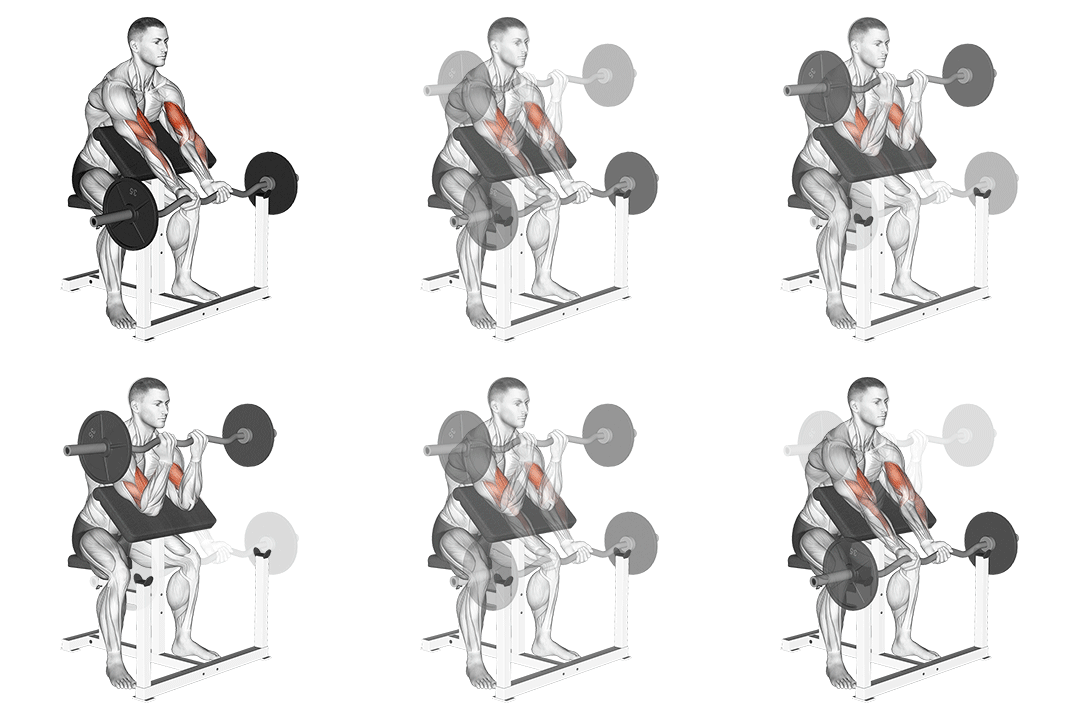
Compare More Exercises
Use our free comparison tool to analyze any two exercises head-to-head.
Compare Exercises