

Ez Barbell Reverse Grip Curl vs Ez Barbell Reverse Grip Preacher Curl: Complete Comparison Guide
Ez Barbell Reverse Grip Curl vs Ez Barbell Reverse Grip Preacher Curl — you’re comparing two isolation moves that load the biceps with a pronated grip. I’ll walk you through how each exercise shifts emphasis between the biceps, brachialis, and forearms, what equipment and setup each needs, and which movement produces better hypertrophy, strength, or beginner-friendly practice. You’ll get clear technique cues, rep ranges (6–12 for hypertrophy, 4–6 for heavy strength work), and practical recommendations so you can pick the one that fits your goals and training environment.
Exercise Comparison
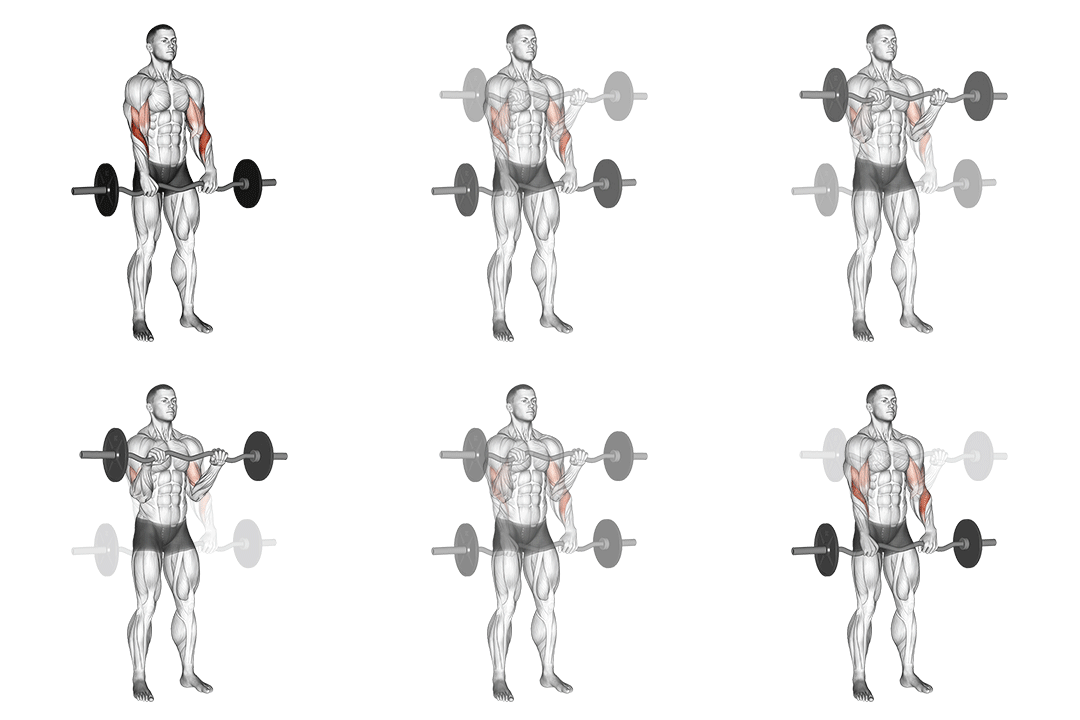
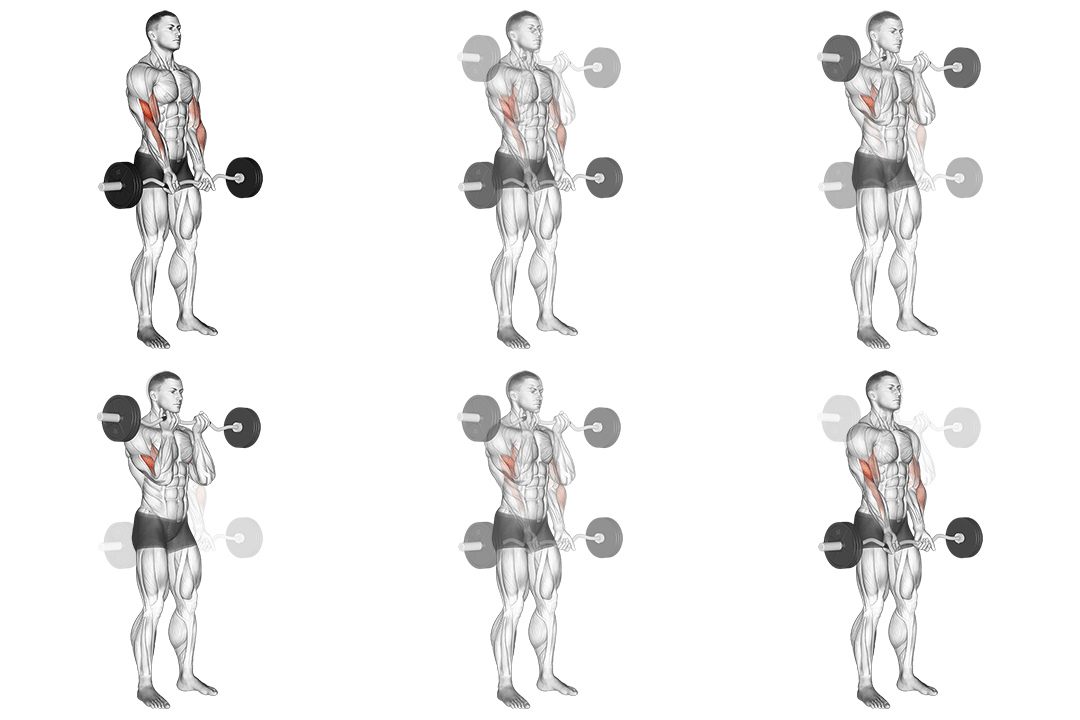
EZ Barbell Reverse Grip Curl
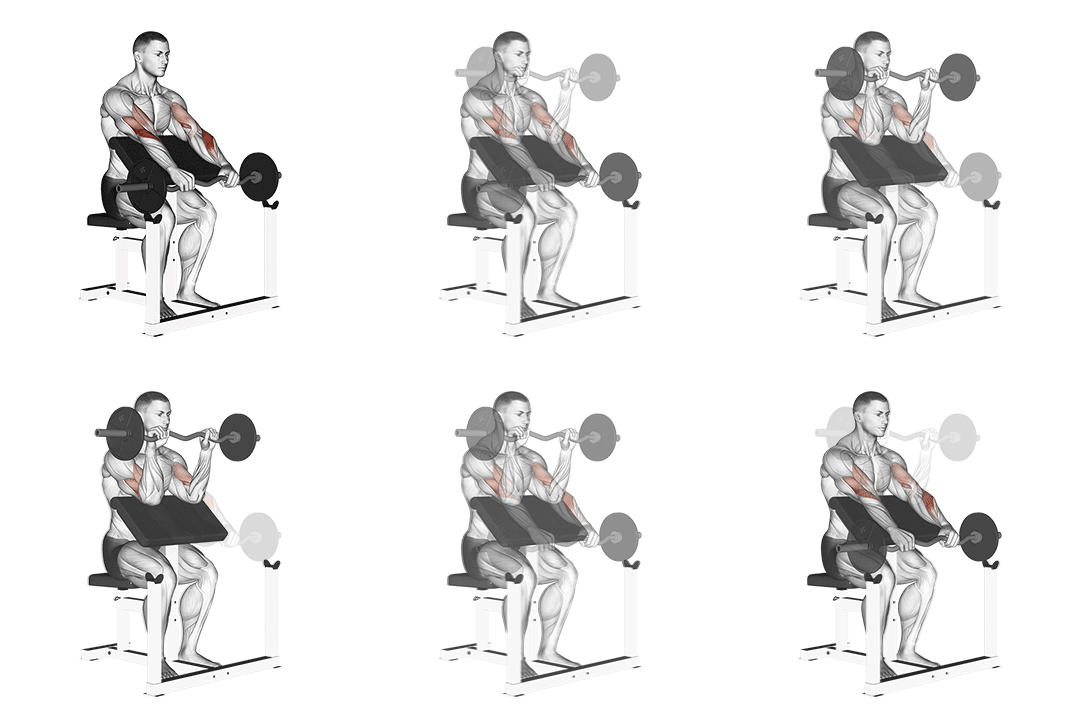
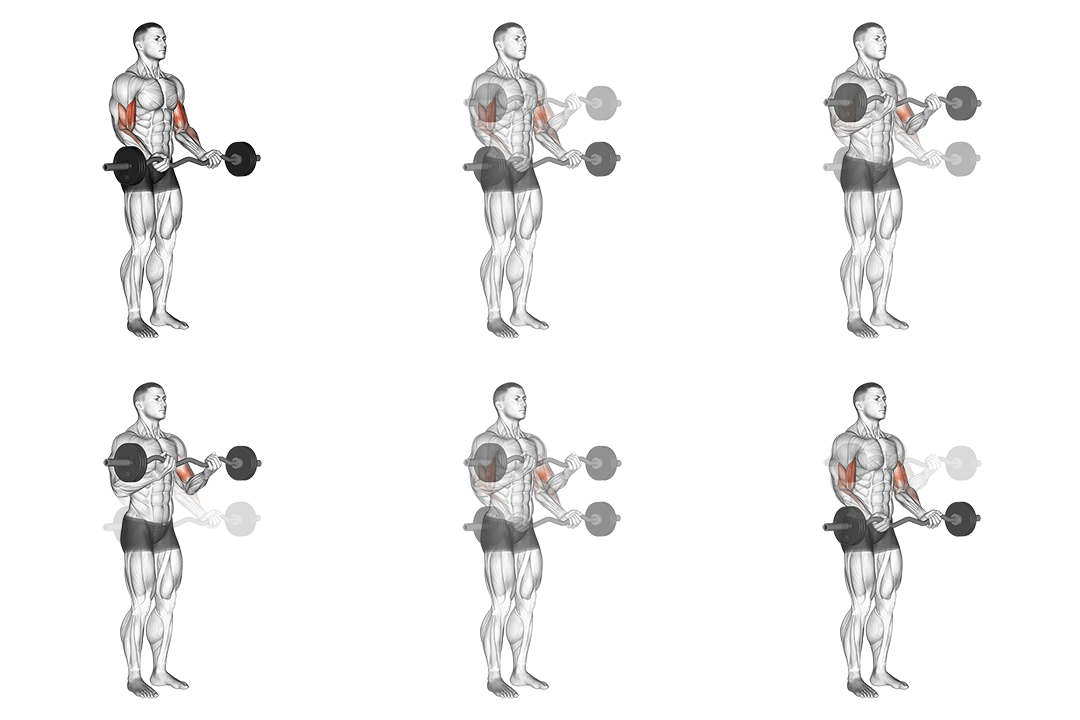
EZ Barbell Reverse Grip Preacher Curl
Head-to-Head Comparison
| Attribute | EZ Barbell Reverse Grip Curl | EZ Barbell Reverse Grip Preacher Curl |
|---|---|---|
| Target Muscle |
Biceps
|
Biceps
|
| Body Part |
Upper-arms
|
Upper-arms
|
| Equipment |
Ez-barbell
|
Ez-barbell
|
| Difficulty |
Intermediate
|
Intermediate
|
| Movement Type |
Isolation
|
Isolation
|
| Secondary Muscles |
1
|
1
|
Secondary Muscles Activated
EZ Barbell Reverse Grip Curl
EZ Barbell Reverse Grip Preacher Curl
Visual Comparison
Overview
Ez Barbell Reverse Grip Curl vs Ez Barbell Reverse Grip Preacher Curl — you’re comparing two isolation moves that load the biceps with a pronated grip. I’ll walk you through how each exercise shifts emphasis between the biceps, brachialis, and forearms, what equipment and setup each needs, and which movement produces better hypertrophy, strength, or beginner-friendly practice. You’ll get clear technique cues, rep ranges (6–12 for hypertrophy, 4–6 for heavy strength work), and practical recommendations so you can pick the one that fits your goals and training environment.
Key Differences
- Both exercises target the Biceps using Ez-barbell. The main differences are in their movement patterns and muscle activation angles.
Pros & Cons
EZ Barbell Reverse Grip Curl
+ Pros
- Requires minimal equipment — just an EZ-bar and plates
- Allows heavier loading and varied progressions (partials, negatives)
- Short-range torso stabilization trains integrated movement patterns
- Easier to manage eccentric control across a longer ROM
− Cons
- More temptation to use momentum and shoulder swing
- Less strict isolation of the biceps and forearm compared to a preacher setup
- Greater need for core/postural control to keep clean reps
EZ Barbell Reverse Grip Preacher Curl
+ Pros
- Strict isolation — pad removes shoulder and torso assistance
- Consistent biomechanics rep-to-rep for precise tension
- Better for strict tempo work and high time-under-tension sets
- Easier to learn safe elbow flexion pattern for beginners
− Cons
- Requires a preacher bench or station (less accessible)
- Can increase compressive/tensile stress at the elbow if loaded improperly
- Shorter available ROM may reduce long-head biceps stretch
When Each Exercise Wins
Preacher curls give stricter isolation and eliminate cheating, increasing mid-range time under tension. That controlled mid-range stress (especially with 8–12 reps and 2–3 second eccentrics) translates to consistent mechanical tension and muscle growth.
Standing reverse curls allow you to load heavier, use progressive overload, and practice handling increased absolute loads. Heavier sets in the 4–6 rep range applied safely produce better improvements in maximal elbow flexion force.
The preacher pad stabilizes the upper arm and reduces movement complexity, letting beginners learn proper elbow flexion patterns and tempo without compensatory shoulder or back motion.
Standing reverse curls need only an EZ-bar and plates, making them far more practical for limited-home setups compared with a bulky preacher bench.
Frequently Asked Questions
Can I do both Ez Barbell Reverse Grip Curl and Ez Barbell Reverse Grip Preacher Curl in the same workout?
Yes — use the preacher curl first for 2–3 strict sets targeting isolation (8–12 reps), then finish with standing reverse curls for load or burnout sets. That order preserves strict form early and lets you overload later without excessive compensation.
Which exercise is better for beginners?
Ez Barbell Reverse Grip Preacher Curl is better for beginners because the pad stabilizes the arm and reduces cheating. It makes learning proper elbow flexion and tempo easier while lowering the motor control demand.
How do the muscle activation patterns differ?
Both emphasize brachialis and brachioradialis due to pronation, but preacher curls concentrate activation in the mid-to-top range by removing shoulder involvement, while standing curls produce a longer ROM and slightly more stabilizer recruitment across the shoulder and core.
Can Ez Barbell Reverse Grip Preacher Curl replace Ez Barbell Reverse Grip Curl?
Yes for isolation-focused hypertrophy work — preacher curls can replace standing reverse curls when your goal is strict mid-range tension. For maximal loading, strength adaptation, or home training, standing reverse curls remain the better choice.
Expert Verdict
If you want strict isolation and consistent mid-range tension for hypertrophy, choose the Ez Barbell Reverse Grip Preacher Curl — use controlled tempo (2–3 second eccentric), 8–12 reps, and focus on full elbow extension to mid-range peak. If your goal is raw strength, load progression, or you train at home, pick the Ez Barbell Reverse Grip Curl: keep your elbows tucked, wrists neutral, and limit torso lean; work 4–6 heavy reps or 6–10 for mixed strength/hypertrophy. Both moves emphasize the brachialis and forearms; rotate them into your program to vary length-tension and mechanical stress.
Also Compare
More comparisons with EZ Barbell Reverse Grip Curl
More comparisons with EZ Barbell Reverse Grip Preacher Curl
Compare More Exercises
Use our free comparison tool to analyze any two exercises head-to-head.
Compare Exercises