

Ez Barbell Reverse Grip Preacher Curl vs Ez Barbell Seated Curls: Complete Comparison Guide
Ez Barbell Reverse Grip Preacher Curl vs Ez Barbell Seated Curls — you’re choosing between two focused EZ-bar isolation moves that hit the biceps and forearms. I’ll walk you through muscle activation, equipment needs, technique cues, risk factors, and when to pick each based on hypertrophy, strength, or convenience. You’ll get specific rep ranges (6–12 for size, 4–6 for strength), actionable form tips, and clear scenarios showing which exercise fits your program so you can train smarter and protect your joints.
Exercise Comparison
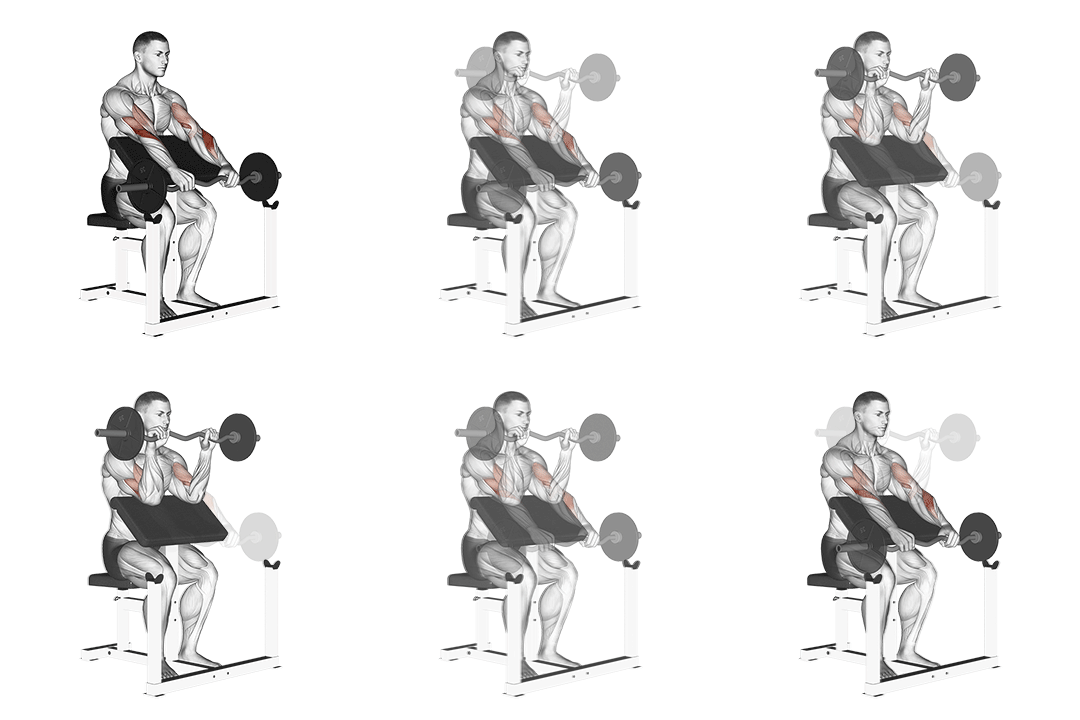
EZ Barbell Reverse Grip Preacher Curl
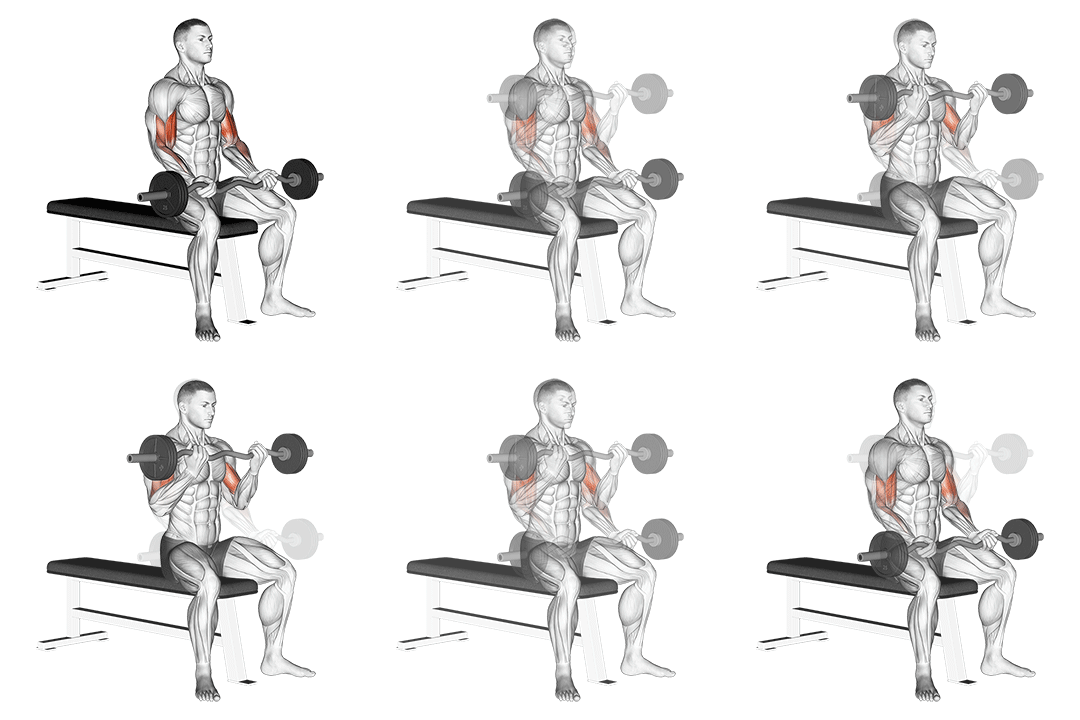
EZ Barbell Seated Curls
Head-to-Head Comparison
| Attribute | EZ Barbell Reverse Grip Preacher Curl | EZ Barbell Seated Curls |
|---|---|---|
| Target Muscle |
Biceps
|
Biceps
|
| Body Part |
Upper-arms
|
Upper-arms
|
| Equipment |
Ez-barbell
|
Ez-barbell
|
| Difficulty |
Intermediate
|
Beginner
|
| Movement Type |
Isolation
|
Isolation
|
| Secondary Muscles |
1
|
1
|
Secondary Muscles Activated
EZ Barbell Reverse Grip Preacher Curl
EZ Barbell Seated Curls
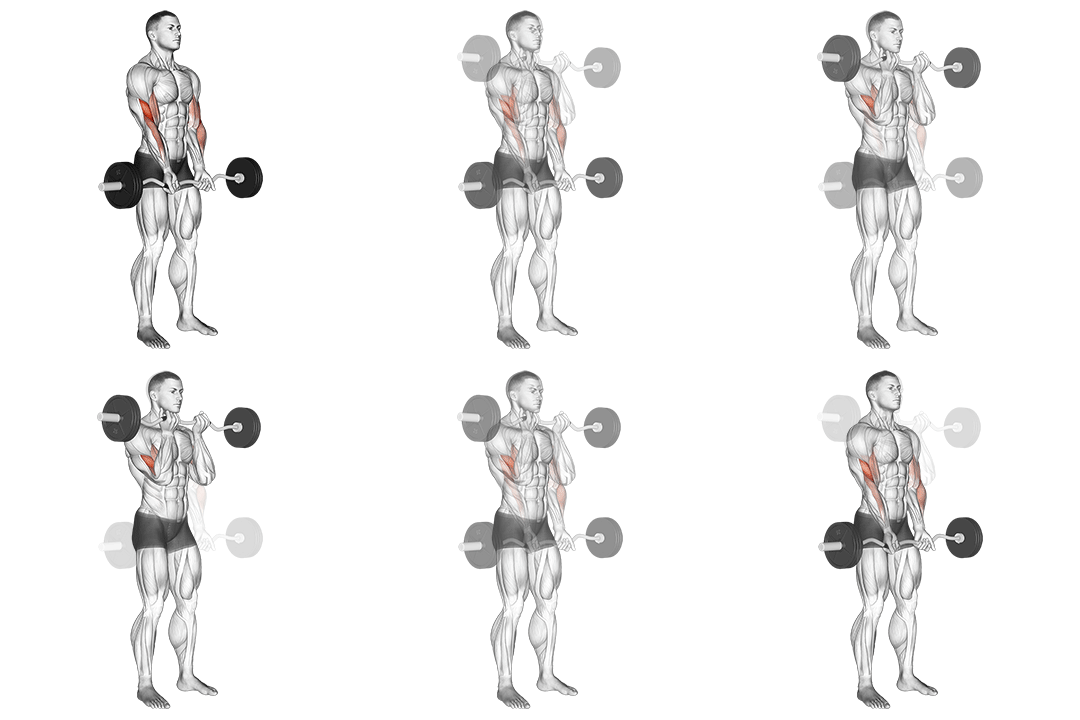
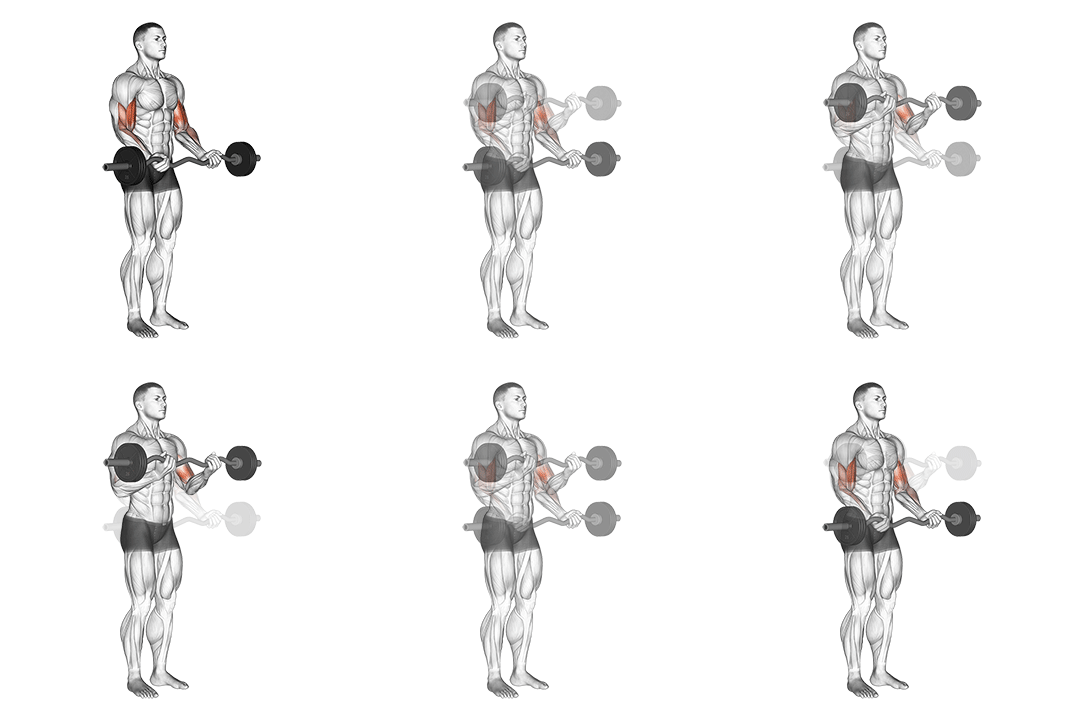
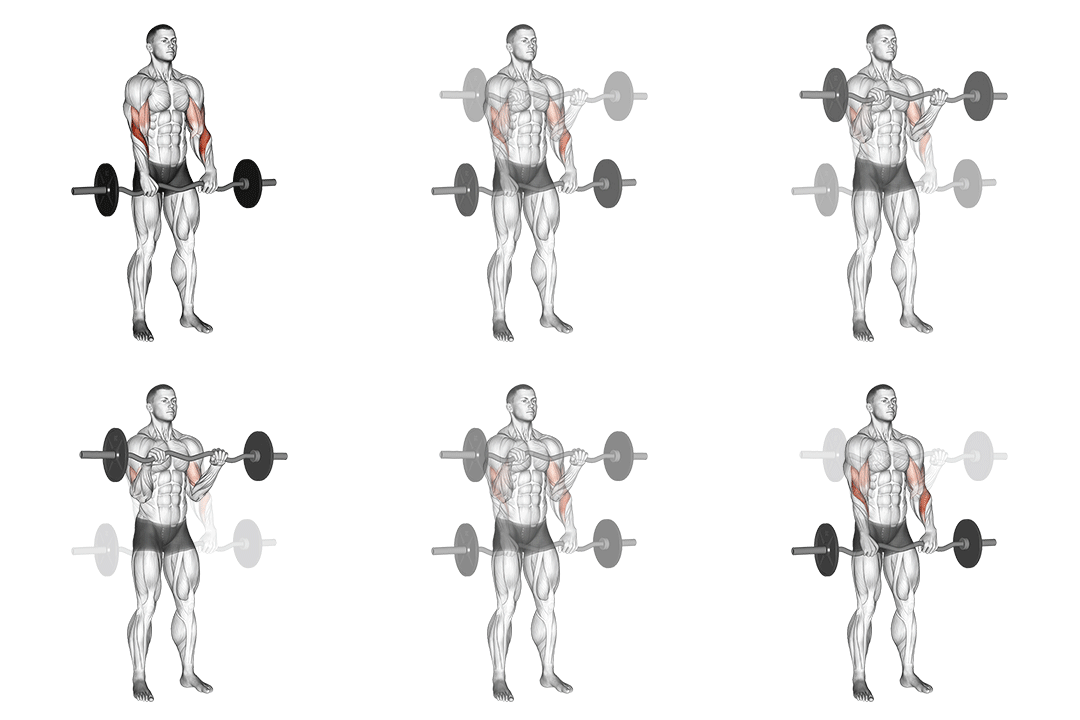
Visual Comparison
Overview
Ez Barbell Reverse Grip Preacher Curl vs Ez Barbell Seated Curls — you’re choosing between two focused EZ-bar isolation moves that hit the biceps and forearms. I’ll walk you through muscle activation, equipment needs, technique cues, risk factors, and when to pick each based on hypertrophy, strength, or convenience. You’ll get specific rep ranges (6–12 for size, 4–6 for strength), actionable form tips, and clear scenarios showing which exercise fits your program so you can train smarter and protect your joints.
Key Differences
- Difficulty levels differ: EZ Barbell Reverse Grip Preacher Curl is intermediate, while EZ Barbell Seated Curls is beginner.
- Both exercises target the Biceps using Ez-barbell. The main differences are in their movement patterns and muscle activation angles.
Pros & Cons
EZ Barbell Reverse Grip Preacher Curl
+ Pros
- Strong isolation of elbow flexors with minimal shoulder involvement
- Greater emphasis on brachialis and brachioradialis for fuller upper-arm thickness
- Fixed pad reduces cheating and enforces strict tempo (useful for tempo control and negatives)
- Good for adding variety and addressing weak points in elbow flexion
− Cons
- Higher wrist and tendon stress from pronated grip
- Requires a preacher bench, reducing accessibility
- Lower peak biceps brachii activation compared to supinated seated curls
EZ Barbell Seated Curls
+ Pros
- Higher peak biceps brachii activation due to supinated hand position
- Very accessible—only a bench or chair and an EZ-bar needed
- Easier to learn and load progressively for strength and size
- Works well across common rep ranges (6–12 for hypertrophy, 4–6 for strength)
− Cons
- Easier to cheat with body swing if not braced
- Less targeted stimulation of brachialis and brachioradialis
- Can allow slight shoulder involvement if form breaks down
When Each Exercise Wins
Seated supinated curls produce stronger peak biceps brachii activation at the top of the curl and fit hypertrophy ranges (8–12 reps) well. The supination increases the biceps’ moment arm, promoting greater short‑head and long‑head loading for muscle growth.
Seated curls let you use heavier absolute loads safely and progress load incrementally. The biomechanics favor greater torque at the elbow flexors when supinated, which translates to larger strength adaptations when you train in lower rep ranges (4–6).
Seated curls have a simpler setup, clearer kinesthetic feedback, and lower wrist complexity, making them easier to learn and progress without specialized equipment or technique coaching.
Seated curls only require an EZ-bar and a stable chair or bench found in most home gyms. The preacher version needs a curl pad or preacher bench, which reduces practicality at home.
Frequently Asked Questions
Can I do both Ez Barbell Reverse Grip Preacher Curl and Ez Barbell Seated Curls in the same workout?
Yes — sequence seated curls first for heavy sets and higher peak biceps activation (work in 4–8 or 8–12 rep ranges), then use reverse‑grip preacher curls as a secondary isolation move to fatigue the brachialis and forearms with lighter sets of 8–15 reps and slow eccentrics.
Which exercise is better for beginners?
Ez Barbell Seated Curls are better for beginners because they’re easier to learn, allow safer loading, and give clearer feedback on biceps engagement. Start with strict sets, 8–12 reps, and focus on full range and controlled tempo.
How do the muscle activation patterns differ?
Supinated seated curls align the biceps’ line of pull, producing higher peak biceps brachii activation near full flexion. Reverse‑grip preacher curls reduce biceps moment arm due to pronation, shifting load to the brachialis and brachioradialis and producing earlier torque peaks in the ROM.
Can Ez Barbell Seated Curls replace Ez Barbell Reverse Grip Preacher Curl?
If your goal is pure biceps size and strength, seated curls can replace the preacher reverse grip in most programs. Keep the reverse‑grip preacher as an accessory when you want extra brachialis and forearm work or to correct specific elbow‑flexion weaknesses.
Expert Verdict
Use Ez Barbell Seated Curls as your primary EZ‑bar biceps movement when you want maximum biceps brachii activation, straightforward progression, and wide accessibility—aim for 6–12 reps for hypertrophy or 4–6 for strength with strict tempo (2‑0‑1). Add Ez Barbell Reverse Grip Preacher Curls as an accessory to target the brachialis and forearms, correct elbow‑flexion weak points, or force stricter tempo work; use lighter loads, 8–15 reps, and wrist wraps if needed. Alternate both across cycles to balance peak biceps development with deeper forearm and brachialis conditioning.
Also Compare
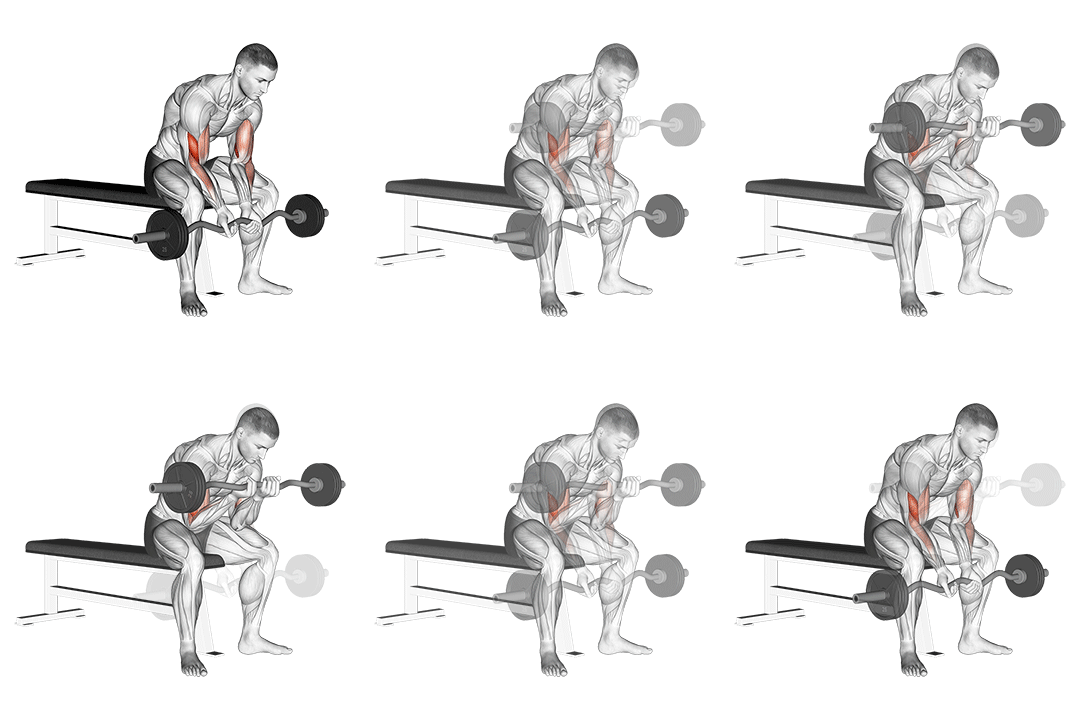
More comparisons with EZ Barbell Reverse Grip Preacher Curl
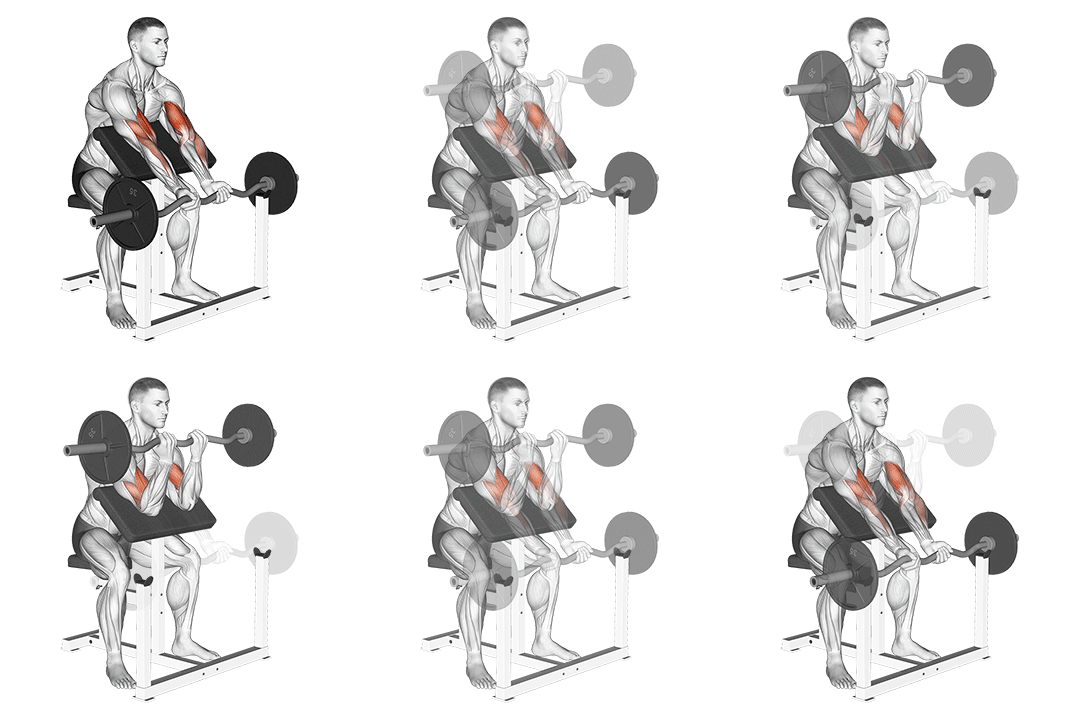
More comparisons with EZ Barbell Seated Curls
Compare More Exercises
Use our free comparison tool to analyze any two exercises head-to-head.
Compare Exercises