

Hyperextensions With No Hyperextension Bench vs Stiff Leg Barbell Good Morning
Compare target muscles, equipment, difficulty, movement type, and secondary muscles for Hyperextensions With No Hyperextension Bench and Stiff Leg Barbell Good Morning.
Get comparison link
Select the link and use your device's Copy command.
Comparison overview
AI-generatedExercise Comparison
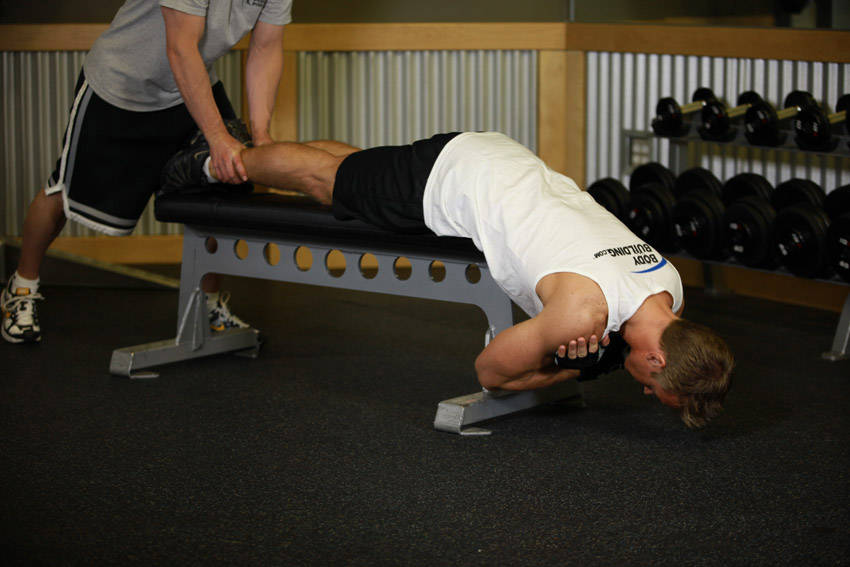
Hyperextensions With No Hyperextension Bench
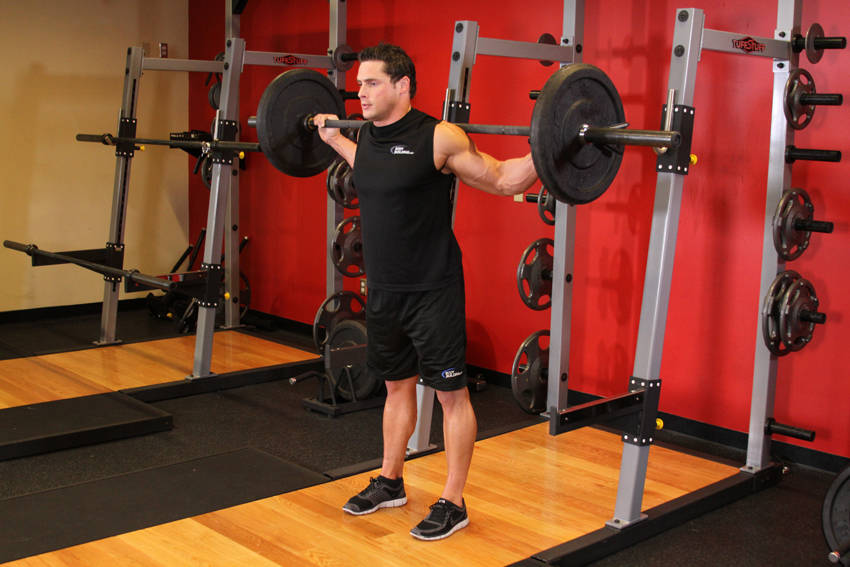
Stiff Leg Barbell Good Morning
Head-to-Head Comparison
Different values are marked. These are catalogue attributes, not performance scores.
Muscles used
Listed target and secondary muscles, shown on the body. Locations, not activation or strength scores.
- Target
- Secondary
- Not highlighted
Hyperextensions With No Hyperextension Bench
- Target
- Erector-spinae
- Secondary
- Glutes, Hamstrings
Not shown on diagram: Erector-spinae. These labels do not identify a precise region on this map.
Stiff Leg Barbell Good Morning
- Target
- Erector-spinae
- Secondary
- Glutes, Hamstrings
Not shown on diagram: Erector-spinae. These labels do not identify a precise region on this map.
Grey does not mean a muscle is unused. The diagrams show only the mapped catalogue labels.
| Attribute | Hyperextensions With No Hyperextension Bench | Stiff Leg Barbell Good Morning |
|---|---|---|
| Target Muscle | Erector-spinae |
Erector-spinae |
| Body Part | Back |
Back |
| Equipment Different | Body-weight |
Barbell |
| Difficulty Different | Intermediate |
Advanced |
| Movement Type | Compound |
Compound |
| Secondary Muscles | Glutes, Hamstrings |
Glutes, Hamstrings |
Visual Comparison
An illustrative 1–10 profile derived from catalog difficulty, equipment, and listed-muscle fields—not measured performance or muscle activation.
Key Differences
- Equipment differs: Hyperextensions With No Hyperextension Bench uses Body-weight, while Stiff Leg Barbell Good Morning requires Barbell.
- Difficulty levels differ: Hyperextensions With No Hyperextension Bench is intermediate, while Stiff Leg Barbell Good Morning is advanced.
Muscle comparison
Shared target muscles
Secondary muscle differences
Muscle involvement analysis
Equipment and setup
Hyperextensions With No Hyperextension Bench: setup
Stiff Leg Barbell Good Morning: setup
Access and practicality
Learning and progression
Learning the movements
Progression considerations
Limitations and precautions
Pros & Cons
Hyperextensions With No Hyperextension Bench
+ Pros
- Minimal equipment—works for home training
- Lower technical barrier; easier to teach and learn
- Safe way to train erectors with bodyweight control
- Easy to manipulate tempo and reps for hypertrophy (12–20 reps)
− Cons
- Limited maximal loading compared to barbell variations
- Shorter range of motion, less hamstring stretch under load
- Can become easy quickly—progressions require creativity
Stiff Leg Barbell Good Morning
+ Pros
- High progression ceiling—add substantial external load
- Loads erectors and hamstrings across a larger ROM
- Transfers strongly to deadlift and squat strength
- Effective for building posterior chain strength (3–6 rep heavy work)
− Cons
- Higher technical demand—needs strict hip hinge and spine control
- Greater injury risk under poor form or excessive load
- Requires barbell and rack—less accessible for home use
When Each Exercise Wins
The good morning allows heavier external loads and longer time-under-tension across a larger hip flexion range, which increases mechanical tension on the erectors and hamstrings. Use 6–12 reps with controlled eccentric tempo to maximize muscle growth.
Good mornings create a larger moment arm and higher torque demand at the hips, so loading them heavy (3–6 reps) develops raw posterior chain force and improves deadlift/squat carryover better than bodyweight hyperextensions.
Hyperextensions teach spinal control and the basic hip hinge with low load and low risk, making them ideal for novices to build tolerance and technique before adding barbell resistance.
You can perform effective hyperextensions with just a bench edge or box and your bodyweight. They let you target the erectors and glutes without a barbell, rack, or plates.
Frequently Asked Questions
Can I do both Hyperextensions With No Hyperextension Bench and Stiff Leg Barbell Good Morning in the same workout?
Which exercise is better for beginners?
How do the muscle activation patterns differ?
Can Stiff Leg Barbell Good Morning replace Hyperextensions With No Hyperextension Bench?
Comparison Summary
Exercise instructions
Steps from the exercise catalogue. Read the full sequence before starting.
Hyperextensions With No Hyperextension Bench
- With someone holding down your legs, slide yourself down to the edge a flat bench until your hips hang off the end of the bench. Tip: Your entire upper body should be hanging down towards the floor. Also, you will be in the same position as if you were on a hyperextension bench but the range of motion will be shorter due to the height of the flat bench vs. that of the hyperextension bench.
- With your body straight, cross your arms in front of you (my preference) or behind your head. This will be your starting position. Tip: You can also hold a weight plate for extra resistance in front of you under your crossed arms.
- Start bending forward slowly at the waist as far as you can while keeping your back flat. Inhale as you perform this movement. Keep moving forward until you almost touch the floor or you feel a nice stretch on the hamstrings (whichever comes first). Tip: Never round the back as you perform this exercise.
Read remaining steps for Hyperextensions With No Hyperextension Bench
- Slowly raise your torso back to the initial position as you exhale. Tip: Avoid the temptation to arch your back past a straight line. Also, do not swing the torso at any time in order to protect the back from injury.
- Repeat for the recommended amount of repetitions.
Stiff Leg Barbell Good Morning
- This exercise is best performed inside a squat rack for safety purposes. To begin, first set the bar on a rack that best matches your height. Once the correct height is chosen and the bar is loaded, step under the bar and place the back of your shoulders (slightly below the neck) across it.
- Hold on to the bar using both arms at each side and lift it off the rack by first pushing with your legs and at the same time straightening your torso.
- Step away from the rack and position your legs using a shoulder width medium stance. Keep your head up at all times as looking down will get you off balance and also maintain a straight back. This will be your starting position.
Read remaining steps for Stiff Leg Barbell Good Morning
- Keeping your legs stationary, move your torso forward by bending at the hips while inhaling. Lower your torso until it is parallel with the floor.
- Begin to raise the bar as you exhale by elevating your torso back to the starting position.
- Repeat for the recommended amount of repetitions.
Also Compare
More comparisons with Hyperextensions With No Hyperextension Bench
More comparisons with Stiff Leg Barbell Good Morning
Compare another pair
Choose two exercises to see their differences side by side.