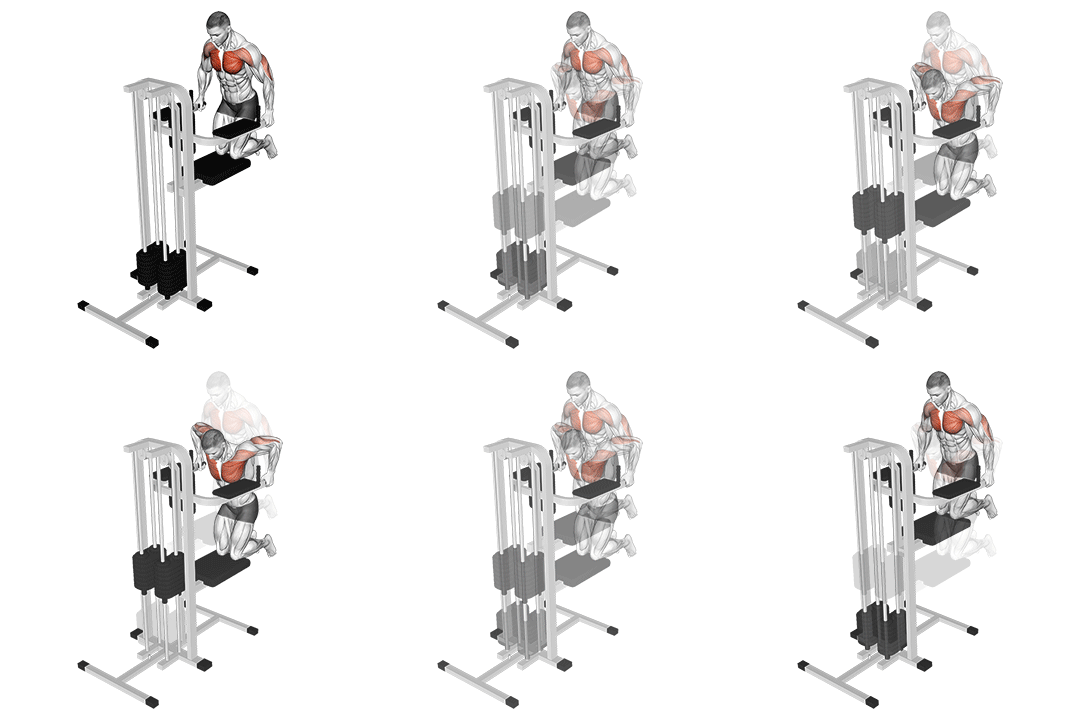
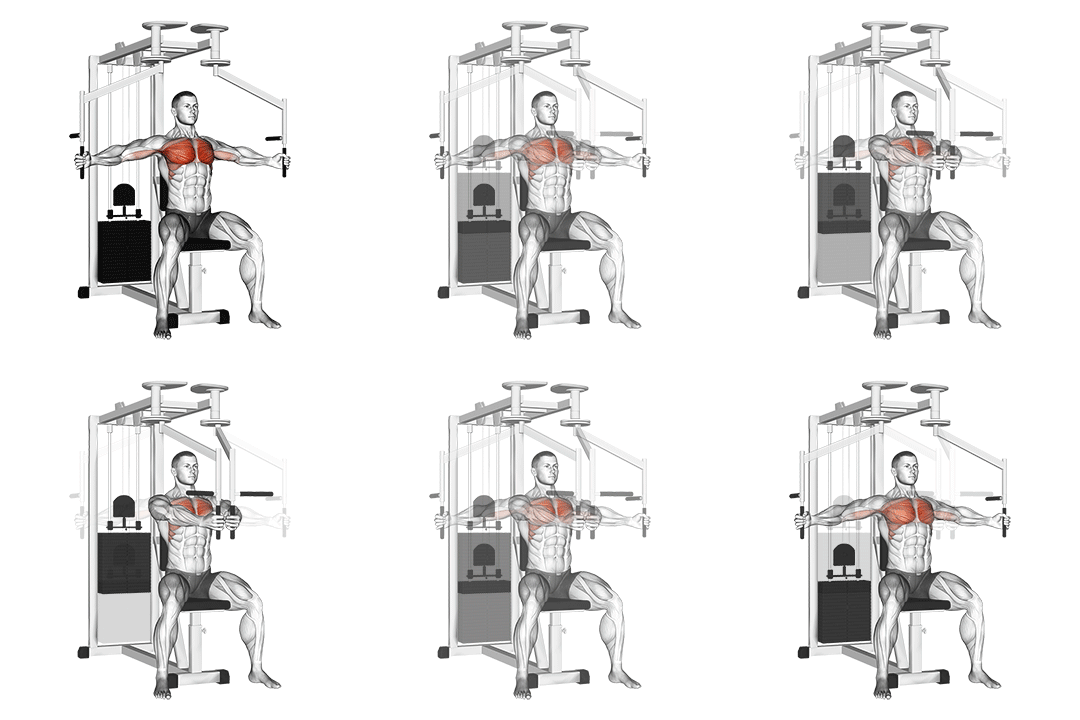
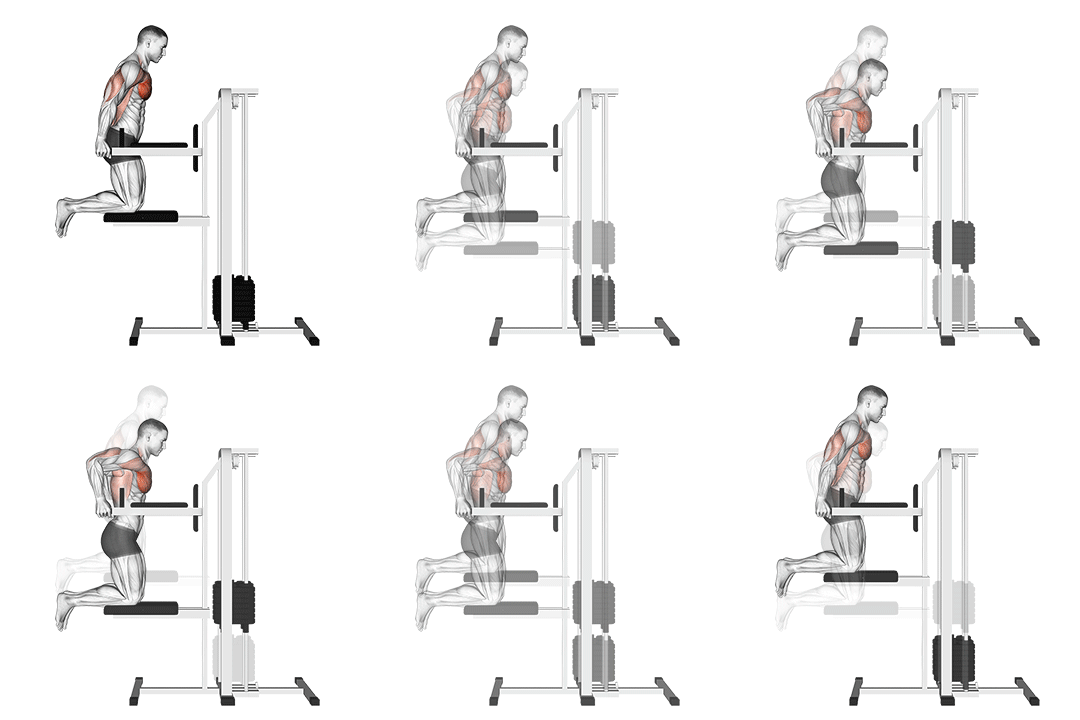
Lever Decline Chest Press vs Lever Incline Chest Press

Compare target muscles, equipment, difficulty, movement type, and secondary muscles for Lever Decline Chest Press and Lever Incline Chest Press.

Change comparison Share

Get comparison link

Select the link and use your device's Copy command.

Comparison overview

AI-generated
Lever Decline Chest Press vs Lever Incline Chest Press — two leveraged presses that both target the pectorals but load them differently. You’ll get a clear breakdown of primary muscle emphasis, secondary recruitment (triceps and shoulders), setup and technique cues, biomechanics like force vectors and length-tension, and practical programming recommendations (angles, rep ranges, and progression). Read on so you can choose which lever press to prioritize based on whether you want heavier horizontal loading, upper-chest development, or safer shoulder mechanics.

Exercise Comparison

Exercise A
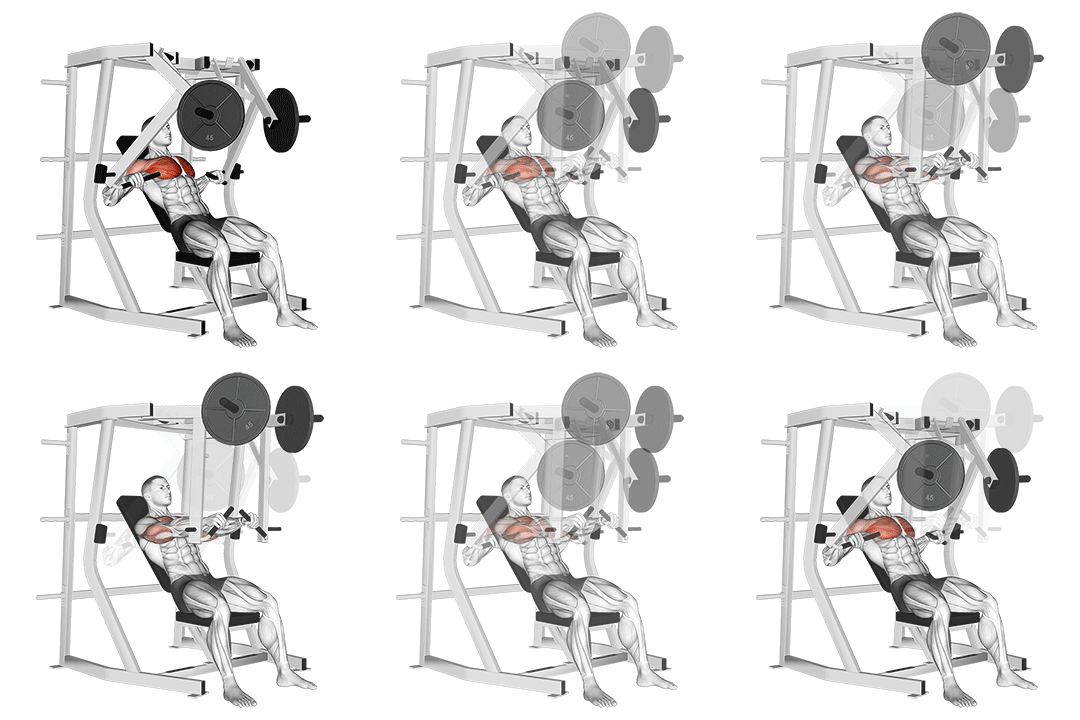
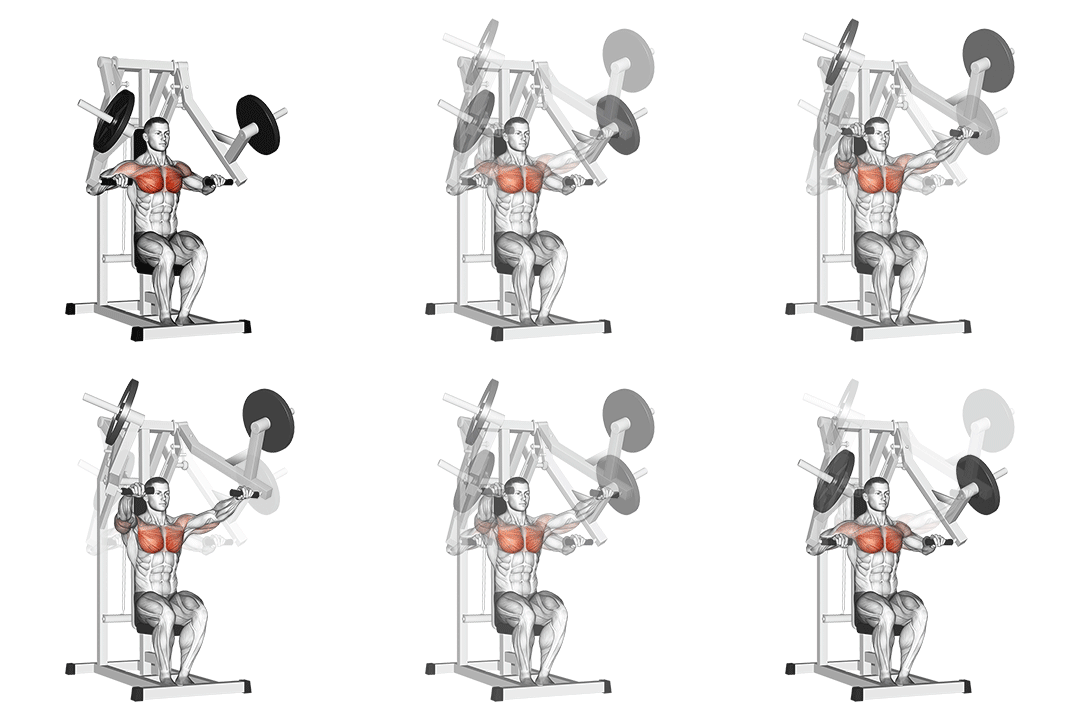
Lever Decline Chest Press demonstration

Lever Decline Chest Press

Target Pectorals
Equipment Lever
Body Part Chest
Difficulty Intermediate
Movement Compound
Secondary Muscles
Triceps Shoulders
VS
Exercise B
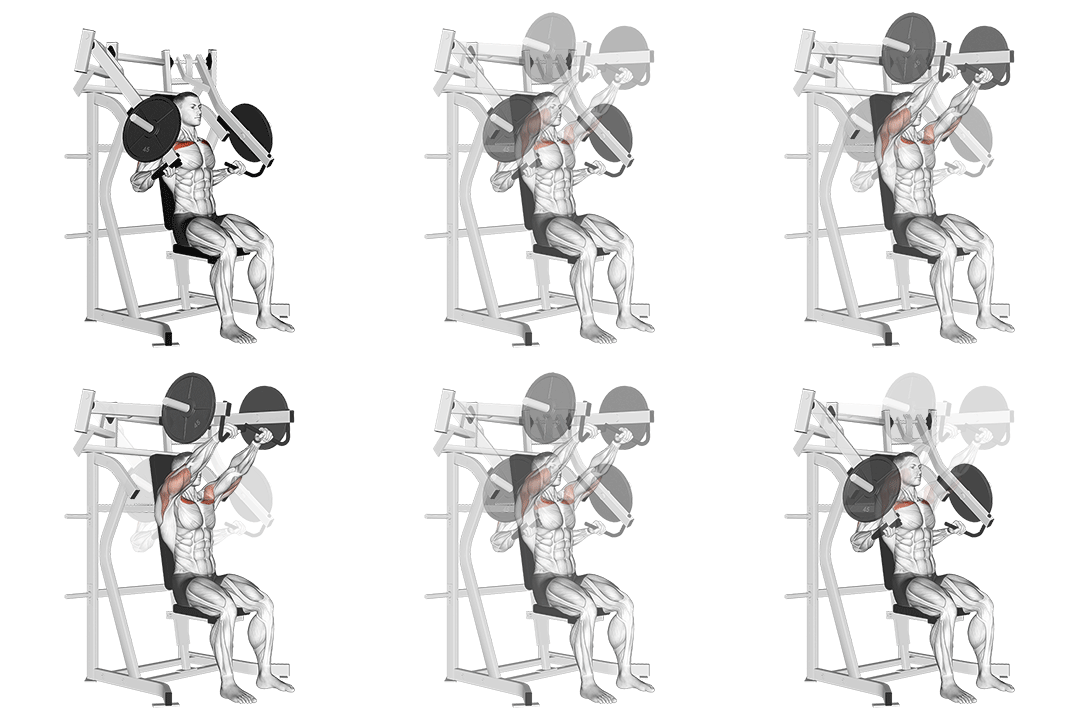
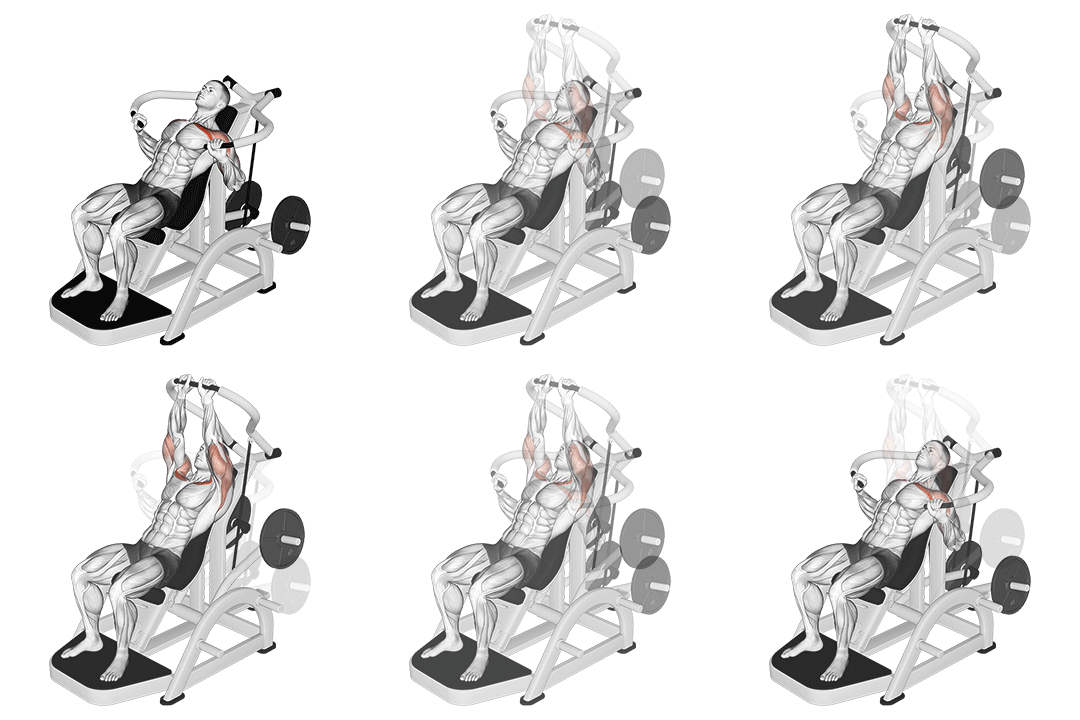
Lever Incline Chest Press demonstration

Lever Incline Chest Press

Target Pectorals
Equipment Lever
Body Part Chest
Difficulty Intermediate
Movement Compound
Secondary Muscles
Shoulders Triceps

Head-to-Head Comparison

Different values are marked. These are catalogue attributes, not performance scores.

Muscles used

Listed target and secondary muscles, shown on the body. Locations, not activation or strength scores.

  • Target
  • Secondary
  • Not highlighted

Lever Decline Chest Press

Front
Lever Decline Chest Press: front muscle locationsSolid: listed target. Striped: listed secondary. Grey: not highlighted. Locations, not activation or strength scores. See the muscle names below.
Back
Lever Decline Chest Press: back muscle locationsSolid: listed target. Striped: listed secondary. Grey: not highlighted. Locations, not activation or strength scores. See the muscle names below.
Target
Pectorals
Secondary
Triceps, Shoulders

Not shown on diagram: Shoulders. These labels do not identify a precise region on this map.

Lever Incline Chest Press

Front
Lever Incline Chest Press: front muscle locationsSolid: listed target. Striped: listed secondary. Grey: not highlighted. Locations, not activation or strength scores. See the muscle names below.
Back
Lever Incline Chest Press: back muscle locationsSolid: listed target. Striped: listed secondary. Grey: not highlighted. Locations, not activation or strength scores. See the muscle names below.
Target
Pectorals
Secondary
Shoulders, Triceps

Not shown on diagram: Shoulders. These labels do not identify a precise region on this map.

Grey does not mean a muscle is unused. The diagrams show only the mapped catalogue labels.

Attribute Lever Decline Chest Press Lever Incline Chest Press
Target Muscle
Pectorals
Pectorals
Body Part
Chest
Chest
Equipment
Lever
Lever
Difficulty
Intermediate
Intermediate
Movement Type
Compound
Compound
Secondary Muscles
Triceps, Shoulders
Shoulders, Triceps

Visual Comparison

An illustrative 1–10 profile derived from catalog difficulty, equipment, and listed-muscle fields—not measured performance or muscle activation.

Key Differences

  • Both exercises target the Pectorals using Lever. The catalogue does not establish which exercise is better for an individual goal.

Muscle comparison

Shared target muscles

Both presses primarily load the pectoralis major and use a horizontal pushing pattern that involves shoulder horizontal adduction and elbow extension. The main overlap is that both generate large concentric force from the sternal and clavicular heads of the pecs; however the lever decline shifts the force vector more horizontally and emphasizes the lower/medial sternal fibers, while the lever incline redirects force upward and increases clavicular (upper) head contribution.

Secondary muscle differences

Secondary recruitment differs in shoulder involvement and triceps demand. The lever incline (typically set at 30–45°) increases anterior deltoid activation by ~10–20% relative to decline due to greater shoulder flexion demand, whereas the decline (15–30° decline) reduces anterior deltoid moment and slightly increases triceps drive because the elbows travel a more horizontal path.

Muscle involvement analysis

Biomechanically, the incline press produces a steeper force vector relative to the torso so the clavicular head works at a longer muscle length at the top of the press, shifting peak activation upward. The decline shortens the clavicular head and loads the sternal fibers more at mid-to-top range; length-tension explains why many lifters can load the decline heavier—mechanical advantage and more favorable torque around the glenohumeral joint at 15–30° decline.

Equipment and setup

Lever Decline Chest Press: setup

Lever Decline Chest Press requires a lever machine with an adjustable decline bench or fixed decline pad, solid foot bracing or straps to secure your lower body, and a weight stack or plates. Seat height and backpad angle should be adjustable so the shoulder joint aligns with the lever pivot.

Lever Incline Chest Press: setup

Lever Incline Chest Press requires a lever machine that allows an incline setting (commonly 30–45°), an adjustable seat to position the shoulder under the pivot, and secure foot placement. Some machines use adjustable backpads instead of full bench swaps, but proper alignment of the shoulder to lever axis is critical.

Access and practicality

Lever Incline Chest Press — most commercial gyms and multi-station machines include an incline lever arm or adjustable backpad, while dedicated decline lever setups are less common. For that reason you’ll usually find an incline option more accessible, especially in crowded facilities.

Learning and progression

Learning the movements

Incline is slightly easier to learn for most lifters because the torso angle mirrors standard pressing mechanics and requires less bracing and foot anchoring. Decline requires deliberate foot lockdown and pelvic positioning to prevent sliding and to keep the spine neutral.

Progression considerations

Both offer linear progression via more load or reps, but the decline often allows larger absolute loads (10–20% higher for many lifters) because of improved mechanical advantage, giving slightly greater raw overload potential. Incline offers more angle-based variation (30°, 35°, 45°) to fine-tune upper-chest emphasis.

Limitations and precautions

Incline carries higher anterior deltoid and shoulder flexion stress, increasing risk for people with existing shoulder impingement if form is poor (elbows flared and excessive humeral internal rotation). Decline reduces anterior deltoid demand but can place compressive load on the sternum and lower pec tendon; with poor setup, sliding or lumbar hyperextension are risks.

Pros & Cons

Lever Decline Chest Press

+ Pros

  • Stronger mechanical advantage allows heavier loading (often 5–20% more than incline)
  • Greater emphasis on lower and mid-sternal pec fibers for chest thickness
  • Less anterior deltoid involvement, useful if shoulders limit pressing
  • Stable pressing path when feet and pelvis are braced correctly

Cons

  • Decline setups are less common in some gyms
  • Requires solid foot lockdown and core bracing to avoid sliding
  • May reduce upper-chest stimulation compared with incline variations

Lever Incline Chest Press

+ Pros

  • Targets upper/clavicular pec fibers for balanced chest development
  • More common on multi-gyms and easy to adjust between lifters
  • Greater carryover to incline barbell/dumbbell variations
  • Easier setup for most lifters — less need for foot straps

Cons

  • Increases anterior deltoid demand, which can aggravate shoulder issues
  • May limit absolute load compared with decline due to less mechanical advantage
  • Improper elbow flare can increase impingement risk

When Each Exercise Wins

1
For muscle hypertrophy: Lever Decline Chest Press

Decline lets you load the sternal pecs more heavily and maintain tension through the mid-range, which supports high mechanical tension—key for hypertrophy. Use 6–12 reps with controlled 2–1–2 tempo and full scapular retraction to maximize fiber recruitment.

2
For strength gains: Lever Decline Chest Press

The more horizontal force vector gives a mechanical advantage that often lets you move heavier absolute loads, aiding neural adaptations for strength. Program 3–6 sets of 3–6 reps with heavier loads and long rest (2–4 minutes) to build maximal pressing strength.

3
For beginners: Lever Incline Chest Press

Incline is easier to set up and trains pressing mechanics with less need for pelvic bracing, making it friendlier for new trainees. Start with 8–12 reps focusing on scapular control and elbow path before increasing load.

4
For home workouts: Lever Incline Chest Press

Adjustable incline benches or incline-capable machines are more common in home gyms than dedicated decline levers, so incline offers greater practical access. If you don’t have a lever machine, incline dumbbell presses are a direct substitute.

Frequently Asked Questions

Can I do both Lever Decline Chest Press and Lever Incline Chest Press in the same workout?

Yes — pairing them works well if you want full chest coverage. Start with the movement that matches your priority (e.g., incline for upper chest), then use the other as a secondary heavy or volume set; manage total volume to avoid excessive shoulder fatigue.

Which exercise is better for beginners?

Lever Incline Chest Press is generally better for beginners because it requires simpler bracing and mirrors common pressing mechanics. It also allows you to learn proper scapular position and elbow tracking before progressing to decline variations.

How do the muscle activation patterns differ?

Incline shifts the force vector upward, increasing clavicular (upper) pec and anterior deltoid activation at about a 30–45° angle, while decline shifts the vector more horizontally, increasing sternal (lower/mid) pec activation. Length-tension and joint torque explain why decline often allows heavier absolute loads.

Can Lever Incline Chest Press replace Lever Decline Chest Press?

It can replace decline if your goal is overall chest balance or if you lack decline equipment, but it won’t load the lower sternal fibers in the same way. If lower-pec thickness or maximal horizontal load is your goal, keep decline in the rotation.

Comparison Summary

Use the Lever Incline Chest Press when your priority is upper-chest development, versatility, and easier setup—set the backpad to 30–45° and emphasize controlled reps (8–12) with scapular retraction. Choose the Lever Decline Chest Press when you want to prioritize sternal/ lower-pec thickness and move heavier loads for strength (3–6 reps) or high-tension hypertrophy (6–10 reps). For balanced chest development, cycle both across your program: include an incline movement earlier in the week for upper-clavicular stimulus and a decline press later for heavy horizontal loading and sternal density.

Exercise instructions

Steps from the exercise catalogue. Read the full sequence before starting.

Lever Decline Chest Press

  1. Adjust the seat height and backrest of the leverage machine to a comfortable position.
  2. Sit on the machine with your back against the backrest and your feet flat on the floor.
  3. Grasp the handles with an overhand grip and position your hands slightly wider than shoulder-width apart.
Read remaining steps for Lever Decline Chest Press
  1. Push the handles forward and away from your body until your arms are fully extended.
  2. Slowly lower the handles back towards your chest, keeping your elbows slightly bent.
  3. Pause for a moment at the bottom, then push the handles back to the starting position.
  4. Repeat for the desired number of repetitions.

Lever Incline Chest Press

  1. Adjust the seat and backrest of the leverage machine to a comfortable position.
  2. Sit on the machine with your back against the backrest and your feet flat on the floor.
  3. Grasp the handles with an overhand grip and position your hands slightly wider than shoulder-width apart.
Read remaining steps for Lever Incline Chest Press
  1. Push the handles forward and away from your body until your arms are fully extended.
  2. Pause for a moment, then slowly bend your elbows and lower the handles back towards your chest.
  3. Repeat for the desired number of repetitions.

Also Compare

Compare another pair

Choose two exercises to see their differences side by side.

Compare Exercises