One Half Locust vs Seated Good Mornings

Compare target muscles, equipment, difficulty, movement type, and secondary muscles for One Half Locust and Seated Good Mornings.

Change comparison Share

Get comparison link

Select the link and use your device's Copy command.

Comparison overview

AI-generated
One Half Locust vs Seated Good Mornings — you’re choosing between a body-weight isolation move and a heavy-barbell compound hinge. If you want to strengthen the erector spinae, protect your low back, or slot exercises into a home or gym plan, this guide helps you pick. I’ll compare primary muscle activation, secondary recruitment, equipment needs, difficulty, progression routes, and injury risk. You’ll get clear cues, recommended rep ranges, and situation-based winners so you can select the right exercise for your goals.

Exercise Comparison

Exercise A
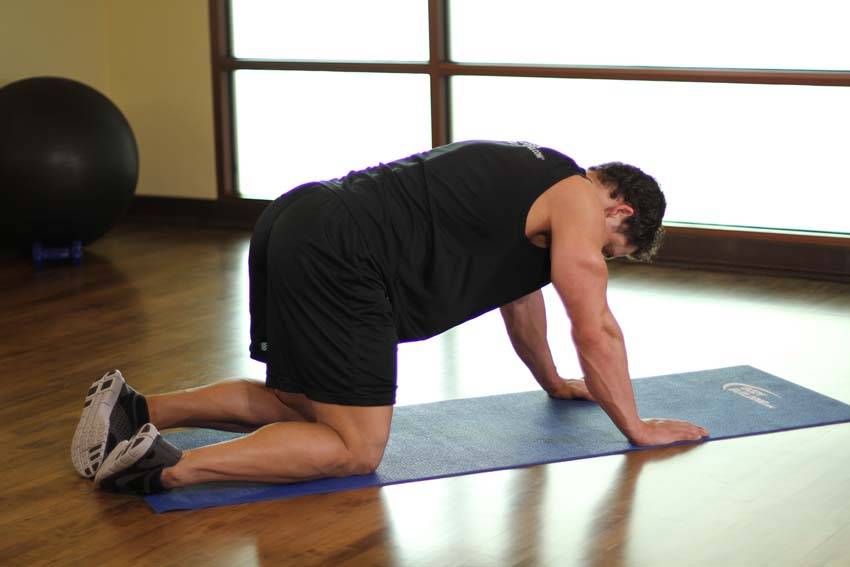
One Half Locust demonstration

One Half Locust

Target Erector-spinae
Equipment Body-weight
Body Part Back
Difficulty Beginner
Movement Isolation
Secondary Muscles
Abdominals Biceps Chest
VS
Exercise B
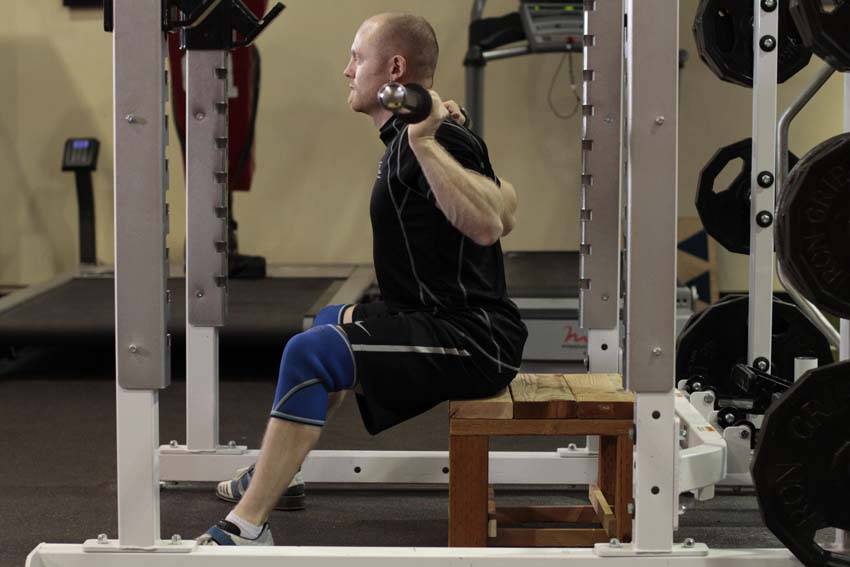
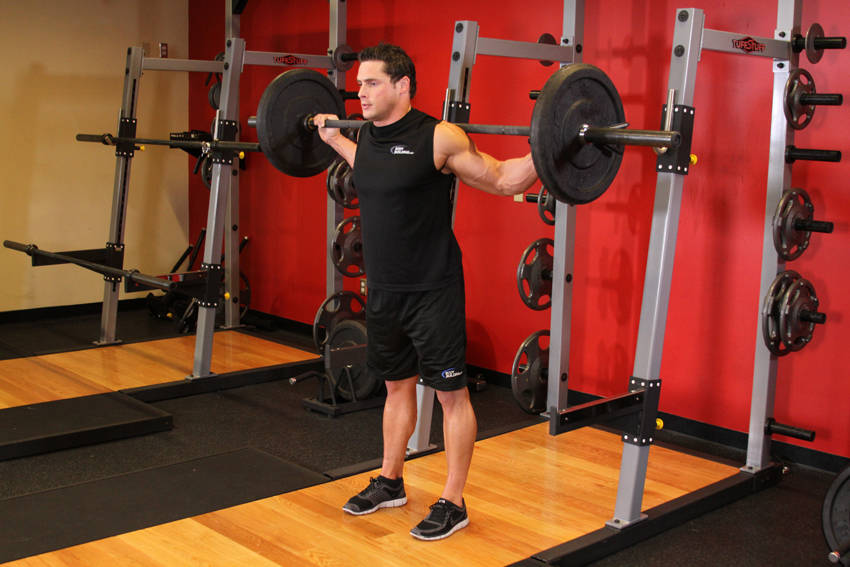
Seated Good Mornings demonstration

Seated Good Mornings

Target Erector-spinae
Equipment Barbell
Body Part Back
Difficulty Advanced
Movement Compound
Secondary Muscles
Glutes

Head-to-Head Comparison

Different values are marked. These are catalogue attributes, not performance scores.

Muscles used

Listed target and secondary muscles, shown on the body. Locations, not activation or strength scores.

  • Target
  • Secondary
  • Not highlighted

One Half Locust

Front
One Half Locust: front muscle locationsSolid: listed target. Striped: listed secondary. Grey: not highlighted. Locations, not activation or strength scores. See the muscle names below.
Back
One Half Locust: back muscle locationsSolid: listed target. Striped: listed secondary. Grey: not highlighted. Locations, not activation or strength scores. See the muscle names below.
Target
Erector-spinae
Secondary
Abdominals, Biceps, Chest

Not shown on diagram: Erector-spinae. These labels do not identify a precise region on this map.

Seated Good Mornings

Front
Seated Good Mornings: front muscle locationsSolid: listed target. Striped: listed secondary. Grey: not highlighted. Locations, not activation or strength scores. See the muscle names below.
Back
Seated Good Mornings: back muscle locationsSolid: listed target. Striped: listed secondary. Grey: not highlighted. Locations, not activation or strength scores. See the muscle names below.
Target
Erector-spinae
Secondary
Glutes

Not shown on diagram: Erector-spinae. These labels do not identify a precise region on this map.

Grey does not mean a muscle is unused. The diagrams show only the mapped catalogue labels.

Attribute One Half Locust Seated Good Mornings
Target Muscle
Erector-spinae
Erector-spinae
Body Part
Back
Back
Equipment Different
Body-weight
Barbell
Difficulty Different
Beginner
Advanced
Movement Type Different
Isolation
Compound
Secondary Muscles Different
Abdominals, Biceps, Chest
Glutes

Visual Comparison

An illustrative 1–10 profile derived from catalog difficulty, equipment, and listed-muscle fields—not measured performance or muscle activation.

Key Differences

  • Equipment differs: One Half Locust uses Body-weight, while Seated Good Mornings requires Barbell.
  • One Half Locust is an isolation exercise, while Seated Good Mornings is a compound movement.
  • Difficulty levels differ: One Half Locust is beginner, while Seated Good Mornings is advanced.

Muscle comparison

Shared target muscles

Both drills target the erector spinae through spinal extension, but they stress the muscle differently. The One Half Locust produces low-to-moderate tension via body-weight-driven spinal extension with emphasis on controlled concentric lift and isometric hold. Seated Good Mornings place an external moment on the spine and create higher peak torque across the erectors—typical loaded sets produce roughly 20–40% greater force demand than unweighted extensions, increasing mechanical tension which favors strength and hypertrophy.

Secondary muscle differences

Secondary recruitment diverges: the One Half Locust calls in the abdominals for anti-flexion stability and the chest and biceps only as minor stabilizers when arms are lifted, producing more global postural work. Seated Good Mornings recruit the glutes and upper hamstring to resist hip flexion and transfer load through the hip hinge, so they produce more posterior chain drive and hip-extension torque.

Muscle involvement analysis

The One Half Locust emphasizes spinal extension through thoracic and lumbar vertebral extension with a shorter moment arm and higher time-under-tension at mid-range (use 2–3 second concentric, 2–3 second eccentric). Seated Good Mornings create a long external moment around the hips and lower spine, lengthening the erectors eccentrically before a strong concentric return; this changes the length-tension relationship and produces higher eccentric loading and peak EMG during the bottom of the hinge.

Equipment and setup

One Half Locust: setup

One Half Locust requires no equipment: just a mat or flat surface and body-weight. You only need floor space and can progress via tempo, holds, or increased reps.

Seated Good Mornings: setup

Seated Good Mornings require a barbell (or safety bar/dumbbell alternative), a stable seat or box, and a rack to load and safely unrack the weight. Proper bar placement and collars are necessary for safety.

Access and practicality

One Half Locust — it’s more accessible because it needs no equipment, has a lower technical barrier, and can be performed anywhere. Seated Good Mornings need gym gear and coaching to avoid risky spinal loading.

Learning and progression

Learning the movements

One Half Locust is easier to learn because movement ROM is smaller and balance demands are low; focus on lifting the chest a few inches and maintaining a neutral neck. Seated Good Mornings have a steeper learning curve due to bar position, hip-hinge mechanics, and managing substantial external load.

Progression considerations

Seated Good Mornings offer greater progression through systematic loading (add 2.5–10% load per cycle), tempo manipulation, and range changes. One Half Locust progresses via reps, tempo, holds, or weighted variations, but absolute overload capacity is limited compared to barbells.

Limitations and precautions

Seated Good Mornings carry higher injury risk when loaded incorrectly—excessive lumbar flexion or sudden loading can increase disc shear and compressive forces. One Half Locust has lower direct spinal load, making it safer for beginners and rehab contexts when performed with control.

Pros & Cons

One Half Locust

+ Pros

  • No equipment — can be done anywhere
  • Low spinal compressive load — safer for beginners
  • Good for endurance and motor control (10–20+ reps)
  • Easy to cue: lift chest, squeeze erectors, neutral neck

− Cons

  • Limited progressive overload for maximal strength
  • Smaller range of motion for hip involvement
  • Lower peak mechanical tension compared to loaded hinges

Seated Good Mornings

+ Pros

  • High mechanical tension — excellent for strength and hypertrophy
  • Direct posterior chain loading via hip hinge
  • Easy to quantify progress by adding weight
  • Strong eccentric demand useful for muscle remodeling

− Cons

  • Requires equipment and proper coaching
  • Higher spinal compressive and shear forces if misperformed
  • Steeper technical learning curve for safe execution

When Each Exercise Wins

1
For muscle hypertrophy: Seated Good Mornings

Seated Good Mornings generate greater mechanical tension on the erectors and glutes via external loading and a longer moment arm, which better stimulates hypertrophy when performed in 6–12 rep ranges with controlled eccentric phases.

2
For strength gains: Seated Good Mornings

Barbell loading allows progressive overload and higher peak torque on the spine and hips, which directly improves maximal trunk extension strength when trained in lower rep ranges (3–6 reps) with heavy, controlled sets.

3
For beginners: One Half Locust

The One Half Locust demands minimal equipment and lower compressive loads, making it ideal for teaching spinal extension, building endurance, and reinforcing neutral posture before advancing to loaded hinges.

4
For home workouts: One Half Locust

No barbell or rack is needed, and you can scale difficulty by increasing tempo, holds, or reps — perfect when you lack gym equipment but still want targeted erector-spinae work.

Frequently Asked Questions

Can I do both One Half Locust and Seated Good Mornings in the same workout?

Yes — pair them strategically: use One Half Locust as an activation or warm-up (2–3 sets of 10–15 reps) and Seated Good Mornings as the heavier main posterior chain movement (3–5 sets of 3–8 reps). That order primes motor control and reduces injury risk when you add load.

Which exercise is better for beginners?

One Half Locust is better for beginners due to lower load and simpler mechanics. It teaches spinal extension and builds endurance before you progress to loaded hinges that demand precise bar placement and hip-hinge mechanics.

How do the muscle activation patterns differ?

One Half Locust emphasizes concentric spinal extension and posture endurance with moderate, sustained erector activation and abdominal co-contraction. Seated Good Mornings create higher peak and eccentric loading on the erectors and greater glute recruitment due to the external moment and hip-hinge mechanics.

Can Seated Good Mornings replace One Half Locust?

Seated Good Mornings can replace One Half Locust when your priority is strength or hypertrophy and you have the skill and equipment. However, keep the locust for activation and higher-rep volume phases because it offers safer low-load conditioning and motor-pattern reinforcement.

Comparison Summary

Use the One Half Locust when you need an accessible, low-load way to teach spinal extension, build muscular endurance, or add volume without increasing spinal compression. Aim for 10–20 reps or 3–5 sets with a 2–3 second concentric and eccentric tempo and short isometric holds to improve motor control. Choose Seated Good Mornings when your goal is measurable strength or hypertrophy of the erectors and posterior chain; load progressively, focus on a clean hip hinge, and work in 3–12 rep ranges depending on strength or size goals. Combine both across phases: start beginners with locust variations, then add seated good mornings for heavier, high-tension work once technique and posterior chain capacity are established.

Exercise instructions

Steps from the exercise catalogue. Read the full sequence before starting.

One Half Locust

  1. Lie facedown on the floor.
  2. Put your left hand under your left hipbone to pad your hip and pubic bone.
  3. Bend your right knee so you can hold the foot in your right hand.
Read remaining steps for One Half Locust
  1. Lift the foot in the air and simultaneously lift your shoulders off the floor. This also stretches the right hip flexor and the chest and shoulders. Switch sides. If it doesn't bother your back, you can try it with both arms and legs at the same time.

Seated Good Mornings

  1. Set up a box in a power rack. The pins should be set at an appropriate height. Begin by stepping under the bar and placing it across the back of the shoulders, not on top of your traps. Squeeze your shoulder blades together and rotate your elbows forward, attempting to bend the bar across your shoulders.
  2. Remove the bar from the rack, creating a tight arch in your lower back. Keep your head facing forward. With your back, shoulders, and core tight, push your knees and butt out and you begin your descent. Sit back with your hips until you are seated on the box. This will be your starting position.
  3. Keeping the bar tight, bend forward at the hips as much as possible. If you set the pins to what would be parallel, you not only have a safety if you fail, but know when to stop.
Read remaining steps for Seated Good Mornings
  1. Pause just above the pins and reverse the motion until your torso it upright.

Also Compare

Compare another pair

Choose two exercises to see their differences side by side.

Compare Exercises