

Deficit Deadlift vs One Half Locust
Compare target muscles, equipment, difficulty, movement type, and secondary muscles for Deficit Deadlift and One Half Locust.
Get comparison link
Select the link and use your device's Copy command.
Comparison overview
AI-generatedExercise Comparison
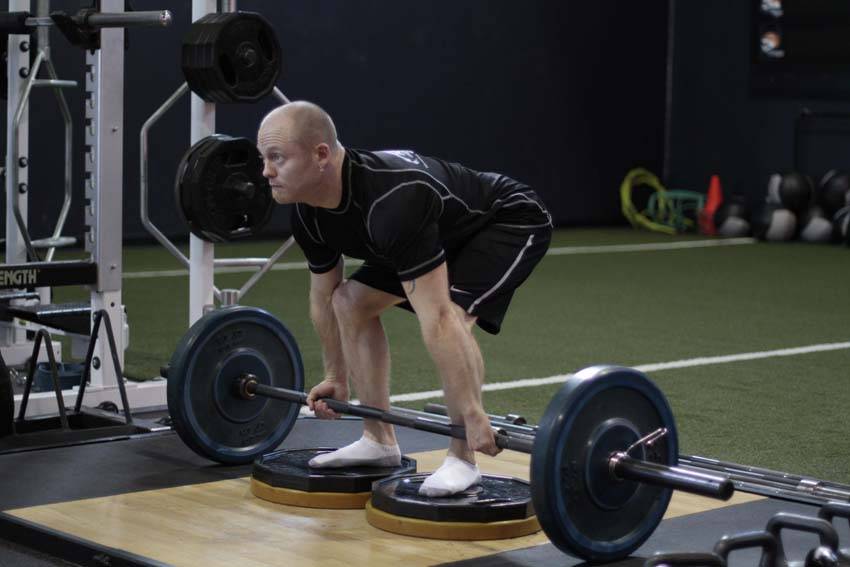
Deficit Deadlift
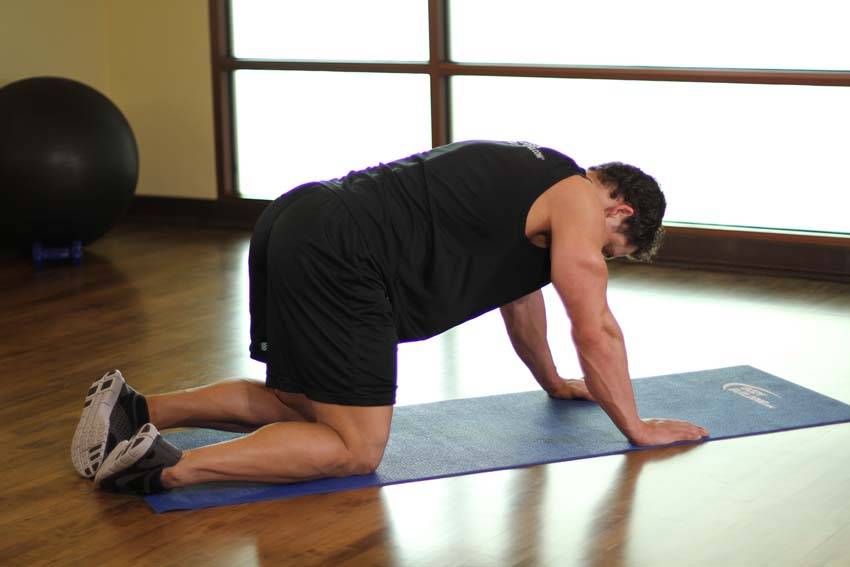
One Half Locust
Head-to-Head Comparison
Different values are marked. These are catalogue attributes, not performance scores.
Muscles used
Listed target and secondary muscles, shown on the body. Locations, not activation or strength scores.
- Target
- Secondary
- Not highlighted
Deficit Deadlift
- Target
- Erector-spinae
- Secondary
- Forearms, Glutes, Hamstrings, Middle Back, Quadriceps, Traps
Not shown on diagram: Erector-spinae, Middle Back. These labels do not identify a precise region on this map.
One Half Locust
- Target
- Erector-spinae
- Secondary
- Abdominals, Biceps, Chest
Not shown on diagram: Erector-spinae. These labels do not identify a precise region on this map.
Grey does not mean a muscle is unused. The diagrams show only the mapped catalogue labels.
| Attribute | Deficit Deadlift | One Half Locust |
|---|---|---|
| Target Muscle | Erector-spinae |
Erector-spinae |
| Body Part | Back |
Back |
| Equipment Different | Barbell |
Body-weight |
| Difficulty Different | Advanced |
Beginner |
| Movement Type Different | Compound |
Isolation |
| Secondary Muscles Different | Forearms, Glutes, Hamstrings, Middle Back, Quadriceps, Traps |
Abdominals, Biceps, Chest |
Visual Comparison
An illustrative 1–10 profile derived from catalog difficulty, equipment, and listed-muscle fields—not measured performance or muscle activation.
Key Differences
- Equipment differs: Deficit Deadlift uses Barbell, while One Half Locust requires Body-weight.
- Deficit Deadlift is a compound movement, while One Half Locust is an isolation exercise.
- Difficulty levels differ: Deficit Deadlift is advanced, while One Half Locust is beginner.
Muscle comparison
Shared target muscles
Secondary muscle differences
Muscle involvement analysis
Equipment and setup
Deficit Deadlift: setup
One Half Locust: setup
Access and practicality
Learning and progression
Learning the movements
Progression considerations
Limitations and precautions
Pros & Cons
Deficit Deadlift
+ Pros
- Heavy progressive overload for maximal strength and muscle growth
- Increased ROM from deficit boosts eccentric loading and tension on erectors
- Recruits full posterior chain (glutes, hamstrings, traps) for functional transfer
- Multiple variables to manipulate: load, deficit height, tempo, pause reps
− Cons
- Requires equipment and coaching to perform safely
- Higher spinal compressive and shear forces increase injury risk if technique fails
- Greater CNS and recovery demand — not ideal daily
One Half Locust
+ Pros
- No equipment and low barrier to entry — do it anywhere
- Excellent isolation for spinal erectors and motor control
- Low absolute load reduces acute injury risk
- Great as a finisher or rehab tool to reinforce posterior chain endurance
− Cons
- Limited absolute overload for long-term strength progression
- Less carryover to hip-dominant tasks and loaded lifts
- Can reinforce hyperextension if performed without core anti-extension cues
When Each Exercise Wins
The deficit deadlift allows systematic progressive overload with heavier external load and increased eccentric stress, which drives more mechanical tension across erectors and the posterior chain. Aim for 6–12 reps with controlled 2–4 second eccentrics to maximize muscle growth.
Deficit deadlifts increase hip and lumbar moment arms, letting you train heavy singles and triples that improve maximal force production. Use 3–6 rep ranges and heavy doubles to build maximal posterior chain strength.
The locust teaches spinal extension and control with minimal load and simple movement patterns, reducing injury risk while building endurance and motor control. Start with 2–4 sets of 8–15 reps focusing on form and core anti-extension.
No equipment, low setup time, and safe to perform on a mat make the locust ideal for home sessions. Use it as a primary erector exercise or as a finisher after bodyweight posterior-chain circuits.
Frequently Asked Questions
Can I do both Deficit Deadlift and One Half Locust in the same workout?
Which exercise is better for beginners?
How do the muscle activation patterns differ?
Can One Half Locust replace Deficit Deadlift?
Comparison Summary
Exercise instructions
Steps from the exercise catalogue. Read the full sequence before starting.
Deficit Deadlift
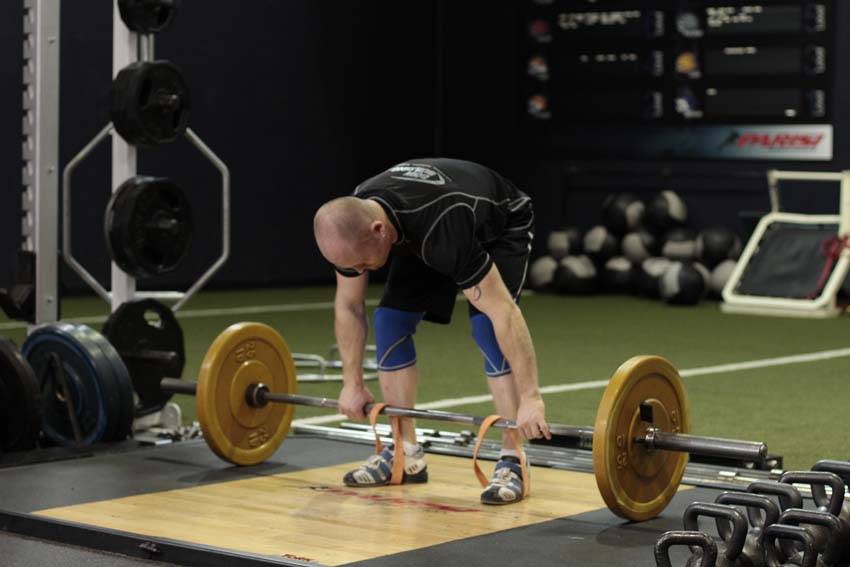
- Begin by having a platform or weight plates that you can stand on, usually 1-3 inches in height. Approach the bar so that it is centered over your feet. You feet should be about hip width apart. Bend at the hip to grip the bar at shoulder width, allowing your shoulder blades to protract. Typically, you would use an overhand grip or an over/under grip on heavier sets.
- With your feet, and your grip set, take a big breath and then lower your hips and bend the knees until your shins contact the bar. Look forward with your head, keep your chest up and your back arched, and begin driving through the heels to move the weight upward. After the bar passes the knees, aggressively pull the bar back, pulling your shoulder blades together as you drive your hips forward into the bar.
- Lower the bar by bending at the hips and guiding it to the floor.
One Half Locust
- Lie facedown on the floor.
- Put your left hand under your left hipbone to pad your hip and pubic bone.
- Bend your right knee so you can hold the foot in your right hand.
Read remaining steps for One Half Locust
- Lift the foot in the air and simultaneously lift your shoulders off the floor. This also stretches the right hip flexor and the chest and shoulders. Switch sides. If it doesn't bother your back, you can try it with both arms and legs at the same time.
Also Compare
More comparisons with Deficit Deadlift
Compare another pair
Choose two exercises to see their differences side by side.