A weak grip does not always announce itself as a grip problem. It shows up as deadlifts that slip before the back is done, pull-ups that end because the hands quit, rows that feel unstable, and carries that turn into a race to put the weights down.
Curls can build arms, but they are not a complete grip plan. Grip strength needs crushing, supporting, pinching, wrist position, and endurance. The best plan uses simple exercises that carry over to real lifts instead of turning forearm training into circus tricks.
This ladder starts with hangs and farmer’s carries, then adds holds, towels, and pinch work only when the basics are stable.
This Is Not Another Forearm Exercise Roundup
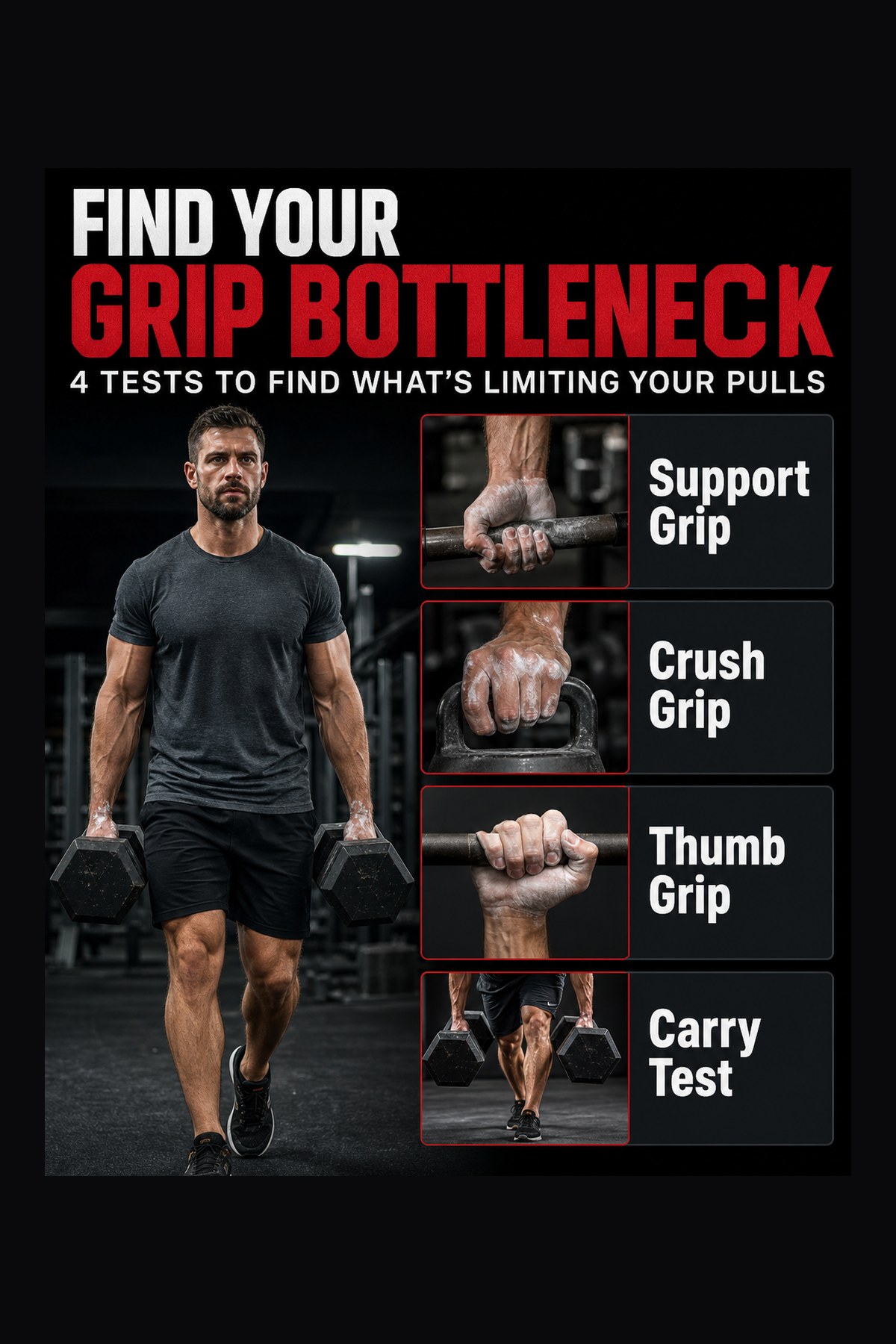
FitnessVolt already has forearm exercises, farmer’s walk guides, chalk reviews, and grip-strengthener coverage. This article is narrower: it helps you diagnose which grip problem is actually limiting your pulling work. A deadlift that slips, a pull-up that fails, and a carry that collapses are related problems, but they do not always need the same fix.
Use the bottleneck first. If heavy pulls slip, start with holds. If pull-ups fail because the hands open, start with hangs. If carries fail because posture breaks, reduce distance before chasing heavier implements. Better diagnosis means less junk volume for the elbows.
The Better Move
Use the trend as a doorway, then build a system you can repeat. The win is not novelty. The win is a rule that survives real training weeks, busy mornings, missed meals, stress, and imperfect equipment. That is why this article focuses on decisions, not hacks.
Train Support Grip First
Support grip is the ability to hold onto something while the rest of the body works. It matters for deadlifts, rows, pull-ups, and carries. Farmer’s carries and dead hangs are the easiest entry points because they train the hands, forearms, shoulders, trunk, and posture together.
- If hanging is your weak link, use FitnessVolt’s 2-minute hanging habit article as a starting point.
- Keep shoulders active instead of collapsing into the joints.
- Stop sets before the hands fully peel open.
Use Carries For Transfer
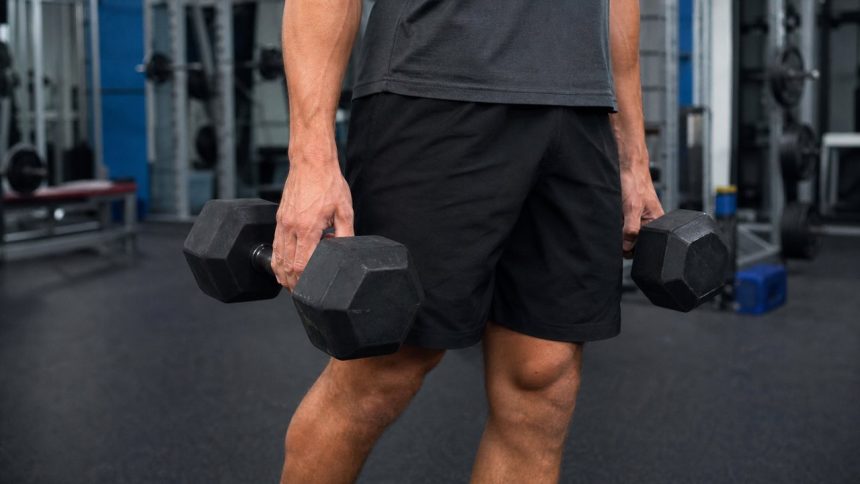
Farmer’s carries are hard to beat because they train grip under whole-body tension. They also punish poor posture. Start with weights you can carry cleanly for 30-40 meters. When that is easy for all sets, add load or distance, not both at once.
- Walk tall with ribs down.
- Keep wrists neutral.
- Use chalk if needed, but do not hide weak progression with straps on every set.
Keep Straps, But Use Them Strategically
Straps are not cheating. They are useful when the target muscle is bigger than your grip capacity. The mistake is using straps on every pulling set and never training the hands. Do your grip work early enough in the week that it does not ruin heavy deadlifts.
- Use straps for high-volume back work if grip would cap the set.
- Train grip separately with carries or hangs.
- Avoid max grip work the day before heavy pulling.
Respect Tendons And Elbows
Grip training can irritate elbows if volume jumps too quickly. Towel hangs, thick bars, and pinch work are powerful but more stressful. Add them after basic hangs and carries are tolerated. If elbow pain shows up, reduce volume before adding another variation.
- If forearm supplements interest you, keep evidence standards similar to beta-alanine guide: useful claims need real support.
- Warm up wrists and fingers briefly.
- Progress one grip variable at a time.
Grip Exercise Matchmaker
| Problem | Best exercise | Dose |
|---|---|---|
| Deadlift slips | Heavy holds | 3 x 10-20 sec |
| Pull-ups end early | Dead hangs | 3 x 20-40 sec |
| Weak carryover | Farmer’s carries | 4 x 30-40 m |
| Thumb/pinch weakness | Plate pinch carries | 3 short carries |
Use It This Week
Add grip work after two sessions this week, not before your heaviest pulls. Ten focused minutes is enough. The goal is high-quality holds and carries, not forearms so wrecked that pulling performance drops.
Track total hold time or carry distance. Grip training improves best when progression is visible. If you only go by discomfort, every set feels hard and nothing is measurable.
If elbows complain, remove towel and pinch work first. Carries and normal hangs are easier to dose than aggressive thick-grip variations.
Adjust It By Goal
| Goal | Best adjustment | Why |
|---|---|---|
| Deadlift | Heavy holds after work sets | Specific support grip |
| Pull-ups | Dead hangs and active hangs | Longer bar tolerance |
| General strength | Farmer’s carries | Grip plus trunk and posture |
| Forearm size | Carries plus wrist work | Load and pump together |
When To Change The Plan
Do not judge the plan from one perfect day or one bad day. Most useful fitness and nutrition changes need a short runway. Give the system one to two weeks unless pain, dizziness, digestive distress, sleep disruption, or a clear medical concern shows up sooner. Early feedback is useful, but it needs context.
The right adjustment is usually smaller than the emotional reaction. If the plan feels too hard, reduce the dose before abandoning the idea. If it feels too easy, repeat it until the habit is stable before adding complexity. Most people fail these trends by escalating too quickly, not by starting too conservatively.
- Change one variable at a time so the result is readable.
- Keep the part that improves training, hunger, recovery, or consistency.
- Remove the part that adds friction without a clear payoff.
- Treat pain, dizziness, unusual fatigue, or persistent digestive symptoms as stop signs, not discipline tests.
The Smarter Starting Dose
Start smaller than your motivation wants. A conservative first dose protects the rest of the week and gives you cleaner feedback. Once the behavior is repeatable, progression is easy. When the starting point is too aggressive, the plan often fails for reasons that have nothing to do with the idea itself.
That is especially important for lifters because everything competes with recovery. A new food habit can change digestion. A new cardio session can change leg fatigue. A new recovery tool can change sleep timing. The first job is to make the change fit the training week. The second job is to make it stronger.
Mistakes To Avoid
- Doing too much towel work too soon.
- Training grip hard before heavy deadlift day.
- Using straps for everything and never loading the hands.
- Ignoring elbow irritation.
How To Know It Is Working
The right version should make the next decision easier. Training should feel more predictable, meals should require less negotiation, and recovery should become easier to read. If the plan adds stress, confusion, pain, or obsessive tracking, simplify it before adding another layer.
Use one clear metric for two weeks. For nutrition articles, that could be hunger, protein consistency, calories, or training energy. For training articles, use performance, soreness, joint comfort, and repeatability. If the metric improves without creating a new problem, keep the system.
Where This Fits On FitnessVolt
This piece is meant to connect with the rest of your training and nutrition system, not replace it. Use the linked FitnessVolt guides where they match your next decision, especially when you need a calculator, a workout progression, or a more detailed nutrition framework.
Video Reference
Reader Scenarios
Deadlift slips first
Use heavy holds after deadlift work and keep straps for higher-volume back exercises where grip is not the main target.
Pull-ups fail from the hands
Use active hangs and shorter sets before adding towel variations. The goal is cleaner time on the bar, not elbow irritation.
Carries collapse posture
Reduce distance and walk taller before adding weight. A carry that turns into a shrugging sprint is no longer the same drill.
What To Track For Two Weeks
Use a short tracking window before judging the plan. Two weeks is long enough to reveal whether the idea fits real life, but short enough that you are not locked into a strategy that clearly does not work. Write down the one outcome the article is meant to improve, then watch that outcome instead of chasing every possible metric.
For food articles, track hunger, meal repeatability, digestion, training energy, and whether the habit prevents a worse decision later. For training and recovery articles, track performance, soreness, joint comfort, sleep, and whether the session is easy enough to repeat. If the plan improves one clear outcome without creating a new problem, keep it. If it only adds work, simplify it.
FAQ
What is the best exercise for grip strength?
Farmer’s carries and dead hangs are the best starting points for most lifters because they train grip with useful whole-body tension.
How often should I train grip?
Two to three short sessions per week is enough for most people. Keep volume lower near heavy deadlift sessions.
Do wrist curls improve grip?
They can help forearm strength, but they do not replace carries, hangs, holds, and pinch work.
Should I use lifting straps?
Use straps when grip would prevent the target muscles from getting trained, but also train grip directly elsewhere.
Sources
- Leong DP, et al. 2015. Prognostic value of grip strength: findings from the Prospective Urban Rural Epidemiology study. The Lancet. Accessed June 4, 2026.
- American College of Sports Medicine. n.d. Physical Activity Guidelines resources. Accessed June 4, 2026.
- Schoenfeld BJ, et al. 2021. Resistance Training Recommendations to Maximize Muscle Hypertrophy. Sports Medicine. Accessed June 4, 2026.