
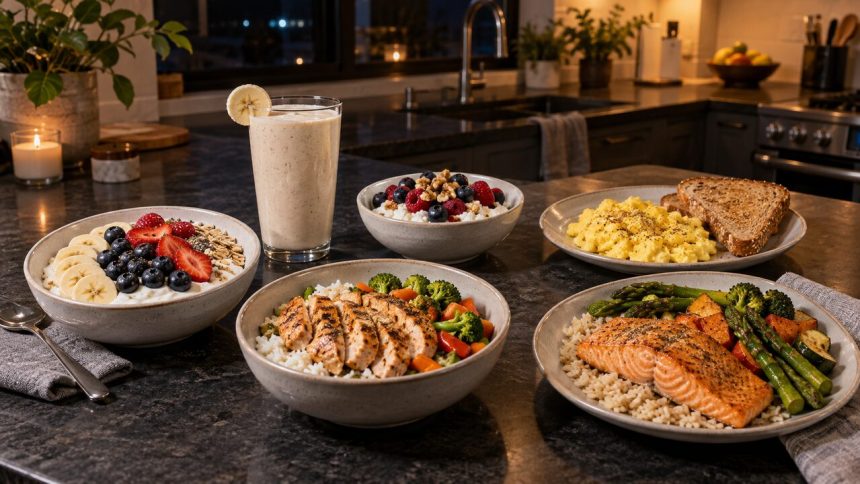
You finish training at 10 p.m. with two competing thoughts: you should eat something for recovery, and a heavy meal sounds like a terrible way to fall asleep. You do not have to choose between food and sleep. You need the right meal size for the time left before bed.
If bedtime is less than an hour away, aim for a light meal or snack with 20 to 40 grams of protein, enough carbohydrate to match the workout, and modest fat and fiber. If you have two hours or more, eat a normal dinner. Total daily protein and calories matter more than racing home to beat a tiny “anabolic window.”[1]
The goal is simple: cover recovery without going to bed painfully full. This guide gives you exact portions, six meals you can make without much effort, and a timing plan for strength sessions, cardio, and early training the next morning.
Pick the Meal by Time Before Bed
Your clock matters more than the fact that it is dark outside. A meal at 10 p.m. with a 1 a.m. bedtime gives you room to digest. The same meal at 11:30 p.m. before a midnight bedtime can feel much heavier.
| Time before bed | Best choice | Useful target | Example |
|---|---|---|---|
| Less than 60 minutes | Small, easy-to-digest snack | 20-30 g protein; 20-40 g carbohydrate if needed | Whey and banana, or Greek yogurt and berries |
| 60-120 minutes | Light meal | 25-40 g protein; 30-60 g carbohydrate | Eggs and toast, or cottage cheese with oats and fruit |
| More than 2 hours | Normal recovery dinner | 30-50 g protein; carbohydrates scaled to training | Chicken or salmon, rice or potatoes, and vegetables |
These are starting points, not a prescription. A 120-pound recreational lifter and a 220-pound competitive athlete do not need the same portion. Use FitnessVolt’s protein calculator to set your daily target, then let this meal fill the gap left by breakfast, lunch, and your pre-workout food.
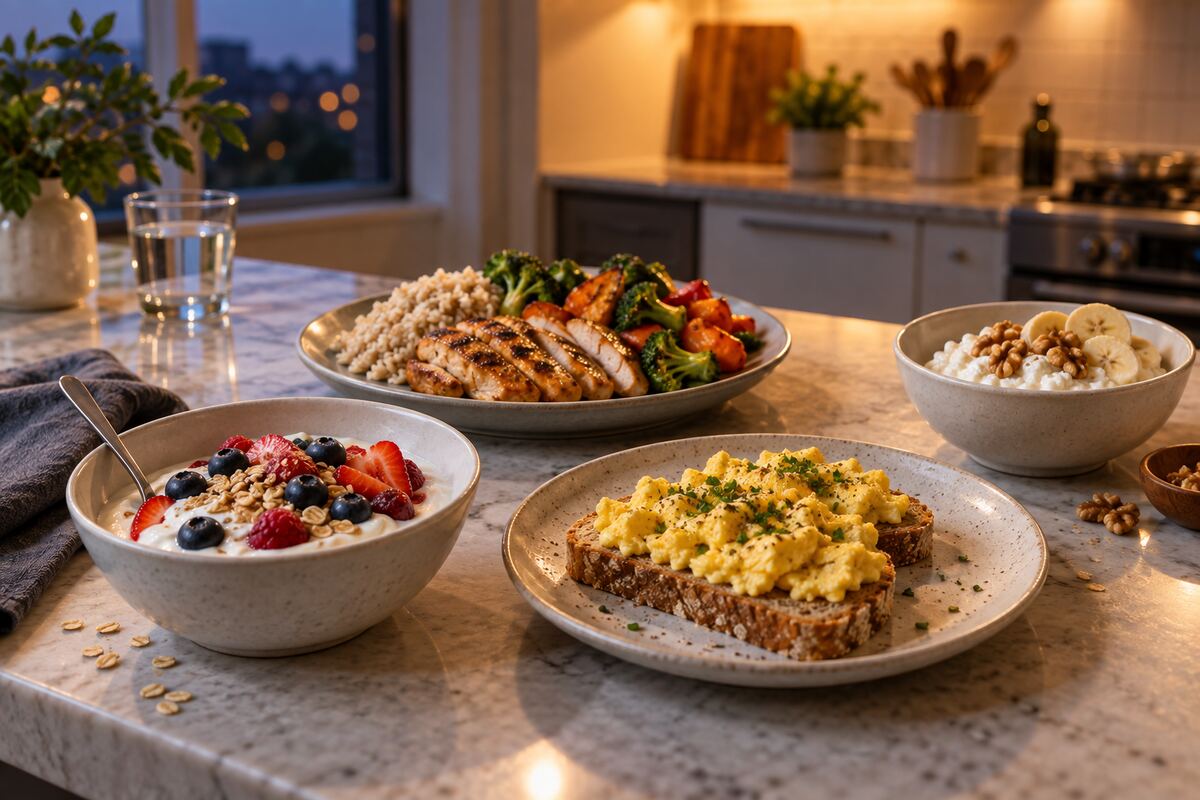
How Much Protein Do You Need After a Late Workout?
The International Society of Sports Nutrition recommends 20 to 40 grams of high-quality protein per meal for most active adults, or about 0.25 to 0.40 grams per kilogram of body weight.[2] A 175-pound person weighs about 79 kilograms, so that range works out to roughly 20 to 32 grams. Larger athletes and people eating fewer daily meals may prefer the upper end.
Daily intake still carries the most weight. The ISSN position stand places a useful daily range for exercising adults at 1.4 to 2.0 grams per kilogram.[3] If you already ate a protein-rich dinner before training and hit your daily target, you may only need a small snack. If the session replaced dinner, eat more.
Pre-sleep protein can support overnight muscle protein synthesis. Reviews often use 30 to 40 grams of casein, but casein is not a rule and cottage cheese is not magic.[4] Whey, Greek yogurt, milk, eggs, soy, chicken, fish, and a mixed meal can all do the job. Pick the food you digest well.
Do You Need Carbs at Night?
Carbohydrate at night does not automatically become body fat. Your total intake and energy balance decide whether body weight rises or falls. Carbs after training can help replace glycogen, the stored carbohydrate your muscles use during hard or long sessions.
Add a meaningful carb portion when you completed a long run, hard conditioning, high-volume leg workout, or when you train again the next morning. A banana, oats, rice, potatoes, toast, or cereal gives you an easy 25 to 60 grams. After a shorter lifting session, you can use less if the rest of your day already covered your needs.
Athletes with less than four hours between demanding sessions need a more aggressive refueling plan than the average late-night lifter. The ISSN nutrient-timing position stand discusses rapid carbohydrate replacement at 1.2 grams per kilogram per hour when recovery time is extremely short.[2] That is a competition or two-a-day strategy, not a bedtime target for everyone.
Six Late-Night Post-Workout Meals That Work
The estimates below use the portions listed, common entries from USDA FoodData Central, and typical product labels.[8] Brands and cooking methods still change the totals, so treat each range as a planning guide.
| Meal | Portion | Approximate macros | Best for |
|---|---|---|---|
| Greek yogurt bowl | 1 cup 0% or 2% Greek yogurt, 1 banana, 1/2 cup berries, 1/3 cup oats | 25-30 g protein, 60-70 g carbs, 350-425 kcal | 60-90 minutes before bed |
| Banana protein smoothie | 1 scoop whey, 1 cup dairy milk, 1 banana, ice | 30-35 g protein, 40-45 g carbs, 315-390 kcal | Less than 60 minutes before bed |
| Cottage cheese bowl | 1 cup cottage cheese, berries, small handful of walnuts | 28-32 g protein, 20-30 g carbs, 350-450 kcal | Low-volume meal with slower digestion |
| Eggs and toast | 2 eggs, 3 egg whites, 2 slices whole-grain toast | 30-35 g protein, 30-40 g carbs, 350-400 kcal | About 90 minutes before bed |
| Chicken rice bowl | 5 oz cooked chicken, 1 cup cooked rice, 1 cup vegetables, 2 tbsp mild sauce | 40-50 g protein, 50-65 g carbs, 500-600 kcal | Hard training with 2+ hours before bed |
| Salmon, rice, and vegetables | 5 oz cooked salmon, 1 cup cooked rice, 1 cup roasted vegetables, 1 tsp oil | 35-40 g protein, 50-65 g carbs, 550-650 kcal | Normal dinner after an evening session |
1. Greek Yogurt, Oats, Banana, and Berries
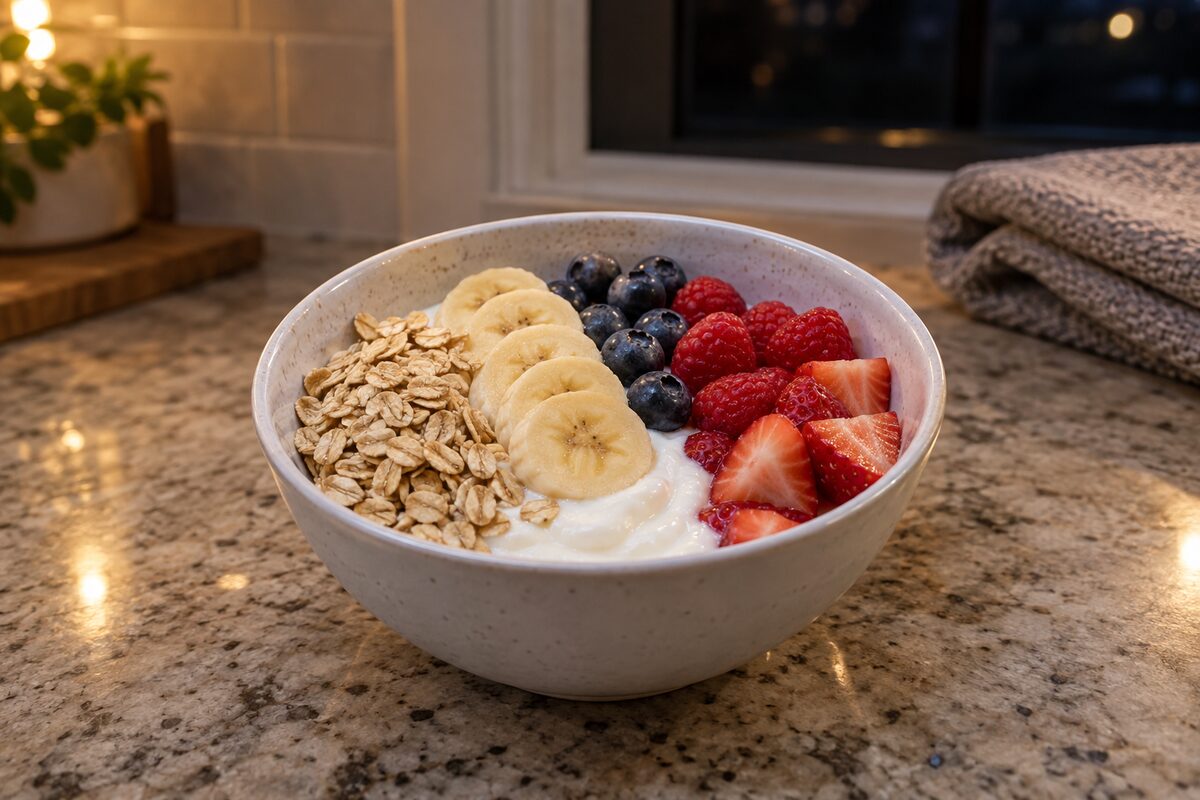
This is the easiest middle-ground meal. Greek yogurt supplies protein, while oats and fruit replace some carbohydrate without requiring a large plate of food. Use 0% or 2% yogurt when you are eating close to bed. Full-fat yogurt is fine if you have more digestion time and tolerate it well.
Skip it if dairy gives you gas, reflux, or congestion that interferes with sleep. A soy-yogurt bowl can work, but check the label because many plant yogurts contain little protein.
2. Banana Protein Smoothie

Blend one scoop of whey or soy protein with milk, a banana, ice, and cinnamon. Skip nut butter when a lighter, lower-fat smoothie sits better before bed.
A 2026 randomized crossover trial compared 40 grams of whey, casein, and carbohydrate 30 minutes before bed in only nine resistance-trained adults. Whey improved several sleep measures versus the carbohydrate control, while whey and casein did not differ significantly.[5] The sample was tiny, so this is promising evidence rather than a reason to declare whey a sleep supplement.
3. Cottage Cheese, Fruit, and Walnuts
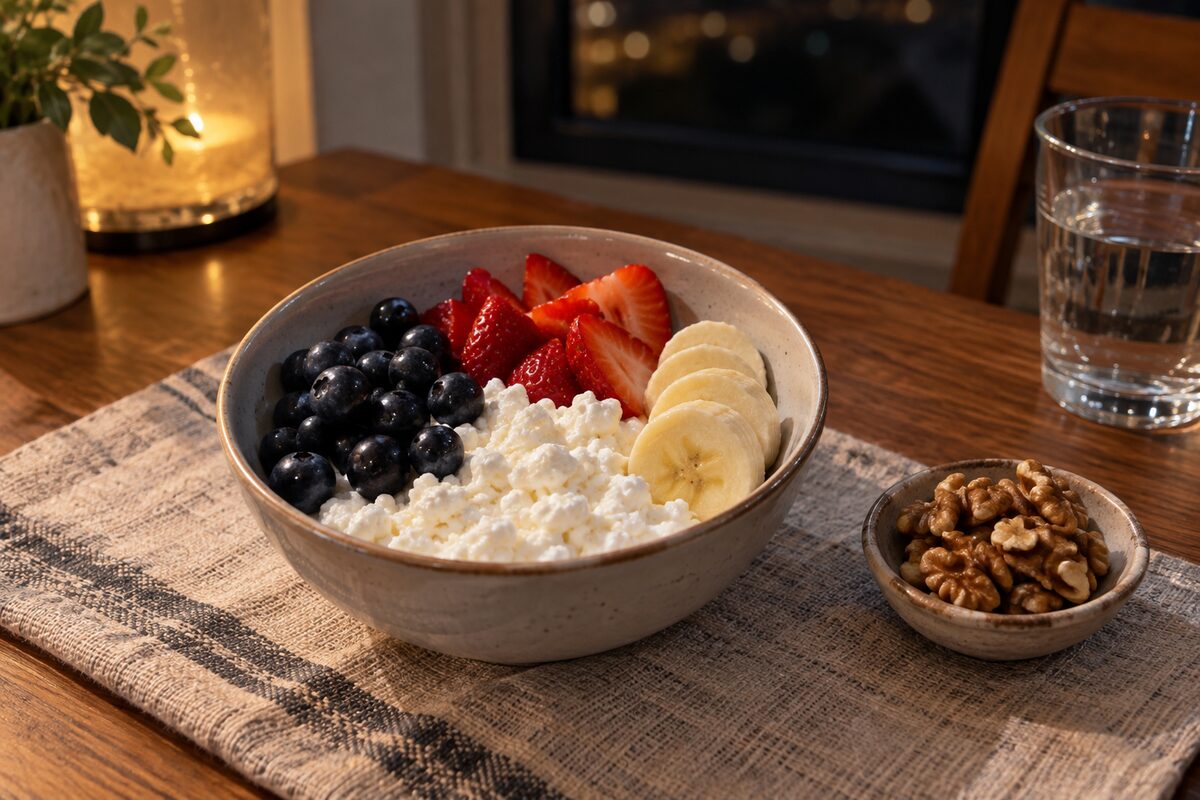
Cottage cheese gives you roughly 25 to 30 grams of protein per cup. Add berries or half a banana. Keep walnuts to a small handful if you are heading to bed soon because a large fat load slows the meal and can leave some people feeling heavy.
Choose a lower-sodium version if you are salt-sensitive. Skip cottage cheese if lactose or the texture does not agree with you. You do not get extra recovery points for forcing down a food you dislike.
4. Eggs and Whole-Grain Toast
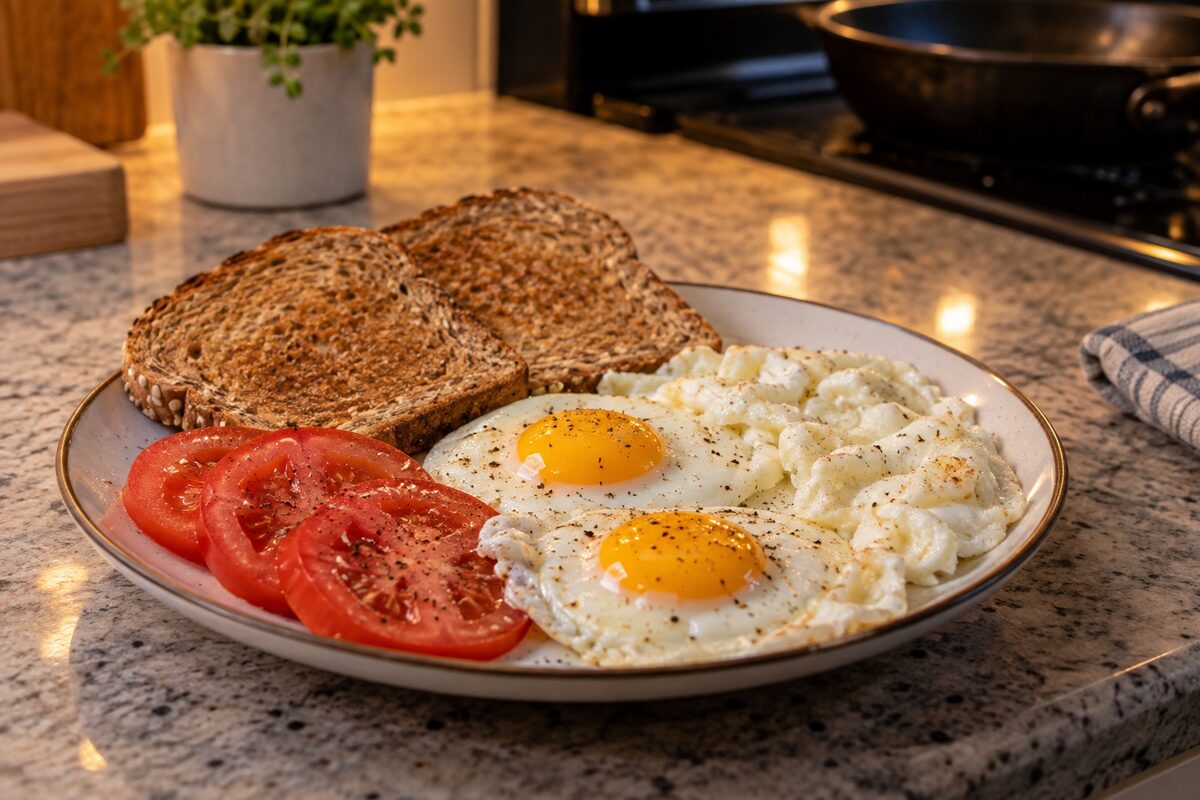
Two eggs plus three egg whites gives you a useful protein serving without turning the meal into a six-egg challenge. Add two slices of toast and a piece of fruit if the workout was hard. Keep the pan light on butter or oil when sleep is close.
This meal fits lifters who want real food but do not want leftover chicken at 11 p.m. If eggs trigger reflux, use yogurt, cottage cheese, tofu, or a smoothie.
5. Chicken and Rice Bowl
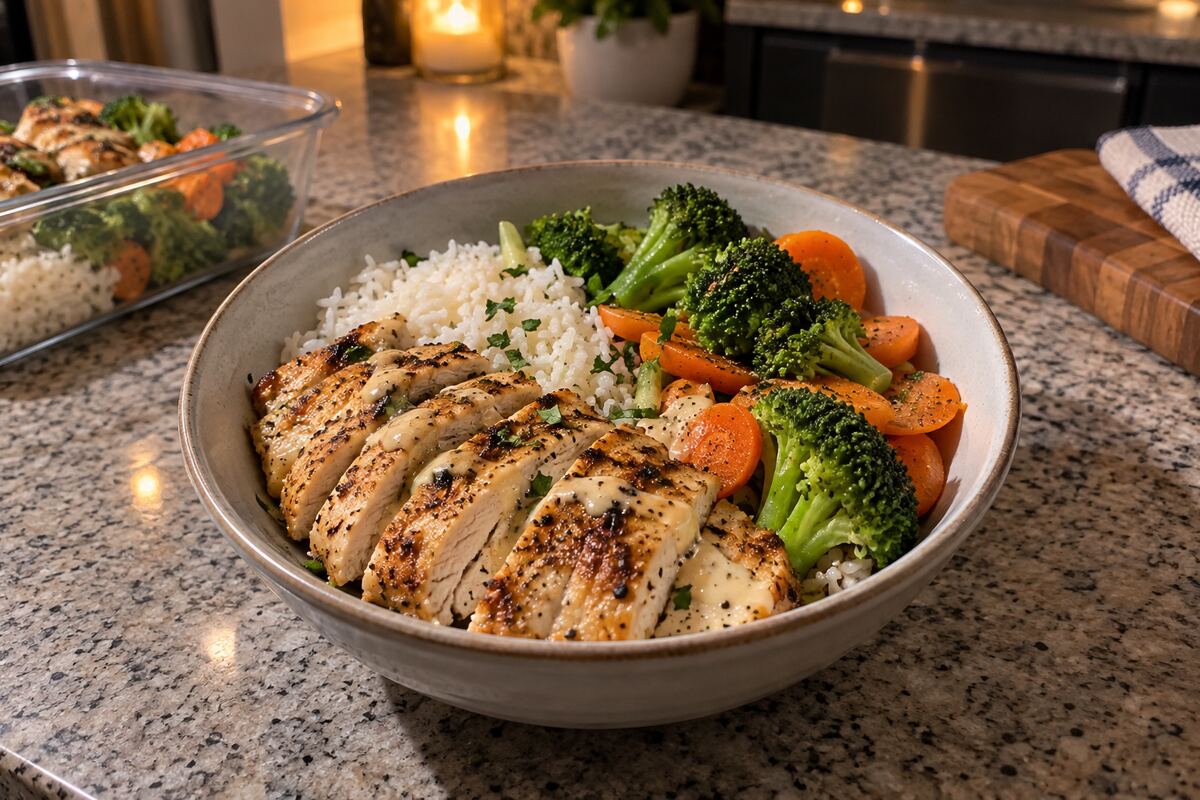
Use this when the workout replaced dinner. Five ounces of cooked chicken, a cup of rice, and a serving of vegetables covers protein and carbohydrate without requiring a giant meal. A mild sauce is easier before bed than a heavy cream sauce or a pile of hot sauce.
If you train late several nights per week, cook the chicken and rice in advance. The best meal at 10:30 p.m. is often the one you can reheat in four minutes.
6. Salmon, Rice, and Roasted Vegetables

Salmon adds protein and omega-3 fats, but it is a fuller meal. Save it for nights when you have at least two hours before bed. Use a moderate portion instead of trying to replace every calorie burned in one sitting.
Swap salmon for tofu, tempeh, lean beef, or turkey. Swap rice for potatoes, pasta, or bread. The structure matters more than the exact foods: a clear protein source, enough carbohydrate for the session, and a portion you can digest.
When a Late Meal Can Hurt Sleep
Meal size, timing, and your own digestion matter. In a 2020 randomized crossover trial, 20 healthy adults ate the same dinner at 6 p.m. or 10 p.m. with an 11 p.m. bedtime. The late dinner produced higher post-meal glucose and lower fat oxidation overnight, though it did not change sleep architecture in that study.[6]
A small 2026 crossover study in healthy young women compared dinner one hour and five hours before bed. The later condition reduced total sleep time and sleep efficiency and increased wakefulness after sleep onset.[7] The meal contained roughly 700 calories, and the sample was small. It supports avoiding a large dinner right before bed, not skipping all food after an evening workout.
People with reflux need more caution. A randomized crossover study in patients with reflux symptoms found more supine acid exposure when a meal was eaten two hours rather than six hours before bed.[9] If reflux wakes you, move more calories into a pre-workout meal and keep the post-workout food smaller, lower in fat, less spicy, and easier to digest.
A Better Schedule for Frequent Late Training
If late training is your normal schedule, split dinner instead of saving the whole meal for afterward. Eat about half of dinner 90 to 150 minutes before training, then eat the remaining protein and carbohydrate when you get home.
For a 7:30 p.m. session, that could mean chicken and rice at 5:45 p.m., training from 7:30 to 9 p.m., then Greek yogurt and fruit at 9:30 p.m. The first meal fuels the session. The second closes the protein gap without putting a large dinner in your stomach at bedtime.
Our pre-workout meal guide helps you size that earlier meal. For the broader picture, use the nutrient timing guide rather than treating the final meal as the only one that matters.
Common Mistakes
- Eating back the watch estimate. Wearable calorie numbers are rough. Build the meal around your daily target, not the biggest number on the screen.
- Turning a snack into a feast. Nut butter, granola, oil, cheese, and sauces can double calories while adding little protein.
- Skipping carbs after hard endurance work. A protein shake alone may leave you flat for a morning run or another long session.
- Forcing casein. Use the protein source you digest well. The evidence does not require cottage cheese at midnight.
- Ignoring reflux. Smaller portions and more time upright can matter more than the food’s fitness reputation.
If you need more small-meal ideas, use our list of post-workout snacks, then adjust the serving so it fits your remaining protein and calories.
Bottom Line
Eat after a late workout when the meal helps you reach your daily protein and energy needs. Keep it small when bed is close, and eat a normal dinner when you have two hours or more to digest. A useful default is 20 to 40 grams of protein, with carbs scaled to the training session and your next workout.
Start with the lightest meal that leaves you recovered and able to sleep. Greek yogurt and fruit, a simple smoothie, cottage cheese, or eggs and toast fit tight nights. Chicken, salmon, rice, and vegetables fit nights with more room. Track how you sleep, whether reflux appears, and how you perform the next day. Those three signals will tell you more than the clock alone.
Sources
- Aragon, A. A., and Schoenfeld, B. J. (2013). Nutrient timing revisited: is there a post-exercise anabolic window? Journal of the International Society of Sports Nutrition, 10, 5. DOI: 10.1186/1550-2783-10-5.
- Kerksick, C. M., et al. (2017). International Society of Sports Nutrition position stand: nutrient timing. Journal of the International Society of Sports Nutrition, 14, 33. DOI: 10.1186/s12970-017-0189-4.
- Jager, R., et al. (2017). International Society of Sports Nutrition position stand: protein and exercise. Journal of the International Society of Sports Nutrition, 14, 20. DOI: 10.1186/s12970-017-0177-8.
- Snijders, T., Trommelen, J., Kouw, I. W. K., Holwerda, A. M., Verdijk, L. B., and van Loon, L. J. C. (2019). The impact of pre-sleep protein ingestion on the skeletal muscle adaptive response to exercise in humans: an update. Frontiers in Nutrition, 6, 17. DOI: 10.3389/fnut.2019.00017.
- Aussieker, T., Kredig, N., Wasserfurth, P., et al. (2026). Presleep whey but not casein protein ingestion improves sleep quality after resistance exercise when compared with an isocaloric control. International Journal of Sport Nutrition and Exercise Metabolism, 36(5), 481-490. DOI: 10.1123/ijsnem.2025-0205.
- Gu, C., Brereton, N., Schweitzer, A., et al. (2020). Metabolic effects of late dinner in healthy volunteers: a randomized crossover clinical trial. Journal of Clinical Endocrinology and Metabolism, 105(8), 2789-2802. DOI: 10.1210/clinem/dgaa354.
- Effects of later dinner timing on subsequent metabolic function and nocturnal sleep in healthy young women. (2026). PubMed record. PMID: 41975458.
- U.S. Department of Agriculture. (n.d.). FoodData Central. Accessed September 16, 2026.
- Piesman, M., Hwang, I., Maydonovitch, C., and Wong, R. K. H. (2007). Nocturnal reflux episodes following the administration of a standardized meal. Does timing matter? American Journal of Gastroenterology, 102(10), 2128-2134. DOI: 10.1111/j.1572-0241.2007.01348.x.