
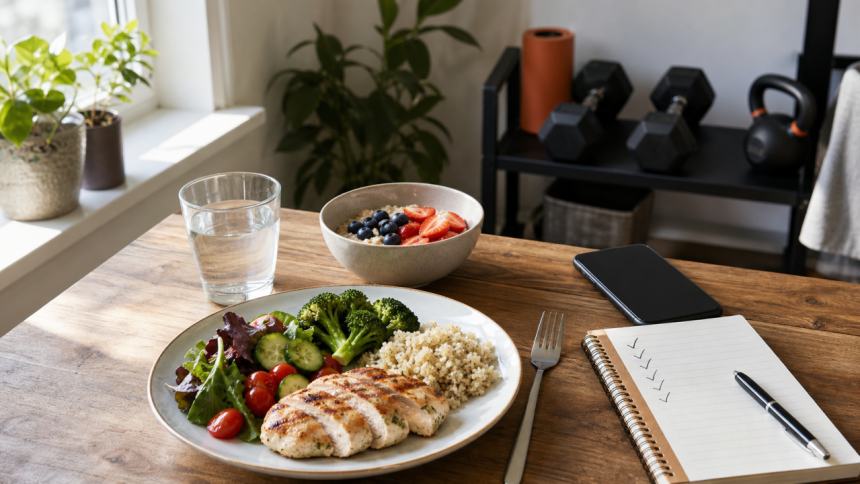
Most diets fail for a boring reason: they are written like a punishment contract. You cut calories too hard, ban half the foods you like, white-knuckle the first 10 pounds, then spend the next six months fighting hunger, low energy, and the feeling that one normal dinner ruined everything.
The better move is not magic. It is a diet structure you can repeat on a bad Tuesday. For most lifters and active adults, that means a small calorie deficit, a clear protein floor, enough fiber to make meals feel like meals, two to four strength sessions per week, and one tracking habit that keeps you honest without turning food into a second job.
Here is the FitnessVolt version: build the diet around the behaviors you can keep after the scale moves. The fat-loss phase matters, but the exit ramp matters more.
What is the best diet strategy for long-term success?
The best diet strategy for long-term success is a flexible eating plan that creates a modest calorie deficit while protecting protein, fiber, training performance, sleep, and social life. Aim to lose about 0.5 to 1 percent of body weight per week, keep protein near 1.4 to 2.0 grams per kilogram of body weight, and use tracking as feedback, not punishment.
That sounds less exciting than “no carbs after 6 p.m.” or “one weird hormone trick.” Good. Boring diets are easier to keep. The old version of this article leaned too hard on the idea that carbs automatically drive fat gain through insulin. That is not the cleanest way to explain it. Calories still matter. Food quality matters. Protein and fiber help because they make the deficit easier to live with, not because they let you ignore energy balance.
The FitnessVolt long-term diet scorecard
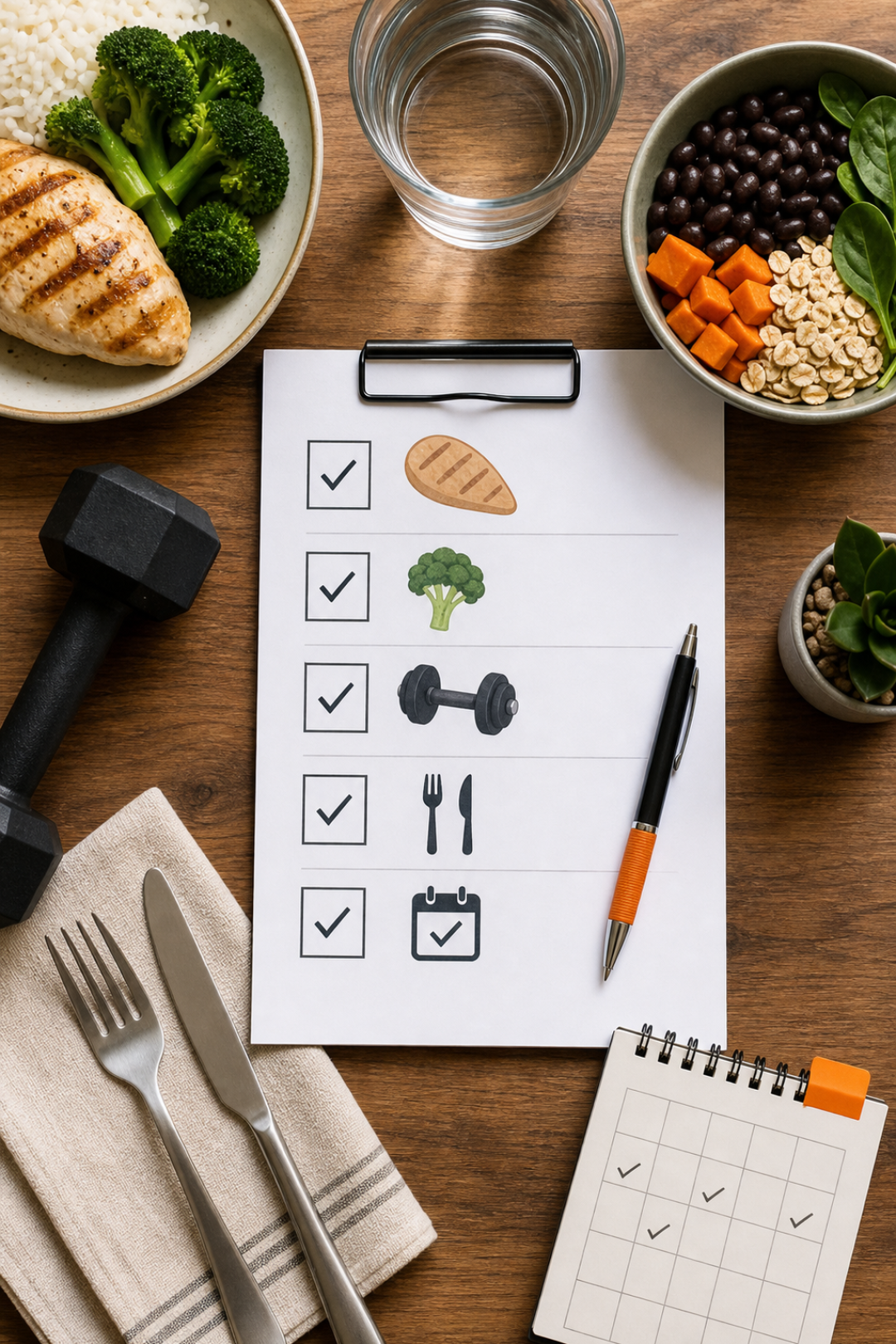
Before you start any diet, grade it with five questions. If it fails two or more, it probably belongs in the “worked for three weeks, then exploded” pile.
| Question | Green flag | Red flag |
|---|---|---|
| Can you hit protein? | 25 to 45 grams per meal, 3 to 5 times daily | Mostly snacks, juices, or tiny portions |
| Can you get fiber? | 25 to 35 grams per day from plants, beans, oats, berries, or potatoes | Low-carb by accident, no vegetables, constant constipation |
| Can you train on it? | Two to four weekly lifting sessions still feel doable | Leg day disappears by week two |
| Can you eat out? | One restaurant meal fits without drama | Every social plan becomes a failure point |
| Can you exit it? | Maintenance calories, step goals, and protein habits are already planned | The only plan is “diet harder” |
This scorecard is the article’s moat. Most diet advice tells you what to remove. This tells you what the plan must survive.
Rule 1: Use the smallest deficit that still moves the scale
A calorie deficit is still the engine of fat loss, but the size of the deficit changes the experience. A 300 to 500 calorie daily deficit is usually more livable than an aggressive crash cut, especially if you lift, work long hours, or have a history of rebound eating. The CDC notes that gradual weight loss of about 1 to 2 pounds per week is more likely to stay off than faster loss.
Start by estimating maintenance with the FitnessVolt TDEE calculator, then subtract 10 to 20 percent. If your estimated maintenance is 2,600 calories, a useful starting range is roughly 2,100 to 2,350 calories. Do not slash straight to 1,500 just because you are impatient.
Skip this aggressive-deficit approach if you already feel cold, irritable, sleep badly, or binge after restrictive weekdays. In that case, spend two weeks at maintenance with a protein and fiber target before cutting again.
Rule 2: Set a protein floor before you worry about diet style
Protein is not a personality. It is a floor. The International Society of Sports Nutrition position stand lists 1.4 to 2.0 grams of protein per kilogram of body weight per day as enough for most exercising people, with higher intakes sometimes useful during hypocaloric phases. For a 180-pound lifter, that is about 115 to 164 grams per day.
The easy version: build each meal around 30 to 45 grams of protein. That could be 6 ounces of Greek yogurt with eggs, a chicken thigh bowl, canned tuna with potatoes, tofu and rice, or a shake when real food is not happening. If you need food ideas, use our high-protein foods guide as a grocery-list shortcut.
Skip high-protein dieting if it makes you cut fiber, fruit, and carb sources so hard that training falls apart. Protein is the anchor, not the whole boat.
Rule 3: Stop treating carbs like the villain
Carbs are not automatically fattening. Overeating calories consistently adds body fat, and refined carbs can make overeating easier because they are fast, low-fiber, and easy to undercount. That is different from saying oatmeal, potatoes, rice, fruit, or beans are the problem.
A better carb rule: put most of your starch around training and active parts of the day. If you lift after work, keep 30 to 60 grams of carbs in the meal before or after training. A bowl with rice, lean beef, salsa, and peppers will beat a sad desk salad if it keeps you from raiding the pantry at 10 p.m.
Skip low-carb dieting if your workouts become flat, your sleep gets worse, or you start “saving” carbs all day and overeating at night. Try a moderate-carb plan before blaming carbs themselves.
Rule 4: Make fiber non-negotiable
Fiber is the least flashy appetite-control tool in the kitchen. In a randomized trial published in Annals of Internal Medicine, a simple high-fiber goal was compared with a more complex American Heart Association-style diet in adults with metabolic syndrome. The practical takeaway is not that fiber is magic. It is that simple, repeatable food rules can move health markers when people can actually follow them.
Set a daily floor of 25 to 35 grams. Easy wins: 1 cup of raspberries has about 8 grams, 1 cup of black beans has about 15 grams, 1 ounce of chia seeds has about 10 grams, and a medium potato with skin has about 4 grams. Our field-tested 20 grams of fiber experiment is useful if you want the non-glamorous version of what this feels like in real meals.
Skip a sudden jump to 35 grams if your current intake is closer to 10. Add 5 grams per day for a week, drink more water, and let your gut catch up.
Rule 5: Lift and walk so the diet has backup
Diet drives most of the deficit, but training protects the result. Weight-loss maintenance data from the National Weight Control Registry repeatedly points toward movement, self-monitoring, and consistent eating behaviors. The lesson for lifters is simple: keep resistance training in the plan while you diet, then use walking or low-stress cardio to increase daily output without wrecking recovery.
Two to four lifting sessions per week is enough for most people during a cut. Add 7,000 to 10,000 steps per day before you add brutal conditioning. If your squat drops 40 pounds, sleep gets worse, and your knees ache, you are not “hardcore.” You are under-recovered.
Skip high-intensity cardio as your main fat-loss tool if it makes you hungrier than the calories it burns. A 35-minute walk after dinner often beats a 12-minute suffer-fest you dread.
Rule 6: Track one boring thing consistently
You do not need to track everything forever. You do need one feedback loop. Pick the one you can do for 30 days: body weight three times per week, calories on weekdays, protein grams, waist measurement every two weeks, or daily steps.
If you hate calorie tracking, use the plate method for two meals per day: half vegetables or fruit, one palm to two palms of protein, one fist of carbs, one thumb of fat. Then use the FitnessVolt macro calculator once to sanity-check the numbers. You are not trying to become a spreadsheet. You are trying to stop guessing.
Skip daily weighing if it turns normal water swings into panic. Use a weekly average or waist measurement instead.
A sample day that does not feel like diet prison
Here is a simple 2,100 to 2,300 calorie day for a lifter aiming for roughly 150 grams of protein and 30 grams of fiber. Adjust portions up or down based on your TDEE.
- Breakfast: Greek yogurt, berries, oats, and whey. Rough target: 45 grams protein, 10 grams fiber.
- Lunch: Chicken thigh rice bowl with peppers, salsa, avocado, and black beans. Rough target: 45 grams protein, 12 grams fiber.
- Pre-workout: Banana and coffee, or toast with honey if training runs long. Rough target: 25 to 45 grams carbs.
- Dinner: Salmon or tofu, potatoes, salad, olive oil dressing. Rough target: 40 grams protein, 8 grams fiber.
- Optional snack: Cottage cheese, eggs, or a protein shake if protein is short.
If you prefer fasting or smaller meals, that can work too. The question is not whether fasting is morally superior. The question is whether the meal pattern helps you hit protein, fiber, calories, and training. Our intermittent fasting vs. small meals breakdown covers that tradeoff in more detail.
Common mistakes that make dieting harder than it needs to be
Mistake: cutting calories and protein at the same time. Fix it by setting protein first, then building the calorie deficit around carbs and fats.
Mistake: eating “clean” but never measuring calorie-dense foods. Olive oil, nuts, peanut butter, and granola are healthy, but two loose spoonfuls can erase a small deficit. Measure them for two weeks, then eyeball better.
Mistake: changing the plan every Monday. Run one plan for 14 days before judging it. Body weight can swing 2 to 5 pounds from water, sodium, soreness, and digestion.
Mistake: treating meal timing like magic. Meal timing matters most when it improves adherence and training. If four meals helps you hit protein, use four. If three meals and a snack works, use that. For nuance, see our meal timing and metabolism guide.
Who should skip this plan?
Skip this plan if you are pregnant, recovering from an eating disorder, under medical nutrition therapy, or dealing with unexplained weight loss. Also skip a fat-loss phase if your training, sleep, mood, and libido are already trending down. Maintenance is not failure. Sometimes the most productive move is to hold body weight steady for four to eight weeks and rebuild consistency.
If you use medications that affect appetite, blood sugar, blood pressure, or digestion, get individualized guidance before making a major diet change. The practical reason is simple: protein, fiber, hydration, and meal timing can change how you feel day to day.
FAQ
How fast should I lose weight for long-term success?
A good target is about 0.5 to 1 percent of body weight per week. For a 200-pound person, that is roughly 1 to 2 pounds per week. Faster loss can work short term, but it often raises hunger, reduces training performance, and makes maintenance harder.
Do I need to cut carbs to lose fat?
No. You need a calorie deficit you can maintain. Lower-carb diets can help some people control appetite, but carbs from potatoes, oats, rice, fruit, beans, and whole grains can fit well, especially if you train hard. Judge carbs by portions, fiber, and performance, not fear.
What is the easiest first change?
Hit 30 to 45 grams of protein at breakfast for seven days. That one change usually makes lunch and late-night snacking easier. Add 5 grams of fiber per day the next week, then adjust calories after your hunger is under control.
Should I reverse diet after losing weight?
You do not need a complicated reverse diet, but you do need a maintenance plan. Add 100 to 200 calories per day, monitor your weekly average weight, keep protein steady, and keep lifting. The goal is to stop dieting without instantly returning to the habits that caused regain.
Bottom line
Long-term diet success is not about finding the harshest plan you can tolerate. It is about building a plan you can repeat when work gets busy, your motivation drops, and restaurant food shows up. Start with a modest deficit, set a protein floor, push fiber up slowly, keep lifting, walk more, and track one boring metric. If you only change one thing this week, make breakfast hit 30 to 45 grams of protein. The rest of the day gets easier from there.
Sources
- Centers for Disease Control and Prevention. Steps for Losing Weight. Healthy Weight and Growth. Updated January 17, 2025. Accessed May 22, 2026.
- Jager R, Kerksick CM, Campbell BI, et al. International Society of Sports Nutrition Position Stand: protein and exercise. Journal of the International Society of Sports Nutrition. 2017;14:20. DOI: 10.1186/s12970-017-0177-8. PMID: 28642676.
- Sumithran P, Prendergast LA, Delbridge E, et al. Long-term persistence of hormonal adaptations to weight loss. New England Journal of Medicine. 2011;365:1597-1604. DOI: 10.1056/NEJMoa1105816. PMID: 22029981.
- Thomas JG, Bond DS, Phelan S, Hill JO, Wing RR. Weight-loss maintenance for 10 years in the National Weight Control Registry. American Journal of Preventive Medicine. 2014;46(1):17-23. DOI: 10.1016/j.amepre.2013.08.019. PMID: 24355667.
- Mozaffarian D, Hao T, Rimm EB, Willett WC, Hu FB. Changes in diet and lifestyle and long-term weight gain in women and men. New England Journal of Medicine. 2011;364:2392-2404. DOI: 10.1056/NEJMoa1014296. PMID: 21696306.
- Ma Y, Olendzki BC, Wang J, et al. Single-component versus multicomponent dietary goals for the metabolic syndrome: a randomized trial. Annals of Internal Medicine. 2015;162(4):248-257. DOI: 10.7326/M14-0611. PMID: 25686165.