



How many sets per muscle group per week do you do? 15, 20, 25? It probably varies depending on the muscle, right? Research suggests that the sweet spot for set volume is between 12–20 per week, which is a good target for most lifters (1).
But according to golden-era bodybuilding legend Mike Mentzer, all you need is one set—and anything more is a waste of time and could even lead to overtraining.
Mentzer was arguably the greatest bodybuilder never to win the Mr. Olympia crown, although he came frustratingly close. In 1980, he placed fifth in one of the most controversial Mr. Olympia contests in history, losing out to a fresh-from-retirement Arnold Schwarzenegger.
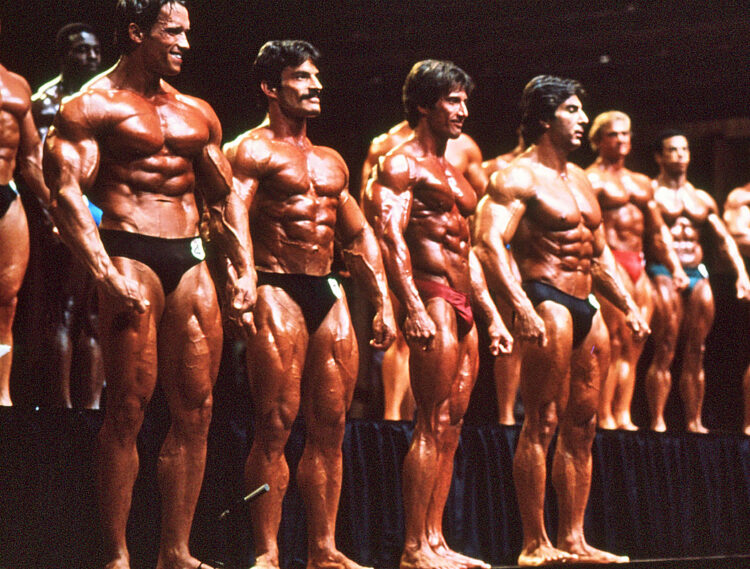
Many believe Mentzer deserved to place much higher—some even argue he should have won—but the title went to Schwarzenegger amid accusations of backstage politics. Just a year earlier, Mentzer had won the Mr. Universe with a perfect score, which made his poor Olympia placing all the more shocking.
Unlike most bodybuilders of the time, Mentzer didn’t train for two hours a day using high-volume routines. Instead, he championed high-intensity training (HIT), performing as few as 1–4 sets per muscle group per week.
He called his method Heavy Duty and wrote several books sharing his belief that short, hard workouts were the best way to build muscle and strength.
As a lifelong Mentzer fan, I wanted to find out whether Heavy Duty really lives up to the hype. So, I swapped my conventional workouts for Mike Mentzer’s low-volume, one-set-to-failure training system. Here’s what happened.
The Science Behind Single-Set Training: Is One Set Enough?
According to Mike Mentzer, quality is more important than quantity when training for hypertrophy. He believed that once a certain training volume threshold was reached, doing more was just a waste of time and energy.
He was the original junk volume critic!
While science suggests that—up to a point—more sets mean more muscle growth, there is evidence suggesting a single set can be enough to elicit hypertrophy, provided that set is taken to muscular failure (2).
Training to failure, i.e., the point at which more reps are impossible, creates a high level of mechanical and metabolic stress, which are two important triggers of muscle growth.
Mentzer wasn’t shy about bad-mouthing more conventional training strategies, either, labeling the high-volume methods used by other bodybuilders as unscientific and even stupid. However, high-intensity training and Mentzer’s Heavy-Duty methods never became mainstream, although some people did get good results from this type of program.
One notable fan of Heavy Duty was six-time Mr. Olympia Dorian Yates, who trained with Mentzer and incorporated some of his methods into his own style of training, which he called Blood and Guts.
With the science behind single-set training in mind and Mentzer’s philosophy of minimalism firmly established, I decided to see if the Heavy Duty approach could really deliver results. So, I swapped my usual routine for Mike Mentzer’s one-set system. Here’s how I structured my four-week workout plan and what I learned along the way.
My Four-Week Mike Mentzer-Inspired Heavy Duty Training Plan
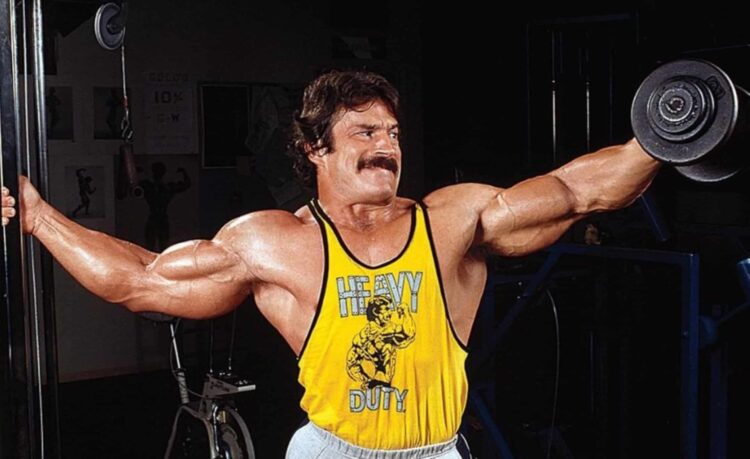
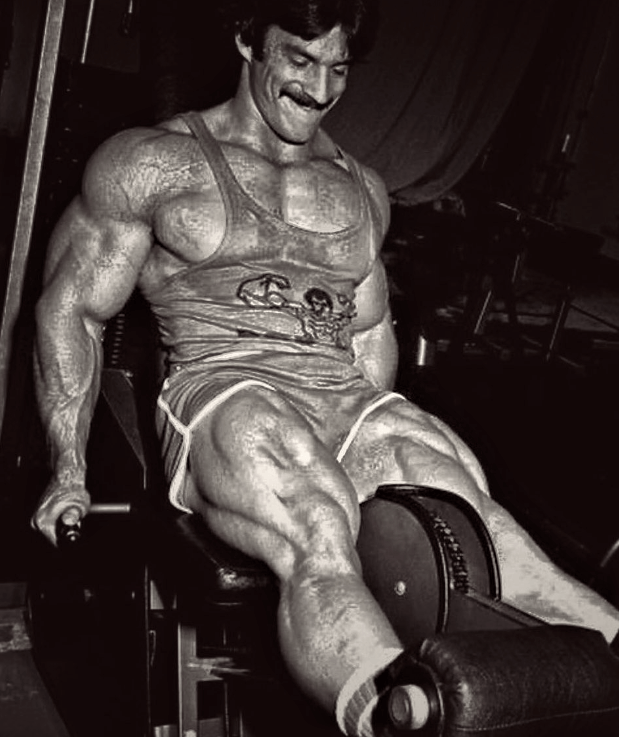
Mike Mentzer had a strong association with Arthur Jones, inventor of Nautilus training equipment. As such, many of his workouts feature machines that are either rare or no longer made.
Consequently, it would be impossible for me to follow many of Mentzer’s Heavy Duty workouts to the letter. After all, I haven’t seen a Nautilus Duo Squat or pullover machine for more than 30 years.
With that in mind, I decided to create a Heavy Duty-style program, inspired by my knowledge and research of Mike Mentzer.
This is what I came up with:
Training Frequency:
- 3 workouts per week (e.g., Monday, Wednesday, Friday).
- At least one rest day between workouts; adjust as needed for recovery.
Training Style:
- 1 working set per exercise taken to absolute muscular failure.
- 1–2 warm-up sets if needed (not taken to failure).
- Focus on strict form and controlled eccentrics (3–4 seconds down).
- Incorporate advanced techniques like rest-pause or forced reps as necessary.
Workout 1: Chest, Shoulders, Triceps
- Pec Deck Flyes – 1 set to failure (8–12 reps)
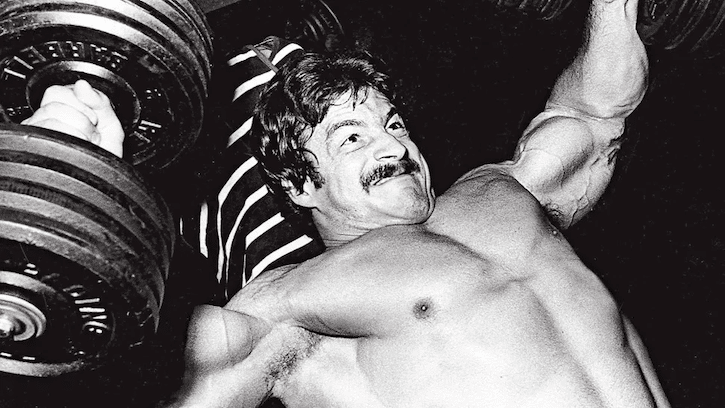
- Incline Dumbbell Press – 1 set to failure (6–10 reps)
- Side Lateral Raises – 1 set to failure (8–12 reps)
- Bent-Over Lateral Raises – 1 set to failure (8–12 reps)
- Triceps Pushdowns – 1 set to failure (6–10 reps)
- Dips – 1 set to failure (6–10 reps)
Workout 2: Back and Biceps
- Straight Arm Pulldown – 1 set to failure (8–12 reps)
- Close-Grip Lat Pulldowns – 1 set to failure (6–10 reps)
- Chest Supported Rows – 1 set to failure (6–10 reps)
- Dumbbell Shrugs – 1 set to failure (8–12 reps)
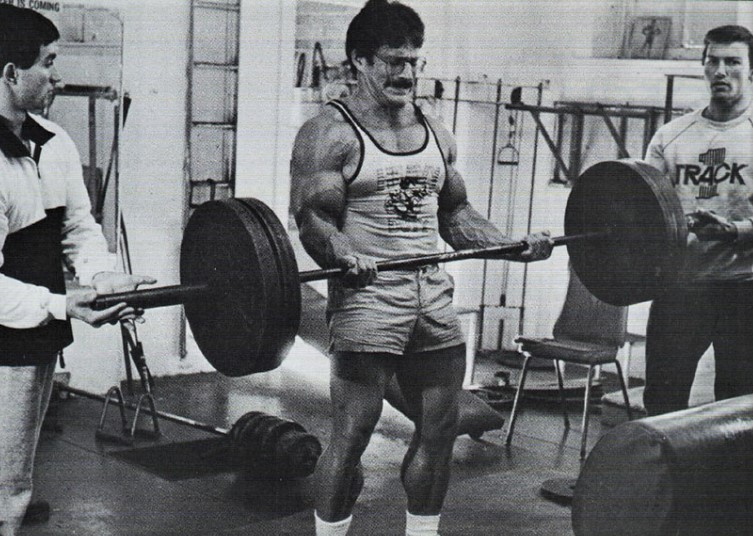
- Barbell Curls – 1 set to failure (6–10 reps)
Workout 3: Legs and Abs
- Leg Extensions – 1 set to failure (8–12 reps)
- Smith Machine Squat – 1 set to failure (6–10 reps)
- Leg Curls – 1 set to failure (8–12 reps)
- Standing Calf Raises – 1 set to failure (12–15 reps)
- Kneeling Cable Crunches – 1 set to failure (15–20 reps)
Program Rules:
- Log every workout to track performance and progress.
- Increase the weight by 2.5–5% on reaching the upper end of the prescribed rep range.
- Ensure each set reaches true momentary muscular failure.
- Use drop sets, forced reps, negatives, etc. to ensure failure is achieved.
Armed with my new program I couldn’t wait to get started. But would Mike Mentzer’s one all-out set approach make or break me? I would find out over the next four weeks!
Week 1: Learning to Train Like Your Life Depends on It
Ask most lifters how hard they train, and they’ll probably tell you they go to failure. However, when you’re only doing one set per exercise, there is no room for doubt, and you cannot afford to leave even a single rep in the tank.
This means you must go beyond discomfort and past the pain barrier. You must keep going until you are unable to complete even a single partial rep. There is a big difference between training hard and training to true muscular failure.
As such, I spent the first week of my Heavy Duty experiment discovering that doing one set to failure was as much a mental challenge as it was physical. It was always tempting to end my set when things got tough, but invariably I had a couple more reps left in me, and I had to dig deep to do them.
Looking back, I don’t think my first week was as effective as it could’ve been. I probably left a few reps on the table. But as the days went on, I began to develop what Mentzer called a “gun to the head” mentality—the ability to rep out like my life depended on it. Once I nailed that mindset, the workouts became much more productive.
Week 2: Making the Switch from Volume to Intensity
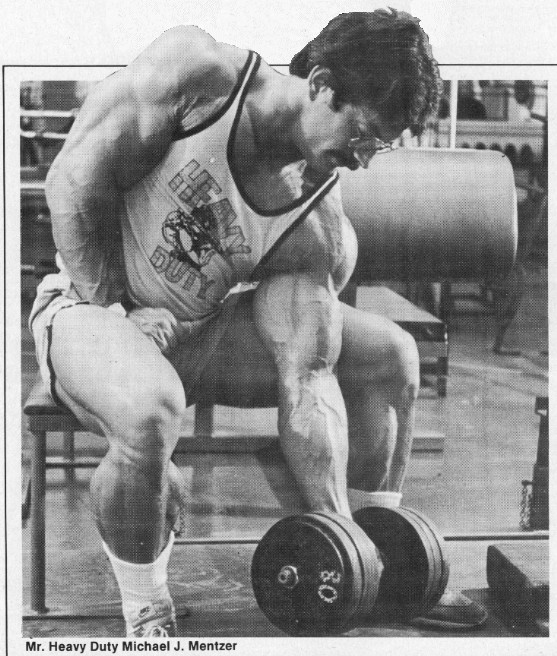
Bodybuilders have a saying, “You can train hard, or you can train long, but you can’t do both.” This illustrates the difference between conventional and Heavy Duty training. Doing a single set—even with 1-2 warm-ups—means that Mentzer-style workouts are over and done before you know it. My workouts took no more than 30 minutes to complete.
However, as Mentzer said, once you’ve “pulled the trigger” on the mechanisms responsible for muscle growth, more sets merely delay your recovery and undermine your progress.
So, while my workouts were very brief, they were far from easy, and I can honestly say this style of training is not for the faint of heart. You start each set feeling an element of dread, as you know it’s going to hurt like hell.
I also started incorporating a few drop sets and forced reps into my workouts, especially if I felt that I might have ended a set with reps still left in the tank. This ensured I got the most from every set performed, even if I did end it 1-2 reps too soon.
Week 3: Mental Warfare—The Fear of Failure
I usually look forward to my workouts. They provide me with a lot of enjoyment and help relieve stress. I usually leave the gym feeling a sense of accomplishment and happy that I found the time and energy to work out.
However—at least for me—one-set-to-failure training takes some of the fun out of exercising. There is no such thing as an easy set, and training takes on a much more serious tone. While the “gun to the head” mindset helps you push to failure, it means you have to attack every set with extreme aggression, which can become wearing.
So, while I was rising to the challenge of taking every set to failure, I can’t say I was enjoying it. Sure, I appreciated the time I was saving, and I was starting to see the fruits of my labors, but I don’t just train for results—I lift because I enjoy it. Heavy Duty training was starting to become too much of a mental challenge.
Week 4: Stronger, Smarter, and Ready for a Break
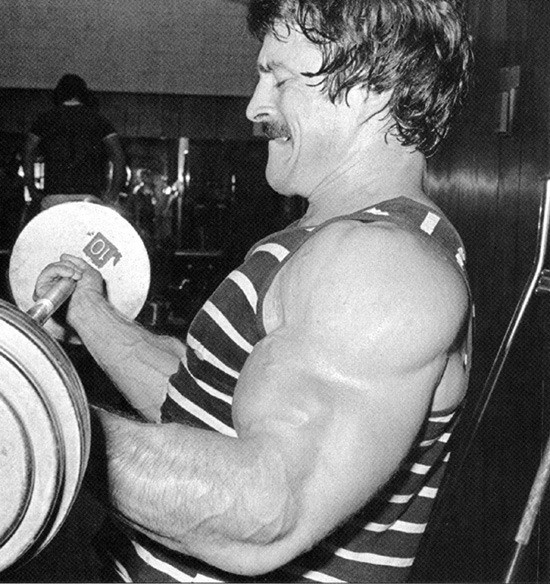
Heavy Duty training was delivering the progress I hoped for—more reps, more weight, and clear signs of muscle growth. However, there was a cost.
Pushing every set to true failure was wearing me down. I felt mentally drained, and the minor aches and pains were stacking up. None of these were serious, but they were enough to make me question the sustainability of this style of training.
Getting just one set per exercise means the pressure never lets up, and there is no cruising through a second or third set if the first doesn’t go well. You have to be “on” every single time, and that constant stress started to overshadow the enjoyment I normally get from training.
So, while I appreciated the efficiency and effectiveness of the Heavy Duty approach, I was also glad when it was all over. One-set-to-failure training delivers results—but it’s not something I’d want to do year-round.
Results from Four Weeks of One All-Out Set to Failure Training
Despite the mental and physical demands of doing one set to failure, I completed all 12 planned workouts and made great progress in terms of weight and reps performed. I ate and slept well and, as Mentzer suggested, avoided any additional physical activity. In short, I did everything I could to ensure I achieved the best possible results.
So, how did a month of Heavy Duty training affect me? Take a look!
Before:
- Bodyweight 179 pounds
- Body fat percentage 11%
After:
- Bodyweight 181 pounds (+2 pounds)
- Body fat percentage 10% (-1%)
- Muscle gain 3.5 pounds
While 3.5 pounds might not sound significant, it’s quite impressive considering the minimal workload—very few sets, short sessions, and just three workouts per week. This is excellent progress given how little training I actually did.
However, the time saved was more than offset by how much mental and physical effort went into each workout—they were anything but easy, and not altogether enjoyable, either, which I view as a major downside to this style of training.
Closing Thoughts
As both the science and Mike Mentzer suggest, one all-out set can build muscle and strength. However, taking all your sets to failure can be exhausting—physically AND mentally—and could make your workouts less enjoyable, even though you won’t have to spend as much time in the gym.
However, this does clearly illustrate that you can get great results from short, infrequent workouts, and that’s good news for anyone who doesn’t have the time to train longer or more often. That said, I wouldn’t call single-set-to-failure training sustainable. It’s better used as a temporary shock to break through a plateau, not as your go-to workout approach.
Have you tried HIT, Heavy Duty, or Blood and Guts-style training? I’d love to hear how it went—share your experiences and results in the comments section below!
References:
- Schoenfeld BJ, Ogborn D, Krieger JW. Dose-response relationship between weekly resistance training volume and increases in muscle mass: A systematic review and meta-analysis. J Sports Sci. 2017 Jun;35(11):1073-1082. doi: 10.1080/02640414.2016.1210197. Epub 2016 Jul 19. PMID: 27433992.
- Krieger JW. Single vs. multiple sets of resistance exercise for muscle hypertrophy: a meta-analysis. J Strength Cond Res. 2010 Apr;24(4):1150-9. doi: 10.1519/JSC.0b013e3181d4d436. PMID: 20300012.
 You can also follow us on Twitter, Facebook, Instagram, and
YouTube for even more content.
You can also follow us on Twitter, Facebook, Instagram, and
YouTube for even more content.Tip: If you're signed in to Google, tap Follow.






Good afternoon. I am 68 years old and have been lifting many years now. I came across these workouts several months ago, following another body builder.
I actually enjoy this type of workout better than higher volumes. I train alone so it makes it a little more harder to hit failure and do negative reps. I am able to get some really good days in. I do four days a week though instead of three days. Legs on Monday’s and chest biceps Tuesday’s , shoulders triceps Thursday’s and back on Saturdays.
I start off using free weight or dumbbells first for my warmup sets, and then move to a machine for the working set.
For instance I start with Dumbbell shoulder presses and finish on a the shoulder press machine. Go to failure and then add rest pause sets,
I have not found anything on rest periods between warmup sets and working sets. I would like to hear some feedback on that portion.
I am retired military as well.
Bob
Hey Bob,
Your approach to HIT sounds great. I like the idea of moving from free weights to machines for the failure sets—safety first!
Re. rest periods, as long as needed is the answer. You don’t want your warm-ups to detract from your max-effort sets. As warm-ups shouldn’t be overly fatiguing you should be good to go in 1-2 minutes. Monitor your breathing and how you feel, and then get to work when you feel ready. But don’t rush – resting for too long probably won’t hurt your performance (provided you don’t get cold of course) while resting too little could reduce workout performance. You’ll also find that some exercises need more recovery than others.
Hope that helps!
All the best,
Patrick.
Hello Mr. Dale,
I posted my support for the HIT method at John Little’s YouTube channel, but got ripped by commenters because I deviated from the EXACT methods/exercises prescribed. I mentioned that while I do only single sets to failure, observing strict form and resting 96 hours between body part workouts, I was vilified because I was doing multiple sets, with each set being a completely different exercise, thus it is considered “high volume”.
Even though I have adapted some key principles and incorporated some of the methodology of Mentzer, I have achieved excellent results. Yet that still goes against the grain of the “purists” and the dogmatic insistence of the pedants. Perhaps I have discovered a hybrid system, or my methods contradict the “purity” of the HIT system.
I enjoy working out, but with a very physical job, I was frustrated with the old high rep methods, so sought to find something more suitable, time wise. I have a method with verifiable results that I can stick to, consistently. Between Saturday and Saturday I do 3 workouts, each day a different body part. It works for me. I do not use a gym so many of the Mentzer prescribed exercises are not possible anyways, but the single set, strict form, concentration on the eccentric moves etc, I have adopted. All done from the comfort of my home with free weights and some resistance bands.
Thank you for the article.
Hi Lincoln – thanks for your message.
I think that what a lot of people forget is that it’s perfectly okay to take an idea and adapt it to your needs, goals, abilities, etc. While that might go against what purists believe, it’s how new ideas are developed. Blindly following someone else’s ideas can work, but sometimes those ideas can be a springboard onto something better. So don’t worry what the HIT Jedis say—if it works for you then YOU are right. After all, the proof is in the pudding, so to speak.
Mike Mentzer was a inspirational bodybuilder, but if you listen to his tapes or read his books, you’ll also see he was very dogmatic—it was my way or the highway. But, clearly, his way was NOT the only way to train, and plenty of other lifters have been equally successful using different methods. There is more than one way to skin the proverbial cat!
Good luck with your continued training.
Patrick.
I think that is amazing that Dorian Yates was able to endure this type of training for so many years!