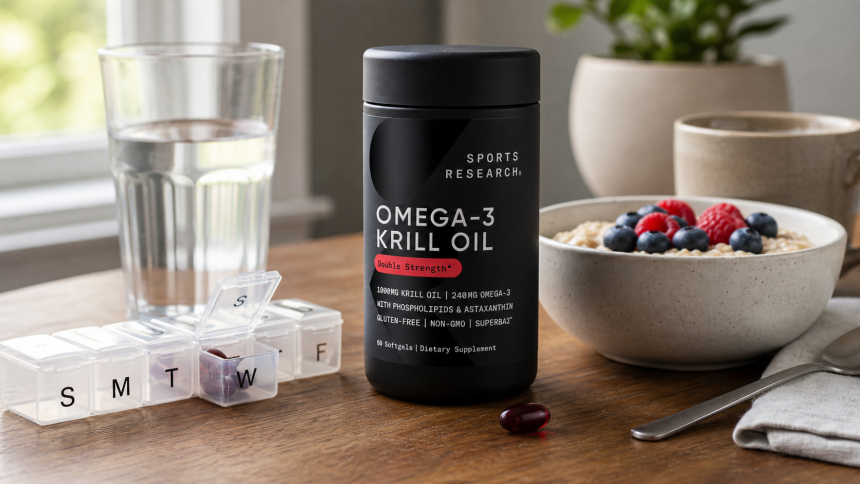
A 1,000 mg krill oil softgel sounds potent until you read the smaller numbers underneath it. Sports Research gives you 136 mg of EPA and 60 mg of DHA per serving, so the two omega-3s most shoppers care about add up to 196 mg. That does not make this a bad supplement. It makes it a specific one: easy to take, backed by useful third-party testing claims, and better suited to modest daily supplementation than high-dose omega-3 goals.
How we tested: Tom Miller used the one-softgel routine with meals, checked the capsule and bottle in daily use, and compared the current label, certification listings, published human studies, and price.
Affiliate disclosure: FitnessVolt may earn a commission if you buy through the Amazon link below, at no extra cost to you. Our verdict does not change based on that commission.
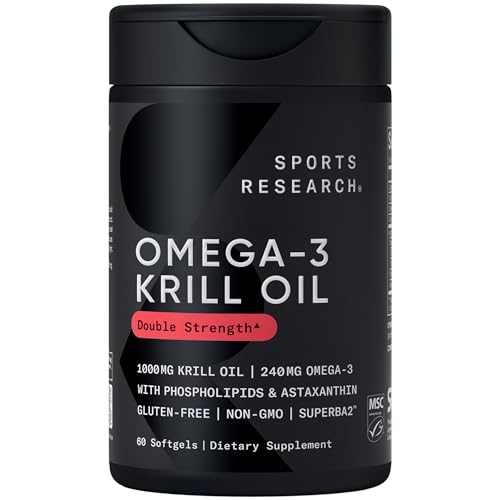
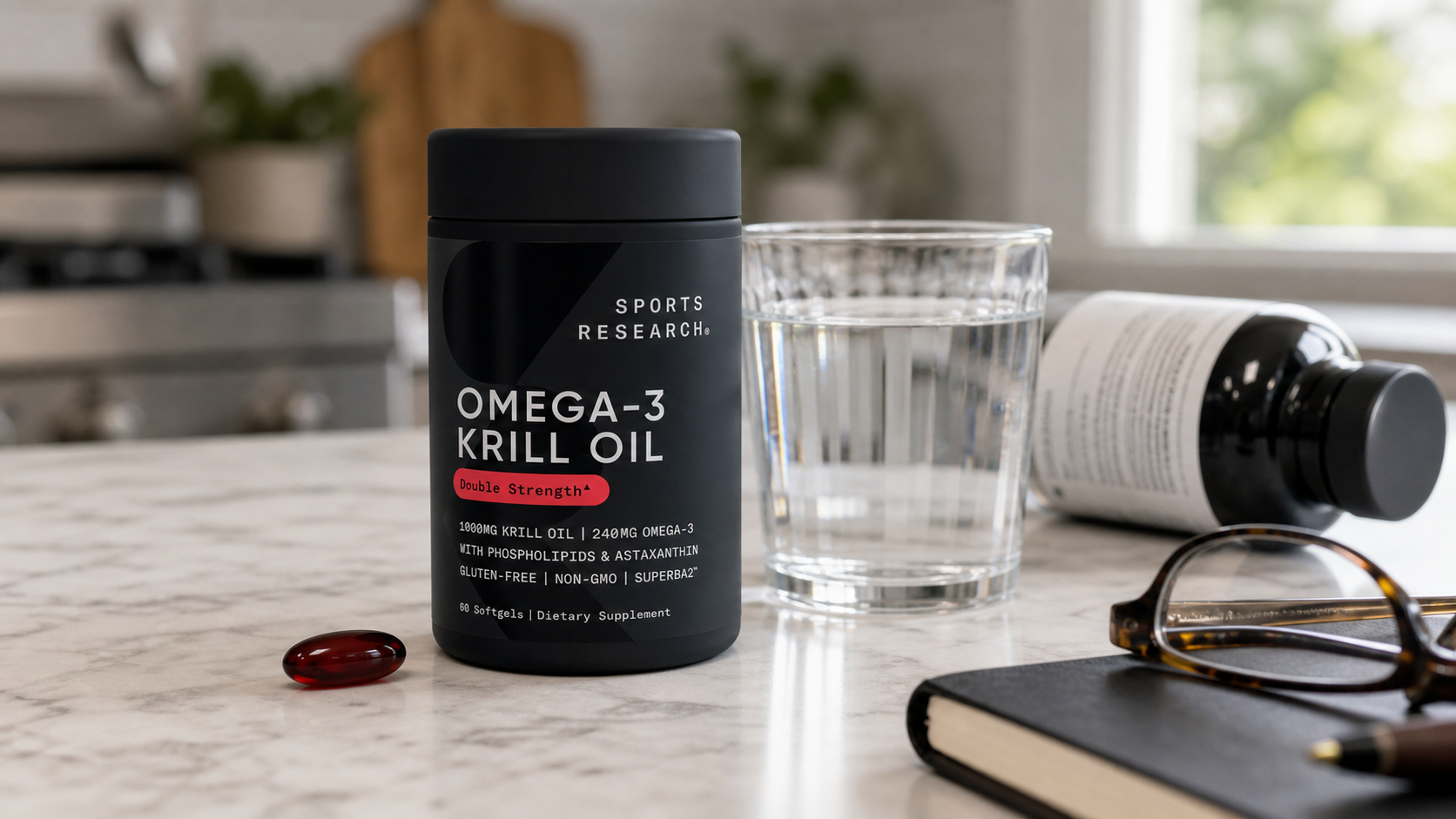
Sports Research Antarctic Krill Oil 1000mg
Best for One-Softgel ConveniencePros
- One softgel supplies 240 mg total omega-3s
- Current formula lists 400 mg phospholipids
- IKOS and IGEN certification listings add useful quality evidence
- About $0.52 per daily serving
Cons
- Only 196 mg of EPA and DHA combined
- Costs more per milligram of EPA and DHA than many fish oils
- Contains crustacean shellfish and gelatin
Sports Research Krill Oil at a Glance
| Serving | 1 softgel with food |
|---|---|
| Krill oil | 1,000 mg Superba2 Antarctic krill oil |
| Total omega-3s | 240 mg |
| EPA | 136 mg |
| DHA | 60 mg |
| EPA + DHA | 196 mg |
| Phospholipids | 400 mg |
| Astaxanthin | 100 mcg |
| Servings | 60 |
| Price checked | $30.95 on August 26, 2026 |
| Cost per serving | About $0.52 |
The serving routine could hardly be simpler. You take one softgel with food and get a two-month supply from one bottle. The current Amazon record also showed the product in stock when we checked it.
The catch sits in the dose. The softgel contains 1,000 mg of krill oil, but most of that total is not EPA or DHA. Those two fatty acids total 196 mg. If you read only the large number on the front, you may expect roughly five times as much EPA and DHA as the capsule delivers.
Our Verdict
Sports Research Antarctic Krill Oil is a sensible buy for someone who wants a modest omega-3 dose in one daily softgel and values phospholipid-bound omega-3s. The formula is transparent, the serving is convenient, and the current certification listings give us more confidence than a label alone.
It is harder to recommend for athletes shopping by EPA+DHA dose. At $30.95, you pay about 52 cents each day for 196 mg of EPA and DHA. Many concentrated fish oils deliver several times that amount per serving. Krill oil may absorb efficiently, but efficient absorption does not turn 196 mg into a gram.
Who Should Buy It?
- You want one softgel a day. The simple serving beats products that require two to four capsules.
- You prefer krill oil over standard fish oil. Much of krill oil’s omega-3 content is associated with phospholipids rather than only triglycerides or ethyl esters.
- You care about independent quality programs. Nutrasource lists this product under its IKOS and IGEN programs.
- You only need a modest supplemental dose. The 196 mg of EPA+DHA may suit someone who already eats fatty fish and wants a small addition.
Who Should Skip It?
- You are targeting a high EPA+DHA intake. The one-softgel serving does not compete with concentrated fish oils that supply 800 to 1,000 mg or more.
- You have a shellfish allergy. The label identifies crustacean shellfish from krill.
- You avoid animal-derived gelatin. The softgel shell is not vegetarian or vegan.
- You want the lowest cost per milligram. Krill oil generally loses that comparison to concentrated fish oil.
What the 1,000 mg Label Really Means
The Supplement Facts panel separates the serving into useful parts. One softgel contains 1,000 mg of Superba2 krill oil, including 240 mg of total omega-3 fatty acids. Within that omega-3 total, you get 136 mg of EPA and 60 mg of DHA.
I would write this number down before comparing it with another omega-3:
136 mg EPA + 60 mg DHA = 196 mg EPA+DHA per softgel.
The remaining 44 mg of the 240 mg total omega-3 figure comes from other omega-3 fatty acids. The formula also lists 400 mg of phospholipids and 100 mcg of astaxanthin. Those ingredients help distinguish krill oil from ordinary fish oil, but they should not distract you from the EPA+DHA total when that is your main buying goal.
The label directs adults to take one softgel daily with food. We would stick to that serving unless a qualified clinician tells you otherwise. Taking five capsules to chase roughly one gram of EPA+DHA would also multiply the cost and move far beyond the labeled serving.
Krill Oil vs. Fish Oil
Krill oil’s main selling point is its chemical form. A meaningful share of its EPA and DHA is carried in phospholipids. Fish oil usually delivers those fats in triglyceride or ethyl-ester forms. Researchers have spent years asking whether that difference improves absorption.
A 2026 double-blind randomized trial gave 72 healthy adults matched doses of 1.1 grams of omega-3 fatty acids from krill oil or fish oil for 12 weeks. The krill oil group had about 1.5 times greater increases in plasma EPA and DHA. That is encouraging for krill oil, but the trial compared matched omega-3 doses. It did not show that this 196 mg EPA+DHA softgel outperforms a fish oil serving with five times the EPA+DHA.
Other trials keep the picture grounded. One randomized study found similar overall 24-hour EPA+DHA absorption from a phospholipid-enhanced fish oil and krill oil, though their absorption profiles differed. A separate 12-week trial found comparable Omega-3 Index gains from fish oil and krill oil when the daily EPA+DHA doses were close.
| Question | Sports Research Krill Oil | Concentrated Fish Oil |
|---|---|---|
| EPA+DHA per labeled serving | 196 mg | Often much higher; check the exact label |
| Delivery form | Krill phospholipids plus other lipids | Usually triglyceride, re-esterified triglyceride, or ethyl ester |
| Capsules | 1 softgel daily | Varies by concentration |
| Allergen concern | Crustacean shellfish | Fish |
| Value advantage | Convenience and krill-specific composition | Usually more EPA+DHA per dollar |
Choose krill oil because you want its phospholipid-rich format and can use this dose. Choose a concentrated fish oil when the EPA+DHA number and cost per milligram matter more. Our guides to the best krill oil supplements and best fish oil supplements show the wider field.
Quality and Certification Claims
Nutrasource currently lists Sports Research Omega-3 Krill Oil 1000mg under its IKOS krill-oil testing program and its IGEN non-GMO testing program. That is useful because these programs look beyond the marketing copy. The product packaging also carries a Marine Stewardship Council sustainable-sourcing claim.
A certification logo does not guarantee that every future lot will stay the same. Programs, formulas, and approved lots can change. Check the seal and lot information on the bottle you receive, especially if third-party testing drives your decision.
One detail needs a close read. Older certification reports for this product show earlier formulas with different EPA or astaxanthin figures. We used the current retail label supplied for ASIN B00IP1E3O0: 136 mg EPA, 60 mg DHA, and 100 mcg astaxanthin. Trust the sealed bottle’s current Supplement Facts panel if it differs from an old webpage.
Price and Value
At $30.95 for 60 servings, the daily cost lands around $0.52. That feels reasonable for a branded krill oil with one-softgel dosing. It looks less impressive when you price the active omega-3s.
Each bottle contains about 11,760 mg of EPA+DHA in total: 196 mg per serving multiplied by 60 servings. At the checked price, you pay about $2.63 per gram of EPA+DHA. A concentrated fish oil can cut that cost while delivering a larger daily dose.
Price can move, so use the current figure as a snapshot rather than a promise. If the bottle climbs well above the low-$30 range, compare it with other products in our krill oil guide before ordering.
Safety and Side Effects
Do not use this product if you have a known crustacean shellfish allergy unless your allergist or physician specifically clears it. The softgel also contains gelatin.
Omega-3 supplements can cause mild stomach upset, nausea, heartburn, or an unpleasant taste. Taking the softgel with food follows the label and may make it easier on your stomach.
Talk with a healthcare professional before using it if you take warfarin or another anticoagulant, have a bleeding disorder, are pregnant or nursing, or have surgery planned. The NIH notes that omega-3s can interact with anticoagulant medicines, even though clinically significant bleeding has not appeared consistently in trials. A clinician can judge your medication, dose, and individual risk.
Pros and Cons
What We Like
- The label shows every key dose instead of hiding the formula in a proprietary blend.
- One softgel a day is easier to maintain than a multi-capsule routine.
- The 400 mg phospholipid figure gives krill-oil shoppers a concrete number to compare.
- IKOS and IGEN listings add a useful layer of verification beyond the brand’s own claims.
What We Do Not Like
- The front-label 1,000 mg figure can make the EPA+DHA dose look much larger than 196 mg.
- The cost per gram of EPA+DHA is high beside concentrated fish oil.
- Shellfish and gelatin exclude several groups of shoppers.
Frequently Asked Questions
How much EPA and DHA does Sports Research Krill Oil contain?
One softgel contains 136 mg of EPA and 60 mg of DHA, for 196 mg combined. The label’s 240 mg total omega-3 number also includes 44 mg of other omega-3 fatty acids.
Is 1,000 mg of krill oil the same as 1,000 mg of omega-3?
No. The 1,000 mg figure describes the full amount of krill oil. Only 240 mg of that is listed as total omega-3 fatty acids, and 196 mg is EPA plus DHA. Compare products by the EPA and DHA lines, not only the largest number on the front.
Is krill oil absorbed better than fish oil?
Some trials report higher plasma EPA and DHA from krill oil at matched omega-3 doses, while other studies find similar overall absorption or similar longer-term Omega-3 Index changes. Form matters, but dose still matters. A small krill-oil dose should not be treated as equal to a much larger fish-oil dose.
When should I take Sports Research Krill Oil?
The current label says to take one softgel daily with food. Pick a meal you eat consistently. The routine matters more than choosing breakfast or dinner.
Does this product contain shellfish?
Yes. It contains Antarctic krill, which the label identifies as crustacean shellfish. Anyone with a shellfish allergy should avoid it unless a qualified medical professional clears its use.
Bottom Line
Sports Research Antarctic Krill Oil is a good fit if you want one daily krill softgel, a transparent label, and current third-party certification listings. The formula gives you 240 mg of total omega-3s, but only 196 mg comes from EPA and DHA. That is the number that keeps our rating at 4.1 rather than pushing it higher. Buy it for convenient, modest krill-oil supplementation. Choose a concentrated fish oil if you need more EPA+DHA for your money.
Sources
- Plourde M, et al. Krill oil increases plasma omega-3 fatty acids more than fish oil in healthy adults: a double-blind randomized controlled trial. American Journal of Clinical Nutrition. 2026. PMID: 42144109. DOI: 10.1016/j.ajcnut.2026.101346.
- Guarneiri LL, Wilcox ML, Maki KC. Comparison of a phospholipid-enhanced fish oil versus krill oil on plasma EPA and DHA. Nutrition. 2023. PMID: 37413768. DOI: 10.1016/j.nut.2023.112090.
- Kohler A, et al. Bioavailability of fatty acids from krill oil, krill meal and fish oil in healthy subjects. Lipids in Health and Disease. 2015. PMID: 25884846. DOI: 10.1186/s12944-015-0015-4.
- Veselinovic T, et al. Equal bioavailability of omega-3 PUFA from Calanus oil, fish oil and krill oil. Lipids in Health and Disease. 2023. PMID: 36960737.
- National Institutes of Health, Office of Dietary Supplements. Omega-3 Fatty Acids: Health Professional Fact Sheet. Accessed August 26, 2026.