

10 Best 90/90 Hamstring Alternatives for Home Workouts
If you can’t perform the 90/90 Hamstring, choose exercises that reproduce its knee-flexion and hip-extension emphasis. Effective bodyweight alternatives include the Nordic hamstring curl, glute-ham raise, single-leg Romanian deadlift, slider/towel hamstring curl, and single-leg bridge—each preserves hamstring loading and is scalable for strength or rehab.
Original Exercise: 90/90 Hamstring
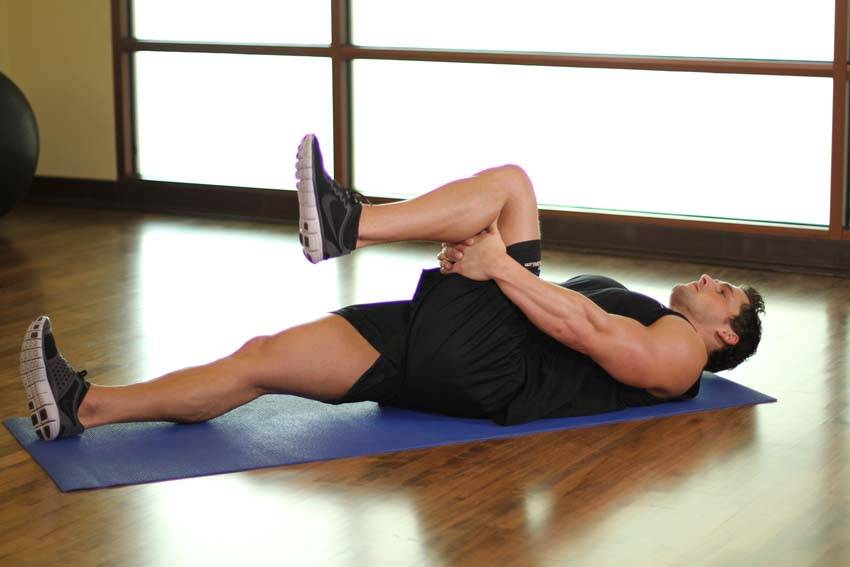
How to Perform 90/90 Hamstring
- Lie on your back, with one leg extended straight out.
- With the other leg, bend the hip and knee to 90 degrees. You may brace your leg with your hands if necessary. This will be your starting position.
- Extend your leg straight into the air, pausing briefly at the top. Return the leg to the starting position.
- Repeat for 10-20 repetitions, and then switch to the other leg.
Pro Tips
- Category: Stretching
- Force: Push
Best 90/90 Hamstring Alternatives
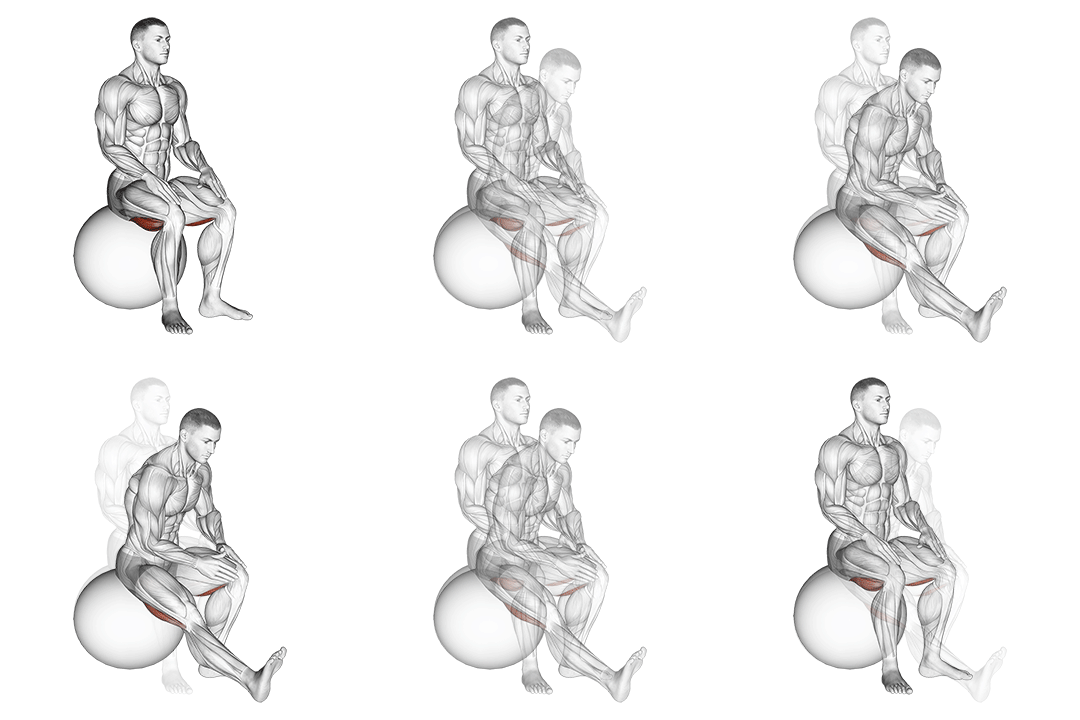
1. Exercise Ball Seated Hamstring Stretch
92.2% MatchHow to perform this exercise
- Sit on the stability ball with your feet flat on the ground and your knees bent at a 90-degree angle.
- Slowly roll the ball forward, walking your feet out until your upper back is resting on the ball and your legs are extended straight in front of you.
- Place your hands on your hips for support.
- Engage your core and slowly lower your upper body towards the ground, keeping your back straight and your chest lifted.
- Stop when you feel a stretch in your hamstrings, and hold the position for 20-30 seconds.
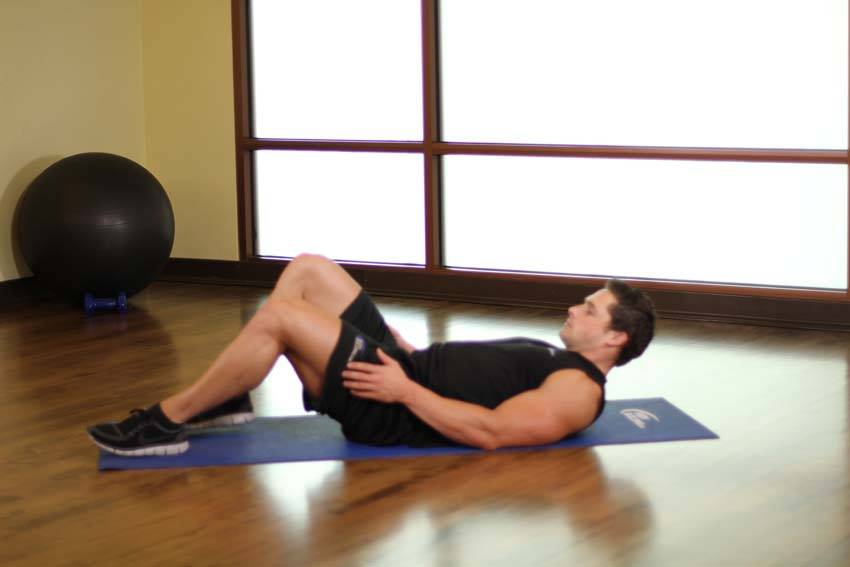
2. Ankle On The Knee
79.4% MatchHow to perform this exercise
- From a lying position, bend your knees and keep your feet on the floor.
- Place your ankle of one foot on your opposite knee.
- Grasp the thigh or knee of the bottom leg and pull both of your legs into the chest. Relax your neck and shoulders. Hold for 10-20 seconds and then switch sides.
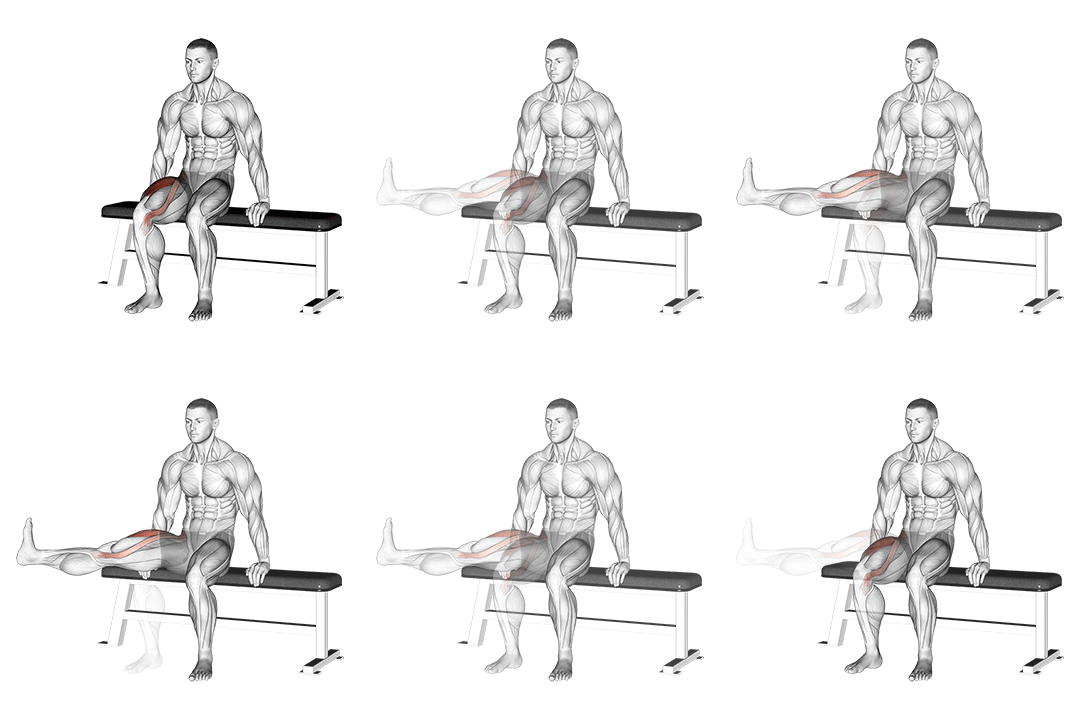
3. Chair Leg Extended Stretch
79.4% MatchHow to perform this exercise
- Sit on the edge of a chair with your back straight and feet flat on the ground.
- Extend one leg straight out in front of you, keeping your heel on the ground.
- Lean forward slightly, feeling a stretch in your quadriceps.
- Hold this position for 20-30 seconds.
- Switch legs and repeat the stretch.
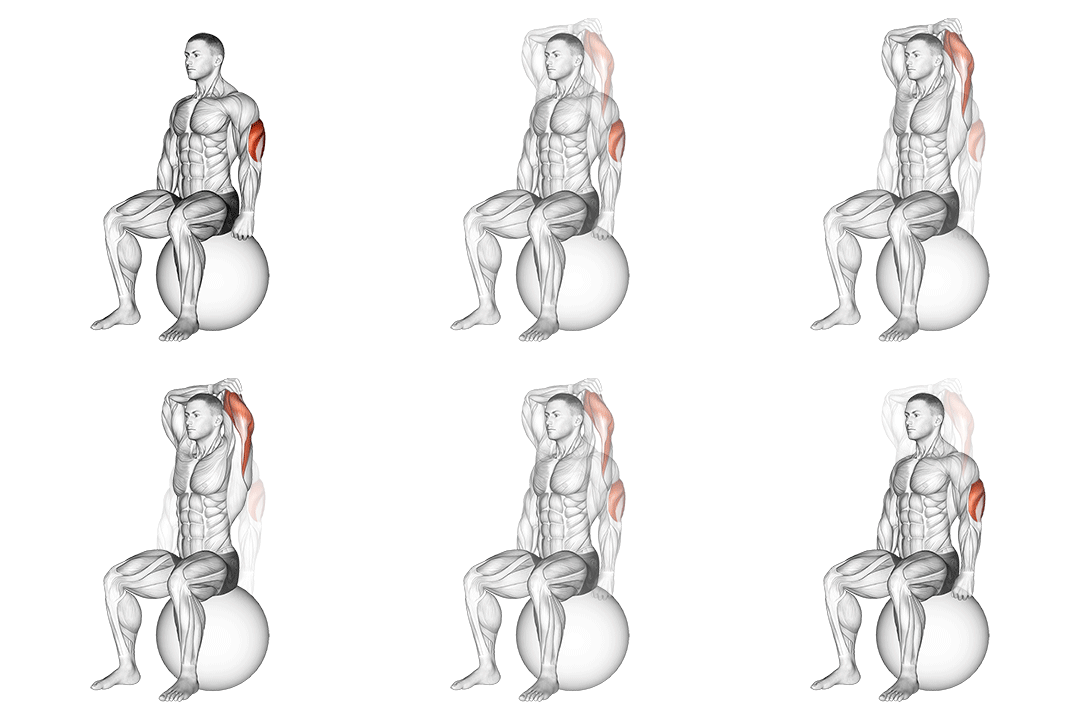
4. Exercise Ball Seated Triceps Stretch
76.7% MatchHow to perform this exercise
- Sit on a stability ball with your feet flat on the ground and your back straight.
- Hold a dumbbell in one hand and extend your arm straight up above your head.
- Bend your elbow and lower the dumbbell behind your head, keeping your upper arm close to your ear.
- Hold the stretch for a few seconds, then return to the starting position.
- Repeat with the other arm.
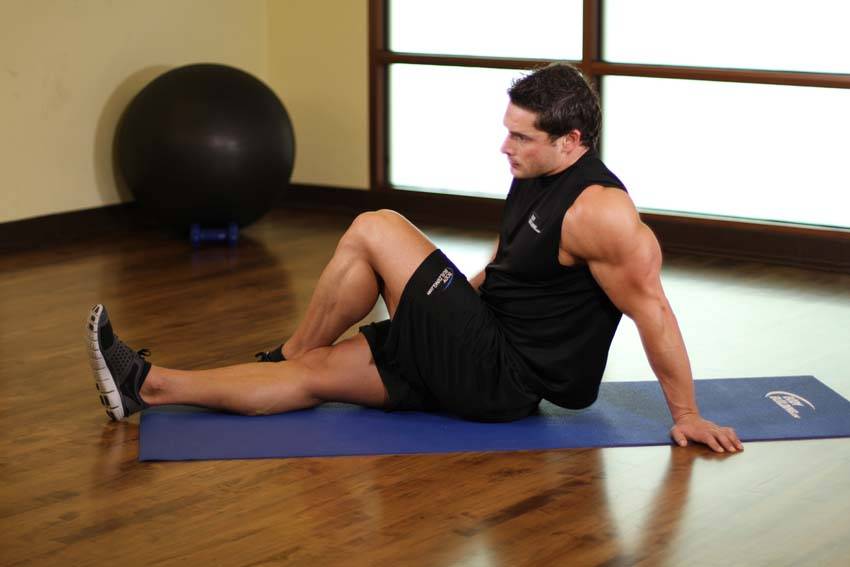
5. Dancer's Stretch
76.4% MatchHow to perform this exercise
- Sit up on the floor.
- Cross your right leg over your left, keeping the knee bent. Your left leg is straight and down on the floor.
- Place your left arm on your right leg and your right hand on the floor.
- Rotate your upper body to the right, and hold for 10-20 seconds. Switch sides.
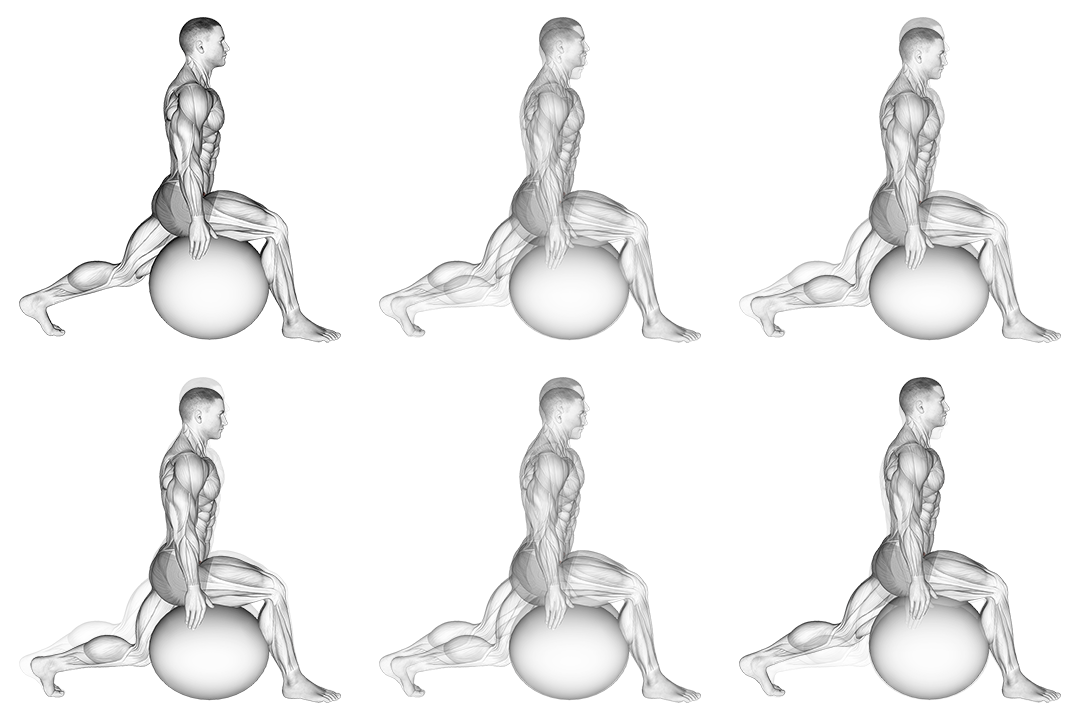
6. Exercise Ball Hip Flexor Stretch
76.2% MatchHow to perform this exercise
- Place the stability ball on the ground and kneel in front of it.
- Place your right foot on top of the stability ball, with your knee bent at a 90-degree angle.
- Extend your left leg behind you, keeping it straight.
- Lean forward, pushing your hips towards the stability ball, until you feel a stretch in your right hip flexor.
- Hold the stretch for 20-30 seconds, then switch sides and repeat.
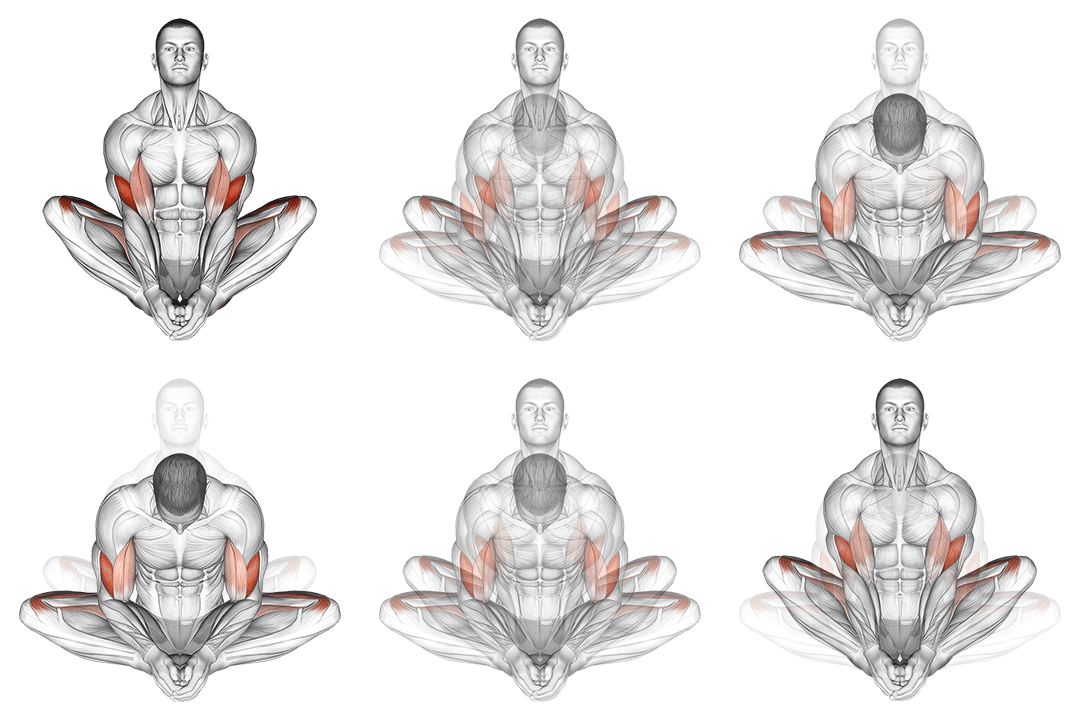
7. Butterfly Yoga Pose
73% MatchHow to perform this exercise
- Sit on the floor with your legs extended in front of you.
- Bend your knees and bring the soles of your feet together, allowing your knees to fall out to the sides.
- Hold onto your ankles or feet with your hands.
- Sit up tall and lengthen your spine.
- Gently press your knees down towards the floor, feeling a stretch in your inner thighs.
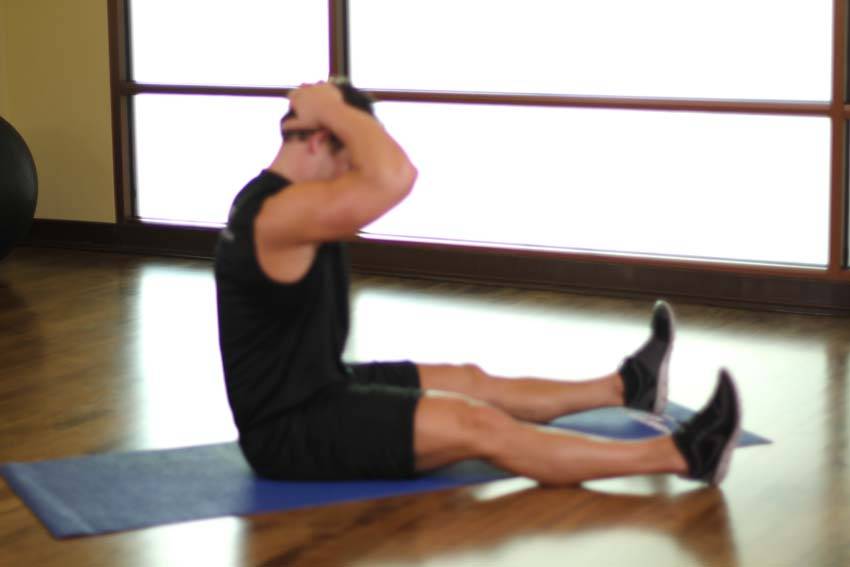
8. Chin To Chest Stretch
72.7% MatchHow to perform this exercise
- Get into a seated position on the floor.
- Place both hands at the rear of your head, fingers interlocked, thumbs pointing down and elbows pointing straight ahead. Slowly pull your head down to your chest. Hold for 20-30 seconds.
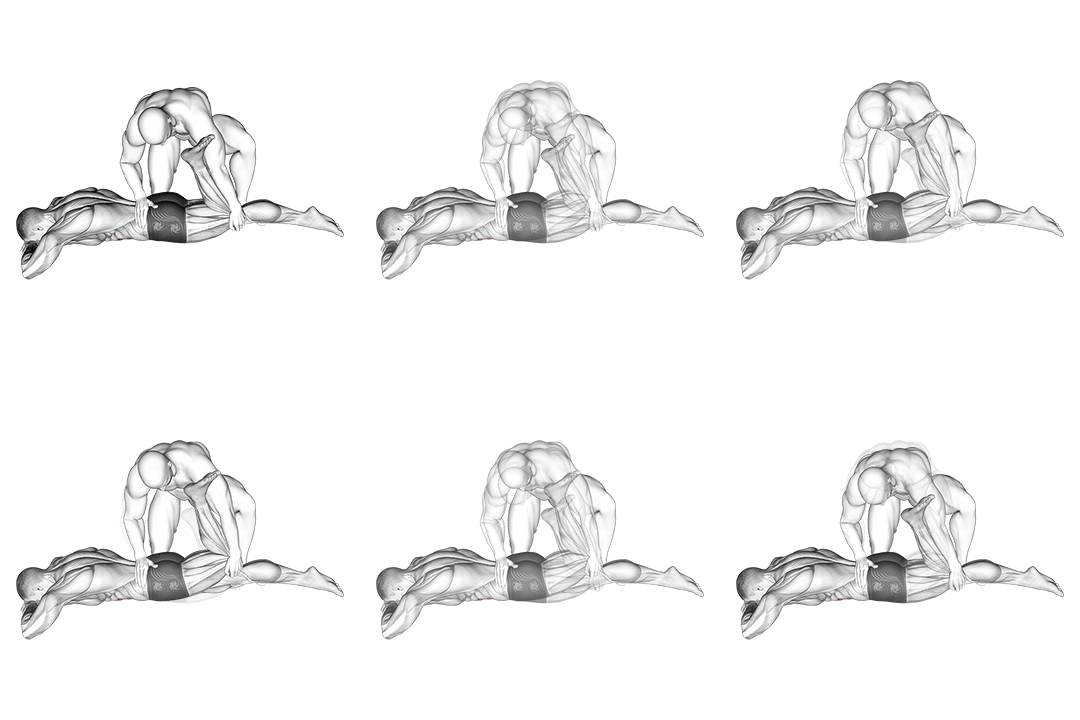
9. Assisted Prone Rectus Femoris Stretch
72.4% MatchHow to perform this exercise
- Lie face down on the ground with your legs straight.
- Bend your right knee and reach back with your right hand to grab your right foot or ankle.
- Gently pull your right foot or ankle towards your glutes, feeling a stretch in the front of your right thigh.
- Hold the stretch for 20-30 seconds.
- Release and repeat on the other side.
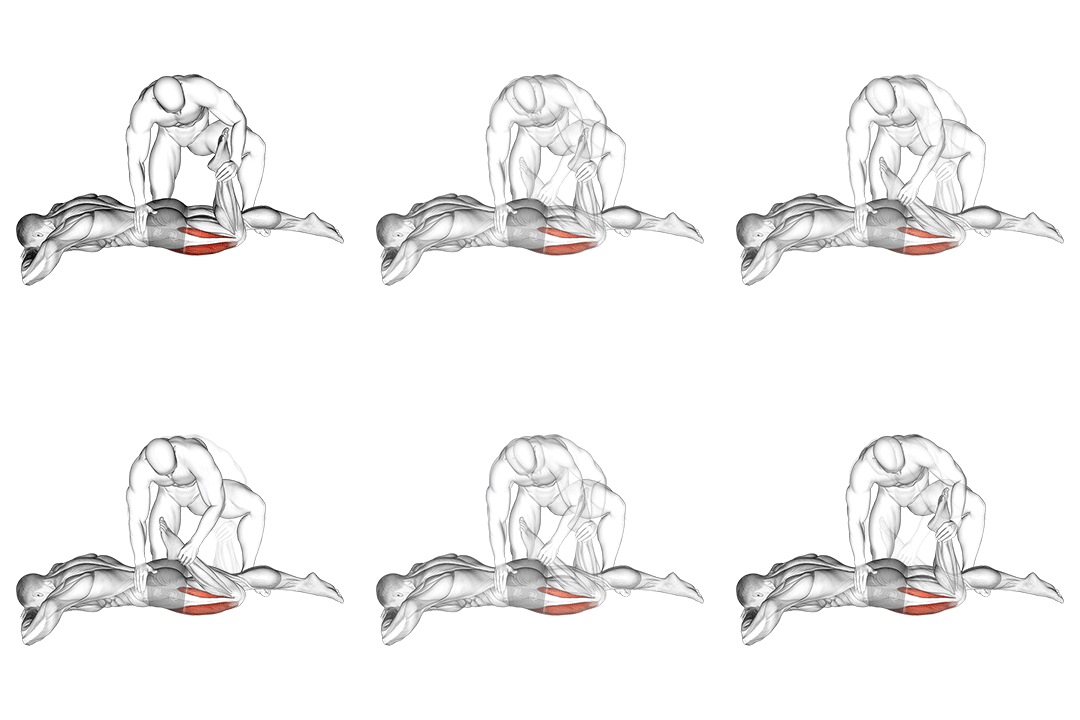
10. Assisted Prone Lying Quads Stretch
72.4% MatchHow to perform this exercise
- Lie face down on the ground with your legs extended.
- Bend your left knee and reach back with your left hand to grab your left foot or ankle.
- Gently pull your left foot towards your glutes, feeling a stretch in your left quad.
- Hold the stretch for 20-30 seconds, then release.
- Repeat with your right leg.
Why You Might Need a 90/90 Hamstring Alternative
You may need alternatives because of acute hamstring strains, knee or lower-back discomfort, or lack of a training partner or equipment. The 90/90 variation can place high eccentric demand on the distal hamstrings; that’s problematic during rehab or early return-to-play phases. Alternatives let you reduce load, isolate specific portions of the hamstring (knee flexors vs hip extensors), or emphasize unilateral control. They also fit constraints—space, no equipment, or progression needs—so you can continue training without forcing a risky movement pattern.
How to Choose the Right Substitute
Choose substitutes based on the movement pattern and your goal. If you need eccentric strength and tendon tolerance, prioritize Nordic hamstring curls and controlled negatives. For posterior chain hip extension, pick glute-ham raises or single-leg bridges. Use single-leg RDLs to address unilateral stability and hip-hinge mechanics. If you lack equipment, slider/towel curls reproduce knee-flexion emphasis. Consider joint pain, range-of-motion limits, and ability to progress load—choose exercises you can regress or intensify with tempo, reps, or added assistance.
Frequently Asked Questions
What muscles does 90/90 Hamstring work?
The 90/90 Hamstring primarily targets the hamstrings—both the knee-flexor (biceps femoris, semitendinosus, semimembranosus) and the hip-extending role via semitendinosus/semimembranosus. It also recruits the glutes and requires core stability to control pelvic position.
What is the best bodyweight alternative to 90/90 Hamstring?
The Nordic hamstring curl is the best bodyweight alternative for replicating the 90/90’s eccentric hamstring load. It maximizes posterior chain activation and can be scaled with partial range or assistance bands to match your strength and tolerance.
Can I build muscle without doing 90/90 Hamstring?
Yes. You can stimulate hamstring hypertrophy and strength using other high-tension exercises like glute-ham raises, single-leg Romanian deadlifts, slider hamstring curls, and progressive eccentrics. Focus on progressive overload, sufficient volume, and full range control to drive adaptation.
More Exercise Alternatives
Find Alternatives for Any Exercise
Use our free tool to discover the best substitute exercises based on your available equipment and goals.
Try the Exercise Substitution Finder →