

10 Best Barbell Bent Over Row Alternatives for When You Can't Use a Barbell
If you can't do the Barbell Bent Over Row, choose exercises that preserve the horizontal-pull pattern and target the lats, rhomboids, and rear delts. Top swaps include single-arm dumbbell rows, chest-supported rows, seated cable rows, T-bar rows, and inverted rows. Cue: hinge at the hips, keep a neutral spine, and pull elbows back to squeeze the scapulae.
Original Exercise: Barbell Bent Over Row
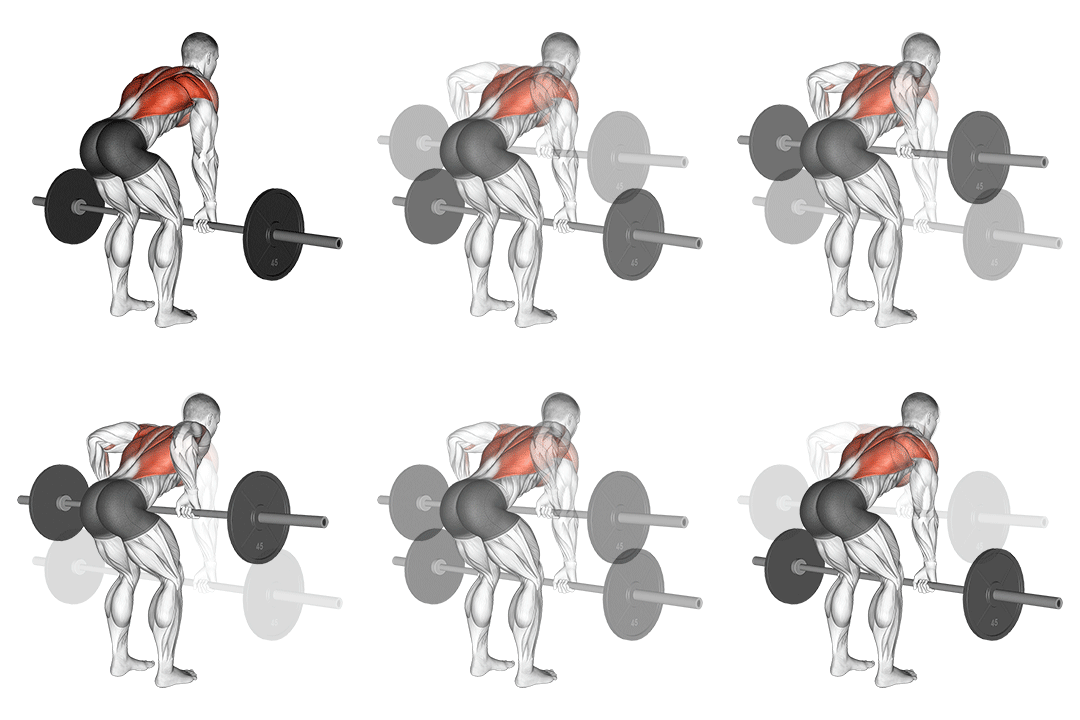
How to Perform Barbell Bent Over Row
- Stand with your feet shoulder-width apart and knees slightly bent.
- Bend forward at the hips while keeping your back straight and chest up.
- Grasp the barbell with an overhand grip, hands slightly wider than shoulder-width apart.
- Pull the barbell towards your lower chest by retracting your shoulder blades and squeezing your back muscles.
- Pause for a moment at the top, then slowly lower the barbell back to the starting position.
- Repeat for the desired number of repetitions.
Ranked Barbell Bent Over Row Alternatives
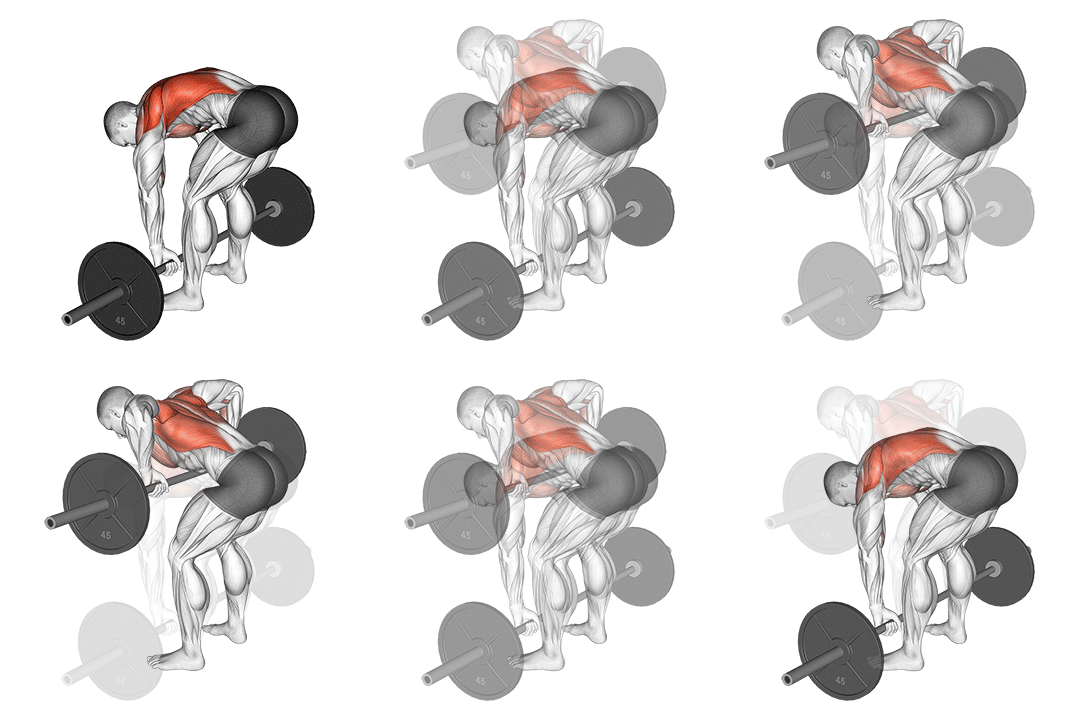
1. Barbell Pendlay Row
99.4% MatchHow to perform this exercise
- Stand with your feet shoulder-width apart and your knees slightly bent.
- Bend forward at the hips, keeping your back straight and your chest up.
- Grasp the barbell with an overhand grip, slightly wider than shoulder-width apart.
- Pull the barbell towards your upper abdomen, squeezing your shoulder blades together.
- Lower the barbell back down to the starting position.
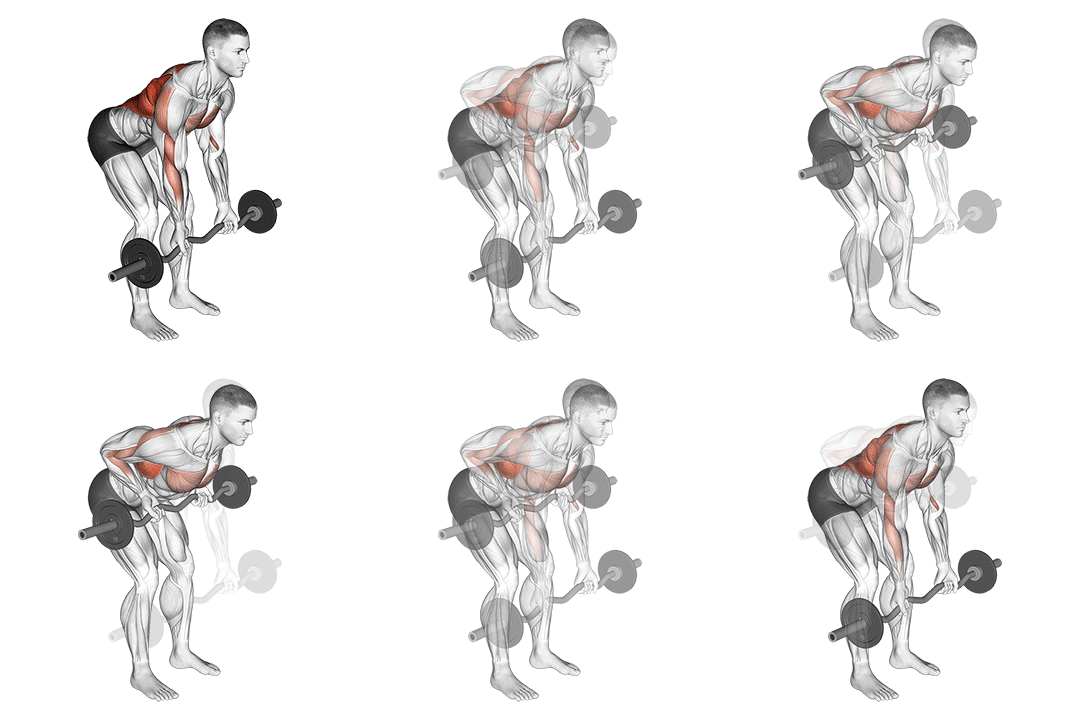
2. Ez Bar Reverse Grip Bent Over Row
96% MatchHow to perform this exercise
- Stand with your feet shoulder-width apart and knees slightly bent.
- Hold the ez barbell with an underhand grip, palms facing up, and hands shoulder-width apart.
- Bend forward at the hips, keeping your back straight and chest up, until your torso is almost parallel to the floor.
- Pull the ez barbell towards your lower chest, squeezing your shoulder blades together.
- Pause for a moment at the top, then slowly lower the ez barbell back to the starting position.
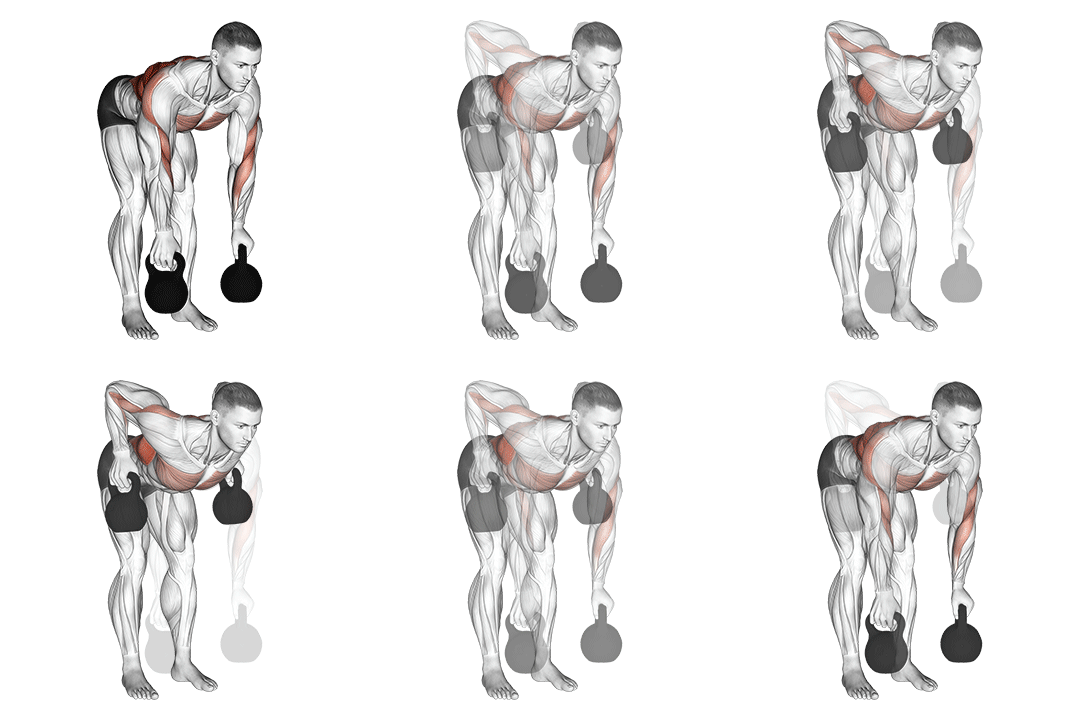
3. Kettlebell Two Arm Row
95.4% MatchHow to perform this exercise
- Stand with your feet shoulder-width apart, knees slightly bent, and hold a kettlebell in each hand with your palms facing your body.
- Bend forward at the hips, keeping your back straight and your core engaged.
- Pull the kettlebells up towards your chest, squeezing your shoulder blades together.
- Pause for a moment at the top, then slowly lower the kettlebells back down to the starting position.
- Repeat for the desired number of repetitions.
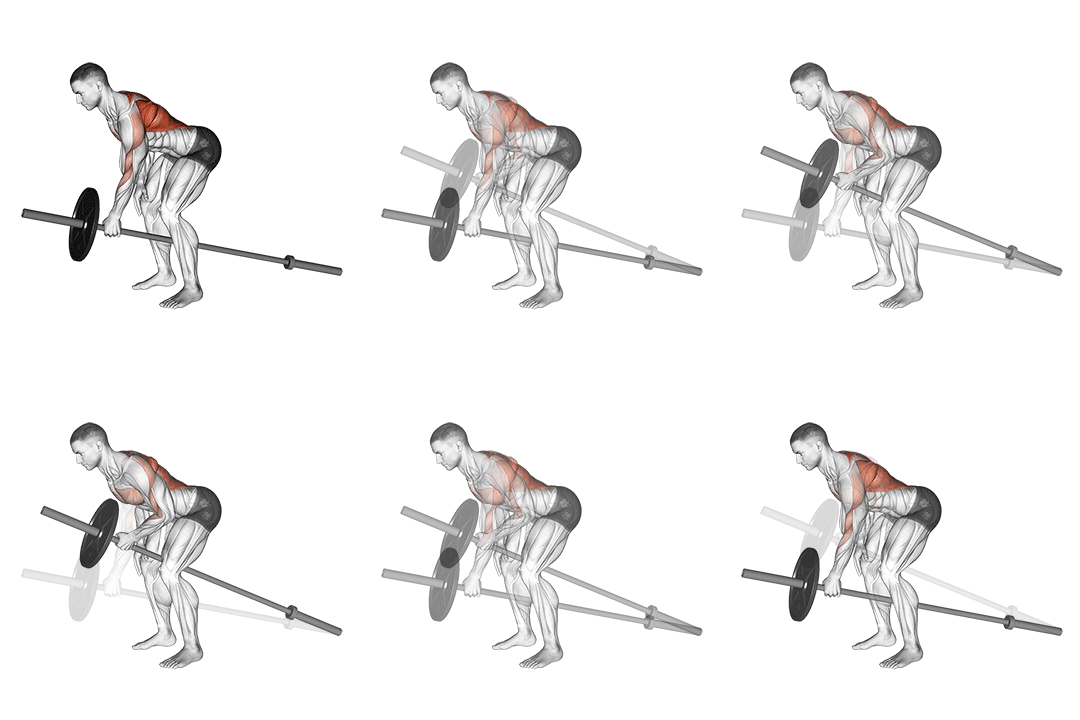
4. Lever One Arm Bent Over Row
92.2% MatchHow to perform this exercise
- Stand with your feet shoulder-width apart, knees slightly bent, and hold a barbell with an overhand grip.
- Bend forward at the hips, keeping your back straight and your head up.
- Let the barbell hang in front of you with your arms fully extended.
- Pull the barbell up towards your chest, keeping your elbows close to your body.
- Squeeze your shoulder blades together at the top of the movement.
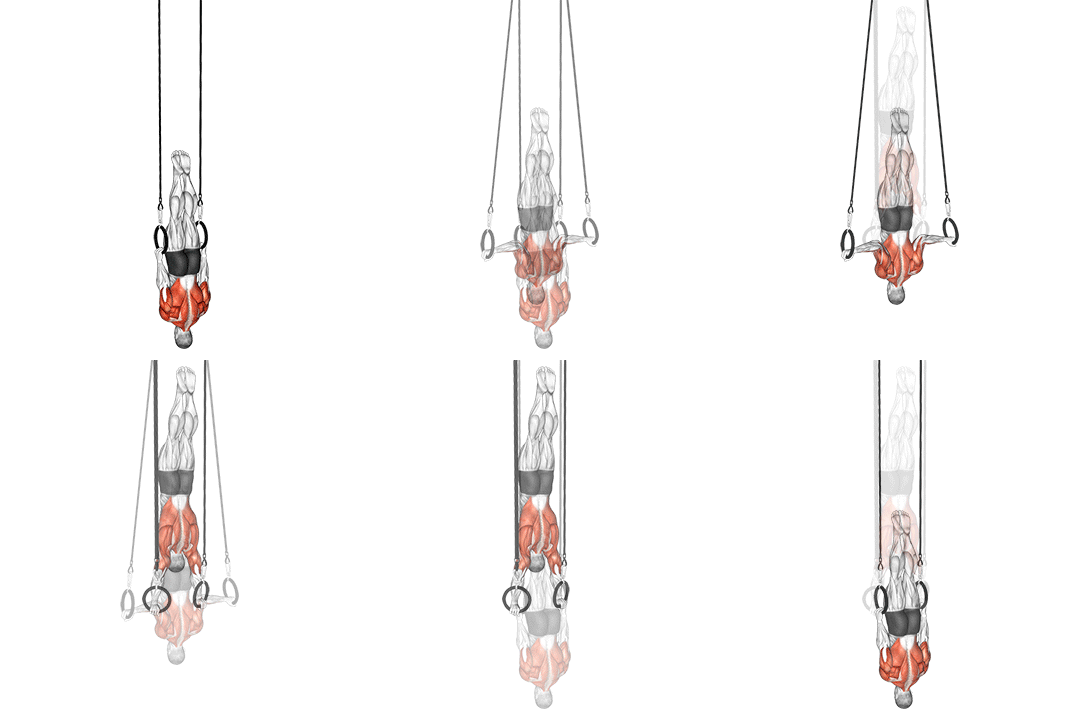
5. Elevator
89.4% MatchHow to perform this exercise
- Stand with your feet shoulder-width apart and your knees slightly bent.
- Place your hands on your hips or cross them in front of your chest.
- Keeping your back straight, slowly bend forward at the waist, lowering your upper body towards the ground.
- Pause for a moment at the bottom, then slowly raise your upper body back up to the starting position.
- Repeat for the desired number of repetitions.
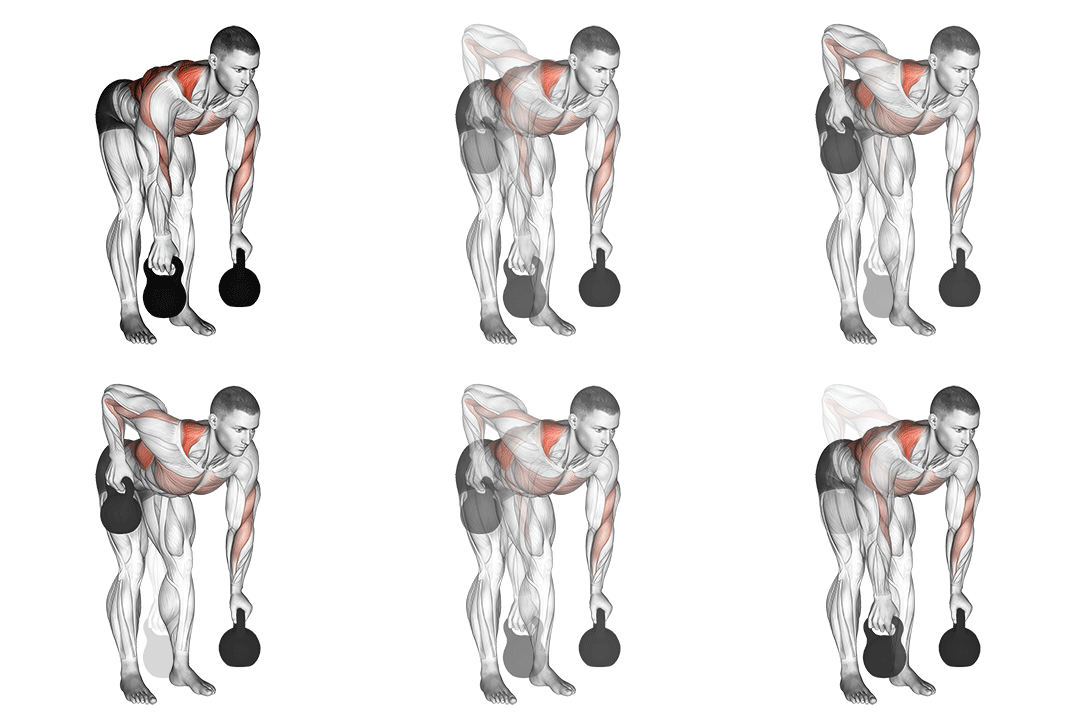
6. Kettlebell Alternating Row
88.2% MatchHow to perform this exercise
- Stand with your feet shoulder-width apart, knees slightly bent, and hold a kettlebell in each hand with your palms facing your body.
- Bend forward at the hips, keeping your back straight and your core engaged.
- Pull one kettlebell up towards your chest, keeping your elbow close to your body and squeezing your shoulder blades together.
- Lower the kettlebell back down to the starting position and repeat with the other arm.
- Continue alternating arms for the desired number of repetitions.
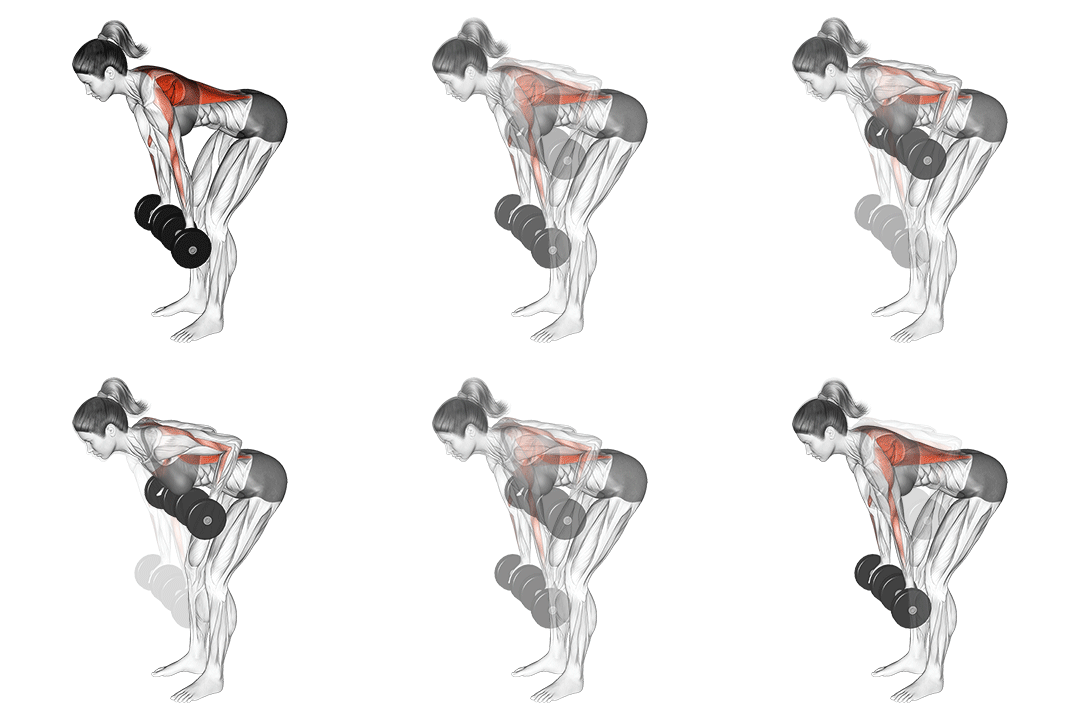
7. Dumbbell Reverse Grip Row (female)
86.4% MatchHow to perform this exercise
- Stand with your feet shoulder-width apart and knees slightly bent.
- Hold a dumbbell in each hand with an overhand grip, palms facing your body.
- Bend forward at the waist, keeping your back straight and your core engaged.
- Let your arms hang straight down, fully extended, with a slight bend in your elbows.
- Pull the dumbbells up towards your chest, squeezing your shoulder blades together.
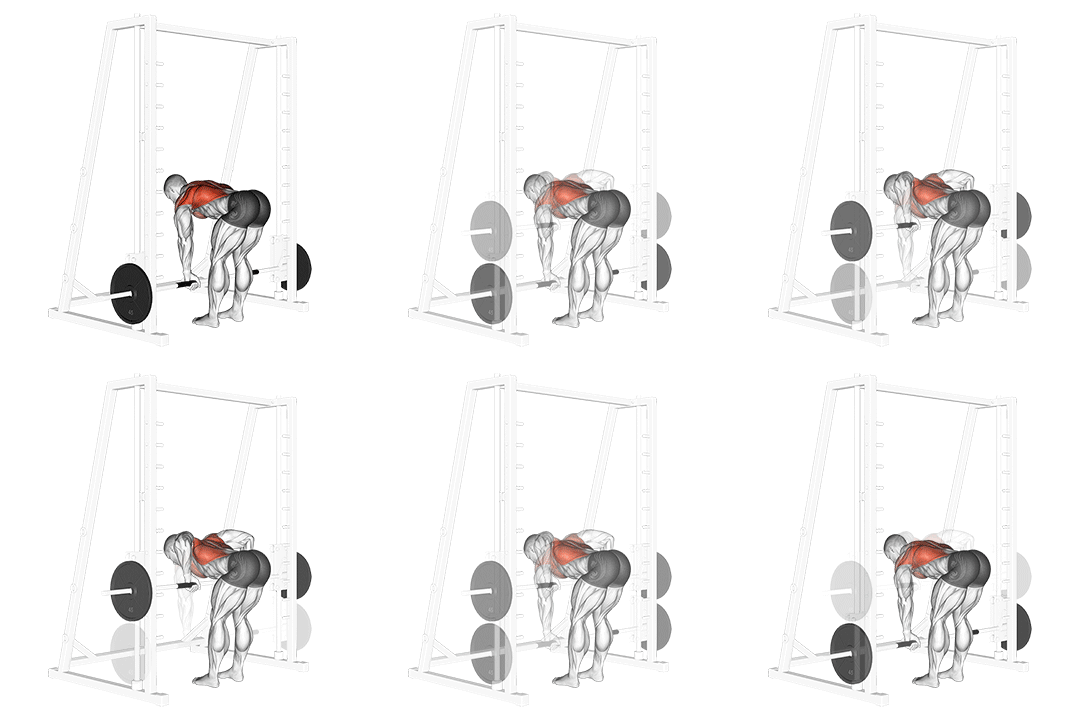
8. Smith Bent Over Row
85.8% MatchHow to perform this exercise
- Set up the smith machine with the bar at hip height.
- Stand facing the bar with your feet shoulder-width apart.
- Bend your knees slightly and hinge forward at the hips, keeping your back straight.
- Grasp the bar with an overhand grip, hands slightly wider than shoulder-width apart.
- Pull the bar towards your lower chest, squeezing your shoulder blades together.
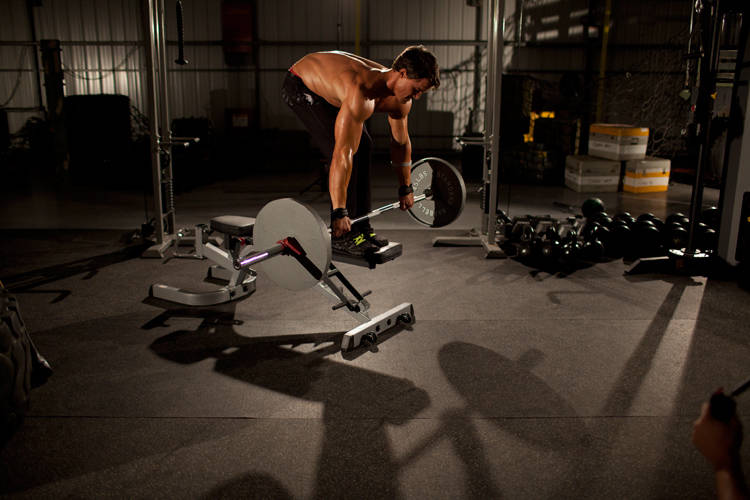
9. Straight Bar Bench Mid Rows
85% MatchHow to perform this exercise
- Place a loaded barbell on the end of a bench. Standing on the bench behind the bar, take a medium, pronated grip. Stand with your hips back and chest up, maintaining a neutral spine. This will be your starting position.
- Row the bar to your torso by retracting the shoulder blades and flexing the elbows. Use a controlled movement with no jerking.
- After a brief pause, slowly return the bar to the starting position, ensuring to go all the way down.
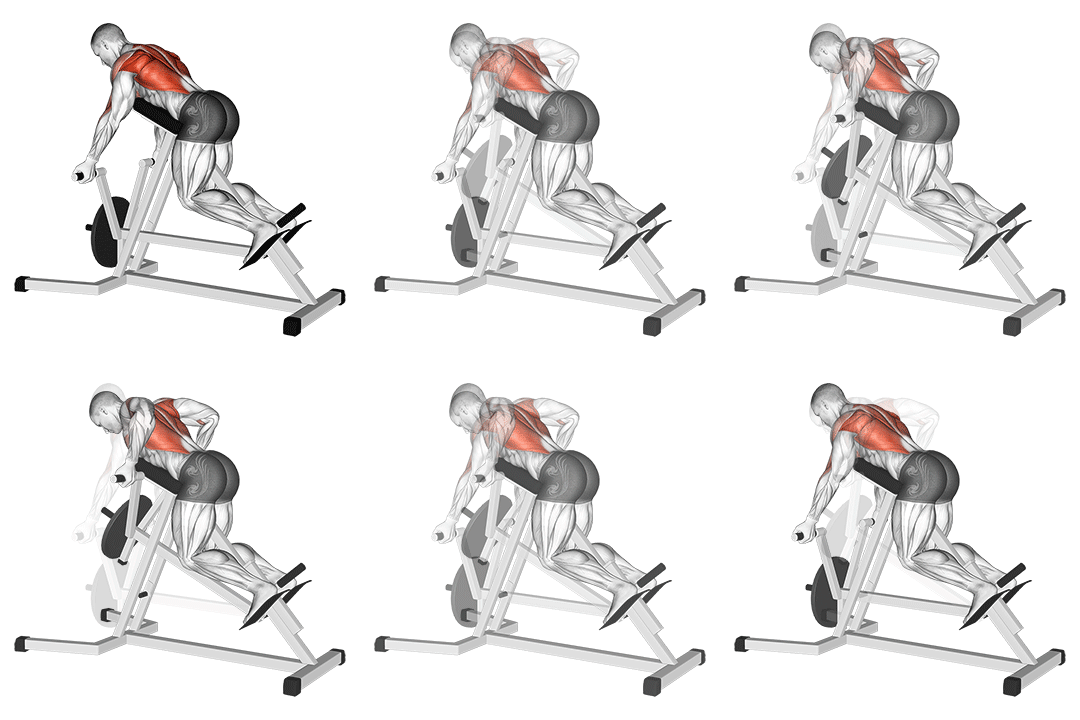
10. Lever Reverse T-bar Row
83.9% MatchHow to perform this exercise
- Adjust the seat height and footplate position on the leverage machine.
- Sit on the machine with your chest against the pad and your feet flat on the footplate.
- Grasp the handles with an overhand grip, slightly wider than shoulder-width apart.
- Keep your back straight and engage your core.
- Pull the handles towards your chest, squeezing your shoulder blades together.
Why You Might Need a Barbell Bent Over Row Alternative
You might substitute the Barbell Bent Over Row because of low-back pain, no access to a barbell, or a desire to change loading angles for better muscle emphasis. Bent-over rows force a hip hinge and place shear on the lumbar spine; if lumbar stabilizers limit load, a chest-supported row removes trunk torque and isolates the upper-back. Alternates let you modify torso angle, grip, and elbow path to bias lats versus mid-traps. Technique cue: maintain a neutral spine, brace your core, and initiate each rep with scapular retraction to maximize targeted upper-back activation and reduce spinal momentum.
How to Choose the Right Substitute
Match the substitute to your equipment, injury profile, and the muscle emphasis you want. If you have dumbbells, use single-arm rows to correct asymmetries, lead with the elbow and pull to the hip to load the lat. For low-back issues, choose chest-supported or machine rows to remove extension torque and isolate the rhomboids and traps. Want heavy, compact loading? Use T-bar or landmine variations with a braced core and short ROM. Prefer controlled tension and constant load? Use cables and focus on full scapular retraction. Evaluate torso angle, elbow path, and scapular mechanics when selecting your substitute.
Frequently Asked Questions
What muscles does Barbell Bent Over Row work?
The Barbell Bent Over Row primarily targets the lats, rhomboids, mid and lower traps, and posterior deltoids, with secondary biceps involvement. It requires a hip hinge and spinal stability, so the erector spinae and core act isometrically to resist trunk flexion; drive the elbows and retract the scapula to maximize upper-back activation.
What is the best bodyweight alternative to Barbell Bent Over Row?
The inverted row is the best bodyweight alternative because it preserves the horizontal-pull mechanics and scapular control. Set a bar at waist height, keep a straight plank line, retract the scapula, and pull your chest to the bar while leading with the elbows to emphasize lats and mid-traps.
Can I build muscle without doing Barbell Bent Over Row?
Yes. You can build upper-back mass using single-arm dumbbell rows, chest-supported rows, seated cable rows, and T-bar rows while applying progressive overload. Focus on scapular retraction, time under tension, and incremental loading to stimulate hypertrophy without relying on the barbell variation.
More Exercise Alternatives
Find Alternatives for Any Exercise
Use the exercise substitution finder to compare ranked alternatives for your available equipment and training preference.
Try the Exercise Substitution Finder →