

10 Best Barbell Pin Presses Alternatives for Limited Equipment
Barbell Pin Presses are done lying on your back with a barbell. Ranked closest by our scoring: the Body-up, the Triceps Dip (Bench Leg) and the Bench Dip (Knees Bent).
Updated Ranked by our 12-factor similarity model How it works
Original Exercise: Barbell Pin Presses
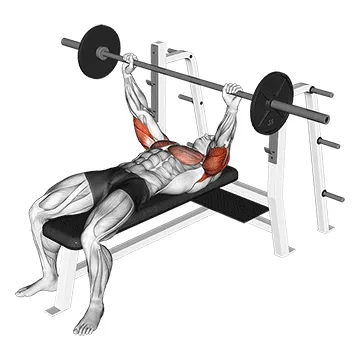
- Primary muscle
- Triceps
- Equipment
- Barbell
- Difficulty
- Advanced
- Type
- Compound
Secondary muscles: Shoulders
How to perform Barbell Pin Presses
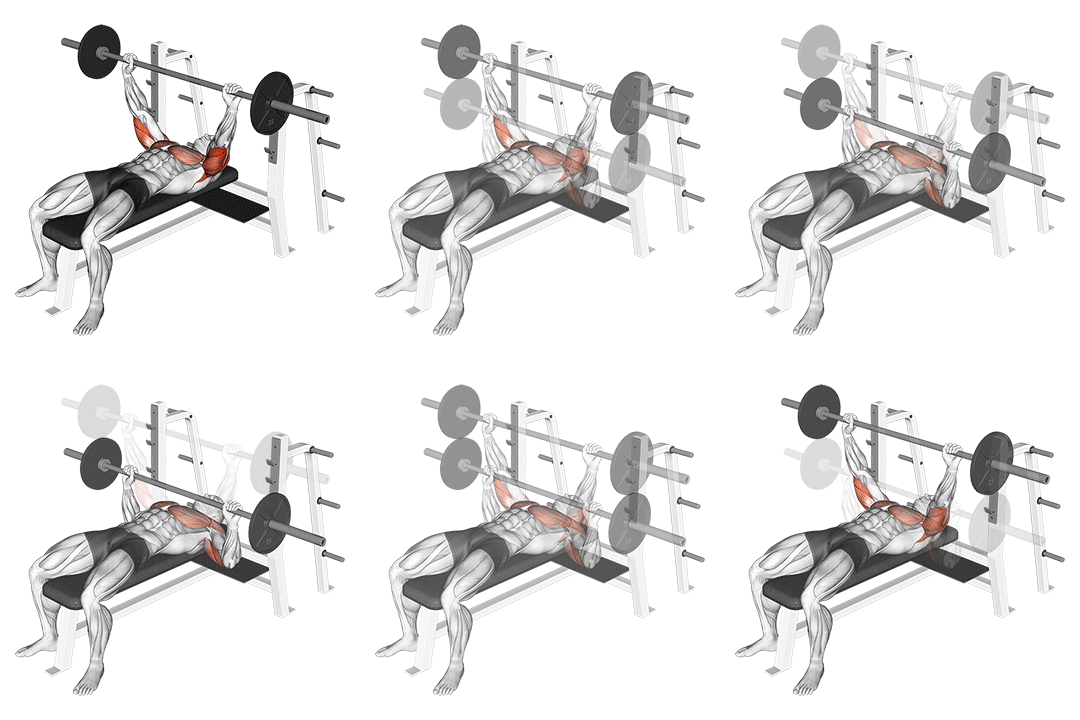
- Set up a barbell on a power rack at chest height.
- Stand facing the barbell and position yourself underneath it, with your feet shoulder-width apart.
- Grip the barbell with an overhand grip, slightly wider than shoulder-width apart.
- Lift the barbell off the rack and hold it directly above your chest, with your arms fully extended.
- Lower the barbell down towards your chest, keeping your elbows tucked in close to your body.
- Pause for a moment when the barbell touches your chest.
- Push the barbell back up to the starting position, fully extending your arms.
- Repeat for the desired number of repetitions.
Ranked Barbell Pin Presses Alternatives
10 substitutes, ranked by how closely each one matches Barbell Pin Presses on movement pattern, muscles worked, equipment and body position. The higher the score, the less you change. Open "How to perform this exercise" on a card for the steps; every card title links to that exercise's own alternatives page.
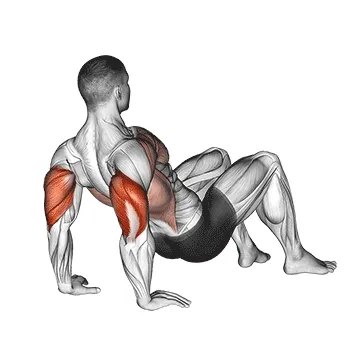
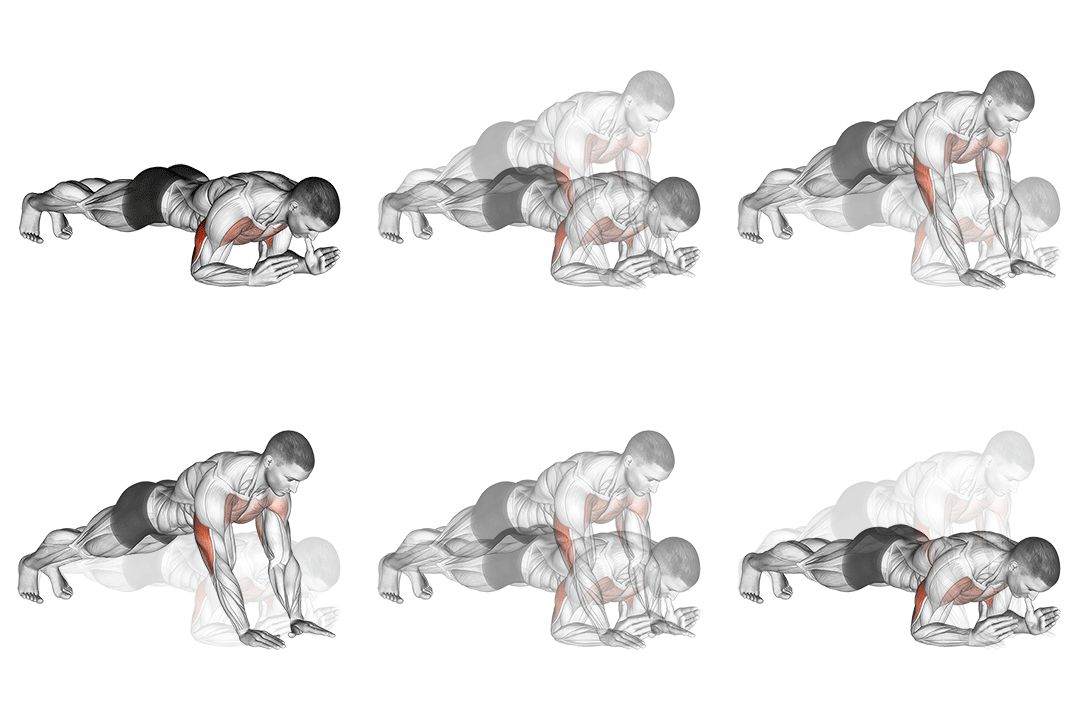
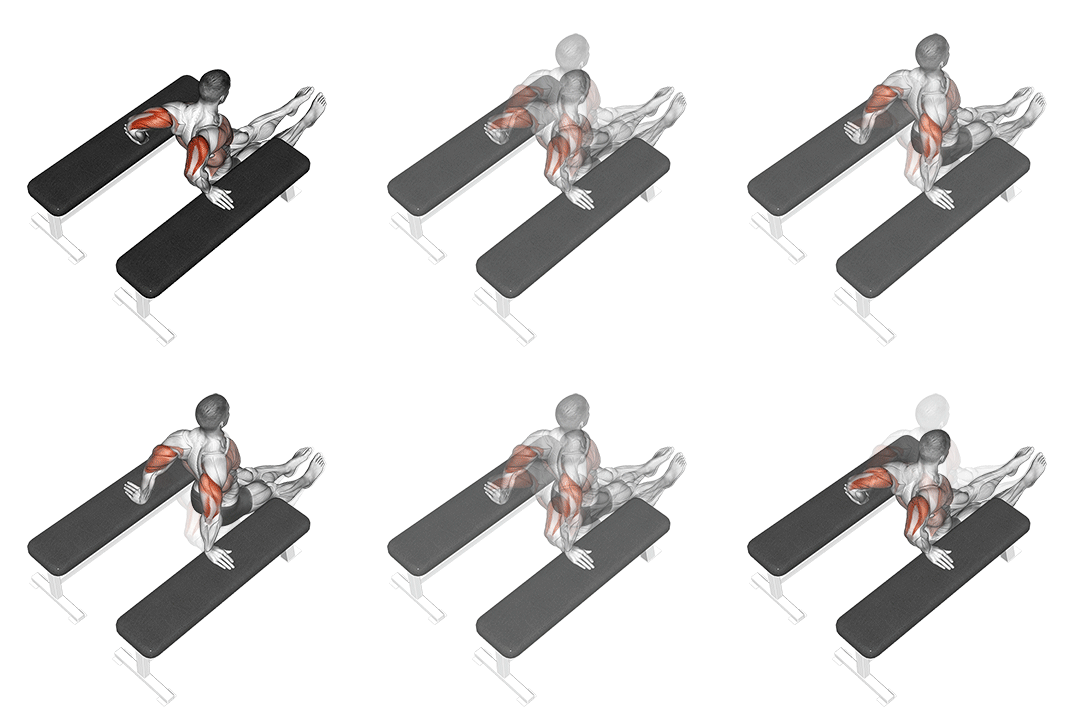
Best match 1. Body-up
76% match- Triceps
- Bodyweight
- Intermediate
- Compound
Use this when you have nothing to train with, because it works the triceps with bodyweight alone.
How to perform this exercise
- Start by placing your hands on a raised surface, such as a bench or parallel bars, with your palms facing down and fingers pointing forward.
- Extend your legs out in front of you, keeping your heels on the ground and your body straight.
- Lower your body by bending your elbows, keeping them close to your sides, until your upper arms are parallel to the ground.
- Pause for a moment, then push through your palms to straighten your arms and lift your body back up to the starting position.
- Repeat for the desired number of repetitions.
Sets and reps: 3 or 4 sets of 6 to 10 reps.
Why this matches
- Primary muscle: triceps, the same as Barbell Pin Presses
- Equipment: bodyweight only, not free weights
- Body position: lying face down, not lying on your back
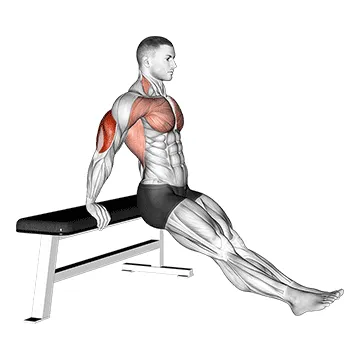
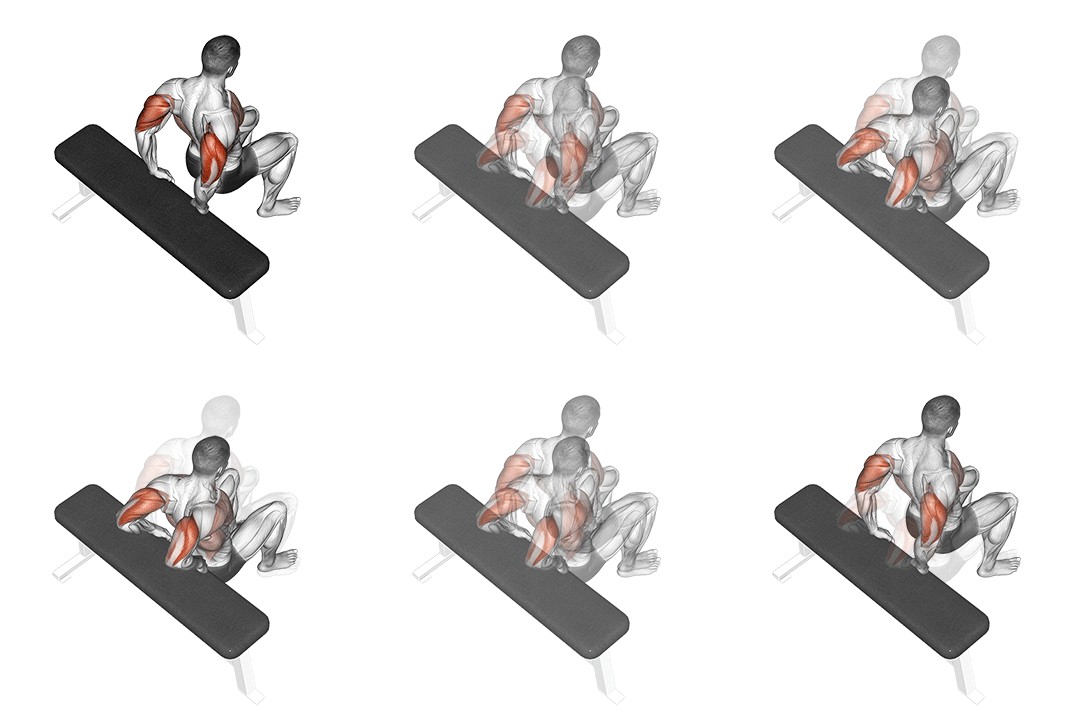
2. Triceps Dip (Bench Leg)
76% match- Triceps
- Bodyweight
- Intermediate
- Compound
How to perform this exercise
- Sit on the edge of a bench with your hands gripping the edge, fingers pointing forward.
- Walk your feet forward, sliding your butt off the bench, and straighten your arms.
- Bend your elbows and lower your body towards the ground, keeping your back close to the bench.
- Push through your palms to straighten your arms and return to the starting position.
- Repeat for the desired number of repetitions.
Sets and reps: 3 or 4 sets of 6 to 10 reps.
Why this matches
- Primary muscle: triceps, the same as Barbell Pin Presses
- Equipment: bodyweight only, not free weights
- Body position: seated, not lying on your back
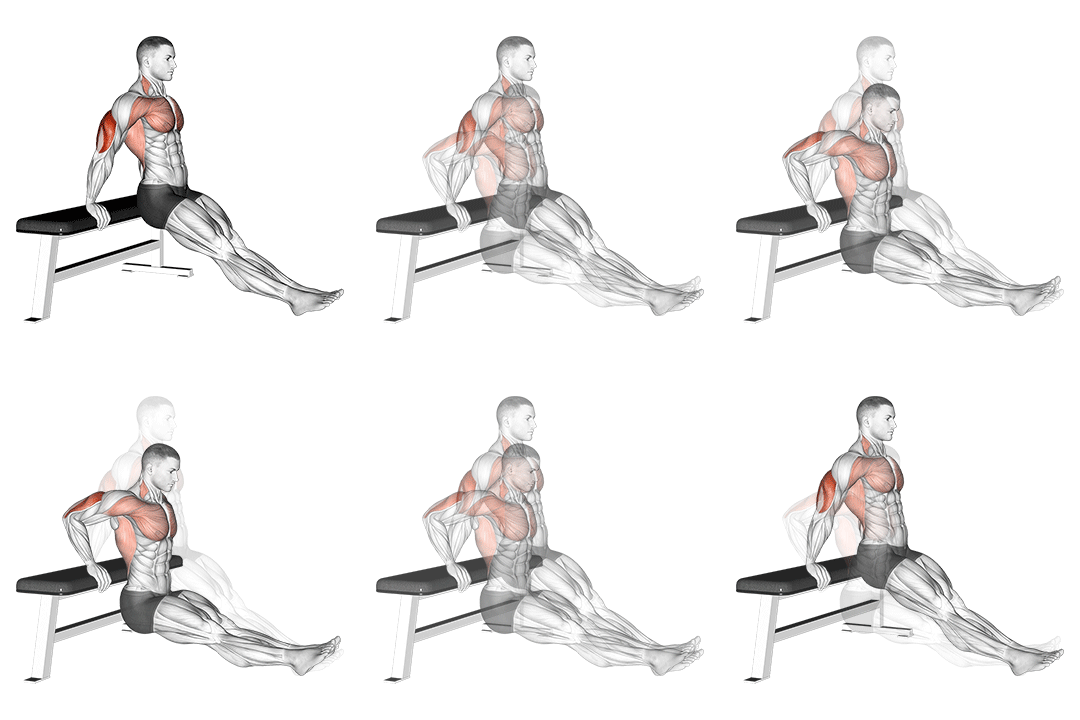
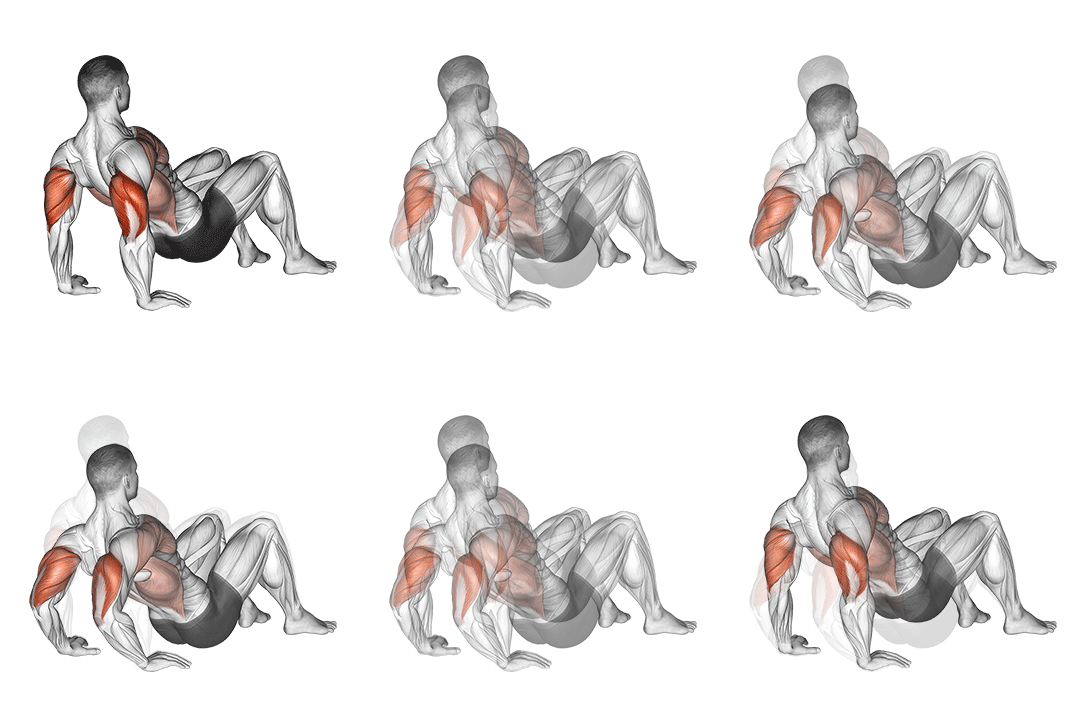
3. Bench Dip (Knees Bent)
75% match- Triceps
- Bodyweight
- Beginner
- Compound
How to perform this exercise
- Sit on the edge of a bench or chair with your hands gripping the edge next to your hips.
- Slide your butt off the bench and straighten your legs in front of you, keeping your heels on the ground.
- Bend your elbows and lower your body towards the ground, keeping your back close to the bench.
- Pause for a moment at the bottom, then push yourself back up to the starting position.
- Repeat for the desired number of repetitions.
Sets and reps: 3 sets of 8 to 12 reps, and add reps before you add load.
Why this matches
- Primary muscle: triceps, the same as Barbell Pin Presses
- Equipment: bodyweight only, not free weights
- Body position: seated, not lying on your back
- Balance: harder to stay steady on than Barbell Pin Presses
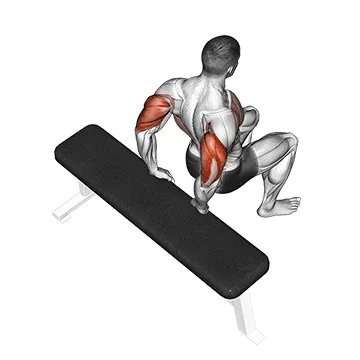
4. Bench Dip On Floor
75% match- Triceps
- Bodyweight
- Intermediate
- Compound
How to perform this exercise
- Sit on the edge of a bench or chair with your hands gripping the edge, fingers pointing forward.
- Slide your butt off the bench, supporting your weight with your hands.
- Lower your body by bending your elbows until your upper arms are parallel to the floor.
- Push yourself back up to the starting position by straightening your arms.
- Repeat for the desired number of repetitions.
Sets and reps: 3 or 4 sets of 6 to 10 reps.
Why this matches
- Primary muscle: triceps, the same as Barbell Pin Presses
- Equipment: bodyweight only, not free weights
- Body position: seated, not lying on your back
- Balance: harder to stay steady on than Barbell Pin Presses
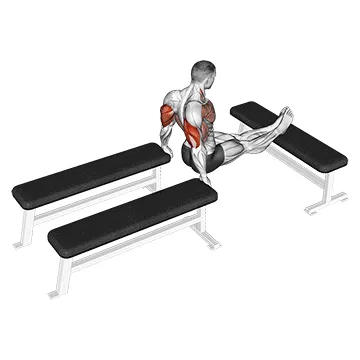
5. Three Bench Dip
72% match- Triceps
- Bodyweight
- Intermediate
- Compound
How to perform this exercise
- Sit on a bench with your hands gripping the edge, fingers pointing forward.
- Slide your butt off the bench, supporting your weight with your hands.
- Bend your elbows and lower your body until your upper arms are parallel to the ground.
- Push yourself back up to the starting position.
- Repeat for the desired number of repetitions.
Sets and reps: 3 or 4 sets of 6 to 10 reps.
Why this matches
- Primary muscle: triceps, the same as Barbell Pin Presses
- Equipment: bodyweight only, not free weights
- Body position: seated, not lying on your back
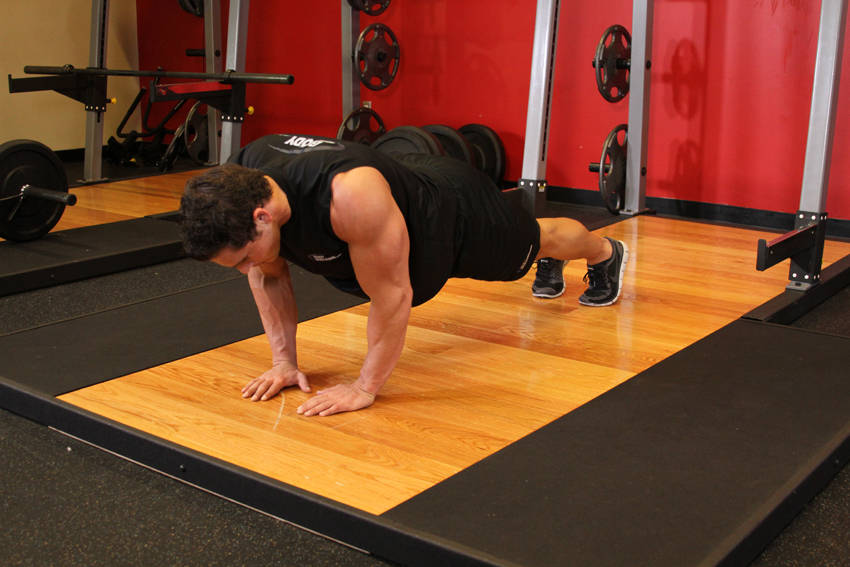
6. Push-ups - Close Triceps Position
72% match- Triceps
- Bodyweight
- Intermediate
- Compound
How to perform this exercise
- Lie on the floor face down and place your hands closer than shoulder width for a close hand position. Make sure that you are holding your torso up at arms' length.
- Lower yourself until your chest almost touches the floor as you inhale.
- Using your triceps and some of your pectoral muscles, press your upper body back up to the starting position and squeeze your chest. Breathe out as you perform this step.
- After a second pause at the contracted position, repeat the movement for the prescribed amount of repetitions.
Sets and reps: 3 or 4 sets of 6 to 10 reps.
Why this matches
- Primary muscle: triceps, the same as Barbell Pin Presses
- Equipment: bodyweight only, not free weights
- Body position: lying face down, not lying on your back
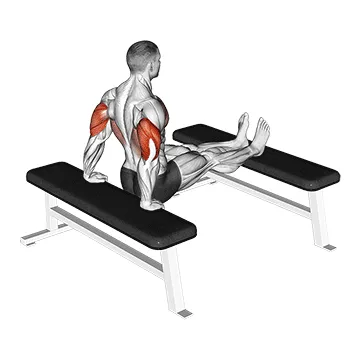
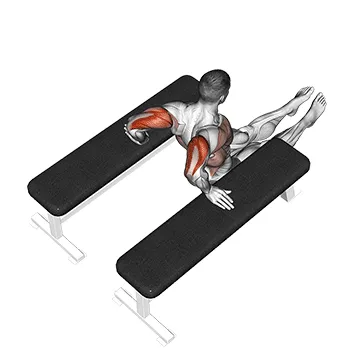
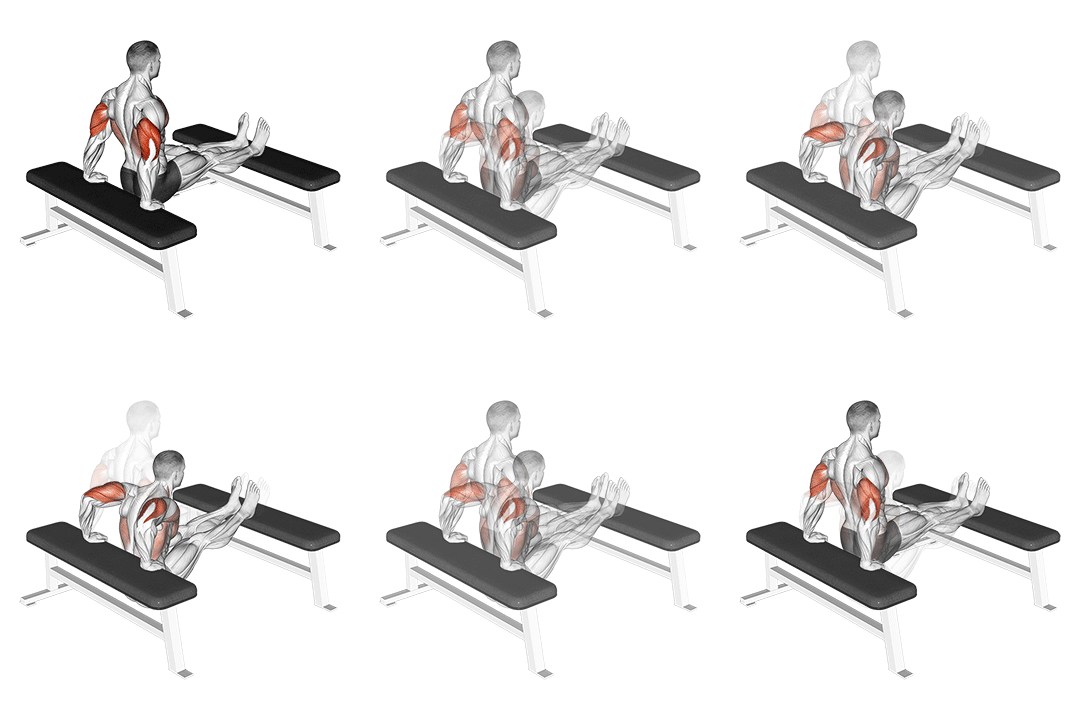
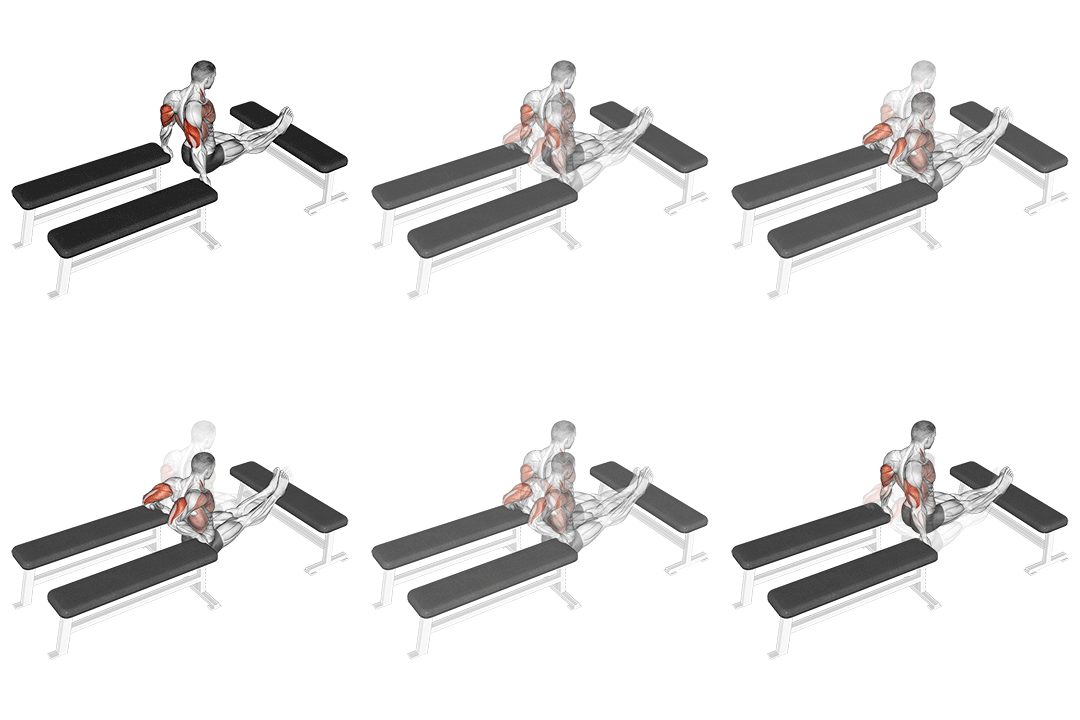
7. Triceps Dip (Between Benches)
72% match- Triceps
- Bodyweight
- Intermediate
- Compound
How to perform this exercise
- Sit on a bench with your hands gripping the edge of the bench, fingers pointing forward.
- Slide your butt off the bench, supporting your weight with your hands.
- Bend your elbows and lower your body towards the ground, keeping your back close to the bench.
- Pause for a moment at the bottom, then push yourself back up to the starting position.
- Repeat for the desired number of repetitions.
Sets and reps: 3 or 4 sets of 6 to 10 reps.
Why this matches
- Primary muscle: triceps, the same as Barbell Pin Presses
- Equipment: bodyweight only, not free weights
- Body position: standing, not lying on your back
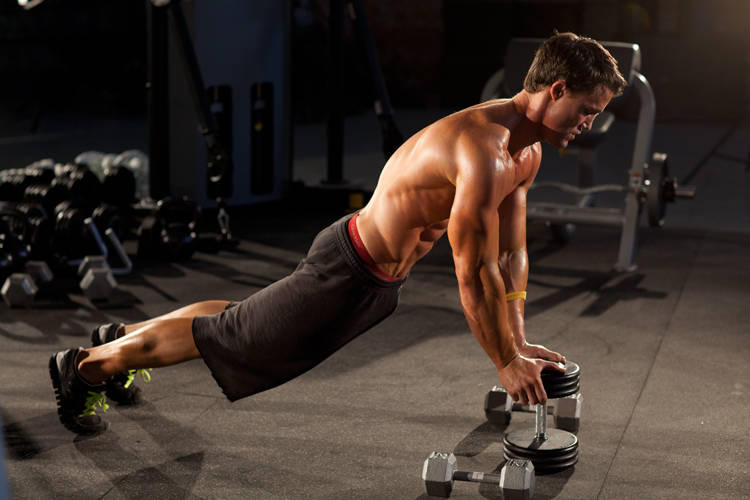
- Triceps
- Bodyweight
- Intermediate
- Compound
How to perform this exercise
- Lie on the floor and place your hands on an upright dumbbell. Supporting your weight on your toes and hands, keep your torso rigid and your elbows in with your arms straight. This will be your starting position.
- Lower your body, allowing the elbows to flex while you inhale. Keep your body straight, not allowing your hips to rise or sag.
- Press yourself back up to the starting position by extending the elbows. Breathe out as you perform this step.
- After a pause at the contracted position, repeat the movement for the prescribed amount of repetitions.
Sets and reps: 3 or 4 sets of 6 to 10 reps.
Why this matches
- Primary muscle: triceps, the same as Barbell Pin Presses
- Equipment: bodyweight only, not free weights
- Body position: lying face down, not lying on your back
- Balance: harder to stay steady on than Barbell Pin Presses
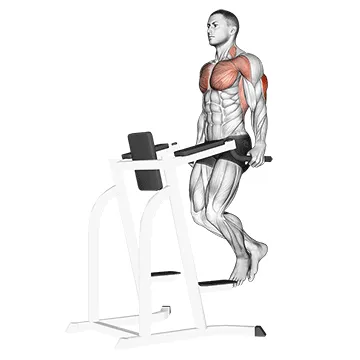
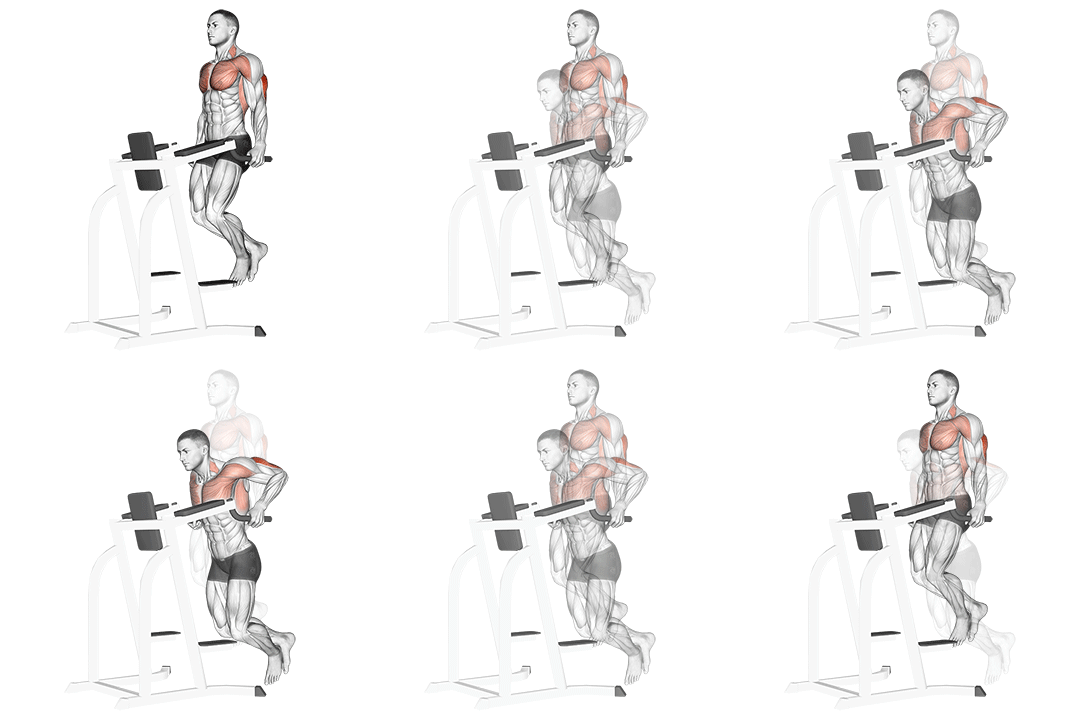
9. Triceps Dip
71% match- Triceps
- Bodyweight
- Intermediate
- Compound
How to perform this exercise
- Sit on the edge of a bench or chair with your hands gripping the edge, fingers pointing forward.
- Slide your butt off the bench, supporting your weight with your hands.
- Bend your elbows and lower your body towards the ground, keeping your back close to the bench.
- Pause for a moment at the bottom, then push yourself back up to the starting position.
- Repeat for the desired number of repetitions.
Sets and reps: 3 or 4 sets of 6 to 10 reps.
Why this matches
- Primary muscle: triceps, the same as Barbell Pin Presses
- Equipment: bodyweight only, not free weights
- Body position: hanging, not lying on your back
- Balance: harder to stay steady on than Barbell Pin Presses
10. Triceps Dips Floor
69% match- Triceps
- Bodyweight
- Beginner
- Isolation
How to perform this exercise
- Sit on the edge of a chair or bench with your hands next to your hips, fingers pointing forward.
- Slide your butt off the front of the chair with your legs extended in front of you.
- Straighten your arms, keeping a little bend in your elbows to keep tension on your triceps and off your elbow joints.
- Slowly bend your elbows to lower your body toward the floor until your elbows are at about a 90-degree angle.
- Once you reach the bottom of the movement, press down into the chair to straighten your elbows, returning to the starting position.
- Repeat for the desired number of repetitions.
Sets and reps: 3 sets of 8 to 12 reps, and add reps before you add load.
Why this matches
- Primary muscle: triceps, the same as Barbell Pin Presses
- Equipment: bodyweight only, not free weights
- Body position: seated, not lying on your back
- Balance: easier to stay steady on than Barbell Pin Presses
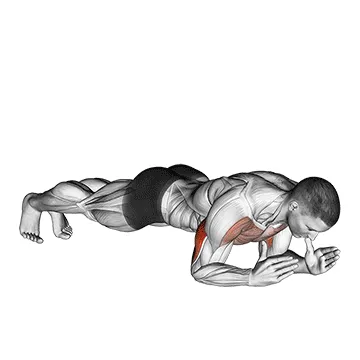
Barbell Pin Presses FAQ
What muscles does Barbell Pin Presses work?
Barbell pin presses primarily target the triceps brachii by emphasizing elbow extension in the top half of the press. They also recruit the anterior deltoid and pectoralis major to a lesser degree; cue: lock the elbows at the top to feel triceps contraction.
What is the best bodyweight alternative to Barbell Pin Presses?
Weighted dips are the best bodyweight substitute for triceps-biased lockout work; add weight via a belt and keep your torso more upright to emphasize the triceps. Cue: descend until elbows hit about 90 degrees, then drive up through the palms and fully extend the elbows to maximize triceps activation.
Find Alternatives for Any Exercise
Search the exercise database and filter the ranked substitutes by the equipment you own.
Similarity scores compare exercise metadata such as movement pattern, muscles, equipment and body position. They are not a safety rating or a check that you own the equipment. Learn about our methodology