

10 Best Barbell Upright Row Alternatives for Shoulder Strength
The Barbell Upright Row is done standing with a barbell. Ranked closest by our scoring: the Barbell Wide-grip Upright Row, the Cable Upright Row and the Barbell Standing Bradford Press. Five harder versions, among them the Snatch From Blocks and the Hang Snatch - Below Knees, are listed below as progressions rather than swaps.
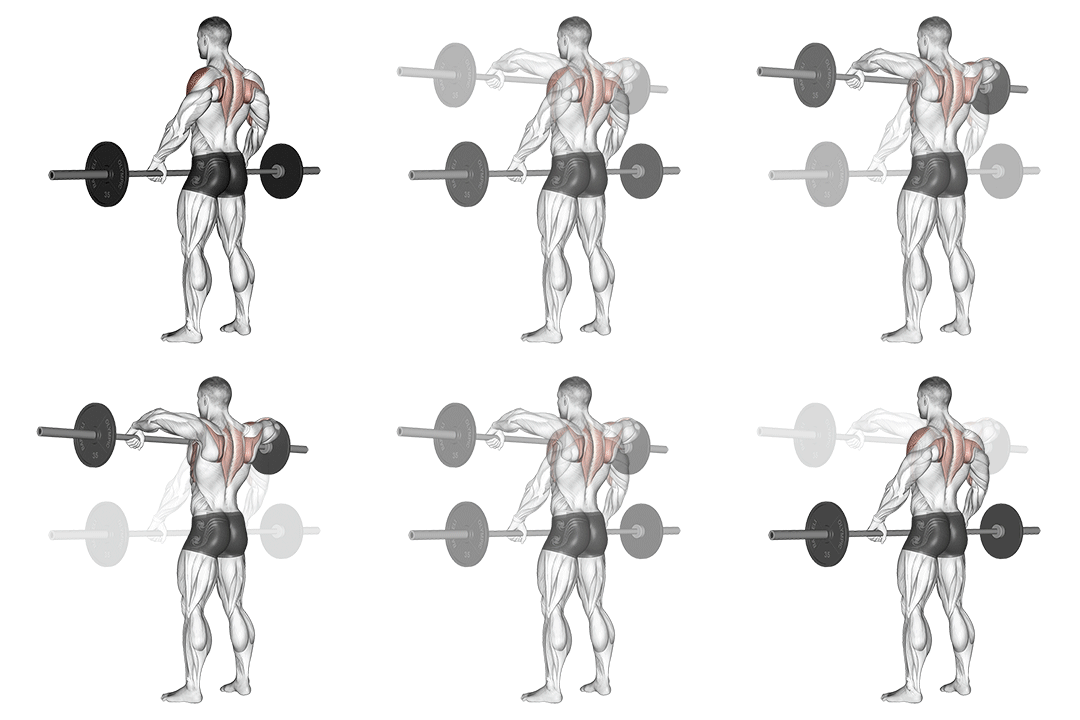
The Barbell Upright Row lifts a bar straight up to your chin, elbows leading, and two of the best swaps stay close to that same movement. The closest one is the Barbell Wide-grip Upright Row, which lifts the same bar to your chin and only sets your hands wider apart. Without a barbell free, the Cable Upright Row pulls a cable handle up to the same spot, elbows leading, and adds a squeeze of the shoulder blades at the top.
Updated Ranked by our 12-factor similarity model How it works
Original Exercise: Barbell Upright Row
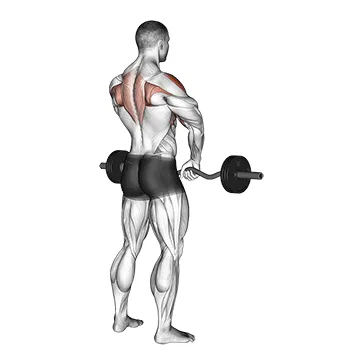
- Primary muscle
- Delts
- Equipment
- Barbell
- Difficulty
- Intermediate
- Type
- Compound
Secondary muscles: Traps, Biceps
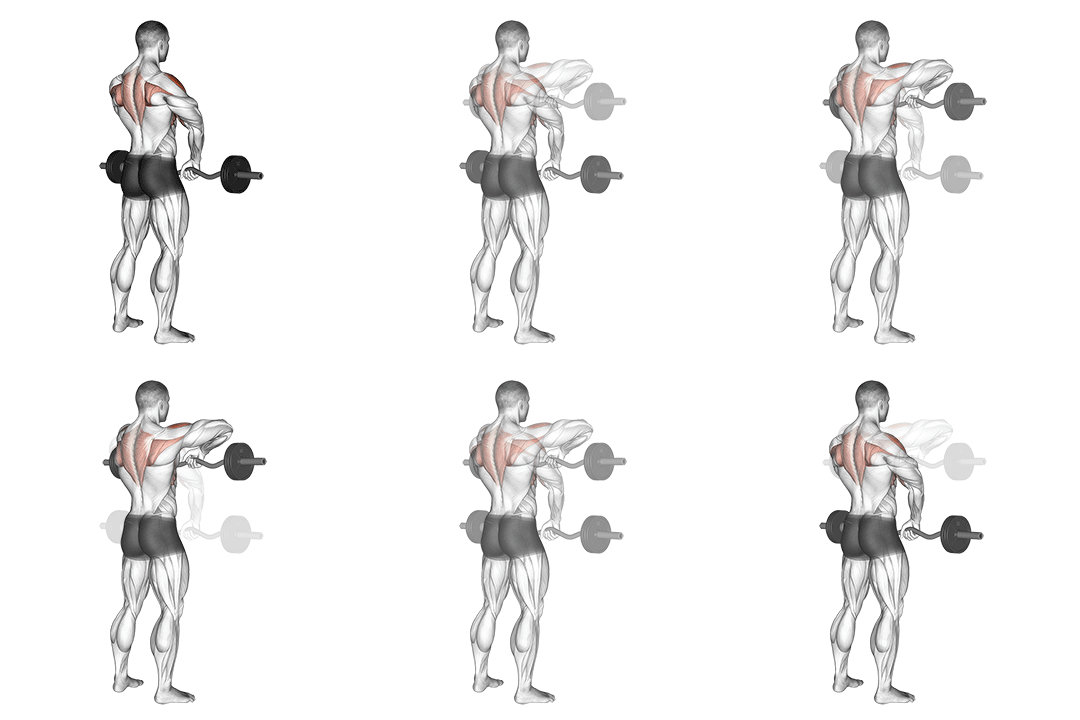
How to perform Barbell Upright Row
- Stand with your feet shoulder-width apart and hold a barbell with an overhand grip, hands slightly wider than shoulder-width apart.
- Let the barbell hang in front of your thighs, arms fully extended.
- Keeping your back straight and core engaged, exhale and lift the barbell straight up towards your chin, leading with your elbows.
- Pause for a moment at the top, then inhale and slowly lower the barbell back down to the starting position.
- Repeat for the desired number of repetitions.
Ranked Barbell Upright Row Alternatives
10 substitutes, ranked by how closely each one matches the Barbell Upright Row on movement pattern, muscles worked, equipment and body position. The higher the score, the less you change. Open "How to perform this exercise" on a card for the steps; every card title links to that exercise's own alternatives page. Harder versions are tagged as progressions and kept out of the top spot even when they score higher.
Best match 1. Barbell Wide-grip Upright Row
98% match- Delts
- Barbell
- Intermediate
- Compound
The same equipment, taken with a wide grip.
How to perform this exercise
- Stand with your feet shoulder-width apart and hold a barbell with an overhand grip, hands wider than shoulder-width apart.
- Let the barbell hang in front of your thighs, arms fully extended.
- Keeping your back straight, exhale and lift the barbell straight up towards your chin, leading with your elbows.
- Pause for a moment at the top, then inhale and slowly lower the barbell back down to the starting position.
- Repeat for the desired number of repetitions.
Sets and reps: 3 or 4 sets of 6 to 10 reps.
Why this matches
- Primary muscle: delts, the same as the Barbell Upright Row
- Equipment: free weights, the same as the Barbell Upright Row
- Body position: standing, the same as the Barbell Upright Row
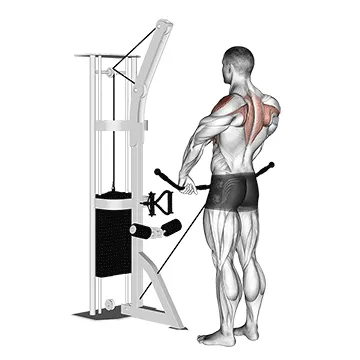
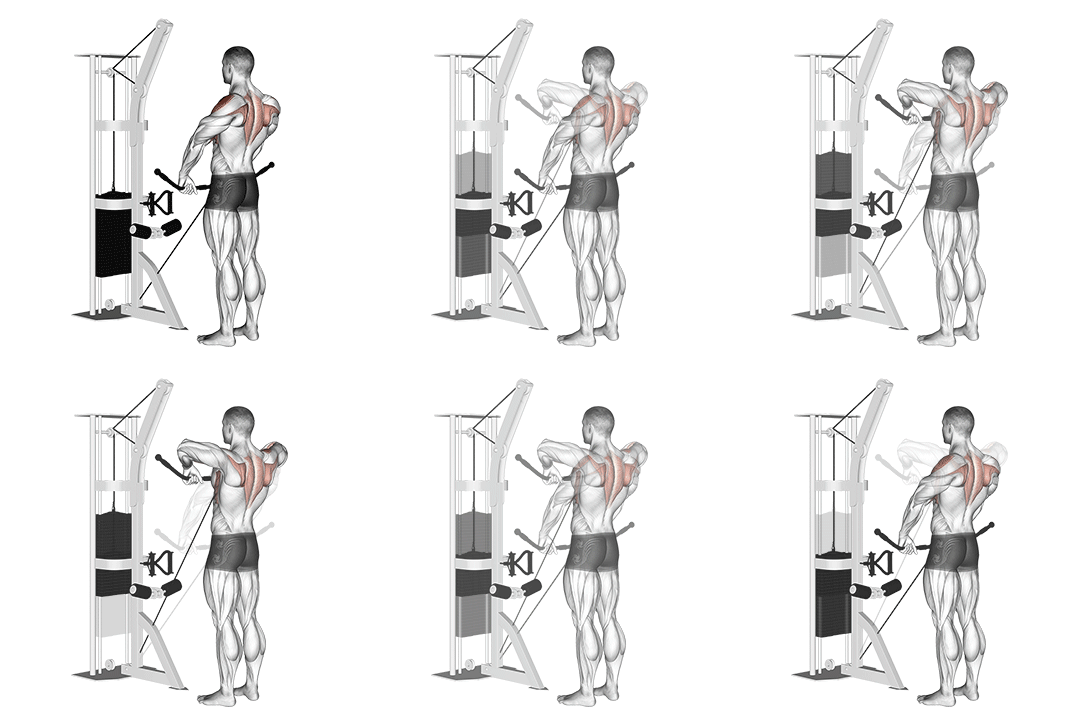
2. Cable Upright Row
75% match- Delts
- Cable
- Intermediate
- Compound
A good swap when you have a cable machine to work with, and it still works the delts.
How to perform this exercise
- Stand with your feet shoulder-width apart, knees slightly bent, and hold the cable attachment with an overhand grip.
- Keep your back straight and your core engaged throughout the exercise.
- Pull the cable attachment straight up towards your chin, leading with your elbows.
- Pause for a moment at the top, squeezing your shoulder blades together.
- Slowly lower the cable attachment back down to the starting position.
- Repeat for the desired number of repetitions.
Sets and reps: 3 to 5 sets of 5 to 8 reps.
Why this matches
- Primary muscle: delts, the same as the Barbell Upright Row
- Equipment: a cable, not free weights
- Body position: standing, the same as the Barbell Upright Row
Progression
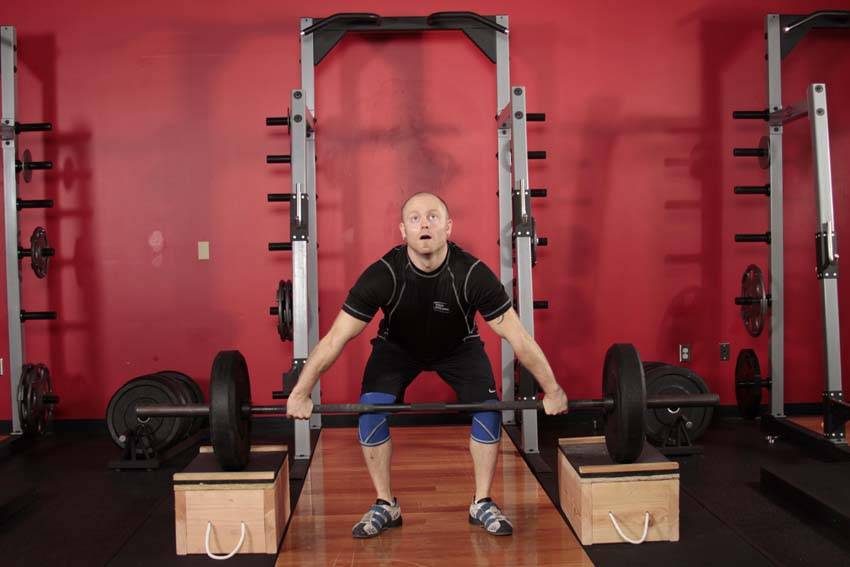
3. Snatch From Blocks
71% match- Quads
- Barbell
- Advanced
- Compound
A looser match: it uses the same equipment, but it works the quads rather than the delts.
How to perform this exercise
- Begin with a loaded barbell on boxes or stands of the desired height. A wide grip should be taken on the bar. The feet should be directly below the hips, with the feet turned out as needed. Lower the hips, with the chest up and the head looking forward. The shoulders should be just in front of the bar, with the elbows pointed out. This will be the starting position.
- Begin the first pull by driving through the front of the heels, raising the bar from the boxes.
- Transition into the second pull by extending through the hips knees and ankles, driving the bar up as quickly as possible. The bar should be close to the body. At peak extension, shrug the shoulders and allow the elbows to flex to the side.
- As you move your feet into the receiving position, forcefully pull yourself below the bar as you elevate the bar overhead. The feet should move to just outside the hips, turned out as necessary. Receive the bar with your body as low as possible and the arms fully extended overhead.
- Keeping the bar aligned over the front of the heels, your head and chest up, drive through heels of the feet to move to a standing position. Carefully return the weight to the boxes.
Sets and reps: 3 to 5 sets of 5 to 8 reps.
Why this matches
- Primary muscle: quads, not delts
- Equipment: free weights, the same as the Barbell Upright Row
- Body position: standing, the same as the Barbell Upright Row
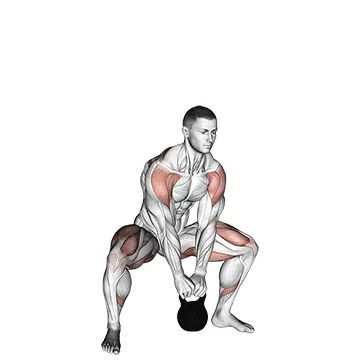
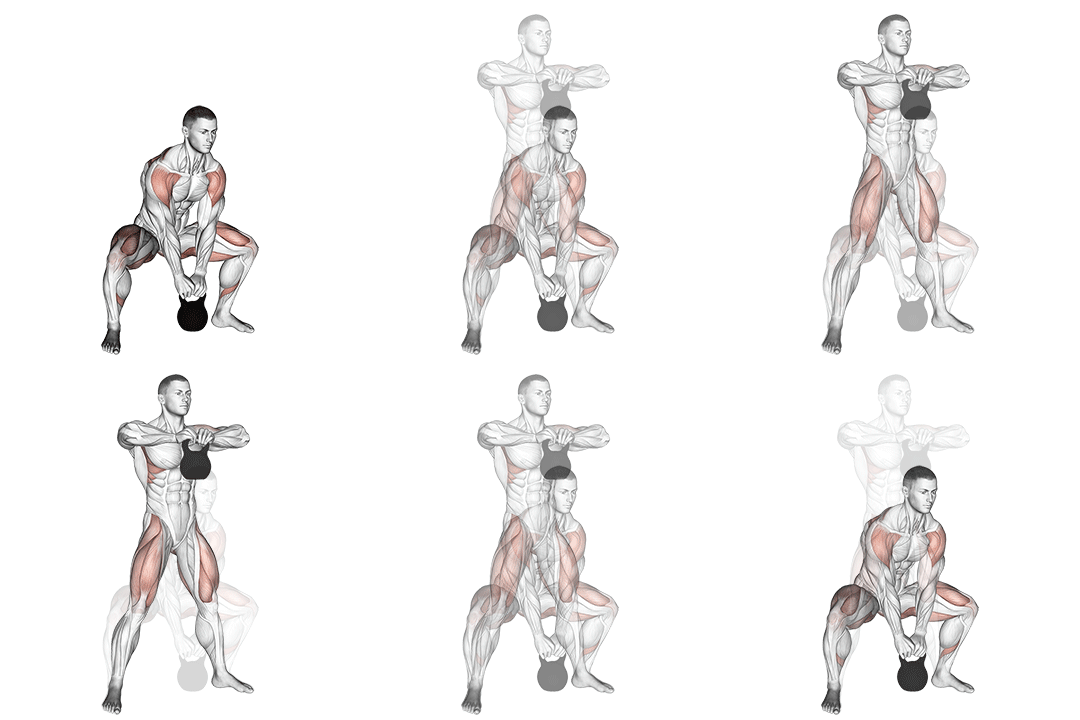
4. Kettlebell Sumo High Pull
69% match- Traps
- Kettlebell
- Advanced
- Compound
A looser match: it works the traps rather than the delts.
How to perform this exercise
- Stand with your feet wider than shoulder-width apart, toes pointing outwards.
- Hold a kettlebell with both hands in front of your body, arms extended downwards.
- Bend your knees and lower your hips into a squat position, keeping your back straight.
- Drive through your heels and explosively extend your hips and knees, pulling the kettlebell up towards your chin.
- As you pull the kettlebell up, keep your elbows high and wide, and squeeze your shoulder blades together.
- Lower the kettlebell back down to the starting position and repeat for the desired number of repetitions.
Sets and reps: 3 to 5 sets of 5 to 8 reps.
Why this matches
- Primary muscle: traps, not delts
- Equipment: free weights, the same as the Barbell Upright Row
- Body position: standing, the same as the Barbell Upright Row
- Balance: harder to stay steady on than the Barbell Upright Row
Progression
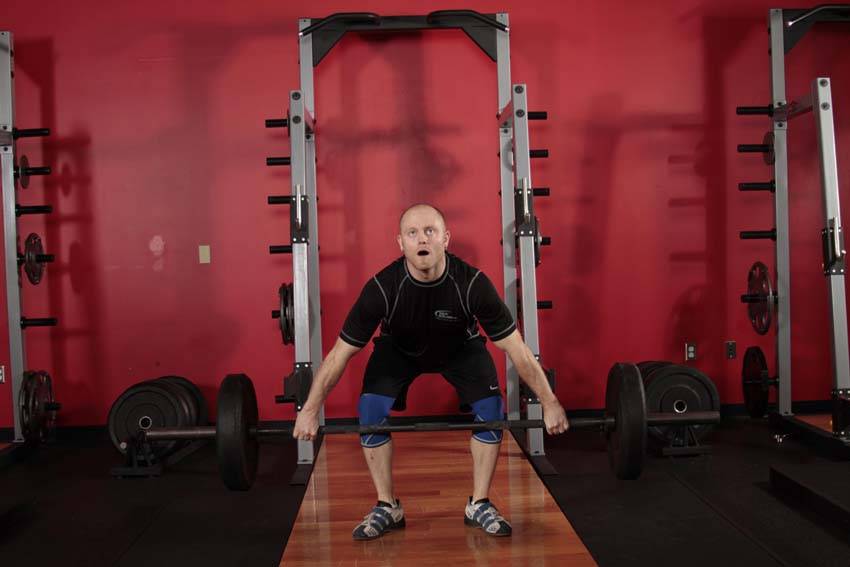
5. Hang Snatch - Below Knees
68% match- Hamstrings
- Barbell
- Advanced
- Compound
A looser match: it uses the same equipment, but it works the hamstrings rather than the delts.
How to perform this exercise
- Begin with a wide grip on the bar, with an overhand or hook grip. The feet should be directly below the hips with the feet turned out. Your knees should be slightly bent, and the torso inclined forward. The spine should be fully extended and the head facing forward. The bar should be just below the knees. This will be your starting position.
- Aggressively extend through the legs and hips. At peak extension, shrug the shoulders and allow the elbows to flex to the side.
- As you move your feet into the receiving position, forcefully pull yourself below the bar as you elevate the bar overhead. Receive the bar with your body as low as possible and the arms fully extended overhead.
- Return to a standing position with the weight overhead, and then return the weight to the floor under control.
Sets and reps: 3 to 5 sets of 5 to 8 reps.
Why this matches
- Primary muscle: hamstrings, not delts
- Equipment: free weights, the same as the Barbell Upright Row
- Body position: standing, the same as the Barbell Upright Row
- Balance: harder to stay steady on than the Barbell Upright Row
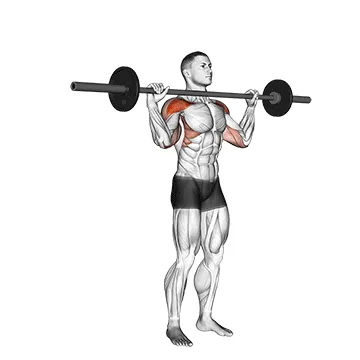
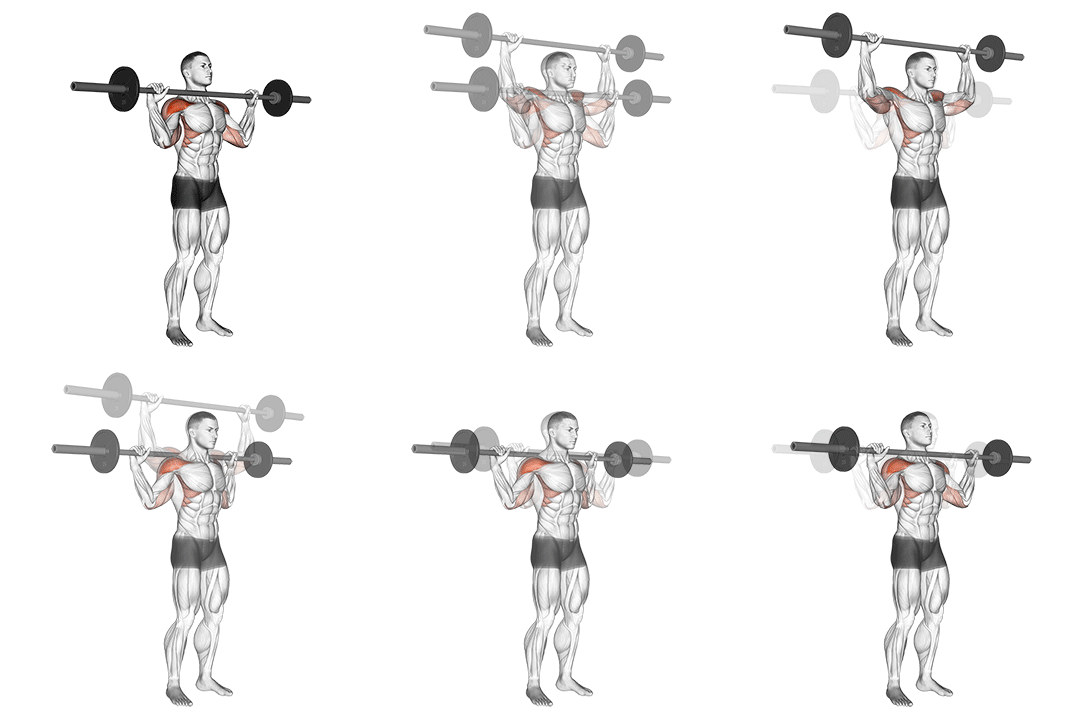
6. Barbell Standing Bradford Press
68% match- Delts
- Barbell
- Advanced
- Compound
It still works the delts, through a different movement.
How to perform this exercise
- Stand with your feet shoulder-width apart and hold the barbell in front of your shoulders with an overhand grip.
- Press the barbell overhead, fully extending your arms.
- Lower the barbell back down to the starting position.
- Repeat for the desired number of repetitions.
Sets and reps: 3 to 5 sets of 5 to 8 reps.
Why this matches
- Primary muscle: delts, the same as the Barbell Upright Row
- Equipment: free weights, the same as the Barbell Upright Row
- Body position: standing, the same as the Barbell Upright Row
Progression
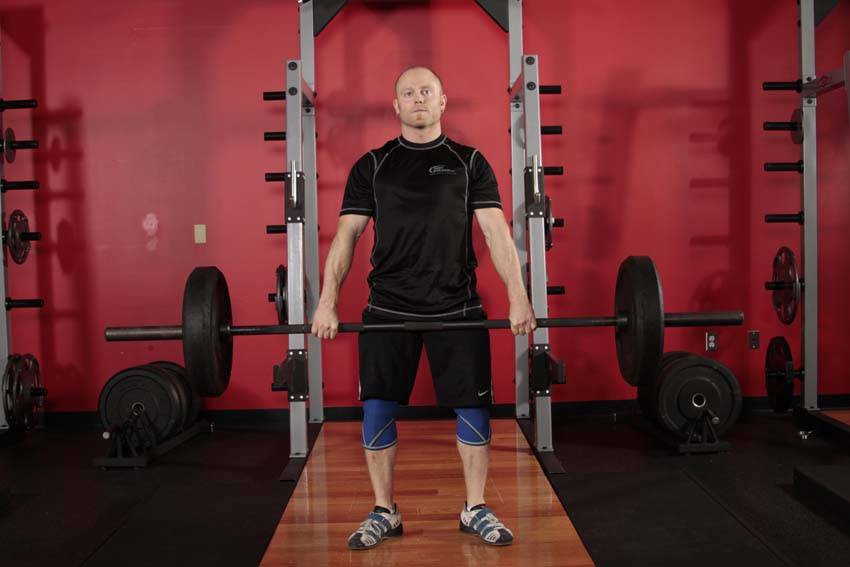
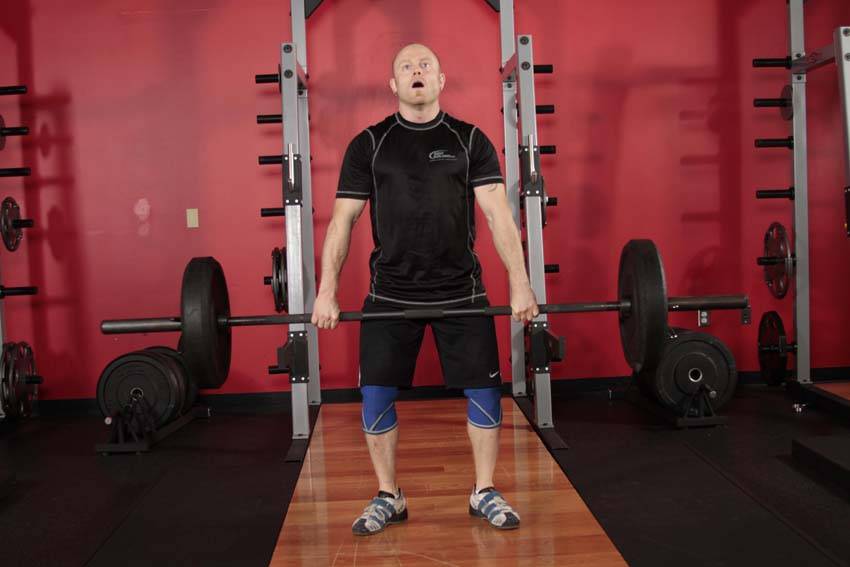
7. Hang Clean - Below The Knees
67% match- Quads
- Barbell
- Advanced
- Compound
How to perform this exercise
- Begin with a shoulder width, double overhand or hook grip, with the bar hanging just below the knees. Your back should be straight and inclined slightly forward.
- Begin by aggressively extending through the hips, knees and ankles, driving the weight upward. As you do so, shrug your shoulders towards your ears. As full extension is achieved, transition into the third pull by aggressively shrugging and flexing the arms with the elbows up and out.
- At peak extension, aggressively pull yourself down, rotating your elbows under the bar as you do so. Receive the bar in a front squat position, the depth of which is dependent upon the height of the bar at the end of the third pull. The bar should be racked onto the protracted shoulders, lightly touching the throat with the hands relaxed. Continue to descend to the bottom squat position, which will help in the recovery.
- Immediately recover by driving through the heels, keeping the torso upright and elbows up. Continue until you have risen to a standing position.
Sets and reps: 3 to 5 sets of 5 to 8 reps.
Why this matches
- Primary muscle: quads, not delts
- Equipment: free weights, the same as the Barbell Upright Row
- Body position: standing, the same as the Barbell Upright Row
- Balance: harder to stay steady on than the Barbell Upright Row
Progression
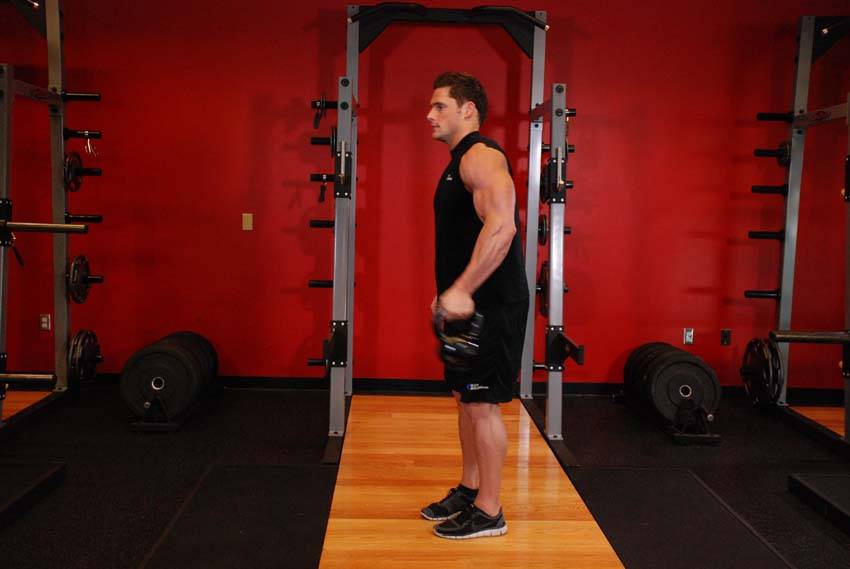
8. Hang Clean
66% match- Quads
- Barbell
- Advanced
- Compound
How to perform this exercise
- Begin with a shoulder width, double overhand or hook grip, with the bar hanging at the mid thigh position. Your back should be straight and inclined slightly forward.
- Begin by aggressively extending through the hips, knees and ankles, driving the weight upward. As you do so, shrug your shoulders towards your ears.
- Immediately recover by driving through the heels, keeping the torso upright and elbows up. Continue until you have risen to a standing position.
Sets and reps: 3 to 5 sets of 5 to 8 reps.
Why this matches
- Primary muscle: quads, not delts
- Equipment: free weights, the same as the Barbell Upright Row
- Body position: standing, the same as the Barbell Upright Row
- Balance: harder to stay steady on than the Barbell Upright Row
- Forearms
- Kettlebell
- Advanced
- Compound
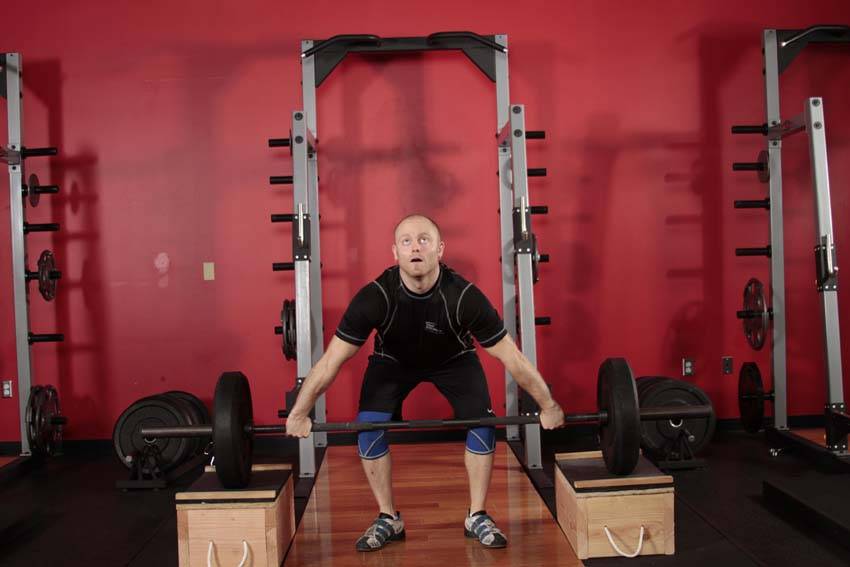
How to perform this exercise
- Initiate the exercise by standing upright with a kettlebell in one hand.
- Swing the kettlebell back forcefully and then reverse the motion forcefully. Crush the kettlebell handle as hard as possible and raise the kettlebell to your shoulder.
Sets and reps: 3 to 5 sets of 5 to 8 reps on each side.
Why this matches
- Primary muscle: forearms, not delts
- Equipment: free weights, the same as the Barbell Upright Row
- Body position: standing, the same as the Barbell Upright Row
- Balance: harder to stay steady on than the Barbell Upright Row
Progression
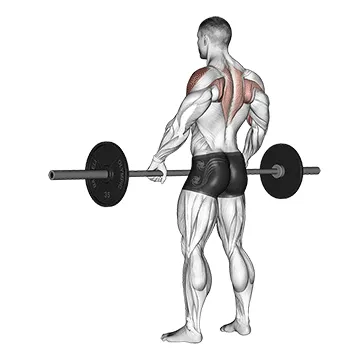
10. Power Snatch From Blocks
66% match- Quads
- Barbell
- Advanced
- Compound
How to perform this exercise
- Begin with a loaded barbell on boxes or stands of the desired height. A wide grip should be taken on the bar. The feet should be directly below the hips, with the feet turned out as needed. Lower the hips, with the chest up and the head looking forward. The shoulders should be just in front of the bar, with the elbows pointed out. This will be the starting position.
- Begin the first pull by driving through the front of the heels, raising the bar from the boxes.
- Transition into the second pull by extending through the hips knees and ankles, driving the bar up as quickly as possible. The bar should be close to the body. At peak extension, shrug the shoulders and allow the elbows to flex to the side.
- As you move your feet into the receiving position, forcefully pull yourself below the bar as you elevate the bar overhead. The feet should move to just outside the hips, turned out as necessary. Receive the bar above a full squat and with the arms fully extended overhead.
- Keeping the bar aligned over the front of the heels, your head and chest up, drive through heels of the feet to move to a standing position. Carefully return the weight to the boxes.
Sets and reps: 3 to 5 sets of 5 to 8 reps.
Why this matches
- Primary muscle: quads, not delts
- Equipment: free weights, the same as the Barbell Upright Row
- Body position: standing, the same as the Barbell Upright Row
- Balance: harder to stay steady on than the Barbell Upright Row
Why You Might Need a Barbell Upright Row Alternative
The Barbell Upright Row needs one bar, and that is also why it disappears fastest when the rack is busy or you train at home without a full set. The Barbell Wide-grip Upright Row keeps the same bar and the same pull to your chin, only with your hands set further apart, so it barely changes what you already do. The Cable Upright Row swaps the bar for a cable handle and still finishes with the same pull to your chin, elbows leading, but it adds a squeeze of the shoulder blades at the top that the barbell version skips. At home with a kettlebell, the Kettlebell Sumo High Pull still pulls to your chin with elbows high, but it starts from a wide squat and drives through the hips and knees, so your legs share the work.
How to Choose the Right Barbell Upright Row Substitute
If a barbell is free, take the Barbell Wide-grip Upright Row: you hold the same bar with the same overhand grip, just spread wider, and lift it straight up to your chin. If the bar is taken but a cable stack is open, the Cable Upright Row pulls a handle to your chin, elbows leading, then pauses to squeeze your shoulder blades together. Away from any station, the Kettlebell Sumo High Pull starts from a wide squat and drives through the hips and knees before the elbows pull the bell to your chin, so the legs share the work and it is not a straight swap. The Bottoms-up Clean From The Hang Position works one arm at a time and puts real demand on your forearms and grip, making it a poor substitute for delts.
Barbell Upright Row FAQ
Which alternative uses a cable machine?
The Cable Upright Row. It replaces the bar with a cable handle and pulls it up to your chin the same way, leading with your elbows. Both versions pause at the top; the cable version adds a squeeze of the shoulder blades during that pause, which the barbell steps do not call for.
Which swap trains grip and forearms instead of delts?
The Bottoms-up Clean From The Hang Position. You start standing with the kettlebell in one hand, swing it back and reverse the motion forcefully, crushing the handle as hard as you can as you raise it to your shoulder. Crushing the handle is the point of the exercise, so pick it when grip work is what you are after rather than as a stand-in for the upright row.
What changes about the pull with a wider grip?
The Barbell Wide-grip Upright Row spreads your hands further apart on the same bar before you lift it straight up to your chin. Everything else stays the same: the same stance, the same hang start and the same pause at the top. The wider grip is the only real change between the two.
Can I do the Barbell Upright Row at home?
Only partly. With a kettlebell you have two options, neither a straight swap for the barbell pull. The Kettlebell Sumo High Pull shares the finish, elbows high and the bell to your chin, but it starts from a wide squat and drives through the hips and knees, so the legs share the work. The Bottoms-up Clean From The Hang Position works one arm at a time and leans on grip, so treat both as accessory work, not a direct swap.
Find Alternatives for Any Exercise
Search the exercise database and filter the ranked substitutes by the equipment you own.
Similarity scores compare exercise metadata such as movement pattern, muscles, equipment and body position. They are not a safety rating or a check that you own the equipment. Learn about our methodology