

10 Best Cable Pull Through (With Rope) Alternatives for Glute Strength
The Cable Pull Through (With Rope) is done standing with a cable machine. Ranked closest by our scoring: the Pull Through, the Band Pull Through and the Dumbbell Sumo Pull Through. A harder version, the Cable Deadlift, is listed below as a progression rather than a swap.
The Cable Pull Through (With Rope) is a standing hip hinge: feet planted, hips pushed back, back kept straight, then the glutes and hamstrings pull your torso back upright. The Pull Through is the same movement listed under a second name, so take whichever your gym has open. Away from any cable station, the Band Pull Through moves that same hinge onto a resistance band instead.
Updated Ranked by our 12-factor similarity model How it works
Original Exercise: Cable Pull Through (With Rope)
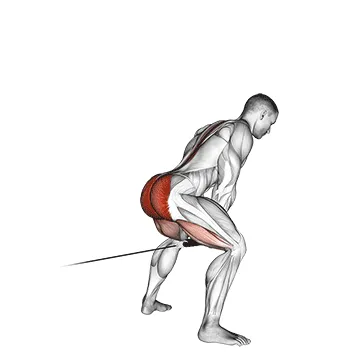
- Primary muscle
- Glutes
- Equipment
- Cable
- Difficulty
- Intermediate
- Type
- Compound
Secondary muscles: Hamstrings, Lower Back
How to perform Cable Pull Through (With Rope)
- Stand facing away from the cable machine with your feet shoulder-width apart.
- Grab the rope attachment with both hands and step forward, creating tension in the cable.
- Bend at the hips and lower your upper body until it is parallel to the ground, keeping your back straight.
- Engage your glutes and hamstrings to pull your body back up to the starting position.
- Repeat for the desired number of repetitions.
Ranked Cable Pull Through (With Rope) Alternatives
10 substitutes, ranked by how closely each one matches the Cable Pull Through (With Rope) on movement pattern, muscles worked, equipment and body position. The higher the score, the less you change. Open "How to perform this exercise" on a card for the steps; every card title links to that exercise's own alternatives page. Harder versions are tagged as progressions and kept out of the top spot even when they score higher.
Best match 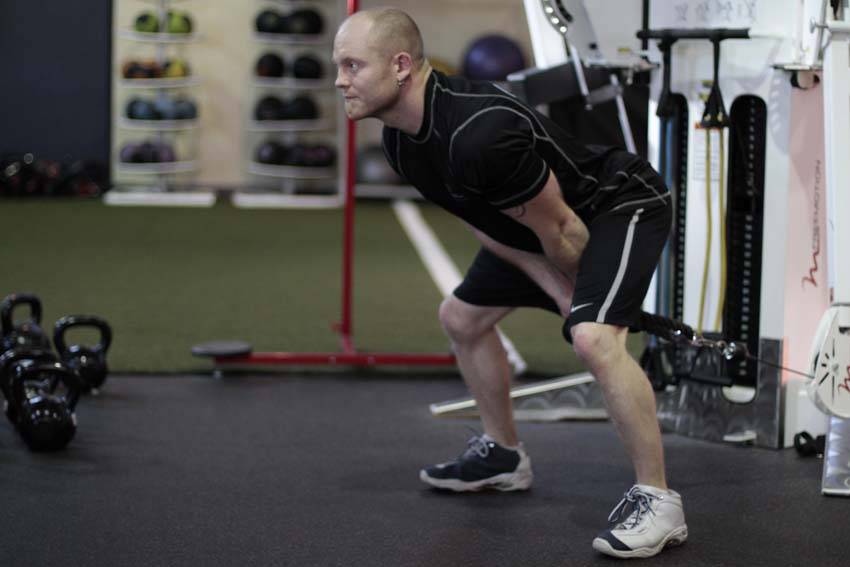
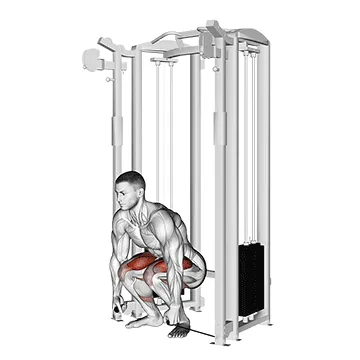
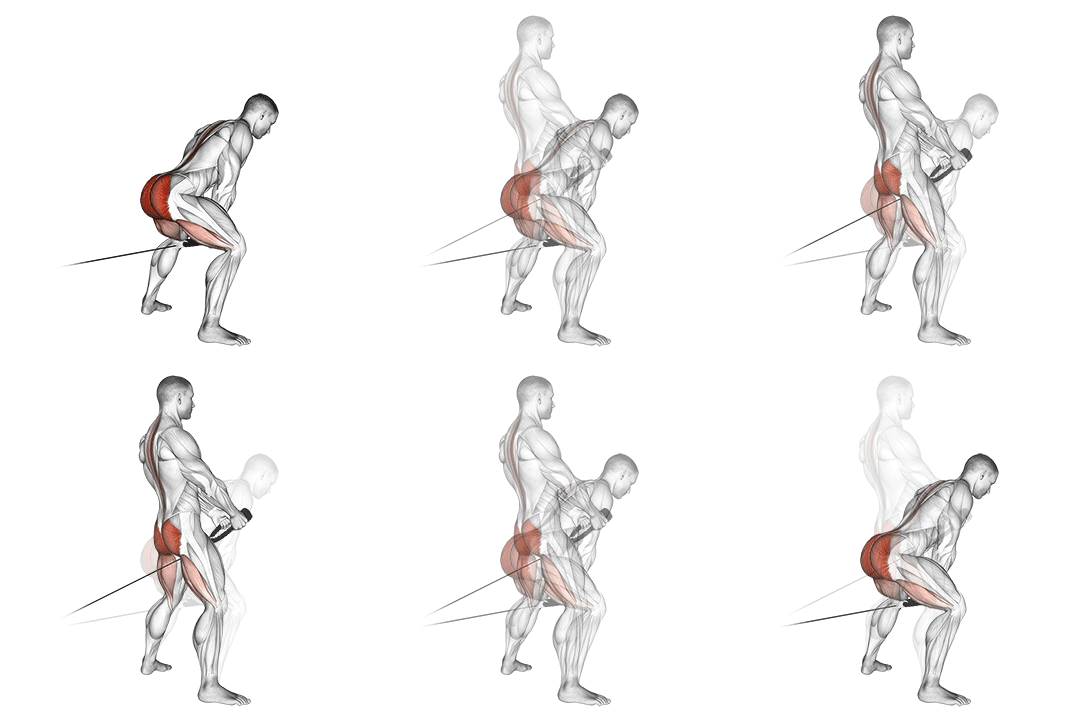
1. Pull Through
99% match- Glutes
- Cable
- Intermediate
- Compound
It uses the same equipment and still works the glutes.
How to perform this exercise
- Begin standing a few feet in front of a low pulley with a rope or handle attached. Face away from the machine, straddling the cable, with your feet set wide apart.
- Begin the movement by reaching through your legs as far as possible, bending at the hips. Keep your knees slightly bent. Keeping your arms straight, extend through the hip to stand straight up. Avoid pulling upward through the shoulders; all of the motion should originate through the hips.
Sets and reps: 3 or 4 sets of 6 to 10 reps.
Why this matches
- Movement: pull-through hinge, the same as the Cable Pull Through (With Rope)
- Primary muscle: glutes, the same as the Cable Pull Through (With Rope)
- Equipment: a cable, the same as the Cable Pull Through (With Rope)
- Body position: standing, the same as the Cable Pull Through (With Rope)
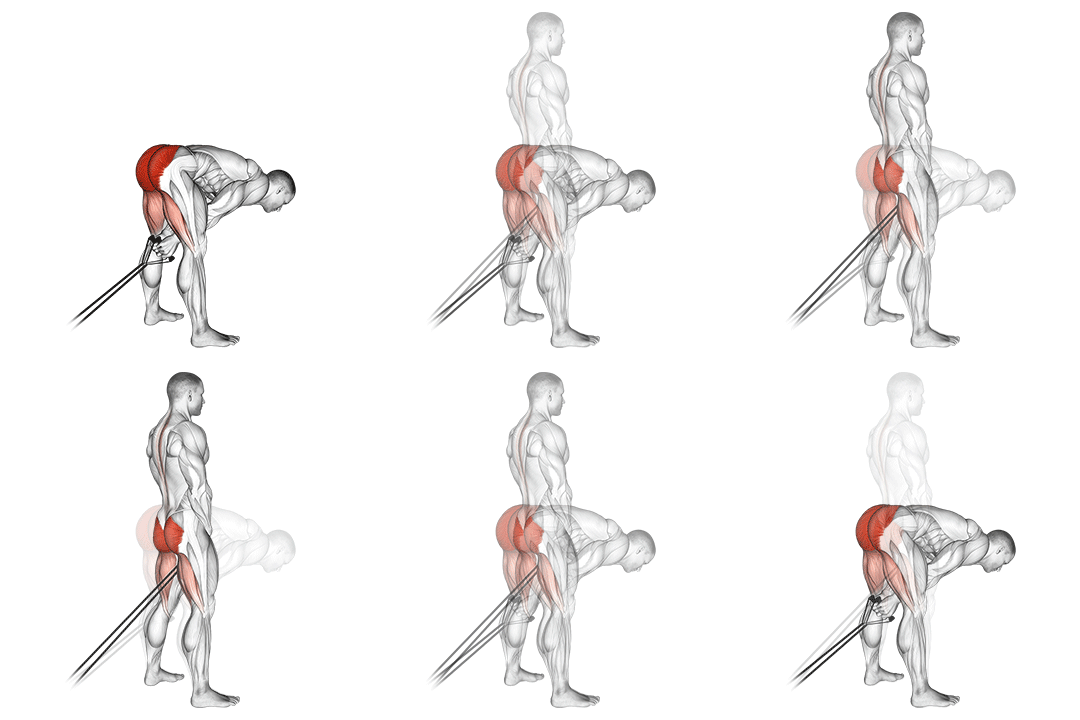
2. Band Pull Through
85% match- Glutes
- Band
- Intermediate
- Compound
A good swap when you have a band to work with, and it still works the glutes.
How to perform this exercise
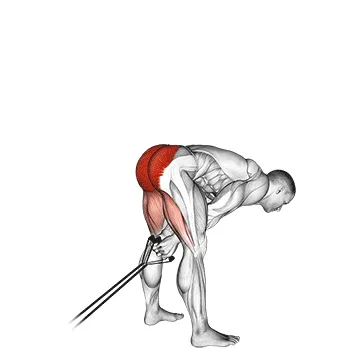
- Attach a resistance band to a sturdy anchor point at ground level.
- Stand facing away from the anchor point with your feet shoulder-width apart.
- Step forward to create tension in the band, keeping your knees slightly bent.
- Hinge at the hips and push your glutes back, maintaining a slight bend in your knees.
- Lower your torso until it is parallel to the ground, feeling a stretch in your hamstrings.
- Drive your hips forward and squeeze your glutes to return to the starting position.
- Repeat for the desired number of repetitions.
Sets and reps: 3 to 5 sets of 5 to 8 reps.
Why this matches
- Movement: pull-through hinge, the same as the Cable Pull Through (With Rope)
- Primary muscle: glutes, the same as the Cable Pull Through (With Rope)
- Equipment: a band, not a cable
- Body position: standing, the same as the Cable Pull Through (With Rope)
Progression
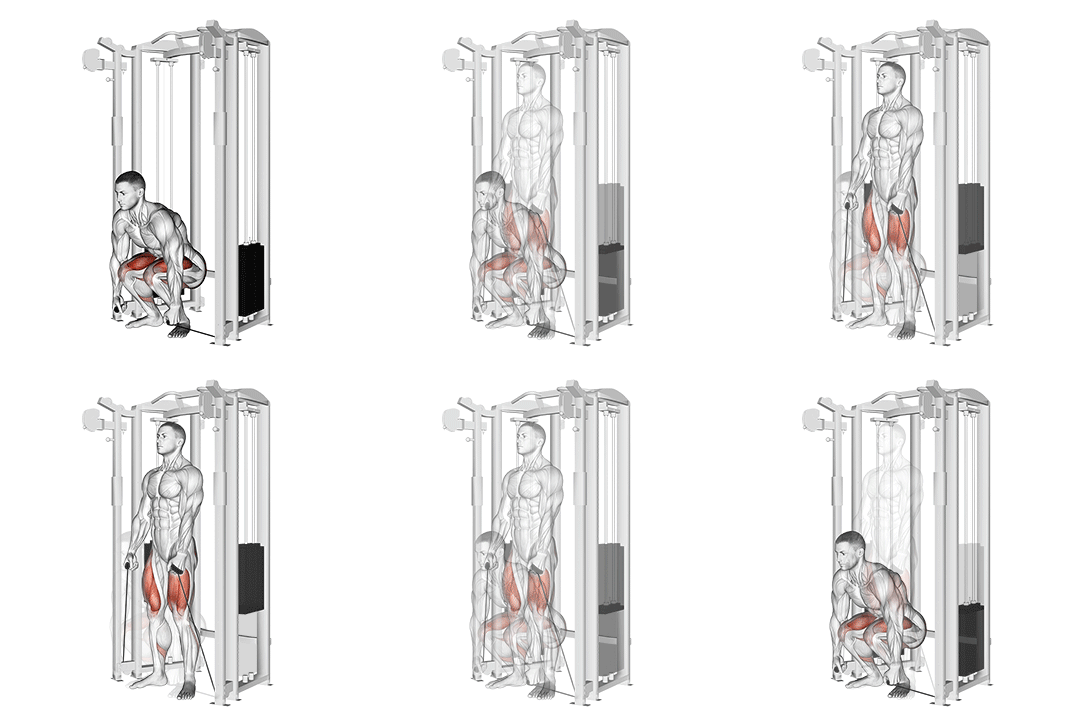
3. Cable Deadlift
80% match- Glutes
- Cable
- Intermediate
- Compound
Pick this when you want a harder version that still works the glutes.
How to perform this exercise
- Stand facing the cable machine with your feet shoulder-width apart.
- Bend at the hips and knees, lowering your torso until your back is parallel to the ground.
- Grasp the cable handles with an overhand grip, keeping your arms straight and your shoulders back.
- Engage your glutes and hamstrings to lift the cable handles, extending your hips and standing up straight.
- Pause for a moment at the top, then slowly lower the cable handles back down to the starting position.
- Repeat for the desired number of repetitions.
Sets and reps: 3 to 5 sets of 5 to 8 reps.
Why this matches
- Primary muscle: glutes, the same as the Cable Pull Through (With Rope)
- Equipment: a cable, the same as the Cable Pull Through (With Rope)
- Body position: standing, the same as the Cable Pull Through (With Rope)
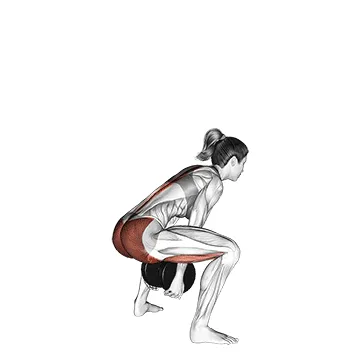
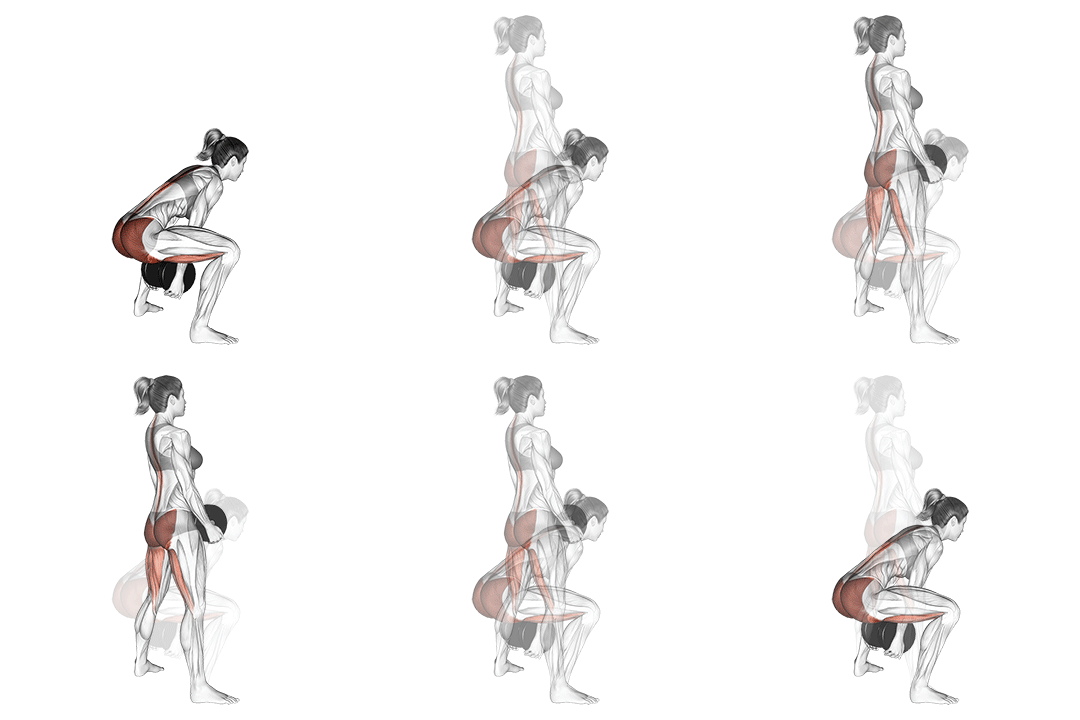
4. Dumbbell Sumo Pull Through
80% match- Glutes
- Dumbbell
- Intermediate
- Compound
A good swap when you have dumbbells to work with, and it still works the glutes.
How to perform this exercise
- Stand with your feet wider than shoulder-width apart, toes pointed outwards.
- Hold a dumbbell with both hands in front of your body, arms extended.
- Bend your knees and lower your hips down into a squat position, keeping your back straight.
- Lower the dumbbell down between your legs, keeping your arms straight.
- Drive through your heels and extend your hips forward, pulling the dumbbell up and in front of your body.
- Squeeze your glutes at the top of the movement, then lower the dumbbell back down between your legs.
- Repeat for the desired number of repetitions.
Sets and reps: 3 to 5 sets of 5 to 8 reps.
Why this matches
- Movement: pull-through hinge, the same as the Cable Pull Through (With Rope)
- Primary muscle: glutes, the same as the Cable Pull Through (With Rope)
- Equipment: free weights, not a cable
- Body position: standing, the same as the Cable Pull Through (With Rope)
- Balance: harder to stay steady on than the Cable Pull Through (With Rope)
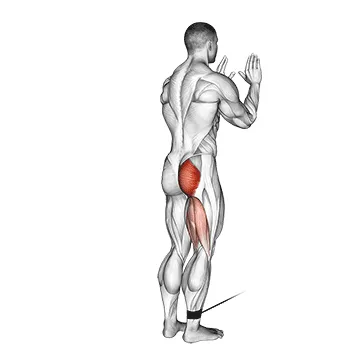
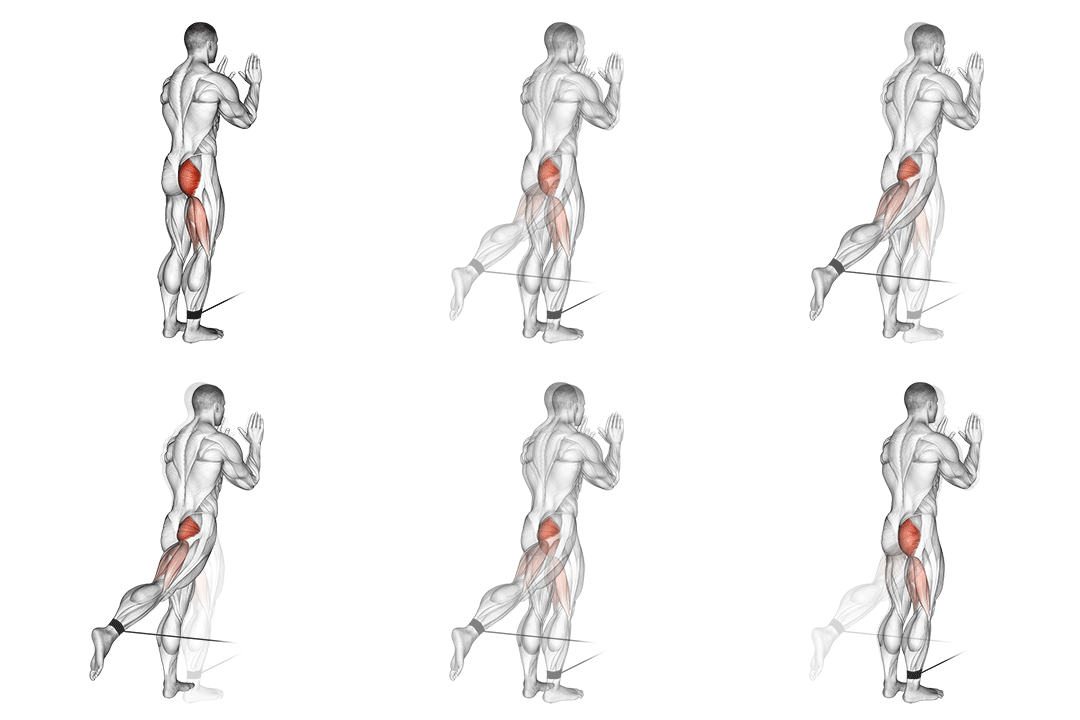
5. Cable Standing Hip Extension
77% match- Glutes
- Cable
- Beginner
- Isolation
Pick this when you want an easier version that works the glutes one side at a time.
How to perform this exercise
- Attach a cable to a low pulley and stand facing away from the machine.
- Place the cable around your ankle and stand with your feet shoulder-width apart.
- Keep your core engaged and your back straight throughout the exercise.
- Slowly extend your leg straight back, squeezing your glutes at the top of the movement.
- Pause for a moment, then return to the starting position.
- Repeat for the desired number of repetitions.
- Switch sides and repeat with the other leg.
Sets and reps: 3 sets of 10 to 15 reps on each side.
Why this matches
- Primary muscle: glutes, the same as the Cable Pull Through (With Rope)
- Equipment: a cable, the same as the Cable Pull Through (With Rope)
- Body position: standing, the same as the Cable Pull Through (With Rope)
- Balance: harder to stay steady on than the Cable Pull Through (With Rope)
6. One-legged Cable Kickback
77% match- Glutes
- Cable
- Beginner
- Isolation
Pick this when you want an easier single-leg version that still works the glutes.
How to perform this exercise
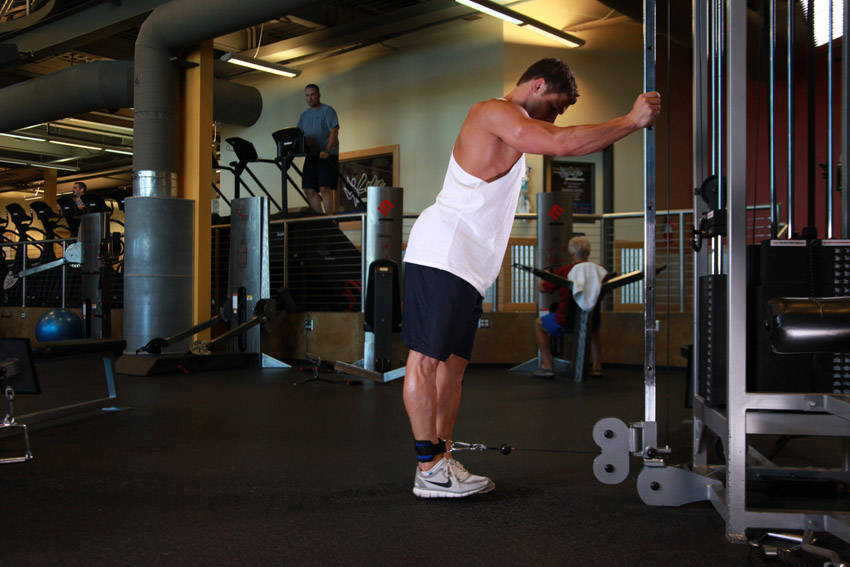
- Hook a leather ankle cuff to a low cable pulley and then attach the cuff to your ankle.
- Face the weight stack from a distance of about two feet, grasping the steel frame for support.
- While keeping your knees and hips bent slightly and your abs tight, contract your glutes to slowly "kick" the working leg back in a semicircular arc as high as it will comfortably go as you breathe out. Tip: At full extension, squeeze your glutes for a second in order to achieve a peak contraction.
- Now slowly bring your working leg forward, resisting the pull of the cable until you reach the starting position.
- Repeat for the recommended amount of repetitions.
- Switch legs and repeat the movement for the other side.
Sets and reps: 3 sets of 10 to 15 reps on each side.
Why this matches
- Primary muscle: glutes, the same as the Cable Pull Through (With Rope)
- Equipment: a cable, the same as the Cable Pull Through (With Rope)
- Body position: standing, the same as the Cable Pull Through (With Rope)
- Balance: harder to stay steady on than the Cable Pull Through (With Rope)
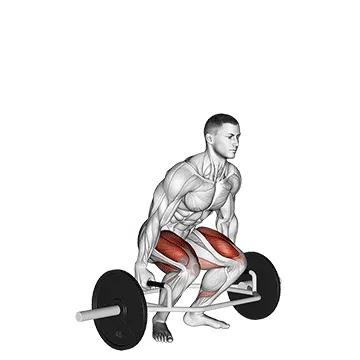
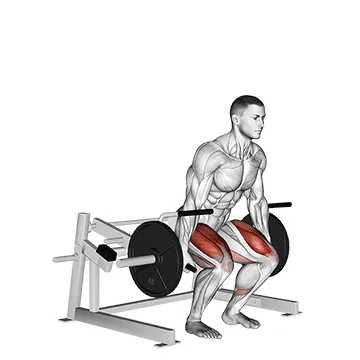
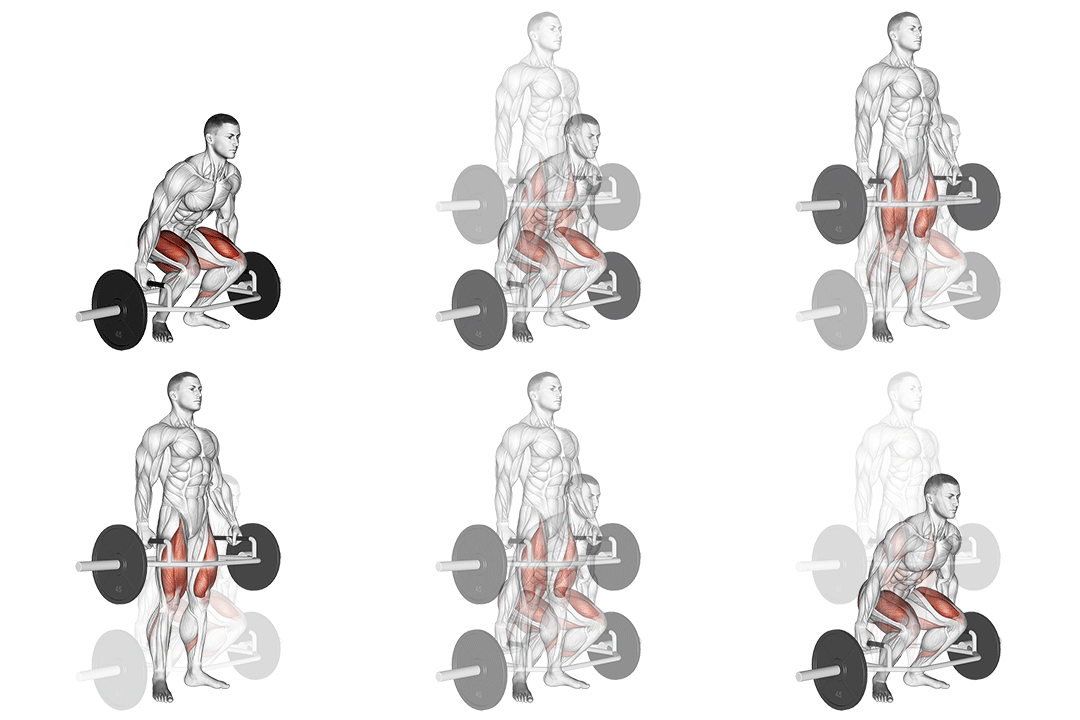
7. Trap Bar Deadlift
75% match- Glutes
- Trap-bar
- Intermediate
- Compound
A good swap when you have a trap bar to work with, and it still works the glutes.
How to perform this exercise
- Stand with your feet shoulder-width apart and the trap bar on the ground in front of you.
- Bend at the hips and knees to lower yourself down and grip the handles of the trap bar with an overhand grip.
- Keep your back straight and chest up as you begin to lift the trap bar off the ground by extending your hips and knees.
- As you lift, focus on driving through your heels and squeezing your glutes at the top of the movement.
- Lower the trap bar back down to the ground by bending at the hips and knees, keeping your back straight throughout the movement.
- Repeat for the desired number of repetitions.
Sets and reps: 3 or 4 sets of 6 to 10 reps.
Why this matches
- Primary muscle: glutes, the same as the Cable Pull Through (With Rope)
- Equipment: free weights, not a cable
- Body position: standing, the same as the Cable Pull Through (With Rope)
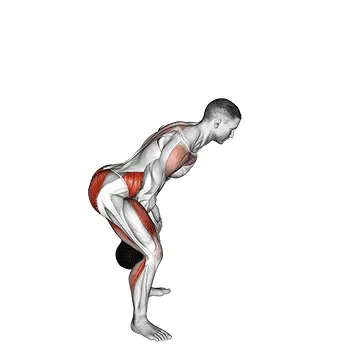
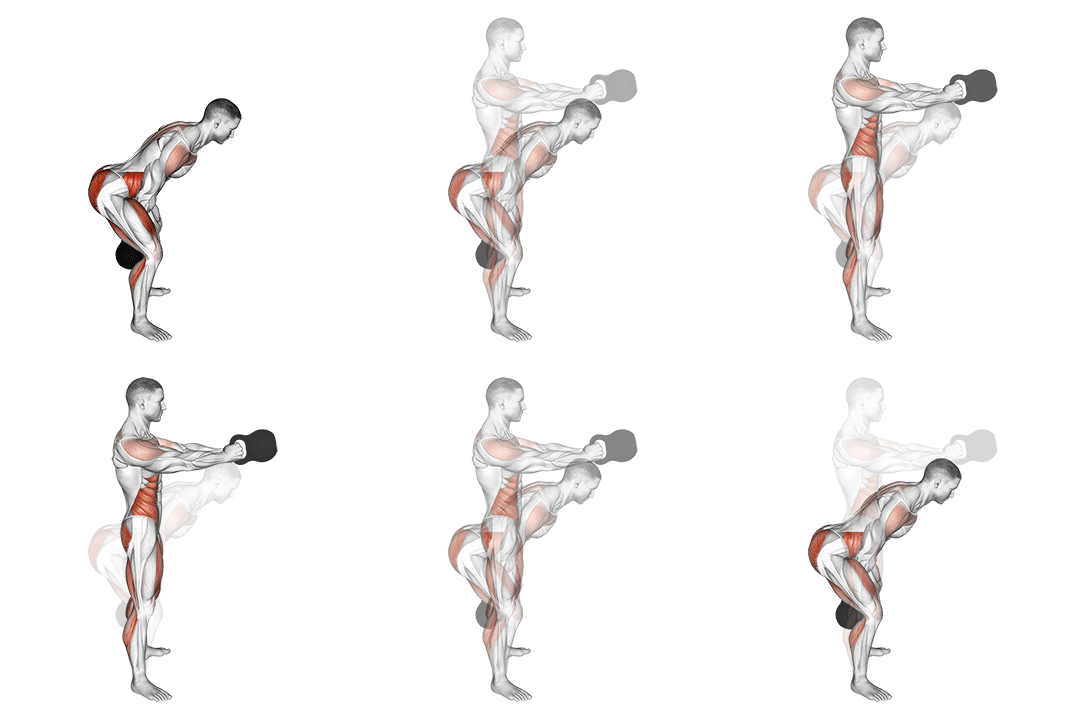
8. Kettlebell Swing
75% match- Glutes
- Kettlebell
- Intermediate
- Compound
How to perform this exercise
- Stand with your feet shoulder-width apart, toes pointed slightly outward.
- Hold the kettlebell with both hands in front of your body, arms extended.
- Bend your knees slightly and hinge at the hips, pushing your butt back.
- Swing the kettlebell back between your legs, keeping your arms straight and maintaining a flat back.
- Drive your hips forward and swing the kettlebell up to shoulder height, using the momentum generated by your hips.
- Allow the kettlebell to swing back down between your legs and repeat the movement for the desired number of repetitions.
Sets and reps: 3 or 4 sets of 6 to 10 reps.
Why this matches
- Primary muscle: glutes, the same as the Cable Pull Through (With Rope)
- Equipment: free weights, not a cable
- Body position: standing, the same as the Cable Pull Through (With Rope)
- Balance: harder to stay steady on than the Cable Pull Through (With Rope)
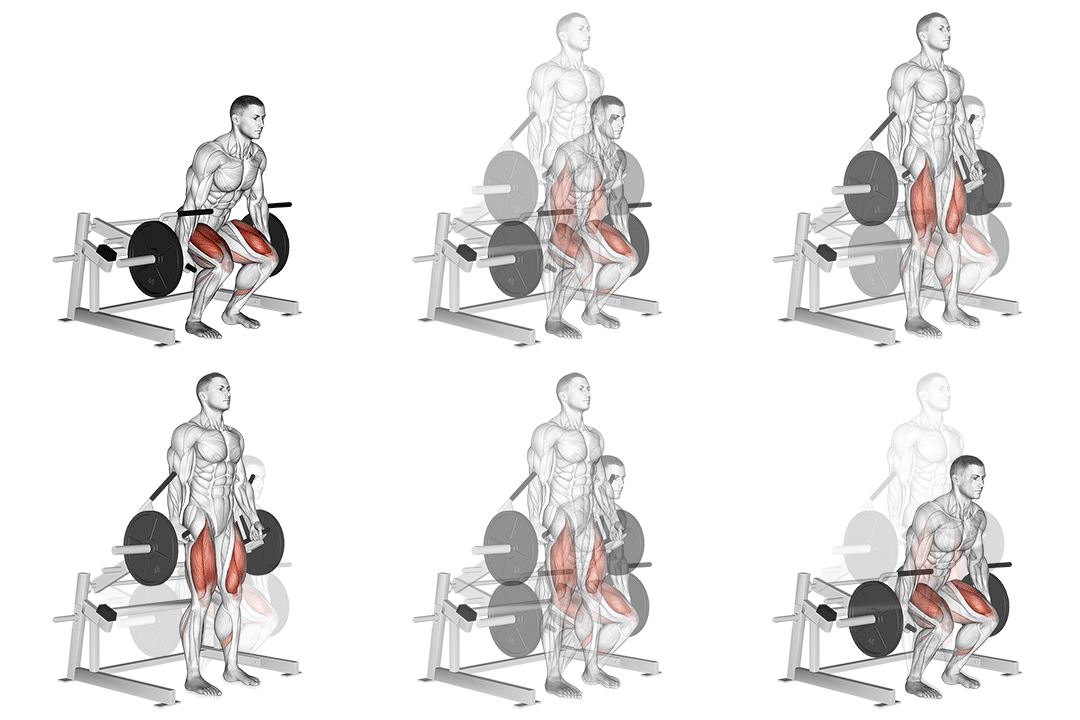
9. Lever Deadlift
74% match- Glutes
- Lever
- Intermediate
- Compound
How to perform this exercise
- Adjust the seat height and foot platform to your desired position.
- Sit on the machine with your back against the pad and your feet flat on the foot platform.
- Grasp the handles or the sides of the seat for stability.
- Engage your glutes and hamstrings, and push through your heels to lift the weight up.
- Keep your back straight and avoid rounding your shoulders.
- Extend your hips fully at the top of the movement, squeezing your glutes.
- Lower the weight back down in a controlled manner, keeping tension on your glutes and hamstrings.
- Repeat for the desired number of repetitions.
Sets and reps: 3 or 4 sets of 6 to 10 reps.
Why this matches
- Primary muscle: glutes, the same as the Cable Pull Through (With Rope)
- Equipment: a machine, not a cable
- Body position: standing, the same as the Cable Pull Through (With Rope)
- Balance: easier to stay steady on than the Cable Pull Through (With Rope)
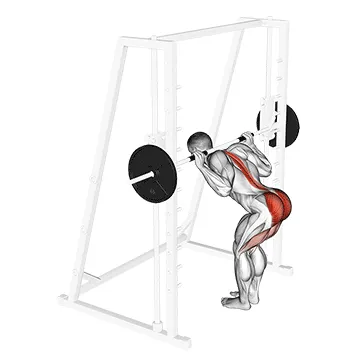
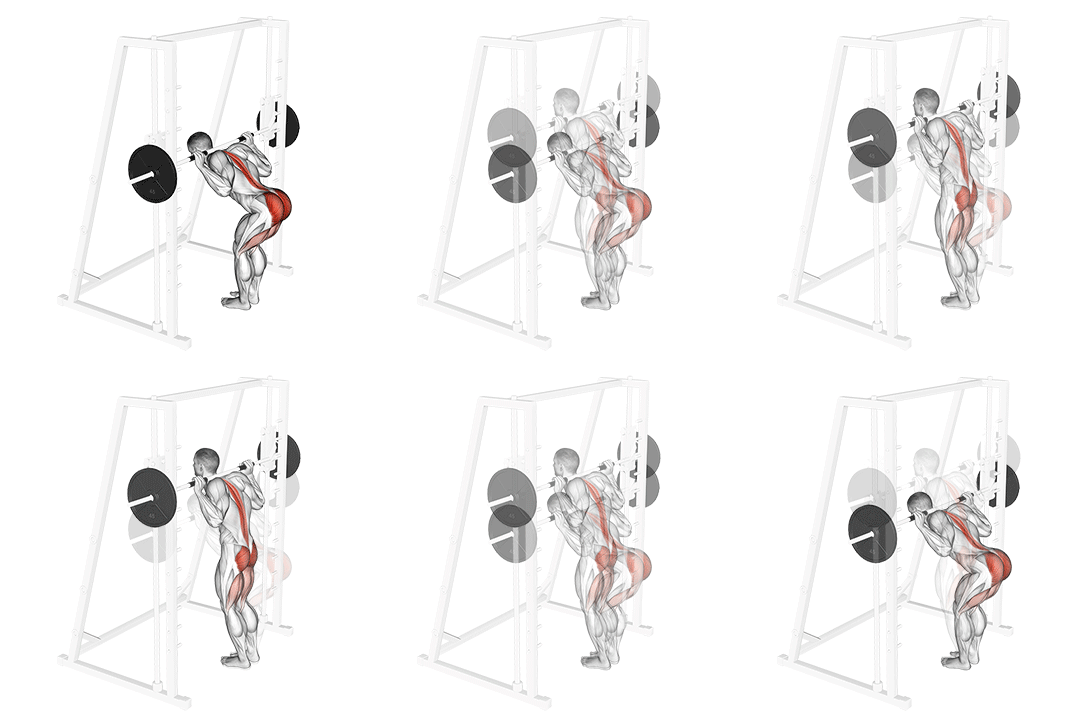
10. Smith Bent Knee Good Morning
74% match- Glutes
- Smith-machine
- Intermediate
- Compound
How to perform this exercise
- Start by standing with your feet shoulder-width apart, toes pointing forward.
- Place the barbell across your upper back, resting it on your traps.
- Bend your knees slightly and hinge forward at the hips, keeping your back straight.
- Lower your torso until it is parallel to the ground, feeling a stretch in your hamstrings.
- Engage your glutes and hamstrings to raise your torso back up to the starting position.
- Repeat for the desired number of repetitions.
Sets and reps: 3 or 4 sets of 6 to 10 reps.
Why this matches
- Primary muscle: glutes, the same as the Cable Pull Through (With Rope)
- Equipment: a machine, not a cable
- Body position: standing, the same as the Cable Pull Through (With Rope)
- Balance: easier to stay steady on than the Cable Pull Through (With Rope)
Why You Might Need a Cable Pull Through (With Rope) Alternative
A cable station gets used for more than one exercise, so the Cable Pull Through (With Rope) is often the first move dropped when the tower is busy or a gym has none. Some home setups have no machine to face away from at all. What is worth keeping is the standing hip hinge itself: feet planted, hips pushed back, back kept straight, then the glutes and hamstrings pulling the body upright again. A band, a kettlebell, a trap bar, or a bar across your back can all supply that same hip drive, and a dumbbell held between the legs gets close to it from a wider, squattier stance, so the hinge stays intact even when the rope does not.
How to Choose the Right Cable Pull Through (With Rope) Substitute
Away from a cable tower, the Band Pull Through builds tension as the band stretches, so the pull gets heavier the further you step forward from the anchor. The Kettlebell Swing turns that same hip drive into a faster, ballistic movement instead of a slow controlled pull. If you would rather pull like a deadlift, the Cable Deadlift changes the setup: you face the stack instead of standing away from it, bend at the hips and knees to reach the handles, and the load comes up in front of you rather than from between your legs.
Cable Pull Through (With Rope) FAQ
Is the Pull Through really a different exercise from the Cable Pull Through (With Rope)?
No. It is the same standing hip hinge on the same cable stack, filed under a second name, so take whichever one your gym has open. The only difference in the setup is stance, wide and straddling the cable for the Pull Through, shoulder-width for the rope version, so it works the same glutes and hamstrings and counts as the same exercise rather than a substitute.
How do I make the hip hinge harder once it feels too easy?
Move to the Cable Deadlift. You face the cable stack instead of standing away from it, bend at the hips and knees to take the handles with straight arms, then drive your hips through to stand up straight. Because the handles sit in front of you and you bend at the knees as well as the hips, it plays like a deadlift on the cable stack, so you get the same glute and hamstring work from a lower start.
Which alternative turns the hinge into a faster movement?
The Kettlebell Swing. You hinge at the hips and let the bell swing back between your legs, then drive your hips forward to send it up to shoulder height using that same hip snap. Pick it when you want the hinge trained with speed and momentum instead of a slow, controlled pull.
Can I do a Cable Pull Through (With Rope) alternative at home?
Yes. The Band Pull Through keeps the same standing hip hinge with a resistance band anchored low behind you, the Dumbbell Sumo Pull Through drops into a wide-stance squat with a dumbbell between your legs and drives the hips forward to stand, and the Kettlebell Swing turns that hip drive into a fast, ballistic movement. All three train the same glutes and hamstrings without needing a cable tower.
Find Alternatives for Any Exercise
Search the exercise database and filter the ranked substitutes by the equipment you own.
Similarity scores compare exercise metadata such as movement pattern, muscles, equipment and body position. They are not a safety rating or a check that you own the equipment. Learn about our methodology