

10 Best Chair Lower Back Stretch Alternatives for Desk Workers
The Chair Lower Back Stretch is done seated. Ranked closest by our scoring: the Seated Lower Back Stretch, the Spinal Stretch and the Standing Lateral Stretch.
Updated Ranked by our 12-factor similarity model How it works
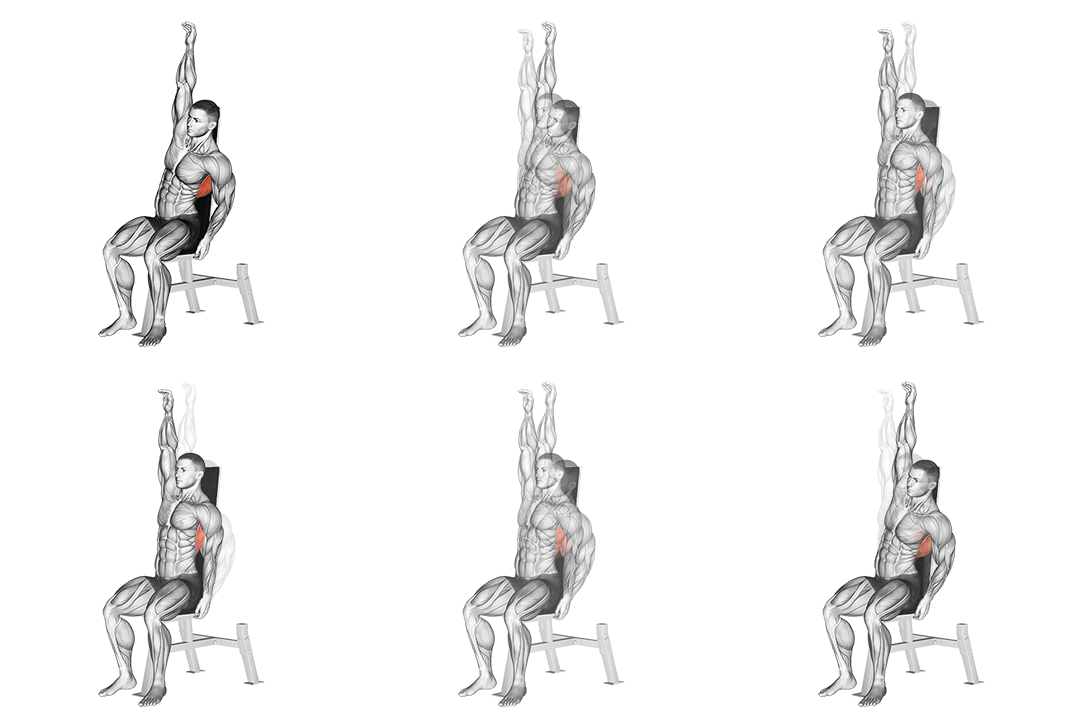
Original Exercise: Chair Lower Back Stretch
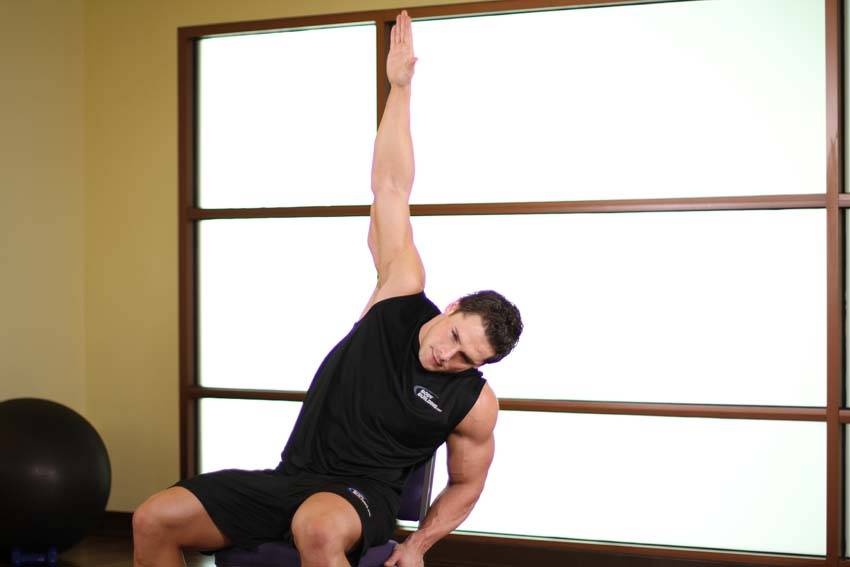
- Primary muscle
- Lats
- Equipment
- Other
- Difficulty
- Beginner
- Type
- Isolation
Secondary muscles: Lower Back
How to perform Chair Lower Back Stretch
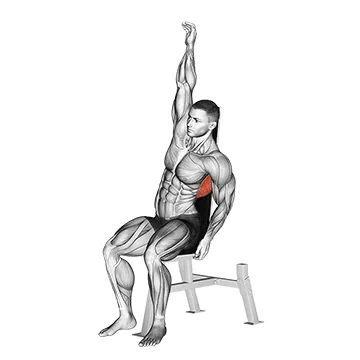
- Sit upright on a chair.
- Bend to one side with your arm over your head. You can hold onto the chair with your free hand.
- Hold for 10 seconds, and repeat for your other side.
Ranked Chair Lower Back Stretch Alternatives
10 substitutes, ranked by how closely each one matches the Chair Lower Back Stretch on movement pattern, muscles worked, equipment and body position. The higher the score, the less you change. Open "How to perform this exercise" on a card for the steps; every card title links to that exercise's own alternatives page.
Best match 1. Seated Lower Back Stretch
99% match- Lats
- Bodyweight
- Beginner
- Isolation
A straight swap when you want to keep working the lats.
How to perform this exercise
- Sit on the edge of a chair with your feet flat on the ground.
- Place your hands on your thighs or on the sides of the chair for support.
- Slowly lean forward from your hips, keeping your back straight.
- Feel the stretch in your lower back and hold for 20-30 seconds.
- Slowly return to the starting position and repeat for the desired number of repetitions.
Sets and reps: 3 sets of 8 to 12 reps, and add reps before you add load.
Why this matches
- Movement: static stretch, the same as the Chair Lower Back Stretch
- Primary muscle: lats, the same as the Chair Lower Back Stretch
- Equipment: bodyweight only, the same as the Chair Lower Back Stretch
- Body position: seated, the same as the Chair Lower Back Stretch
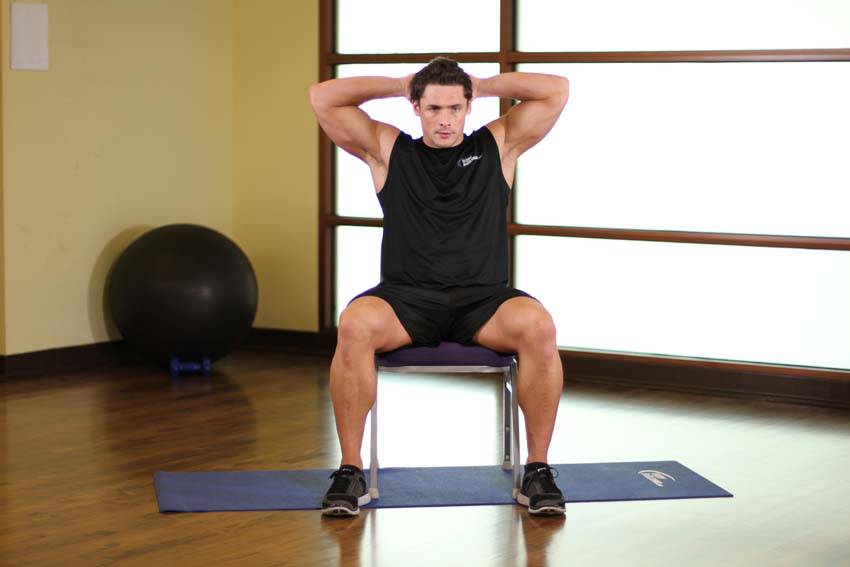
2. Spinal Stretch
99% match- Lats
- Foam-roll
- Beginner
- Isolation
How to perform this exercise
- Sit in a chair so your back is straight and your feet planted on the floor.
- Interlace your fingers behind your head, elbows out and your chin down.
- Twist your upper body to one side about 3 times as far as you can. Then lean forward and twist your torso to reach your elbow to the floor on the inside of your knee.
- Return to upright position and then repeat for your other side.
Sets and reps: 3 sets of 8 to 12 reps, and add reps before you add load.
Why this matches
- Movement: static stretch, the same as the Chair Lower Back Stretch
- Primary muscle: lats, the same as the Chair Lower Back Stretch
- Equipment: bodyweight only, the same as the Chair Lower Back Stretch
- Body position: seated, the same as the Chair Lower Back Stretch
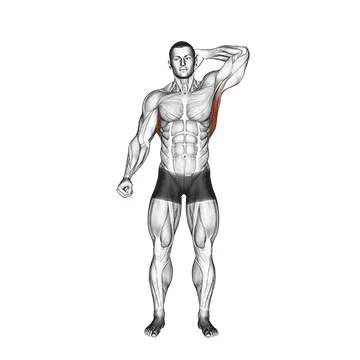
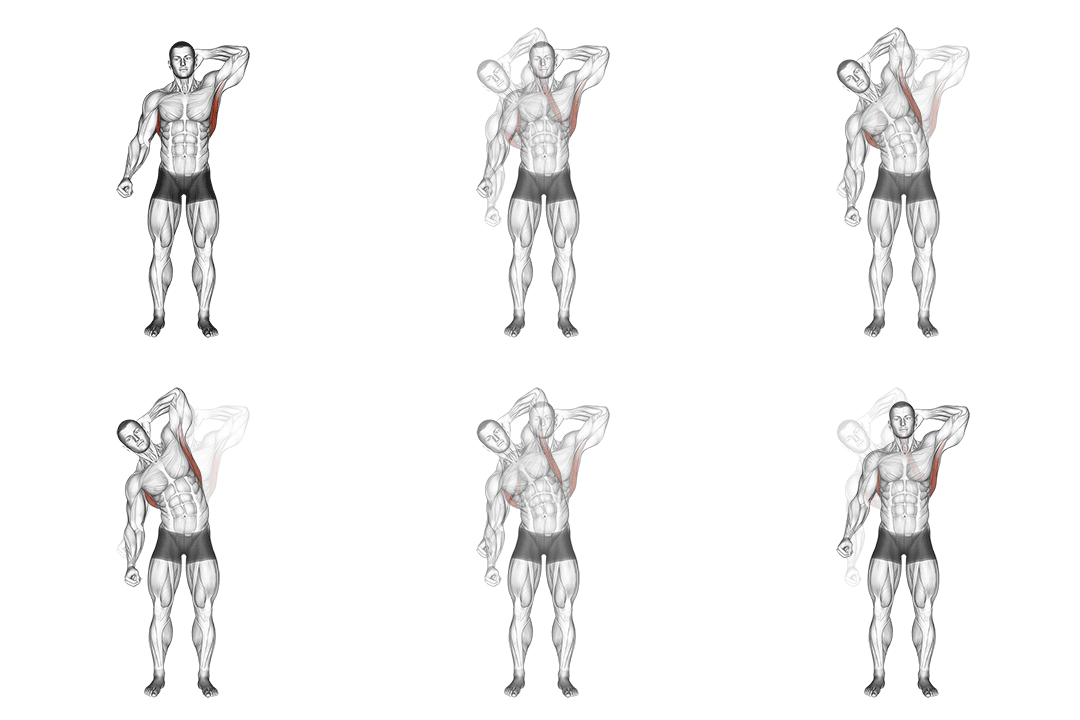
3. Standing Lateral Stretch
88% match- Lats
- Bodyweight
- Beginner
- Isolation
How to perform this exercise
- Stand with your feet shoulder-width apart and your knees slightly bent.
- Extend your arms straight out to the sides, parallel to the ground.
- Slowly lean your upper body to one side, feeling a stretch in your side and lats.
- Hold the stretch for 15-30 seconds.
- Return to the starting position and repeat on the other side.
- Repeat for the desired number of repetitions.
Sets and reps: 3 sets of 8 to 12 reps, and add reps before you add load.
Why this matches
- Movement: static stretch, the same as the Chair Lower Back Stretch
- Primary muscle: lats, the same as the Chair Lower Back Stretch
- Equipment: bodyweight only, the same as the Chair Lower Back Stretch
- Body position: standing, not seated
4. Back Pec Stretch
87% match- Lats
- Bodyweight
- Beginner
- Isolation
How to perform this exercise
- Stand tall with your feet shoulder-width apart.
- Extend your arms straight out in front of you, parallel to the ground.
- Cross your arms in front of your body, with your right arm over your left arm.
- Interlock your fingers and rotate your palms away from your body.
- Slowly raise your arms up and away from your body, feeling a stretch in your back and chest.
- Hold the stretch for 15-30 seconds, then release.
- Repeat on the opposite side.
Sets and reps: Hold for 20 to 30 seconds, 3 sets.
Why this matches
- Movement: static stretch, the same as the Chair Lower Back Stretch
- Primary muscle: lats, the same as the Chair Lower Back Stretch
- Equipment: bodyweight only, the same as the Chair Lower Back Stretch
- Body position: standing, not seated
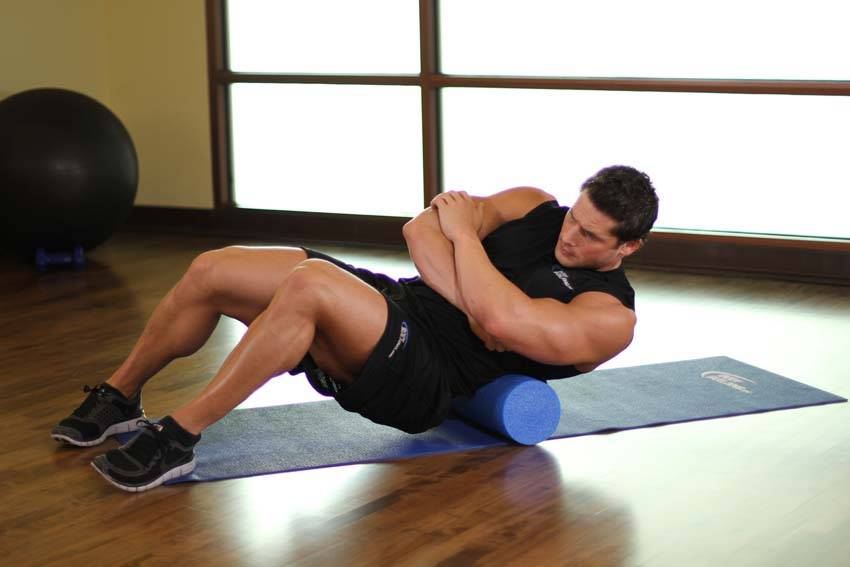
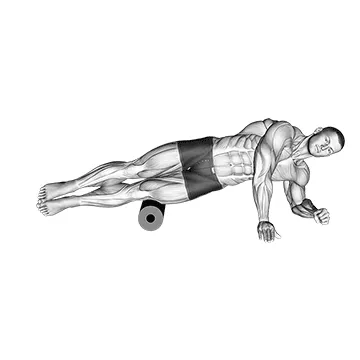
5. Latissimus Dorsi-smr
87% match- Lats
- Foam-roll
- Beginner
- Isolation
How to perform this exercise
- While lying on the floor, place a foam roll under your back and to one side, just behind your arm pit. This will be your starting position.
- Keep the arm of the side being stretched behind and to the side of you as you shift your weight onto your lats, keeping your upper body off of the ground. Hold for 10-30 seconds, and switch sides.
Sets and reps: 3 sets of 8 to 12 reps, and add reps before you add load.
Why this matches
- Primary muscle: lats, the same as the Chair Lower Back Stretch
- Equipment: bodyweight only, the same as the Chair Lower Back Stretch
- Body position: lying face down, not seated
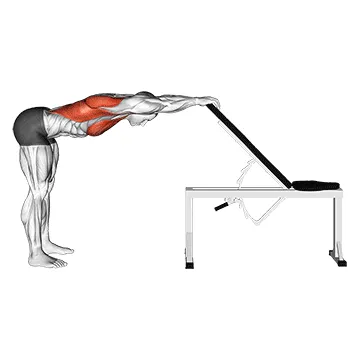
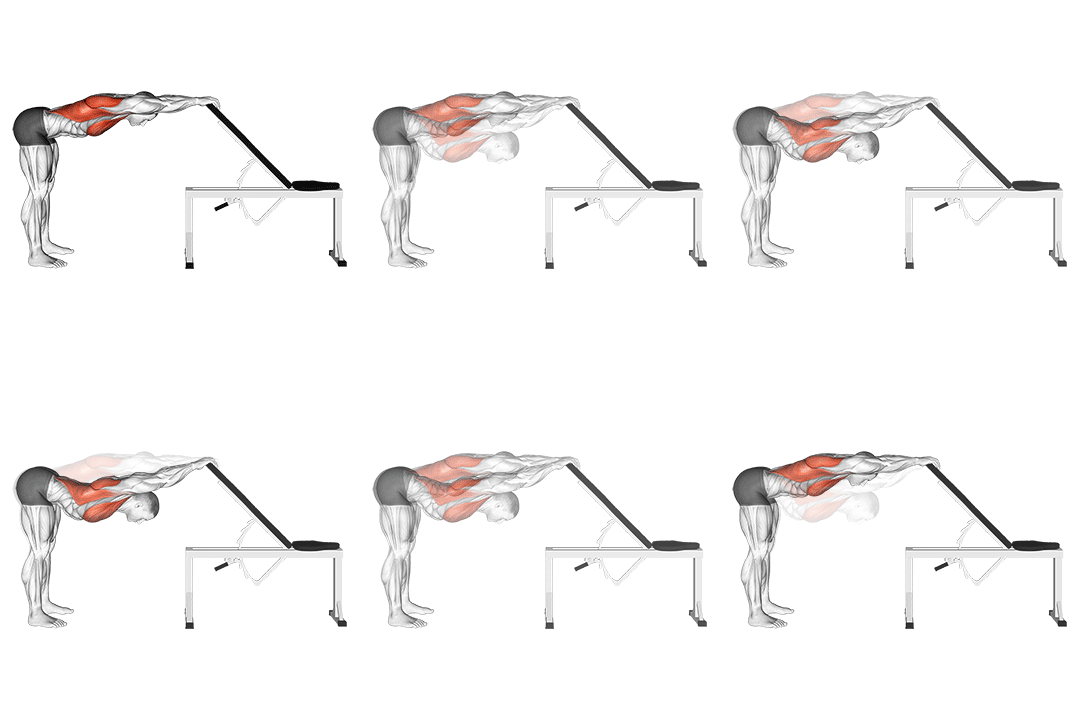
6. Roller Side Lat Stretch
85% match- Lats
- Foam-roll
- Beginner
- Isolation
Pick this when you want to work the lats one side at a time.
How to perform this exercise
- Stand with your feet shoulder-width apart and hold the roller with both hands in front of your body.
- Bend your knees slightly and hinge forward at the hips, keeping your back straight.
- Extend your arms forward and roll the roller down towards your feet, feeling a stretch in your lats.
- Hold the stretch for a few seconds, then slowly roll the roller back up to the starting position.
- Repeat for the desired number of repetitions.
Sets and reps: 3 sets of 8 to 12 reps on each side, and add reps before you add load.
Why this matches
- Movement: static stretch, the same as the Chair Lower Back Stretch
- Primary muscle: lats, the same as the Chair Lower Back Stretch
- Equipment: bodyweight only, the same as the Chair Lower Back Stretch
- Body position: standing, not seated
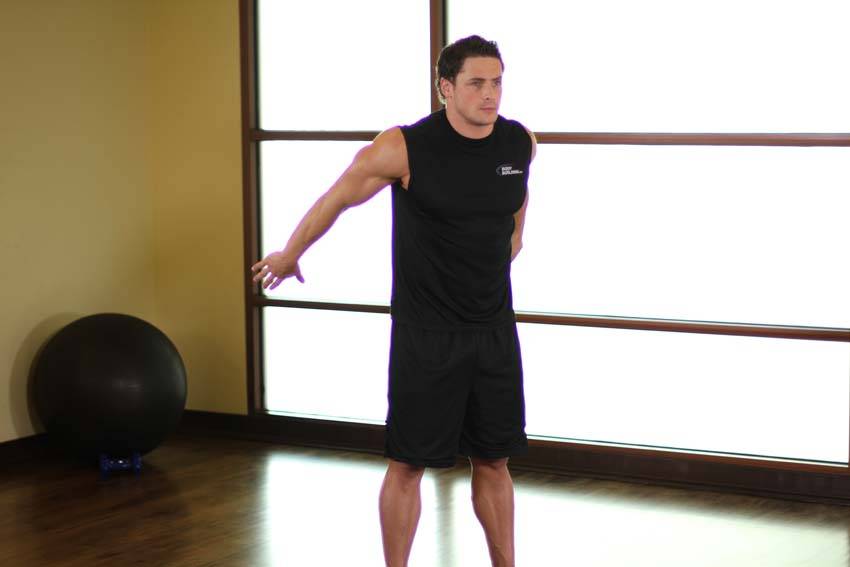
7. Dynamic Back Stretch
81% match- Lats
- Bodyweight
- Beginner
- Isolation
It still works the lats, through a different movement.
How to perform this exercise
- Stand with your feet shoulder width apart. This will be your starting position.
- Keeping your arms straight, swing them straight up in front of you 5-10 times, increasing the range of motion each time until your arms are above your head.
Sets and reps: 3 sets of 8 to 12 reps, and add reps before you add load.
Why this matches
- Primary muscle: lats, the same as the Chair Lower Back Stretch
- Equipment: bodyweight only, the same as the Chair Lower Back Stretch
- Body position: standing, not seated
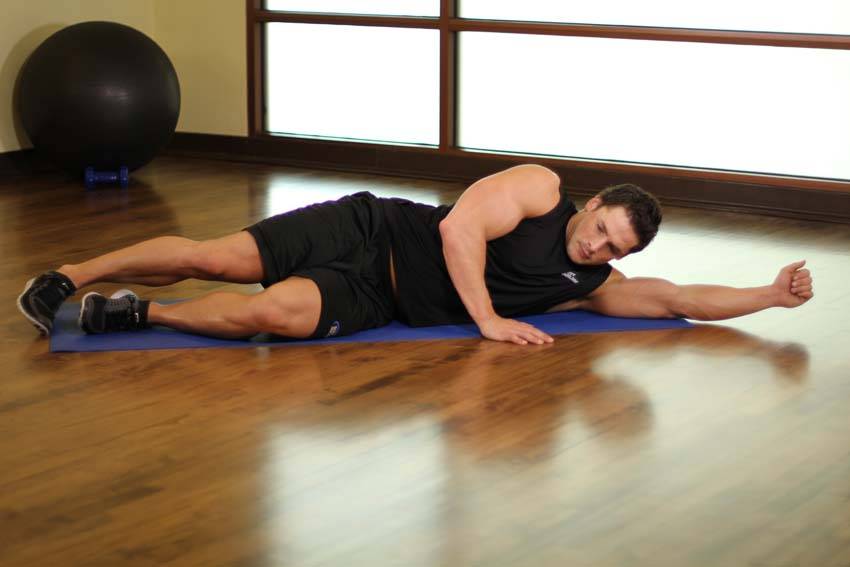
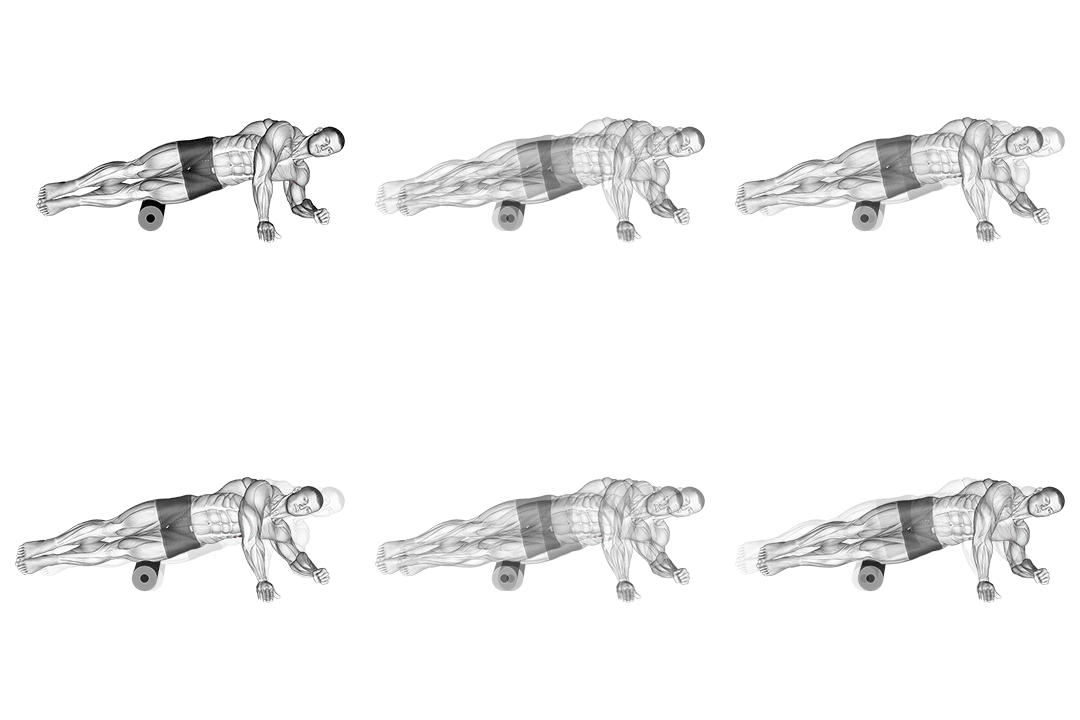
8. Side-lying Floor Stretch
80% match- Lats
- Bodyweight
- Beginner
- Isolation
How to perform this exercise
- First lie on your left side, bending your left knee in front of you to stabilize your torso (use your abdominal muscles as well to hold you upright).
- Straighten your right leg and rest the right foot on the floor behind your left. Straighten your right arm over your head and gently pull on your right wrist to stretch the entire right side of the body. Switch sides.
Sets and reps: Hold for 20 to 30 seconds on each side, 3 sets.
Why this matches
- Movement: static stretch, the same as the Chair Lower Back Stretch
- Primary muscle: lats, the same as the Chair Lower Back Stretch
- Equipment: bodyweight only, the same as the Chair Lower Back Stretch
- Body position: lying face down, not seated
9. Roller Back Stretch
77% match- Spine
- Foam-roll
- Beginner
- Isolation
How to perform this exercise
- Start by sitting on the ground with your legs extended in front of you.
- Place the roller perpendicular to your body, just below your glutes.
- Slowly roll your body backwards, allowing the roller to move up your back.
- Continue rolling until the roller reaches your upper back.
- Pause for a moment, then slowly roll back to the starting position.
- Repeat for the desired number of repetitions.
Sets and reps: 3 sets of 8 to 12 reps, and add reps before you add load.
Why this matches
- Movement: static stretch, the same as the Chair Lower Back Stretch
- Primary muscle: spine, not lats
- Equipment: bodyweight only, the same as the Chair Lower Back Stretch
- Body position: lying face down, not seated
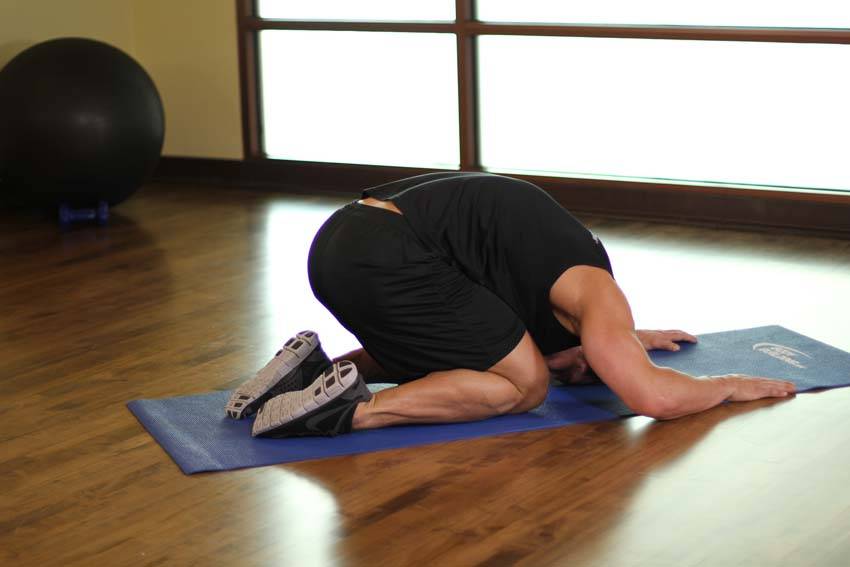
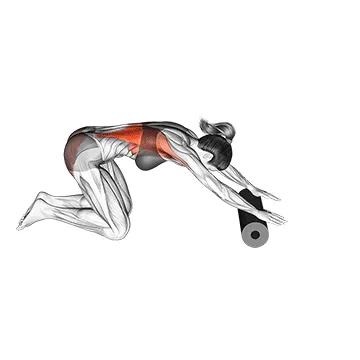
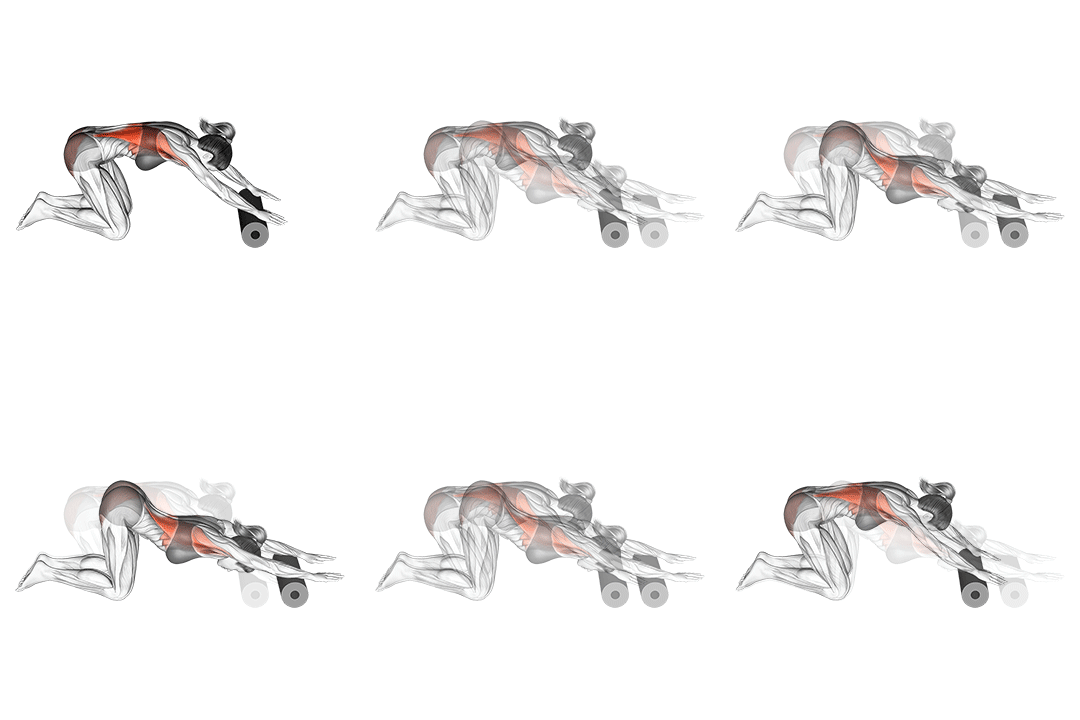
10. Child's Pose
76% match- Abs
- Bodyweight
- Beginner
- Isolation
How to perform this exercise
- Get on your hands and knees, walk your hands in front of you.
- Lower your buttocks down to sit on your heels. Let your arms drag along the floor as you sit back to stretch your entire spine.
- Once you settle onto your heels, bring your hands next to your feet and relax. "breathe" into your back. Rest your forehead on the floor. Avoid this position if you have knee problems.
Sets and reps: 3 sets of 8 to 12 reps, and add reps before you add load.
Why this matches
- Primary muscle: abs, not lats
- Equipment: bodyweight only, the same as the Chair Lower Back Stretch
- Body position: kneeling, not seated
How to Choose the Right Chair Lower Back Stretch Substitute
Select a substitute based on pain, mobility, and training goals. If you have lumbar pain, prioritize thoracic-focused stretches (child's pose with lat reach) that avoid excessive lumbar flexion; cue a long spine and ribcage-down. If you want activation and strength, pick loaded options (single-arm dumbbell row or banded lat pull-apart) and cue full scapular retraction and elbow drive to maximize lat recruitment. For limited space or no equipment, use standing lat stretches and isometric holds, focusing on scapular depression and diaphragmatic breathing to increase tolerance. Progress by adding time under tension, range of motion, or external load.
Chair Lower Back Stretch FAQ
What muscles does Chair Lower Back Stretch work?
The Chair Lower Back Stretch primarily lengthens the latissimus dorsi and mobilizes the thoracolumbar fascia and thoracic spine. It also reduces tension in the posterior shoulder and upper gluteal area. You should feel the stretch along the side of the ribcage when you depress the scapula and hinge from the hips.
What is the best bodyweight alternative to Chair Lower Back Stretch?
Child's pose with a lat reach is the top bodyweight alternative: start on your knees, sit back toward your heels, reach one arm forward with the palm down, and press the ribcage toward the floor. Cue scapular depression and a long spine to emphasize lat lengthening while avoiding lumbar flexion.
Find Alternatives for Any Exercise
Search the exercise database and filter the ranked substitutes by the equipment you own.
Similarity scores compare exercise metadata such as movement pattern, muscles, equipment and body position. They are not a safety rating or a check that you own the equipment. Learn about our methodology