

10 Best Dumbbell Decline One Arm Hammer Press Alternatives
The Dumbbell Decline One Arm Hammer Press is done lying on your back with dumbbells. Ranked closest by our scoring: the Chest Dip (On Dip-pull-up Cage), Korean Dips and the Wide-grip Chest Dip On High Parallel Bars.
Updated Ranked by our 12-factor similarity model How it works
Original Exercise: Dumbbell Decline One Arm Hammer Press
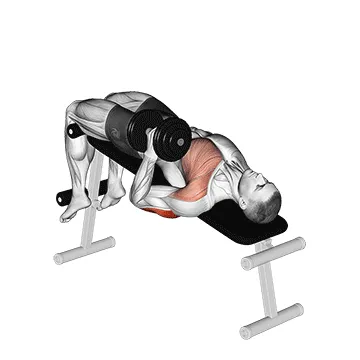
- Primary muscle
- Pectorals
- Equipment
- Dumbbell
- Difficulty
- Advanced
- Type
- Compound
Secondary muscles: Chest, Shoulders
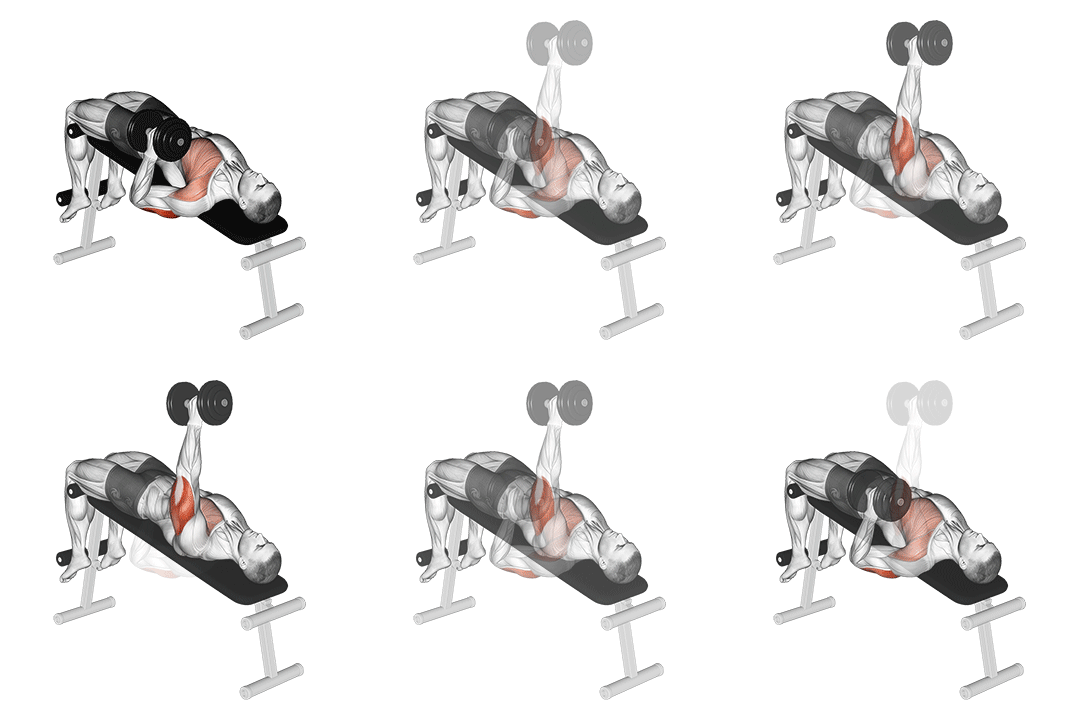
How to perform Dumbbell Decline One Arm Hammer Press
- Lie on a decline bench with a dumbbell in one hand, resting on your chest.
- Extend your arm straight up, keeping your elbow slightly bent.
- Lower the dumbbell down towards your shoulder, keeping your elbow close to your body.
- Press the dumbbell back up to the starting position.
- Repeat for the desired number of repetitions, then switch arms.
Ranked Dumbbell Decline One Arm Hammer Press Alternatives
10 substitutes, ranked by how closely each one matches the Dumbbell Decline One Arm Hammer Press on movement pattern, muscles worked, equipment and body position. The higher the score, the less you change. Open "How to perform this exercise" on a card for the steps; every card title links to that exercise's own alternatives page.
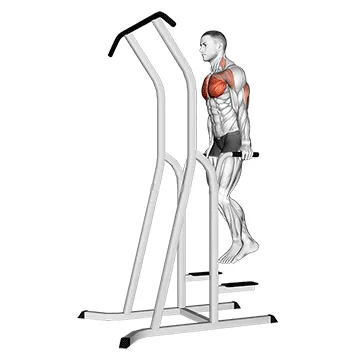
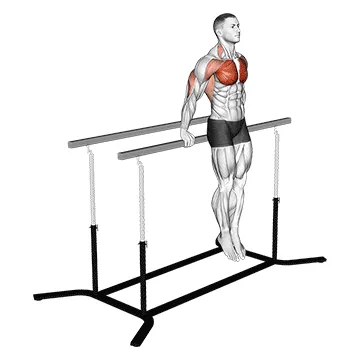
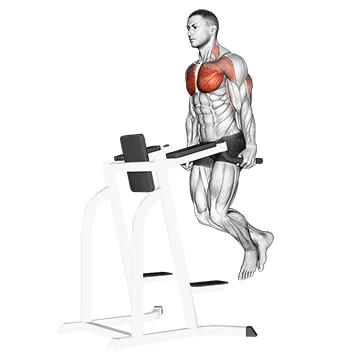
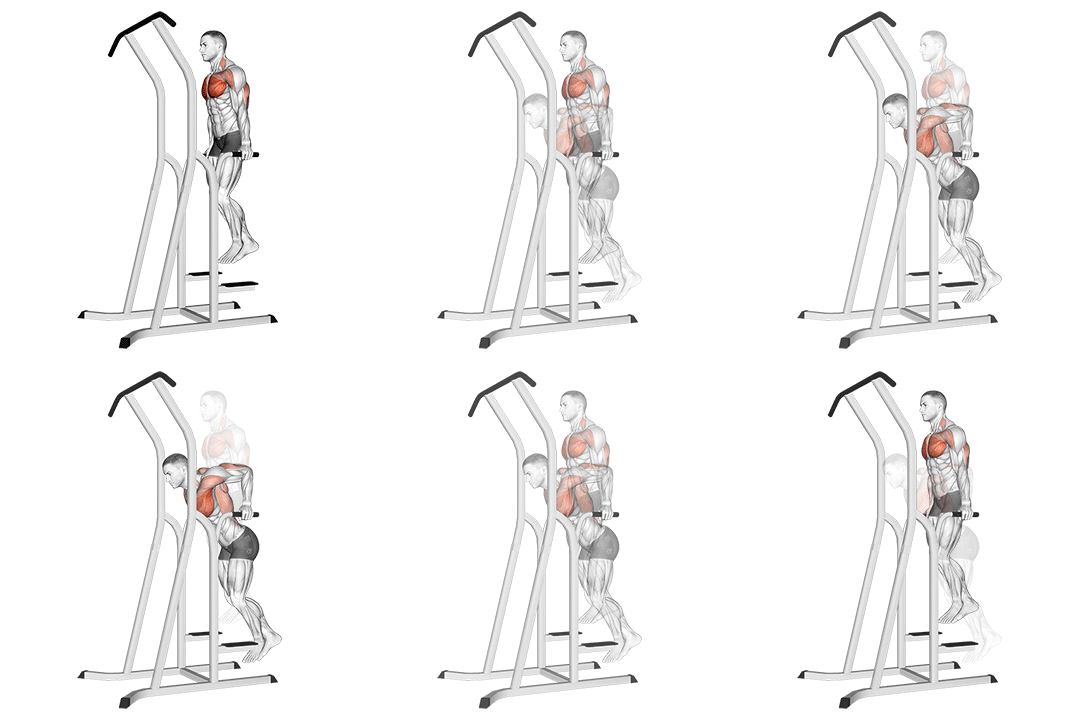
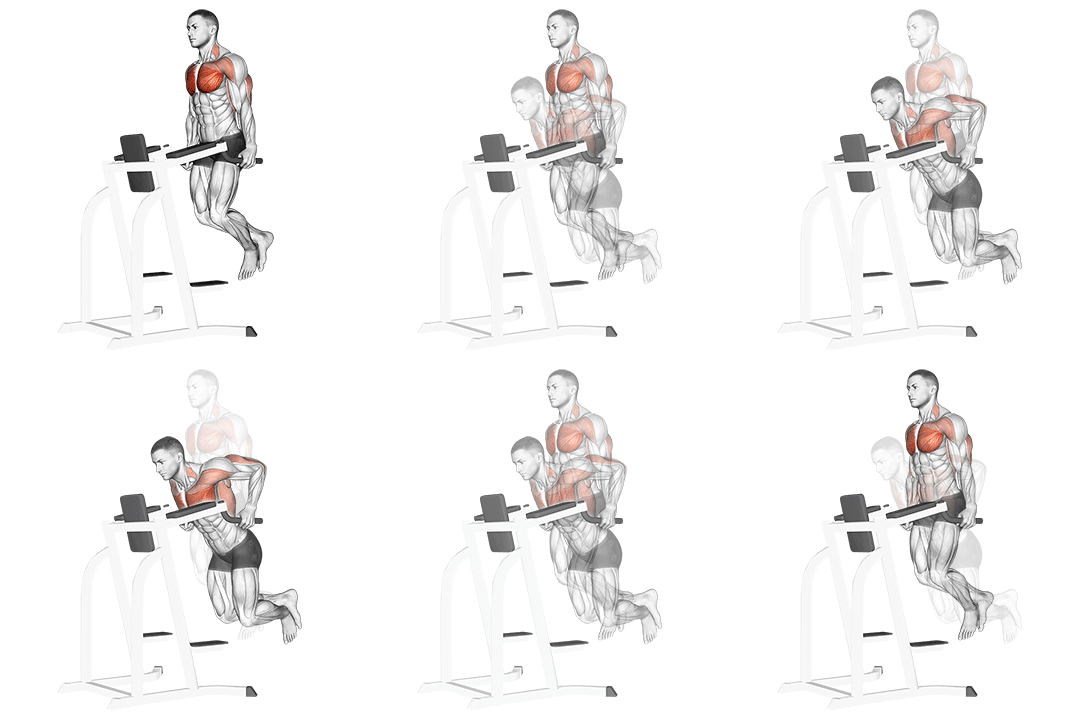
Best match 1. Chest Dip (On Dip-pull-up Cage)
60% match- Pectorals
- Bodyweight
- Intermediate
- Compound
Use this when you have nothing to train with, because it works the pectorals with bodyweight alone.
How to perform this exercise
- Adjust the dip bars to a height that allows you to comfortably grip them.
- Stand between the bars and place your hands on each bar, slightly wider than shoulder-width apart.
- Jump up and straighten your arms, supporting your body weight on the bars.
- Bend your knees and cross your ankles behind you.
- Lower your body by bending your elbows, keeping your chest up and your shoulders down.
- Continue lowering until your shoulders are below your elbows or until you feel a stretch in your chest.
- Push through your palms and extend your elbows to raise your body back up to the starting position.
- Repeat for the desired number of repetitions.
Sets and reps: 3 or 4 sets of 6 to 10 reps.
Why this matches
- Primary muscle: pectorals, the same as the Dumbbell Decline One Arm Hammer Press
- Equipment: bodyweight only, not free weights
- Body position: hanging, not lying on your back
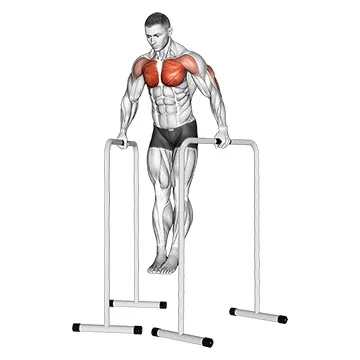
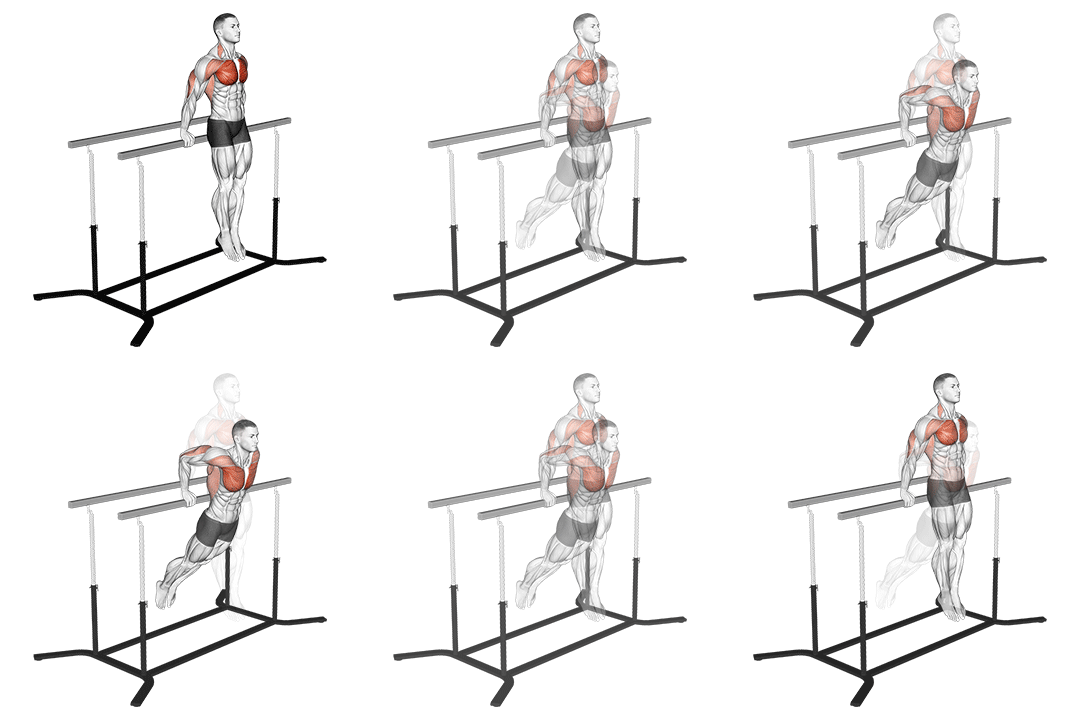
2. Korean Dips
58% match- Pectorals
- Bodyweight
- Advanced
- Compound
How to perform this exercise
- Position yourself between two parallel bars with your arms extended and supporting your body weight.
- Lower your body by bending your elbows until your upper arms are parallel to the ground.
- Pause for a moment, then push yourself back up to the starting position by straightening your arms.
- Repeat for the desired number of repetitions.
Sets and reps: 3 or 4 sets of 6 to 10 reps.
Why this matches
- Primary muscle: pectorals, the same as the Dumbbell Decline One Arm Hammer Press
- Equipment: bodyweight only, not free weights
- Body position: standing, not lying on your back
- Pectorals
- Bodyweight
- Advanced
- Compound
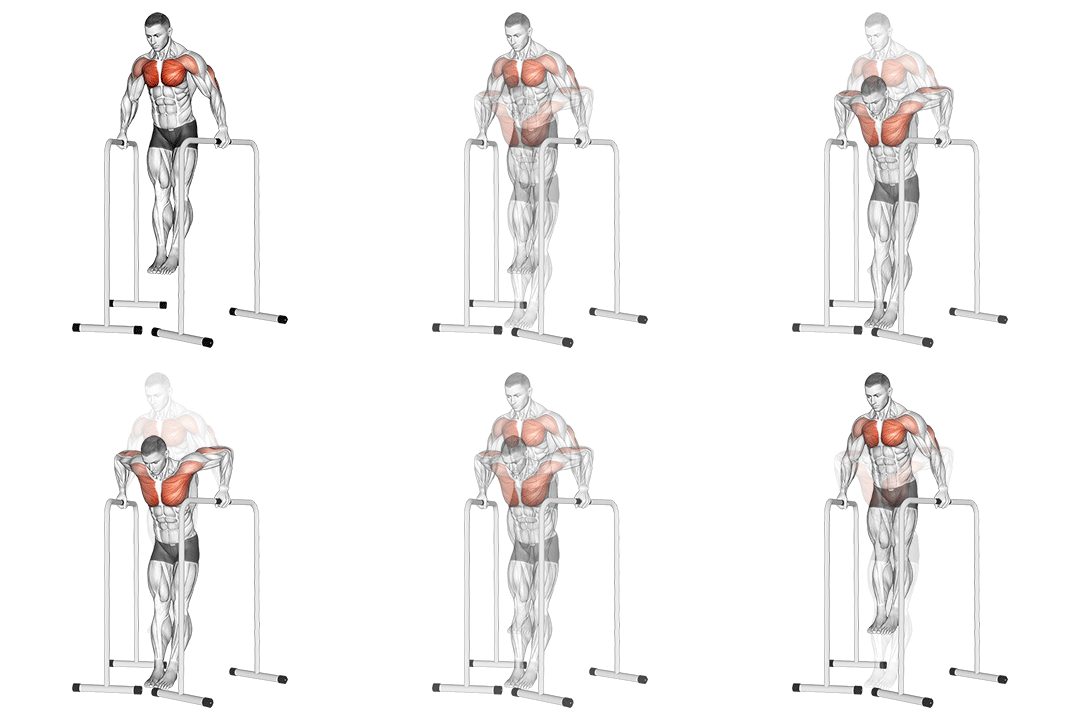
How to perform this exercise
- Position yourself on the parallel bars with your arms fully extended and your body suspended in the air.
- Lean forward slightly and lower your body by bending your elbows until your chest is just above the bars.
- Pause for a moment, then push yourself back up to the starting position by straightening your arms.
- Repeat for the desired number of repetitions.
Sets and reps: 3 or 4 sets of 6 to 10 reps.
Why this matches
- Primary muscle: pectorals, the same as the Dumbbell Decline One Arm Hammer Press
- Equipment: bodyweight only, not free weights
- Body position: hanging, not lying on your back
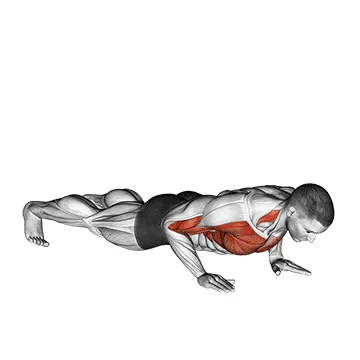
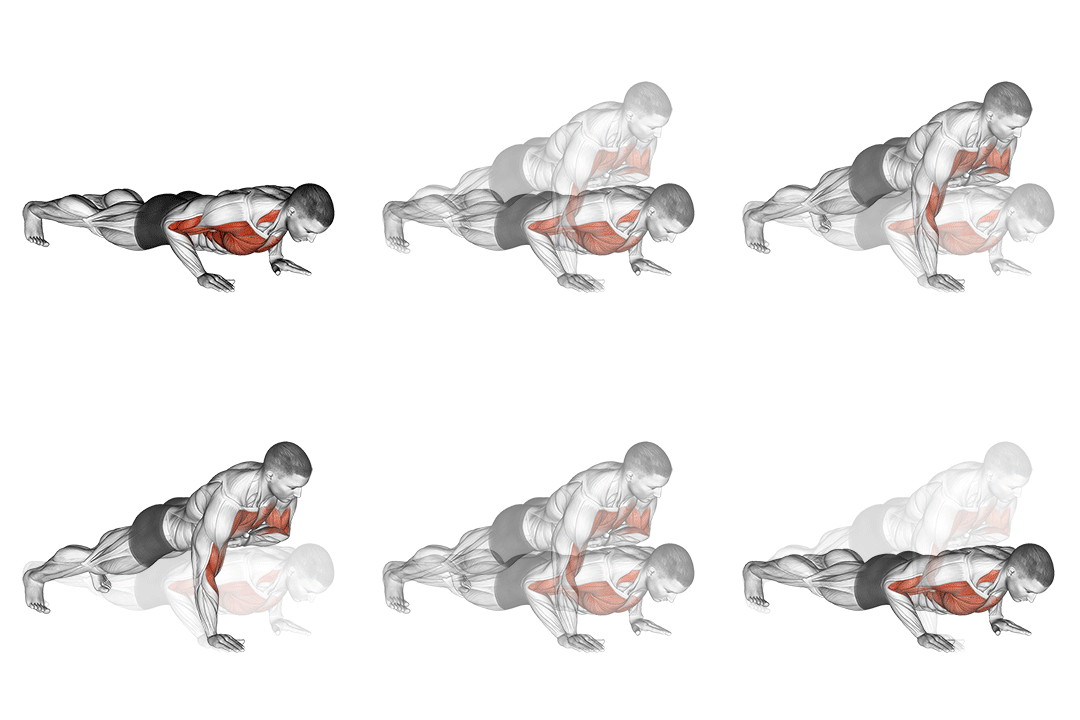
4. Decline Push-up
55% match- Pectorals
- Bodyweight
- Intermediate
- Compound
How to perform this exercise
- Place your hands on the ground slightly wider than shoulder-width apart, with your feet elevated on a stable surface.
- Keep your body in a straight line from head to toe, engaging your core muscles.
- Lower your chest towards the ground by bending your elbows, keeping them close to your body.
- Push through your palms to extend your arms and return to the starting position.
- Repeat for the desired number of repetitions.
Sets and reps: 3 or 4 sets of 6 to 10 reps.
Why this matches
- Primary muscle: pectorals, the same as the Dumbbell Decline One Arm Hammer Press
- Equipment: bodyweight only, not free weights
- Body position: lying face down, not lying on your back
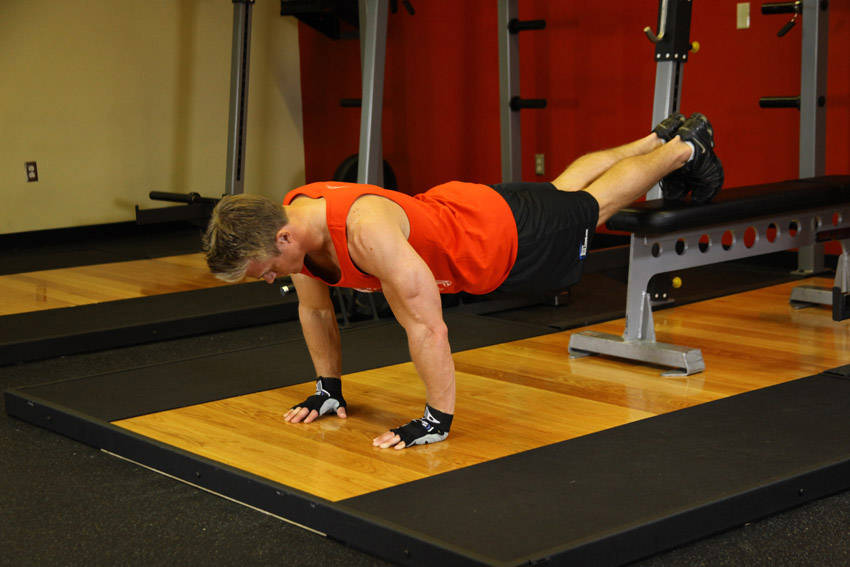
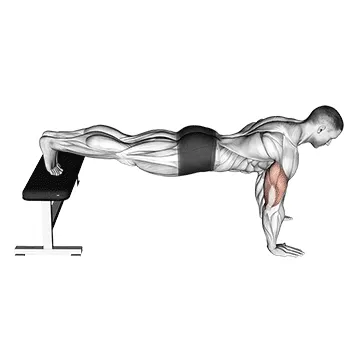
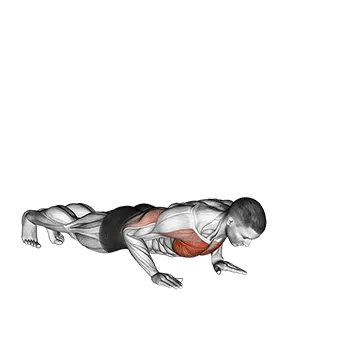
5. Push-ups With Feet Elevated
55% match- Pectorals
- Bodyweight
- Intermediate
- Compound
How to perform this exercise
- Lie on the floor face down and place your hands about 36 inches apart from each other holding your torso up at arms length.
- Place your toes on top of a flat bench. This will allow your body to be elevated. Note: The higher the elevation of the flat bench, the higher the resistance of the exercise is.
- Lower yourself until your chest almost touches the floor as you inhale.
- Using your pectoral muscles, press your upper body back up to the starting position and squeeze your chest. Breathe out as you perform this step.
- After a second pause at the contracted position, repeat the movement for the prescribed amount of repetitions.
Sets and reps: 3 or 4 sets of 6 to 10 reps.
Why this matches
- Primary muscle: pectorals, the same as the Dumbbell Decline One Arm Hammer Press
- Equipment: bodyweight only, not free weights
- Body position: lying face down, not lying on your back
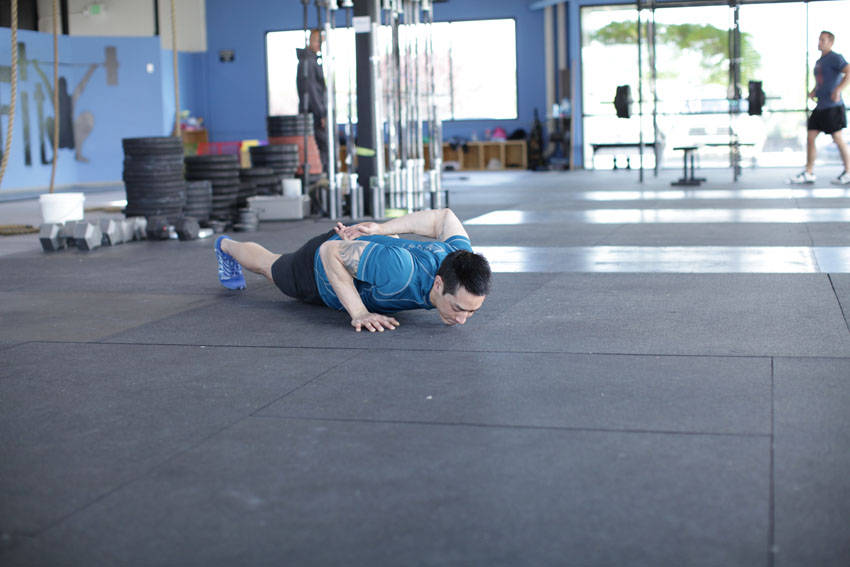
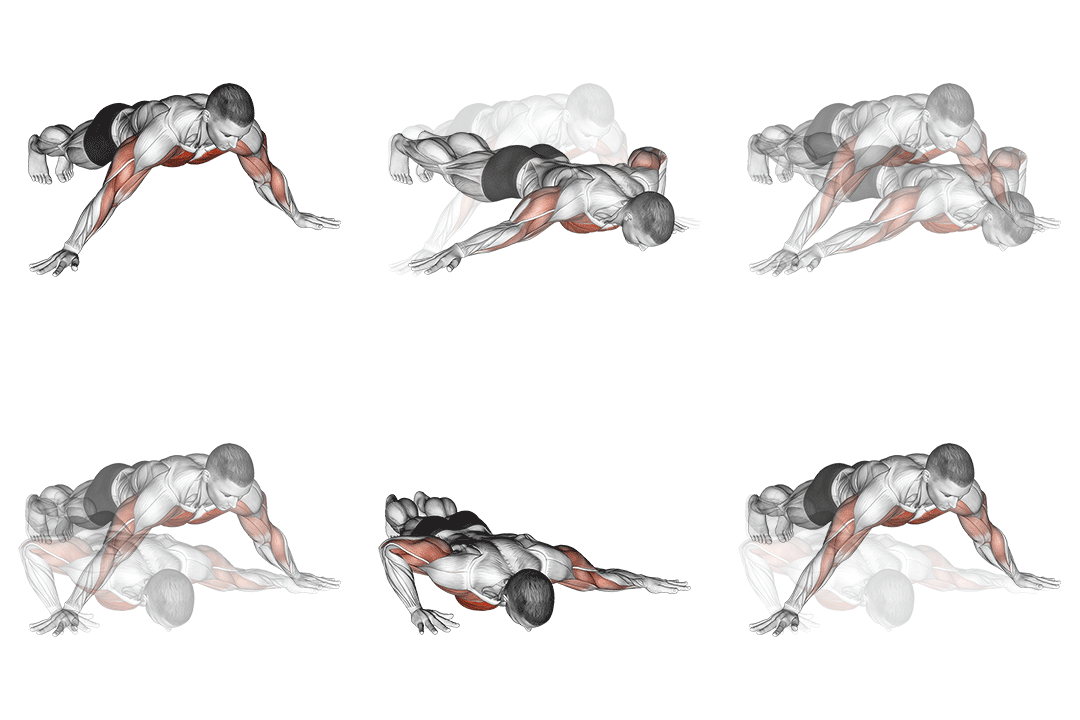
6. Single-arm Push-up
50% match- Pectorals
- Bodyweight
- Advanced
- Compound
How to perform this exercise
- Begin laying prone on the ground. Move yourself into a position supporting your weight on your toes and one arm. Your working arm should be placed directly under the shoulder, fully extended. Your legs should be extended, and for this movement you may need a wider base, placing your feet further apart than in a normal push-up.
- Maintain good posture, and place your free hand behind your back. This will be your starting position.
- Lower yourself by allowing the elbow to flex until you touch the ground.
- Descend slowly, and reverse direction be extending the arm to return to the starting position.
Sets and reps: 3 or 4 sets of 6 to 10 reps on each side.
Why this matches
- Primary muscle: pectorals, the same as the Dumbbell Decline One Arm Hammer Press
- Equipment: bodyweight only, not free weights
- Body position: lying face down, not lying on your back
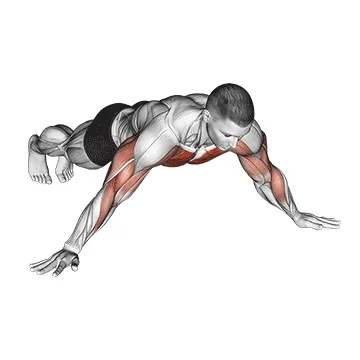
7. Archer Push Up
50% match- Pectorals
- Bodyweight
- Advanced
- Compound
How to perform this exercise
- Start in a push-up position with your hands slightly wider than shoulder-width apart.
- Extend one arm straight out to the side, parallel to the ground.
- Lower your body by bending your elbows, keeping your back straight and core engaged.
- Push back up to the starting position.
- Repeat on the other side, extending the opposite arm out to the side.
- Continue alternating sides for the desired number of repetitions.
Sets and reps: 3 or 4 sets of 6 to 10 reps on each side.
Why this matches
- Primary muscle: pectorals, the same as the Dumbbell Decline One Arm Hammer Press
- Equipment: bodyweight only, not free weights
- Body position: lying face down, not lying on your back
8. Shoulder Tap Push-up
49% match- Pectorals
- Bodyweight
- Intermediate
- Compound
How to perform this exercise
- Start in a high plank position with your hands slightly wider than shoulder-width apart and your body in a straight line from head to heels.
- Lower your body towards the ground by bending your elbows, keeping them close to your sides.
- As you push back up, lift your right hand off the ground and tap your left shoulder.
- Return your right hand to the ground and repeat the push-up, this time lifting your left hand and tapping your right shoulder.
- Continue alternating shoulder taps with each push-up repetition.
- Maintain a stable core and avoid excessive hip rotation throughout the exercise.
- Repeat for the desired number of repetitions.
Sets and reps: 3 or 4 sets of 6 to 10 reps on each side.
Why this matches
- Primary muscle: pectorals, the same as the Dumbbell Decline One Arm Hammer Press
- Equipment: bodyweight only, not free weights
- Body position: lying face down, not lying on your back
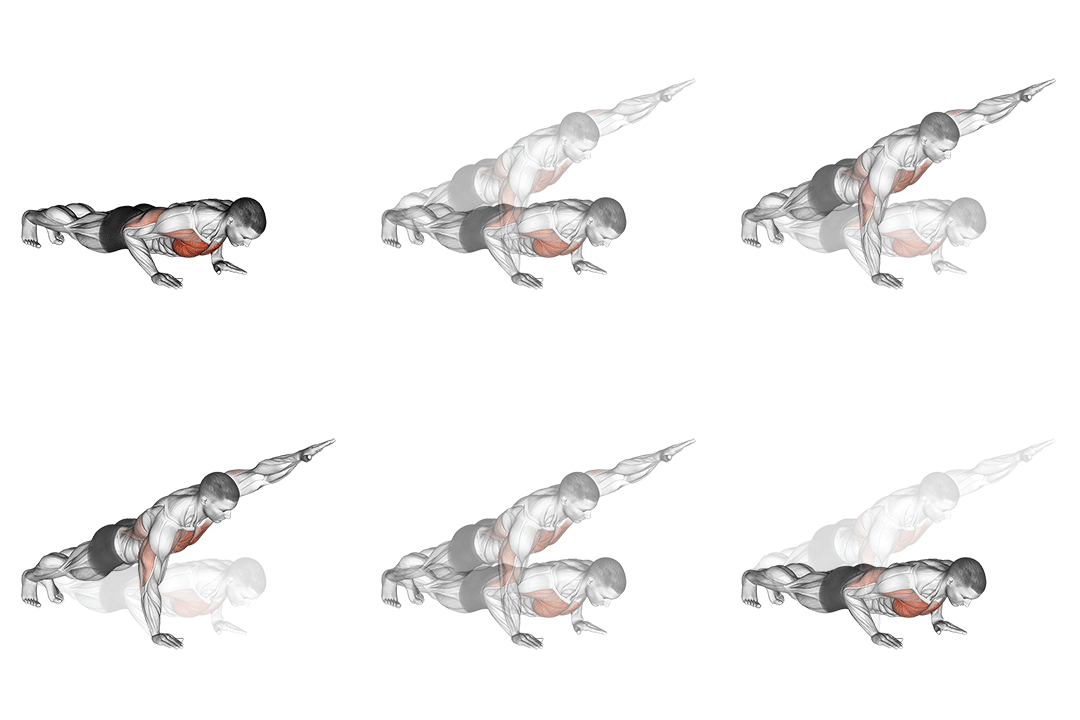
9. Raise Single Arm Push-up
49% match- Pectorals
- Bodyweight
- Advanced
- Compound
How to perform this exercise
- Start in a push-up position with your hands slightly wider than shoulder-width apart and your feet together.
- Extend one arm straight out to the side, parallel to the ground.
- Lower your body towards the ground by bending your elbows, keeping your back straight and core engaged.
- Push back up to the starting position, using your chest muscles to lift your body.
- Repeat with the other arm extended.
Sets and reps: 3 or 4 sets of 6 to 10 reps on each side.
Why this matches
- Primary muscle: pectorals, the same as the Dumbbell Decline One Arm Hammer Press
- Equipment: bodyweight only, not free weights
- Body position: lying face down, not lying on your back
- Balance: harder to stay steady on than the Dumbbell Decline One Arm Hammer Press
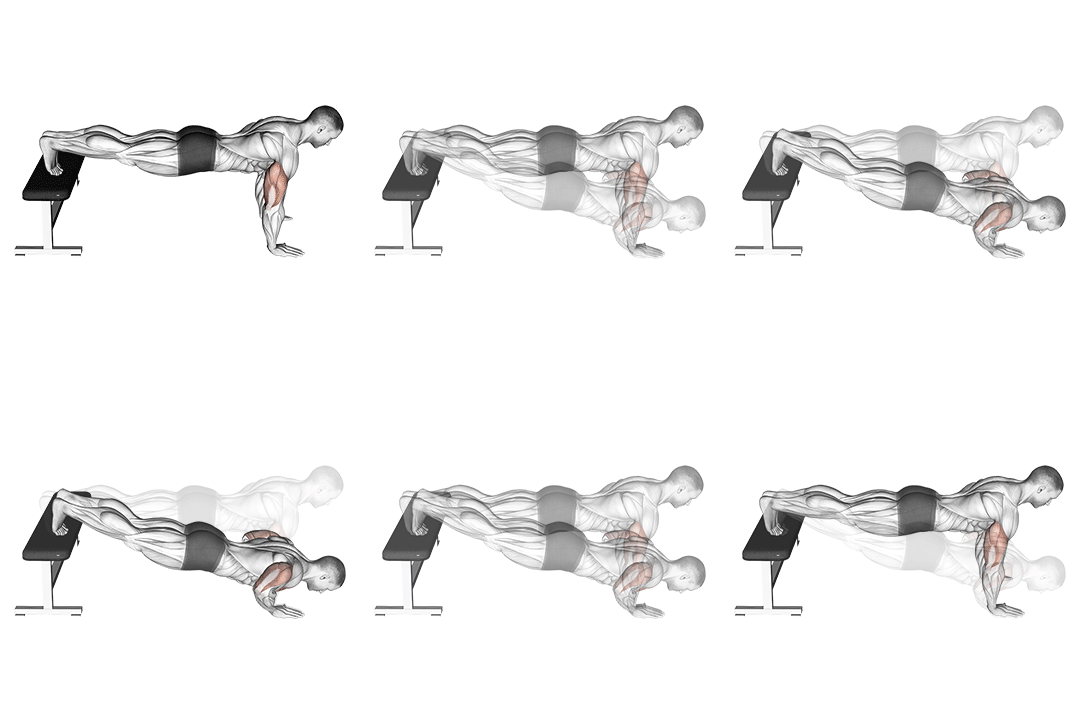
10. Chest Dip
49% match- Pectorals
- Bodyweight
- Advanced
- Compound
How to perform this exercise
- Position yourself on parallel bars with your arms fully extended and your body straight.
- Lower your body by bending your elbows until your shoulders are below your elbows.
- Push yourself back up to the starting position by straightening your arms.
- Repeat for the desired number of repetitions.
Sets and reps: 3 or 4 sets of 6 to 10 reps.
Why this matches
- Primary muscle: pectorals, the same as the Dumbbell Decline One Arm Hammer Press
- Equipment: bodyweight only, not free weights
- Body position: hanging, not lying on your back
Why You Might Need a Dumbbell Decline One Arm Hammer Press Alternative
You might substitute this exercise due to shoulder pain, lack of a decline bench, or to progress strength and balance. The decline angle biases the lower pectoralis major; removing that exact movement can reduce discomfort or match available equipment. Unilateral substitutes address bilateral deficit and core anti-rotation demands, while cables and machines provide constant tension to maintain pec activation. Use technique cues like keeping the elbow ~45° from the torso to reduce impingement and emphasize pectoral fibers. Substitutes let you manipulate load path, range of motion, and stability to keep progressive overload without exacerbating joint issues.
How to Choose the Right Dumbbell Decline One Arm Hammer Press Substitute
Pick a substitute based on equipment, desired pec emphasis, and stability needs. If you lack a decline bench, use a neutral-grip flat or slight-decline press with feet elevated to shift activation to lower pecs; cue: tilt bench 15–30° and retract scapula. For shoulder sensitivity, prefer a neutral (hammer) grip and control the eccentric for 3–4 seconds to lower joint stress and increase time under tension. Choose cables or machines for constant tension and controlled arc, or bodyweight decline archer/single-arm push-ups to build unilateral strength and anti-rotation stability. Prioritize exercises that let you progress load while maintaining clean technique.
Dumbbell Decline One Arm Hammer Press FAQ
What muscles does Dumbbell Decline One Arm Hammer Press work?
The exercise primarily targets the lower fibers of the pectoralis major, with secondary activation of the anterior deltoid and triceps brachii. Biomechanically, the decline angle shifts the line of pull toward the lower pecs; cue to retract the scapula and press through a neutral grip to maximize pec recruitment.
What is the best bodyweight alternative to Dumbbell Decline One Arm Hammer Press?
A decline archer push-up or decline single-arm push-up are the best bodyweight options because they replicate unilateral load and lower-chest emphasis. Set your feet on a box 12–18 inches high, keep a hollow-body position, and lower slowly while driving through the palm to maintain pec loading and spinal stability.
Can I build muscle without doing Dumbbell Decline One Arm Hammer Press?
Yes. You can build comparable chest mass using other decline or unilateral pressing movements, plus progressive overload and proper volume. Focus on full range of motion, controlled eccentrics (3–4 seconds), and maintain tension on the pecs, use neutral grips or cables to preserve shoulder health while driving hypertrophy.
Find Alternatives for Any Exercise
Search the exercise database and filter the ranked substitutes by the equipment you own.
Similarity scores compare exercise metadata such as movement pattern, muscles, equipment and body position. They are not a safety rating or a check that you own the equipment. Learn about our methodology