

10 Best Korean Dips Alternatives for Chest Development
Korean Dips are done standing. Ranked closest by our scoring: the Chest Dip (On Dip-pull-up Cage), Dips - Chest Version and the Wide-grip Chest Dip On High Parallel Bars.
Updated Ranked by our 12-factor similarity model How it works
Original Exercise: Korean Dips
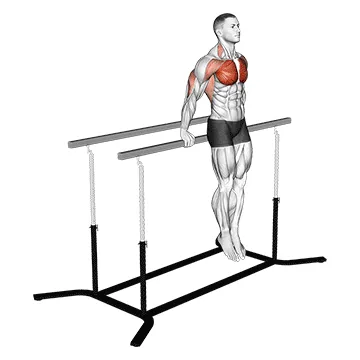
- Primary muscle
- Pectorals
- Equipment
- Bodyweight
- Difficulty
- Advanced
- Type
- Compound
Secondary muscles: Triceps, Shoulders
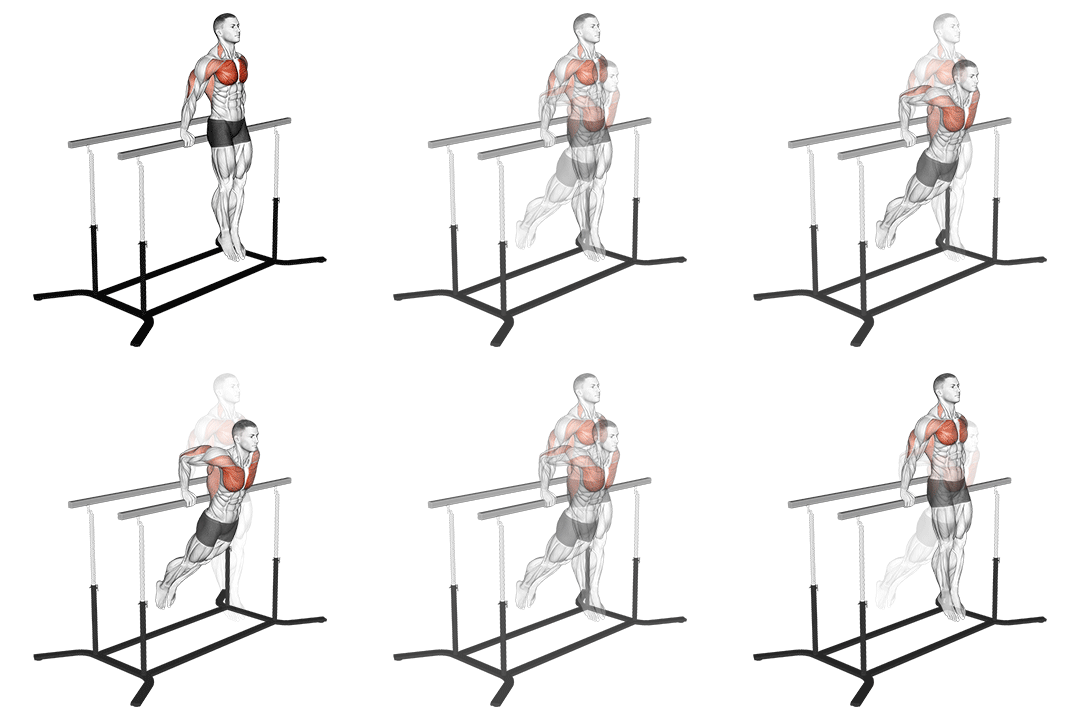
How to perform Korean Dips
- Position yourself between two parallel bars with your arms extended and supporting your body weight.
- Lower your body by bending your elbows until your upper arms are parallel to the ground.
- Pause for a moment, then push yourself back up to the starting position by straightening your arms.
- Repeat for the desired number of repetitions.
Ranked Korean Dips Alternatives
10 substitutes, ranked by how closely each one matches Korean Dips on movement pattern, muscles worked, equipment and body position. The higher the score, the less you change. Open "How to perform this exercise" on a card for the steps; every card title links to that exercise's own alternatives page.
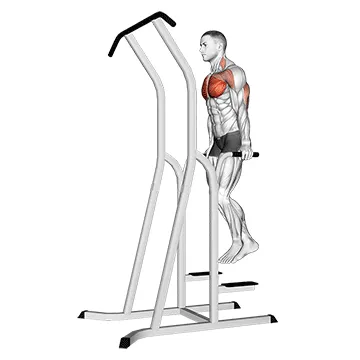
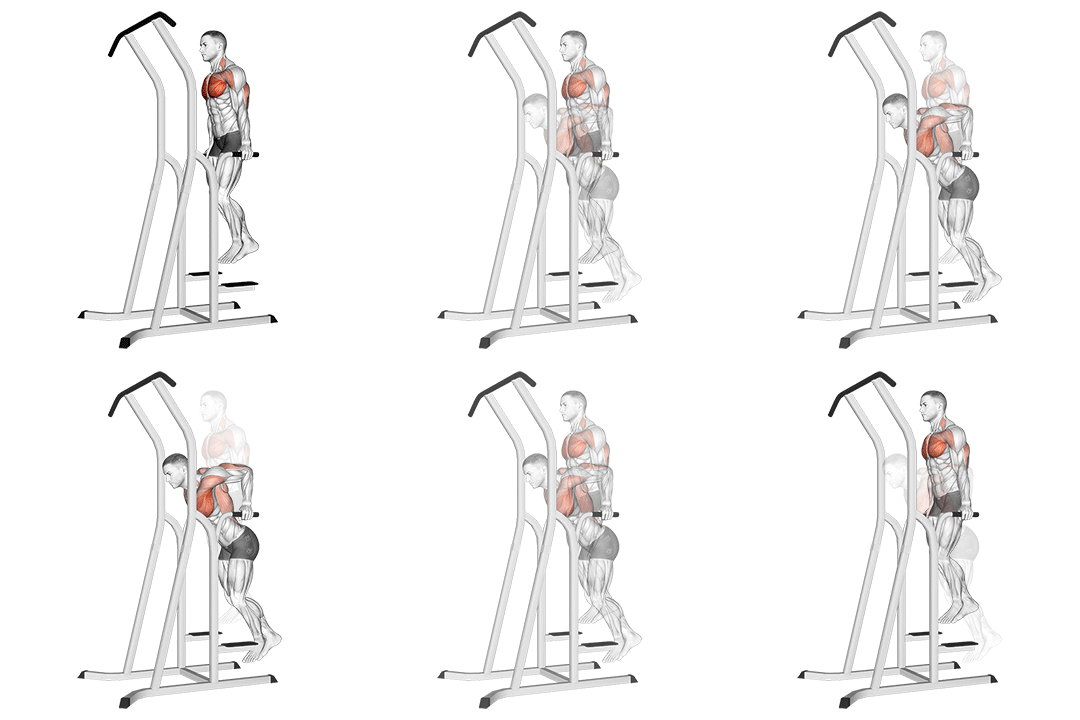
Best match 1. Chest Dip (On Dip-pull-up Cage)
90% match- Pectorals
- Bodyweight
- Intermediate
- Compound
Pick this when you want an easier version that still works the pectorals.
How to perform this exercise
- Adjust the dip bars to a height that allows you to comfortably grip them.
- Stand between the bars and place your hands on each bar, slightly wider than shoulder-width apart.
- Jump up and straighten your arms, supporting your body weight on the bars.
- Bend your knees and cross your ankles behind you.
- Lower your body by bending your elbows, keeping your chest up and your shoulders down.
- Continue lowering until your shoulders are below your elbows or until you feel a stretch in your chest.
- Push through your palms and extend your elbows to raise your body back up to the starting position.
- Repeat for the desired number of repetitions.
Sets and reps: 3 or 4 sets of 6 to 10 reps.
Why this matches
- Primary muscle: pectorals, the same as Korean Dips
- Equipment: bodyweight only, the same as Korean Dips
- Body position: hanging, not standing
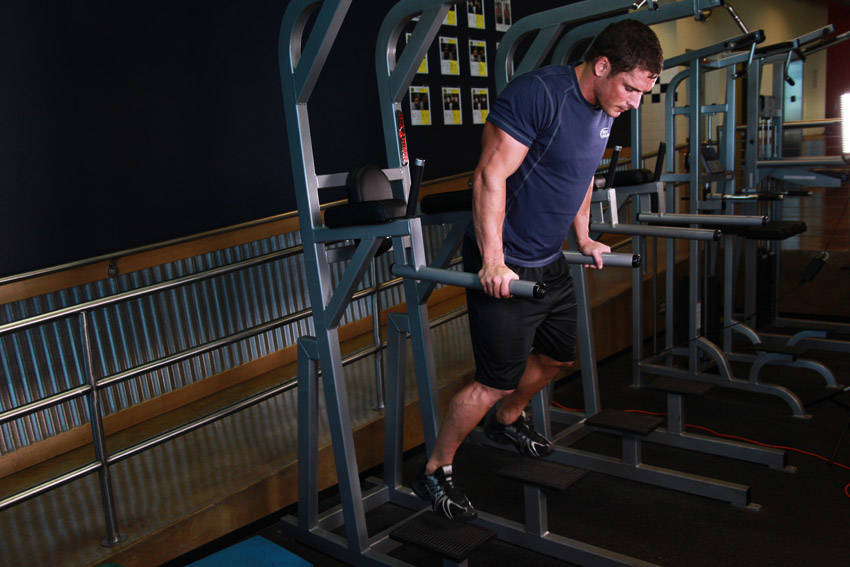
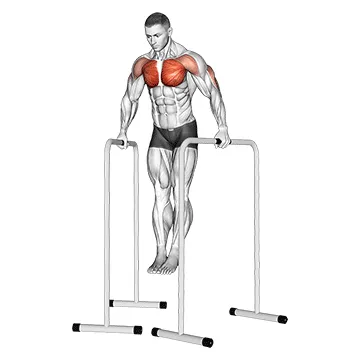
2. Dips - Chest Version
90% match- Pectorals
- Other
- Intermediate
- Compound
How to perform this exercise
- For this exercise you will need access to parallel bars. To get yourself into the starting position, hold your body at arms length (arms locked) above the bars.
- While breathing in, lower yourself slowly with your torso leaning forward around 30 degrees or so and your elbows flared out slightly until you feel a slight stretch in the chest.
- Once you feel the stretch, use your chest to bring your body back to the starting position as you breathe out. Tip: Remember to squeeze the chest at the top of the movement for a second.
- Repeat the movement for the prescribed amount of repetitions.
Sets and reps: 3 or 4 sets of 6 to 10 reps.
Why this matches
- Primary muscle: pectorals, the same as Korean Dips
- Equipment: bodyweight only, the same as Korean Dips
- Body position: hanging, not standing
- Pectorals
- Bodyweight
- Advanced
- Compound
Pick this when you want to work the pectorals with less balance to manage.
How to perform this exercise
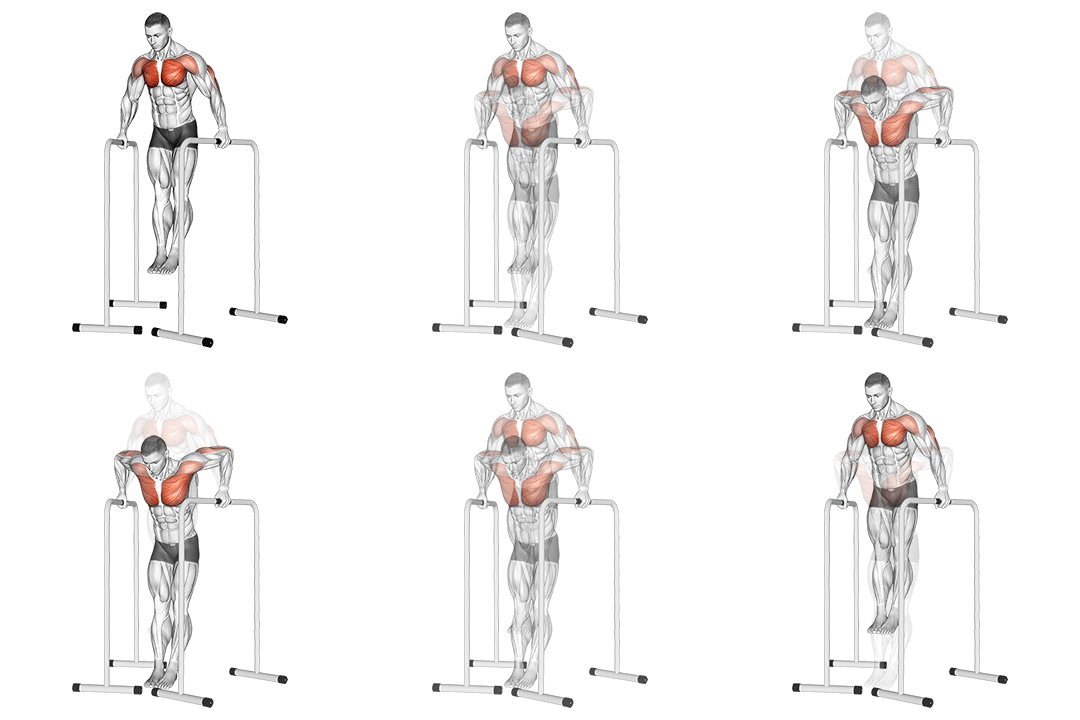
- Position yourself on the parallel bars with your arms fully extended and your body suspended in the air.
- Lean forward slightly and lower your body by bending your elbows until your chest is just above the bars.
- Pause for a moment, then push yourself back up to the starting position by straightening your arms.
- Repeat for the desired number of repetitions.
Sets and reps: 3 or 4 sets of 6 to 10 reps.
Why this matches
- Primary muscle: pectorals, the same as Korean Dips
- Equipment: bodyweight only, the same as Korean Dips
- Body position: hanging, not standing
- Balance: easier to stay steady on than Korean Dips
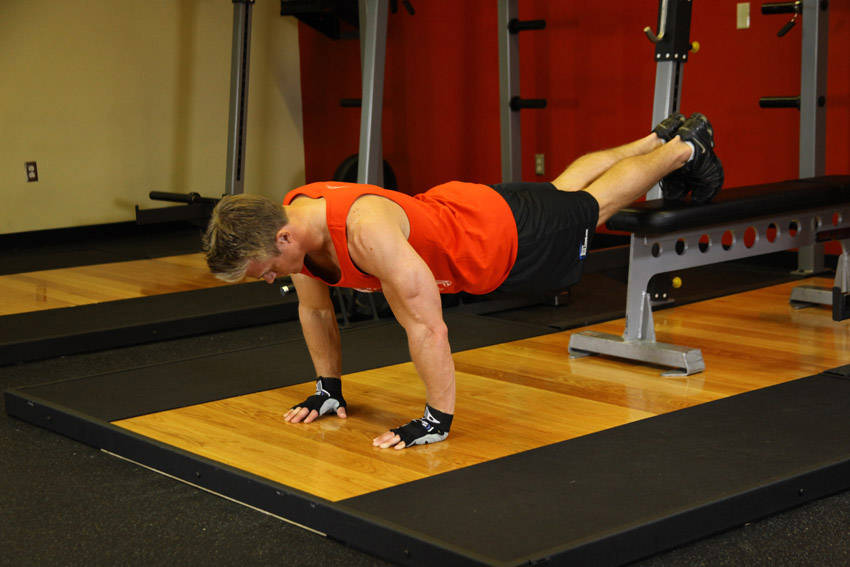
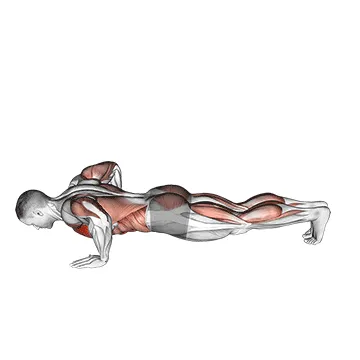
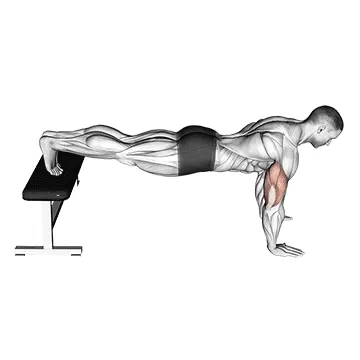
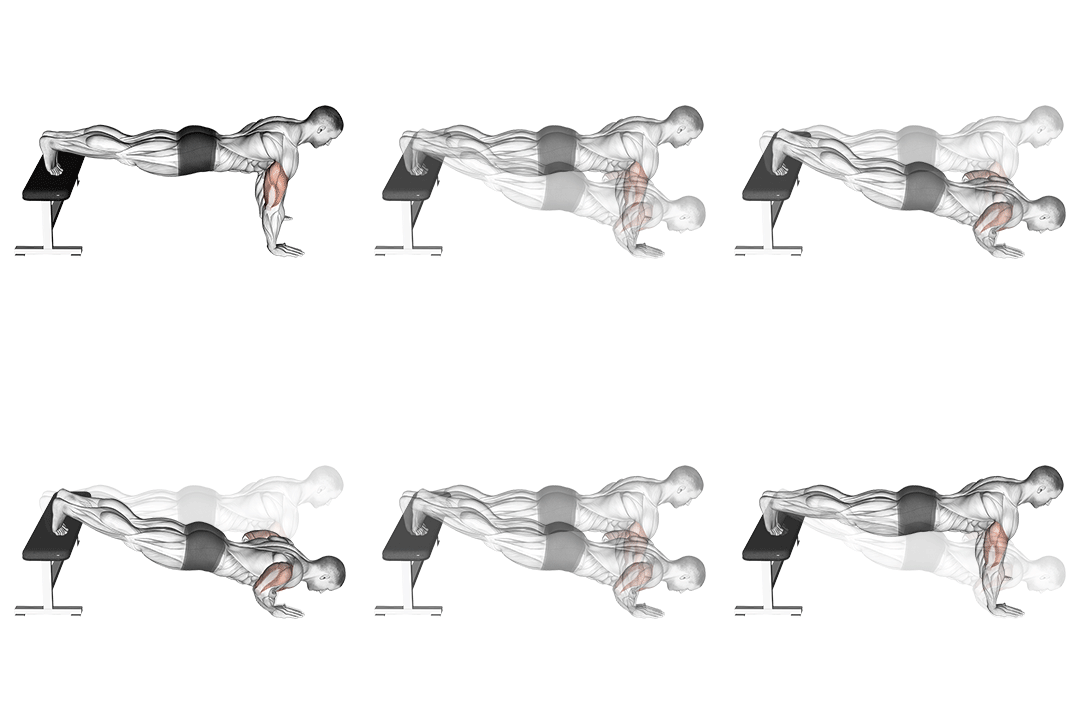
4. Push-ups With Feet Elevated
85% match- Pectorals
- Bodyweight
- Intermediate
- Compound
How to perform this exercise
- Lie on the floor face down and place your hands about 36 inches apart from each other holding your torso up at arms length.
- Place your toes on top of a flat bench. This will allow your body to be elevated. Note: The higher the elevation of the flat bench, the higher the resistance of the exercise is.
- Lower yourself until your chest almost touches the floor as you inhale.
- Using your pectoral muscles, press your upper body back up to the starting position and squeeze your chest. Breathe out as you perform this step.
- After a second pause at the contracted position, repeat the movement for the prescribed amount of repetitions.
Sets and reps: 3 or 4 sets of 6 to 10 reps.
Why this matches
- Primary muscle: pectorals, the same as Korean Dips
- Equipment: bodyweight only, the same as Korean Dips
- Body position: lying face down, not standing
5. Modified Hindu Push-up
83% match- Pectorals
- Bodyweight
- Intermediate
- Compound
How to perform this exercise
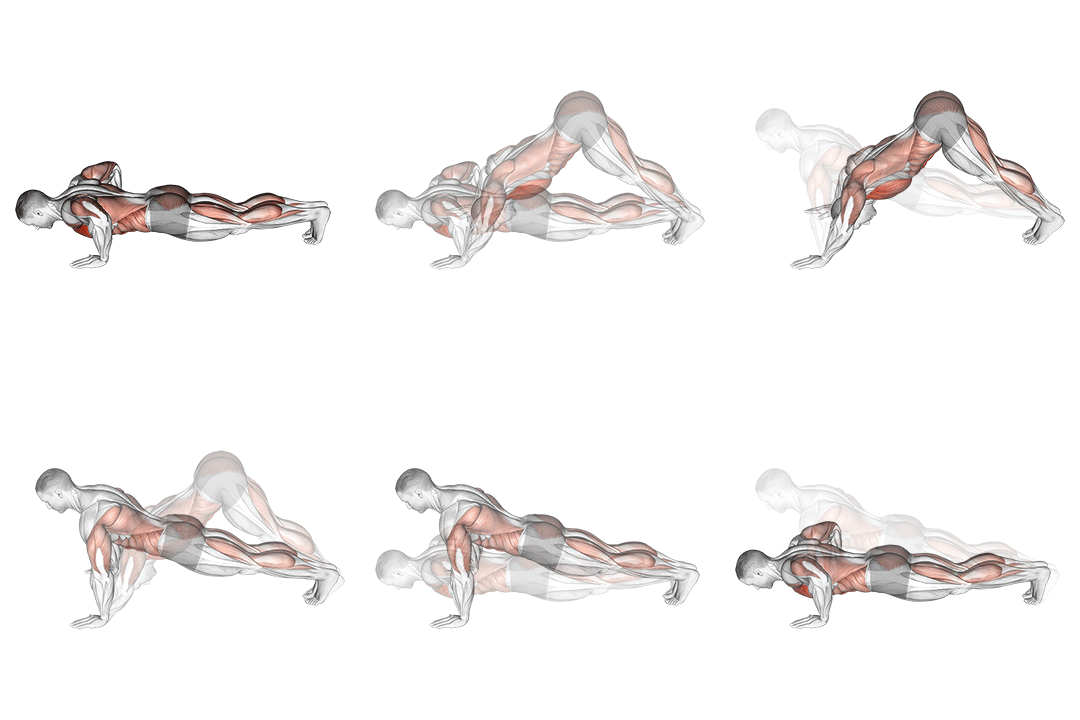
- Start in a push-up position with your hands slightly wider than shoulder-width apart and your feet hip-width apart.
- Lower your body towards the ground, bending your elbows and keeping your core engaged.
- As you lower your body, shift your weight back and lift your hips up towards the ceiling, creating an inverted V shape with your body.
- Continue to lower your body until your chest is just above the ground, then reverse the movement, pushing your hips back down and extending your arms to return to the starting position.
- Repeat for the desired number of repetitions.
Sets and reps: 3 or 4 sets of 6 to 10 reps.
Why this matches
- Primary muscle: pectorals, the same as Korean Dips
- Equipment: bodyweight only, the same as Korean Dips
- Body position: standing, the same as Korean Dips
- Balance: easier to stay steady on than Korean Dips
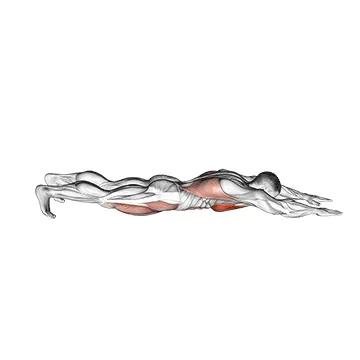
6. Superman Push-up
81% match- Pectorals
- Bodyweight
- Advanced
- Compound
The same equipment, done lying face down instead.
How to perform this exercise
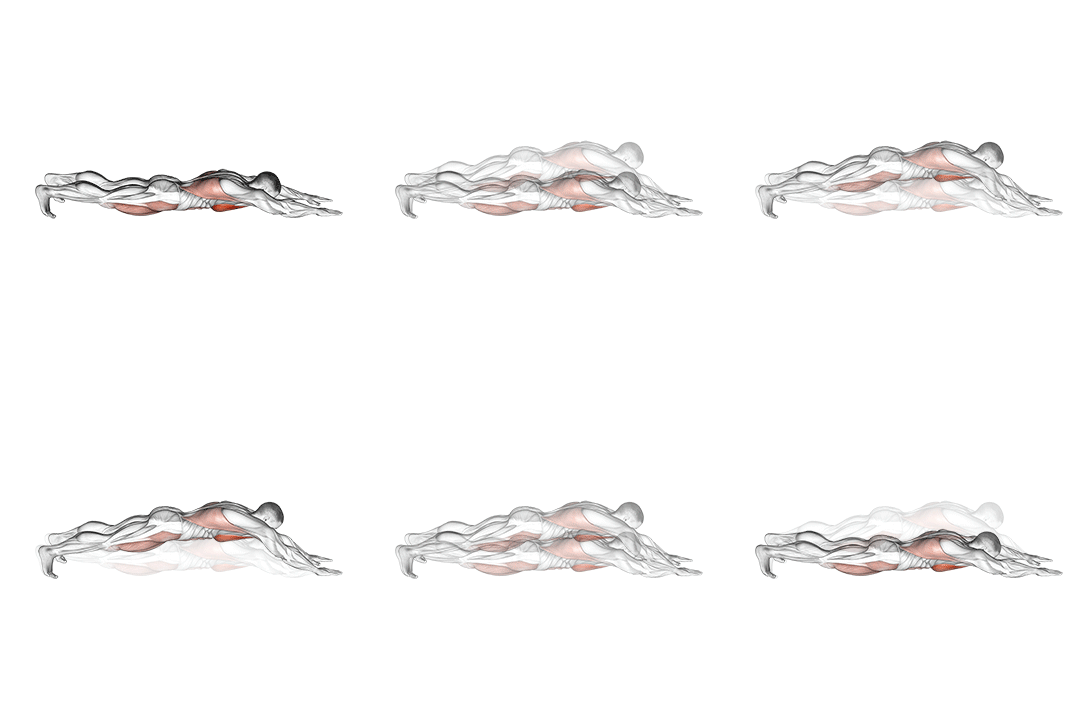
- Start in a high plank position with your hands slightly wider than shoulder-width apart and your feet together.
- Engage your core and lower your body towards the ground, keeping your elbows close to your sides.
- As you lower your body, simultaneously lift your right arm and left leg off the ground, extending them straight out.
- Pause for a moment at the top, then lower your arm and leg back down while pushing yourself back up to the starting position.
- Repeat the movement, this time lifting your left arm and right leg.
- Continue alternating sides for the desired number of repetitions.
Sets and reps: 3 or 4 sets of 6 to 10 reps.
Why this matches
- Primary muscle: pectorals, the same as Korean Dips
- Equipment: bodyweight only, the same as Korean Dips
- Body position: lying face down, not standing
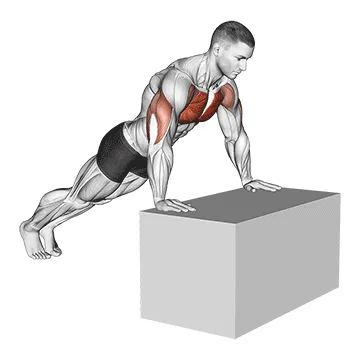
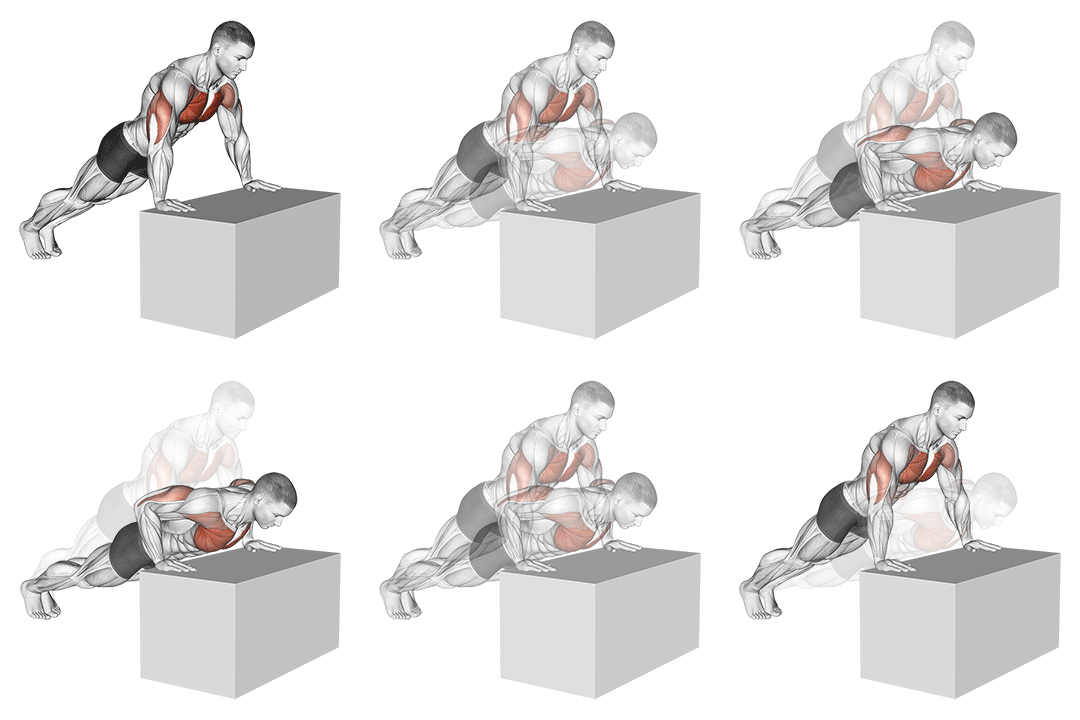
7. Incline Push-up (On Box)
80% match- Pectorals
- Bodyweight
- Beginner
- Compound
How to perform this exercise
- Place your hands on the edge of a box or elevated surface, slightly wider than shoulder-width apart.
- Extend your legs behind you, resting on the balls of your feet, creating a straight line from your head to your heels.
- Lower your chest towards the box by bending your elbows, keeping your body in a straight line.
- Pause for a moment at the bottom, then push yourself back up to the starting position by straightening your arms.
- Repeat for the desired number of repetitions.
Sets and reps: 3 sets of 8 to 12 reps, and add reps before you add load.
Why this matches
- Primary muscle: pectorals, the same as Korean Dips
- Equipment: bodyweight only, the same as Korean Dips
- Body position: standing, the same as Korean Dips
- Balance: easier to stay steady on than Korean Dips
8. Decline Push-up
80% match- Pectorals
- Bodyweight
- Intermediate
- Compound
How to perform this exercise
- Place your hands on the ground slightly wider than shoulder-width apart, with your feet elevated on a stable surface.
- Keep your body in a straight line from head to toe, engaging your core muscles.
- Lower your chest towards the ground by bending your elbows, keeping them close to your body.
- Push through your palms to extend your arms and return to the starting position.
- Repeat for the desired number of repetitions.
Sets and reps: 3 or 4 sets of 6 to 10 reps.
Why this matches
- Primary muscle: pectorals, the same as Korean Dips
- Equipment: bodyweight only, the same as Korean Dips
- Body position: lying face down, not standing
- Balance: easier to stay steady on than Korean Dips
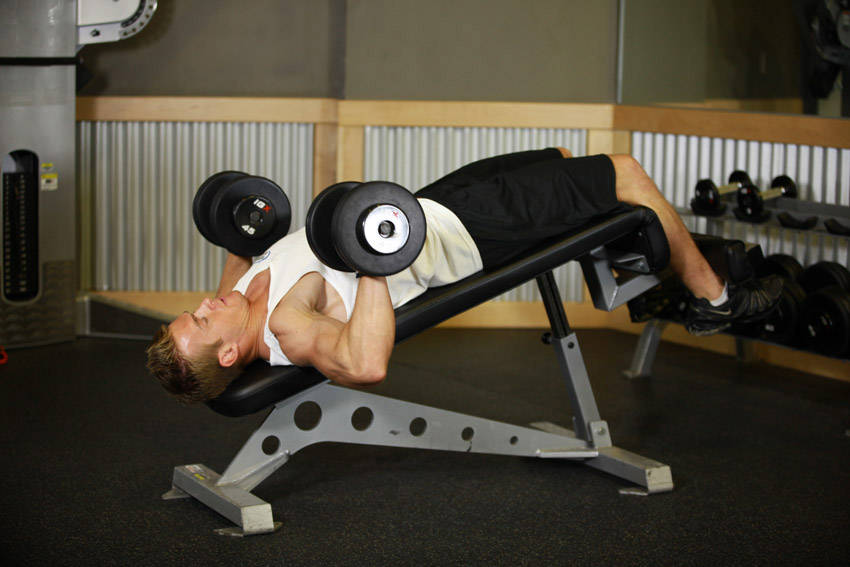
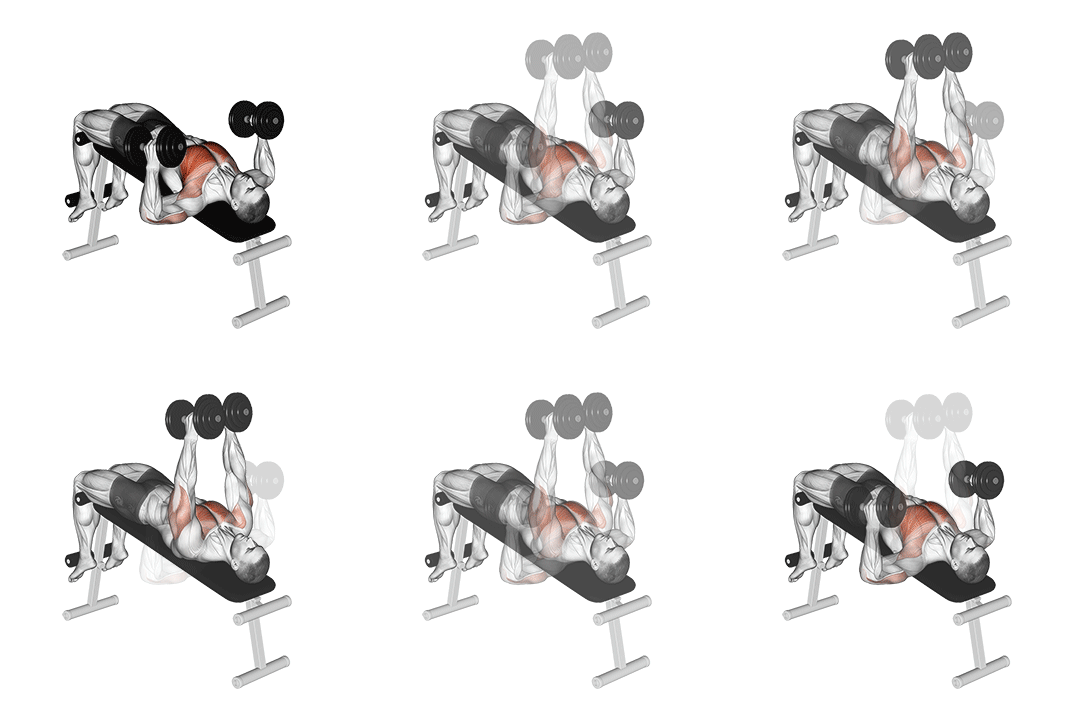
9. Decline Dumbbell Bench Press
78% match- Pectorals
- Dumbbell
- Intermediate
- Compound
How to perform this exercise
- Secure your legs at the end of the decline bench and lie down with a dumbbell on each hand on top of your thighs. The palms of your hand will be facing each other.
- Once you are laying down, move the dumbbells in front of you at shoulder width.
- Once at shoulder width, rotate your wrists forward so that the palms of your hands are facing away from you. This will be your starting position.
- Bring down the weights slowly to your side as you breathe out. Keep full control of the dumbbells at all times. Tip: Throughout the motion, the forearms should always be perpendicular to the floor.
- As you breathe out, push the dumbbells up using your pectoral muscles. Lock your arms in the contracted position, squeeze your chest, hold for a second and then start coming down slowly. Tip: It should take at least twice as long to go down than to come up..
- Repeat the movement for the prescribed amount of repetitions of your training program.
Sets and reps: 3 or 4 sets of 6 to 10 reps.
Why this matches
- Primary muscle: pectorals, the same as Korean Dips
- Equipment: free weights, not bodyweight only
- Body position: lying on your back, not standing
- Balance: easier to stay steady on than Korean Dips
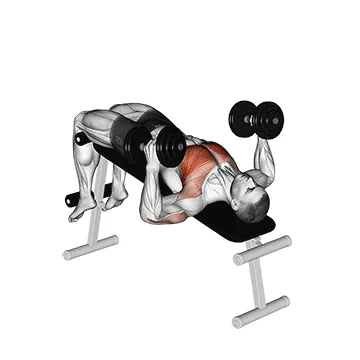
10. Dumbbell Decline Hammer Press
78% match- Pectorals
- Dumbbell
- Intermediate
- Compound
How to perform this exercise
- Lie on a decline bench with your feet secured and your head lower than your hips.
- Hold a dumbbell in each hand with your palms facing each other and your arms extended above your chest.
- Lower the dumbbells to the sides of your chest, keeping your elbows slightly bent.
- Press the dumbbells back up to the starting position, fully extending your arms.
- Repeat for the desired number of repetitions.
Sets and reps: 3 or 4 sets of 6 to 10 reps.
Why this matches
- Primary muscle: pectorals, the same as Korean Dips
- Equipment: free weights, not bodyweight only
- Body position: lying on your back, not standing
- Balance: easier to stay steady on than Korean Dips
How to Choose the Right Korean Dips Substitute
Match the substitute to the movement pattern, loading progression, and shoulder tolerance you need. Choose horizontal push variants or deep dips if you want similar sternal pec stretch; choose elevated or decline push-ups to reduce shoulder extension. Consider stability demands (rings vs bars), ability to progressively overload, and required ROM. Use technique cues: brace your core, drive the torso forward for chest emphasis, and keep elbows tracking 30–45 degrees to manage shear on the shoulder while maintaining pectoral activation.
Korean Dips FAQ
What muscles does Korean Dips work?
Korean dips primarily load the pectoralis major, especially the sternal head, through large shoulder extension and horizontal adduction. They also recruit anterior deltoids, triceps, and scapular stabilizers; lean forward and keep a wider hand position to bias chest activation.
Find Alternatives for Any Exercise
Search the exercise database and filter the ranked substitutes by the equipment you own.
Similarity scores compare exercise metadata such as movement pattern, muscles, equipment and body position. They are not a safety rating or a check that you own the equipment. Learn about our methodology