

10 Alternatives to Dumbbell Incline One Arm Fly On Exercise Ball
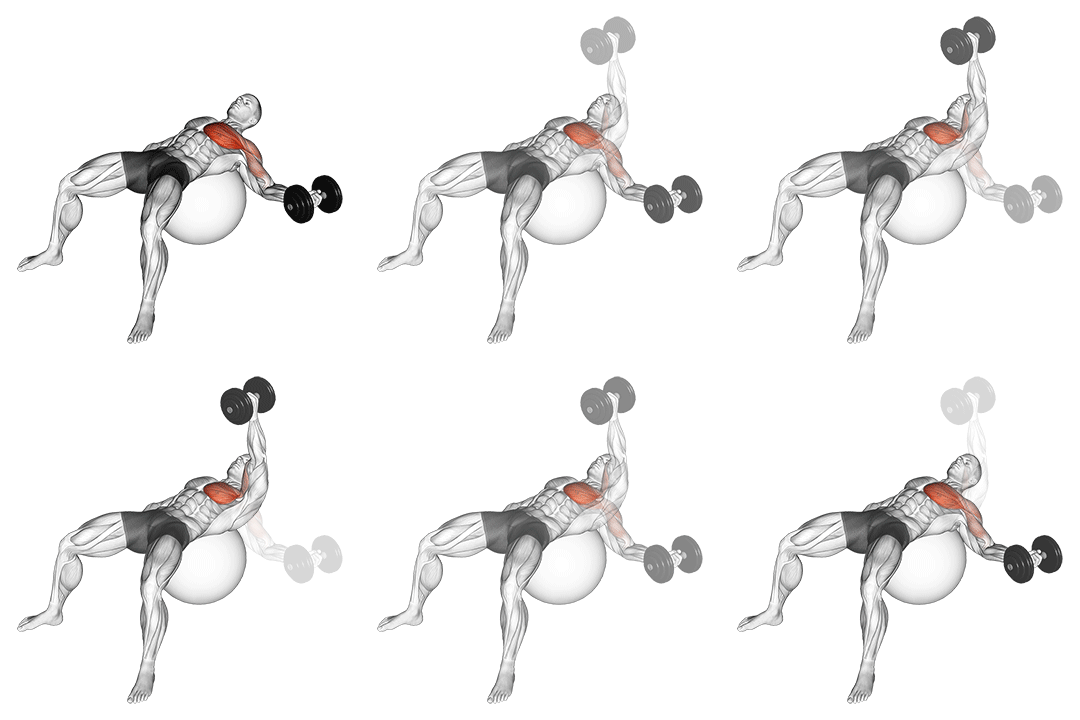
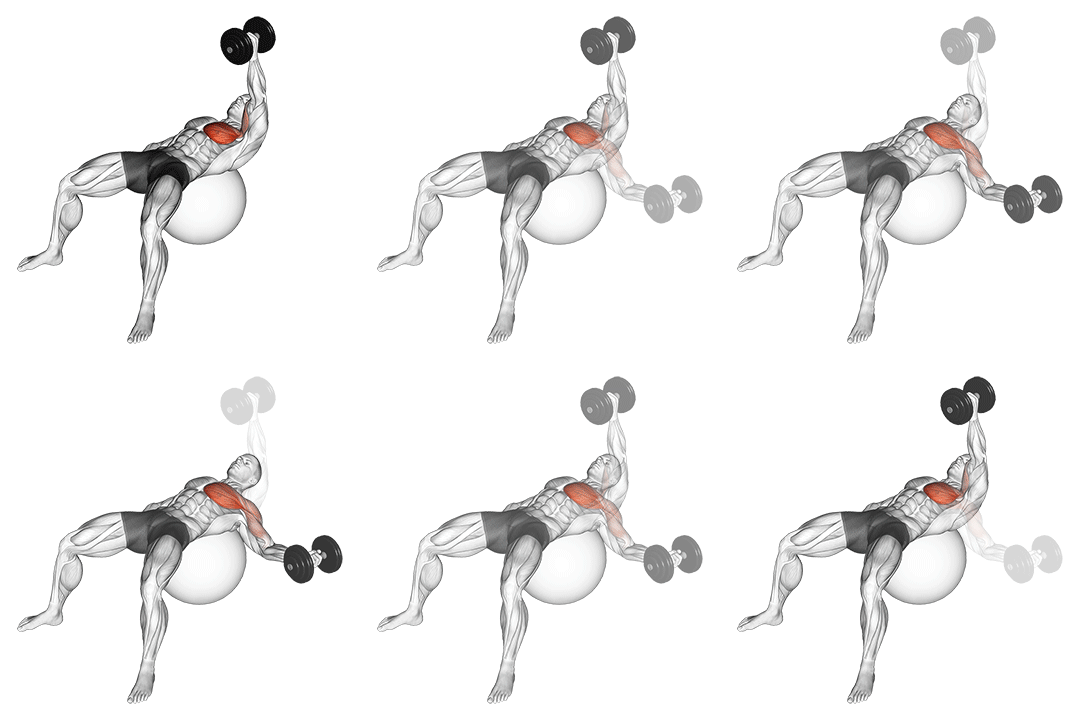
The Dumbbell Incline One Arm Fly On Exercise Ball is done lying on your back with a stability ball. Ranked closest by our scoring: the Dumbbell One Arm Chest Fly On Exercise Ball, the Dumbbell One Arm Fly On Exercise Ball and the Dumbbell Decline One Arm Fly.
Updated Ranked by our 12-factor similarity model How it works
Original Exercise: Dumbbell Incline One Arm Fly On Exercise Ball
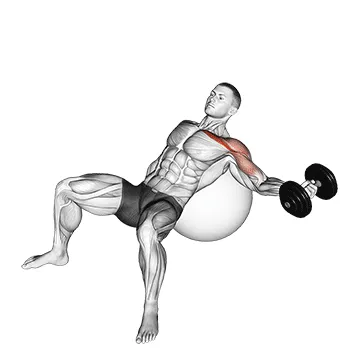
- Primary muscle
- Pectorals
- Equipment
- Stability-ball
- Difficulty
- Advanced
- Type
- Isolation
Secondary muscles: Shoulders
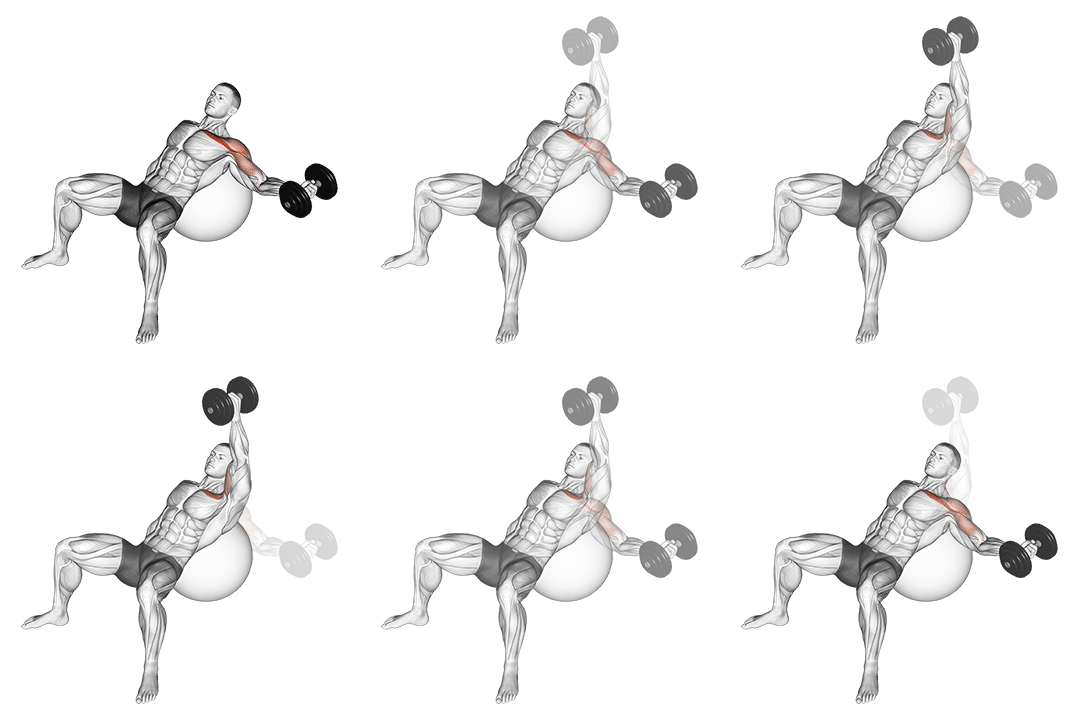
How to perform Dumbbell Incline One Arm Fly On Exercise Ball
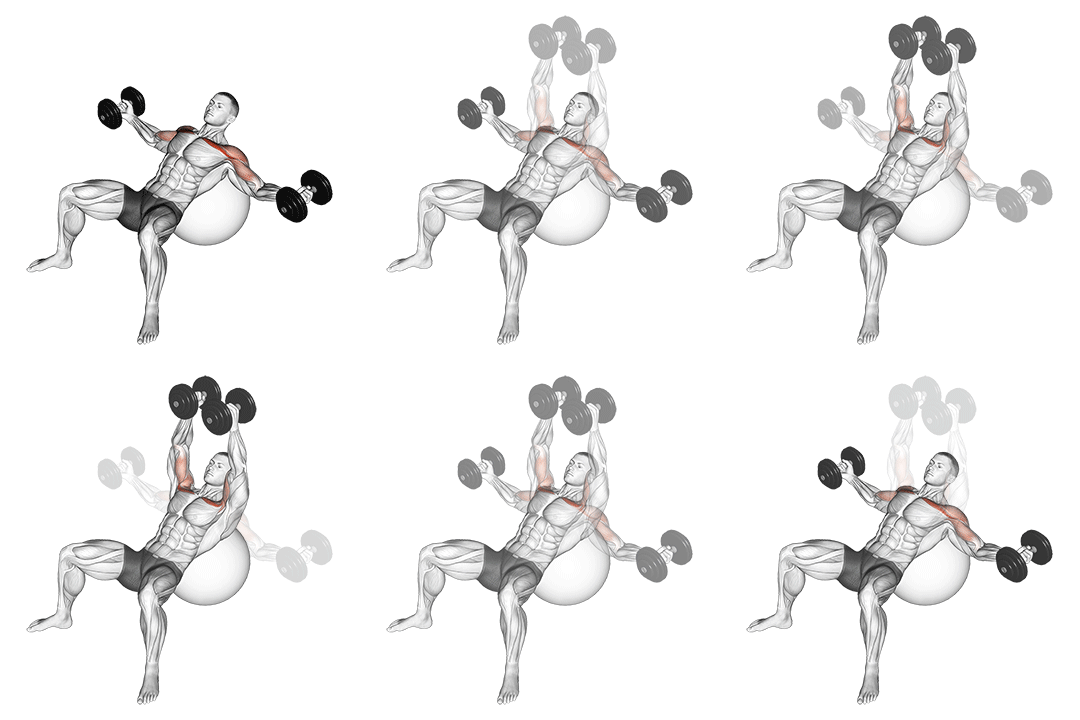
- Sit on an exercise ball with a dumbbell in one hand.
- Walk your feet forward and roll your body down until your head, neck, and upper back are supported on the ball.
- Hold the dumbbell with your arm extended straight up over your chest, palm facing inwards.
- Slowly lower the dumbbell out to the side, keeping a slight bend in your elbow.
- Pause for a moment when your arm is parallel to the ground.
- Engage your chest muscles to bring the dumbbell back up to the starting position.
- Repeat for the desired number of repetitions, then switch arms.
Ranked Dumbbell Incline One Arm Fly On Exercise Ball Alternatives
10 substitutes, ranked by how closely each one matches the Dumbbell Incline One Arm Fly On Exercise Ball on movement pattern, muscles worked, equipment and body position. The higher the score, the less you change. Open "How to perform this exercise" on a card for the steps; every card title links to that exercise's own alternatives page.
Best match - Pectorals
- Stability-ball
- Advanced
- Isolation
It uses the same equipment and still works the pectorals.
How to perform this exercise
- Sit on an exercise ball with a dumbbell in one hand and your feet flat on the ground.
- Walk your feet forward, rolling the ball until your upper back is supported on the ball and your head, neck, and shoulders are off the ball.
- Extend your arm with the dumbbell straight up above your chest, palm facing inward.
- Slowly lower the dumbbell out to the side, keeping a slight bend in your elbow.
- Pause for a moment when your arm is parallel to the ground.
- Engage your chest muscles to bring the dumbbell back up to the starting position.
- Repeat for the desired number of repetitions, then switch arms.
Sets and reps: 3 sets of 10 to 15 reps on each side.
Why this matches
- Movement: chest fly, the same as the Dumbbell Incline One Arm Fly On Exercise Ball
- Primary muscle: pectorals, the same as the Dumbbell Incline One Arm Fly On Exercise Ball
- Body position: lying on your back, the same as the Dumbbell Incline One Arm Fly On Exercise Ball
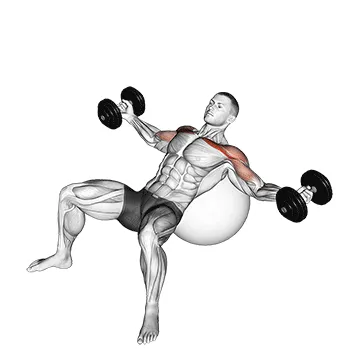
- Pectorals
- Stability-ball
- Advanced
- Isolation
How to perform this exercise
- Sit on an exercise ball with a dumbbell in one hand and your feet flat on the ground.
- Walk your feet forward and roll your body down until your upper back is resting on the exercise ball.
- Extend your arm with the dumbbell straight up above your chest, palm facing inwards.
- Slowly lower the dumbbell out to the side, keeping a slight bend in your elbow.
- Pause for a moment, then squeeze your chest muscles to bring the dumbbell back to the starting position.
- Repeat for the desired number of repetitions, then switch arms.
Sets and reps: 3 sets of 10 to 15 reps on each side.
Why this matches
- Movement: chest fly, the same as the Dumbbell Incline One Arm Fly On Exercise Ball
- Primary muscle: pectorals, the same as the Dumbbell Incline One Arm Fly On Exercise Ball
- Body position: lying on your back, the same as the Dumbbell Incline One Arm Fly On Exercise Ball
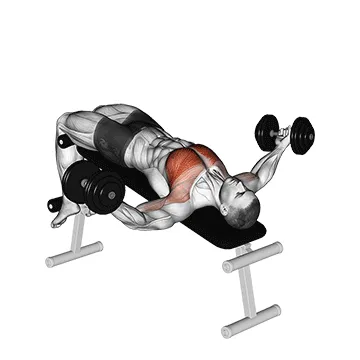
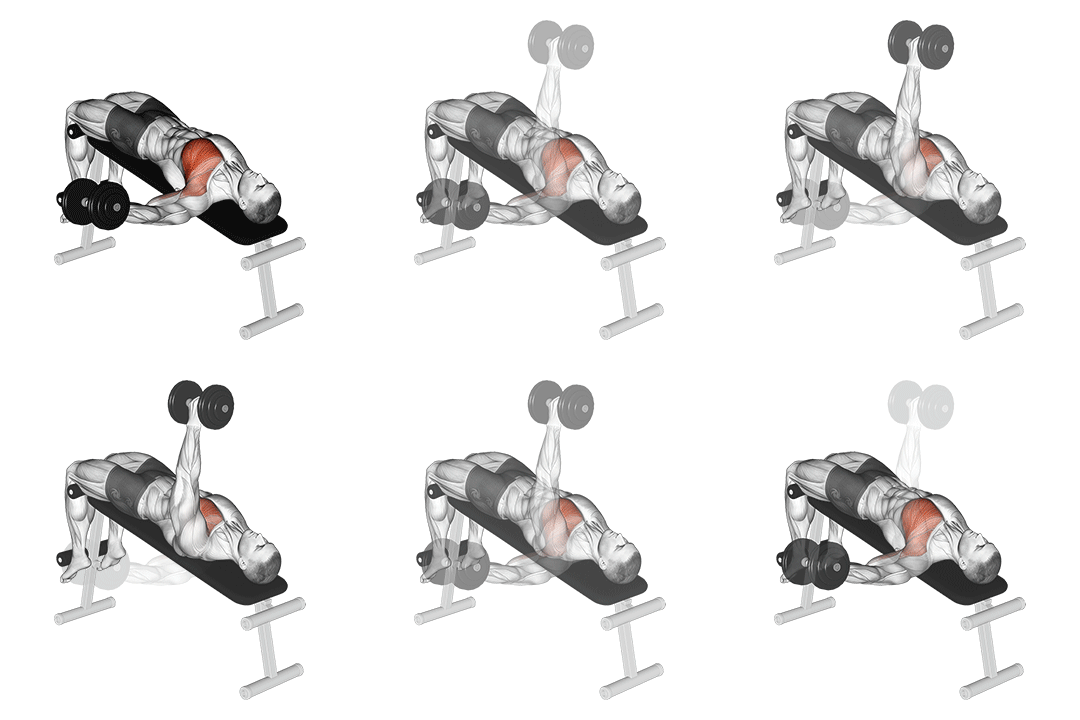
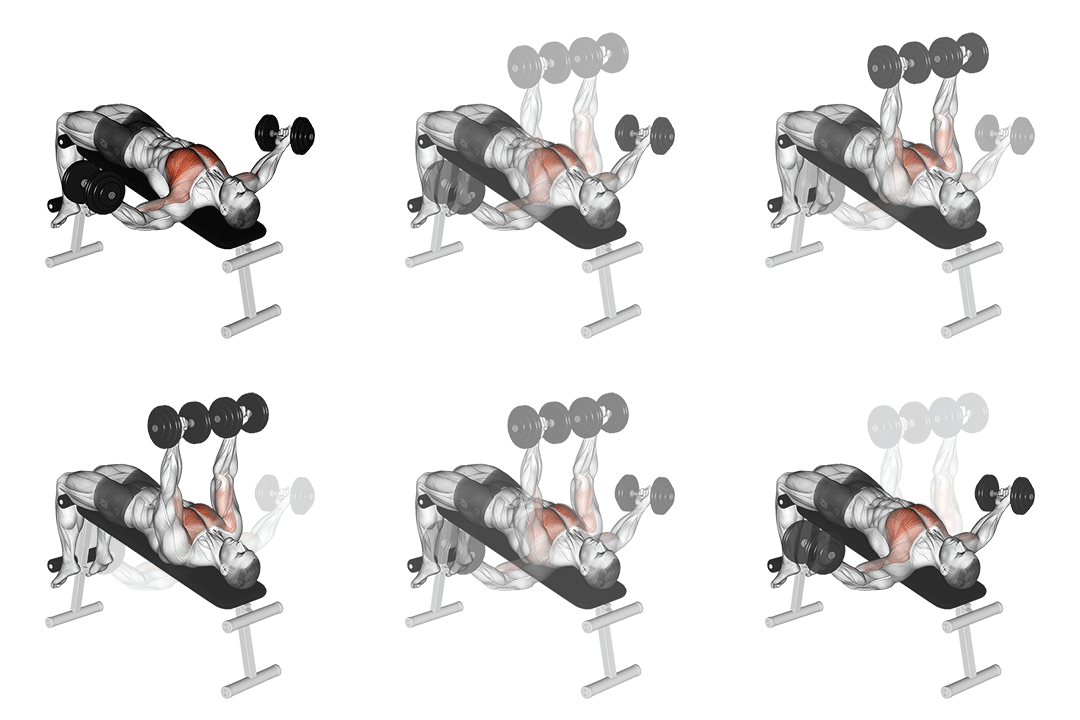
3. Dumbbell Decline One Arm Fly
98% match- Pectorals
- Dumbbell
- Advanced
- Isolation
A good swap when you have dumbbells to work with, and it still works the pectorals.
How to perform this exercise
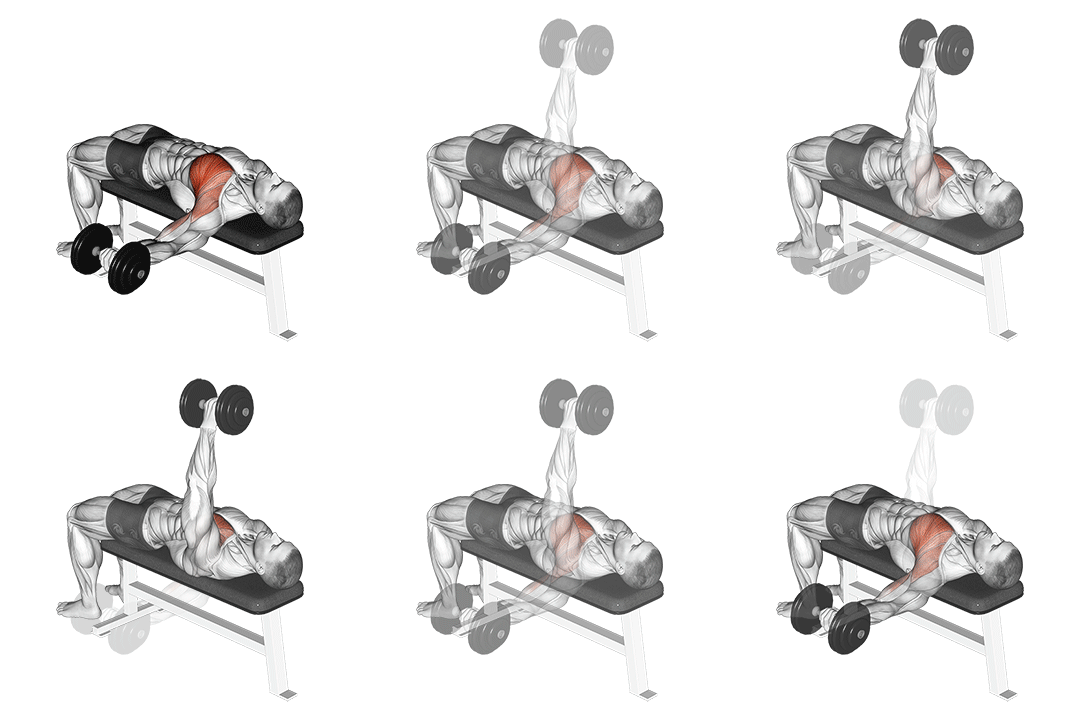
- Lie down on a decline bench with a dumbbell in one hand, resting it on your thigh.
- Using your thigh to help raise the dumbbell, lift it up to shoulder width with your palm facing your torso.
- Rotate your wrist so that the palm of your hand is facing forward.
- As you breathe in, lower the dumbbell slowly to the side until you feel a stretch in your chest.
- Exhale and use your chest muscles to bring the dumbbell back up to the starting position.
- Repeat for the desired number of repetitions, then switch arms.
Sets and reps: 3 sets of 10 to 15 reps on each side.
Why this matches
- Movement: chest fly, the same as the Dumbbell Incline One Arm Fly On Exercise Ball
- Primary muscle: pectorals, the same as the Dumbbell Incline One Arm Fly On Exercise Ball
- Equipment: free weights, the same as the Dumbbell Incline One Arm Fly On Exercise Ball
- Body position: lying on your back, the same as the Dumbbell Incline One Arm Fly On Exercise Ball
- Balance: easier to stay steady on than the Dumbbell Incline One Arm Fly On Exercise Ball
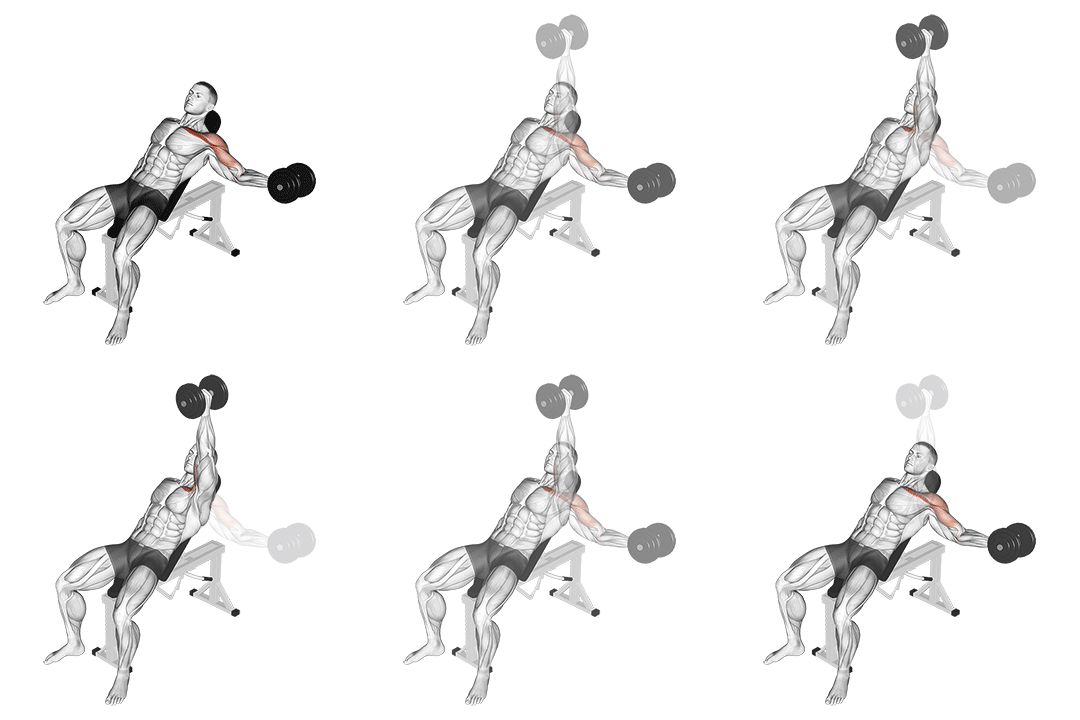
4. Dumbbell Incline One Arm Fly
98% match- Pectorals
- Dumbbell
- Advanced
- Isolation
How to perform this exercise
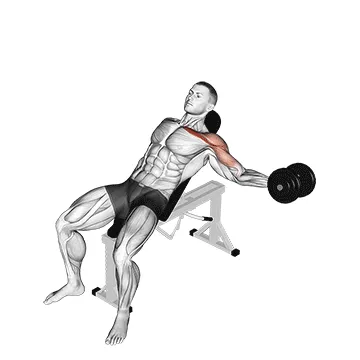
- Adjust the incline bench to a 30-45 degree angle.
- Sit on the bench with a dumbbell in one hand, resting it on your thigh.
- Lie back on the bench, keeping your feet flat on the ground.
- Hold the dumbbell with your arm extended straight up over your chest.
- Lower the dumbbell out to the side in a wide arc, keeping a slight bend in your elbow.
- Pause when your arm is parallel to the ground, then reverse the motion to bring the dumbbell back to the starting position.
- Repeat for the desired number of repetitions, then switch arms.
Sets and reps: 3 sets of 10 to 15 reps on each side.
Why this matches
- Movement: chest fly, the same as the Dumbbell Incline One Arm Fly On Exercise Ball
- Primary muscle: pectorals, the same as the Dumbbell Incline One Arm Fly On Exercise Ball
- Equipment: free weights, the same as the Dumbbell Incline One Arm Fly On Exercise Ball
- Body position: lying on your back, the same as the Dumbbell Incline One Arm Fly On Exercise Ball
- Balance: easier to stay steady on than the Dumbbell Incline One Arm Fly On Exercise Ball
5. Dumbbell One Arm Bench Fly
98% match- Pectorals
- Dumbbell
- Advanced
- Isolation
How to perform this exercise
- Sit on a flat bench with a dumbbell in one hand, resting it on top of your thigh.
- Lie back on the bench, keeping the dumbbell pressed against your thigh.
- Using your free hand, help lift the dumbbell up to the starting position.
- Hold the dumbbell directly above your shoulder with your arm extended and palm facing inward.
- Lower the dumbbell out to the side in a wide arc, keeping a slight bend in your elbow.
- Pause when your arm is parallel to the ground, then reverse the movement and bring the dumbbell back to the starting position.
- Repeat for the desired number of repetitions, then switch arms and repeat.
Sets and reps: 3 sets of 10 to 15 reps on each side.
Why this matches
- Movement: chest fly, the same as the Dumbbell Incline One Arm Fly On Exercise Ball
- Primary muscle: pectorals, the same as the Dumbbell Incline One Arm Fly On Exercise Ball
- Equipment: free weights, the same as the Dumbbell Incline One Arm Fly On Exercise Ball
- Body position: lying on your back, the same as the Dumbbell Incline One Arm Fly On Exercise Ball
- Balance: easier to stay steady on than the Dumbbell Incline One Arm Fly On Exercise Ball
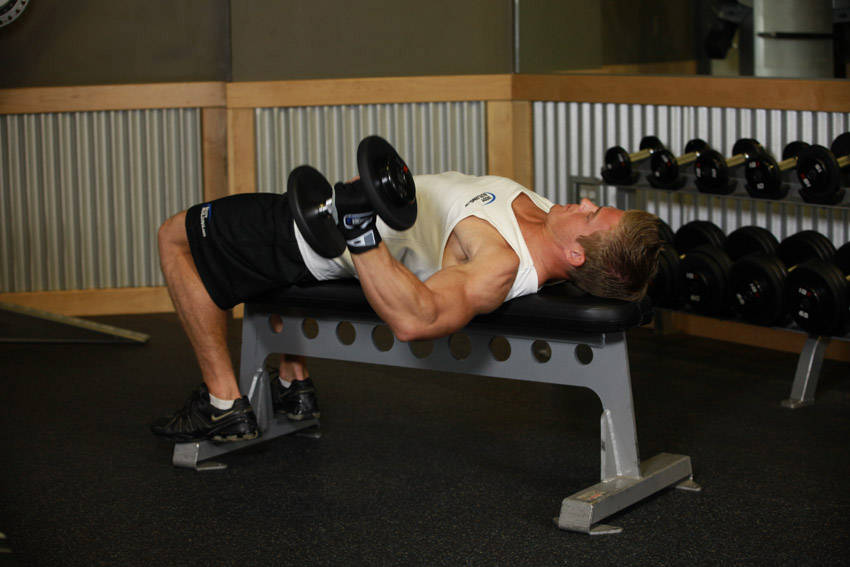
6. One-arm Flat Bench Dumbbell Flye
96% match- Pectorals
- Dumbbell
- Intermediate
- Isolation
How to perform this exercise
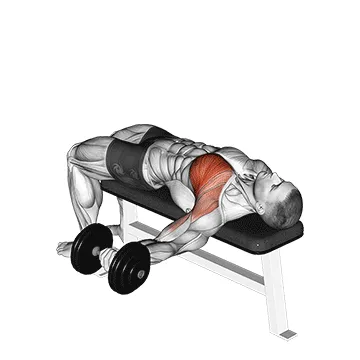
- Lie down on a flat bench with a dumbbell in one hand resting on top of your thigh. The palm of your hand with the dumbbell in it should be at a neutral grip.
- By using your thighs to help you get the dumbbell up, clean the dumbbell so that you can hold it in front of you with your lifting arm being fully extended. Remember to maintain a neutral grip with this exercise. Your non lifting hand should be to the side holding the flat bench for better support. This will be your starting position.
- Your arm with the weight should have a slight bend on your elbow in order to prevent stress at the biceps tendon. Begin by lowering your arm with the weight in it out in a wide arc until you feel a stretch on your chest. Breathe in as you perform this portion of the movement. Tip: Keep in mind that throughout the movement, your lifting arm should remain stationary; the movement should only occur at the shoulder joint.
- Return your lifting arm back to the starting position as you squeeze your chest muscles and breathe out. Tip: Make sure to use the same arc of motion used to lower the weights.
- Hold for a second at the contracted position and repeat the movement for the prescribed amount of repetitions.
- Switch arms and repeat the exercise.
Sets and reps: 3 sets of 10 to 15 reps on each side.
Why this matches
- Movement: chest fly, the same as the Dumbbell Incline One Arm Fly On Exercise Ball
- Primary muscle: pectorals, the same as the Dumbbell Incline One Arm Fly On Exercise Ball
- Equipment: free weights, the same as the Dumbbell Incline One Arm Fly On Exercise Ball
- Body position: lying on your back, the same as the Dumbbell Incline One Arm Fly On Exercise Ball
- Balance: easier to stay steady on than the Dumbbell Incline One Arm Fly On Exercise Ball
- Pectorals
- Dumbbell
- Intermediate
- Isolation
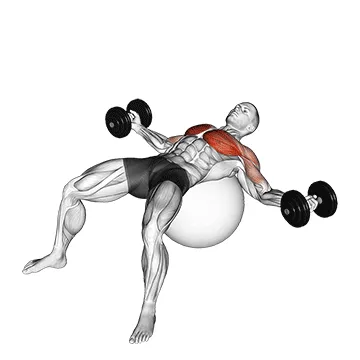
How to perform this exercise
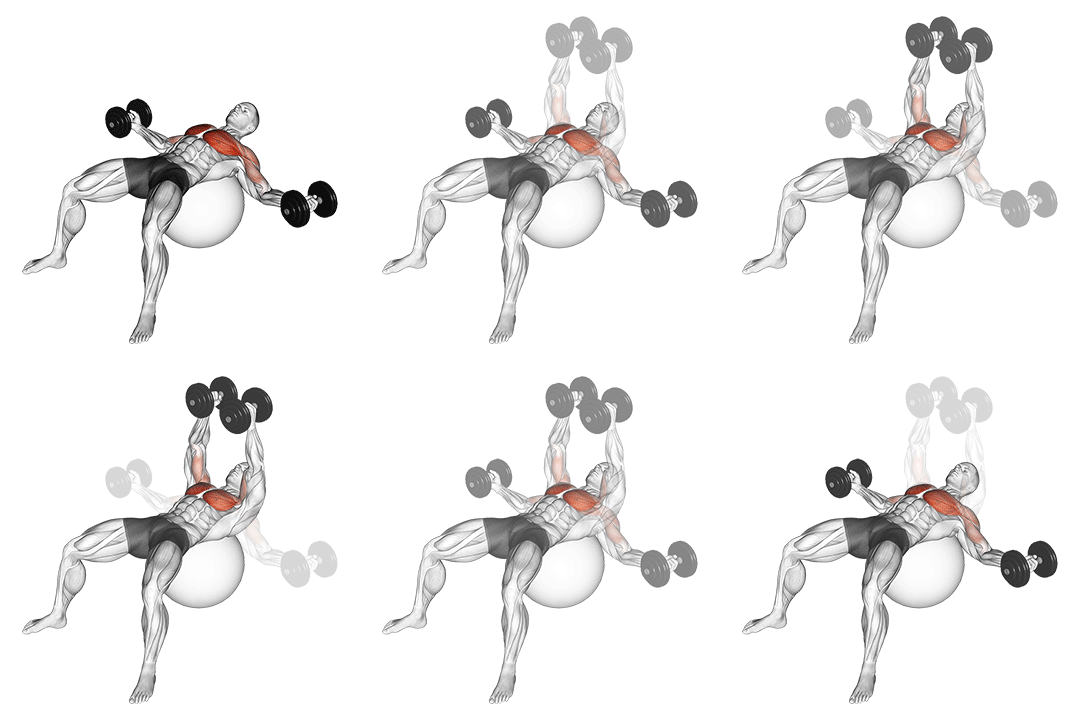
- Sit on an exercise ball with a dumbbell in each hand, palms facing each other.
- Place one foot on the ground and extend the other leg straight out in front of you.
- Lean forward slightly and bring your arms out to the sides, keeping a slight bend in your elbows.
- Slowly lower the dumbbells down and out to the sides, feeling a stretch in your chest.
- Pause for a moment at the bottom, then squeeze your chest muscles to bring the dumbbells back up to the starting position.
- Repeat for the desired number of repetitions, then switch legs and repeat.
Sets and reps: 3 sets of 10 to 15 reps.
Why this matches
- Movement: chest fly, the same as the Dumbbell Incline One Arm Fly On Exercise Ball
- Primary muscle: pectorals, the same as the Dumbbell Incline One Arm Fly On Exercise Ball
- Equipment: free weights, the same as the Dumbbell Incline One Arm Fly On Exercise Ball
- Body position: lying on your back, the same as the Dumbbell Incline One Arm Fly On Exercise Ball
8. Dumbbell Fly On Exercise Ball
92% match- Pectorals
- Stability-ball
- Intermediate
- Isolation
How to perform this exercise
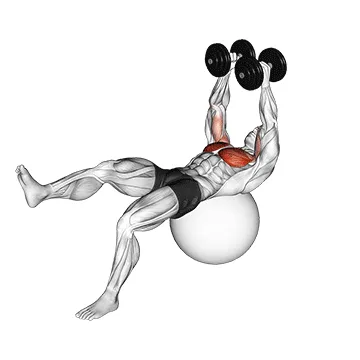
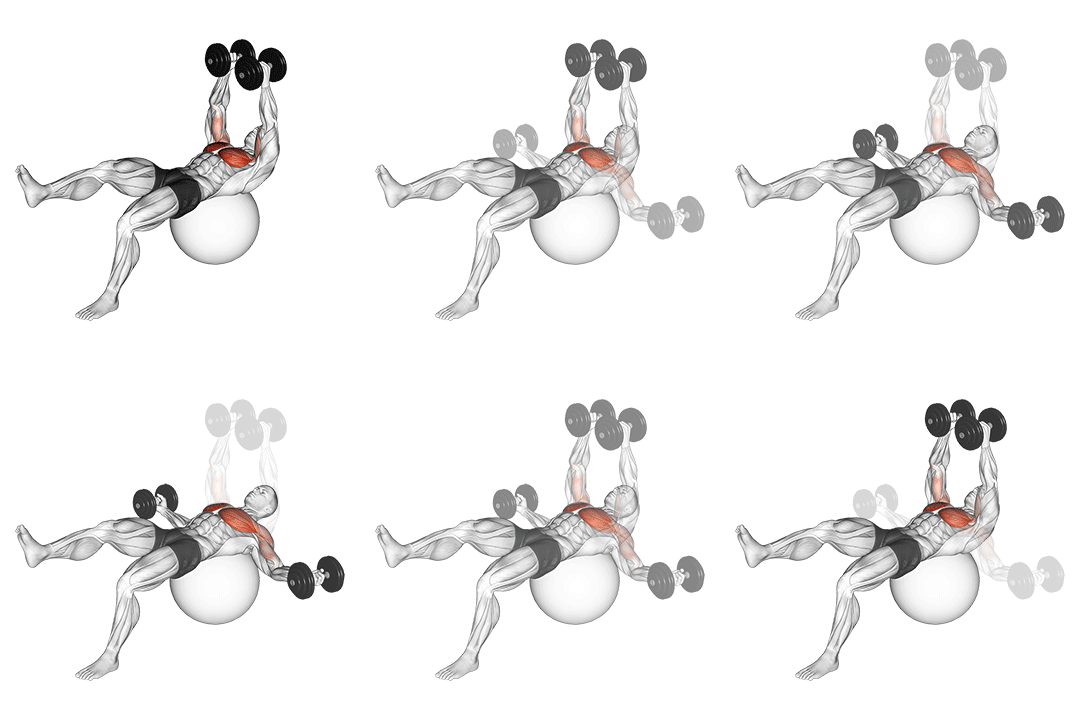
- Sit on an exercise ball and hold a dumbbell in each hand.
- Walk your feet forward and roll your body down until your head, neck, and upper back are supported by the ball.
- Extend your arms straight up above your chest, palms facing each other.
- Bend your elbows slightly and lower your arms out to the sides in a wide arc until you feel a stretch in your chest.
- Pause for a moment, then reverse the movement and squeeze your chest muscles as you bring the dumbbells back to the starting position.
- Repeat for the desired number of repetitions.
Sets and reps: 3 sets of 10 to 15 reps.
Why this matches
- Movement: chest fly, the same as the Dumbbell Incline One Arm Fly On Exercise Ball
- Primary muscle: pectorals, the same as the Dumbbell Incline One Arm Fly On Exercise Ball
- Body position: lying on your back, the same as the Dumbbell Incline One Arm Fly On Exercise Ball
- Pectorals
- Stability-ball
- Intermediate
- Isolation
How to perform this exercise
- Set up an incline bench at a 45-degree angle.
- Sit on an exercise ball and roll forward until your upper back is resting on the incline bench.
- Hold a dumbbell in each hand with your palms facing each other and your arms extended above your chest.
- Lower the dumbbells out to the sides in a wide arc until you feel a stretch in your chest.
- Pause for a moment, then squeeze your chest muscles to bring the dumbbells back to the starting position.
- Repeat for the desired number of repetitions.
Sets and reps: 3 sets of 10 to 15 reps.
Why this matches
- Movement: chest fly, the same as the Dumbbell Incline One Arm Fly On Exercise Ball
- Primary muscle: pectorals, the same as the Dumbbell Incline One Arm Fly On Exercise Ball
- Body position: lying on your back, the same as the Dumbbell Incline One Arm Fly On Exercise Ball
10. Dumbbell Decline Twist Fly
89% match- Pectorals
- Dumbbell
- Intermediate
- Isolation
How to perform this exercise
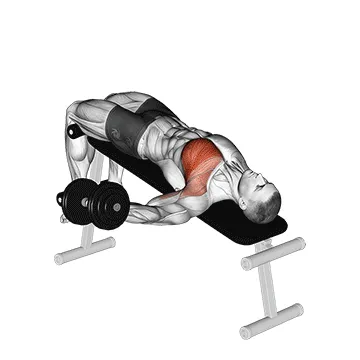
- Lie down on a decline bench with your head lower than your hips.
- Hold a dumbbell in each hand with your palms facing each other and your arms extended straight up over your chest.
- Lower the dumbbells out to the sides in a wide arc until you feel a stretch in your chest.
- As you lower the dumbbells, twist your wrists so that your palms face forward at the bottom of the movement.
- Reverse the motion and bring the dumbbells back up to the starting position, squeezing your chest muscles at the top.
- Repeat for the desired number of repetitions.
Sets and reps: 3 sets of 10 to 15 reps.
Why this matches
- Movement: chest fly, the same as the Dumbbell Incline One Arm Fly On Exercise Ball
- Primary muscle: pectorals, the same as the Dumbbell Incline One Arm Fly On Exercise Ball
- Equipment: free weights, the same as the Dumbbell Incline One Arm Fly On Exercise Ball
- Body position: lying on your back, the same as the Dumbbell Incline One Arm Fly On Exercise Ball
- Balance: easier to stay steady on than the Dumbbell Incline One Arm Fly On Exercise Ball
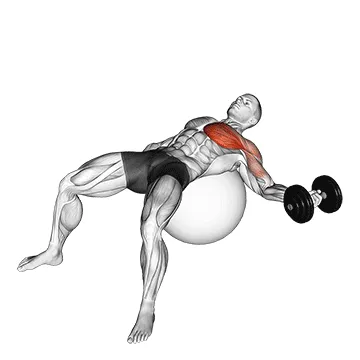
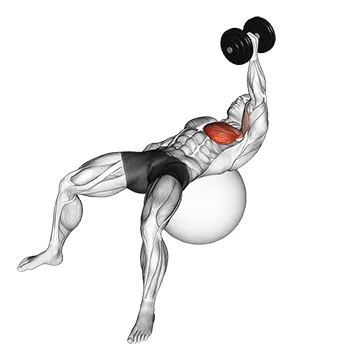
Why You Might Need a Dumbbell Incline One Arm Fly On Exercise Ball Alternative
You may substitute the exercise for several practical reasons: no stability ball, persistent shoulder pain, poor balance, or the need for precise load progression. Bench-based single-arm incline flies remove instability, letting you increase load while maintaining pec isolation. Cables preserve continuous tension and allow a more anterior line of pull to target the clavicular head. Machines provide fixed arcs for injured athletes to limit scapular drift. Choose alternatives that let you control elbow angle (10–20° bend) and maintain scapular retraction to keep the glenohumeral joint centered and maximize pectoral activation.
Dumbbell Incline One Arm Fly On Exercise Ball FAQ
What muscles does Dumbbell Incline One Arm Fly On Exercise Ball work?
The movement primarily targets the pectoralis major, especially the clavicular (upper) head when performed on an incline, through horizontal adduction. Secondary muscles include the anterior deltoid and serratus anterior for scapular control; the rotator cuff stabilizes the glenohumeral joint during the fly.
Find Alternatives for Any Exercise
Search the exercise database and filter the ranked substitutes by the equipment you own.
Similarity scores compare exercise metadata such as movement pattern, muscles, equipment and body position. They are not a safety rating or a check that you own the equipment. Learn about our methodology