

10 Best Dumbbell Lying Supine Biceps Curl Alternatives
The Dumbbell Lying Supine Biceps Curl is done lying on your back with dumbbells. Ranked closest by our scoring: the Dumbbell Incline Inner Biceps Curl, the Dumbbell Lying Wide Curl and the Lying High Bench Barbell Curl.
Updated Ranked by our 12-factor similarity model How it works
Original Exercise: Dumbbell Lying Supine Biceps Curl
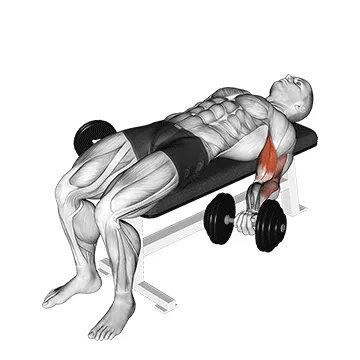
- Primary muscle
- Biceps
- Equipment
- Dumbbell
- Difficulty
- Intermediate
- Type
- Isolation
Secondary muscles: Forearms
How to perform Dumbbell Lying Supine Biceps Curl
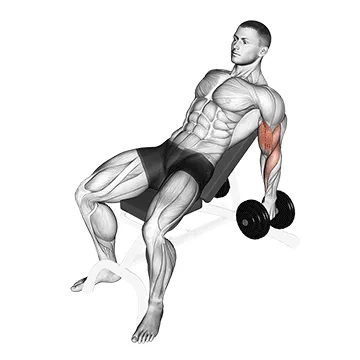
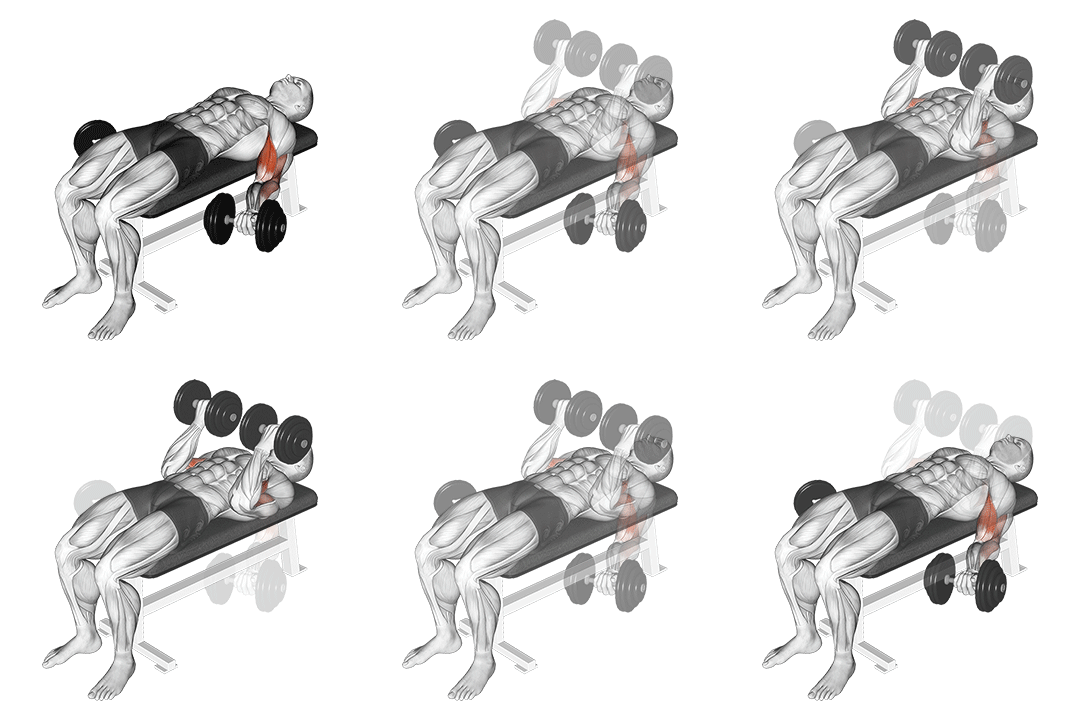
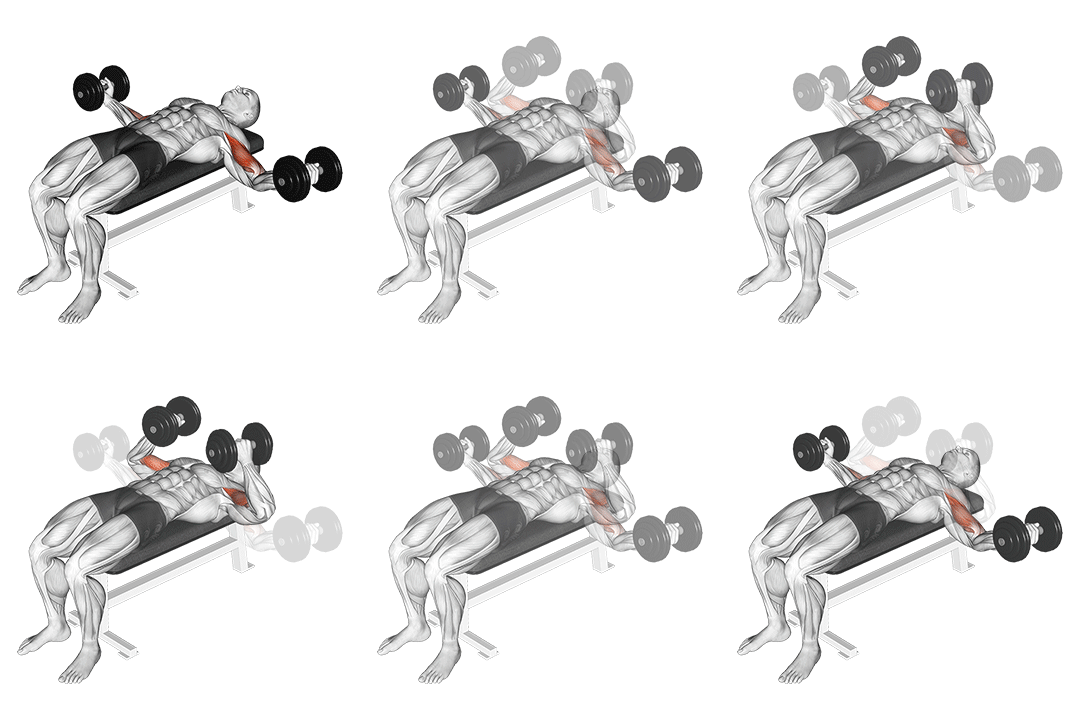
- Lie flat on a bench with your back and head supported, and your feet flat on the ground.
- Hold a dumbbell in each hand with your palms facing up and your arms fully extended.
- Keeping your upper arms stationary, exhale and curl the weights while contracting your biceps.
- Continue to raise the weights until your biceps are fully contracted and the dumbbells are at shoulder level.
- Hold the contracted position for a brief pause as you squeeze your biceps.
- Inhale and slowly begin to lower the dumbbells back to the starting position.
- Repeat for the desired number of repetitions.
Ranked Dumbbell Lying Supine Biceps Curl Alternatives
10 substitutes, ranked by how closely each one matches the Dumbbell Lying Supine Biceps Curl on movement pattern, muscles worked, equipment and body position. The higher the score, the less you change. Open "How to perform this exercise" on a card for the steps; every card title links to that exercise's own alternatives page.
Best match - Biceps
- Dumbbell
- Beginner
- Isolation
Pick this when you want an easier version that still works the biceps.
How to perform this exercise
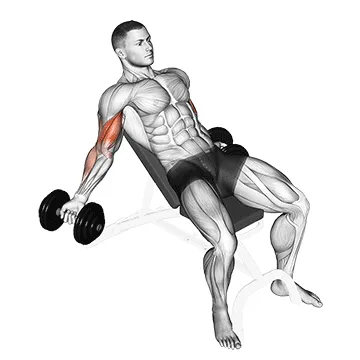
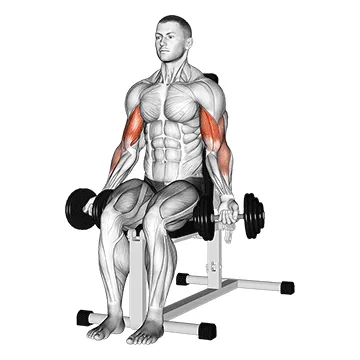
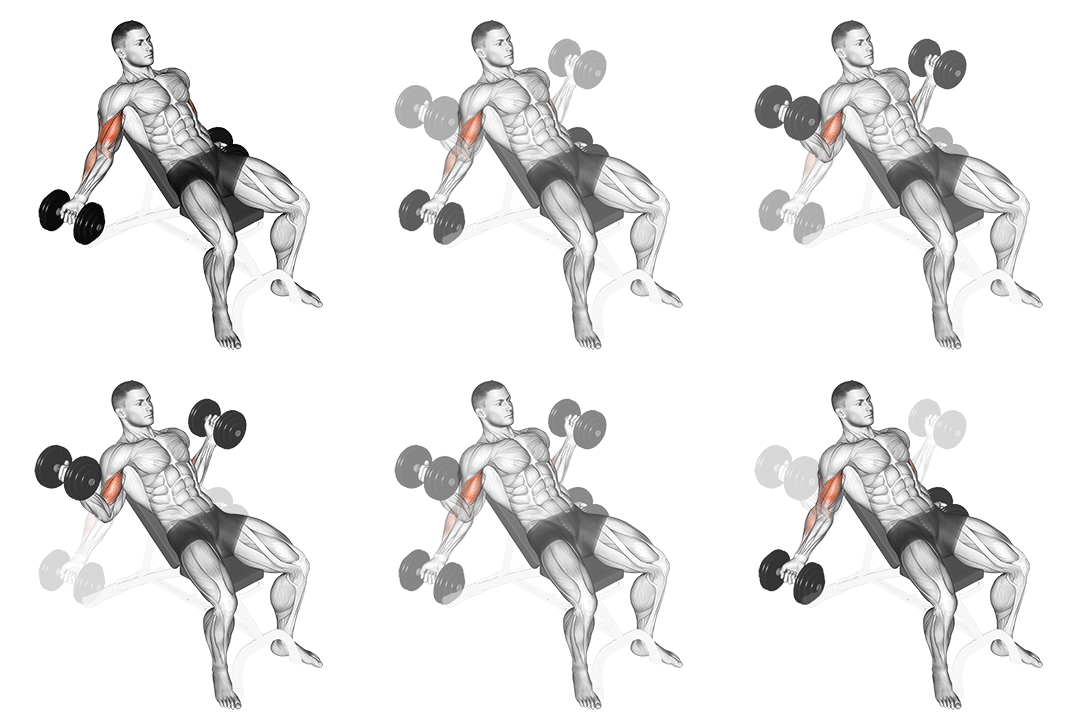
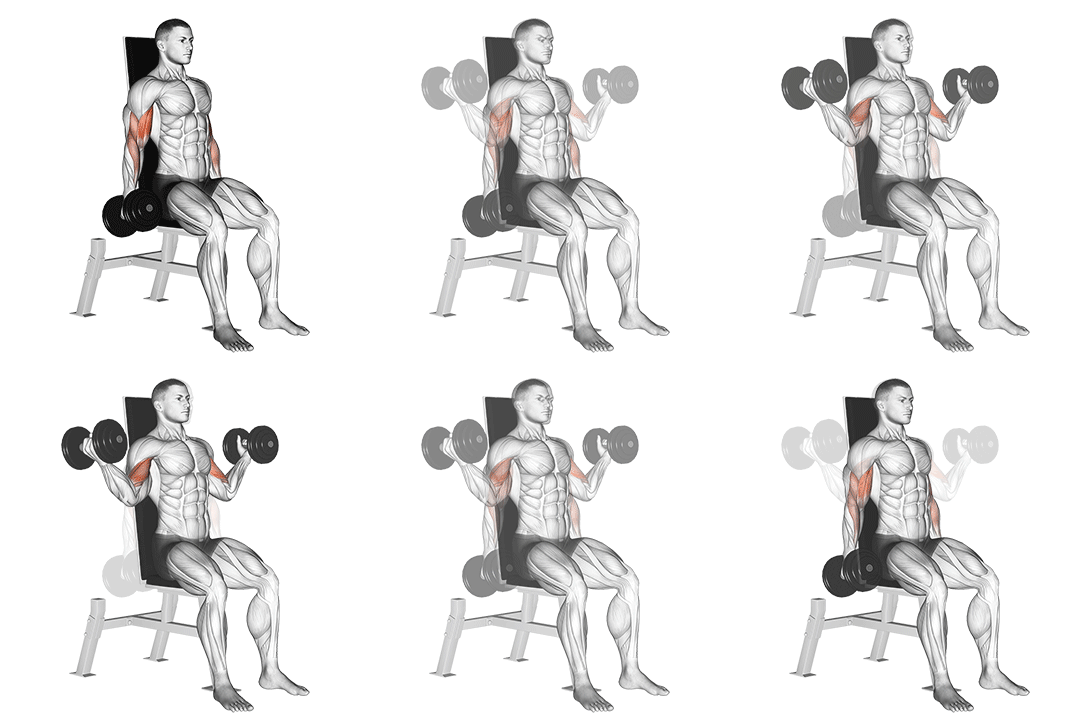
- Sit on an incline bench with a dumbbell in each hand, palms facing each other.
- Rest your upper arms on the bench, allowing your elbows to hang down and your palms to face forward.
- Keeping your upper arms stationary, exhale and curl the weights while contracting your biceps.
- Continue to raise the dumbbells until your biceps are fully contracted and the dumbbells are at shoulder level.
- Hold the contracted position for a brief pause as you squeeze your biceps.
- Inhale and slowly begin to lower the dumbbells back to the starting position.
- Repeat for the desired number of repetitions.
Sets and reps: 3 sets of 10 to 15 reps.
Why this matches
- Movement: curl, the same as the Dumbbell Lying Supine Biceps Curl
- Primary muscle: biceps, the same as the Dumbbell Lying Supine Biceps Curl
- Equipment: free weights, the same as the Dumbbell Lying Supine Biceps Curl
- Body position: lying on your back, the same as the Dumbbell Lying Supine Biceps Curl
2. Dumbbell Lying Wide Curl
99% match- Biceps
- Dumbbell
- Intermediate
- Isolation
It uses the same equipment and still works the biceps.
How to perform this exercise
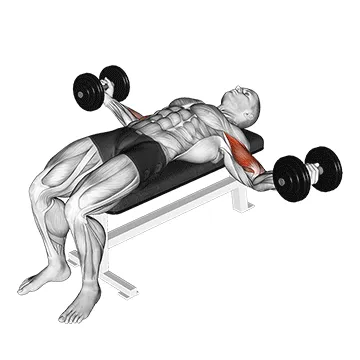
- Lie flat on a bench with a dumbbell in each hand, palms facing up and arms fully extended.
- Keeping your upper arms stationary, exhale and curl the weights while contracting your biceps.
- Continue to raise the weights until your biceps are fully contracted and the dumbbells are at shoulder level.
- Hold the contracted position for a brief pause as you squeeze your biceps.
- Inhale and slowly begin to lower the dumbbells back to the starting position.
- Repeat for the desired number of repetitions.
Sets and reps: 3 sets of 10 to 15 reps.
Why this matches
- Movement: curl, the same as the Dumbbell Lying Supine Biceps Curl
- Primary muscle: biceps, the same as the Dumbbell Lying Supine Biceps Curl
- Equipment: free weights, the same as the Dumbbell Lying Supine Biceps Curl
- Body position: lying on your back, the same as the Dumbbell Lying Supine Biceps Curl
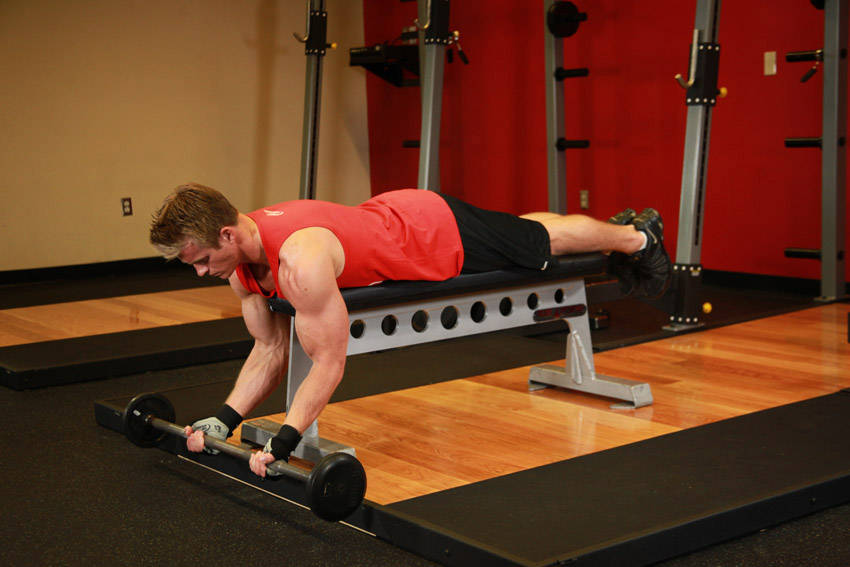
3. Lying High Bench Barbell Curl
99% match- Biceps
- Barbell
- Intermediate
- Isolation
A good swap when you have a barbell to work with, and it still works the biceps.
How to perform this exercise
- Lie face forward on a tall flat bench while holding a barbell with a supinated grip (palms facing up). Tip: If you are holding a barbell grab it using a shoulder-width grip and if you are using an E-Z Bar grab it on the inner handles. Your upper body should be positioned in a way that the upper chest is over the end of the bench and the barbell is hanging in front of you with the arms extended and perpendicular to the floor. This will be your starting position.
- While keeping the elbows in and the upper arms stationary, curl the weight up in a semi-circular motion as you contract the biceps and exhale. Hold at the top of the movement for a second.
- As you inhale, slowly go back to the starting position. Tip: Maintain full control of the weight at all times and avoid any swinging. Remember, only the forearms should move throughout the movement.
- Repeat for the recommended amount of repetitions.
Sets and reps: 3 sets of 10 to 15 reps.
Why this matches
- Movement: curl, the same as the Dumbbell Lying Supine Biceps Curl
- Primary muscle: biceps, the same as the Dumbbell Lying Supine Biceps Curl
- Equipment: free weights, the same as the Dumbbell Lying Supine Biceps Curl
- Body position: lying on your back, the same as the Dumbbell Lying Supine Biceps Curl
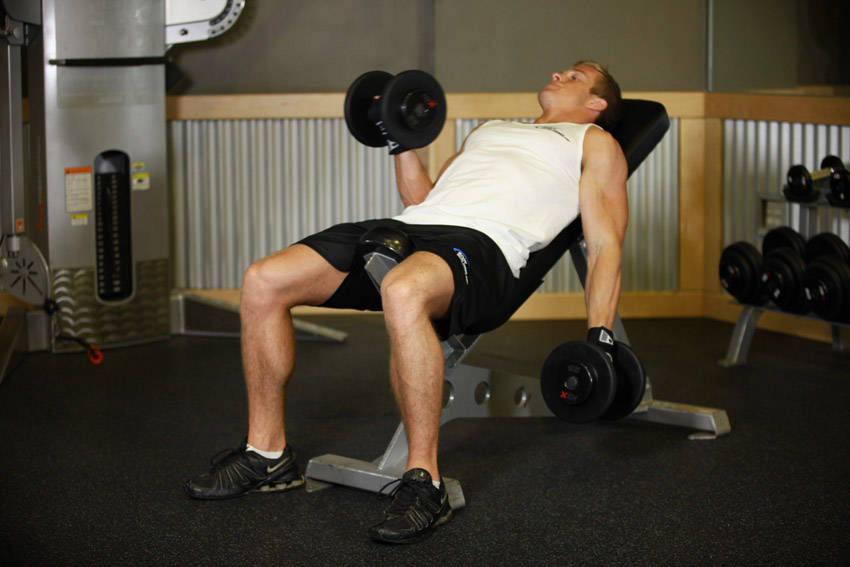
4. Incline Dumbbell Curl
98% match- Biceps
- Dumbbell
- Intermediate
- Isolation
Pick this when you want to work the biceps with more balance to manage.
How to perform this exercise
- Sit back on an incline bench with a dumbbell in each hand held at arms length. Keep your elbows close to your torso and rotate the palms of your hands until they are facing forward. This will be your starting position.
- While holding the upper arm stationary, curl the weights forward while contracting the biceps as you breathe out. Only the forearms should move. Continue the movement until your biceps are fully contracted and the dumbbells are at shoulder level. Hold the contracted position for a second.
- Slowly begin to bring the dumbbells back to starting position as your breathe in.
- Repeat for the recommended amount of repetitions.
Sets and reps: 3 sets of 10 to 15 reps.
Why this matches
- Movement: curl, the same as the Dumbbell Lying Supine Biceps Curl
- Primary muscle: biceps, the same as the Dumbbell Lying Supine Biceps Curl
- Equipment: free weights, the same as the Dumbbell Lying Supine Biceps Curl
- Body position: lying on your back, the same as the Dumbbell Lying Supine Biceps Curl
- Balance: harder to stay steady on than the Dumbbell Lying Supine Biceps Curl
5. Dumbbell Incline Hammer Curl
96% match- Biceps
- Dumbbell
- Beginner
- Isolation
How to perform this exercise
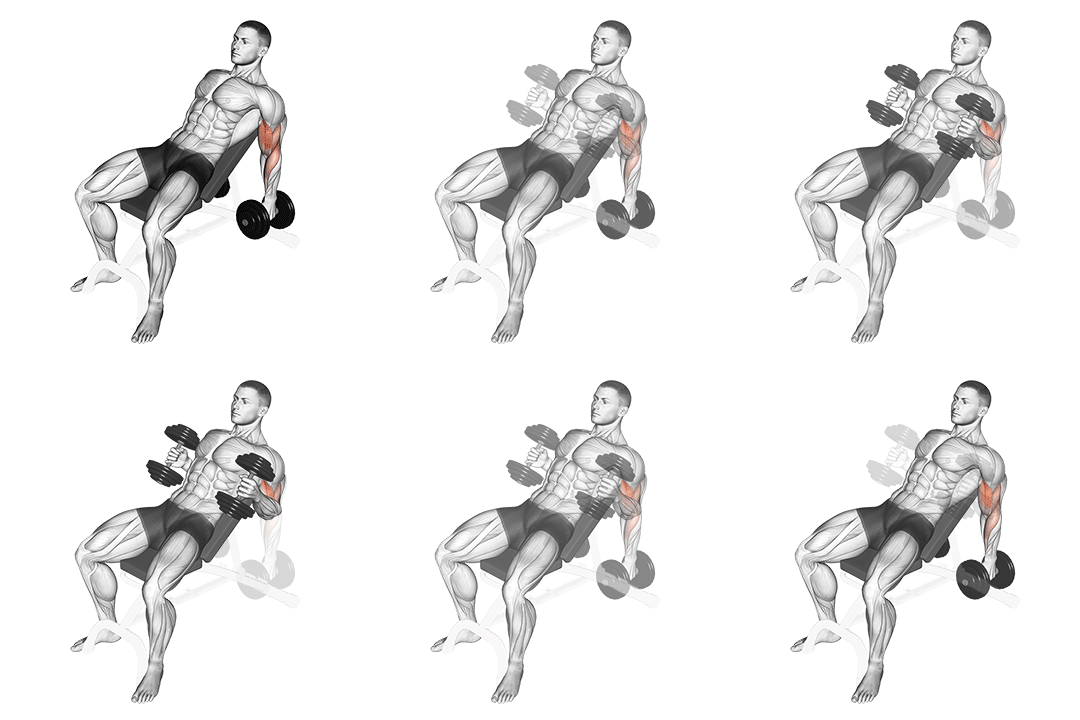
- Sit on an incline bench with a dumbbell in each hand, palms facing your torso and arms fully extended.
- Keep your back against the bench and your feet flat on the floor.
- While keeping your upper arms stationary, exhale and curl the weights while contracting your biceps.
- Continue to raise the weights until your biceps are fully contracted and the dumbbells are at shoulder level.
- Hold the contracted position for a brief pause as you squeeze your biceps.
- Inhale and slowly begin to lower the dumbbells back to the starting position.
- Repeat for the desired number of repetitions.
Sets and reps: 3 sets of 10 to 15 reps.
Why this matches
- Movement: curl, the same as the Dumbbell Lying Supine Biceps Curl
- Primary muscle: biceps, the same as the Dumbbell Lying Supine Biceps Curl
- Equipment: free weights, the same as the Dumbbell Lying Supine Biceps Curl
- Body position: lying on your back, the same as the Dumbbell Lying Supine Biceps Curl
6. Dumbbell Seated Bicep Curl
92% match- Biceps
- Dumbbell
- Beginner
- Isolation
How to perform this exercise
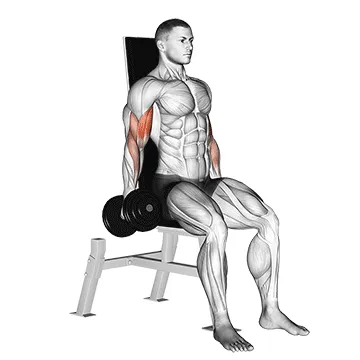
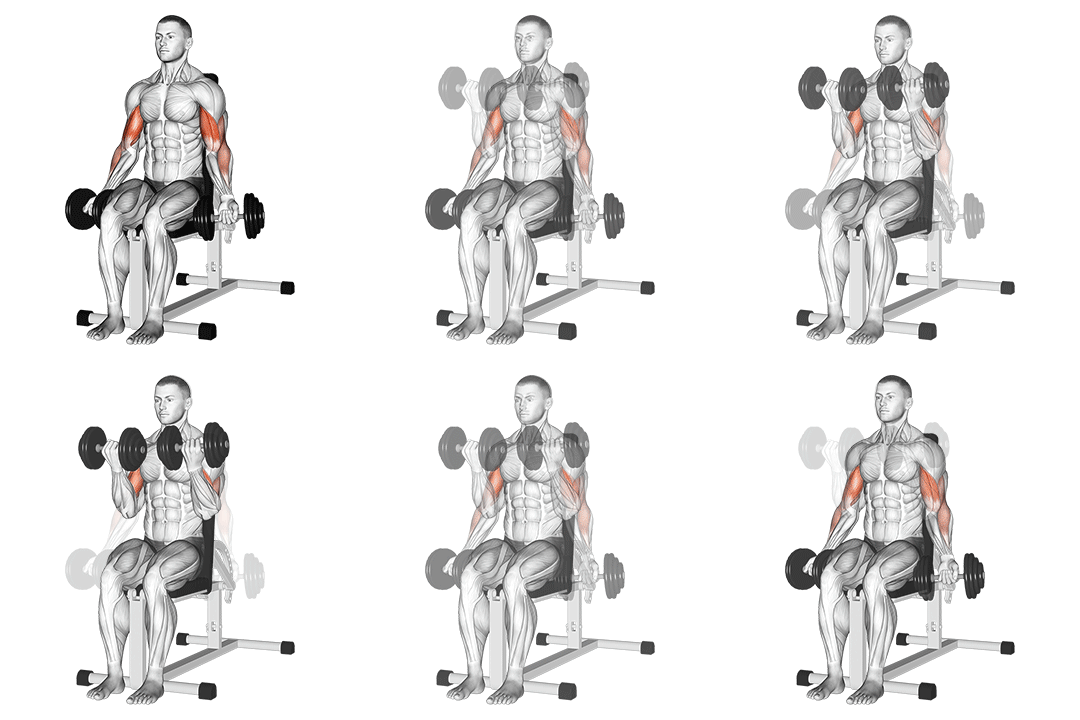
- Sit on a bench with your feet flat on the ground and hold a dumbbell in each hand, palms facing up.
- Keep your back straight and your elbows close to your torso.
- Exhale and curl the dumbbells up towards your shoulders, contracting your biceps.
- Pause for a moment at the top, then inhale and slowly lower the dumbbells back down to the starting position.
- Repeat for the desired number of repetitions.
Sets and reps: 3 sets of 10 to 15 reps.
Why this matches
- Movement: curl, the same as the Dumbbell Lying Supine Biceps Curl
- Primary muscle: biceps, the same as the Dumbbell Lying Supine Biceps Curl
- Equipment: free weights, the same as the Dumbbell Lying Supine Biceps Curl
- Body position: seated, not lying on your back
7. Dumbbell Seated Inner Biceps Curl
92% match- Biceps
- Dumbbell
- Beginner
- Isolation
How to perform this exercise
- Sit on a bench with your feet flat on the ground and hold a dumbbell in each hand, palms facing up.
- Rest your upper arms on your thighs, allowing the dumbbells to hang down.
- Keeping your upper arms stationary, curl the dumbbells up towards your shoulders by contracting your biceps.
- Pause for a moment at the top, then slowly lower the dumbbells back down to the starting position.
- Repeat for the desired number of repetitions.
Sets and reps: 3 sets of 10 to 15 reps.
Why this matches
- Movement: curl, the same as the Dumbbell Lying Supine Biceps Curl
- Primary muscle: biceps, the same as the Dumbbell Lying Supine Biceps Curl
- Equipment: free weights, the same as the Dumbbell Lying Supine Biceps Curl
- Body position: seated, not lying on your back
8. Dumbbell Seated Preacher Curl
92% match- Biceps
- Dumbbell
- Intermediate
- Isolation
How to perform this exercise
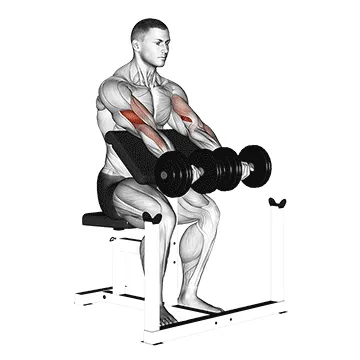
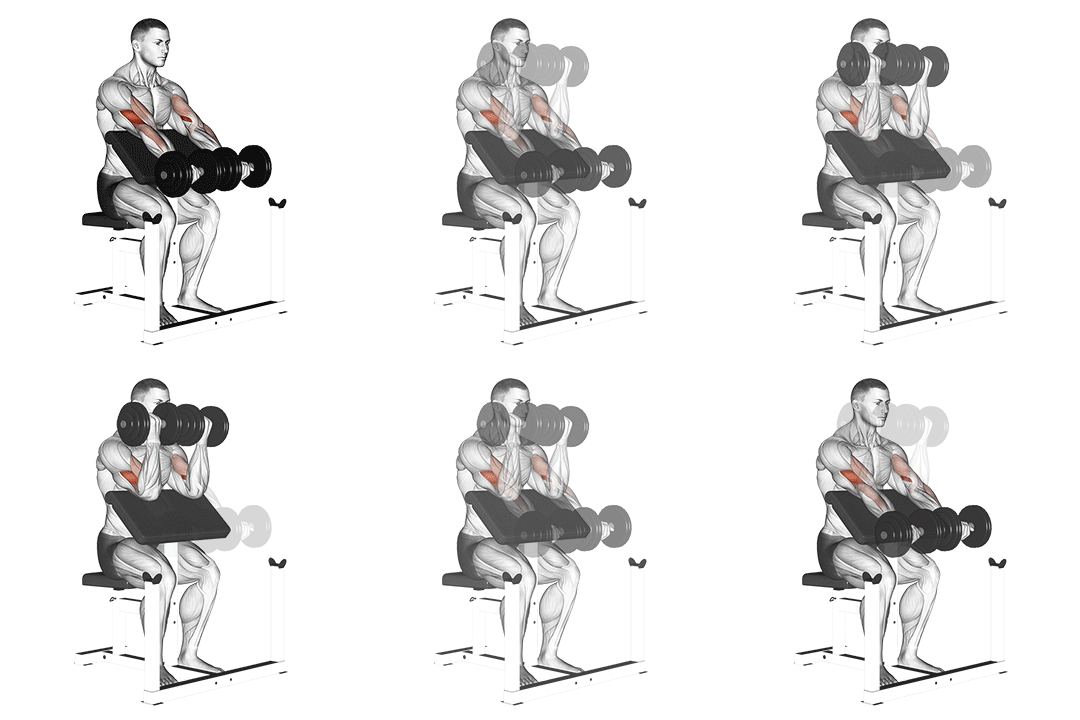
- Sit on a preacher curl bench with your feet flat on the floor.
- Hold a dumbbell in one hand with an underhand grip, resting your upper arm against the preacher pad.
- Keeping your upper arm stationary, exhale and curl the dumbbell up towards your shoulder.
- Pause for a moment at the top, then inhale and slowly lower the dumbbell back down to the starting position.
- Repeat for the desired number of repetitions, then switch arms.
Sets and reps: 3 sets of 10 to 15 reps.
Why this matches
- Movement: curl, the same as the Dumbbell Lying Supine Biceps Curl
- Primary muscle: biceps, the same as the Dumbbell Lying Supine Biceps Curl
- Equipment: free weights, the same as the Dumbbell Lying Supine Biceps Curl
- Body position: seated, not lying on your back
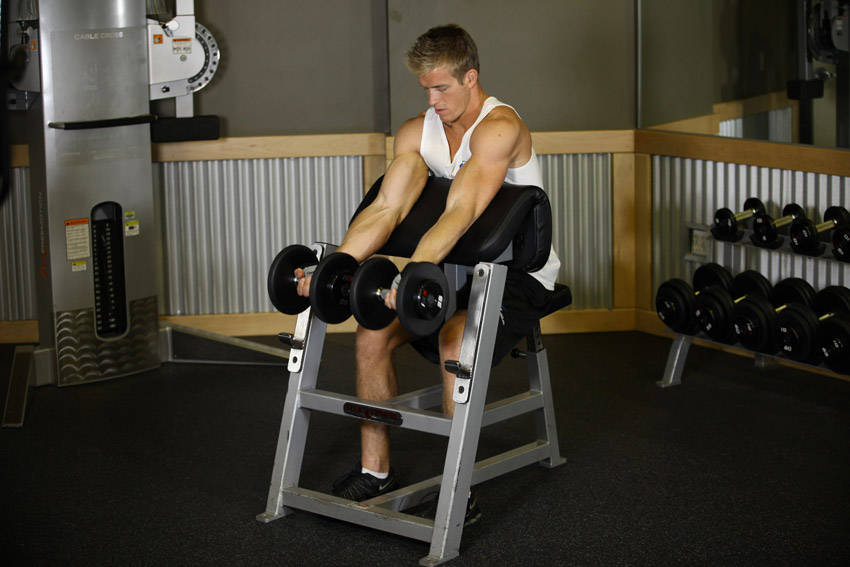
9. Two-arm Dumbbell Preacher Curl
92% match- Biceps
- Dumbbell
- Beginner
- Isolation
How to perform this exercise
- Grab a dumbbell with each arm and place the upper arms on top of the preacher bench or the incline bench. The dumbbell should be held at shoulder length. This will be your starting position.
- As you breathe in, slowly lower the dumbbells until your upper arm is extended and the biceps is fully stretched.
- As you exhale, use the biceps to curl the weights up until your biceps is fully contracted and the dumbbells are at shoulder height.
- Squeeze the biceps hard for a second at the contracted position and repeat for the recommended amount of repetitions.
Sets and reps: 3 sets of 10 to 15 reps.
Why this matches
- Movement: curl, the same as the Dumbbell Lying Supine Biceps Curl
- Primary muscle: biceps, the same as the Dumbbell Lying Supine Biceps Curl
- Equipment: free weights, the same as the Dumbbell Lying Supine Biceps Curl
- Body position: seated, not lying on your back
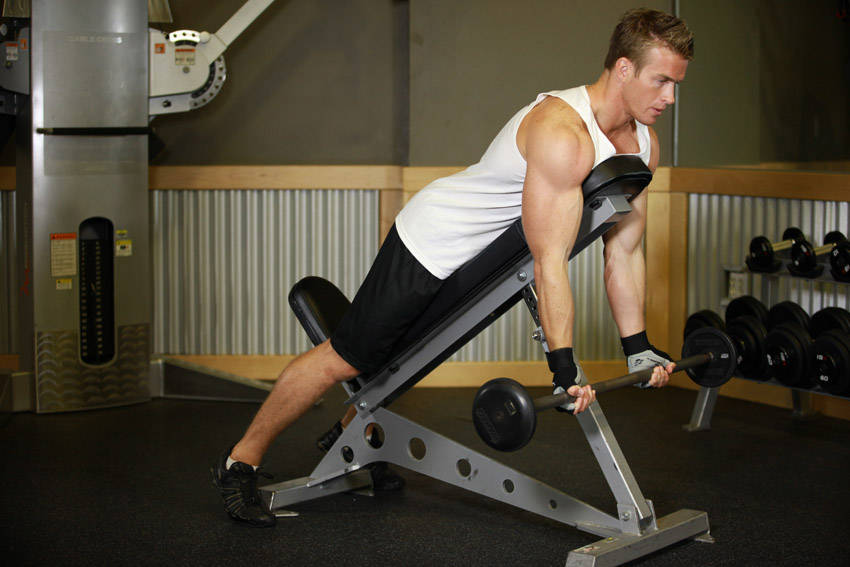
- Biceps
- Barbell
- Intermediate
- Isolation
How to perform this exercise
- Lie against an incline bench, with your arms holding a barbell and hanging down in a horizontal line. This will be your starting position.
- While keeping the upper arms stationary, curl the weight up as high as you can while squeezing the biceps. Breathe out as you perform this portion of the movement. Tip: Only the forearms should move. Do not swing the arms.
- After a second contraction, slowly go back to the starting position as you inhale. Tip: Make sure that you go all of the way down.
- Repeat for the recommended amount of repetitions.
Sets and reps: 3 sets of 10 to 15 reps.
Why this matches
- Movement: curl, the same as the Dumbbell Lying Supine Biceps Curl
- Primary muscle: biceps, the same as the Dumbbell Lying Supine Biceps Curl
- Equipment: free weights, the same as the Dumbbell Lying Supine Biceps Curl
- Body position: seated, not lying on your back
Dumbbell Lying Supine Biceps Curl FAQ
What muscles does Dumbbell Lying Supine Biceps Curl work?
It primarily targets the biceps brachii (long and short heads) and secondarily the brachialis and brachioradialis. The supine position limits shoulder involvement, increasing peak biceps activation by keeping the elbow fixed and the forearm supinated.
Find Alternatives for Any Exercise
Search the exercise database and filter the ranked substitutes by the equipment you own.
Similarity scores compare exercise metadata such as movement pattern, muscles, equipment and body position. They are not a safety rating or a check that you own the equipment. Learn about our methodology