

10 Best Dumbbell One Arm Upright Row Alternatives for Shoulder Strength
If you can’t do a dumbbell one-arm upright row, use single-arm lateral raises, cable face pulls, seated dumbbell presses, dumbbell high pulls, or banded upright rows to stress the delts. Cue: lead with the elbow and keep the wrist neutral to target the lateral deltoid while limiting upper-trap dominance and impingement.
Original Exercise: Dumbbell One Arm Upright Row
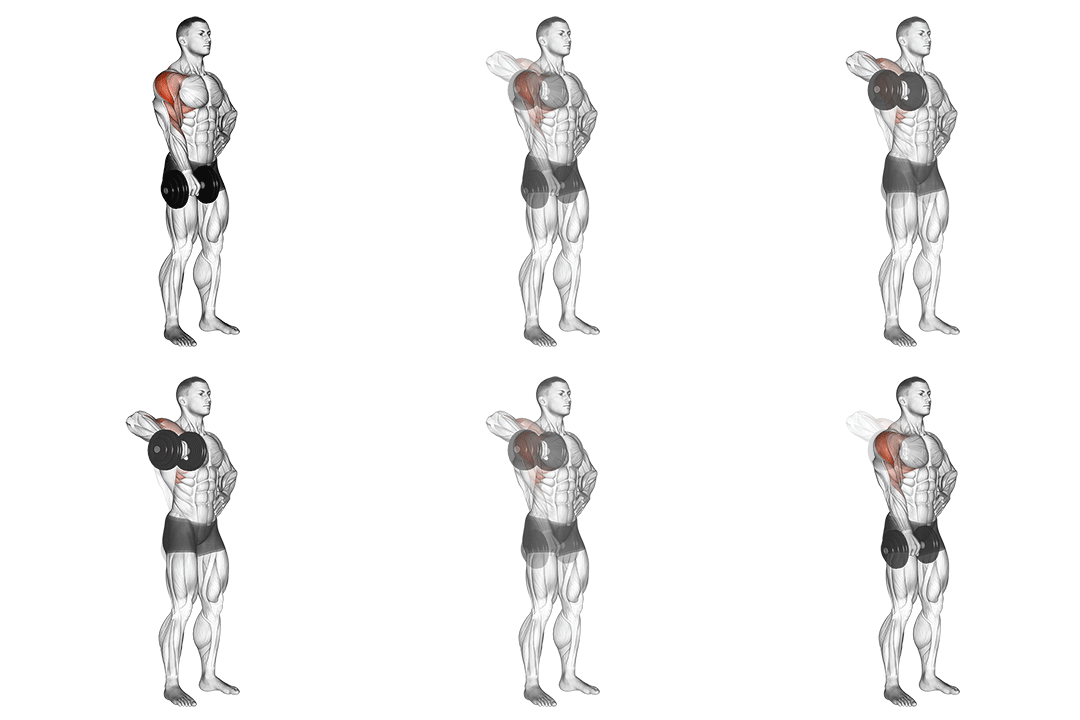
How to Perform Dumbbell One Arm Upright Row
- Stand with your feet shoulder-width apart, holding a dumbbell in one hand with an overhand grip.
- Let the dumbbell hang at arm's length in front of your thighs, with your palm facing your body.
- Keeping your back straight and your core engaged, exhale and lift the dumbbell straight up towards your chin, leading with your elbow.
- Pause for a moment at the top, then inhale and slowly lower the dumbbell back down to the starting position.
- Repeat for the desired number of repetitions, then switch to the other arm.
Ranked Dumbbell One Arm Upright Row Alternatives
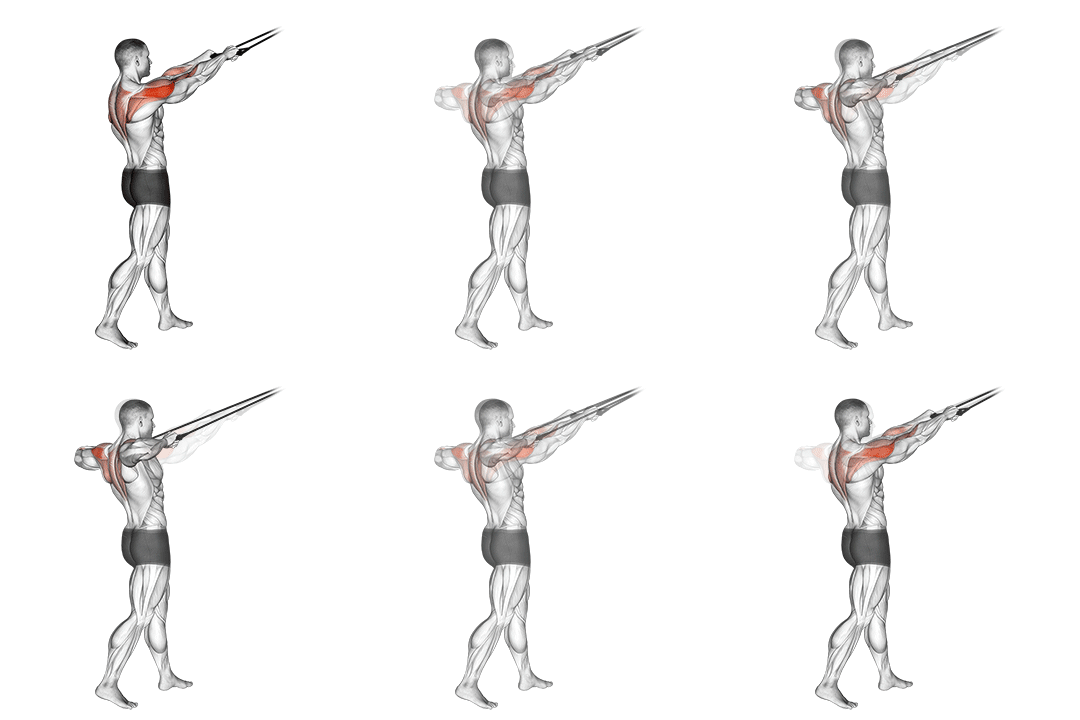
1. Band Standing Rear Delt Row
79% MatchHow to perform this exercise
- Stand with your feet shoulder-width apart and place the band under your feet.
- Hold the band handles with your palms facing each other and your arms extended in front of you.
- Bend your knees slightly and hinge forward at the hips, keeping your back straight.
- Pull the band towards your chest, squeezing your shoulder blades together.
- Pause for a moment at the top, then slowly release the tension and return to the starting position.
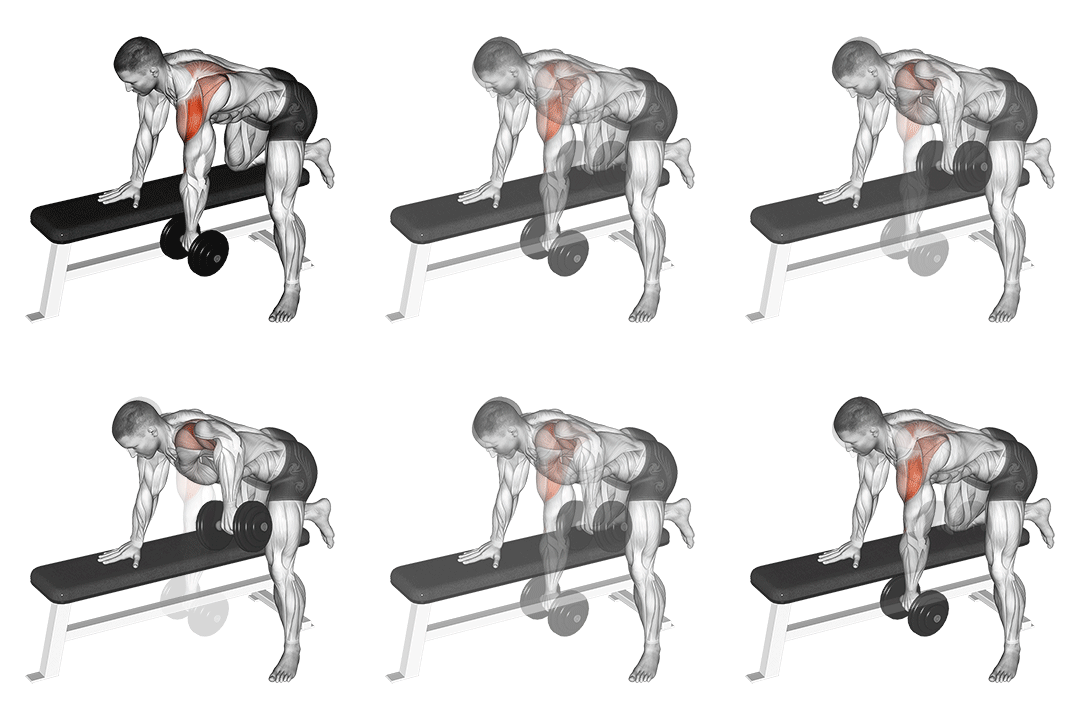
2. Dumbbell Rear Delt Row_shoulder
78.4% MatchHow to perform this exercise
- Stand with your feet shoulder-width apart and knees slightly bent.
- Hold a dumbbell in each hand with your palms facing your body.
- Bend forward at the waist, keeping your back straight and your core engaged.
- Extend your arms straight down towards the floor, with a slight bend in your elbows.
- Raise the dumbbells out to the sides, squeezing your shoulder blades together.
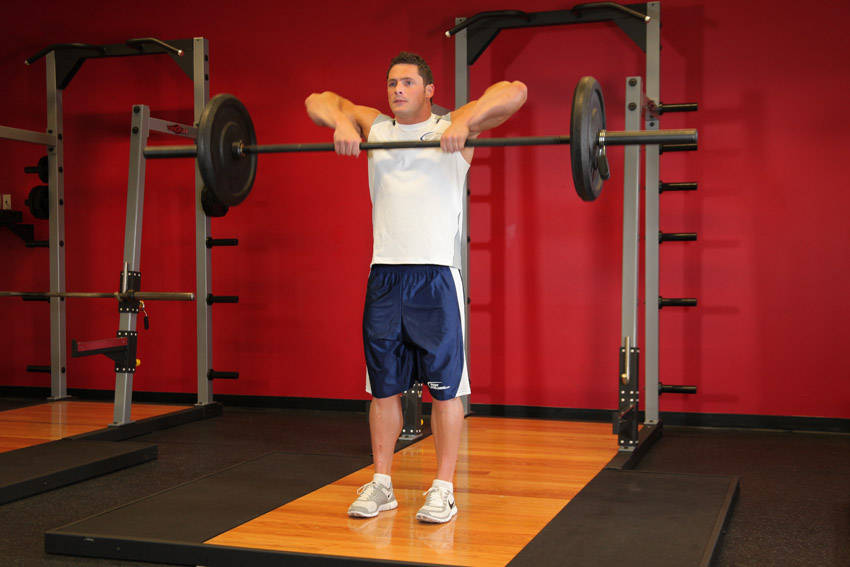
3. Upright Barbell Row
78.2% MatchHow to perform this exercise
- Grasp a barbell with an overhand grip that is slightly less than shoulder width. The bar should be resting on the top of your thighs with your arms extended and a slight bend in your elbows. Your back should also be straight. This will be your starting position.
- Now exhale and use the sides of your shoulders to lift the bar, raising your elbows up and to the side. Keep the bar close to your body as you raise it. Continue to lift the bar until it nearly touches your chin. Tip: Your elbows should drive the motion, and should always be higher than your forearms. Remember to keep your torso stationary and pause for a second at the top of the movement.
- Lower the bar back down slowly to the starting position. Inhale as you perform this portion of the movement.
- Repeat for the recommended amount of repetitions.
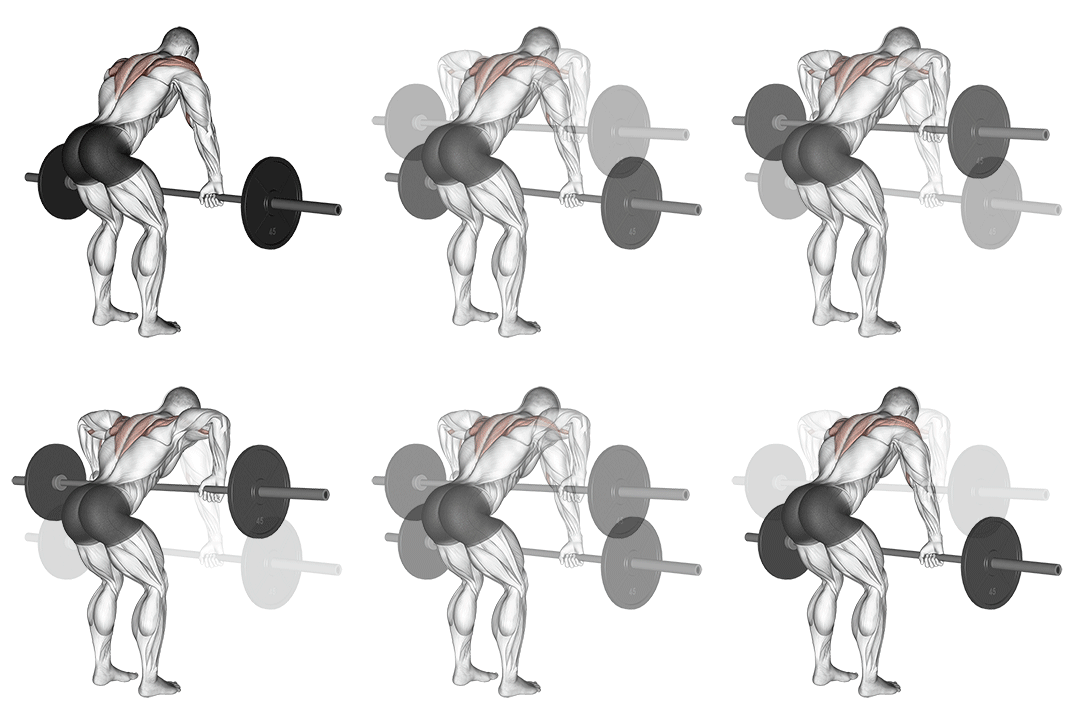
4. Barbell Rear Delt Row
74.4% MatchHow to perform this exercise
- Stand with your feet shoulder-width apart and knees slightly bent.
- Hold a barbell with an overhand grip, hands slightly wider than shoulder-width apart.
- Bend forward at the hips, keeping your back straight and chest up.
- Pull the barbell towards your chest, squeezing your shoulder blades together.
- Pause for a moment at the top, then slowly lower the barbell back to the starting position.
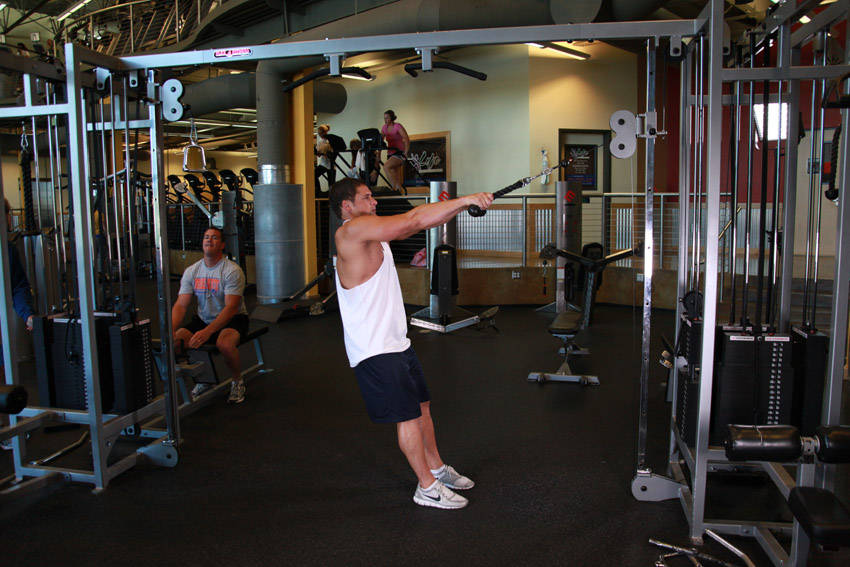
5. Cable Rope Rear-Delt Rows
74.2% MatchHow to perform this exercise
- Sit in the same position on a low pulley row station as you would if you were doing seated cable rows for the back.
- Attach a rope to the pulley and grasp it with an overhand grip. Your arms should be extended and parallel to the floor with the elbows flared out.
- Keep your lower back upright and slide your hips back so that your knees are slightly bent. This will be your starting position.
- Pull the cable attachment towards your upper chest, just below the neck, as you keep your elbows up and out to the sides. Continue this motion as you exhale until the elbows travel slightly behind the back. Tip: Keep your upper arms horizontal, perpendicular to the torso and parallel to the floor throughout the motion.
- Go back to the initial position where the arms are extended and the shoulders are stretched forward. Inhale as you perform this portion of the movement.
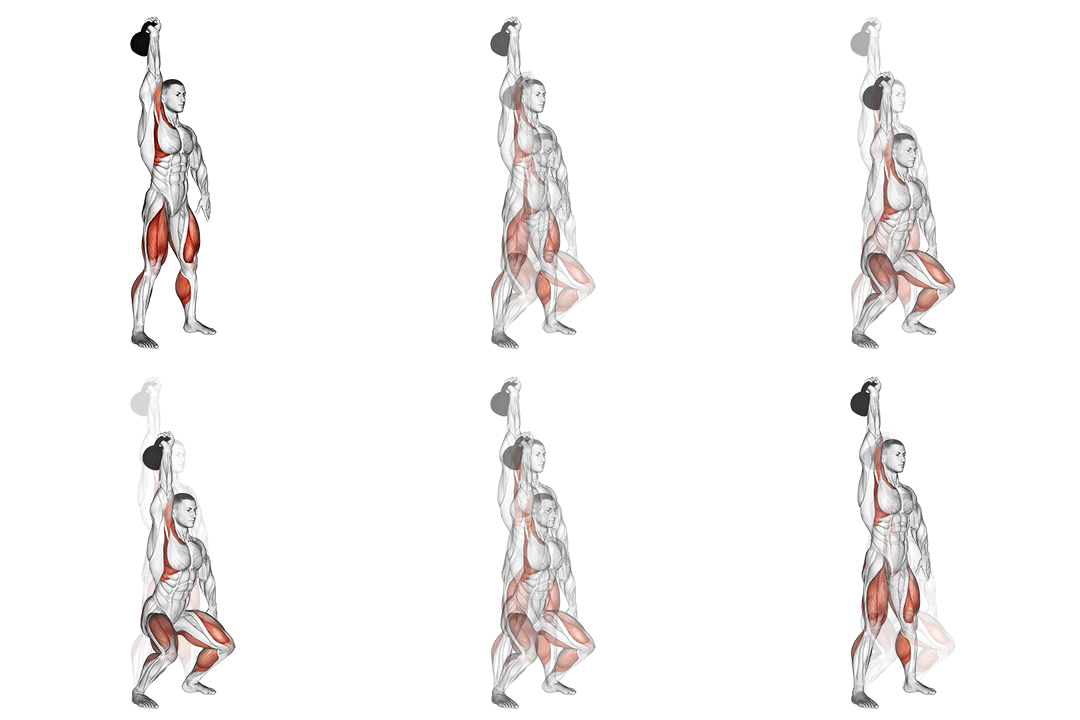
6. Kettlebell One Arm Jerk
72.8% MatchHow to perform this exercise
- Stand with your feet shoulder-width apart, holding a kettlebell in one hand at shoulder height.
- Bend your knees slightly and engage your core.
- Press the kettlebell overhead in a straight line, fully extending your arm.
- As you press the kettlebell overhead, simultaneously dip your knees and quickly straighten them to generate momentum.
- As the kettlebell reaches its highest point, quickly drop underneath it by bending your knees and hips.
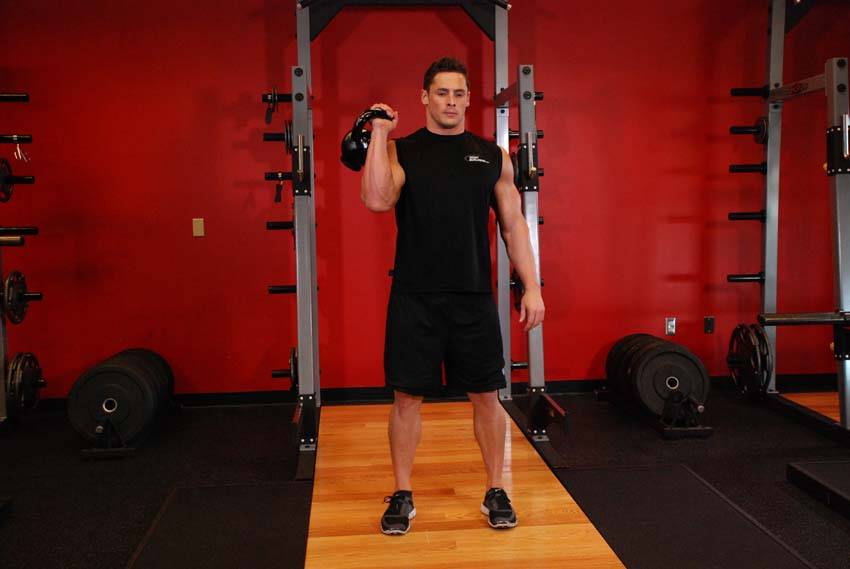
7. One-Arm Kettlebell Split Jerk
72.8% MatchHow to perform this exercise
- Hold a kettlebell by the handle. Clean the kettlebell to your shoulder by extending through the legs and hips as you pull the kettlebell towards your shoulder. Rotate your wrist as you do so, so that the palm faces forward. This will be your starting position.
- Dip your body by bending the knees, keeping your torso upright.
- Immediately reverse direction, driving through the heels, in essence jumping to create momentum. As you do so, press the kettlebell overhead to lockout by extending the arms, using your body's momentum to move the weight.
- Receive the weight overhead by returning to a squat position underneath the weight, positioning one leg in front of you and one leg behind you.
- Keeping the weight overhead, return to a standing position and bring your feet together. Lower the weight to perform the next repetition.
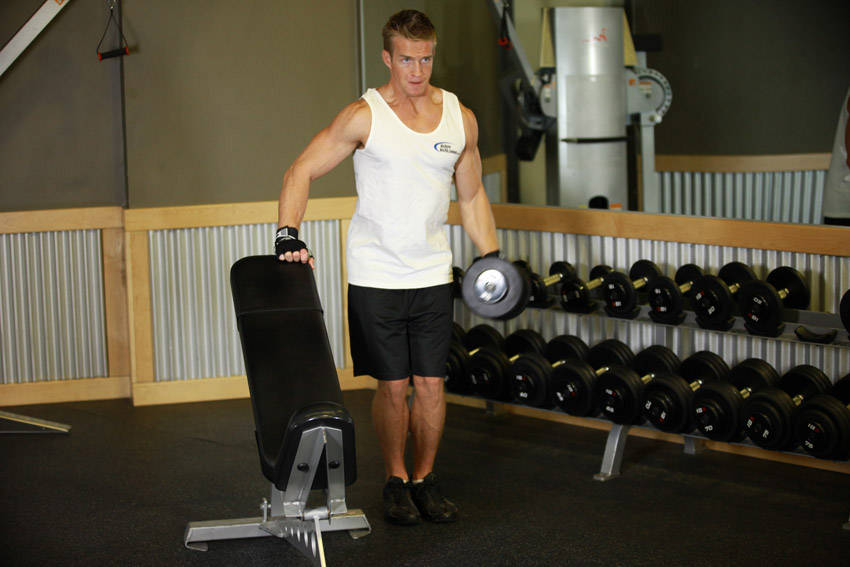
8. One-Arm Side Laterals
72.3% MatchHow to perform this exercise
- Pick a dumbbell and place it in one of your hands. Your non lifting hand should be used to grab something steady such as an incline bench press. Lean towards your lifting arm and away from the hand that is gripping the incline bench as this will allow you to keep your balance.
- Stand with a straight torso and have the dumbbell by your side at arm's length with the palm of the hand facing you. This will be your starting position.
- While maintaining the torso stationary (no swinging), lift the dumbbell to your side with a slight bend on the elbow and your hand slightly tilted forward as if pouring water in a glass. Continue to go up until you arm is parallel to the floor. Exhale as you execute this movement and pause for a second at the top.
- Lower the dumbbell back down slowly to the starting position as you inhale.
- Repeat for the recommended amount of repetitions.
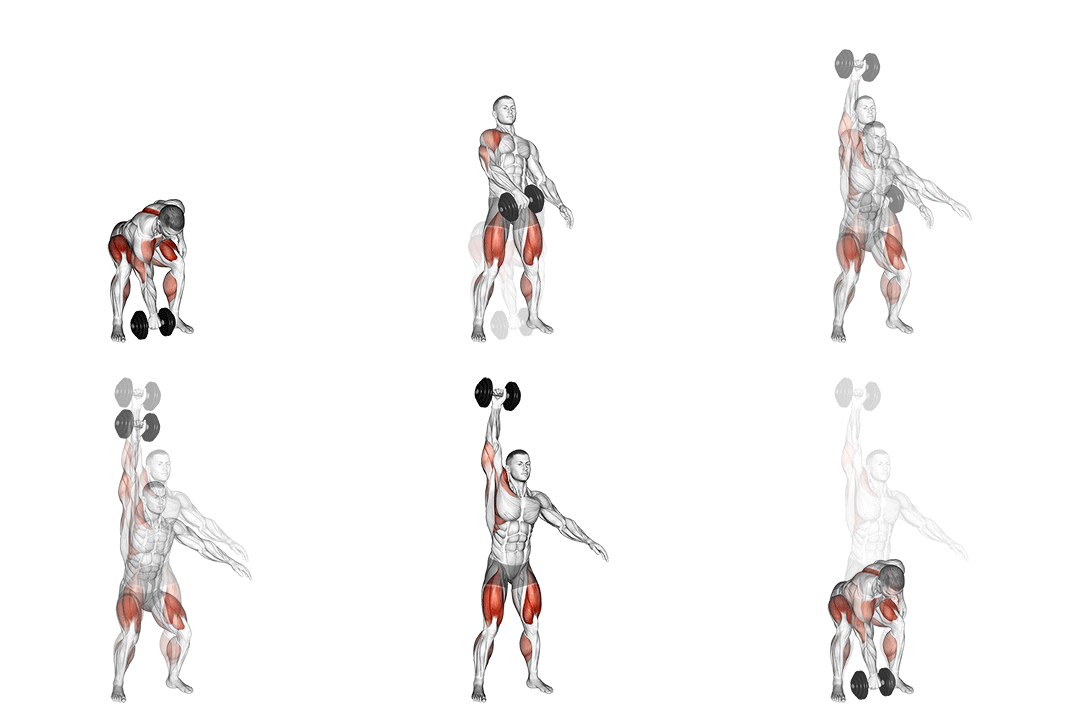
9. Dumbbell One Arm Snatch
72.2% MatchHow to perform this exercise
- Stand with your feet shoulder-width apart, holding a dumbbell in one hand with an overhand grip.
- Bend your knees slightly and hinge forward at the hips, keeping your back straight and chest up.
- Lower the dumbbell towards the ground, keeping it close to your body.
- Explosively extend your hips, knees, and ankles, driving the dumbbell upwards in a straight line.
- As the dumbbell reaches shoulder height, quickly rotate your hand and punch it overhead, fully extending your arm.
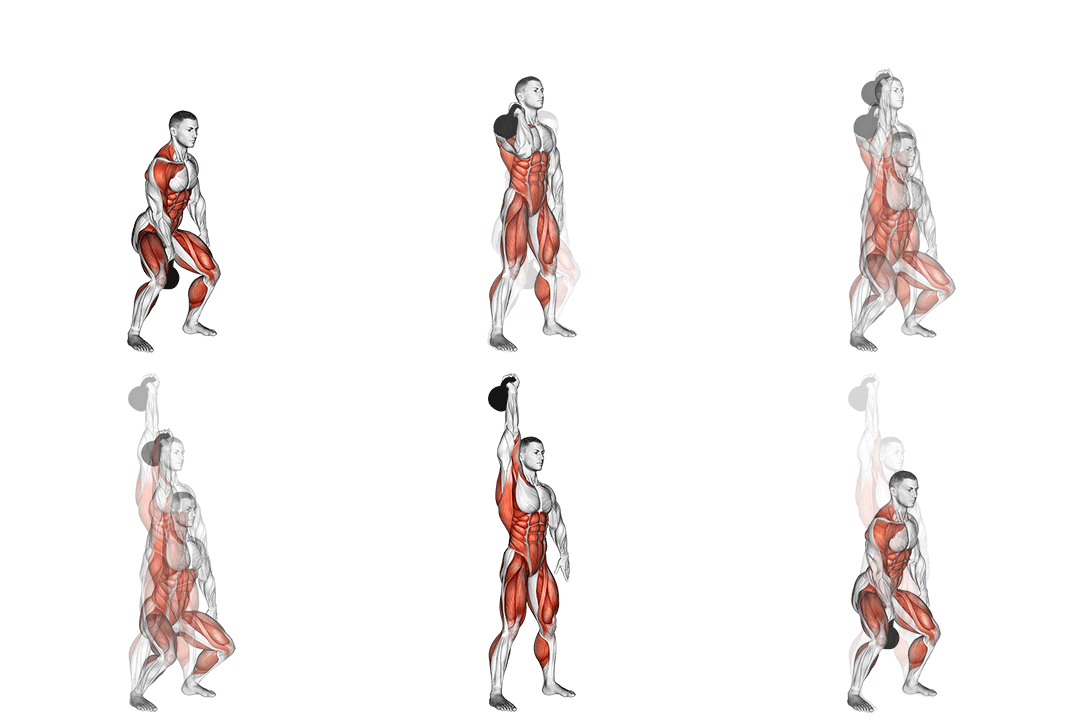
10. Kettlebell One Arm Clean And Jerk
72.2% MatchHow to perform this exercise
- Stand with your feet shoulder-width apart, holding a kettlebell in one hand with an overhand grip.
- Bend your knees slightly and hinge at the hips, lowering the kettlebell between your legs.
- Explosively extend your hips, knees, and ankles, using the momentum to swing the kettlebell up to shoulder height.
- As the kettlebell reaches shoulder height, rotate your wrist and punch your hand straight up, locking out your arm overhead.
- Lower the kettlebell back down to the starting position and repeat for the desired number of repetitions.
Why You Might Need a Dumbbell One Arm Upright Row Alternative
You might replace the one-arm upright row for pain, mobility, or equipment reasons. Upright rows can irritate the subacromial space if you lack external rotation or scapular control; choose movements that reduce humeral internal rotation and overhead compression. Use cues such as "maintain scapular retraction" and "lead with the elbow" to shift load from the upper trap to the lateral deltoid. Alternatives let you load the delts through safer planes (abduction or horizontal plane) and emphasize the anterior, lateral, or posterior fibers depending on your goal.
How to Choose the Right Substitute
Select a substitute by matching movement pattern, loading capability, and shoulder mechanics. For pure lateral deltoid work pick single-arm lateral raises with a slight lean; cue: keep the elbow above the wrist and pause at 90° to maximize lateral head activation. For balanced shoulder strength choose seated dumbbell presses, drive through the elbow, not the wrist, to engage deltoids and triceps. If impingement is the issue, favor face pulls or banded external-rotation drills that emphasize scapular control and infraspinatus activation while avoiding humeral elevation in internal rotation.
Frequently Asked Questions
What muscles does Dumbbell One Arm Upright Row work?
The one-arm upright row primarily targets the deltoids, especially the lateral head, while recruiting the upper trapezius and biceps as synergists. The movement combines shoulder abduction/scapular elevation mechanics, so scapular stabilizers and rotator cuff muscles assist to control the humeral head.
What is the best bodyweight alternative to Dumbbell One Arm Upright Row?
A bodyweight face-pull variation using a suspension trainer or banded horizontal pull is a top option. Cue: pull with elbows high and squeeze the scapulae together to emphasize posterior deltoid and scapular stabilizer activation without compressing the subacromial space.
Can I build muscle without doing Dumbbell One Arm Upright Row?
Yes, you can build shoulder mass with alternatives that provide equal or better deltoid loading, such as progressive single-arm lateral raises, seated dumbbell presses, and dumbbell high pulls. Focus on progressive overload, clean technique (lead with the elbow, maintain neutral wrist), and full range of motion to drive hypertrophy.
More Exercise Alternatives
Find Alternatives for Any Exercise
Use the exercise substitution finder to compare ranked alternatives for your available equipment and training preference.
Try the Exercise Substitution Finder →