

10 Best Dumbbell Seated Triceps Extension Alternatives for Home Gyms
The Dumbbell Seated Triceps Extension is done seated with dumbbells. Ranked closest by our scoring: the Seated Triceps Press, the Barbell Seated Overhead Triceps Extension and the Standing Dumbbell Triceps Extension.
Updated Ranked by our 12-factor similarity model How it works
Original Exercise: Dumbbell Seated Triceps Extension
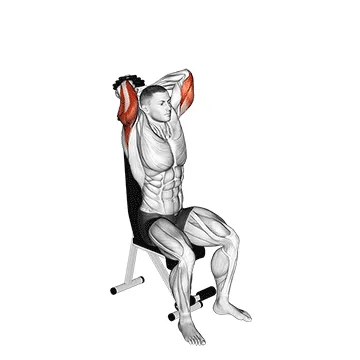
- Primary muscle
- Triceps
- Equipment
- Dumbbell
- Difficulty
- Intermediate
- Type
- Isolation
Secondary muscles: Shoulders
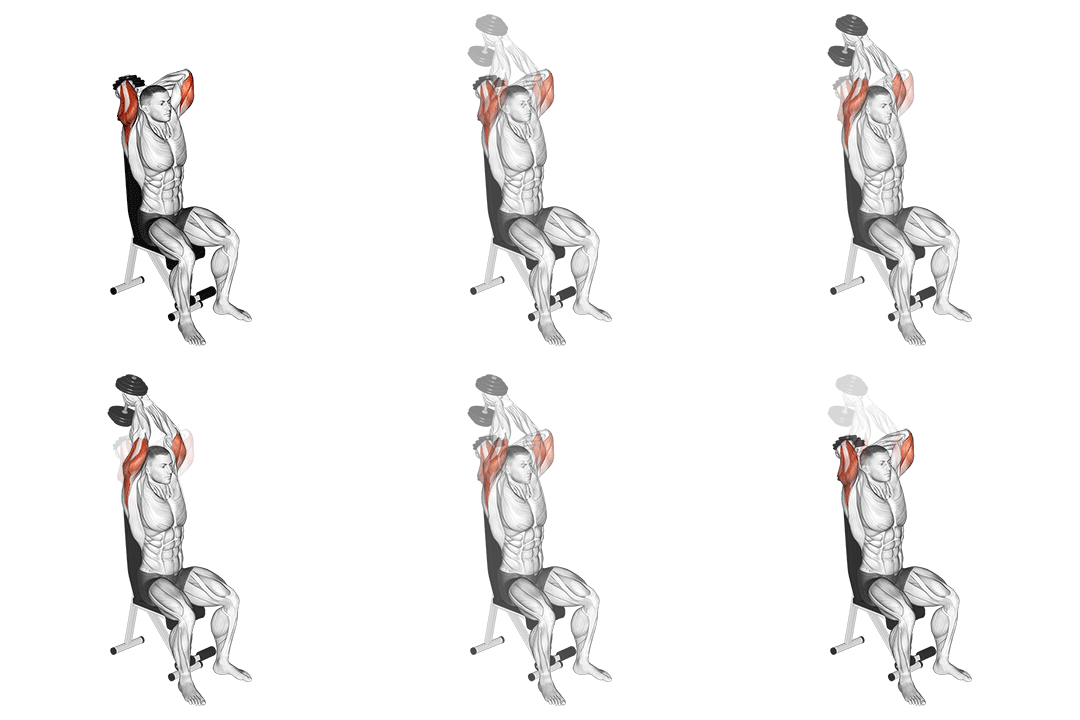
How to perform Dumbbell Seated Triceps Extension
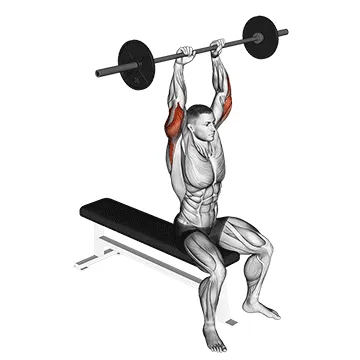
- Sit on a bench with your back straight and feet flat on the ground.
- Hold a dumbbell with both hands and extend your arms straight up overhead.
- Bend your elbows and lower the dumbbell behind your head, keeping your upper arms close to your ears.
- Pause for a moment, then straighten your arms and return to the starting position.
- Repeat for the desired number of repetitions.
Ranked Dumbbell Seated Triceps Extension Alternatives
10 substitutes, ranked by how closely each one matches the Dumbbell Seated Triceps Extension on movement pattern, muscles worked, equipment and body position. The higher the score, the less you change. Open "How to perform this exercise" on a card for the steps; every card title links to that exercise's own alternatives page.
Best match 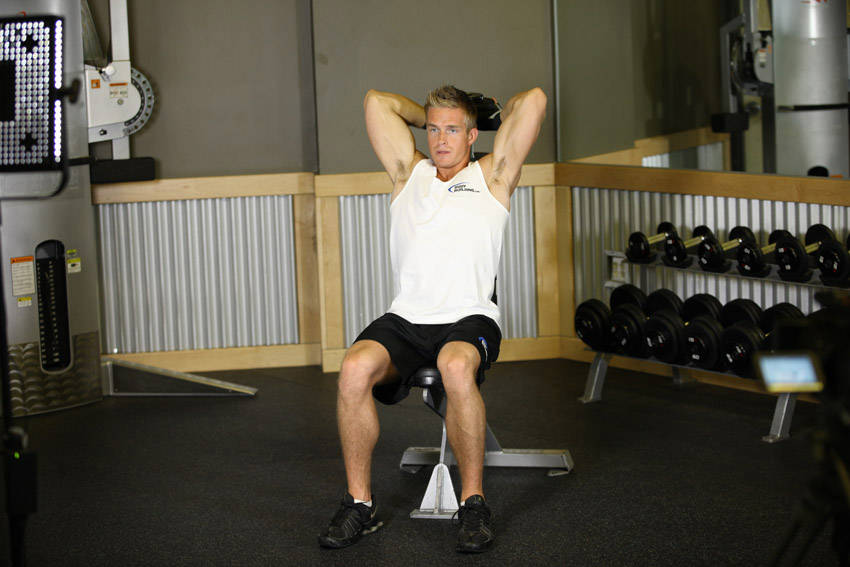
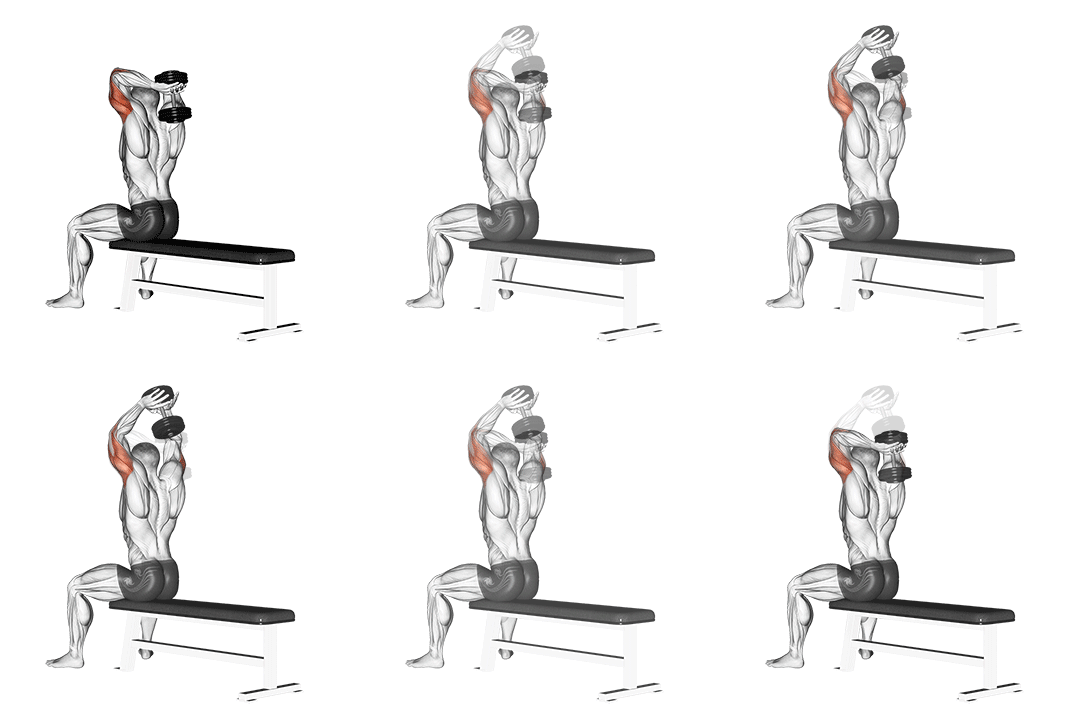
1. Seated Triceps Press
99% match- Triceps
- Dumbbell
- Intermediate
- Isolation
Pick this when you want an easier version that still works the triceps.
How to perform this exercise
- Sit down on a bench with back support and grasp a dumbbell with both hands and hold it overhead at arm's length. Tip: a better way is to have somebody hand it to you especially if it is very heavy. The resistance should be resting in the palms of your hands with your thumbs around it. The palm of the hand should be facing inward. This will be your starting position.
- Keeping your upper arms close to your head (elbows in) and perpendicular to the floor, lower the resistance in a semi-circular motion behind your head until your forearms touch your biceps. Tip: The upper arms should remain stationary and only the forearms should move. Breathe in as you perform this step.
- Go back to the starting position by using the triceps to raise the dumbbell. Breathe out as you perform this step.
- Repeat for the recommended amount of repetitions.
Sets and reps: 3 sets of 10 to 15 reps.
Why this matches
- Primary muscle: triceps, the same as the Dumbbell Seated Triceps Extension
- Equipment: free weights, the same as the Dumbbell Seated Triceps Extension
- Body position: seated, the same as the Dumbbell Seated Triceps Extension
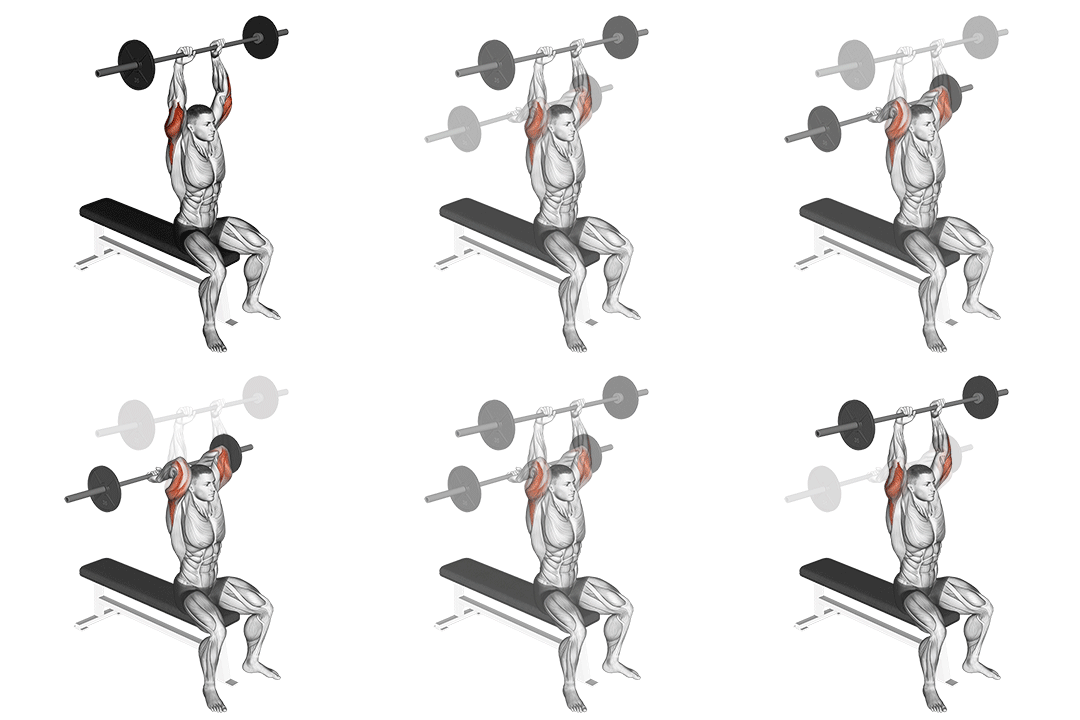
- Triceps
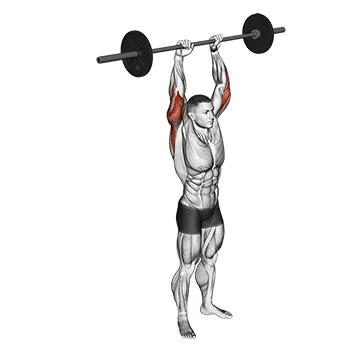
- Barbell
- Intermediate
- Isolation
A good swap when you have a barbell to work with, and it still works the triceps.
How to perform this exercise
- Sit on a bench with your back straight and feet flat on the ground.
- Hold a barbell with an overhand grip, hands shoulder-width apart, and raise it overhead.
- Lower the barbell behind your head by bending your elbows, keeping your upper arms close to your head.
- Pause for a moment, then extend your arms to raise the barbell back to the starting position.
- Repeat for the desired number of repetitions.
Sets and reps: 3 sets of 10 to 15 reps.
Why this matches
- Movement: extension, the same as the Dumbbell Seated Triceps Extension
- Primary muscle: triceps, the same as the Dumbbell Seated Triceps Extension
- Equipment: free weights, the same as the Dumbbell Seated Triceps Extension
- Body position: seated, the same as the Dumbbell Seated Triceps Extension
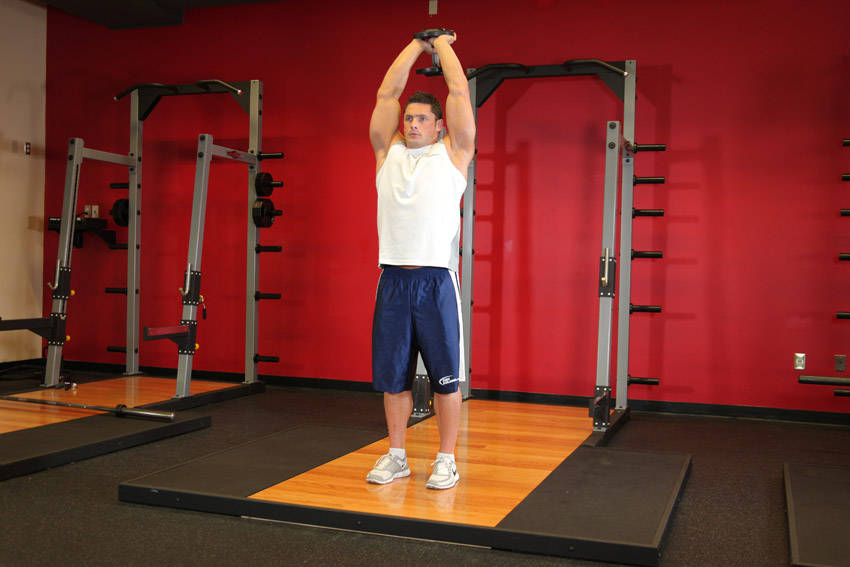
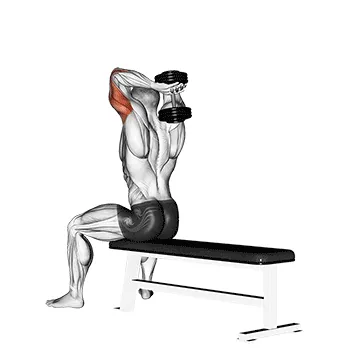
- Triceps
- Dumbbell
- Beginner
- Isolation
How to perform this exercise
- To begin, stand up with a dumbbell held by both hands. Your feet should be about shoulder width apart from each other. Slowly use both hands to grab the dumbbell and lift it over your head until both arms are fully extended.
- The resistance should be resting in the palms of your hands with your thumbs around it. The palm of the hands should be facing up towards the ceiling. This will be your starting position.
- Keeping your upper arms close to your head with elbows in and perpendicular to the floor, lower the resistance in a semicircular motion behind your head until your forearms touch your biceps. Tip: The upper arms should remain stationary and only the forearms should move. Breathe in as you perform this step.
- Go back to the starting position by using the triceps to raise the dumbbell. Breathe out as you perform this step.
- Repeat for the recommended amount of repetitions.
Sets and reps: 3 sets of 10 to 15 reps.
Why this matches
- Movement: extension, the same as the Dumbbell Seated Triceps Extension
- Primary muscle: triceps, the same as the Dumbbell Seated Triceps Extension
- Equipment: free weights, the same as the Dumbbell Seated Triceps Extension
- Body position: standing, not seated
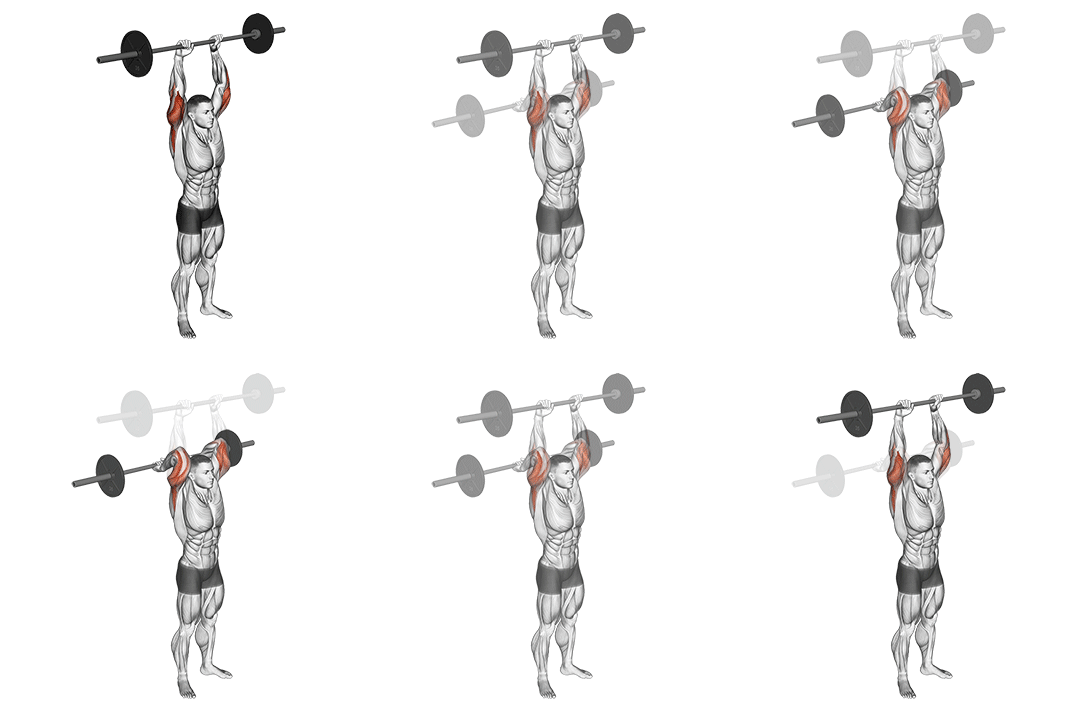
- Triceps
- Barbell
- Intermediate
- Isolation
How to perform this exercise
- Stand with your feet shoulder-width apart and hold a barbell with an overhand grip.
- Raise the barbell overhead, fully extending your arms.
- Keeping your upper arms close to your head, slowly lower the barbell behind your head by bending your elbows.
- Pause for a moment, then raise the barbell back to the starting position by extending your arms.
- Repeat for the desired number of repetitions.
Sets and reps: 3 sets of 10 to 15 reps.
Why this matches
- Movement: extension, the same as the Dumbbell Seated Triceps Extension
- Primary muscle: triceps, the same as the Dumbbell Seated Triceps Extension
- Equipment: free weights, the same as the Dumbbell Seated Triceps Extension
- Body position: standing, not seated
- Balance: harder to stay steady on than the Dumbbell Seated Triceps Extension
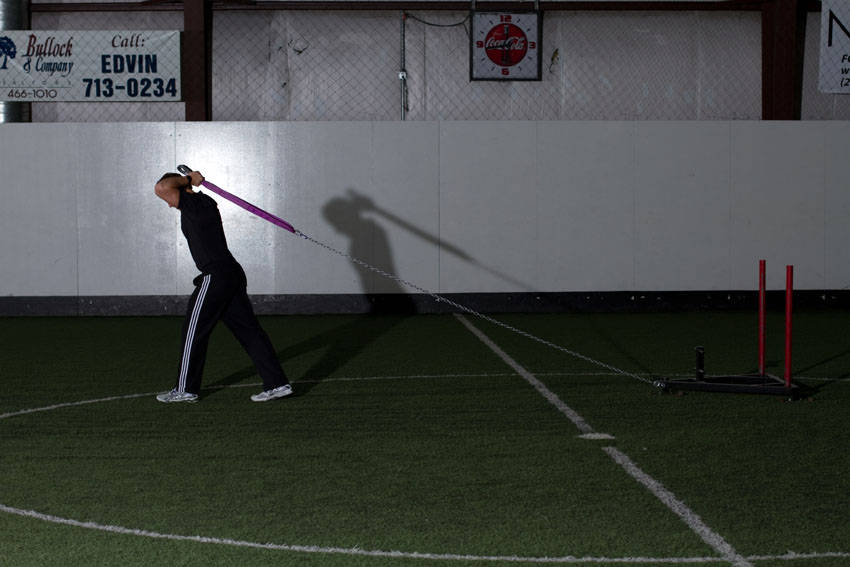
5. Sled Overhead Triceps Extension
86% match- Triceps
- Sled
- Intermediate
- Isolation
A good swap when you have a sled to work with, and it still works the triceps.
How to perform this exercise
- Attach dual handles to a sled using a chain or rope. Load the sled to an appropriate load.
- Facing away from the sled, step away until there is tension in the line. Raise your hands above your head, keeping them together, palms facing each other. Your elbows should be pointed upward with the elbows flexed. This will be your starting position.
- Extend through the elbow to straighten the arm. Ensure that your upper arm stays in position to isolate the triceps.
- Upon full extension, step forward to take the slack out of the line. You may keep your feet staggered for more stability.
Sets and reps: 3 sets of 10 to 15 reps.
Why this matches
- Movement: extension, the same as the Dumbbell Seated Triceps Extension
- Primary muscle: triceps, the same as the Dumbbell Seated Triceps Extension
- Body position: standing, not seated
- Balance: harder to stay steady on than the Dumbbell Seated Triceps Extension
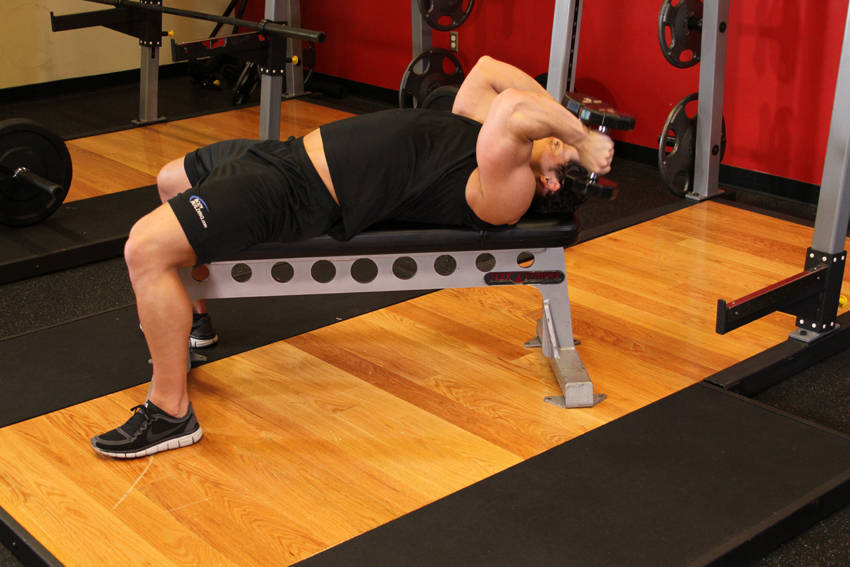
6. Lying Dumbbell Tricep Extension
86% match- Triceps
- Dumbbell
- Intermediate
- Isolation
How to perform this exercise
- Lie on a flat bench while holding two dumbbells directly in front of you. Your arms should be fully extended at a 90-degree angle from your torso and the floor. The palms should be facing in and the elbows should be tucked in. This is the starting position.
- As you breathe in and you keep the upper arms stationary with the elbows in, slowly lower the weight until the dumbbells are near your ears.
- At that point, while keeping the elbows in and the upper arms stationary, use the triceps to bring the weight back up to the starting position as you breathe out.
- Repeat for the recommended amount of repetitions.
Sets and reps: 3 sets of 10 to 15 reps.
Why this matches
- Movement: extension, the same as the Dumbbell Seated Triceps Extension
- Primary muscle: triceps, the same as the Dumbbell Seated Triceps Extension
- Equipment: free weights, the same as the Dumbbell Seated Triceps Extension
- Body position: lying on your back, not seated
7. Dumbbell Seated Bench Extension
84% match- Triceps
- Dumbbell
- Intermediate
- Isolation
It still works the triceps, through a different movement.
How to perform this exercise
- Sit on a bench with your back straight and feet flat on the ground.
- Hold a dumbbell with both hands and extend your arms straight up above your head.
- Slowly lower the dumbbell behind your head, keeping your elbows close to your ears.
- Pause for a moment, then raise the dumbbell back up to the starting position.
- Repeat for the desired number of repetitions.
Sets and reps: 3 sets of 10 to 15 reps.
Why this matches
- Primary muscle: triceps, the same as the Dumbbell Seated Triceps Extension
- Equipment: free weights, the same as the Dumbbell Seated Triceps Extension
- Body position: seated, the same as the Dumbbell Seated Triceps Extension
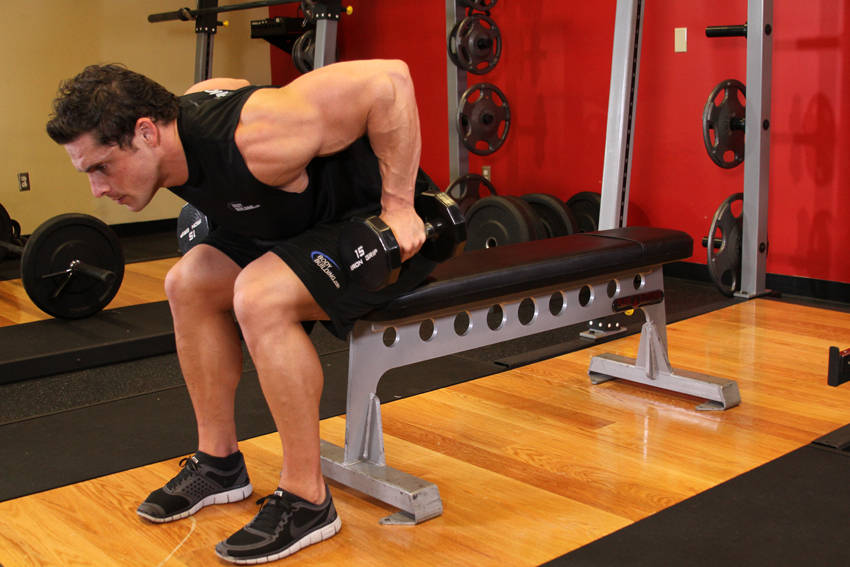
- Triceps
- Dumbbell
- Intermediate
- Isolation
How to perform this exercise
- Sit down at the end of a flat bench with a dumbbell in both arms using a neutral grip (palms of the hand facing you).
- Bend your knees slightly and bring your torso forward, by bending at the waist, while keeping the back straight until it is almost parallel to the floor. Make sure that you keep the head up.
- The upper arms with the dumbbells should be close to the torso and aligned with it (lifted up until they are parallel to the floor while the forearms are pointing towards the floor as the hands hold the weights). Tip: There should be a 90-degree angle between the forearms and the upper arm. This is your starting position.
- Keeping the upper arms stationary, use the triceps to lift the weight as you exhale until the forearms are parallel to the floor and the whole arm is extended. Like many other arm exercises, only the forearm moves.
- After a second contraction at the top, slowly lower the dumbbells back to the starting position as you inhale.
- Repeat the movement for the prescribed amount of repetitions.
Sets and reps: 3 sets of 10 to 15 reps.
Why this matches
- Primary muscle: triceps, the same as the Dumbbell Seated Triceps Extension
- Equipment: free weights, the same as the Dumbbell Seated Triceps Extension
- Body position: seated, the same as the Dumbbell Seated Triceps Extension
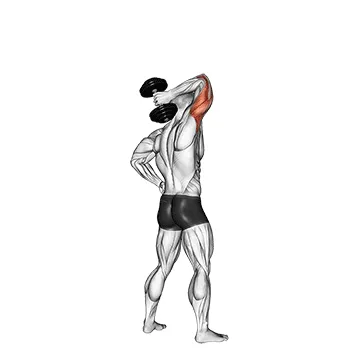
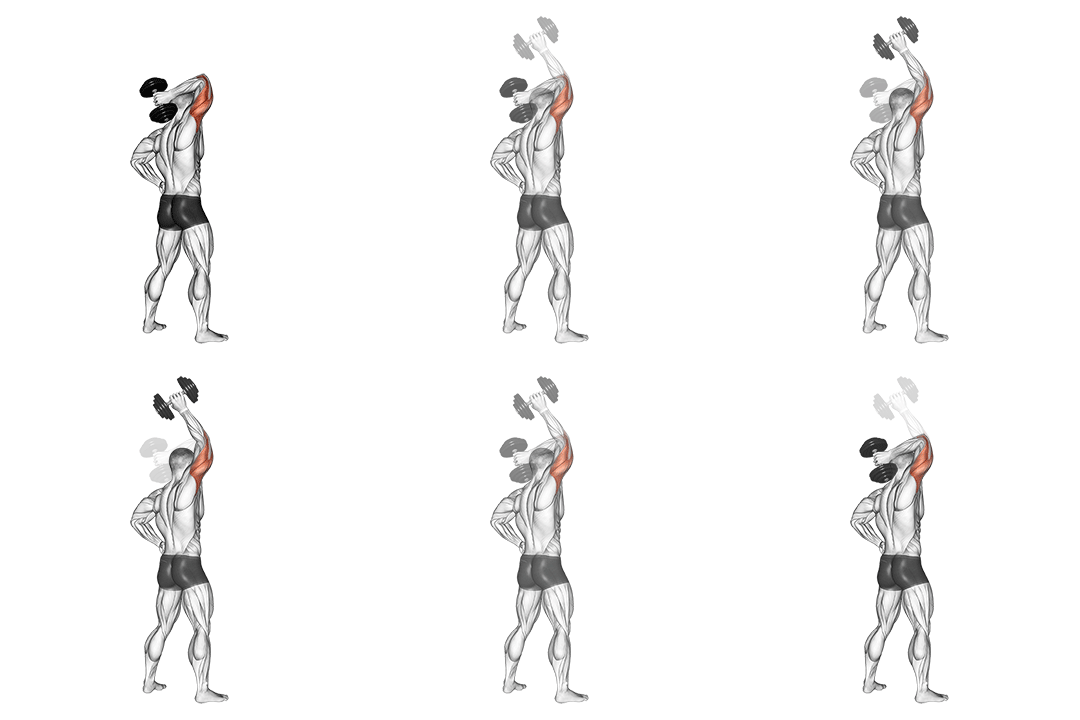
- Triceps
- Dumbbell
- Intermediate
- Isolation
How to perform this exercise
- Stand with your feet shoulder-width apart, holding a dumbbell in one hand.
- Raise the dumbbell overhead, fully extending your arm.
- Keep your upper arm close to your head and perpendicular to the ground.
- Slowly lower the dumbbell behind your head, bending your elbow.
- Pause for a moment, then raise the dumbbell back to the starting position.
- Repeat for the desired number of repetitions.
Sets and reps: 3 sets of 10 to 15 reps on each side.
Why this matches
- Movement: extension, the same as the Dumbbell Seated Triceps Extension
- Primary muscle: triceps, the same as the Dumbbell Seated Triceps Extension
- Equipment: free weights, the same as the Dumbbell Seated Triceps Extension
- Body position: standing, not seated
- Balance: harder to stay steady on than the Dumbbell Seated Triceps Extension
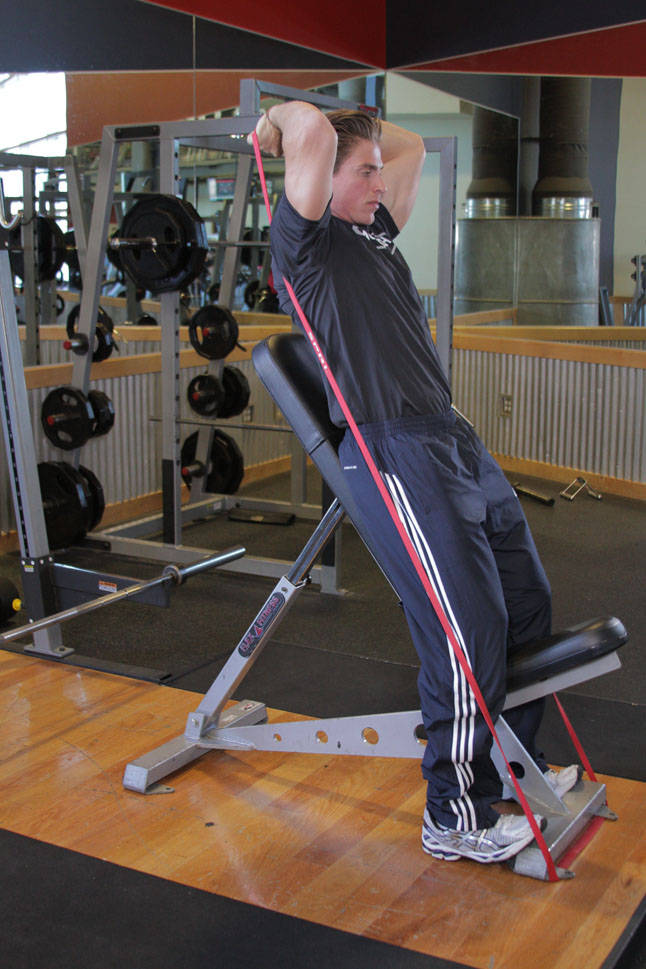
10. Speed Band Overhead Triceps
82% match- Triceps
- Band
- Intermediate
- Isolation
How to perform this exercise
- For this exercise anchor a band to the ground. We used an incline bench and anchored the band to the base, standing over the bench. Alternatively, this could be performed standing on the band.
- To begin, pull the band behind your head, holding it with a pronated grip and your elbows up. This will be your starting position.
- To perform the movement, extend through the elbow to to straighten your arms, ensuring that you keep your upper arm in place.
- Pause, and then return to the starting position.
Sets and reps: 3 sets of 10 to 15 reps.
Why this matches
- Primary muscle: triceps, the same as the Dumbbell Seated Triceps Extension
- Equipment: a band, not free weights
- Body position: standing, not seated
Why You Might Need a Dumbbell Seated Triceps Extension Alternative
You may substitute this isolation move for several reasons: shoulder pain during overhead loading, lack of a heavy dumbbell, desire for more progressive overload, or need for a compound lift that handles heavier loads. Choose alternatives that maintain the elbow-extension movement pattern and long-head stretch to target the triceps effectively. For shoulder issues pick a neutral-grip cable or band variant that reduces GH joint torque; for strength goals use close-grip bench or dips to increase load. Keep elbows tucked, wrists neutral and emphasize a slow eccentric to protect connective tissue while preserving muscle activation.
How to Choose the Right Dumbbell Seated Triceps Extension Substitute
Decide by equipment, pain profile, and training goal. If you have no dumbbell but a cable or band, pick cable overhead extensions to keep constant tension; cue: keep upper arm vertical and avoid shoulder retraction. For hypertrophy under heavy load, choose close-grip bench or dips to boost total torque across the elbow and shoulder. If shoulder mobility is limited, use lying skull crushers with a neutral wrist to isolate the triceps while minimizing GH stress. Prioritize range of motion, progressive overload capability, and whether you need unilateral work for balance.
Dumbbell Seated Triceps Extension FAQ
What muscles does Dumbbell Seated Triceps Extension work?
The movement primarily targets the triceps brachii, long, lateral and medial heads, through elbow extension. It emphasizes the long head when the upper arm is overhead, so keep the upper arm vertical and control the eccentric to maximize long-head stretch and activation.
Can I build muscle without doing Dumbbell Seated Triceps Extension?
Yes. You can achieve triceps hypertrophy with other elbow-extension exercises like skull crushers, close-grip bench press, cables or dips as long as you apply progressive overload and full range of motion. Emphasize controlled eccentrics and full elbow extension to ensure adequate muscle activation across the triceps heads.
Find Alternatives for Any Exercise
Search the exercise database and filter the ranked substitutes by the equipment you own.
Similarity scores compare exercise metadata such as movement pattern, muscles, equipment and body position. They are not a safety rating or a check that you own the equipment. Learn about our methodology