

10 Best Dumbbell Step Ups Alternatives for Strength and Rehab
If you can't perform Dumbbell Step Ups, use knee-dominant alternatives that target the quadriceps and preserve unilateral strength. Effective options include Bulgarian split squats, front squats, walking lunges, leg press, and box step-downs. Cue: for Bulgarian split squats, keep your torso upright, front knee tracking over the ankle, and drive through the midfoot.
Original Exercise: Dumbbell Step Ups
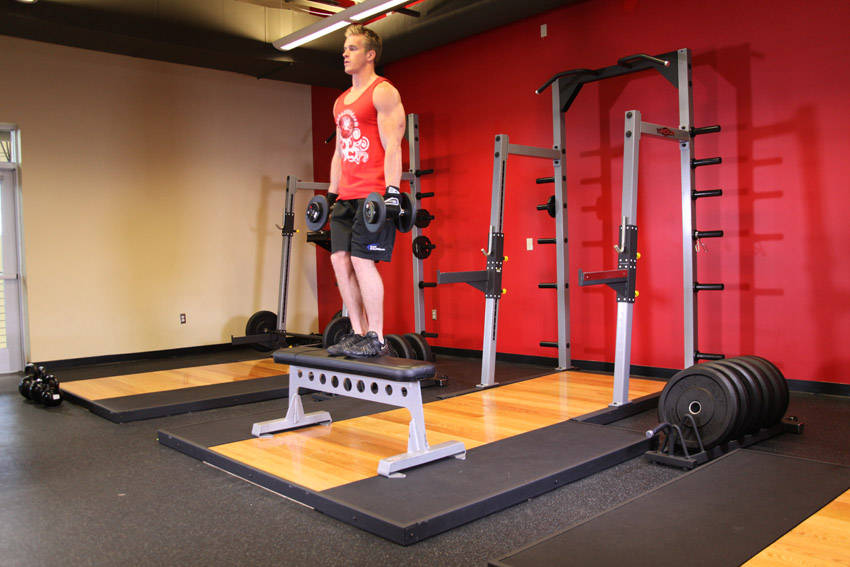
How to Perform Dumbbell Step Ups
- Stand up straight while holding a dumbbell on each hand (palms facing the side of your legs).
- Place the right foot on the elevated platform. Step on the platform by extending the hip and the knee of your right leg. Use the heel mainly to lift the rest of your body up and place the foot of the left leg on the platform as well. Breathe out as you execute the force required to come up.
- Step down with the left leg by flexing the hip and knee of the right leg as you inhale. Return to the original standing position by placing the right foot of to next to the left foot on the initial position.
- Repeat with the right leg for the recommended amount of repetitions and then perform with the left leg.
Pro Tips
- Category: Strength
- Force: Push
- Movement type: Compound
Best Dumbbell Step Ups Alternatives
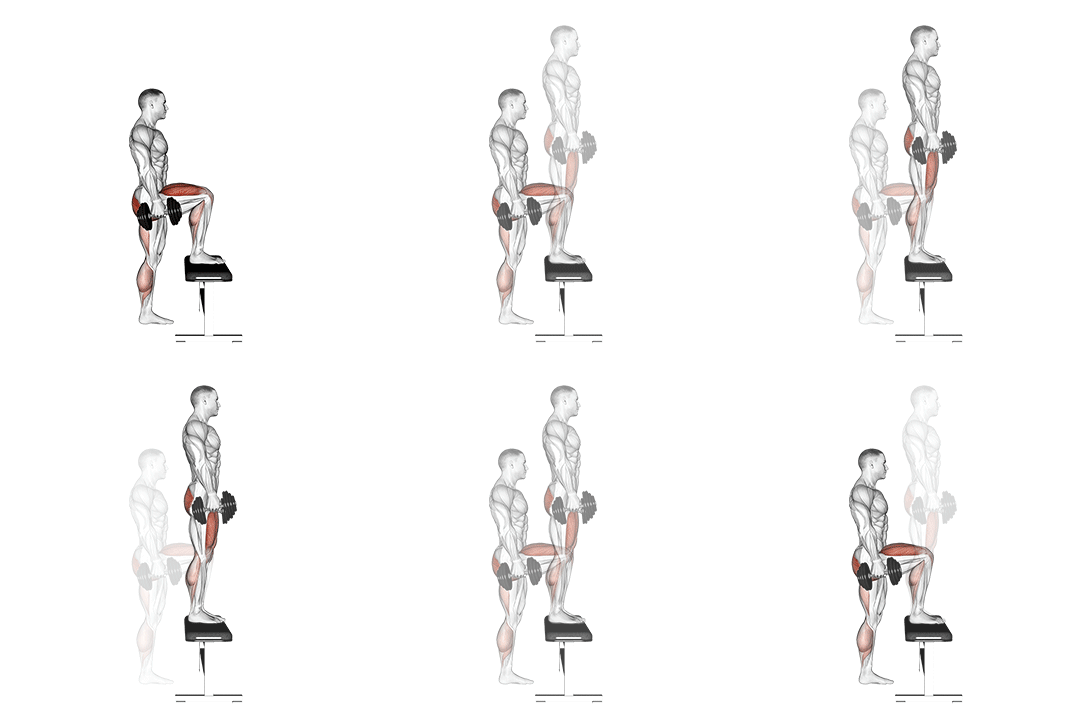
1. Dumbbell Step-up
84.4% MatchHow to perform this exercise
- Stand in front of a bench or step with a dumbbell in each hand, palms facing your body.
- Place your right foot on the bench or step, ensuring your entire foot is in contact with the surface.
- Push through your right heel and lift your body up onto the bench or step, straightening your right leg.
- Bring your left foot up onto the bench or step, standing fully upright.
- Step back down with your left foot, followed by your right foot, returning to the starting position.
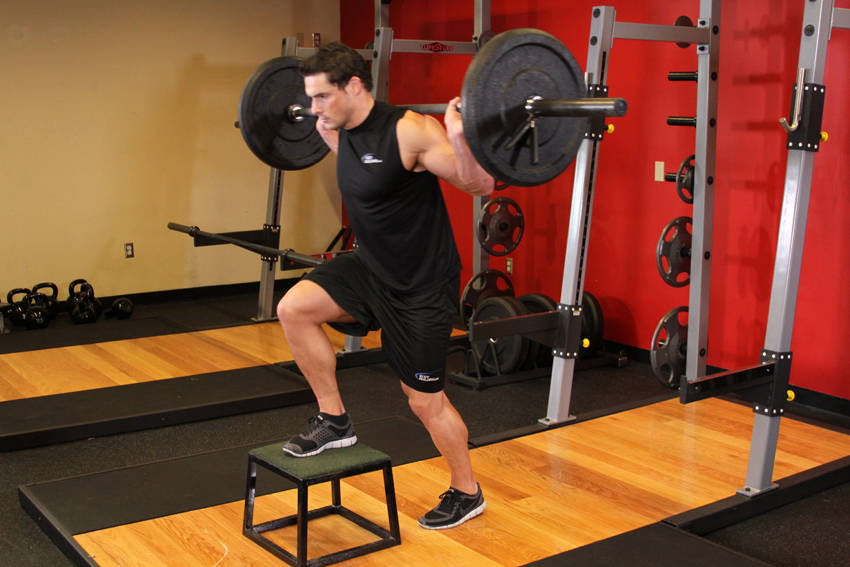
2. Barbell Step Ups
81% MatchHow to perform this exercise
- Stand up straight while holding a barbell placed on the back of your shoulders (slightly below the neck) and stand upright behind an elevated platform (such as the one used for spotting behind a flat bench). This is your starting position.
- Place the right foot on the elevated platform. Step on the platform by extending the hip and the knee of your right leg. Use the heel mainly to lift the rest of your body up and place the foot of the left leg on the platform as well. Breathe out as you execute the force required to come up.
- Step down with the left leg by flexing the hip and knee of the right leg as you inhale. Return to the original standing position by placing the right foot of to next to the left foot on the initial position.
- Repeat with the right leg for the recommended amount of repetitions and then perform with the left leg.
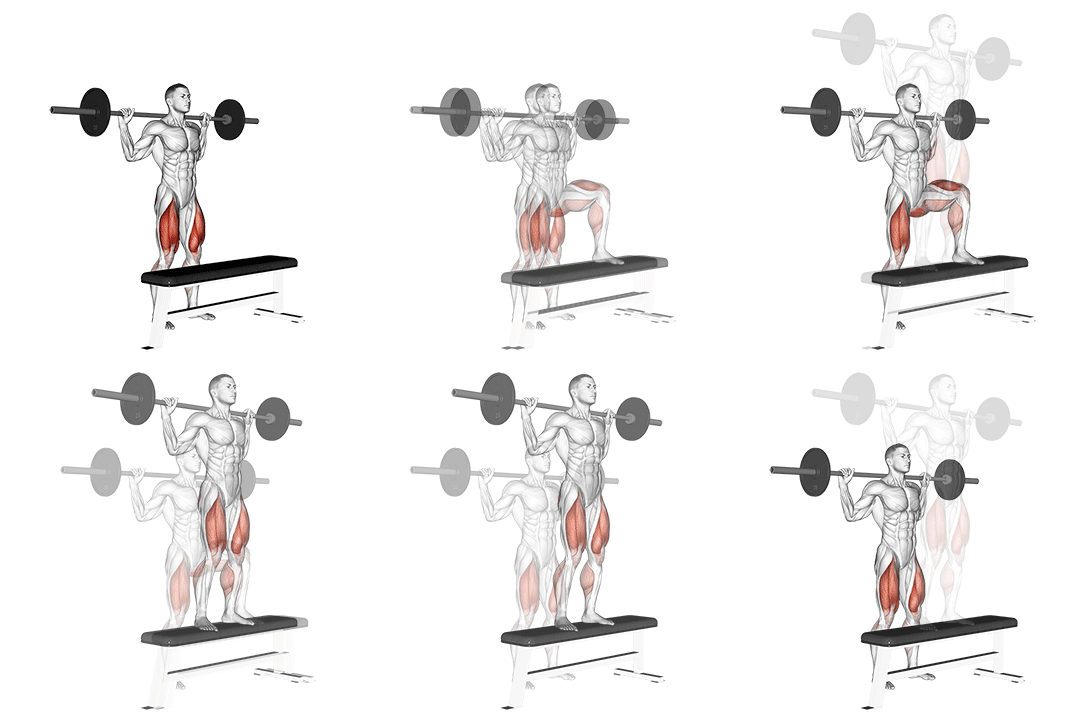
3. Barbell Step-up
81% MatchHow to perform this exercise
- Stand in front of a bench or step with a barbell resting on your upper back.
- Place one foot on the bench or step, ensuring your entire foot is in contact with the surface.
- Push through your heel and step up onto the bench or step, fully extending your hip and knee.
- Pause briefly at the top, then lower yourself back down to the starting position.
- Repeat with the opposite leg.
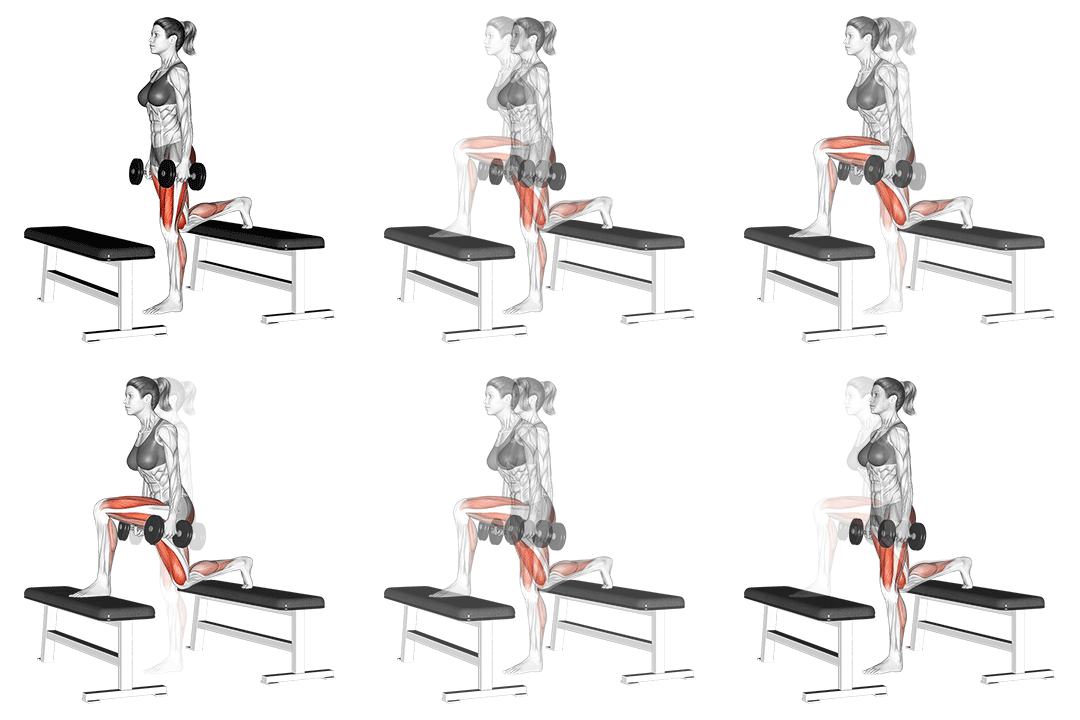
4. Dumbbell Step-up Lunge
80% MatchHow to perform this exercise
- Stand in front of a step or platform with a dumbbell in each hand, palms facing your sides.
- Place your right foot on the step, ensuring your entire foot is on the surface.
- Push through your right heel and lift your body up onto the step, bringing your left foot up as well.
- Once both feet are on the step, lower your left foot back down to the starting position, keeping your right foot on the step.
- Repeat the movement, alternating which foot you step up with each time.
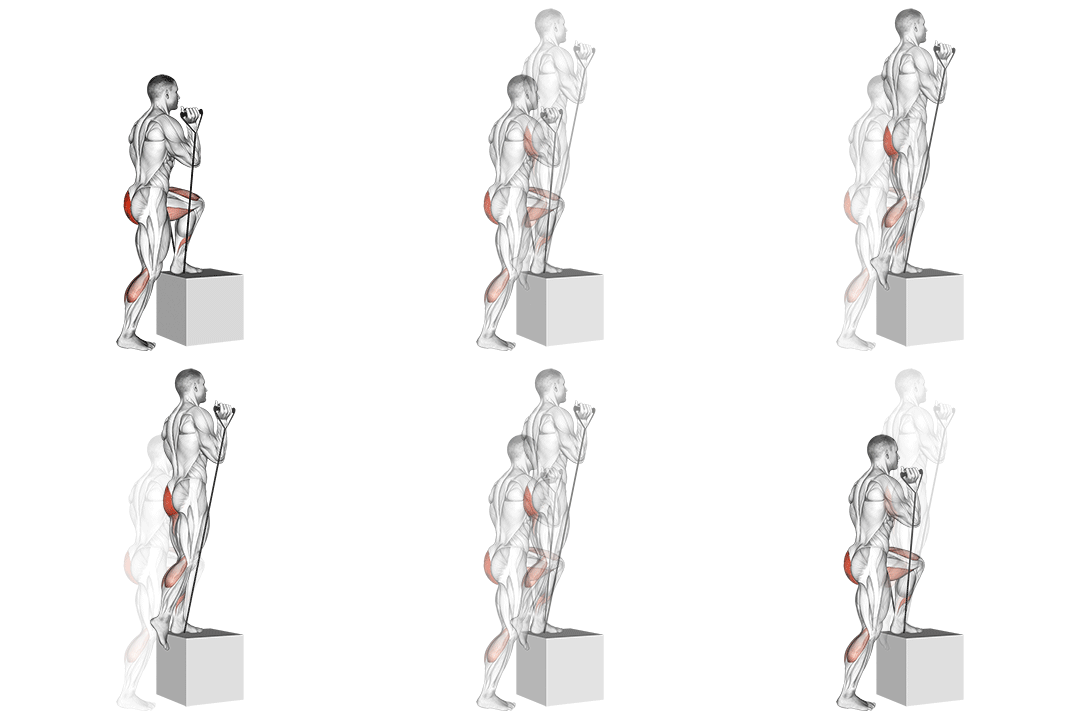
5. Band Step-up
75% MatchHow to perform this exercise
- Place a band around your thighs, just above your knees.
- Stand facing a step or platform with your feet hip-width apart.
- Step up onto the platform with your right foot, pushing through your heel.
- Extend your left leg behind you, keeping it straight.
- Lower your left foot back down to the ground.
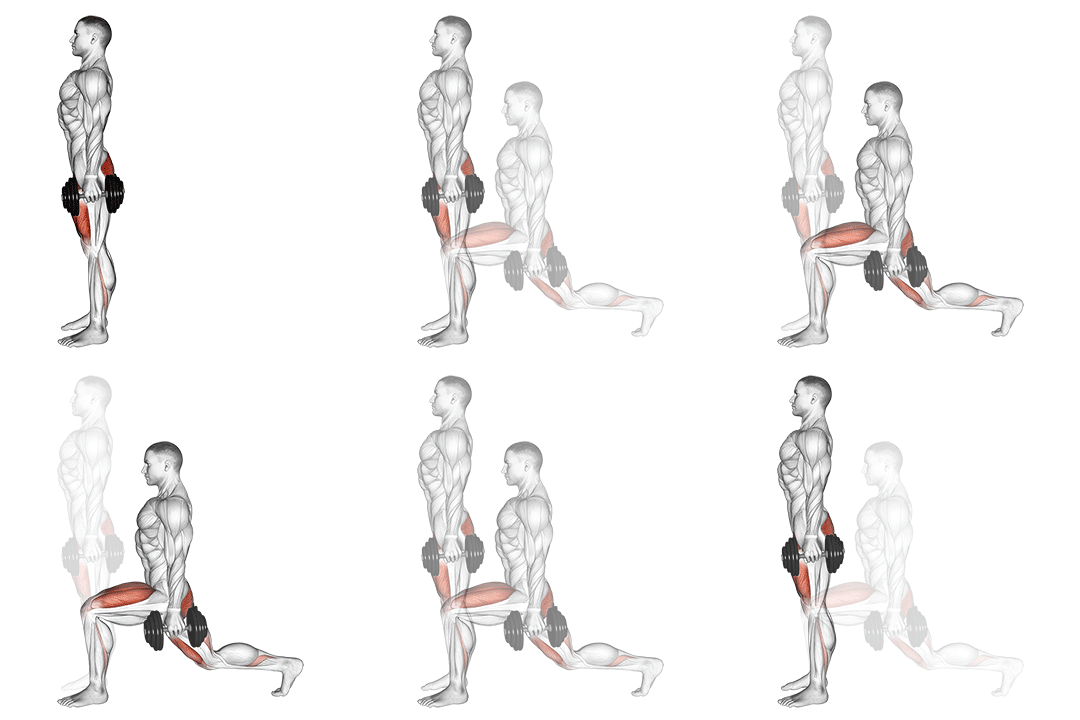
6. Dumbbell Rear Lunge
74.4% MatchHow to perform this exercise
- Stand with your feet shoulder-width apart, holding a dumbbell in each hand.
- Take a step backward with your right foot, lowering your body into a lunge position.
- Bend your left knee and lower your body until your left thigh is parallel to the ground.
- Pause for a moment, then push through your left heel to return to the starting position.
- Repeat on the other side, stepping back with your left foot.
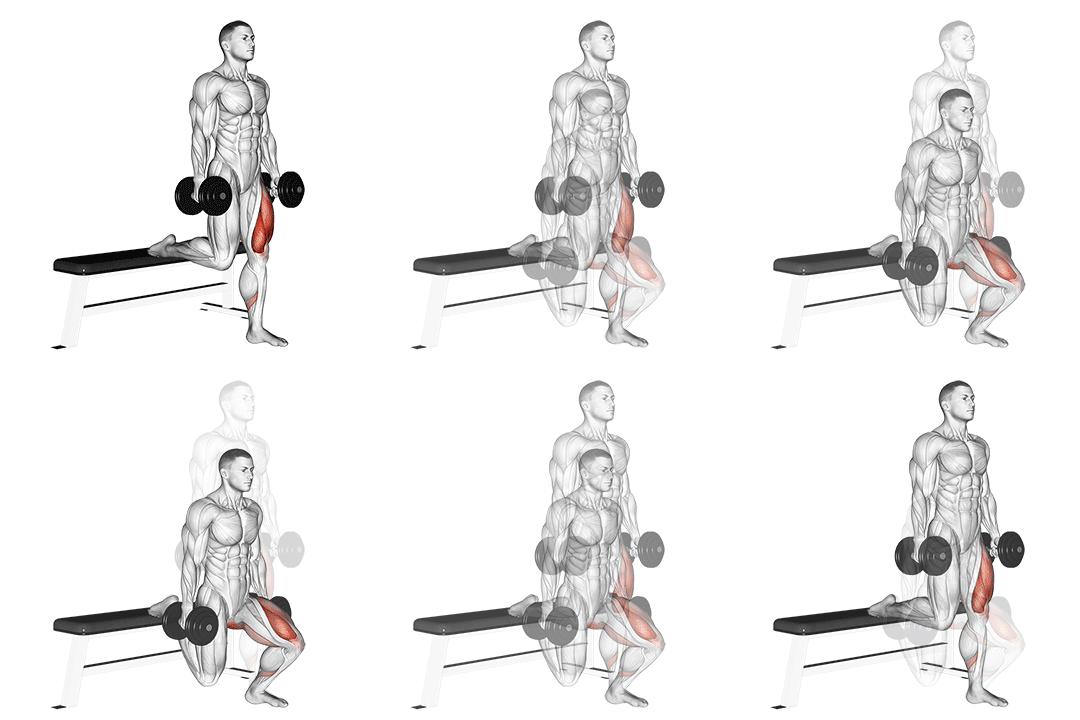
7. Dumbbell Single Leg Split Squat
74.2% MatchHow to perform this exercise
- Stand with your feet shoulder-width apart, holding a dumbbell in each hand.
- Take a step forward with one foot and position your feet so that your front foot is flat on the ground and your back foot is elevated on a bench or step.
- Lower your body by bending your front knee and hip, keeping your back knee slightly bent and your back heel off the ground.
- Continue lowering until your front thigh is parallel to the ground, then push through your front heel to return to the starting position.
- Repeat for the desired number of repetitions, then switch legs and repeat.
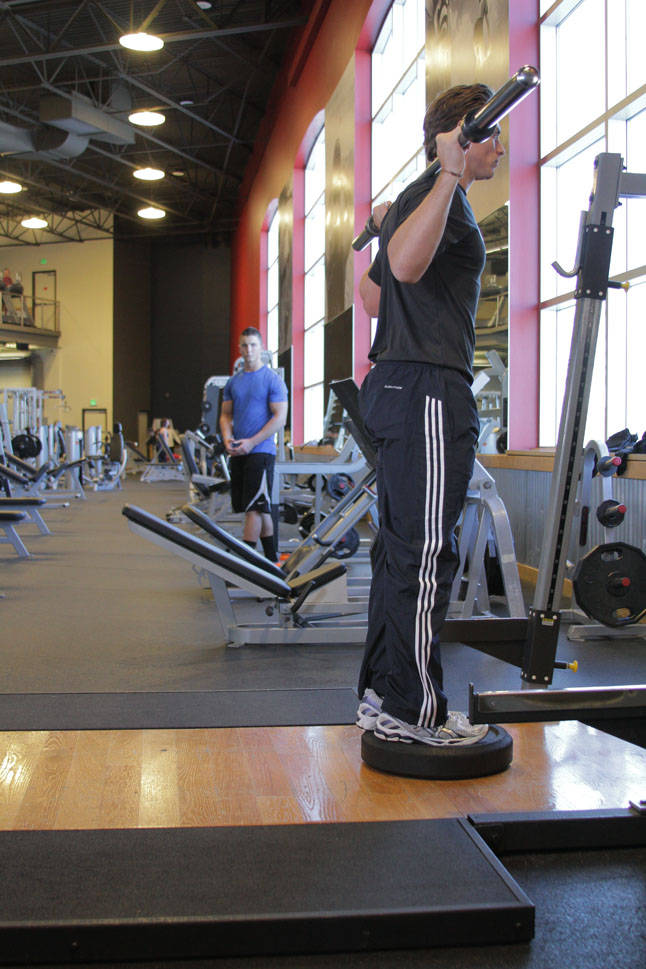
8. Elevated Back Lunge
70.2% MatchHow to perform this exercise
- Position a bar onto a rack at shoulder height loaded to an appropriate weight. Place a short, raised platform behind you.
- Rack the bar onto your upper back, keeping your back arched and tight. Step onto your raised platform with both feet. This will be your starting position.
- Begin by stepping backwards with one leg. Descend by flexing your hips and knees until your knee touches the floor.
- Pause, and extend through the hips and knees to rise up, returning all the way to the starting position before alternating.
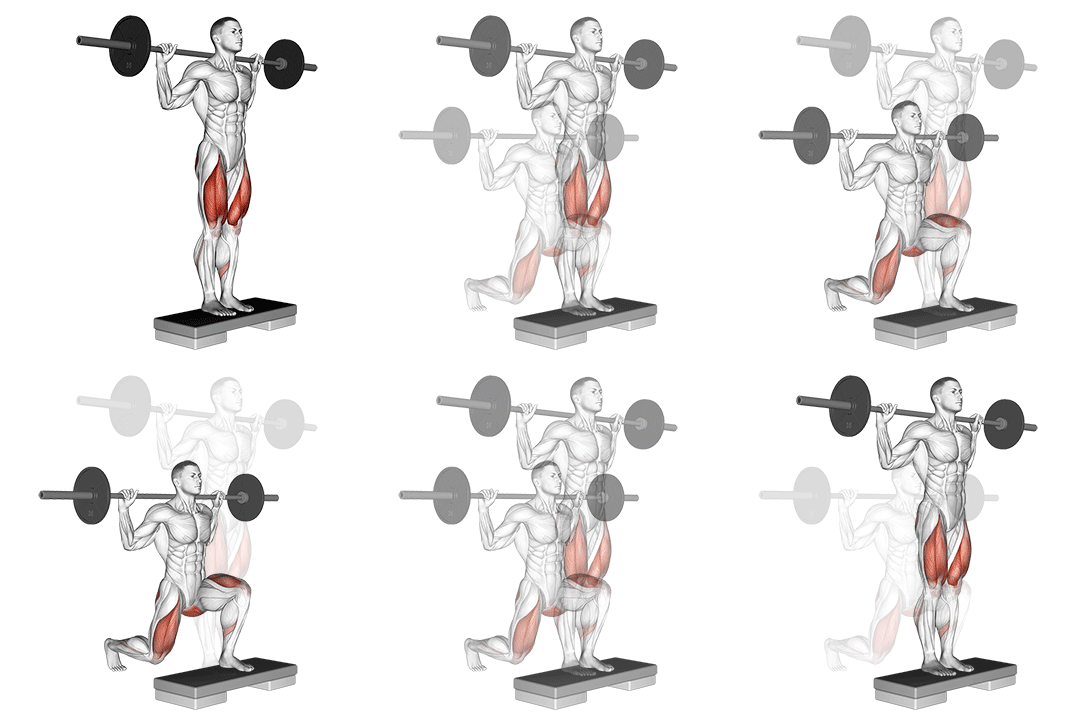
9. Barbell Rear Lunge V. 2
70.2% MatchHow to perform this exercise
- Stand with your feet shoulder-width apart and hold a barbell across your upper back.
- Take a step backward with your right foot, landing on the ball of your foot.
- Bend both knees to lower your body until your left thigh is parallel to the ground.
- Push through your left heel to return to the starting position.
- Repeat with the other leg.
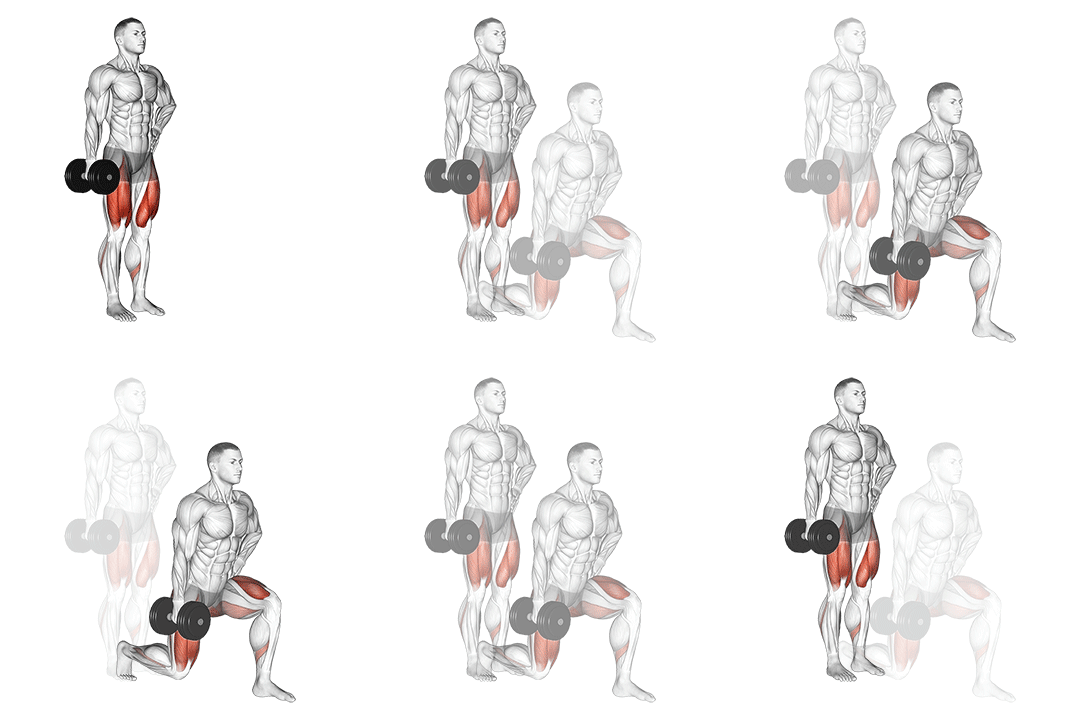
10. Dumbbell Contralateral Forward Lunge
70% MatchHow to perform this exercise
- Stand with your feet shoulder-width apart, holding a dumbbell in each hand.
- Take a step forward with your right foot, keeping your back straight and core engaged.
- Lower your body by bending both knees until your right thigh is parallel to the ground.
- Push through your right heel to return to the starting position.
- Repeat with your left leg.
Why You Might Need a Dumbbell Step Ups Alternative
You might substitute Dumbbell Step Ups because of limited equipment, poor platform stability, balance deficits, or joint pain. Step-ups require ankle dorsiflexion and single-leg balance; if you lack range or you feel anterior knee pain, the pattern will change and reduce quad activation. Alternatives let you control load, range of motion, and balance demands while preserving knee-dominant mechanics. For example, a front squat increases absolute load with bilateral knee extension, while a Bulgarian split squat retains unilateral stimulus with less balance challenge—keep the front knee tracking over the toes and descend to parallel to maximize quad recruitment.
How to Choose the Right Substitute
Select a substitute based on equipment, goals, and joint tolerance. If you want unilateral strength but lack a stable step, use Bulgarian split squats or walking lunges and cue a vertical torso with the front knee aligned over the ankle to bias the quads. For maximal load and progression choose front squats or leg press to maintain knee-dominant extension. If knee pain limits depth, use a box or reduce eccentric range and emphasize controlled knee extension. Prioritize exercises that produce deliberate knee flexion and extension to activate rectus femoris and vastus lateralis while allowing progressive overload.
Frequently Asked Questions
What muscles does Dumbbell Step Ups work?
Dumbbell Step Ups primarily load the quadriceps through knee extension while also engaging the glutes, hamstrings, calves, and core for stability. The unilateral pattern increases rectus femoris and vastus lateralis activation as you drive the knee and hip into extension. Cue: push through the midfoot and extend the knee forcefully to emphasize quad recruitment.
What is the best bodyweight alternative to Dumbbell Step Ups?
The Bulgarian split squat is the best bodyweight alternative because it preserves unilateral loading and quad emphasis without a raised platform. Keep the front foot planted, torso upright, and lower until the front thigh is parallel—drive through the midfoot to bias the quadriceps. This mirrors the step-up's knee-extension mechanics with less balance demand.
Can I build muscle without doing Dumbbell Step Ups?
Yes — you can build quad muscle using other knee-dominant movements like front squats, leg press, and split squats as long as you apply progressive overload. Use controlled tempos (slow 2–4 second eccentrics), full knee flexion, and increasing load or volume to maximize time under tension and quadriceps activation. Track progressive increases in weight or reps to ensure hypertrophy.
More Exercise Alternatives
Find Alternatives for Any Exercise
Use our free tool to discover the best substitute exercises based on your available equipment and goals.
Try the Exercise Substitution Finder →