

10 Best Yoke Walk Alternatives for Quad Strength
The Yoke Walk is done standing. Ranked closest by our scoring: the Conan's Wheel and Zercher Squats.
Updated Ranked by our 12-factor similarity model How it works
Original Exercise: Yoke Walk
- Primary muscle
- Quadriceps
- Equipment
- Other
- Difficulty
- Advanced
- Type
- Compound
Secondary muscles: Abdominals, Abductors, Adductors, Calves, Glutes, Hamstrings, Lower Back
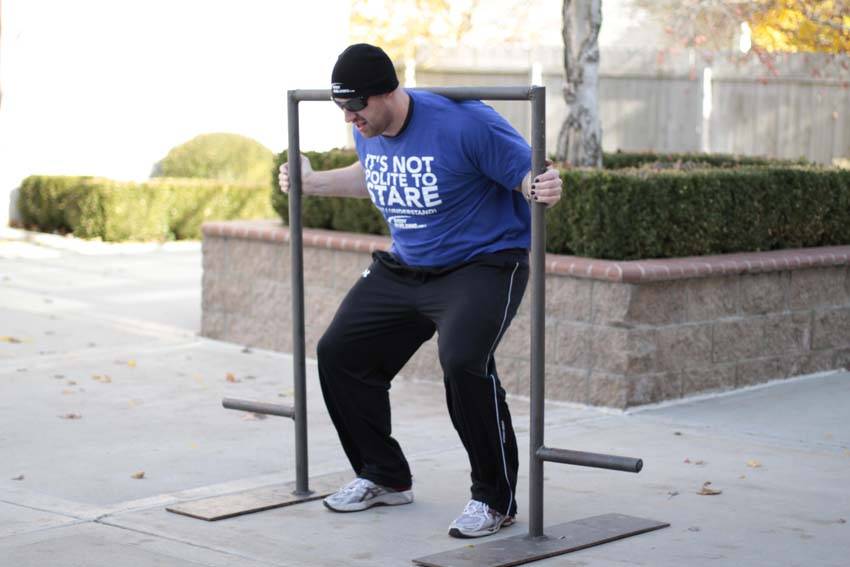
How to perform Yoke Walk
- The yoke is usually done with a yoke apparatus, but is sometimes seen with refrigerators or other heavy objects.
- Begin by racking the apparatus across the back of the shoulders. With your head looking forward and back arched, lift the yoke by driving through the heels.
- Begin walking as quickly as possible using short, quick steps. You may hold the side posts of the yoke to help steady it and hold it in position. Continue for the given distance as fast as possible, usually 75-100 feet.
Ranked Yoke Walk Alternatives
10 substitutes, ranked by how closely each one matches the Yoke Walk on movement pattern, muscles worked, equipment and body position. The higher the score, the less you change. Open "How to perform this exercise" on a card for the steps; every card title links to that exercise's own alternatives page.
1. Farmer's Walk
80% match- Forearms
- Other
- Intermediate
- Compound
A looser match: it works the forearms rather than the quadriceps.
How to perform this exercise
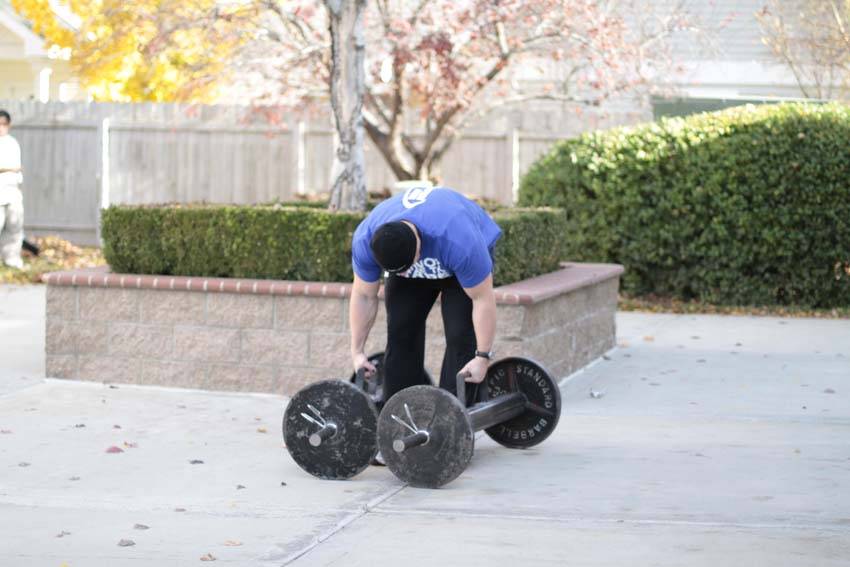
- There are various implements that can be used for the farmers walk. These can also be performed with heavy dumbbells or short bars if these implements aren't available. Begin by standing between the implements.
- After gripping the handles, lift them up by driving through your heels, keeping your back straight and your head up.
- Walk taking short, quick steps, and don't forget to breathe. Move for a given distance, typically 50-100 feet, as fast as possible.
Sets and reps: Hold for 20 to 30 seconds, 3 sets.
Why this matches
- Primary muscle: forearms, not quadriceps
- Body position: standing, the same as the Yoke Walk
2. Rickshaw Carry
79% match- Forearms
- Other
- Intermediate
- Compound
How to perform this exercise
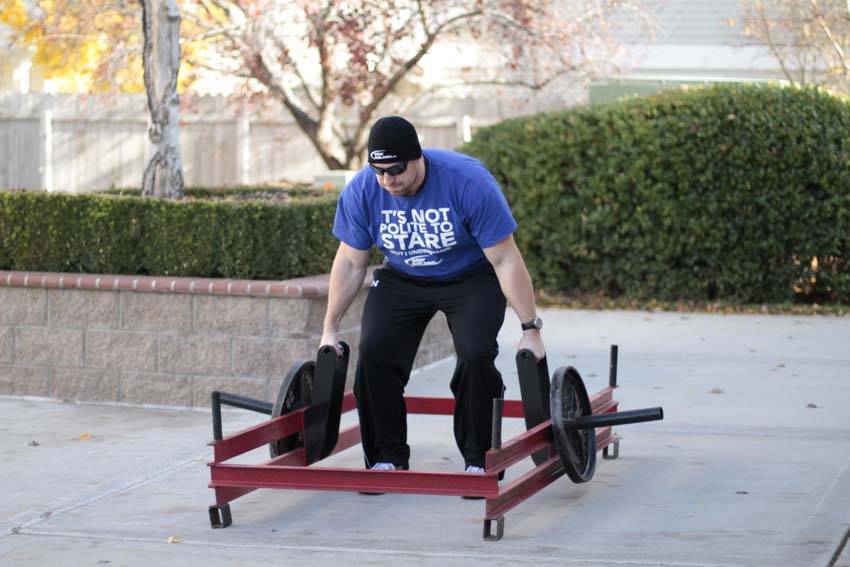
- Position the frame at the starting point, and load with the appropriate weight. Standing in the center of the frame, begin by gripping the handles and driving through your heels to lift the frame. Ensure your chest and head are up and your back is straight.
- Immediately begin walking briskly with quick, controlled steps. Keep your chest up and head forward, and make sure you continue breathing. Bring the frame to the ground after you have reached the end point.
Sets and reps: Hold for 20 to 30 seconds, 3 sets.
Why this matches
- Primary muscle: forearms, not quadriceps
- Body position: standing, the same as the Yoke Walk
3. Sled Drag - Harness
75% match- Quads
- Sled
- Intermediate
- Compound
A looser match: it works the quads rather than the quadriceps.
How to perform this exercise
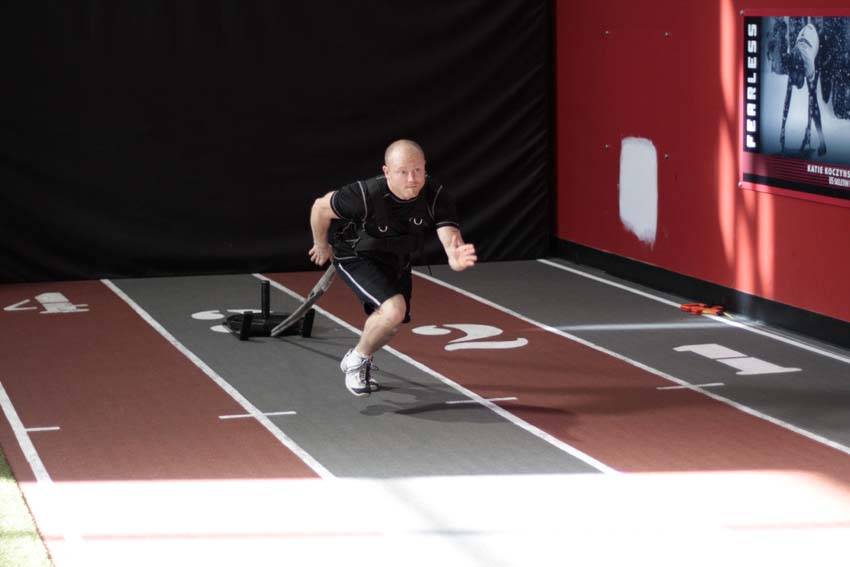
- To begin, load the sled with the desired weight and attach the pulling strap. You can pull with handles, use a harness, or attach the pulling strap to a weight belt.
- Whether pulling forwards or backwards, lean in the direction of travel and progress by extending through the hips and knees.
Sets and reps: Carry for 20 to 30 metres and repeat for 3 or 4 rounds.
Why this matches
- Primary muscle: quads, not quadriceps
- Body position: standing, the same as the Yoke Walk
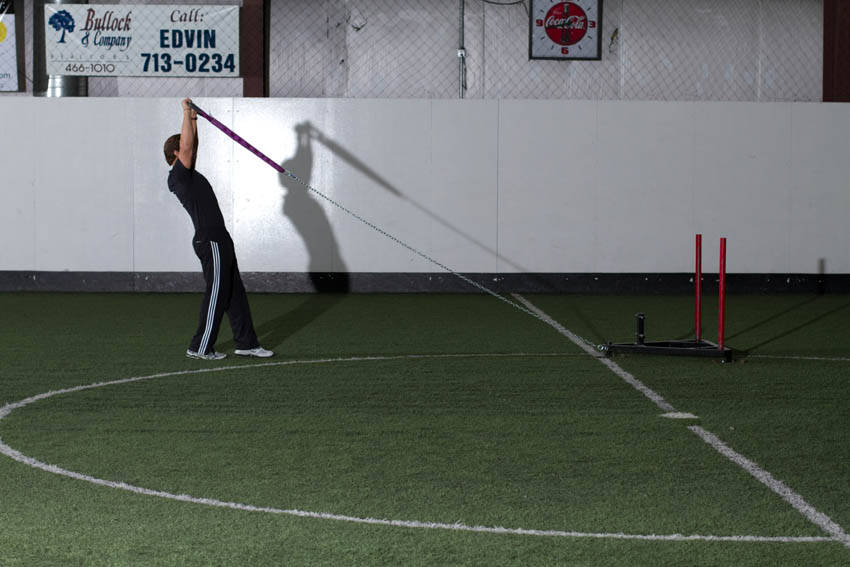
4. Sled Overhead Backward Walk
74% match- Delts
- Sled
- Advanced
- Compound
A looser match: it works the delts rather than the quadriceps.
How to perform this exercise
- Attach dual handles to a sled connected by a rope or chain. Load the sled to a light weight.
- Face the sled, backing up until there is some tension in the line. Hold your hands directly above your head with your elbows extended. This will be your starting position.
- Walk backwards, keeping your arms raised above your head. Avoid jerky movements.
Sets and reps: Carry for 20 to 30 metres and repeat for 3 or 4 rounds.
Why this matches
- Primary muscle: delts, not quadriceps
- Body position: standing, the same as the Yoke Walk
Best match 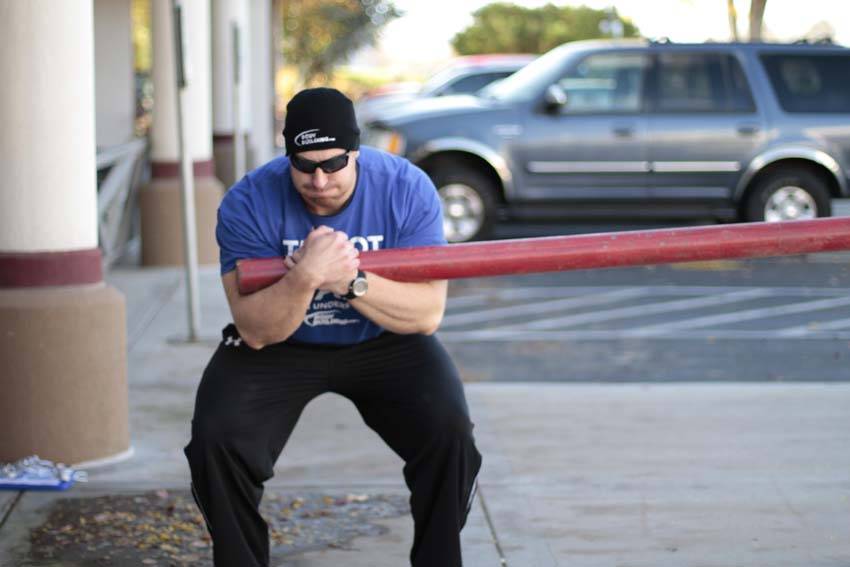
5. Conan's Wheel
72% match- Quadriceps
- Other
- Advanced
- Compound
Pick this when you want an easier version that works the quadriceps one side at a time.
How to perform this exercise
- With the weight loaded, take a zurcher hold on the end of the implement. Place the bar in the crook of the elbow and hold onto your wrist. Try to keep the weight off of the forearms.
- Begin by lifting the weight from the ground. Keep a tight, upright posture as you being to walk, taking short, fast steps. Look up and away as you turn in a circle. Do not hold your breath during the event. Continue walking until you complete one or more complete turns.
Sets and reps: Carry for 20 to 30 metres and repeat for 3 or 4 rounds.
Why this matches
- Primary muscle: quadriceps, the same as the Yoke Walk
- Body position: standing, the same as the Yoke Walk
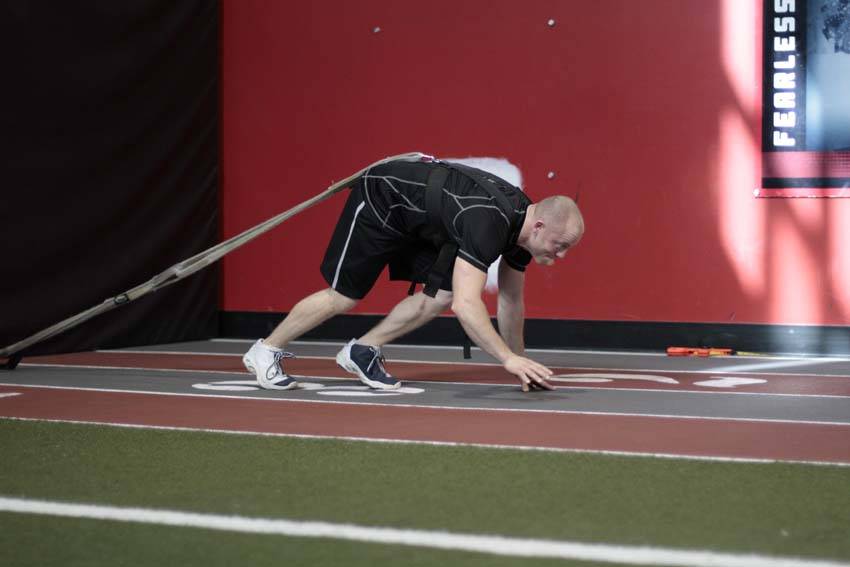
6. Bear Crawl Sled Drags
70% match- Quads
- Other
- Intermediate
- Compound
How to perform this exercise
- Wearing either a harness or a loose weight belt, attach the chain to the back so that you will be facing away from the sled. Bend down so that your hands are on the ground. Your back should be flat and knees bent. This is your starting position.
- Begin by driving with legs, alternating left and right. Use your hands to maintain balance and to help pull. Try to keep your back flat as you move over a given distance.
Sets and reps: Carry for 20 to 30 metres and repeat for 3 or 4 rounds.
Why this matches
- Primary muscle: quads, not quadriceps
- Body position: kneeling, not standing
7. Weighted Standing Hand Squeeze
68% match- Forearms
- Weighted
- Beginner
- Isolation
How to perform this exercise
- Stand with your feet shoulder-width apart and hold a weight in each hand.
- Extend your arms straight in front of you, palms facing each other.
- Squeeze your hands together as hard as you can, engaging your forearms.
- Hold the squeeze for a few seconds, then release.
- Repeat for the desired number of repetitions.
Sets and reps: Carry for 20 to 30 metres and repeat for 3 or 4 rounds.
Why this matches
- Primary muscle: forearms, not quadriceps
- Equipment: free weights, the same as the Yoke Walk
- Body position: standing, the same as the Yoke Walk
- Balance: easier to stay steady on than the Yoke Walk
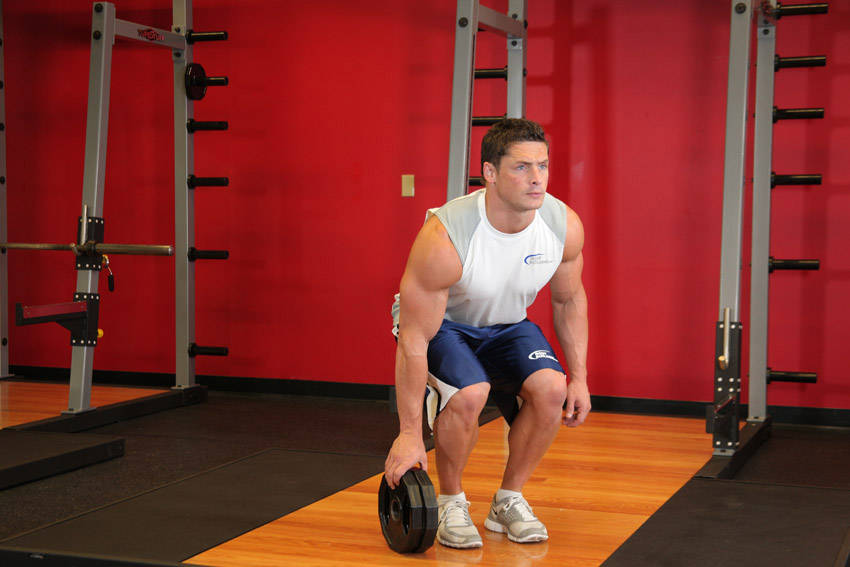
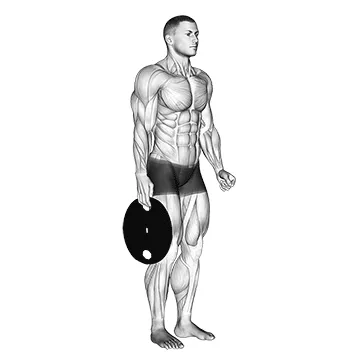
8. Plate Pinch
65% match- Forearms
- Other
- Beginner
- Isolation
How to perform this exercise
- Grab two wide-rimmed plates and put them together with the smooth sides facing outward
- Use your fingers to grip the outside part of the plate and your thumb for the other side thus holding both plates together. This is the starting position.
- Squeeze the plate with your fingers and thumb. Hold this position for as long as you can.
- Repeat for the recommended amount of sets prescribed in your program.
- Switch arms and repeat the movements.
Sets and reps: Hold for 20 to 30 seconds, 3 sets.
Why this matches
- Primary muscle: forearms, not quadriceps
- Body position: standing, the same as the Yoke Walk
- Delts
- Dumbbell
- Intermediate
- Compound
How to perform this exercise
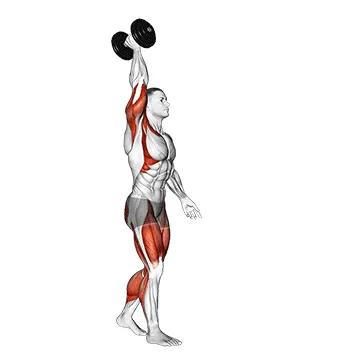
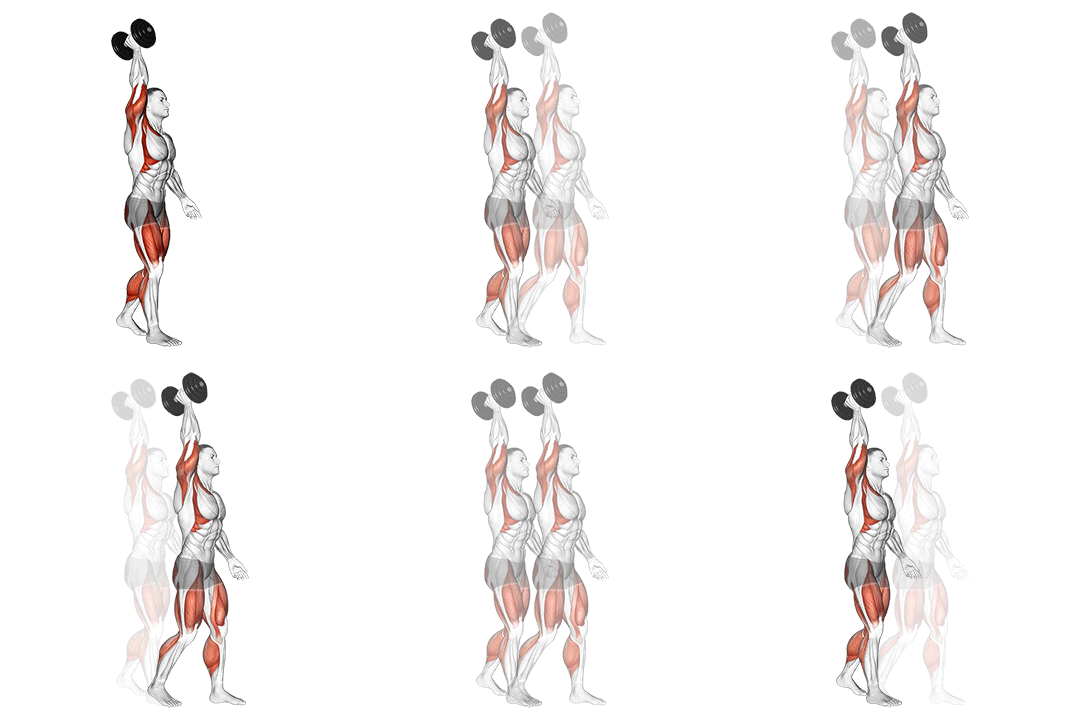
- Stand tall with your feet shoulder-width apart, holding a dumbbell in one hand.
- Raise the dumbbell overhead, fully extending your arm.
- Engage your core and keep your back straight as you walk forward, maintaining the dumbbell overhead.
- Continue walking for the desired distance or time.
- Switch hands and repeat the exercise.
Sets and reps: Hold for 20 to 30 seconds on each side, 3 sets.
Why this matches
- Primary muscle: delts, not quadriceps
- Equipment: free weights, the same as the Yoke Walk
- Body position: standing, the same as the Yoke Walk
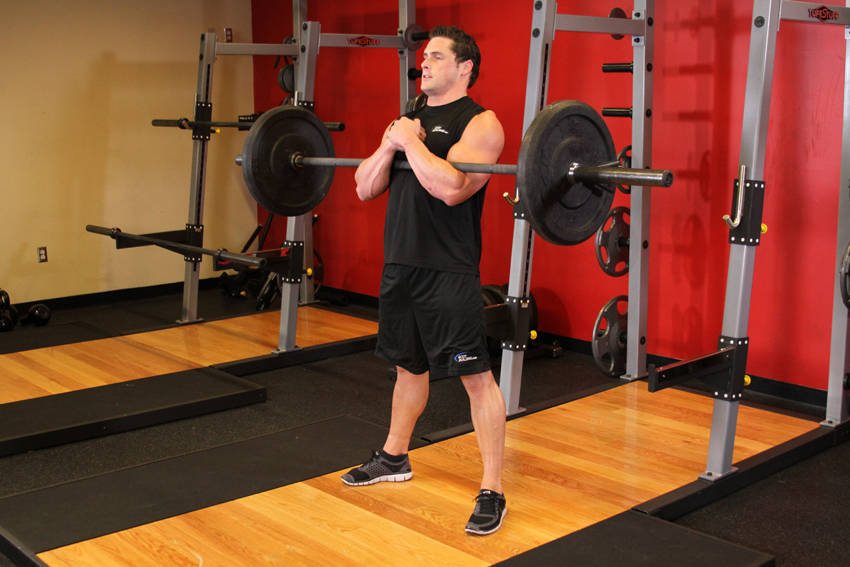
10. Zercher Squats
63% match- Quadriceps
- Barbell
- Advanced
- Compound
How to perform this exercise
- This exercise is best performed inside a squat rack for safety purposes. To begin, first set the bar on a rack that best matches your height. The correct height should be anywhere above the waist but below the chest. Once the correct height is chosen and the bar is loaded, lock your hands together and place the bar on top of your arms in between the forearm and upper arm.
- Lift the bar up so that it is resting on top of your forearms. If you are holding the bar properly, it should look as if you have your arms crossed but with a bar running across them.
- Step away from the rack and position your legs using a shoulder width medium stance with the toes slightly pointed out. Keep your head up at all times as looking down will get you off balance and also maintain a straight back. This will be your starting position. (Note: For the purposes of this discussion we will use the medium stance described above which targets overall development; however you can choose any of the three stances discussed in the foot stances section).
- Begin to lower the bar by bending the knees as you maintain a straight posture with the head up. Continue down until the angle between the upper leg and the calves becomes slightly less than 90-degrees (which is the point in which the upper legs are below parallel to the floor). Inhale as you perform this portion of the movement. Tip: If you performed the exercise correctly, the front of the knees should make an imaginary straight line with the toes that is perpendicular to the front. If your knees are past that imaginary line (if they are past your toes) then you are placing undue stress on the knee and the exercise has been performed incorrectly.
- Begin to raise the bar as you exhale by pushing the floor with the ball of your foot mainly as you straighten the legs again and go back to the starting position.
- Repeat for the recommended amount of repetitions.
Sets and reps: 3 to 5 sets of 5 to 8 reps.
Why this matches
- Primary muscle: quadriceps, the same as the Yoke Walk
- Equipment: free weights, the same as the Yoke Walk
- Body position: standing, the same as the Yoke Walk
Yoke Walk FAQ
What muscles does Yoke Walk work?
The Yoke Walk primarily taxes the quadriceps via sustained knee extension while demanding hip extensors and glutes for support. It also loads the spinal erectors and traps for trunk stabilization, requiring strong core bracing to transfer force through the hips and knees.
Find Alternatives for Any Exercise
Search the exercise database and filter the ranked substitutes by the equipment you own.
Similarity scores compare exercise metadata such as movement pattern, muscles, equipment and body position. They are not a safety rating or a check that you own the equipment. Learn about our methodology