

10 Best Full Range-of-motion Lat Pulldown Alternatives for Any Setup
If you can’t perform a full range-of-motion lat pulldown, use exercises that replicate humeral adduction and scapular depression. Try pull-ups, single-arm cable pulldowns, bent-over rows, band pulldowns, or inverted rows. Cue: lead with the elbow, depress the scapula and pull to the lower rib to maximize lat tension.
Original Exercise: Full Range-of-motion Lat Pulldown
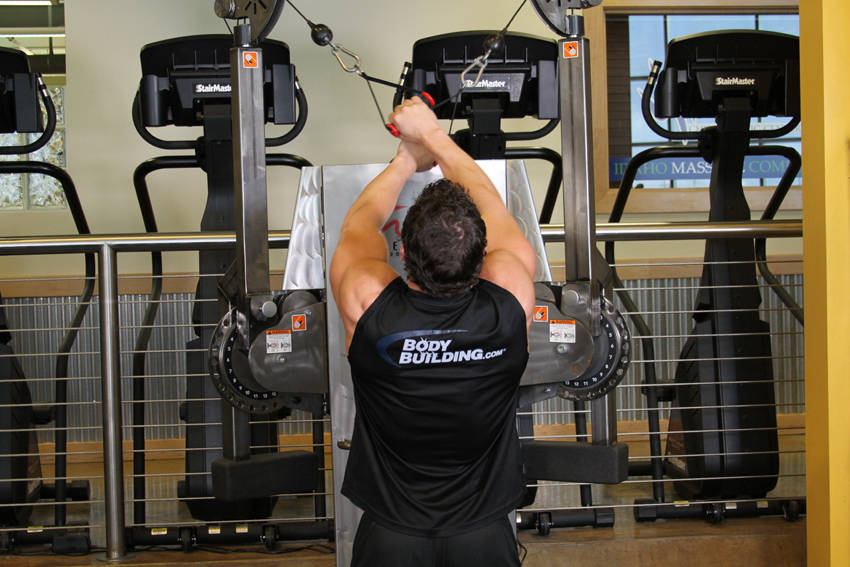
How to Perform Full Range-of-motion Lat Pulldown
- Either standing or seated on a high bench, grasp two stirrup cables that are attached to the high pulleys. Grab with the opposing hand so your arms are crisscrossed about you and your palms are facing forward.
- Keeping your chest up and maintaining a slight arch in your lower back, pull the handles down as if you were doing a regular pulldown. The range of motion will be more of an arc. During the movement, rotate your hands so that in the bottom position your palms face each other rather than forward. Return slowly to the starting position and repeat.
Pro Tips
- Category: Strength
- Force: Pull
- Movement type: Compound
Ranked Full Range-of-motion Lat Pulldown Alternatives
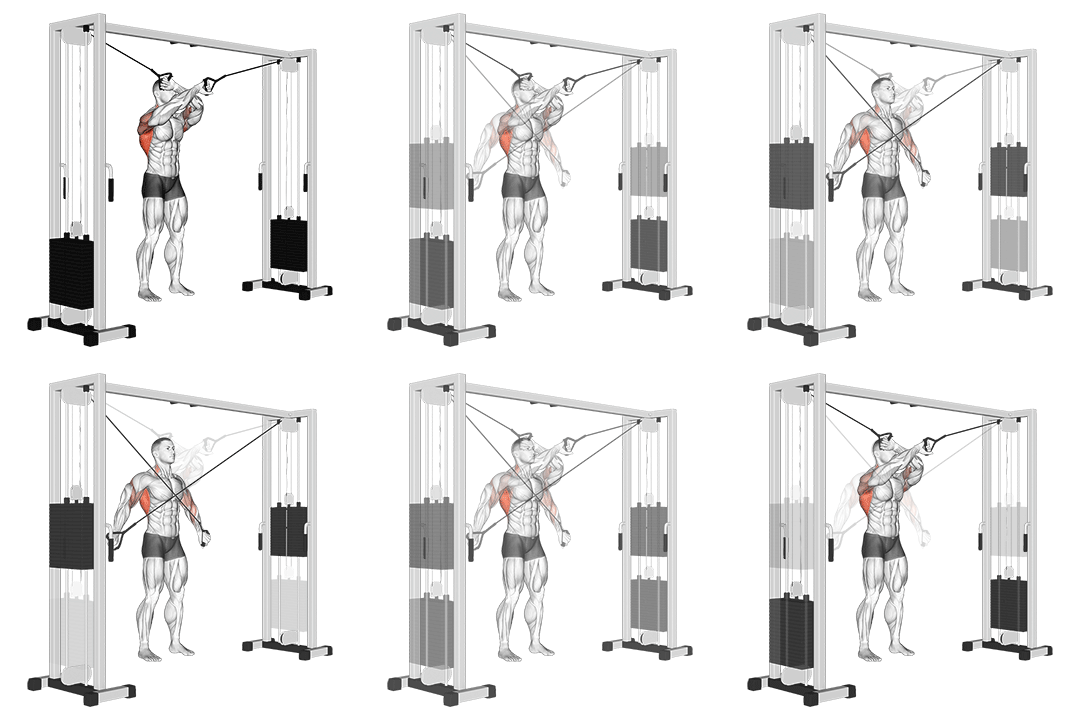
1. Cable Lat Pulldown Full Range Of Motion
99.9% MatchHow to perform this exercise
- Sit on the lat pulldown machine with your knees positioned under the pads.
- Grasp the cable bar with an overhand grip, slightly wider than shoulder-width apart.
- Lean back slightly and keep your chest up, maintaining a slight arch in your lower back.
- Pull the bar down towards your upper chest, squeezing your shoulder blades together.
- Pause for a moment at the bottom of the movement, then slowly release the bar back to the starting position.
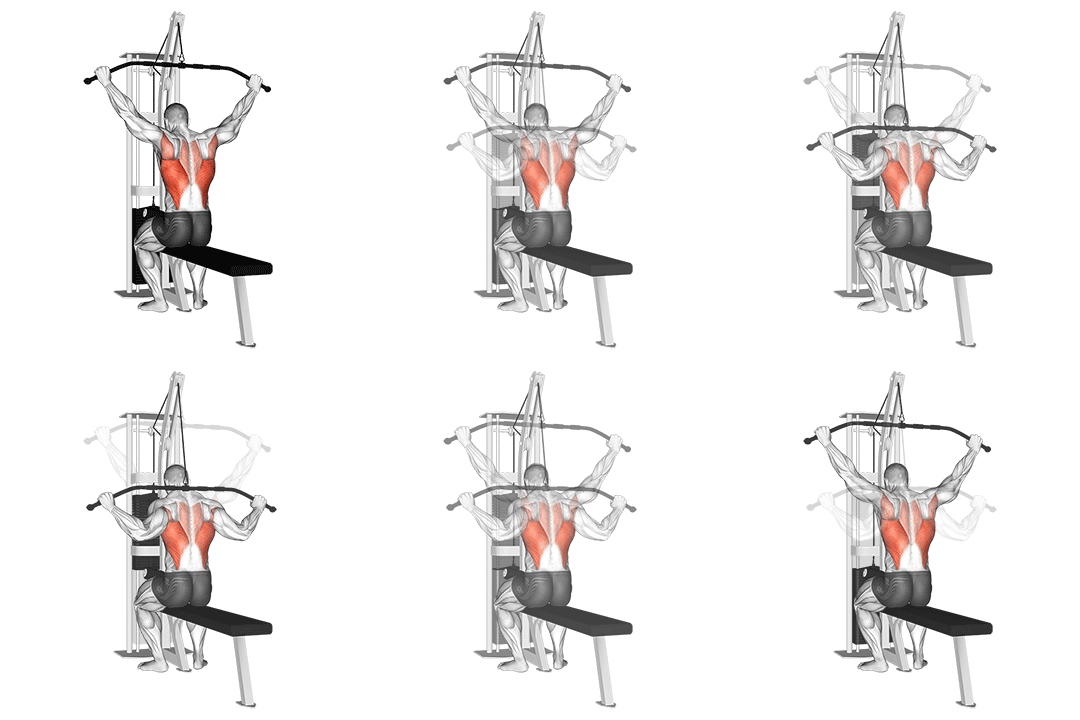
2. Cable Wide Grip Rear Pulldown Behind Neck
99.4% MatchHow to perform this exercise
- Adjust the cable machine so that the pulldown bar is at a height above your head.
- Sit down on the seat and grab the pulldown bar with a wide overhand grip.
- Keep your back straight and your chest up as you lean back slightly.
- Pull the bar down towards your upper chest, squeezing your shoulder blades together.
- Pause for a moment at the bottom of the movement, then slowly release the bar back up to the starting position.
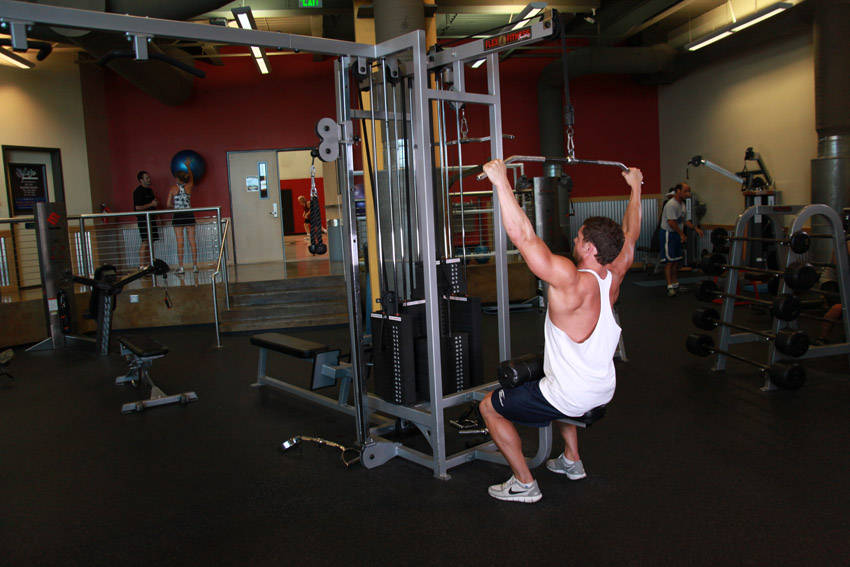
3. Wide-Grip Lat Pulldown
99.4% MatchHow to perform this exercise
- Sit down on a pull-down machine with a wide bar attached to the top pulley. Make sure that you adjust the knee pad of the machine to fit your height. These pads will prevent your body from being raised by the resistance attached to the bar.
- Grab the bar with the palms facing forward using the prescribed grip. Note on grips: For a wide grip, your hands need to be spaced out at a distance wider than shoulder width. For a medium grip, your hands need to be spaced out at a distance equal to your shoulder width and for a close grip at a distance smaller than your shoulder width.
- As you have both arms extended in front of you holding the bar at the chosen grip width, bring your torso back around 30 degrees or so while creating a curvature on your lower back and sticking your chest out. This is your starting position.
- As you breathe out, bring the bar down until it touches your upper chest by drawing the shoulders and the upper arms down and back. Tip: Concentrate on squeezing the back muscles once you reach the full contracted position. The upper torso should remain stationary and only the arms should move. The forearms should do no other work except for holding the bar; therefore do not try to pull down the bar using the forearms.
- After a second at the contracted position squeezing your shoulder blades together, slowly raise the bar back to the starting position when your arms are fully extended and the lats are fully stretched. Inhale during this portion of the movement.
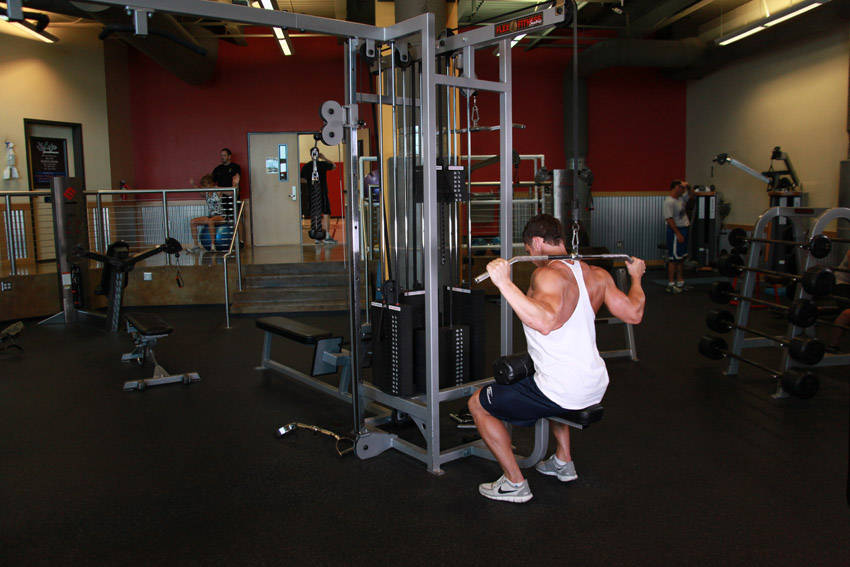
4. Wide-Grip Pulldown Behind The Neck
98.9% MatchHow to perform this exercise
- Sit down on a pull-down machine with a wide bar attached to the top pulley. Make sure that you adjust the knee pad of the machine to fit your height. These pads will prevent your body from being raised by the resistance attached to the bar.
- Grab the bar with the palms facing forward using the prescribed grip. Note on grips: For a wide grip, your hands need to be spaced out at a distance wider than your shoulder width. For a medium grip, your hands need to be spaced out at a distance equal to your shoulder width and for a close grip at a distance smaller than your shoulder width.
- As you have both arms extended in front of you holding the bar at the chosen grip width, bring your torso and head forward. Think of an imaginary line from the center of the bar down to the back of your neck. This is your starting position.
- As you breathe out, bring the bar down until it touches the back of your neck by drawing the shoulders and the upper arms down and back. Tip: Concentrate on squeezing the back muscles once you reach the full contracted position. The upper torso should remain stationary and only the arms should move. The forearms should do no other work except for holding the bar; therefore do not try to pull down the bar using the forearms.
- After a second on the contracted position squeezing your shoulder blades together, slowly raise the bar back to the starting position when your arms are fully extended and the lats are fully stretched. Inhale during this portion of the movement.
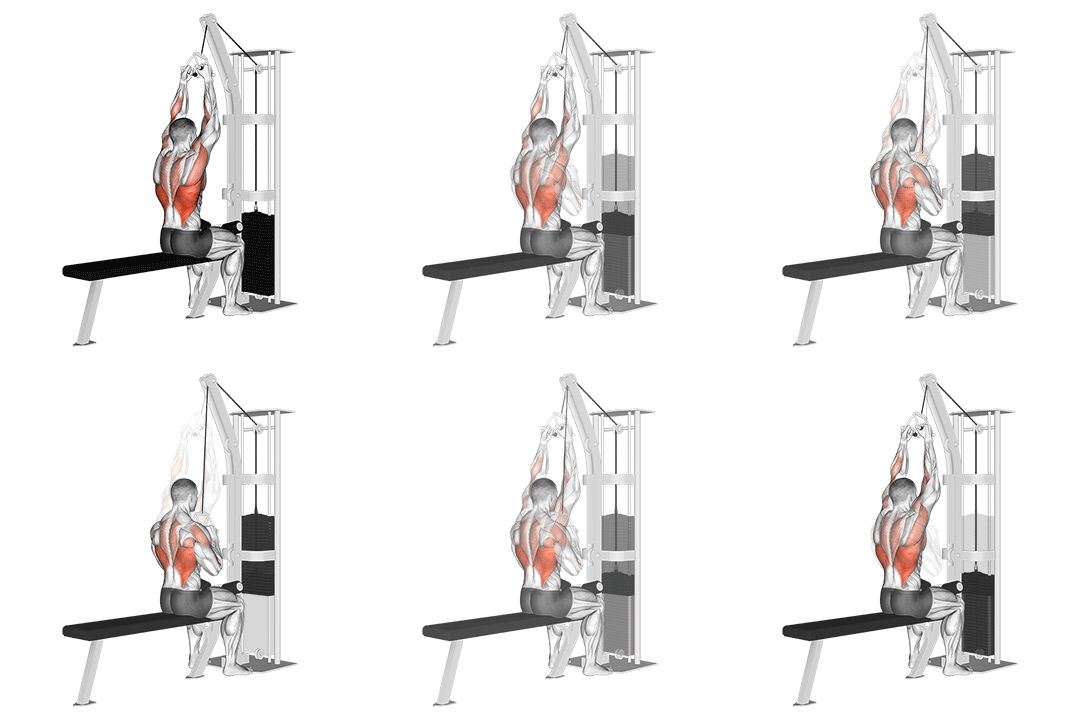
5. Cable Lateral Pulldown With V-bar
96% MatchHow to perform this exercise
- Sit down on the cable pulldown machine and grab the v-bar attachment with an overhand grip.
- Adjust the knee pad so that your thighs are secured under it.
- Keep your back straight and lean back slightly.
- Pull the v-bar down towards your upper chest while keeping your elbows close to your body.
- Squeeze your back muscles at the bottom of the movement.
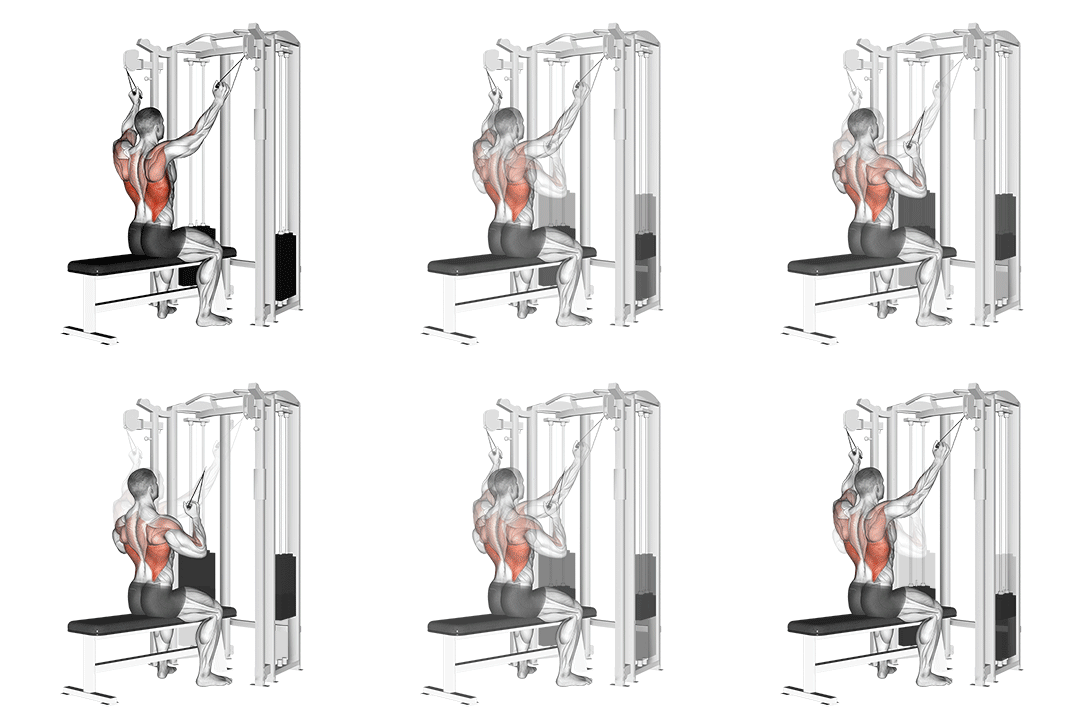
6. Twin Handle Parallel Grip Lat Pulldown
96% MatchHow to perform this exercise
- Adjust the seat height and position yourself facing the cable machine.
- Grasp the handles with an overhand grip, hands shoulder-width apart.
- Sit down and position your thighs under the thigh pads, keeping your feet flat on the floor.
- Lean back slightly and keep your chest up, maintaining a neutral spine.
- Pull the handles down towards your upper chest, squeezing your shoulder blades together.
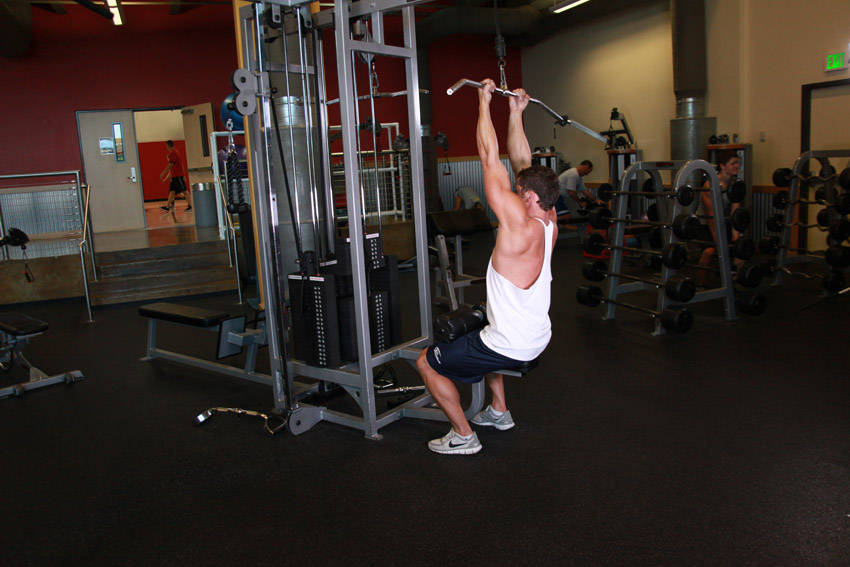
7. Underhand Cable Pulldowns
96% MatchHow to perform this exercise
- Sit down on a pull-down machine with a wide bar attached to the top pulley. Adjust the knee pad of the machine to fit your height. These pads will prevent your body from being raised by the resistance attached to the bar.
- Grab the pull-down bar with the palms facing your torso (a supinated grip). Make sure that the hands are placed closer than the shoulder width.
- As you have both arms extended in front of you holding the bar at the chosen grip width, bring your torso back around 30 degrees or so while creating a curvature on your lower back and sticking your chest out. This is your starting position.
- As you breathe out, pull the bar down until it touches your upper chest by drawing the shoulders and the upper arms down and back. Tip: Concentrate on squeezing the back muscles once you reach the fully contracted position and keep the elbows close to your body. The upper torso should remain stationary as your bring the bar to you and only the arms should move. The forearms should do no other work other than hold the bar.
- After a second on the contracted position, while breathing in, slowly bring the bar back to the starting position when your arms are fully extended and the lats are fully stretched.
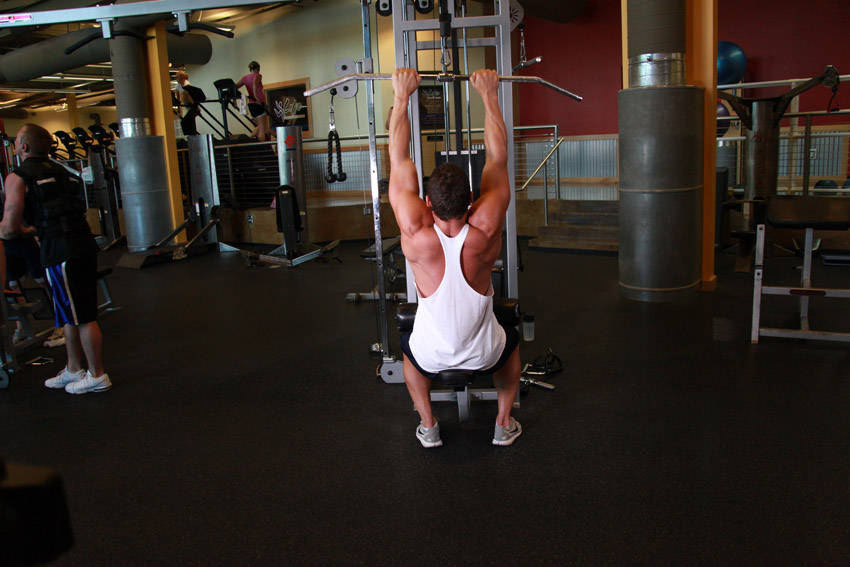
8. Close-Grip Front Lat Pulldown
95.4% MatchHow to perform this exercise
- Sit down on a pull-down machine with a wide bar attached to the top pulley. Make sure that you adjust the knee pad of the machine to fit your height. These pads will prevent your body from being raised by the resistance attached to the bar.
- Grab the bar with the palms facing forward using the prescribed grip. Note on grips: For a wide grip, your hands need to be spaced out at a distance wider than your shoulder width. For a medium grip, your hands need to be spaced out at a distance equal to your shoulder width and for a close grip at a distance smaller than your shoulder width.
- As you have both arms extended in front of you - while holding the bar at the chosen grip width - bring your torso back around 30 degrees or so while creating a curvature on your lower back and sticking your chest out. This is your starting position.
- As you breathe out, bring the bar down until it touches your upper chest by drawing the shoulders and the upper arms down and back. Tip: Concentrate on squeezing the back muscles once you reach the full contracted position. The upper torso should remain stationary (only the arms should move). The forearms should do no other work except for holding the bar; therefore do not try to pull the bar down using the forearms.
- After a second in the contracted position, while squeezing your shoulder blades together, slowly raise the bar back to the starting position when your arms are fully extended and the lats are fully stretched. Inhale during this portion of the movement.
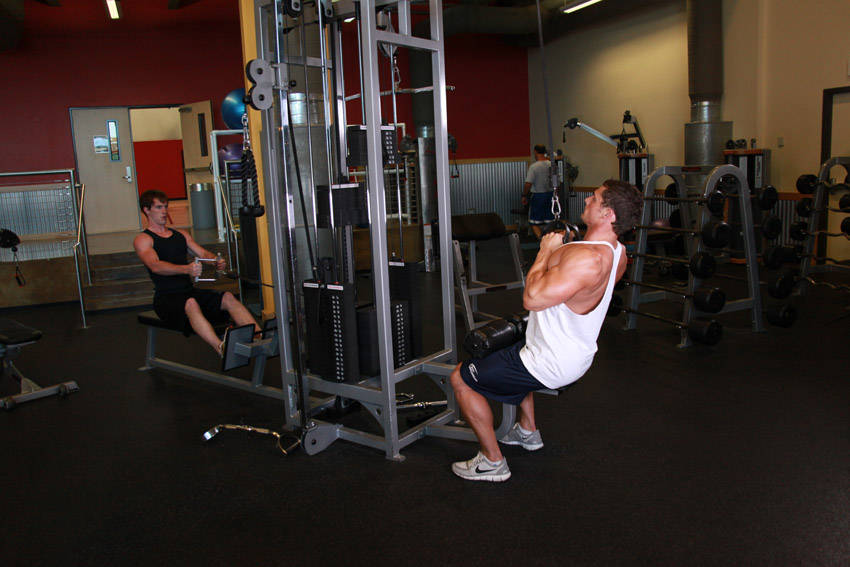
9. V-Bar Pulldown
95.4% MatchHow to perform this exercise
- Sit down on a pull-down machine with a V-Bar attached to the top pulley.
- Adjust the knee pad of the machine to fit your height. These pads will prevent your body from being raised by the resistance attached to the bar.
- Grab the V-bar with the palms facing each other (a neutral grip). Stick your chest out and lean yourself back slightly (around 30-degrees) in order to better engage the lats. This will be your starting position.
- Using your lats, pull the bar down as you squeeze your shoulder blades. Continue until your chest nearly touches the V-bar. Exhale as you execute this motion. Tip: Keep the torso stationary throughout the movement.
- After a second hold on the contracted position, slowly bring the bar back to the starting position as you breathe in.
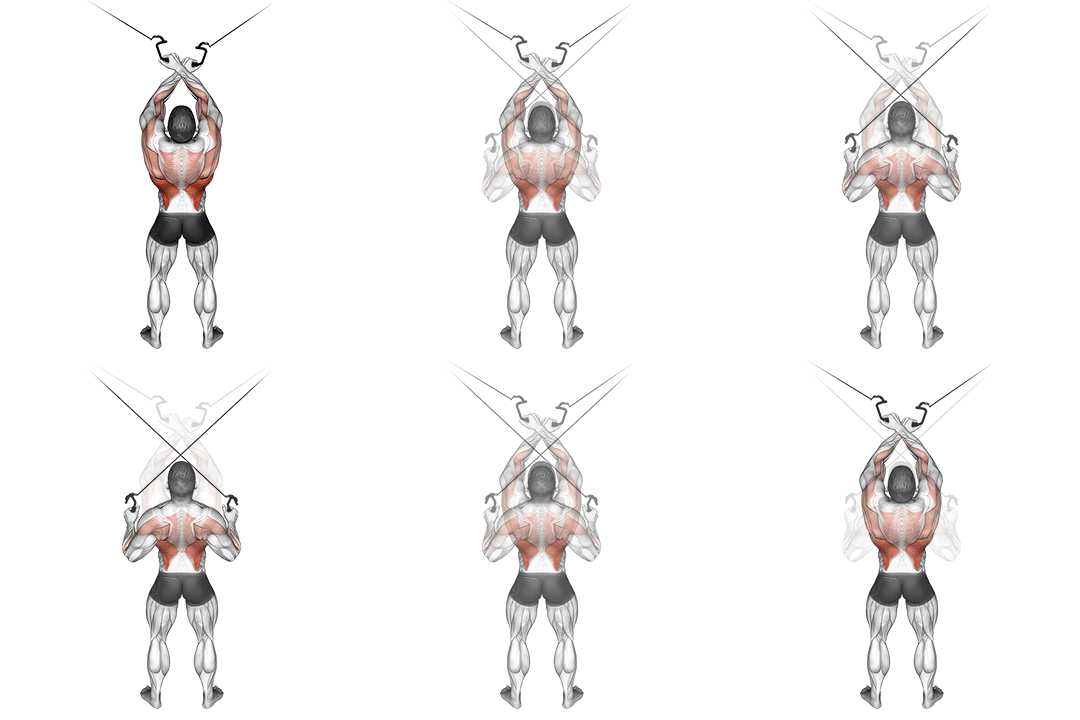
10. Cable Cross-over Lateral Pulldown
95% MatchHow to perform this exercise
- Attach a cable handle to each side of a cable machine at shoulder height.
- Stand in the middle of the machine with your feet shoulder-width apart.
- Grasp the handles with an overhand grip and step back to create tension in the cables.
- Lean forward slightly from the hips, keeping your back straight and your chest up.
- Pull the handles down and across your body, squeezing your shoulder blades together.
Why You Might Need a Full Range-of-motion Lat Pulldown Alternative
You may need substitutes because of limited equipment, shoulder pain, or movement preference. A cable pulldown stresses the lats through a vertical line; if you lack a cable machine, choose exercises that reproduce the same biomechanics, humeral extension/adduction and scapular depression. For shoulder irritation, select single-arm or neutral-grip options to reduce impingement. For home training, elastic bands and bodyweight pull variations reproduce the eccentric control and long muscle length under tension. Cue: maintain a long spine, initiate with scapular depression, and pull the elbow down to emphasize the lat rather than the biceps.
How to Choose the Right Substitute
Match the substitute to the limiting factor: if you lack cables, pick band pulldowns or pull-ups that create vertical tension. If pain limits range, use neutral-grip single-arm pulldowns or incline rows to shorten the moment arm and reduce impingement. Consider load progression, choose a movement where you can add weight or increase time under tension (weighted pull-ups, loaded rows). Also evaluate muscle activation: prioritize exercises that allow scapular depression and full humeral adduction. Technique cue: pause at peak contraction, consciously squeeze the lower lats and avoid high-elbow, biceps-dominant pulling.
Frequently Asked Questions
What muscles does Full Range-of-motion Lat Pulldown work?
The lat pulldown primarily targets the latissimus dorsi through humeral extension and adduction. It also recruits teres major, posterior deltoid, rhomboids and middle trapezius for scapular control, with the biceps acting as a secondary elbow flexor. Cue: pull elbows to your hips and depress the scapula to emphasize the lats.
What is the best bodyweight alternative to Full Range-of-motion Lat Pulldown?
Pull-ups are the top bodyweight alternative because they load the same humeral extension/adduction pattern and allow progressive overload via added weight. If full pull-ups are too hard, use band-assisted pull-ups or inverted rows. Cue: start each rep with a scapular depression, lead with the elbows, and lower slowly for stronger eccentric stimulus.
Can I build muscle without doing Full Range-of-motion Lat Pulldown?
Yes. You can build lat mass using pull-ups, rows, and single-arm cable or band pulldowns by applying progressive overload and sufficient volume. Focus on mechanics, initiate with scapular depression, pull to the lower ribs, and control the eccentric phase to maximize muscle tension.
More Exercise Alternatives
Find Alternatives for Any Exercise
Use the exercise substitution finder to compare ranked alternatives for your available equipment and training preference.
Try the Exercise Substitution Finder →