

10 Best Hanging Straight Leg Raise Alternatives for Home Gyms
If you can't do the Hanging Straight Leg Raise, use movements that train hip flexion and spinal flexion without hanging. Effective options include lying straight leg raises, captain's chair leg raises, V-ups, decline crunches, and Pallof presses. Technique cue: brace your core, posteriorly tilt the pelvis, and lift with the hips, not momentum.
Original Exercise: Hanging Straight Leg Raise
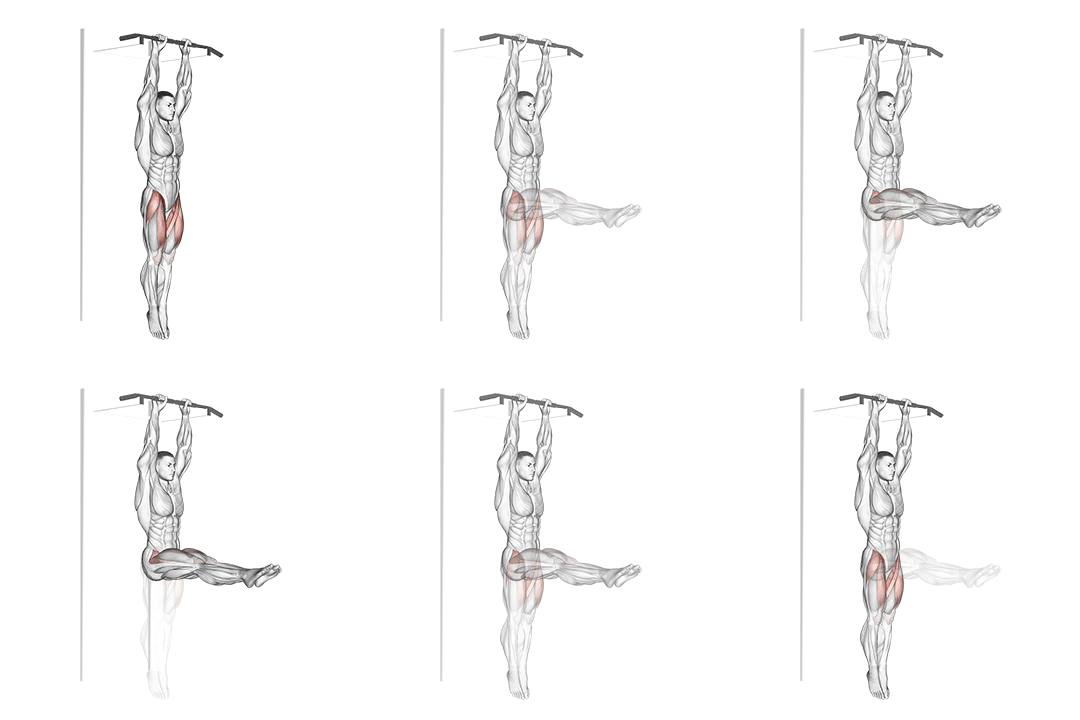
How to Perform Hanging Straight Leg Raise
- Hang from a pull-up bar with your arms fully extended and your palms facing away from you.
- Engage your core and lift your legs up in front of you, keeping them straight.
- Continue lifting until your legs are parallel to the ground or as high as you can comfortably go.
- Pause for a moment at the top, then slowly lower your legs back down to the starting position.
- Repeat for the desired number of repetitions.
Best Hanging Straight Leg Raise Alternatives
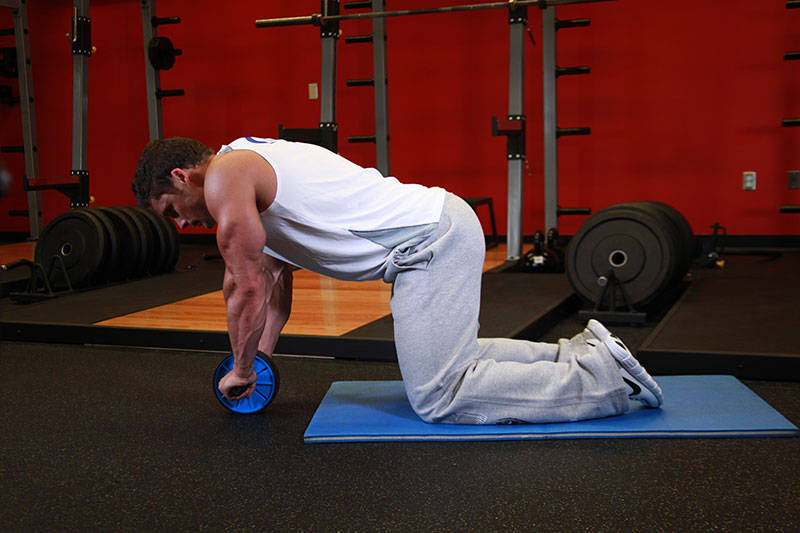
1. Ab Roller
85.7% MatchHow to perform this exercise
- Hold the Ab Roller with both hands and kneel on the floor.
- Now place the ab roller on the floor in front of you so that you are on all your hands and knees (as in a kneeling push up position). This will be your starting position.
- Slowly roll the ab roller straight forward, stretching your body into a straight position. Tip: Go down as far as you can without touching the floor with your body. Breathe in during this portion of the movement.
- After a pause at the stretched position, start pulling yourself back to the starting position as you breathe out. Tip: Go slowly and keep your abs tight at all times.
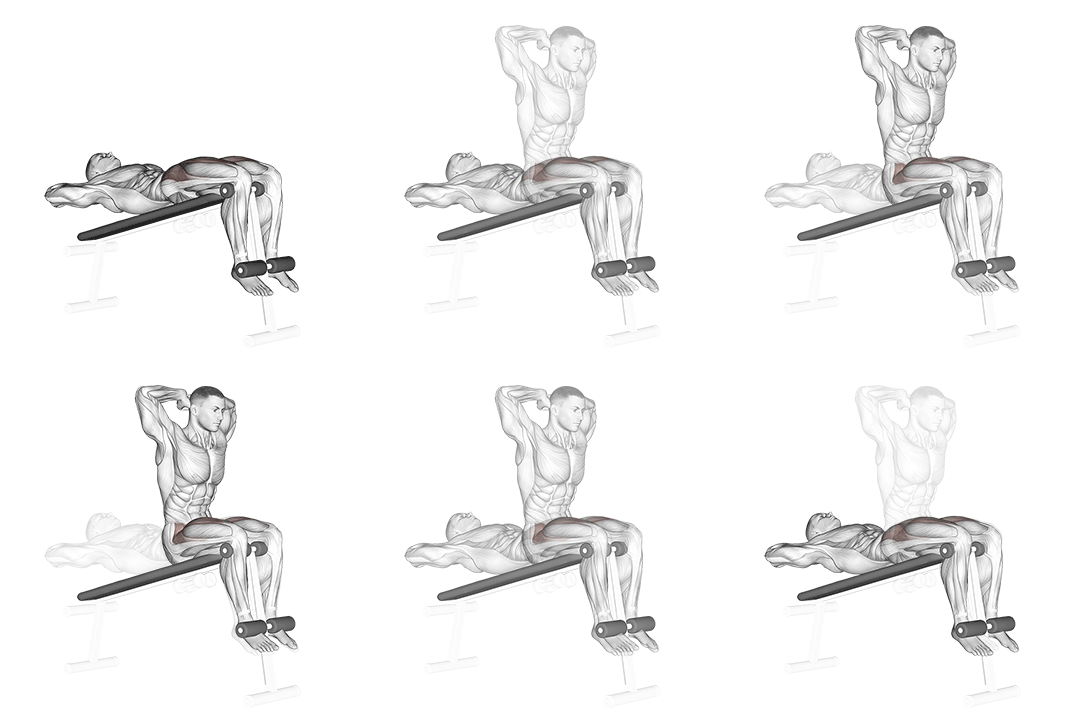
2. Decline Sit-up
85.3% MatchHow to perform this exercise
- Lie on a decline bench with your feet secured and your knees bent.
- Place your hands behind your head or across your chest.
- Engage your abs and lift your upper body off the bench, curling forward towards your knees.
- Pause for a moment at the top, then slowly lower your upper body back down to the starting position.
- Repeat for the desired number of repetitions.
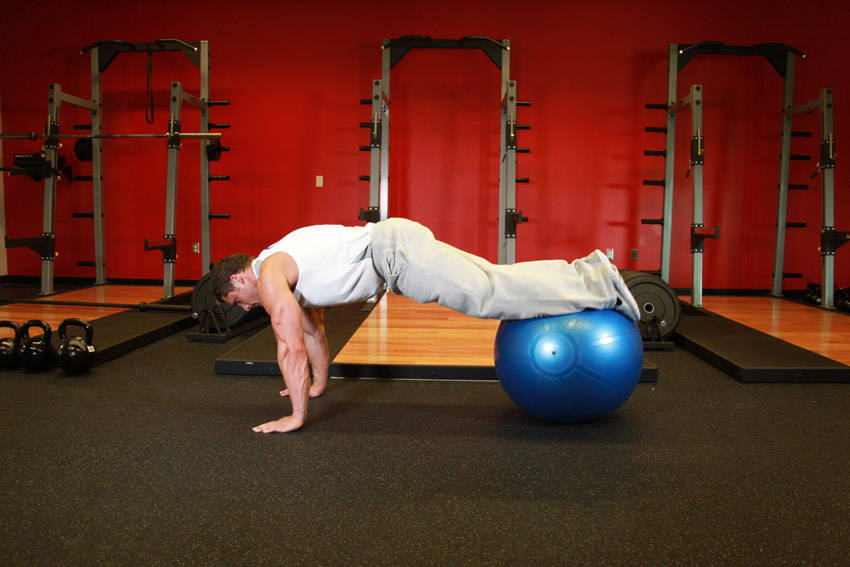
3. Exercise Ball Pull-In
81.9% MatchHow to perform this exercise
- Place an exercise ball nearby and lay on the floor in front of it with your hands on the floor shoulder width apart in a push-up position.
- Now place your lower shins on top of an exercise ball. Tip: At this point your legs should be fully extended with the shins on top of the ball and the upper body should be in a push-up type of position being supported by your two extended arms in front of you. This will be your starting position.
- While keeping your back completely straight and the upper body stationary, pull your knees in towards your chest as you exhale, allowing the ball to roll forward under your ankles. Squeeze your abs and hold that position for a second.
- Now slowly straighten your legs, rolling the ball back to the starting position as you inhale.
- Repeat for the recommended amount of repetitions.
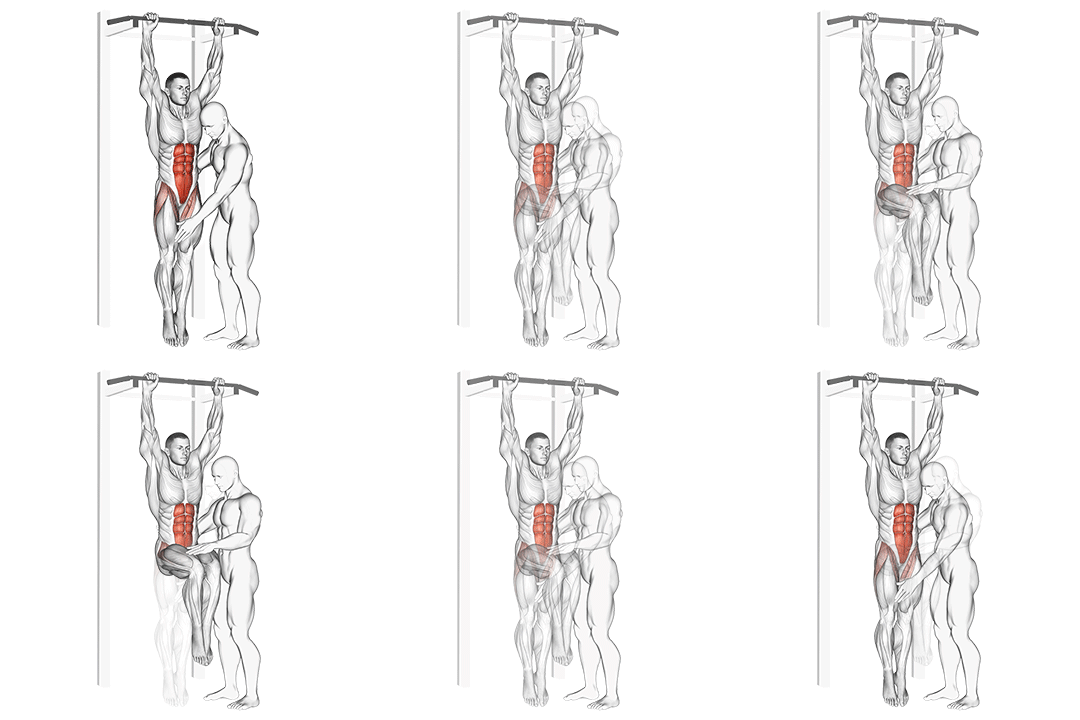
4. Assisted Hanging Knee Raise
80.2% MatchHow to perform this exercise
- Hang from a pull-up bar with your arms fully extended and your palms facing away from you.
- Engage your core muscles and lift your knees towards your chest, bending at the hips and knees.
- Pause for a moment at the top of the movement, squeezing your abs.
- Slowly lower your legs back down to the starting position.
- Repeat for the desired number of repetitions.
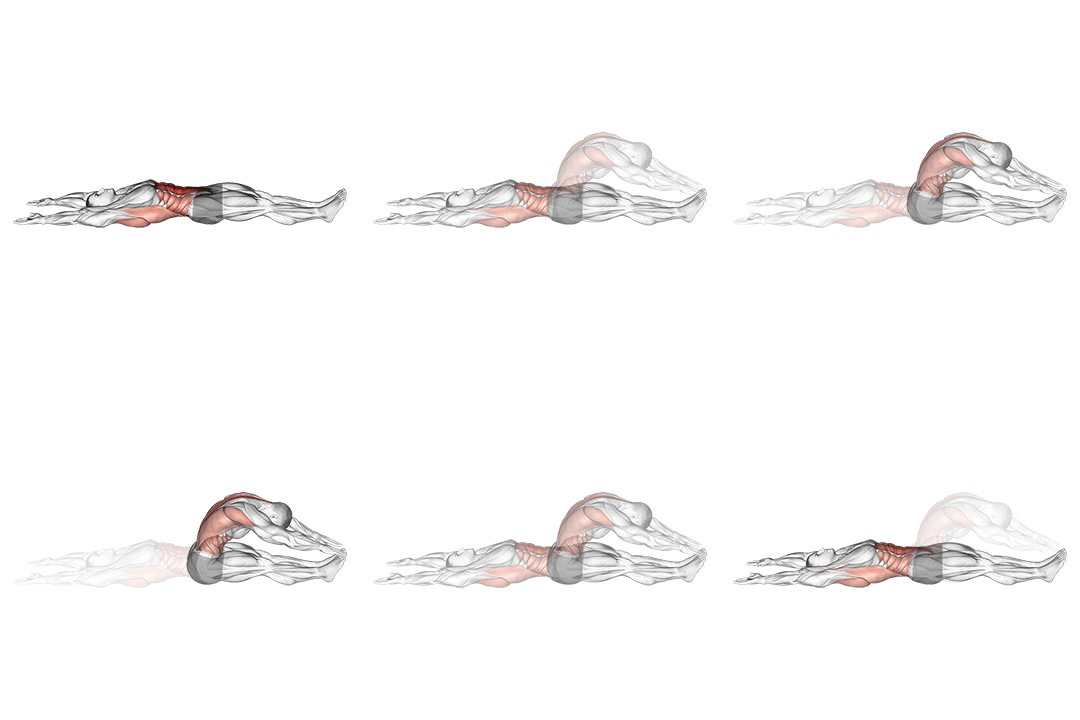
5. Arms Overhead Full Sit-up (male)
78.2% MatchHow to perform this exercise
- Lie flat on your back with your knees bent and feet flat on the ground.
- Extend your arms overhead, keeping them straight.
- Engaging your abs, slowly lift your upper body off the ground, curling forward until your torso is upright.
- Pause for a moment at the top, then slowly lower your upper body back down to the starting position.
- Repeat for the desired number of repetitions.
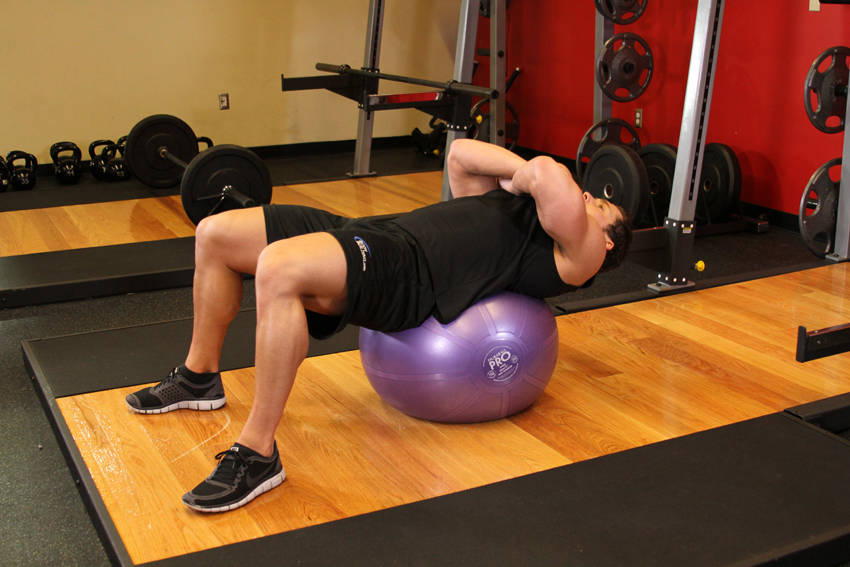
6. Exercise Ball Crunch
77.1% MatchHow to perform this exercise
- Lie on an exercise ball with your lower back curvature pressed against the spherical surface of the ball. Your feet should be bent at the knee and pressed firmly against the floor. The upper torso should be hanging off the top of the ball. The arms should either be kept alongside the body or crossed on top of your chest as these positions avoid neck strains (as opposed to the hands behind the back of the head position).
- Lower your torso into a stretch position keeping the neck stationary at all times. This will be your starting position.
- With the hips stationary, flex the waist by contracting the abdominals and curl the shoulders and trunk upward until you feel a nice contraction on your abdominals. The arms should simply slide up the side of your legs if you have them at the side or just stay on top of your chest if you have them crossed. The lower back should always stay in contact with the ball. Exhale as you perform this movement and hold the contraction for a second.
- As you inhale, go back to the starting position.
- Repeat for the recommended amount of repetitions.
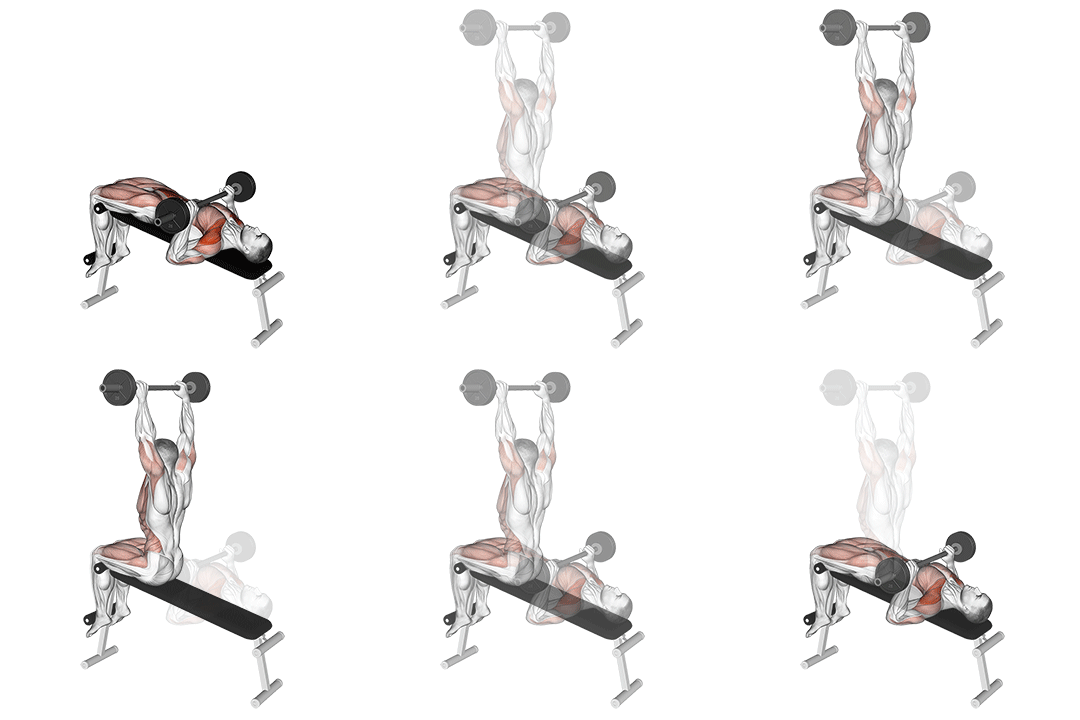
7. Barbell Press Sit-up
77% MatchHow to perform this exercise
- Lie flat on your back on a mat with your knees bent and feet flat on the ground.
- Hold the barbell with an overhand grip, resting it on your chest.
- Engaging your abs, slowly lift your upper body off the ground, curling forward until your torso is at a 45-degree angle.
- Pause for a moment at the top, then slowly lower your upper body back down to the starting position.
- Repeat for the desired number of repetitions.
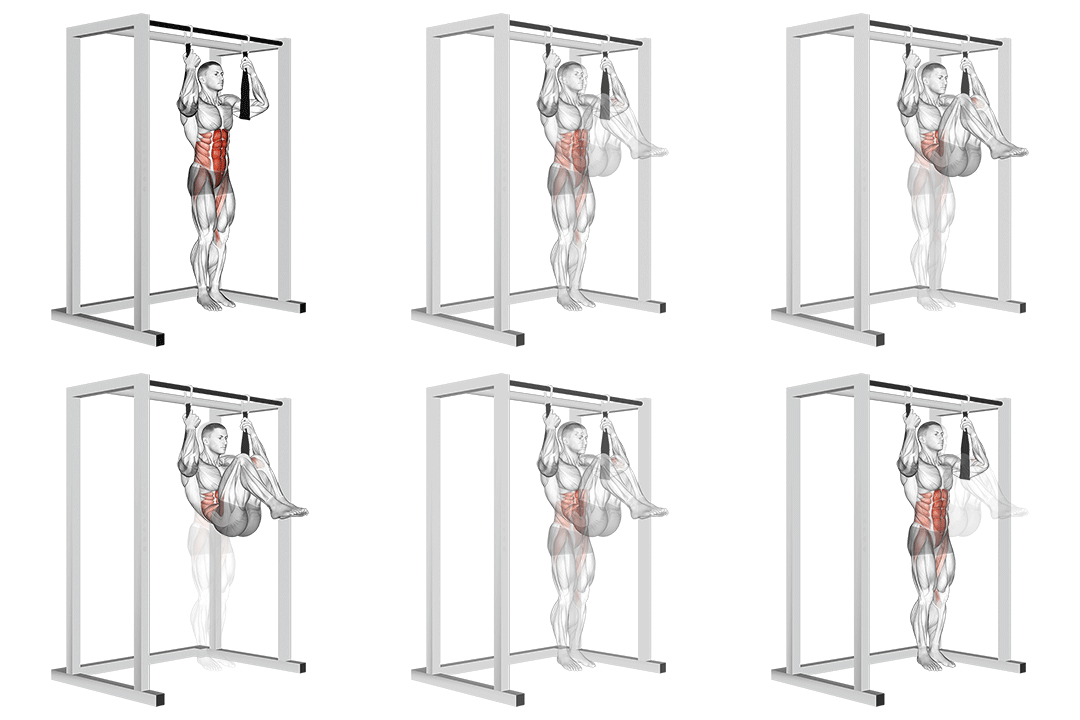
8. Arm Slingers Hanging Bent Knee Legs
76.7% MatchHow to perform this exercise
- Hang from a pull-up bar with your arms fully extended and your knees bent at a 90-degree angle.
- Engage your core and lift your knees towards your chest, bringing them as close to your elbows as possible.
- Slowly lower your legs back down to the starting position.
- Repeat for the desired number of repetitions.
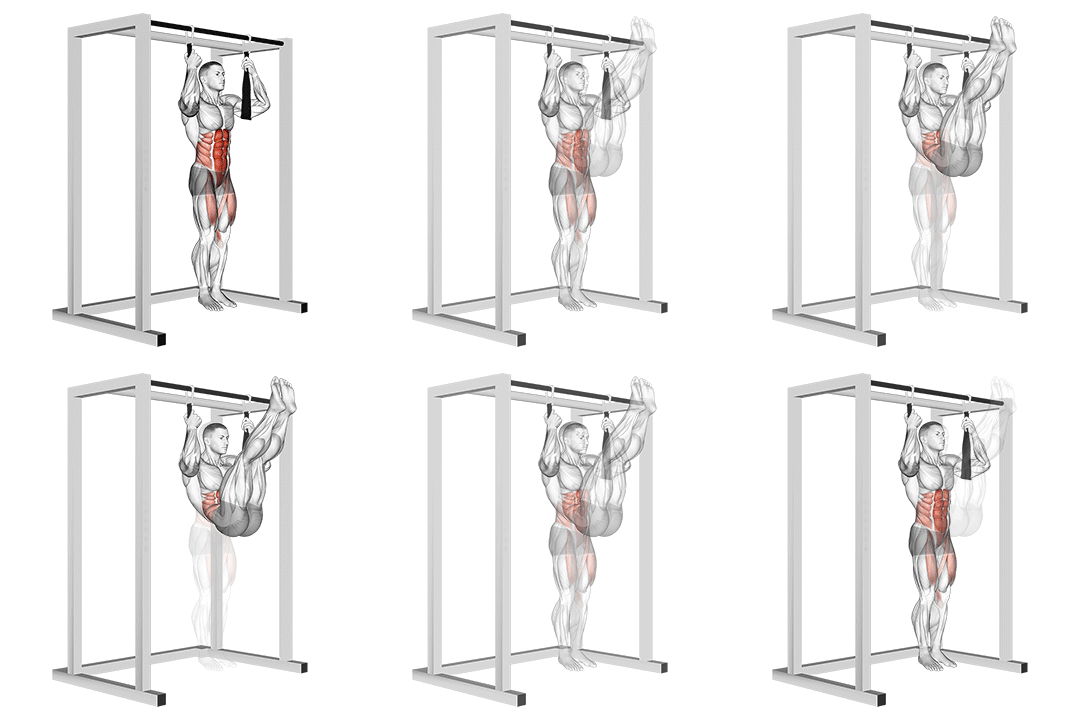
9. Arm Slingers Hanging Straight Legs
76.4% MatchHow to perform this exercise
- Hang from a pull-up bar with your arms fully extended and your legs straight down.
- Engage your core and lift your legs up in front of you until they are parallel to the ground.
- Hold for a moment at the top, then slowly lower your legs back down to the starting position.
- Repeat for the desired number of repetitions.
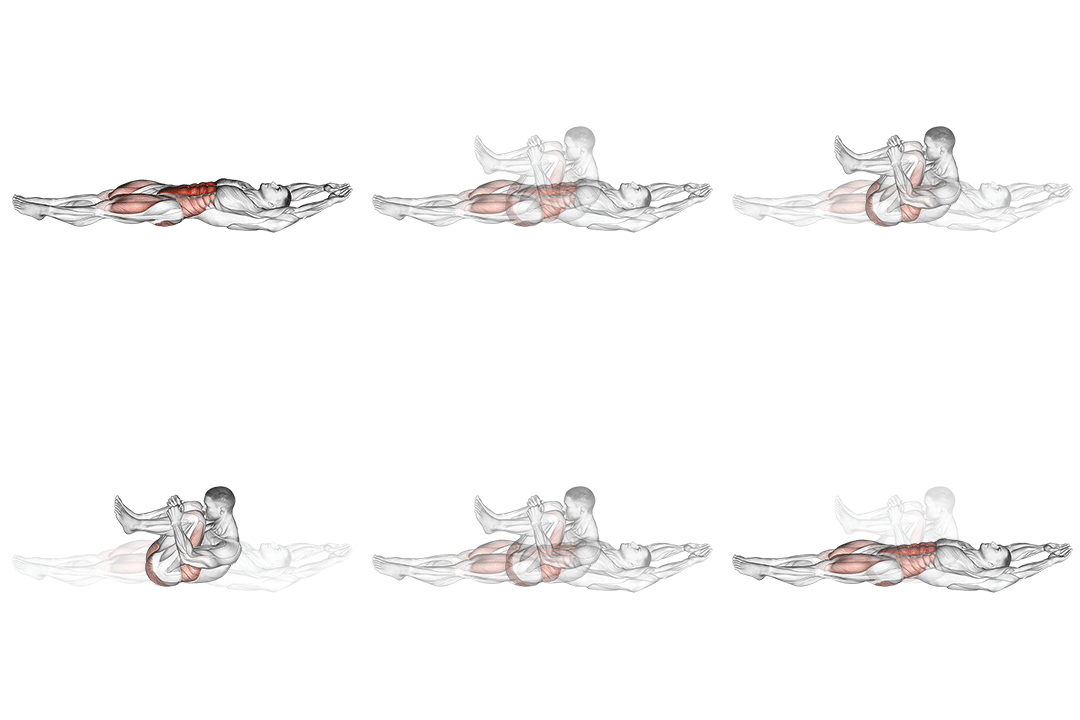
10. Cocoons
76.1% MatchHow to perform this exercise
- Lie flat on your back with your knees bent and feet flat on the ground.
- Place your hands behind your head with your elbows pointing outwards.
- Engaging your abs, slowly lift your upper body off the ground, curling forward until your torso is at a 45-degree angle.
- Pause for a moment at the top, then slowly lower your upper body back down to the starting position.
- Repeat for the desired number of repetitions.
Why You Might Need a Hanging Straight Leg Raise Alternative
You may need alternatives because of shoulder or grip weakness, no pull-up bar, lower-back pain from uncontrolled spinal flexion, or just to progress gradually. Substitutes let you keep tension on the rectus abdominis and hip flexors while removing scapular or shoulder demand. For example, lying straight leg raises shift load away from the upper body and increase iliopsoas involvement; captain's chair work reduces forearm fatigue and isolates hip flexion. If lumbar discomfort appears, pick variations that enforce a posterior pelvic tilt and controlled spinal flexion. Technique cue: exhale on the lift and draw the belly button to the spine to maximize abdominal activation and protect the lumbar curve.
How to Choose the Right Substitute
Choose a substitute based on equipment, pain history, and training goal. If you lack a bar or have shoulder issues, prioritize supine leg raises or captain's chair variations to remove scapular loading. For hypertrophy use slow eccentrics and added resistance (ankle weights or cable lever); for endurance use higher reps and shorter rests. Consider which muscles you want emphasized: start with hip flexion to bias iliopsoas or initiate with a posterior pelvic tilt to target rectus abdominis. Progress logical templates: increase range of motion, add load, or slow the tempo. Technique cue: control the descent, keep the lumbar spine pressed to the floor, and avoid swinging.
Frequently Asked Questions
What muscles does Hanging Straight Leg Raise work?
The exercise primarily targets the rectus abdominis and hip flexors (iliopsoas and rectus femoris). Obliques and transverse abdominis stabilize the pelvis, while lats, scapular retractors and forearms maintain the hanging position. Biomechanically it combines spinal flexion and hip flexion with a posterior pelvic tilt to lift the legs.
What is the best bodyweight alternative to Hanging Straight Leg Raise?
The lying straight leg raise is the best pure bodyweight alternative: lie supine, press your lower back into the floor, posteriorly tilt the pelvis and lift straight legs to about 45°. Focus on initiating the movement from the abs (pull the belly button in) rather than swinging with the hips; progress by slowing the eccentric or adding ankle weights.
Can I build muscle without doing Hanging Straight Leg Raise?
Yes. You can hypertrophy the abs and hip flexors using many alternatives that allow progressive overload and time under tension. Use increased range of motion, added resistance (ankle weights, cables), tempo manipulation and consistent progressive sets to drive muscle growth while managing joint load.
More Exercise Alternatives
Find Alternatives for Any Exercise
Use our free tool to discover the best substitute exercises based on your available equipment and goals.
Try the Exercise Substitution Finder →