

10 Best L-sit On Floor Alternatives for Core and Hip Flexor Strength
The L-sit On Floor is done seated. Ranked closest by our scoring: the Frog Planche, the Lean Planche and the Straddle Planche.
A stretch of open floor and your own body weight cover the L-sit On Floor, which holds your legs straight out while your abs and hip flexors keep them there and your hands brace on the ground. The Frog Planche is the closest swap because it keeps that same hand brace on the floor and asks your shoulders and chest to hold your whole body instead of just your legs. If that feels like too much today, the Bench Dip (Knees Bent) swaps the floor for a bench edge and trains your triceps instead.
Updated Ranked by our 12-factor similarity model How it works
Original Exercise: L-sit On Floor
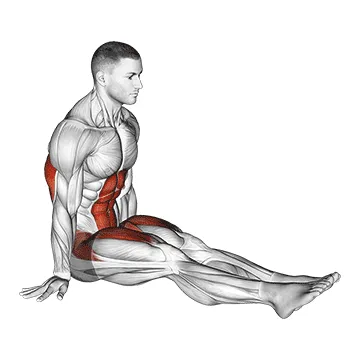
- Primary muscle
- Abs
- Equipment
- Bodyweight
- Difficulty
- Intermediate
- Type
- Compound
Secondary muscles: Hip Flexors
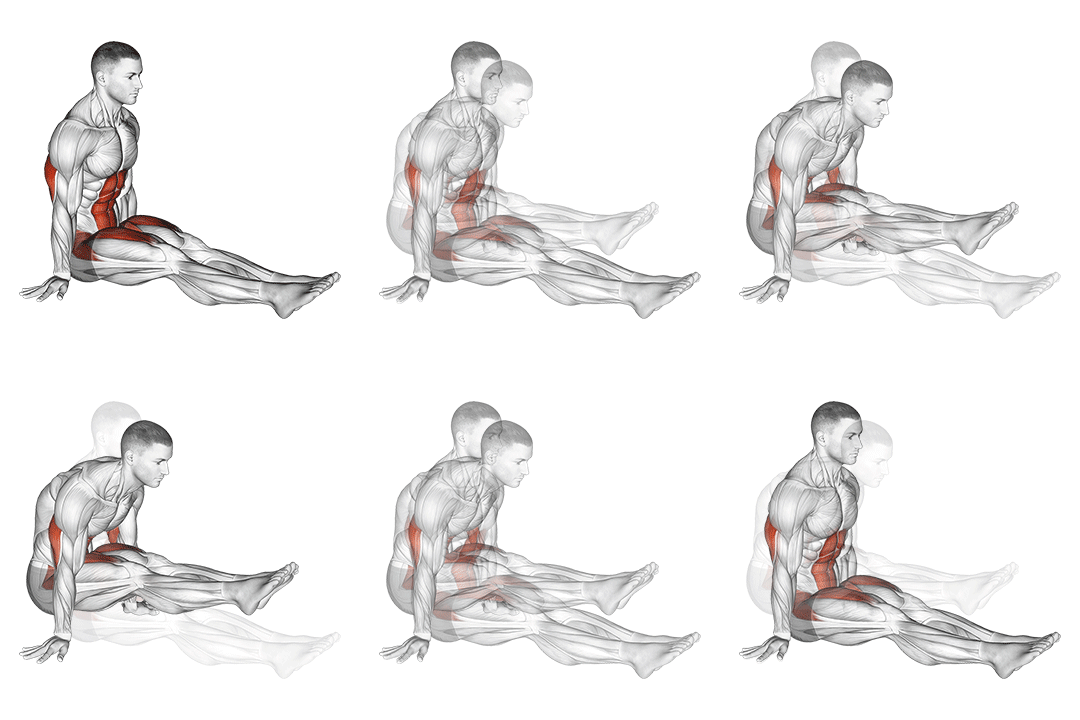
How to perform L-sit On Floor
- Sit on the floor with your legs extended in front of you.
- Place your hands on the floor beside your hips, fingers pointing forward.
- Engage your core and lift your legs off the ground, keeping them straight.
- Try to bring your legs parallel to the floor, forming an 'L' shape with your body.
- Hold this position for as long as you can.
- Slowly lower your legs back down to the starting position.
- Repeat for the desired number of repetitions.
Ranked L-sit On Floor Alternatives
10 substitutes, ranked by how closely each one matches the L-sit On Floor on movement pattern, muscles worked, equipment and body position. The higher the score, the less you change. Open "How to perform this exercise" on a card for the steps; every card title links to that exercise's own alternatives page. Harder versions are tagged as progressions and kept out of the top spot even when they score higher.
Progression
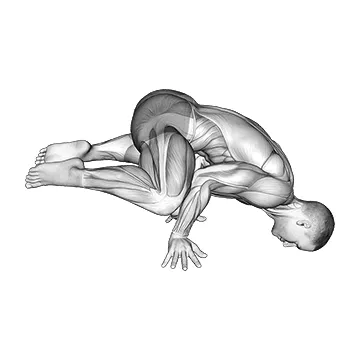
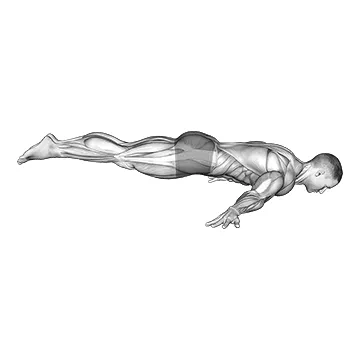
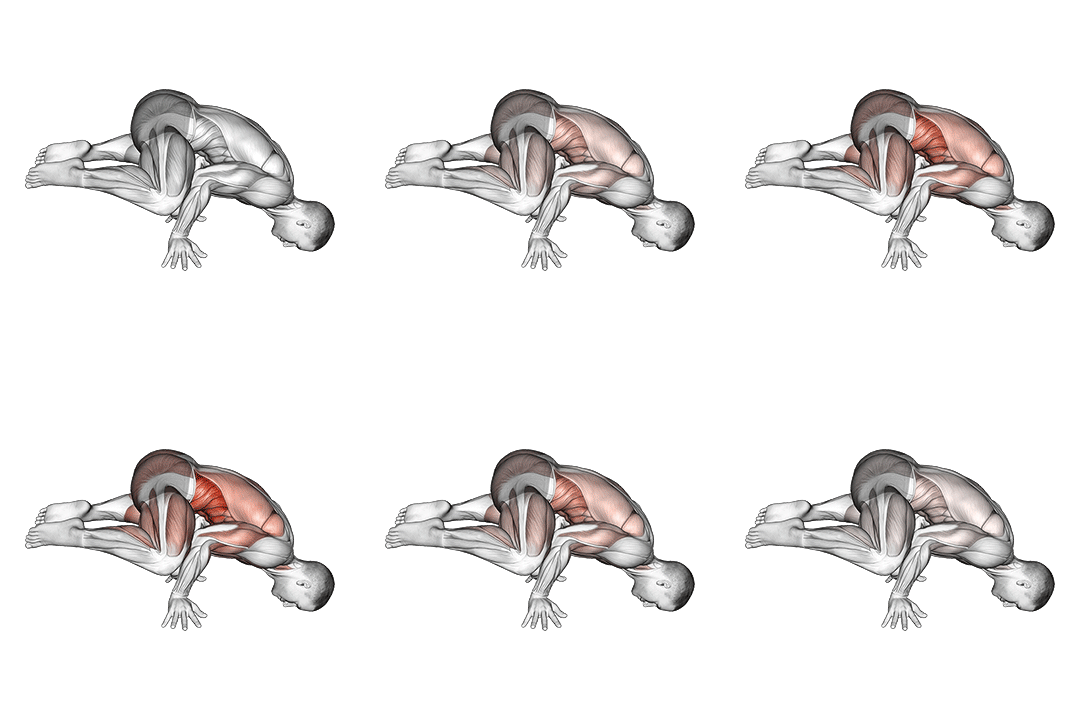
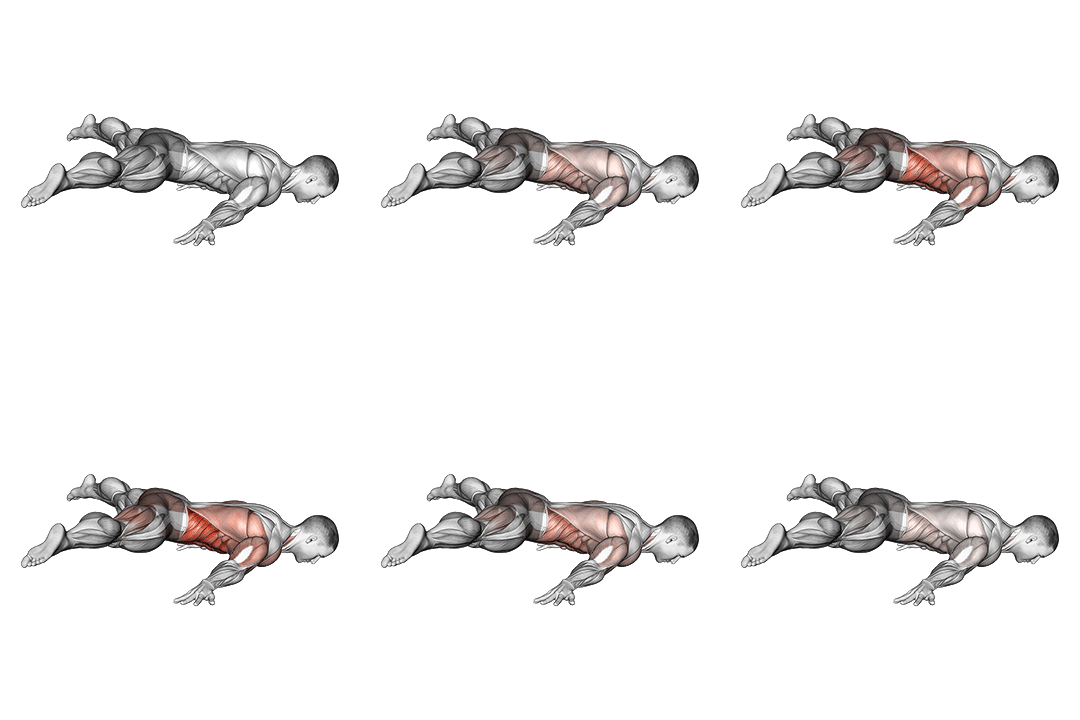
1. Frog Planche
88% match- Abs
- Bodyweight
- Advanced
- Compound
Pick this when you want a harder version that still works the abs.
How to perform this exercise
- Start in a push-up position with your hands shoulder-width apart and your feet together.
- Bend your elbows and lower your body towards the ground, keeping your back straight.
- As you lower your body, lift your feet off the ground and bring your knees towards your chest.
- Hold this position for a few seconds, then extend your legs back out and push yourself back up to the starting position.
- Repeat for the desired number of repetitions.
Sets and reps: 3 or 4 sets of 6 to 10 reps.
Why this matches
- Primary muscle: abs, the same as the L-sit On Floor
- Equipment: bodyweight only, the same as the L-sit On Floor
- Body position: lying face down, not seated
Progression
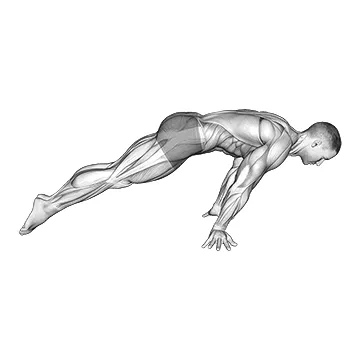
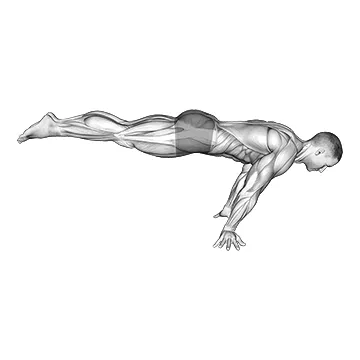
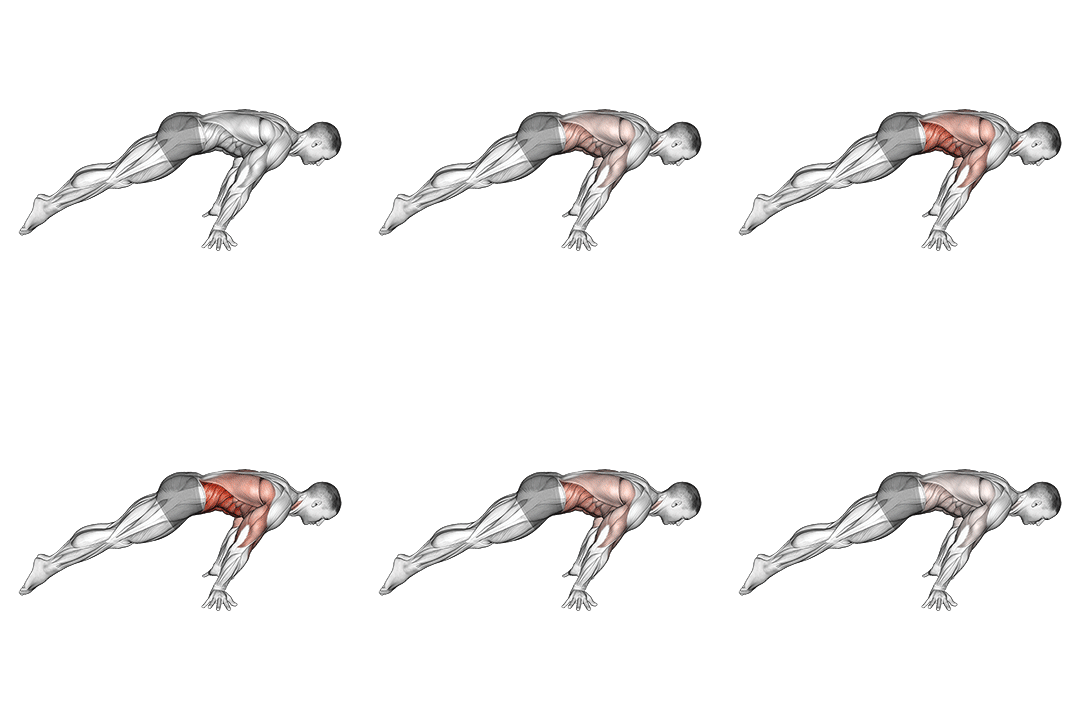
2. Lean Planche
88% match- Abs
- Bodyweight
- Advanced
- Compound
How to perform this exercise
- Start in a push-up position with your hands shoulder-width apart and your body straight.
- Engage your core and slowly shift your weight forward, bringing your shoulders past your hands.
- Keep your elbows slightly bent and your body straight as you lean forward.
- Hold this position for a few seconds, then slowly return to the starting position.
- Repeat for the desired number of repetitions.
Sets and reps: 3 or 4 sets of 6 to 10 reps.
Why this matches
- Primary muscle: abs, the same as the L-sit On Floor
- Equipment: bodyweight only, the same as the L-sit On Floor
- Body position: lying face down, not seated
Progression
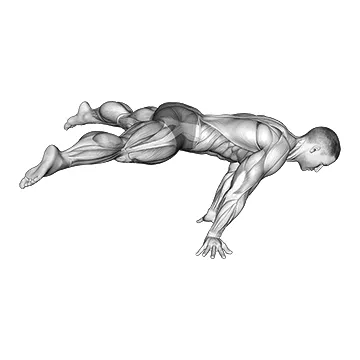
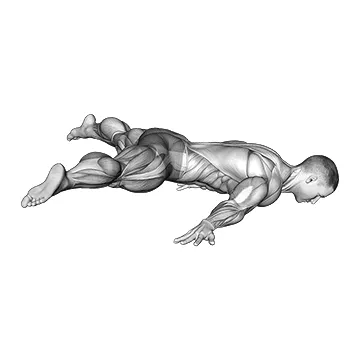
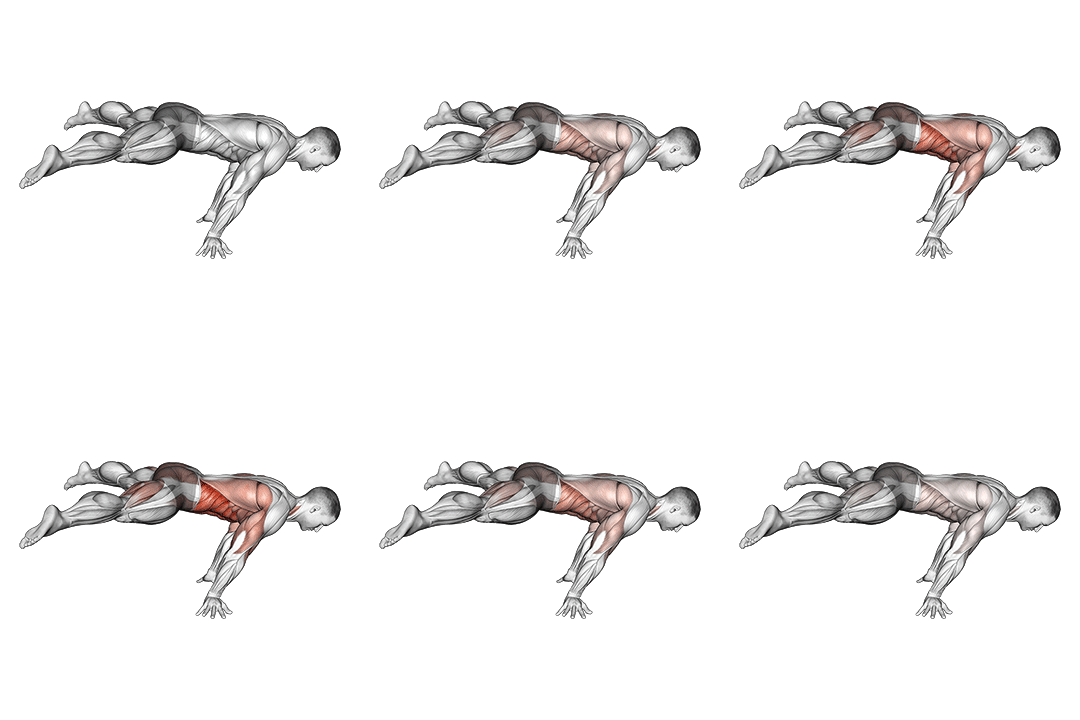
3. Straddle Planche
87% match- Abs
- Bodyweight
- Advanced
- Compound
How to perform this exercise
- Start in a push-up position with your hands shoulder-width apart and your feet spread wide apart.
- Engage your core and slowly shift your weight forward, bringing your shoulders over your hands.
- Bend your elbows and lower your body towards the ground, keeping your elbows close to your sides.
- Pause for a moment at the bottom, then push through your hands to straighten your arms and lift your body back up to the starting position.
- Repeat for the desired number of repetitions.
Sets and reps: 3 or 4 sets of 6 to 10 reps.
Why this matches
- Primary muscle: abs, the same as the L-sit On Floor
- Equipment: bodyweight only, the same as the L-sit On Floor
- Body position: lying face down, not seated
Progression
4. Full Maltese
86% match- Abs
- Bodyweight
- Advanced
- Compound
How to perform this exercise
- Start by standing with your feet shoulder-width apart and your arms extended straight out to the sides.
- Slowly lean forward, keeping your arms straight, until your upper body is parallel to the ground.
- Engage your core and hold this position for a few seconds.
- Return to the starting position by pushing through your feet and standing back up.
- Repeat for the desired number of repetitions.
Sets and reps: 3 or 4 sets of 6 to 10 reps.
Why this matches
- Primary muscle: abs, the same as the L-sit On Floor
- Equipment: bodyweight only, the same as the L-sit On Floor
- Body position: hanging, not seated
Progression
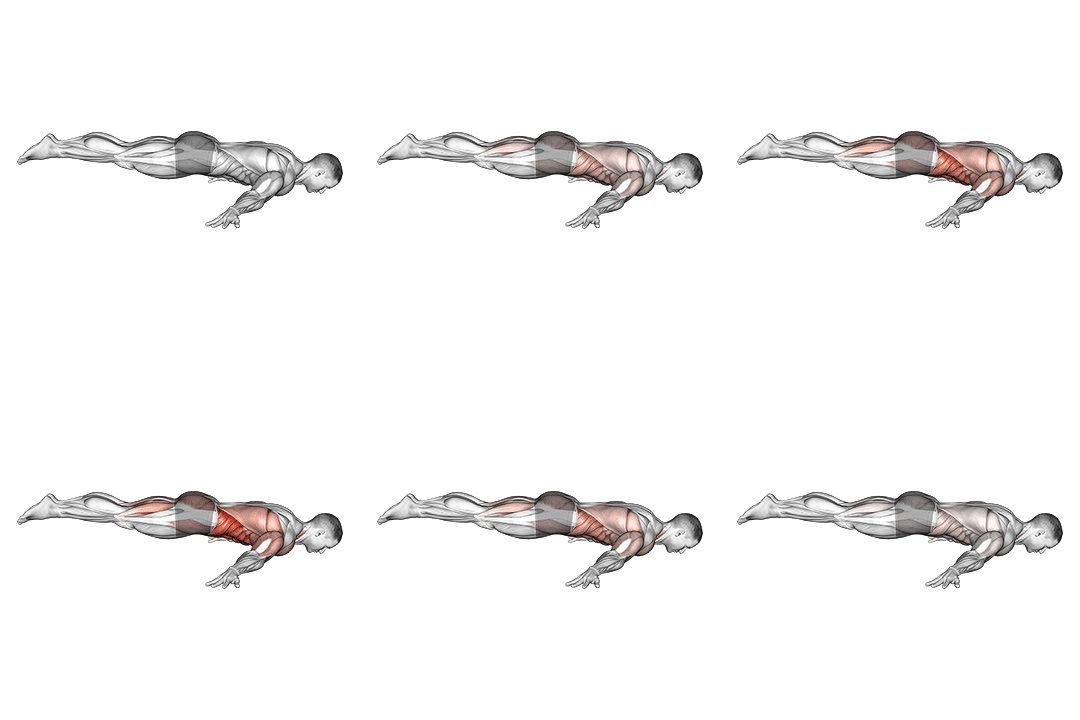
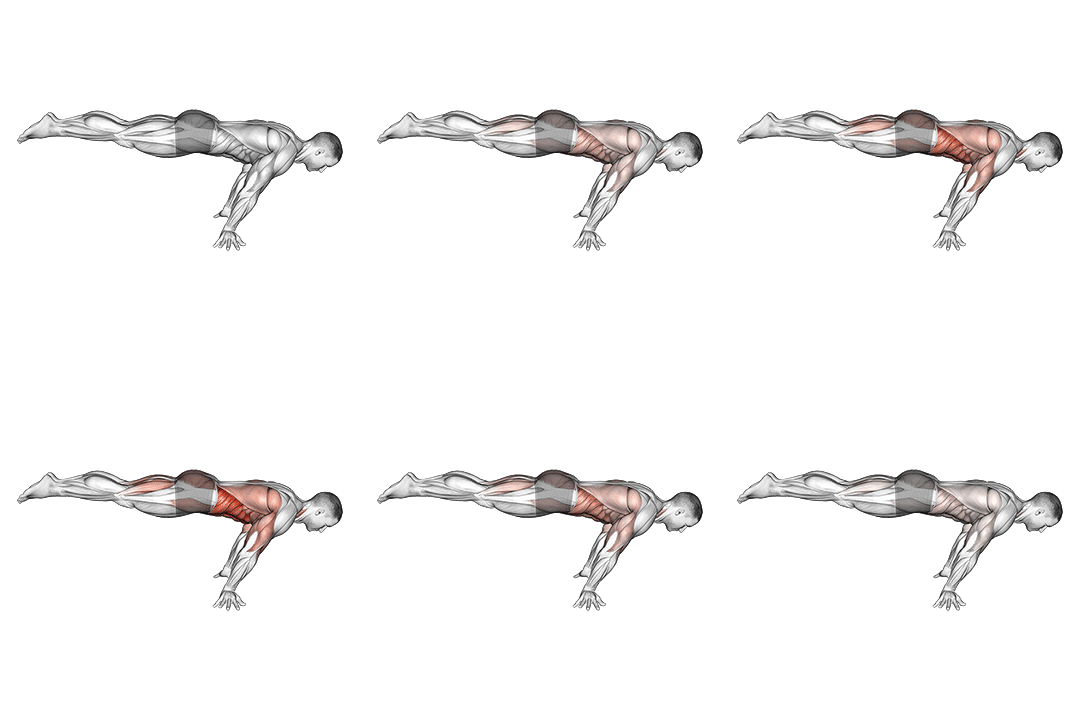
5. Full Planche
86% match- Abs
- Bodyweight
- Advanced
- Compound
How to perform this exercise
- Start in a push-up position with your hands shoulder-width apart and your fingers pointing forward.
- Engage your core and slowly shift your weight forward, lifting your feet off the ground.
- Continue shifting your weight forward until your body is parallel to the ground, balancing on your hands.
- Hold this position for as long as you can, maintaining a straight body line.
- Slowly lower your feet back to the ground and return to the starting position.
- Repeat for the desired number of repetitions.
Sets and reps: Hold for 20 to 30 seconds, 3 sets.
Why this matches
- Primary muscle: abs, the same as the L-sit On Floor
- Equipment: bodyweight only, the same as the L-sit On Floor
- Body position: lying face down, not seated
Progression
6. Straddle Maltese
86% match- Abs
- Bodyweight
- Advanced
- Compound
How to perform this exercise
- Start by hanging from a pair of rings with your arms fully extended and your body in a straight line.
- Spread your legs wide apart, forming a straddle position.
- Engage your core and slowly lower your body until your arms are parallel to the ground.
- Hold this position for a few seconds, then push yourself back up to the starting position.
- Repeat for the desired number of repetitions.
Sets and reps: 3 or 4 sets of 6 to 10 reps.
Why this matches
- Primary muscle: abs, the same as the L-sit On Floor
- Equipment: bodyweight only, the same as the L-sit On Floor
- Body position: hanging, not seated
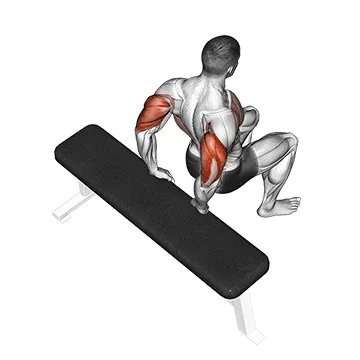
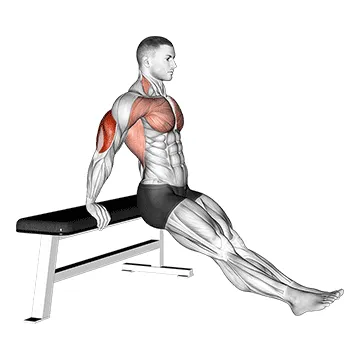
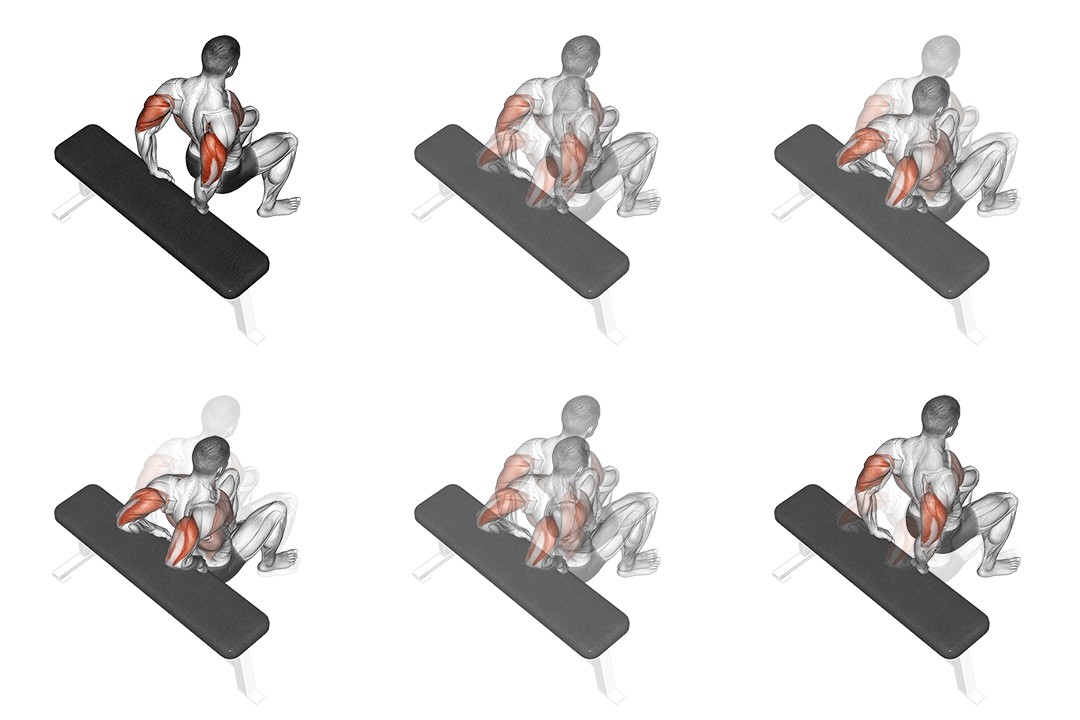
7. Bench Dip (Knees Bent)
71% match- Triceps
- Bodyweight
- Beginner
- Compound
A looser match: it uses the same equipment, but it works the triceps rather than the abs.
How to perform this exercise
- Sit on the edge of a bench or chair with your hands gripping the edge next to your hips.
- Slide your butt off the bench and straighten your legs in front of you, keeping your heels on the ground.
- Bend your elbows and lower your body towards the ground, keeping your back close to the bench.
- Pause for a moment at the bottom, then push yourself back up to the starting position.
- Repeat for the desired number of repetitions.
Sets and reps: 3 sets of 8 to 12 reps, and add reps before you add load.
Why this matches
- Primary muscle: triceps, not abs
- Equipment: bodyweight only, the same as the L-sit On Floor
- Body position: seated, the same as the L-sit On Floor
- Balance: easier to stay steady on than the L-sit On Floor
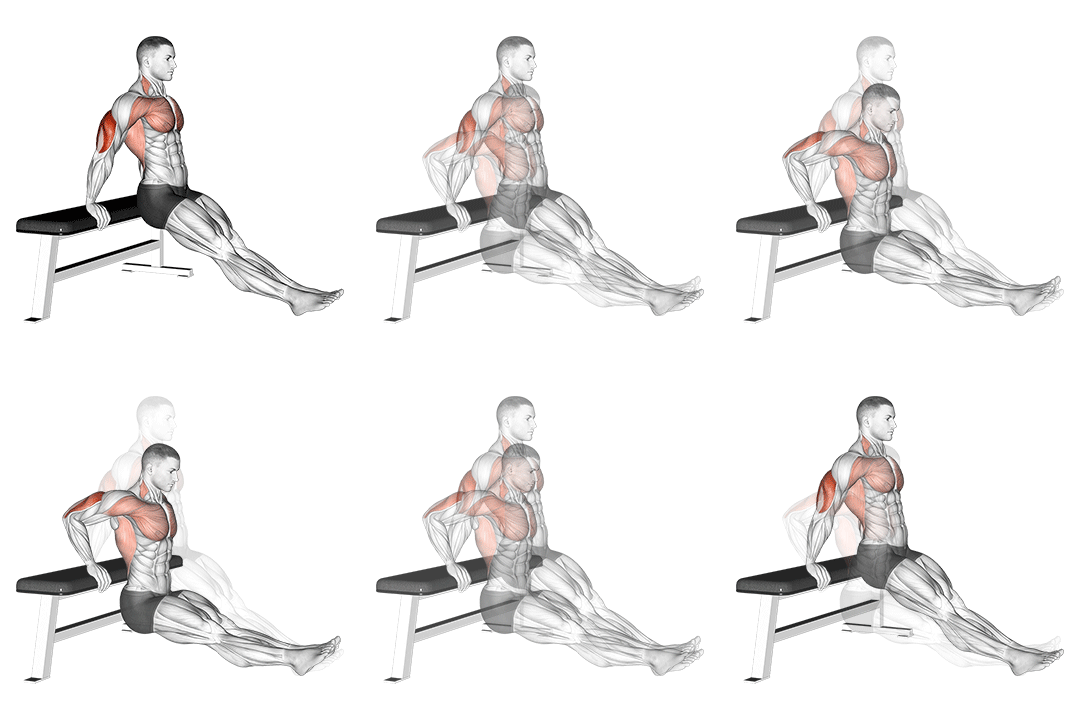
8. Bench Dip On Floor
71% match- Triceps
- Bodyweight
- Intermediate
- Compound
How to perform this exercise
- Sit on the edge of a bench or chair with your hands gripping the edge, fingers pointing forward.
- Slide your butt off the bench, supporting your weight with your hands.
- Lower your body by bending your elbows until your upper arms are parallel to the floor.
- Push yourself back up to the starting position by straightening your arms.
- Repeat for the desired number of repetitions.
Sets and reps: 3 or 4 sets of 6 to 10 reps.
Why this matches
- Primary muscle: triceps, not abs
- Equipment: bodyweight only, the same as the L-sit On Floor
- Body position: seated, the same as the L-sit On Floor
- Balance: easier to stay steady on than the L-sit On Floor
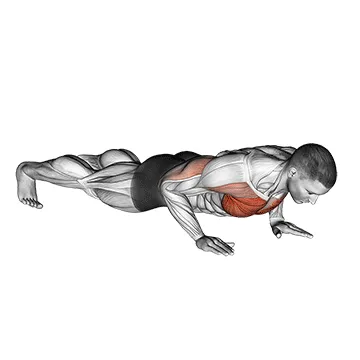
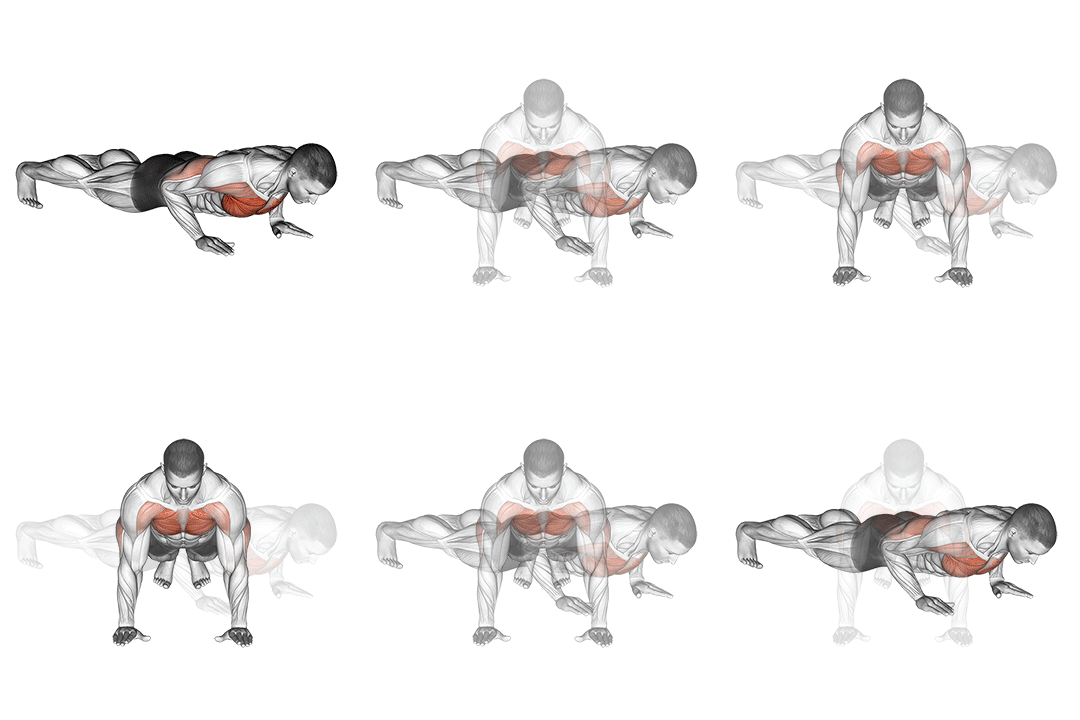
9. Clock Push-up
70% match- Pectorals
- Bodyweight
- Intermediate
- Compound
How to perform this exercise
- Start in a high plank position with your hands directly under your shoulders and your body in a straight line.
- Lower your body towards the ground by bending your elbows, keeping them close to your sides.
- As you lower, rotate your body to the left, extending your left arm straight out to the side.
- Push back up to the starting position, while rotating your body to the center.
- Repeat the push-up, this time rotating your body to the right and extending your right arm out to the side.
- Continue alternating sides with each repetition.
Sets and reps: 3 or 4 sets of 6 to 10 reps.
Why this matches
- Primary muscle: pectorals, not abs
- Equipment: bodyweight only, the same as the L-sit On Floor
- Body position: lying face down, not seated
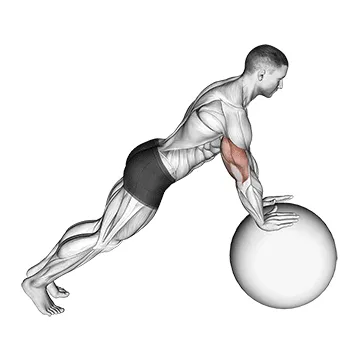
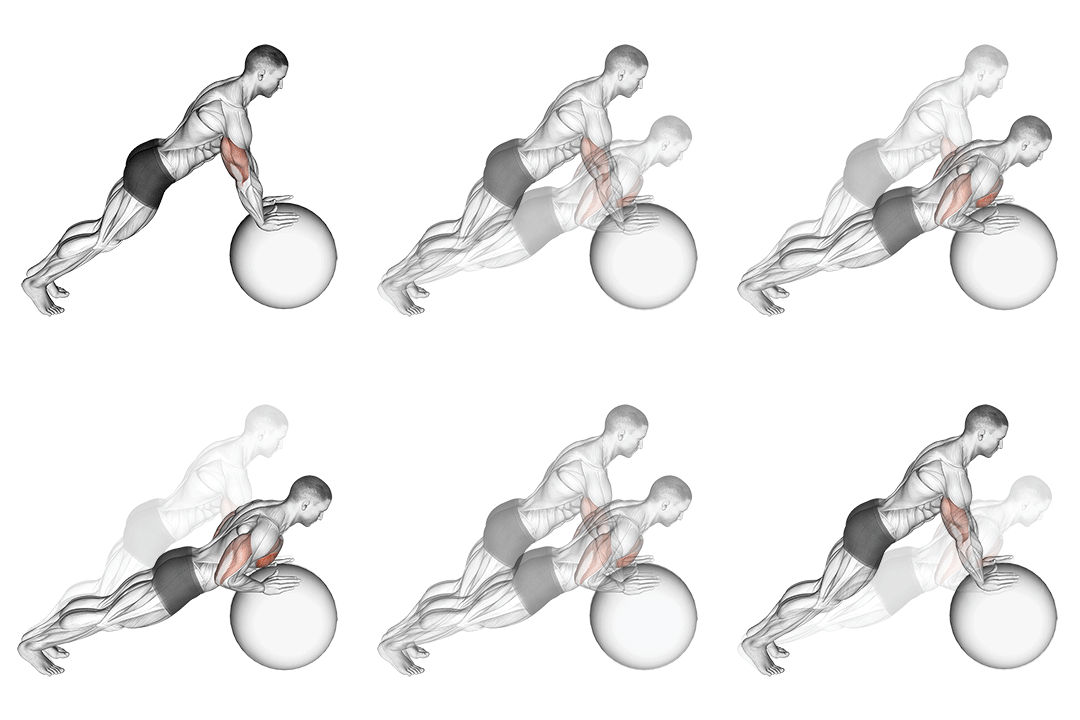
10. Push-up (On Stability Ball)
67% match- Pectorals
- Stability-ball
- Intermediate
- Compound
How to perform this exercise
- Place the stability ball on the ground and position yourself facing down with your hands on the ball, shoulder-width apart.
- Extend your legs straight out behind you, balancing on your toes.
- Engage your core and lower your chest towards the ball by bending your elbows, keeping your body in a straight line.
- Pause for a moment at the bottom, then push yourself back up to the starting position by straightening your arms.
- Repeat for the desired number of repetitions.
Sets and reps: 3 or 4 sets of 6 to 10 reps.
Why this matches
- Primary muscle: pectorals, not abs
- Equipment: bodyweight only, the same as the L-sit On Floor
- Body position: lying face down, not seated
Why You Might Need an L-sit On Floor Alternative
Most swaps for the L-sit On Floor get searched for one of two reasons: the hold stops feeling hard on your abs and hip flexors, or your hands want a break from bracing on the ground at all. The Frog Planche, Lean Planche, Straddle Planche, Full Maltese and Full Planche all stay on plain body weight and keep your abs doing the bracing, so they suit anyone chasing a harder position without buying anything. Straddle Maltese asks for a pair of rings to hang from, and Bench Dip (Knees Bent) and Bench Dip On Floor both need a bench or chair edge, trading ab work for triceps work. Clock Push-up stays on the floor but moves the work to your chest, and Push-up (On Stability Ball) is the one swap that asks for a ball.
How to Choose the Right L-sit On Floor Substitute
Take the Frog Planche first if you want your abs braced with hands on the floor: lower down, lift your feet and tuck your knees to your chest. Lean Planche, Straddle Planche and Full Planche keep your hands down too, so treat them as more options, not a ladder. Full Maltese is the odd one out: you stand, arms out to the sides, and lean forward until your torso is parallel to the ground, hands free. Straddle Maltese needs a pair of rings, so save it for a gym that has them. Want to stay seated but train your arms instead? Bench Dip (Knees Bent) and Bench Dip On Floor move your hands to a bench edge and work your triceps. Push-up (On Stability Ball) is the only swap needing kit, a ball under your hands, working your chest instead.
L-sit On Floor FAQ
Can I train the L-sit On Floor at home?
Yes. The L-sit On Floor, Frog Planche, Lean Planche, Straddle Planche, Full Maltese, Full Planche and Clock Push-up all use nothing but body weight and floor space, so a mat or a rug is enough. Straddle Maltese needs a pair of rings, Bench Dip (Knees Bent) and Bench Dip On Floor need a bench or chair, and Push-up (On Stability Ball) needs a stability ball.
Which swap keeps the same abs and hip flexor focus?
The Frog Planche matches best: you lift your feet and tuck your knees to your chest, so your hip flexors work alongside your abs. Lean Planche, Straddle Planche, Full Maltese and Full Planche keep your abs braced but do not lift the legs against the hips, and none of them need anything but body weight like the L-sit On Floor. Straddle Maltese keeps your abs braced too, but needs a pair of rings to hang from.
What changes if I do a Bench Dip instead?
Bench Dip (Knees Bent) and Bench Dip On Floor both trade the open floor for a bench edge, and the work moves from your abs and hip flexors to your triceps as you bend and straighten your arms to lower and raise your body. Either one is a fair pick when you want a rest from holding your legs up: the set-up is similar, hands beside your hips, but your heels stay down and your arms do the moving.
How does the Frog Planche differ from the L-sit On Floor?
The L-sit On Floor has you seated with your legs held straight out in front of you. The Frog Planche starts braced on your hands and feet instead, and after you lower your body you lift your feet and pull your knees toward your chest before pushing back up, so your hands carry your weight rather than your seat.
Find Alternatives for Any Exercise
Search the exercise database and filter the ranked substitutes by the equipment you own.
Similarity scores compare exercise metadata such as movement pattern, muscles, equipment and body position. They are not a safety rating or a check that you own the equipment. Learn about our methodology